Linville Gorge Wilderness Travel Guide — North Carolina
For those seeking raw, untamed beauty and a true test of their outdoor skills, the Linville Gorge Wilderness North Carolina offers an unparalleled adventure. Often termed the "Grand Canyon of the East," this rugged expanse within the Pisgah National Forest is a sanctuary for those who crave exceptionally rugged, unmanaged hiking terrain, breathtaking vistas, and a deep connection with nature. Our team at Roam States has ventured into its depths to bring you the definitive guide to navigating this spectacular wilderness.
Why Visit Linville Gorge Wilderness
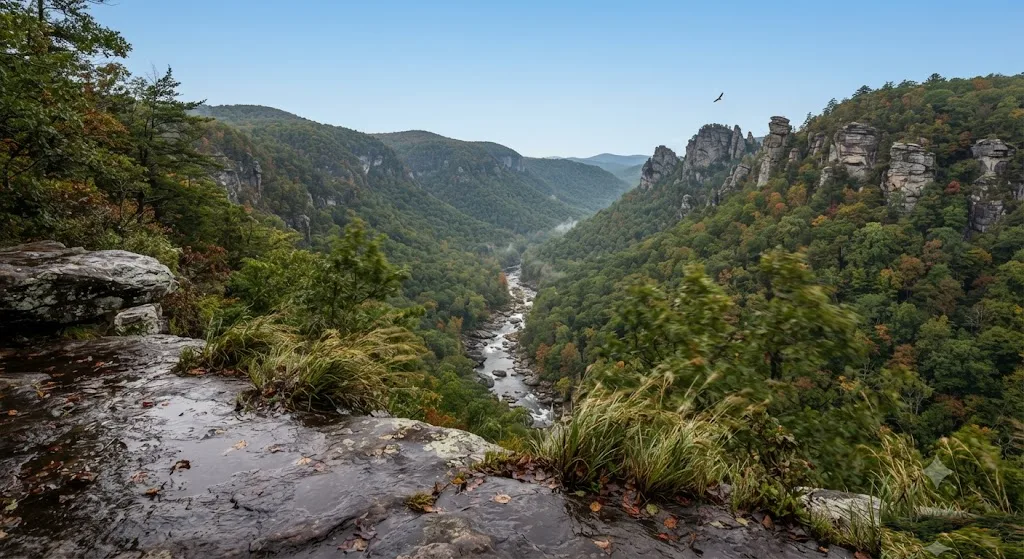
The allure of Linville Gorge Wilderness lies in its wild, untamed character. Unlike many managed parks, this is a designated wilderness area, meaning human intervention is minimal, and nature reigns supreme. We believe it's worth visiting for its dramatic landscapes, including the 12-mile long gorge carved by the Linville River, which plunges over 2,000 feet from its rim to the riverbed. The steep, dramatic walls, towering mountain summits like Hawksbill and Table Rock, and dense, virgin forests create a panorama that feels ancient and untouched. It's a place where you can truly disconnect, challenge yourself physically, and immerse yourself in a pristine natural environment. For those asking, "is Linville Gorge Wilderness worth visiting?", our answer is an unequivocal yes – if you're prepared for its challenges, the rewards are immense.
Beyond the visual spectacle, Linville Gorge is a haven for diverse plant and animal life, including rare and endangered species. The area was spared the extensive logging that impacted much of the eastern forests, preserving stretches of old-growth trees. It's a living testament to the power of nature and a vital ecosystem. This isn't your average stroll in the park; it's an expedition into one of the most rugged and scenic gorges in the eastern United States.
Who It's Best For
Linville Gorge Wilderness is unequivocally best for experienced hikers, backpackers, and rock climbers. This is not a destination for casual visitors seeking paved paths and abundant amenities. The trails are primitive, often poorly marked, and demand significant physical fitness, sure-footedness, and navigational skills. Cell service is notoriously spotty or non-existent throughout much of the gorge, so self-reliance and preparedness are paramount.
If you thrive on challenging terrain, enjoy the solitude of the backcountry, and are comfortable with primitive camping, then Linville Gorge will be an unforgettable experience. It's ideal for those who practice Leave No Trace principles and understand the responsibilities that come with exploring a wilderness area. If you're new to serious backpacking or prefer well-maintained trails and conveniences, we recommend starting with less strenuous areas within the Great Smoky Mountains National Park or along the Blue Ridge Parkway before tackling the "Grand Canyon of the East."
Getting There & Parking
Navigating to the Linville Gorge Wilderness North Carolina requires some planning, as access roads can be unpaved and rugged. The wilderness area is part of the Pisgah National Forest. There are two primary access points: the eastern rim and the western rim.
Eastern Section Access
From Marion, take US 221 North to the intersection of NC 183 at Linville Falls. Turn right onto NC 183 and continue to NC 181. Turn right (south) onto NC 181 and go approximately three miles to Forest Service Road (FR) 210 (Gingercake Road). Turn right onto FR 210. At the first fork, turn left and continue through the Gingercake Acres housing development.
- The first parking area, approximately two miles from Gingercake Acres, is for the Devil's Hole Trail.
- One mile further, you'll find parking for Hawksbill Mountain (parking on the left, trail on the right).
- Another mile brings you to the parking area for Spence Ridge Trail and North Table Rock Trail.
- Continuing one more mile to the first intersection and turning right (past the Outward Bound School sign), then bearing right through several switchbacks, will lead you to the Table Rock Picnic Area.
Western Section Access
From Marion, take US 221 North to the intersection of NC 183 at Linville Falls. Turn right onto NC 183 and go one mile to NC 1238, Kistler Memorial Highway. Trailhead and parking lots accessing the western section of the gorge lead off Kistler Memorial Highway. Alternatively, from Nebo, take NC 126 across Lake James and continue eight miles to access Kistler Memorial Highway.
No parking permit is required for vehicles parked overnight at any of the trailheads surrounding the Linville Gorge Wilderness. However, be aware that certain parking areas have limited spaces and vehicle size restrictions. Improperly parked vehicles (blocking roadways or on private land) may be subject to citation or towing. We always recommend arriving early, especially on weekends, as spots fill up quickly. While the Linville Gorge Wilderness area remains open, visitors should be aware that temporary closures may occur at west rim locations as construction progresses through the Old NC 105 corridor.
Top Things to Do
The Linville Gorge Wilderness North Carolina is a playground for the adventurous, offering a diverse array of activities for those prepared for its challenges. Here are the top things to do:
Linville Gorge Wilderness Hiking Trails
Hiking is the quintessential experience here, with a network of 39 miles of trails weaving through the gorge. These Linville Gorge Wilderness hiking trails range from moderate to extremely difficult, often featuring significant elevation changes and rugged terrain. Expect primitive conditions, limited signage, and the need for good navigational skills.
- Hawksbill Mountain Trail: A popular choice for its panoramic views of the gorge, Table Rock, and Shortoff Mountain. This 1.9-mile (3.1 km) trail typically takes about 1 hour 21 minutes to complete.
- Shortoff Mountain Trail: A moderate ridgeline trail, approximately 4.1 miles (6.7 km), offering stunning views of Lake James and distant Linville Falls.
- Babel Tower Trail: A 2.6-mile (4.2 km) trail leading through rugged terrain to the Linville River, often completed in about 1 hour 58 minutes.
- Table Rock Summit Trail: A strenuous but rewarding 1.2-mile trail to the 3,930-foot summit of Table Rock, providing 360-degree views of the gorge.
- Spence Ridge Trail: A good starter trail, about 1.75 miles each way, with the first half-mile following an old logging road. It leads to the Linville River, where hikers can cross to the western bank.
- Linville Gorge Trail: At 11.5 miles, this is the longest trail in the wilderness area, forming the western portion of the strenuous Linville Gorge Wilderness Loop. It follows the Linville River and is not recommended for novice hikers due to poorly marked sections.
Remember that many trails descend steeply into the gorge, meaning a strenuous climb back out. Always carry a map and compass (or a reliable GPS app), plenty of water, and be prepared for changing weather conditions.
Rock Climbing
Linville Gorge is a premier destination for rock climbing in North Carolina, particularly Shortoff Mountain and Table Rock on the east rim. Climbers will find challenging routes on the gorge's sheer cliffs and unique rock formations. This activity is strictly for experienced climbers with proper gear and safety knowledge.
Fishing
The Linville River offers opportunities for fishing, primarily for native trout. A North Carolina fishing license is required, and anglers should be aware of specific regulations for this wilderness area. The remote nature of the river means a challenging hike to access good fishing spots.
Wildlife Viewing & Photography
The dense forests and rugged terrain provide habitat for a variety of wildlife, including deer, bear, raccoon, turkey, and ruffled grouse. Birdwatching is excellent, particularly during the annual hawk migration from September to October, when thousands of broad-winged, red-tail, and sharp-shinned hawks soar overhead. Osprey, turkey vultures, and bald eagles can also be spotted. Patience and a good telephoto lens will reward photographers.
Visiting Linville Falls
While technically just outside the designated wilderness, the spectacular Linville Falls are an essential visit when exploring the area. Located on the Blue Ridge Parkway near Milepost 316.4, the falls drop 90 feet into the gorge. The Linville Falls Visitor Center, open seasonally from May to October (weekends in April), provides restrooms, a picnic area, and information. Several trails lead to different overlooks of the multi-level cascades, including the moderate Erwin's View Trail and the more strenuous Linville Gorge Trail.
Best Time to Visit
The best time to visit Linville Gorge Wilderness North Carolina largely depends on your desired activities and tolerance for crowds and weather. Our team generally recommends the shoulder seasons for the most pleasant experience.
- Spring (April-May): Wildflowers begin to bloom, and temperatures are generally mild, making for excellent hiking conditions. However, spring can also bring unpredictable weather and sudden storms. This is when the permit season for overnight camping begins.
- Summer (June-August): While lush and green, summer can be hot and humid, with frequent thunderstorms. The gorge is also at its busiest during this time, especially on weekends. Permits for overnight camping are required on weekends and federal holidays from May through October.
- Fall (September-October): Many consider fall the prime season, with cooler temperatures, lower humidity, and spectacular autumn foliage. This is also peak season for hawk migration, offering incredible birdwatching opportunities. However, like spring, weather can be variable, and the trails can be crowded. Permits are still required for weekend overnight camping.
- Winter (November-March): Winter offers the most solitude but presents the most challenging conditions. Temperatures can drop significantly, and ice and snow can make trails treacherous. Some forest service roads may close from January to March. Only highly experienced and well-equipped winter adventurers should attempt to explore the gorge during this time. Permits are not required for overnight camping outside of the May-October window.
Regardless of when you visit, always check the weather forecast, fire danger status (which can be high in Pisgah National Forest), and any alerts or closures from the US Forest Service before heading out.
Where to Stay Nearby
Given the primitive nature of the Linville Gorge Wilderness, most visitors will be looking for accommodations outside the wilderness boundary or utilizing designated camping areas. We recommend planning your stay in advance, especially during peak seasons.
Linville Gorge Wilderness Camping
Backcountry camping within the Linville Gorge Wilderness is a truly immersive experience, but it comes with strict regulations to preserve its wild character. Overnight camping permits are required on Friday and Saturday nights from May 1st through October 31st. On three-day holiday weekends, permits are also required for Sunday night camping. There is a $6.00 non-refundable reservation fee for all overnight permits, which must be made electronically through Recreation.gov. Permits are issued for a maximum of three consecutive days and two nights, and groups are limited to 10 people. A total of 50 people are permitted per night within the wilderness boundary. Seventy percent of the quota is available one month in advance, and 30% is reserved for last-minute permits available three days in advance.
Campsites within the wilderness are undeveloped and unmarked. Campers are expected to use existing sites and hardened surfaces to minimize environmental impact. Campfires are generally allowed unless prohibited due to high fire danger, but cutting live vegetation is forbidden, and all fires must be out cold before leaving. Remember, there are no facilities, potable water, or bear lockers in the backcountry, so practice Leave No Trace principles diligently.
For those interested in car camping or camping outside the wilderness boundary, areas along Old NC 105 offer dispersed camping spots on a first-come, first-served basis. These do not require permits. Additionally, the Linville Falls Campground, located just north of the gorge along the Blue Ridge Parkway, offers around 70 sites, including RV sites and 25 first-come, first-served sites. This campground is open seasonally.
Hotels and Cabins Nearby
For those preferring more comfortable accommodations, several towns surrounding Linville Gorge offer hotels, motels, and cabin rentals:
- Marion, NC: Located to the southeast, Marion offers a range of lodging options and serves as a good base for accessing the eastern side of the gorge.
- Morganton, NC: Further east, Morganton provides more extensive amenities and lodging choices.
- Linville Falls, NC: A small community directly adjacent to the gorge, offering some local inns and cabins.
- Nebo, NC: Home to the Grandfather Ranger District office, Nebo has limited lodging but is convenient for permit pickup and information.
Consider checking out nearby destinations like Biltmore Estate in Asheville or exploring more of the best places in North Carolina for additional lodging options, though these will be further afield.
Sample 2-Day Itinerary
This itinerary is designed for experienced backpackers ready to tackle the rugged terrain of Linville Gorge Wilderness. Remember to secure your overnight camping permit well in advance for weekend stays between May and October.
Day 1: East Rim Exploration & Descent
- Morning (8:00 AM): Arrive at the Grandfather Ranger District office in Nebo (109 E. Lawing Drive) to pick up your permit if you haven't already and get updated trail information. Ensure you have a detailed map, compass, and sufficient water.
- Late Morning (9:30 AM): Drive to the Table Rock parking area via FR 210. Begin your hike on the Table Rock Summit Trail to enjoy the iconic 360-degree views.
- Afternoon (1:00 PM): From Table Rock, connect to the Spence Ridge Trail and begin your descent into the gorge. This trail is a good option, with the initial section being an old logging road. The descent will be steep and challenging.
- Late Afternoon (4:00 PM): Reach the Linville River. Find an established primitive campsite along the river, adhering to Leave No Trace principles. Set up camp, gather firewood (if not under a burn ban and using existing fire rings), and prepare dinner.
- Evening: Enjoy the solitude of the gorge. Stargazing can be exceptional due to minimal light pollution.
Day 2: River Trek & Ascent
- Morning (7:00 AM): Wake early, pack up camp, and ensure all traces of your stay are removed. Begin hiking north along the Linville Gorge Trail, following the river. This trail is primitive and can be challenging with numerous fallen trees.
- Late Morning (10:00 AM): Continue along the Linville Gorge Trail, enjoying the cascades and rugged beauty of the river. Be prepared for stream crossings and difficult footing.
- Afternoon (1:00 PM): Begin your ascent out of the gorge using a trail like the Babel Tower Trail or Conley Cove Trail, which will be strenuous climbs back to the rim.
- Late Afternoon (4:00 PM): Reach your vehicle at the trailhead (e.g., Babel Tower or Conley Cove, requiring a shuttle or a pre-arranged pick-up if you didn't do a loop). Celebrate your accomplishment with a well-deserved meal in a nearby town like Marion.
This itinerary is a suggestion and can be modified based on your fitness level and interests. Always prioritize safety and be prepared for unexpected challenges. For more trip planning resources, visit our Plan Your US Trip page.
Things to do in Marion
Marion, North Carolina, offers a charming small-town experience with several attractions. You can explore the downtown area, visit the McDowell County Courthouse, or enjoy the Marion Greenway Trailhead along the Catawba River. For events, check out the annual Mountain Glory Festival in October, featuring crafts, food, and local entertainment. Other events in 2026 include an Independence Day Celebration in July and a Halloween Party in October.
Linville Gorge Wilderness with Kids
Due to its exceptionally rugged and unmanaged terrain, Linville Gorge Wilderness is generally not recommended for young children or novice hikers. The trails are primitive, often poorly marked, and can be very steep and challenging. However, older, experienced, and well-prepared teenagers who are accustomed to strenuous backpacking might enjoy the challenge. For families with younger children, we suggest exploring the more accessible trails around Linville Falls on the Blue Ridge Parkway, which offer spectacular views without the extreme difficulty of the wilderness interior.
Linville Gorge Wilderness tips
Our top tips for visiting Linville Gorge Wilderness include: always carry a detailed map and compass (and know how to use them), as cell service is unreliable. Pack plenty of water or a reliable filtration system. Wear sturdy hiking boots and layers of clothing, as weather can change quickly. Inform someone of your itinerary before you go. Be prepared for primitive conditions – there are no facilities or potable water sources in the wilderness. Practice Leave No Trace principles rigorously to protect this special environment. Finally, be aware of wildlife, especially black bears, and know how to store food properly.
Linville Gorge Wilderness parking
Parking for Linville Gorge Wilderness is available at various trailheads along the eastern and western rims. No parking permit is required for vehicles parked overnight at these trailheads. However, parking areas can be limited in size and fill up quickly, especially on weekends and during peak season. Always park in designated areas and avoid blocking roadways or private property to prevent citations or towing. Some access roads, particularly Old NC 105, can be rough and may require a high-clearance vehicle.
Best time to visit Linville Gorge Wilderness
The best time to visit Linville Gorge Wilderness is during the spring (April-May) and fall (September-October) shoulder seasons. These months offer milder temperatures, lower humidity, and fewer insects than summer. Fall is particularly popular for its vibrant foliage and excellent hawk migration viewing. While summer is also an option, expect higher temperatures, humidity, and more crowds. Winter provides solitude but comes with significant challenges like ice, snow, and potential road closures. Overnight camping permits are required on weekends and federal holidays from May through October.
Linville Gorge Wilderness hours and fees
Linville Gorge Wilderness is open 24 hours a day, year-round, as it is a wilderness area without gates or set operating hours. There are no entry fees to access the wilderness area. However, overnight camping within the designated wilderness boundary requires a permit on Friday and Saturday nights (and Sunday nights on 3-day holiday weekends) from May 1st through October 31st. While the permit itself is free, there is a $6.00 non-refundable reservation fee for all overnight permit reservations made through Recreation.gov. Permits are not required for day use or roadside camping.
Our Expert Verdict: The Linville Gorge Wilderness is not for the faint of heart, but for those prepared to embrace its wild, unmanaged nature, it offers an unparalleled adventure. We've explored countless destinations across the US, and few rival the raw beauty and challenging terrain of this "Grand Canyon of the East." It's a place that demands respect, preparedness, and a genuine love for the untamed outdoors. If you're seeking a true wilderness experience in North Carolina, this is it.
We hope this guide inspires your journey into the Linville Gorge Wilderness. For more adventures in the Tar Heel State, be sure to explore our comprehensive guide to the Best places in North Carolina. You might also find our guides to the Biltmore Estate and Great Smoky Mountains National Park helpful for planning other aspects of your trip.
Last updated: 2026-07-08 by the Roam States team.