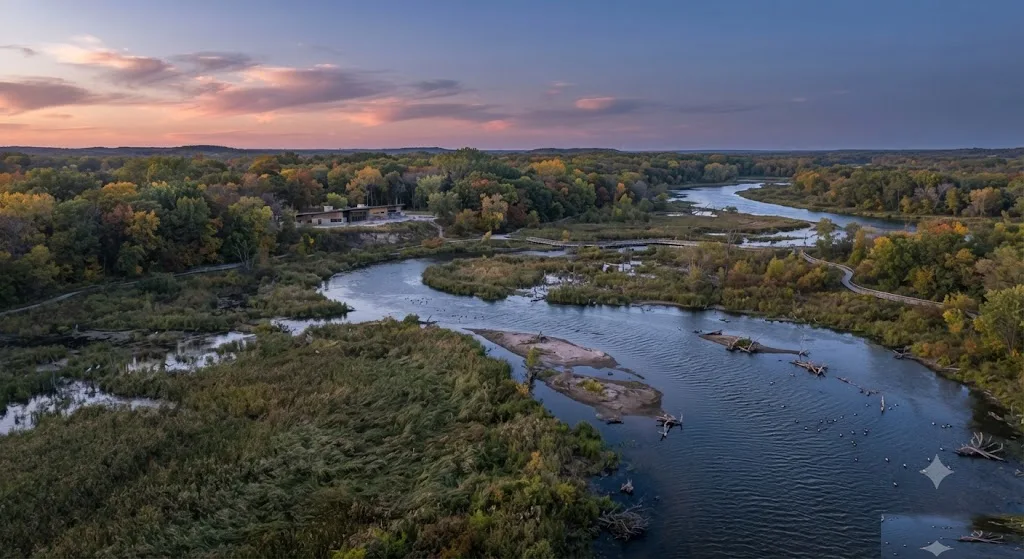
Our Minnesota Valley National Wildlife Refuge guide covers practical planning for Minnesota Valley National Wildlife Refuge Minnesota — best time to visit, getting there, and what to do on the ground.
As the Roam States editorial team, we’re committed to providing you with the most accurate and actionable travel advice for exploring the United States. The Minnesota Valley National Wildlife Refuge Minnesota is a prime example of a remarkable natural escape easily accessible from a major metropolitan area. This extensive refuge, stretching 70 miles along the Minnesota River, is a vital haven for migratory birds and diverse wildlife, offering a wealth of opportunities for outdoor enthusiasts.
Why Visit Minnesota Valley National Wildlife Refuge
We recommend visiting the Minnesota Valley National Wildlife Refuge for its incredible accessibility and the sheer diversity of its natural offerings. It's a place where you can truly disconnect and immerse yourself in nature, despite being just moments from the bustling Twin Cities. The refuge spans approximately 14,000 acres, encompassing a variety of habitats including wetlands, floodplain forests, and prairies.
This urban refuge plays a critical role in conserving wildlife habitat within the Minnesota River Valley, providing essential resting, nesting, and feeding grounds for a multitude of animal species, especially migratory birds. For visitors, this means unparalleled opportunities for birdwatching, wildlife observation, and nature photography. The commitment to free activities and events since its founding in 1976 underscores its mission to connect everyone with nature.
Who It's Best For
The Minnesota Valley National Wildlife Refuge is ideal for a wide range of visitors. It's perfect for birdwatchers and wildlife photographers seeking to capture stunning images of over 100 species of birds and other animals in their natural habitat. Hikers of all skill levels will find trails suited to their abilities, from easy, accessible paths to longer, more secluded routes.
Families with children will appreciate the refuge's kid-friendly activities, such as borrowing "Let's Go Outside" backpacks filled with exploration tools and participating in the Junior Refuge Manager program. Nature lovers, environmental educators, and anyone looking for a peaceful escape from urban life will find solace and inspiration here. Even those interested in hunting and fishing will find designated areas and opportunities, managed in accordance with state regulations.
Getting There & Parking
Understanding how to get to Minnesota Valley National Wildlife Refuge is straightforward, given its proximity to the Twin Cities metropolitan area. The refuge is comprised of multiple units stretching along the Minnesota River, but the primary access points are its two visitor centers.
Bloomington Education and Visitor Center
The Bloomington Education and Visitor Center is located at 3815 American Boulevard East, Bloomington, MN 55425. It is conveniently situated near the Minneapolis-St. Paul International Airport and the Mall of America. We recommend accessing this center by taking the 34th Avenue exit south from Interstate 494. At the stoplight on American Blvd. East, proceed east for about a quarter-mile around a bend and up a small rise to find the entrance on your right. For those using public transport, the Metro Transit Blue Line Train's American Blvd Station is a roughly 10-minute walk from the center.
Parking is available at the Bloomington Education and Visitor Center. Overflow parking is also available at nearby hotels like the Hilton MSP Airport Hotel and the Embassy Suites by Hilton Minneapolis Airport. As of July 2026, there are temporary parking capacity reductions at the Old Cedar Avenue parking lot due to ongoing boardwalk replacement.
Rapids Lake Education and Visitor Center
The Rapids Lake Education and Visitor Center is located at 15865 Rapids Lake Road, Carver, MN 55315. This center serves the western units of the refuge and is accessible by car. We advise checking the refuge's official website for specific driving directions to this location.
General Refuge Access and Parking
The lands and trails of the Minnesota Valley National Wildlife Refuge are generally open daily from 5:00 a.m. to 10:00 p.m., including federal holidays. There is no charge to visit the refuge lands or visitor centers. Parking is available at various trailheads throughout the refuge, but capacities can vary, and some areas may have reduced capacity due to ongoing projects. We always recommend checking the refuge's "Visit Us" or "Trails" page for the latest updates on closures and parking availability before your trip. For how to get to Minnesota Valley National Wildlife Refuge, public transit options are also available for some units, particularly near the Bloomington Visitor Center.
Top Things to Do
There are many things to do at Minnesota Valley National Wildlife Refuge, making it a versatile destination for nature lovers. Our team suggests prioritizing activities that allow you to fully appreciate the refuge's diverse ecosystems and abundant wildlife.
Hiking and Trail Exploration
With over 45 miles of trails, hiking is a premier activity. The trails wind through wetlands, forests, and prairies, offering varied scenery and wildlife viewing opportunities. Popular routes include the Mazomani Trail, an easy 2.8-mile loop suitable for families, and the Louisville Swamp Trailhead – Louisville Swamp Overlook loop, known for birdwatching. The River Bottoms Trail offers walking, snowshoeing, cross-country skiing, and fat-tire biking. Be aware that some trails, like the Wilkie segment of the Minnesota Valley State Trail and the Old Cedar Avenue boardwalk, may have temporary closures or capacity limitations in 2026 due to construction or maintenance.
Birdwatching and Wildlife Observation
The refuge is a critical migratory bird flyway, making birdwatching one of the most rewarding things to do at Minnesota Valley National Wildlife Refuge. Over 100 species of birds utilize the refuge's diverse habitats. We recommend bringing binoculars and a camera to fully enjoy and capture the abundant wildlife, which also includes various mammals, reptiles, and amphibians. Guided birdwatching treks are often available, providing expert insights into the local avian population.
Nature Photography
The scenic landscapes and abundant wildlife provide endless opportunities for nature photography. From expansive prairie vistas to intimate shots of birds in their natural setting, the refuge is a photographer's dream. Special photo hikes, such as flower photography walks, are sometimes offered.
Paddling and Fishing
Visitors can enjoy fishing in the ponds, lakes, and the Minnesota River within the refuge. Canoeing and boating are also permitted in certain areas, offering a unique perspective of the river valley. Free family fishing events are occasionally hosted, providing equipment and guidance.
Environmental Education and Programs
Both visitor centers offer exhibits, programs, and resources for learning about the refuge's ecology and conservation efforts. Events like Story Strolls and Nature Fest provide engaging experiences for all ages. The Bloomington Education and Visitor Center also loans out "Let's Go Outside" backpacks and snowshoes during winter months.
Hunting
Portions of the refuge are open for hunting in accordance with state and refuge-specific regulations. For 2026, hunting opportunities are expanding to include additional species like bear, badger, bobcat, and various game birds on specific units. Lead-free shot is required for migratory game bird and upland game hunting. We encourage hunters to consult the refuge's official hunt plan amendment for the most current information on permitted species, seasons, and regulations.
Best Time to Visit
The Minnesota Valley National Wildlife Refuge offers unique experiences throughout the year, making the "best" time to visit dependent on your interests.
Spring (March - May)
Spring is exceptional for birdwatching as migratory birds return. The refuge comes alive with new growth and the sounds of nesting birds. However, river valley trails can be prone to seasonal flooding during this time, so checking trail conditions is crucial.
Summer (June - August)
Summer provides lush green landscapes and warmer weather, ideal for hiking, biking, and paddling. This is a great time for family activities and educational programs. Be prepared for biting insects and ensure you bring bug spray. As of July 2026, there are some trail closures and construction activities to be aware of, particularly the Old Cedar Avenue boardwalk replacement.
Fall (September - November)
Fall brings stunning foliage changes and is another excellent season for bird migration. Cooler temperatures make for comfortable hiking, and the vibrant colors offer fantastic photography opportunities. Hunting seasons also begin in the fall.
Winter (December - February)
Winter transforms the refuge into a serene, snow-covered landscape. Activities like snowshoeing and cross-country skiing are popular, though trails are not groomed. The Bloomington Education and Visitor Center loans snowshoes for free once there are six inches of snow. It's a peaceful time to observe animal tracks in the snow.
Regardless of the season, we always advise checking the refuge's official website or calling the visitor centers for the most up-to-date information on trail conditions, closures, and program schedules before your visit.
Where to Stay Nearby
While there is no Minnesota Valley National Wildlife Refuge lodging directly within the refuge itself, its urban setting means there are numerous accommodation options in nearby communities. We recommend focusing your search on Bloomington, Minneapolis, and St. Paul for convenient access.
Hotels in Bloomington
Bloomington is the most convenient option for Minnesota Valley National Wildlife Refuge lodging, especially if you plan to visit the Bloomington Education and Visitor Center. It offers a wide array of hotels, from budget-friendly to upscale, many of which are located near the Mall of America. Options include the Cambria Hotel Bloomington Mall of America Minneapolis Airport, DoubleTree by Hilton Minneapolis Airport, Embassy Suites by Hilton Minneapolis Bloomington Edina, and Country Inn & Suites by Radisson, Bloomington at Mall of America. These hotels often provide amenities like fitness centers, free parking, and easy access to dining and shopping.
Hotels in Minneapolis and St. Paul
For those who prefer a city experience with access to more cultural attractions, downtown Minneapolis and St. Paul offer excellent hotel choices. While a bit further, they are still within a reasonable driving distance. Examples include the Embassy Suites by Hilton Minneapolis Downtown and The Marquette Hotel, Curio Collection by Hilton in Minneapolis. These cities provide a broader range of dining, entertainment, and cultural experiences, such as the Cathedral of Saint Paul or the Minneapolis Sculpture Garden.
Camping Near the Refuge
Direct camping within the Minnesota Valley National Wildlife Refuge is not available. For those seeking a camping experience, we recommend exploring state parks and private campgrounds further afield in Minnesota. You can use the Explore Minnesota website or the Minnesota DNR's ReserveMN system to find and book campsites in nearby state parks. Remember that Minnesota State Parks require a vehicle permit, which can be purchased online or in person.
When considering Minnesota Valley National Wildlife Refuge lodging, we suggest booking in advance, especially during peak travel seasons, to secure your preferred accommodation.
Sample 2-Day Itinerary
To help you maximize your visit, our team has crafted a sample 2-day itinerary for the Minnesota Valley National Wildlife Refuge, focusing on its highlights and nearby attractions.
Day 1: Immersion in Bloomington's Refuge Units
- Morning (9:00 AM - 12:00 PM): Bloomington Education and Visitor Center & Long Meadow Lake Unit. Start your day at the Bloomington Education and Visitor Center. Explore the indoor exhibits, learn about the refuge's history and wildlife, and pick up a trail map. Consider borrowing a "Let's Go Outside" backpack if you're with kids. Then, head out to the Long Meadow Lake Unit. Walk a portion of the Long Meadow Lake Trail, offering views of the lake and opportunities for birdwatching.
- Lunch (12:00 PM - 1:30 PM): Local Eatery in Bloomington. Enjoy lunch at one of the many restaurants in Bloomington, perhaps near the Mall of America.
- Afternoon (1:30 PM - 5:00 PM): Old Cedar Avenue Bridge & Black Dog Lake Unit. Visit the historic Old Cedar Avenue Bridge area. While the boardwalk might be under replacement in July 2026, the surrounding trails still offer excellent birding. Explore the trails around the Black Dog Lake Unit, known for waterfowl observation.
- Evening: Dinner & Relaxation. Enjoy dinner in Bloomington. If time and energy permit, you could explore the Mall of America, which is very close to the refuge's Bloomington units.
Day 2: Western Units & Local Exploration
- Morning (9:00 AM - 12:00 PM): Rapids Lake Unit & Visitor Center. Drive to the Rapids Lake Education and Visitor Center in Carver. Explore this center and then embark on one of the hiking trails in the Rapids Lake Unit. These trails offer rewarding views of the Minnesota River and the Carver Rapids. Keep an eye out for goats used in habitat restoration in this unit during summer.
- Lunch (12:00 PM - 1:30 PM): Picnic or Local Cafe. Pack a picnic to enjoy at a scenic spot within the Rapids Lake Unit, or find a local cafe in Carver or Chaska.
- Afternoon (1:30 PM - 5:00 PM): Louisville Swamp Unit or Nearby Attraction. Explore the Louisville Swamp Unit, known for its extensive wetlands and birdwatching opportunities. The Louisville Swamp Trailhead – Louisville Swamp Overlook loop is a good option here. Alternatively, depending on your interests, you could visit a nearby Minnesota destination like the Chain of Lakes in Minneapolis or plan a future adventure to the Boundary Waters Canoe Area Wilderness.
- Evening: Departure or Extended Stay. Head home or extend your stay to explore more of what Minnesota has to offer.
Is It Worth Visiting?
From our perspective as the Roam States editorial team, the question "is Minnesota Valley National Wildlife Refuge worth visiting?" can be answered with a resounding yes. This refuge offers an exceptional blend of natural beauty, ecological significance, and accessibility that is hard to find elsewhere, especially so close to a major urban center. Its dedication to preserving vital habitat for migratory birds and other wildlife, coupled with its commitment to providing free recreational and educational opportunities, makes it a truly valuable destination.
Whether you're an avid birder, a casual hiker, a family seeking outdoor adventure, or simply looking for a peaceful retreat into nature, the Minnesota Valley National Wildlife Refuge delivers. The extensive network of trails, the diverse wildlife, and the engaging visitor centers ensure there are always new things to discover. We firmly believe that a visit here is a rewarding experience that connects you with the natural world and offers a refreshing contrast to the urban landscape. Therefore, is Minnesota Valley National Wildlife Refuge worth visiting? Absolutely.
Last updated: 2026-07-14 by the Roam States team.