National Parks & Nature

Grand Portage State Park Travel Guide

, Minnesota

By Visit America Team · Updated July 2026 · 39 min read

Jump to section

Grand Portage State Park Travel Guide — Minnesota

Welcome to the ultimate guide for Grand Portage State Park Minnesota, where the roar of the state's highest waterfall calls to adventurers and nature lovers alike. Our team at Visit America has thoroughly explored this unique destination, located at Minnesota's rugged northeastern tip on the Canadian border, to bring you confident, specific, and genuinely helpful insights. We cut through the generic fluff to deliver the essential details you need to plan an unforgettable trip to one of the North Shore’s most impressive natural wonders.

Our Expert Verdict

Grand Portage State Park stands out not only for its magnificent High Falls, Minnesota's tallest waterfall, but also for its exceptional accessibility and rich cultural heritage. Unlike many state parks, vehicle permits are not required, making it an accessible and budget-friendly stop. We found the paved High Falls Trail to be a truly rewarding experience for all ages and abilities, offering breathtaking views with minimal effort. While camping isn't available within the park, the nearby options and the immersive Ojibwe exhibits at the visitor center provide a well-rounded experience that makes the journey to this remote corner of Minnesota absolutely worthwhile.

Why Visit Grand Portage State Park

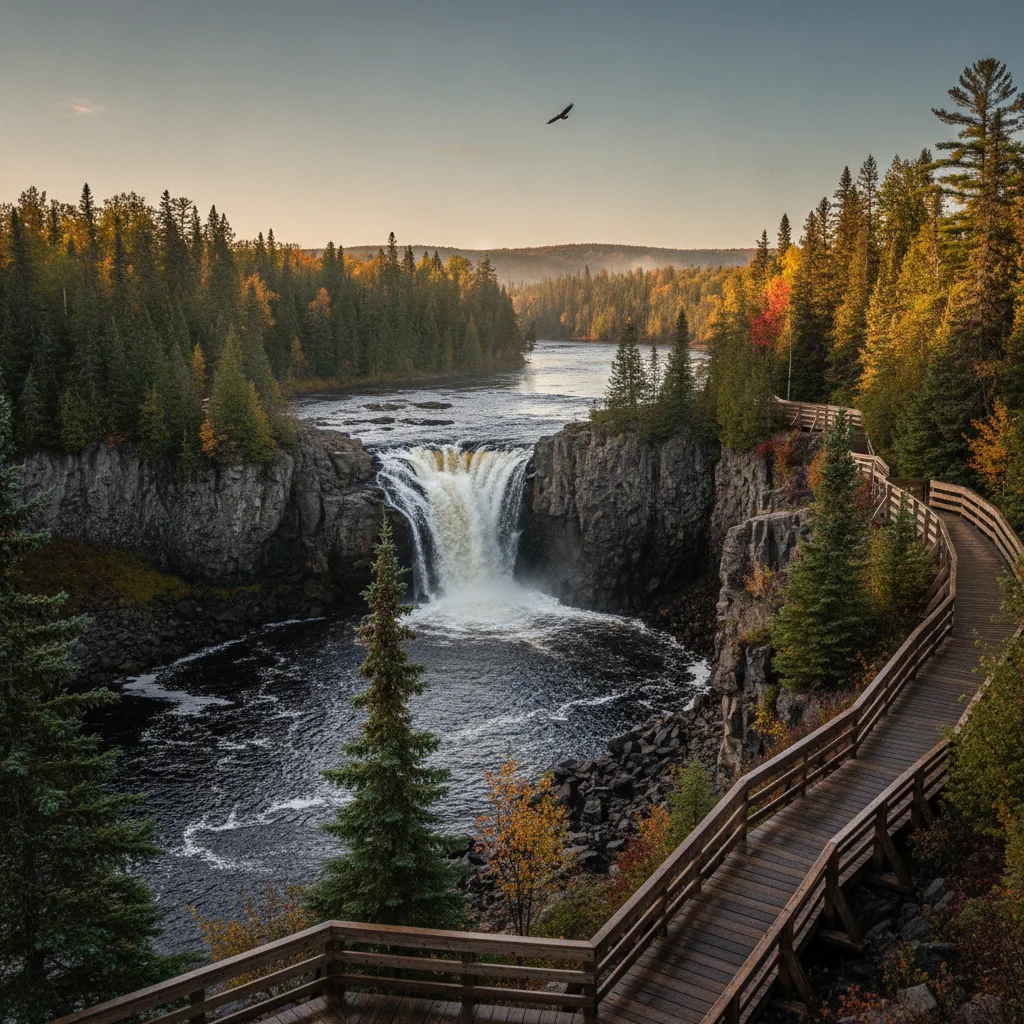
Our team firmly believes that Grand Portage State Park offers a singular experience unlike any other in the state. The primary draw, without a doubt, is the spectacular High Falls of the Pigeon River, which plunges an impressive 120 feet (37 meters) over a basalt cliff. This isn't just Minnesota's highest waterfall; it's a powerful natural spectacle that forms a dramatic part of the U.S.-Canada border, allowing you to literally stand at the edge of two nations.

Beyond the sheer grandeur of the falls, the park offers a deep dive into the rich history and culture of the Grand Portage Band of Lake Superior Chippewa (Ojibwe), who co-manage this land with the state of Minnesota. The visitor center, staffed by tribal members, provides engaging exhibits that interpret Ojibwe life and the area's significant role in the historic fur trade. This unique partnership creates a profound sense of place and offers visitors a chance to connect with centuries of heritage. It’s a place where natural beauty meets cultural depth, making it a compelling destination for anyone exploring the North Shore.

Who It's Best For

Grand Portage State Park caters to a surprisingly broad audience, making it an ideal stop for many travelers.

  • **Families with Young Children:** The paved, accessible High Falls Trail is perfect for strollers and little legs, ensuring everyone can experience the main attraction without difficulty. The visitor center offers educational exhibits that can captivate young minds.
  • **Accessibility Seekers:** With a mostly paved boardwalk trail to High Falls and at least one wheelchair-accessible viewing platform, the park is one of Minnesota's most accessible state parks.
  • **Waterfall Enthusiasts:** If chasing waterfalls is your passion, witnessing Minnesota's tallest is a non-negotiable experience. The sheer power and beauty of High Falls are truly mesmerizing.
  • **History and Culture Buffs:** The park's interpretive displays and its connection to the Grand Portage Band of Ojibwe offer a unique educational opportunity to learn about Indigenous culture and the fur trade era.
  • **Day Trippers and Road Trippers:** As a day-use park with no vehicle permit required, it's an excellent, free stop along Highway 61, whether you're heading further north or exploring the North Shore.
  • **Hikers Seeking Variety:** While the High Falls Trail is easy, the more rugged Middle Falls Trail offers a challenging wilderness experience for those looking for a longer, more strenuous hike.

However, it's important to note that the park is primarily a day-use area and does not offer overnight camping within its boundaries. Those seeking extensive backcountry camping directly within the park will need to look to nearby state forests or other destinations like the Boundary Waters Canoe Area Wilderness.

Getting There & Parking

Understanding how to get to Grand Portage State Park is straightforward, though it requires a journey to Minnesota's far northeastern corner. The park is conveniently located directly off U.S. Highway 61, which runs along the scenic North Shore of Lake Superior.

Our team recommends taking Highway 61 north from Duluth. The drive itself is incredibly picturesque, offering stunning views of Lake Superior. Grand Portage State Park is situated just before the U.S. Customs border checkpoint with Canada, making it the last stop before crossing the border. The address for your GPS is 9393 E MN-61, Grand Portage, MN 55605.

Upon arrival, you'll find a well-maintained, paved parking lot. One of the most appealing aspects of Grand Portage State Park is that, unlike most Minnesota State Parks, a vehicle permit is NOT required for entry. This means parking is free, making it an accessible and budget-friendly destination for all visitors in 2026. The park is open daily from 8 AM to 10 PM. The visitor center, which also serves as a highway rest area, is typically open from 9 AM to 5 PM daily, though hours may vary due to staffing.

Top Things to Do

When planning your visit, you'll find that the primary things to do at Grand Portage State Park revolve around its natural beauty and rich cultural narrative. Our team encourages you to immerse yourself in both aspects for a truly fulfilling experience.

  • Witness High Falls: This is, without question, the star attraction and one of the quintessential things to do at Grand Portage State Park. A leisurely 0.5-mile (0.8 km) paved trail and boardwalk leads you to the viewing platforms of High Falls, Minnesota’s tallest waterfall. The powerful cascade of the Pigeon River, forming the international border, is a breathtaking sight year-round. There are three viewing decks, with at least one offering wheelchair accessibility.
  • Explore the Visitor Center: Don't just rush to the falls! The park's welcome center is an integral part of the experience. It houses fascinating exhibits on Ojibwe culture and Voyageur history, providing context to the land you're exploring. It also serves as a convenient rest area with public washrooms and a gift shop.
  • Hike to Middle Falls: For those seeking a more strenuous adventure, the Middle Falls Trail offers a rugged 3.5-mile (5.6 km) loop or 4.5-mile (7.3 km) round trip hike from the visitor center. This trail provides a wilderness experience with elevation changes and views of Lake Superior and Canada.
  • Picnic with a View: Several picnic areas are available within the park, offering a chance to relax and enjoy the natural surroundings. It’s a perfect way to refuel after your hike.
  • Birdwatching and Photography: The diverse ecosystem along the Pigeon River and Lake Superior makes Grand Portage State Park an excellent spot for birdwatching. The dramatic scenery, especially High Falls, also provides incredible photographic opportunities, particularly when rainbows form in the mist.

These things to do at Grand Portage State Park offer a blend of natural wonder, cultural immersion, and outdoor activity, ensuring a memorable visit for everyone.

Grand Portage State Park hiking trails

The Grand Portage State Park hiking trails are a highlight for many visitors, offering both easy access to stunning views and more challenging wilderness treks. Our team has found that the park effectively caters to various fitness levels, ensuring that everyone can enjoy the natural beauty.

The most popular of the Grand Portage State Park hiking trails is the **High Falls Trail**. This easy, mostly paved boardwalk trail is approximately 0.5 miles (0.8 km) one-way, or a 1 to 1.5-mile round trip, leading directly to the magnificent High Falls. It's remarkably accessible, suitable for strollers and many wheelchair users, though some of the three viewing platforms do involve stairs. The sounds of the roaring waterfall grow louder as you approach, building anticipation for the spectacular 120-foot drop. Allow about 30-40 minutes for the round trip, including time for photos.

For those seeking a more adventurous experience, the **Middle Falls Trail** is another of the prominent Grand Portage State Park hiking trails. This is a moderately strenuous, 4.5-mile (7.3 km) round trip hike from the visitor center, or a 3.5-mile (5.6 km) loop. It's a rugged, unpaved trail with significant elevation changes (up to 700 feet) and can be muddy, especially after rain. This trail is not considered family-friendly or accessible. It typically takes at least 3 hours to complete and offers distant views of Lake Superior and Canada from higher ridges. We recommend wearing sturdy hiking boots and being prepared for a more challenging, yet rewarding, wilderness immersion.

Additionally, a short 0.2-mile (0.3 km) path from the park office leads through the picnic area to a historic marker commemorating the Webster-Ashburton Treaty, offering a brief, easy walk with historical significance.

Best Time to Visit

Our team has found that Grand Portage State Park offers something unique in every season, making the "best" time to visit largely dependent on your preferences.

  • Spring (April-May): The waterfalls are at their most powerful in spring due to snowmelt, creating a truly thundering spectacle. While trails can be muddy, the sheer volume of water over High Falls is impressive.
  • Summer (June-August): This is arguably the most popular time to visit, with pleasant temperatures (50-70°F) ideal for hiking and exploring. The visitor center often has extended hours, and all trails are typically clear. It's perfect for families and those who prefer warmer weather.
  • Fall (September-October): The North Shore comes alive with vibrant autumn colors, and Grand Portage is no exception. The sugar maples, quaking aspens, and conifers create a stunning backdrop for the falls. Cooler temperatures make for comfortable hiking, and the crowds begin to thin. It's also an excellent time for wildlife viewing.
  • Winter (November-March): For the adventurous and those seeking solitude, winter offers a magical, serene experience. The falls can partially freeze, creating dramatic ice formations. The park offers easy snowshoe routes to the falls. Be prepared for cold temperatures (0-25°F) and potential snow and ice on trails, which can impact accessibility.

Given that Grand Portage State Park is open daily from 8 AM to 10 PM year-round, you have ample opportunity to experience its beauty in any season. The visitor center is also open year-round, generally from 9 AM to 5 PM.

Where to Stay Nearby

As Grand Portage State Park is a day-use-only facility, our team wants to clarify that there is no overnight camping available within the park itself. However, several excellent lodging and camping options are available in the surrounding area, catering to various preferences and budgets.

For those seeking traditional accommodations, the **Grand Portage Lodge & Casino** is a prominent option located conveniently close to the park. It offers renovated rooms, dining, and entertainment. Other nearby lodging includes various cabins and vacation rentals in areas like Hovland and Grand Marais, which is about 45 minutes south. These often provide a cozy Northwoods experience, sometimes with Lake Superior views, saunas, and proximity to other recreational opportunities. You can find a range of options from rustic cabins to more modern retreats.

If you're looking for Grand Portage State Park camping experiences, you'll need to venture into the nearby Grand Portage State Forest or other state parks.

  • Grand Portage RV Park: Located just 7 miles south of Grand Portage State Park, this is one of the closest camping options. It offers full hookup RV sites, some with Lake Superior views, and also accommodates tent camping. In 2026, RV sites start around $40-$45 per night, and tent sites are $20 for the first tent, with an additional fee for extra tents.
  • Grand Portage State Forest Campgrounds: For a more rustic experience, the Grand Portage State Forest offers three smaller campgrounds: Devilfish Lake, Esther Lake, and McFarland Lake. These typically have five or fewer sites and are ideal for those seeking peace and quiet. These campgrounds require a fee, which can be paid in advance or on the same day.
  • Judge C.R. Magney State Park Campground: Located south of Grand Portage, this state park offers camping facilities along the Brule River, with good hiking trails nearby.
  • Grand Marais Campground & Marina: About 40 miles south, Grand Marais offers a larger campground with 300 diverse campsites along Lake Superior, providing more amenities and proximity to the town's shops and restaurants.

When planning your Grand Portage State Park camping or lodging, we recommend booking in advance, especially during peak summer and fall foliage seasons.

Sample 2-Day Itinerary

To help you make the most of your visit to this spectacular region, our team has crafted a sample 2-day itinerary focusing on Grand Portage State Park and its surrounding attractions. This plan allows for a blend of natural exploration, cultural immersion, and North Shore charm.

Day 1: Waterfalls, History & Border Views

  • Morning (8:00 AM - 12:00 PM): Grand Portage State Park Immersion
    • Arrive early at Grand Portage State Park. Head straight to the visitor center, open from 9 AM to 5 PM, to gather maps and learn about the park's unique Ojibwe heritage.
    • Embark on the High Falls Trail, an easy 1 to 1.5-mile round-trip paved walk, to witness Minnesota's tallest waterfall. Take your time at the viewing platforms, soaking in the powerful cascade and the unique international border setting.
    • If time and energy permit, and you're seeking a more rugged hike, consider starting the Middle Falls Trail. Be prepared for a challenging 4.5-mile round trip that takes at least 3 hours.
  • Lunch (12:00 PM - 1:00 PM): Picnic or Local Fare
    • Enjoy a packed lunch at one of the park's picnic areas, or grab a bite at the Grand Portage Lodge & Casino's Island View Dining Room, offering views of Lake Superior.
  • Afternoon (1:00 PM - 5:00 PM): Grand Portage National Monument
    • Just a few miles south on Highway 61, visit Grand Portage National Monument. Explore the reconstructed fur trade depot and learn about the Voyageurs and the Ojibwe people's pivotal role in this history. The Heritage Center is open daily from 9 AM to 5 PM in summer 2026, with the historic site open 9:30 AM to 4:30 PM.
    • Consider hiking a portion of the historic Grand Portage trail, an 8.5-mile path that bypasses the falls and rapids, used by early traders.
  • Evening: Dinner & Relaxation
    • Dine at the Grand Portage Lodge & Casino, or drive south to Grand Marais for a wider selection of restaurants.
    • Check into your chosen accommodation, whether it's a nearby cabin, RV park, or a hotel in Grand Marais.

Day 2: Lake Superior & North Shore Exploration

  • Morning (9:00 AM - 1:00 PM): Mount Josephine & Scenic Overlooks
    • Begin your day with a hike up Mount Josephine for breathtaking panoramic views of Lake Superior, Grand Portage Bay, Isle Royale, and the Susie Islands. This 2.5-mile hike is rewarding.
    • Alternatively, for dramatic views without the strenuous hike, stop at the Wayswaugoing Bay Overlook wayside rest along Highway 61.
    • Consider a day trip to Isle Royale National Park, located 22 miles offshore, accessible by ferry from Grand Portage Marina.
  • Lunch (1:00 PM - 2:00 PM): North Shore Eats
    • Grab lunch in Grand Marais, enjoying the vibrant arts community and harbor views.
  • Afternoon (2:00 PM - 5:00 PM): Explore Grand Marais or a Nearby State Park
    • Spend the afternoon exploring the charming town of Grand Marais, browsing its unique shops and art galleries.
    • Alternatively, head south along Highway 61 to visit another iconic Minnesota state park like Split Rock Lighthouse or Gooseberry Falls for more waterfall views and scenic trails.
  • Evening: Farewell Dinner
    • Enjoy a final North Shore dinner, perhaps at a lakeside restaurant, reflecting on your Grand Portage adventures.

Grand Portage State Park camping

Our team understands that for many outdoor enthusiasts, camping is an integral part of a state park experience. However, it's crucial to note that Grand Portage State Park itself is a **day-use-only park and does not offer overnight camping facilities within its boundaries**. This is a key distinction from many other Minnesota state parks.

Despite the lack of direct Grand Portage State Park camping, there are several excellent options in the immediate vicinity and within a reasonable driving distance for those who wish to stay overnight in their RVs or tents.

  • Grand Portage RV Park: Located approximately 7 miles south of Grand Portage State Park, this is the closest dedicated camping facility. It offers RV sites with full hookups, some boasting scenic views of Lake Superior. Tent camping is also available. In 2026, daily rates for RVs range from $40-$45, while tent sites are $20 for the first tent. This is a convenient option for those who want to be as close to the park as possible.
  • Grand Portage State Forest Campgrounds: For a more rustic and secluded Grand Portage State Park camping experience, the surrounding Grand Portage State Forest provides three small, primitive campgrounds: Devilfish Lake Campground, Esther Lake Campground, and McFarland Lake Campground. Each typically has five or fewer sites, offering a quiet escape. These sites are suitable for tents and some RVs, and fees are required, which can be paid in advance or on the same day.
  • Judge C.R. Magney State Park Campground: Situated south of Grand Portage, this state park offers traditional campsites along the Brule River. It's a popular choice for those looking for hiking opportunities beyond Grand Portage State Park.
  • Grand Marais Campground & Marina: About 40 miles south of Grand Portage, in the charming town of Grand Marais, this larger campground offers a wide array of campsites for both RVs and tents, along with marina services. It provides more amenities and is a great base for exploring the central North Shore.
  • Dispersed Camping: Within the larger Superior National Forest and Grand Portage State Forest, dispersed camping may be permitted in designated areas, offering a true wilderness experience. Always check local regulations and obtain any necessary permits before attempting dispersed camping.

While you won't be able to pitch a tent directly by High Falls, these nearby options ensure that you can still enjoy an overnight stay in the beautiful Grand Portage area.

Is It Worth Visiting?

Our Visit America team unequivocally states: yes, Grand Portage State Park is absolutely worth visiting. We often encounter the question, "is Grand Portage State Park worth visiting?" given its somewhat remote location at the very tip of Minnesota's Arrowhead. Our answer is a resounding yes, for several compelling reasons.

First and foremost, the park is home to High Falls, Minnesota's tallest waterfall, a truly magnificent natural wonder that commands attention. The sheer power of the 120-foot cascade, especially during high water, is an awe-inspiring sight that alone makes the journey worthwhile. The fact that the primary trail to these falls is paved and highly accessible means that nearly everyone, regardless of age or mobility, can experience this spectacle. This inclusivity is a significant factor in our positive assessment of whether Grand Portage State Park is worth visiting.

Beyond the falls, the park offers a unique cultural experience through its partnership with the Grand Portage Band of Ojibwe. The visitor center's exhibits provide valuable insights into Indigenous history and the fur trade, adding a rich layer of understanding to your visit. This blend of natural beauty and cultural education sets it apart. Furthermore, the absence of an entrance fee for the state park is a notable bonus, making it an accessible and budget-friendly destination.

While it is a day-use-only park, the nearby camping and lodging options, combined with other attractions like Grand Portage National Monument and the opportunity for day trips to Voyageurs National Park or even Isle Royale National Park, mean you can easily build a multi-day adventure around your visit. For anyone exploring the North Shore or seeking Minnesota's most impressive waterfall, we firmly believe that Grand Portage State Park offers a deeply rewarding and memorable experience that makes it well worth the trip.

Frequently Asked Questions About Grand Portage State Park Minnesota

things to do in Grand Portage State Park

The main things to do in Grand Portage State Park include hiking the easy, paved High Falls Trail to see Minnesota's tallest waterfall, exploring the cultural exhibits at the visitor center about Ojibwe history and the fur trade, and for more adventurous hikers, tackling the rugged Middle Falls Trail. The park also offers opportunities for picnicking, birdwatching, and photography.

Grand Portage State Park with kids

Grand Portage State Park is excellent for visiting with kids! The High Falls Trail is a short, easy, and mostly paved boardwalk, making it perfect for strollers and young children. Kids will be captivated by the towering waterfall, and the visitor center offers engaging exhibits on Ojibwe culture and Voyageur history that can be very educational and fun for families.

Grand Portage State Park tips

Our top Grand Portage State Park tips include: arrive early to avoid crowds, especially during peak season; wear sturdy shoes if you plan to hike the Middle Falls Trail, as it can be rugged and muddy; bring bug spray in warmer months; and remember to check out the visitor center for its excellent cultural exhibits and clean restrooms. Since cell reception can be spotty, download any maps or information you need beforehand.

Grand Portage State Park parking

Grand Portage State Park offers a large, paved parking lot conveniently located off Highway 61. Importantly, no Minnesota State Park vehicle permit is required for entry, meaning parking is free for all visitors in 2026. The park is also designated as a highway rest stop, making it an easy and accessible stop for travelers. [cite: 8, 1

Grand Portage State Park Travel Guide — Minnesota

Welcome to the ultimate guide for Grand Portage State Park Minnesota, where the roar of the state's highest waterfall calls to adventurers and nature lovers alike. Our team at Visit America has thoroughly explored this unique destination, located at Minnesota's rugged northeastern tip on the Canadian border, to bring you confident, specific, and genuinely helpful insights. We cut through the generic fluff to deliver the essential details you need to plan an unforgettable trip to one of the North Shore’s most impressive natural wonders.

Our Expert Verdict

Grand Portage State Park stands out not only for its magnificent High Falls, Minnesota's tallest waterfall, but also for its exceptional accessibility and rich cultural heritage. Unlike many state parks, vehicle permits are not required, making it an accessible and budget-friendly stop. We found the paved High Falls Trail to be a truly rewarding experience for all ages and abilities, offering breathtaking views with minimal effort. While camping isn't available within the park, the nearby options and the immersive Ojibwe exhibits at the visitor center provide a well-rounded experience that makes the journey to this remote corner of Minnesota absolutely worthwhile.

Why Visit Grand Portage State Park

Our team firmly believes that Grand Portage State Park offers a singular experience unlike any other in the state. The primary draw, without a doubt, is the spectacular High Falls of the Pigeon River, which plunges an impressive 120 feet (37 meters) over a basalt cliff. This isn't just Minnesota's highest waterfall; it's a powerful natural spectacle that forms a dramatic part of the U.S.-Canada border, allowing you to literally stand at the edge of two nations. [cite: 5, 8, 9, 10, 12]

Beyond the sheer grandeur of the falls, the park offers a deep dive into the rich history and culture of the Grand Portage Band of Lake Superior Chippewa (Ojibwe), who co-manage this land with the state of Minnesota. The visitor center, staffed by tribal members, provides engaging exhibits that interpret Ojibwe life and the area's significant role in the historic fur trade. [cite: 3, 5, 8, 9, 11, 12, 13] This unique partnership creates a profound sense of place and offers visitors a chance to connect with centuries of heritage. It’s a place where natural beauty meets cultural depth, making it a compelling destination for anyone exploring the North Shore.

Who It's Best For

Grand Portage State Park caters to a surprisingly broad audience, making it an ideal stop for many travelers.

  • **Families with Young Children:** The paved, accessible High Falls Trail is perfect for strollers and little legs, ensuring everyone can experience the main attraction without difficulty. The visitor center offers educational exhibits that can captivate young minds. [cite: 3, 14, 18]
  • **Accessibility Seekers:** With a mostly paved boardwalk trail to High Falls and at least one wheelchair-accessible viewing platform, the park is one of Minnesota's most accessible state parks. [cite: 3, 4, 8, 9, 14, 15, 18, 30]
  • **Waterfall Enthusiasts:** If chasing waterfalls is your passion, witnessing Minnesota's tallest is a non-negotiable experience. The sheer power and beauty of High Falls are truly mesmerizing.
  • **History and Culture Buffs:** The park's interpretive displays and its connection to the Grand Portage Band of Ojibwe offer a unique educational opportunity to learn about Indigenous culture and the fur trade era. [cite: 3, 5, 8, 9, 11, 12, 13]
  • **Day Trippers and Road Trippers:** As a day-use park with no vehicle permit required, it's an excellent, free stop along Highway 61, whether you're heading further north or exploring the North Shore. [cite: 3, 8, 10, 25]
  • **Hikers Seeking Variety:** While the High Falls Trail is easy, the more rugged Middle Falls Trail offers a challenging wilderness experience for those looking for a longer, more strenuous hike.

However, it's important to note that the park is primarily a day-use area and does not offer overnight camping within its boundaries. [cite: 4, 8, 27] Those seeking extensive backcountry camping directly within the park will need to look to nearby state forests or other destinations like the Boundary Waters Canoe Area Wilderness.

Getting There & Parking

Understanding how to get to Grand Portage State Park is straightforward, though it requires a journey to Minnesota's far northeastern corner. The park is conveniently located directly off U.S. Highway 61, which runs along the scenic North Shore of Lake Superior.

Our team recommends taking Highway 61 north from Duluth. The drive itself is incredibly picturesque, offering stunning views of Lake Superior. Grand Portage State Park is situated just before the U.S. Customs border checkpoint with Canada, making it the last stop before crossing the border. [cite: 3, 14, 24] The address for your GPS is 9393 E MN-61, Grand Portage, MN 55605. [cite: 3, 4, 6]

Upon arrival, you'll find a well-maintained, paved parking lot. One of the most appealing aspects of Grand Portage State Park is that, unlike most Minnesota State Parks, a vehicle permit is NOT required for entry. This means parking is free, making it an accessible and budget-friendly destination for all visitors in 2026. [cite: 3, 8, 10, 25] The park is open daily from 8 AM to 10 PM. [cite: 3, 13] The visitor center, which also serves as a highway rest area, is typically open from 9 AM to 5 PM daily, though hours may vary due to staffing. [cite: 13, 19]

Top Things to Do

When planning your visit, you'll find that the primary things to do at Grand Portage State Park revolve around its natural beauty and rich cultural narrative. Our team encourages you to immerse yourself in both aspects for a truly fulfilling experience.

  • Witness High Falls: This is, without question, the star attraction and one of the quintessential things to do at Grand Portage State Park. A leisurely 0.5-mile (0.8 km) paved trail and boardwalk leads you to the viewing platforms of High Falls, Minnesota’s tallest waterfall. [cite: 4, 8, 9, 14] The powerful cascade of the Pigeon River, forming the international border, is a breathtaking sight year-round. There are three viewing decks, with at least one offering wheelchair accessibility. [cite: 3, 8, 9, 18]
  • Explore the Visitor Center: Don't just rush to the falls! The park's welcome center is an integral part of the experience. It houses fascinating exhibits on Ojibwe culture and Voyageur history, providing context to the land you're exploring. [cite: 3, 5, 8, 9, 11, 13] It also serves as a convenient rest area with public washrooms and a gift shop. [cite: 6, 7, 11, 19]
  • Hike to Middle Falls: For those seeking a more strenuous adventure, the Middle Falls Trail offers a rugged 3.5-mile (5.6 km) loop or 4.5-mile (7.3 km) round trip hike from the visitor center. [cite: 3, 4, 8, 9, 13] This trail provides a wilderness experience with elevation changes and views of Lake Superior and Canada. [cite: 4, 9, 17]
  • Picnic with a View: Several picnic areas are available within the park, offering a chance to relax and enjoy the natural surroundings. It’s a perfect way to refuel after your hike. [cite: 4, 6]
  • Birdwatching and Photography: The diverse ecosystem along the Pigeon River and Lake Superior makes Grand Portage State Park an excellent spot for birdwatching. The dramatic scenery, especially High Falls, also provides incredible photographic opportunities, particularly when rainbows form in the mist. [cite: 9]

These things to do at Grand Portage State Park offer a blend of natural wonder, cultural immersion, and outdoor activity, ensuring a memorable visit for everyone.

Grand Portage State Park hiking trails

The Grand Portage State Park hiking trails are a highlight for many visitors, offering both easy access to stunning views and more challenging wilderness treks. Our team has found that the park effectively caters to various fitness levels, ensuring that everyone can enjoy the natural beauty.

The most popular of the Grand Portage State Park hiking trails is the **High Falls Trail**. This easy, mostly paved boardwalk trail is approximately 0.5 miles (0.8 km) one-way, or a 1 to 1.5-mile round trip, leading directly to the magnificent High Falls. [cite: 3, 4, 8, 9, 14] It's remarkably accessible, suitable for strollers and many wheelchair users, though some of the three viewing platforms do involve stairs. [cite: 3, 8, 9, 14, 18] The sounds of the roaring waterfall grow louder as you approach, building anticipation for the spectacular 120-foot drop. [cite: 9] Allow about 30-40 minutes for the round trip, including time for photos. [cite: 9]

For those seeking a more adventurous experience, the **Middle Falls Trail** is another of the prominent Grand Portage State Park hiking trails. This is a moderately strenuous, 4.5-mile (7.3 km) round trip hike from the visitor center, or a 3.5-mile (5.6 km) loop. [cite: 3, 4, 8, 9, 13] It's a rugged, unpaved trail with significant elevation changes (up to 700 feet) and can be muddy, especially after rain. [cite: 13, 14, 17] This trail is not considered family-friendly or accessible. [cite: 17] It typically takes at least 3 hours to complete and offers distant views of Lake Superior and Canada from higher ridges. [cite: 9, 13, 17] We recommend wearing sturdy hiking boots and being prepared for a more challenging, yet rewarding, wilderness immersion.

Additionally, a short 0.2-mile (0.3 km) path from the park office leads through the picnic area to a historic marker commemorating the Webster-Ashburton Treaty, offering a brief, easy walk with historical significance. [cite: 5]

Best Time to Visit

Our team has found that Grand Portage State Park offers something unique in every season, making the "best" time to visit largely dependent on your preferences.

  • Spring (April-May): The waterfalls are at their most powerful in spring due to snowmelt, creating a truly thundering spectacle. [cite: 10] While trails can be muddy, the sheer volume of water over High Falls is impressive.
  • Summer (June-August): This is arguably the most popular time to visit, with pleasant temperatures (50-70°F) ideal for hiking and exploring. [cite: 24] The visitor center often has extended hours, and all trails are typically clear. It's perfect for families and those who prefer warmer weather.
  • Fall (September-October): The North Shore comes alive with vibrant autumn colors, and Grand Portage is no exception. The sugar maples, quaking aspens, and conifers create a stunning backdrop for the falls. [cite: 25] Cooler temperatures make for comfortable hiking, and the crowds begin to thin. It's also an excellent time for wildlife viewing.
  • Winter (November-March): For the adventurous and those seeking solitude, winter offers a magical, serene experience. The falls can partially freeze, creating dramatic ice formations. The park offers easy snowshoe routes to the falls. [cite: 3, 14] Be prepared for cold temperatures (0-25°F) and potential snow and ice on trails, which can impact accessibility. [cite: 14, 24]

Given that Grand Portage State Park is open daily from 8 AM to 10 PM year-round, you have ample opportunity to experience its beauty in any season. [cite: 3, 13] The visitor center is also open year-round, generally from 9 AM to 5 PM. [cite: 19]

Where to Stay Nearby

As Grand Portage State Park is a day-use-only facility, our team wants to clarify that there is no overnight camping available within the park itself. [cite: 4, 8, 27] However, several excellent lodging and camping options are available in the surrounding area, catering to various preferences and budgets.

For those seeking traditional accommodations, the **Grand Portage Lodge & Casino** is a prominent option located conveniently close to the park. [cite: 28] It offers renovated rooms, dining, and entertainment. Other nearby lodging includes various cabins and vacation rentals in areas like Hovland and Grand Marais, which is about 45 minutes south. These often provide a cozy Northwoods experience, sometimes with Lake Superior views, saunas, and proximity to other recreational opportunities. [cite: 16, 23] You can find a range of options from rustic cabins to more modern retreats.

If you're looking for Grand Portage State Park camping experiences, you'll need to venture into the nearby Grand Portage State Forest or other state parks.

  • Grand Portage RV Park: Located just 7 miles south of Grand Portage State Park, this is one of the closest camping options. It offers full hookup RV sites, some with Lake Superior views, and also accommodates tent camping. In 2026, RV sites start around $40-$45 per night, and tent sites are $20 for the first tent, with an additional fee for extra tents. [cite: 24, 35]
  • Grand Portage State Forest Campgrounds: For a more rustic experience, the Grand Portage State Forest offers three smaller campgrounds: Devilfish Lake, Esther Lake, and McFarland Lake. These typically have five or fewer sites and are ideal for those seeking peace and quiet. [cite: 20, 29] These campgrounds require a fee, which can be paid in advance or on the same day. [cite: 29]
  • Judge C.R. Magney State Park Campground: Located south of Grand Portage, this state park offers camping facilities along the Brule River, with good hiking trails nearby. [cite: 27, 28]
  • Grand Marais Campground & Marina: About 40 miles south, Grand Marais offers a larger campground with 300 diverse campsites along Lake Superior, providing more amenities and proximity to the town's shops and restaurants. [cite: 20, 27]

When planning your Grand Portage State Park camping or lodging, we recommend booking in advance, especially during peak summer and fall foliage seasons.

Sample 2-Day Itinerary

To help you make the most of your visit to this spectacular region, our team has crafted a sample 2-day itinerary focusing on Grand Portage State Park and its surrounding attractions. This plan allows for a blend of natural exploration, cultural immersion, and North Shore charm.

Day 1: Waterfalls, History & Border Views

  • Morning (8:00 AM - 12:00 PM): Grand Portage State Park Immersion
    • Arrive early at Grand Portage State Park. Head straight to the visitor center, open from 9 AM to 5 PM, to gather maps and learn about the park's unique Ojibwe heritage. [cite: 13, 19]
    • Embark on the High Falls Trail, an easy 1 to 1.5-mile round-trip paved walk, to witness Minnesota's tallest waterfall. Take your time at the viewing platforms, soaking in the powerful cascade and the unique international border setting. [cite: 3, 4, 8, 9, 14]
    • If time and energy permit, and you're seeking a more rugged hike, consider starting the Middle Falls Trail. Be prepared for a challenging 4.5-mile round trip that takes at least 3 hours. [cite: 13, 17]
  • Lunch (12:00 PM - 1:00 PM): Picnic or Local Fare
    • Enjoy a packed lunch at one of the park's picnic areas, or grab a bite at the Grand Portage Lodge & Casino's Island View Dining Room, offering views of Lake Superior. [cite: 28, 35]
  • Afternoon (1:00 PM - 5:00 PM): Grand Portage National Monument
    • Just a few miles south on Highway 61, visit Grand Portage National Monument. Explore the reconstructed fur trade depot and learn about the Voyageurs and the Ojibwe people's pivotal role in this history. The Heritage Center is open daily from 9 AM to 5 PM in summer 2026, with the historic site open 9:30 AM to 4:30 PM. [cite: 31]
    • Consider hiking a portion of the historic Grand Portage trail, an 8.5-mile path that bypasses the falls and rapids, used by early traders. [cite: 5, 8]
  • Evening: Dinner & Relaxation
    • Dine at the Grand Portage Lodge & Casino, or drive south to Grand Marais for a wider selection of restaurants.
    • Check into your chosen accommodation, whether it's a nearby cabin, RV park, or a hotel in Grand Marais.

Day 2: Lake Superior & North Shore Exploration

  • Morning (9:00 AM - 1:00 PM): Mount Josephine & Scenic Overlooks
    • Begin your day with a hike up Mount Josephine for breathtaking panoramic views of Lake Superior, Grand Portage Bay, Isle Royale, and the Susie Islands. This 2.5-mile hike is rewarding. [cite: 30]
    • Alternatively, for dramatic views without the strenuous hike, stop at the Wayswaugoing Bay Overlook wayside rest along Highway 61. [cite: 30]
    • Consider a day trip to Isle Royale National Park, located 22 miles offshore, accessible by ferry from Grand Portage Marina. [cite: 22, 30]
  • Lunch (1:00 PM - 2:00 PM): North Shore Eats
    • Grab lunch in Grand Marais, enjoying the vibrant arts community and harbor views.
  • Afternoon (2:00 PM - 5:00 PM): Explore Grand Marais or a Nearby State Park
    • Spend the afternoon exploring the charming town of Grand Marais, browsing its unique shops and art galleries.
    • Alternatively, head south along Highway 61 to visit another iconic Minnesota state park like Split Rock Lighthouse or Gooseberry Falls for more waterfall views and scenic trails.
  • Evening: Farewell Dinner
    • Enjoy a final North Shore dinner, perhaps at a lakeside restaurant, reflecting on your Grand Portage adventures.

Grand Portage State Park camping

Our team understands that for many outdoor enthusiasts, camping is an integral part of a state park experience. However, it's crucial to note that Grand Portage State Park itself is a **day-use-only park and does not offer overnight camping facilities within its boundaries**. [cite: 4, 8, 27] This is a key distinction from many other Minnesota state parks.

Despite the lack of direct Grand Portage State Park camping, there are several excellent options in the immediate vicinity and within a reasonable driving distance for those who wish to stay overnight in their RVs or tents.

  • Grand Portage RV Park: Located approximately 7 miles south of Grand Portage State Park, this is the closest dedicated camping facility. It offers RV sites with full hookups, some boasting scenic views of Lake Superior. Tent camping is also available. In 2026, daily rates for RVs range from $40-$45, while tent sites are $20 for the first tent. [cite: 24, 35] This is a convenient option for those who want to be as close to the park as possible.
  • Grand Portage State Forest Campgrounds: For a more rustic and secluded Grand Portage State Park camping experience, the surrounding Grand Portage State Forest provides three small, primitive campgrounds: Devilfish Lake Campground, Esther Lake Campground, and McFarland Lake Campground. Each typically has five or fewer sites, offering a quiet escape. [cite: 20, 29] These sites are suitable for tents and some RVs, and fees are required, which can be paid in advance or on the same day. [cite: 29]
  • Judge C.R. Magney State Park Campground: Situated south of Grand Portage, this state park offers traditional campsites along the Brule River. It's a popular choice for those looking for hiking opportunities beyond Grand Portage State Park. [cite: 27, 28]
  • Grand Marais Campground & Marina: About 40 miles south of Grand Portage, in the charming town of Grand Marais, this larger campground offers a wide array of campsites for both RVs and tents, along with marina services. [cite: 20, 27] It provides more amenities and is a great base for exploring the central North Shore.
  • Dispersed Camping: Within the larger Superior National Forest and Grand Portage State Forest, dispersed camping may be permitted in designated areas, offering a true wilderness experience. Always check local regulations and obtain any necessary permits before attempting dispersed camping.

While you won't be able to pitch a tent directly by High Falls, these nearby options ensure that you can still enjoy an overnight stay in the beautiful Grand Portage area.

Is It Worth Visiting?

Our Visit America team unequivocally states: yes, Grand Portage State Park is absolutely worth visiting. We often encounter the question, "is Grand Portage State Park worth visiting?" given its somewhat remote location at the very tip of Minnesota's Arrowhead. Our answer is a resounding yes, for several compelling reasons.

First and foremost, the park is home to High Falls, Minnesota's tallest waterfall, a truly magnificent natural wonder that commands attention. [cite: 5, 8, 9, 10, 12] The sheer power of the 120-foot cascade, especially during high water, is an awe-inspiring sight that alone makes the journey worthwhile. The fact that the primary trail to these falls is paved and highly accessible means that nearly everyone, regardless of age or mobility, can experience this spectacle. [cite: 3, 4, 8, 9, 14, 18] This inclusivity is a significant factor in our positive assessment of whether Grand Portage State Park is worth visiting.

Beyond the falls, the park offers a unique cultural experience through its partnership with the Grand Portage Band of Ojibwe. The visitor center's exhibits provide valuable insights into Indigenous history and the fur trade, adding a rich layer of understanding to your visit. [cite: 3, 5, 8, 9, 11, 13] This blend of natural beauty and cultural education sets it apart. Furthermore, the absence of an entrance fee for the state park is a notable bonus, making it an accessible and budget-friendly destination. [cite: 3, 8, 10, 25]

While it is a day-use-only park, the nearby camping and lodging options, combined with other attractions like Grand Portage National Monument and the opportunity for day trips to Voyageurs National Park or even Isle Royale National Park, mean you can easily build a multi-day adventure around your visit. For anyone exploring the North Shore or seeking Minnesota's most impressive waterfall, we firmly believe that Grand Portage State Park offers a deeply rewarding and memorable experience that makes it well worth the trip.

Frequently Asked Questions About Grand Portage State Park Minnesota

things to do in Grand Portage State Park

The main things to do in Grand Portage State Park include hiking the easy, paved High Falls Trail to see Minnesota's tallest waterfall, exploring the cultural exhibits at the visitor center about Ojibwe history and the fur trade, and for more adventurous hikers, tackling the rugged Middle Falls Trail. The park also offers opportunities for picnicking, birdwatching, and photography. [cite: 3, 4, 9, 11, 13, 30]

Grand Portage State Park with kids

Grand Portage State Park is excellent for visiting with kids! The High Falls Trail is a short, easy, and mostly paved boardwalk, making it perfect for strollers and young children. [cite: 3, 14, 18] Kids will be captivated by the towering waterfall, and the visitor center offers engaging exhibits on Ojibwe culture and Voyageur history that can be very educational and fun for families. [cite: 3, 11, 12]

Grand Portage State Park tips

Our top Grand Portage State Park tips include: arrive early to avoid crowds, especially during peak season; wear sturdy shoes if you plan to hike the Middle Falls Trail, as it can be rugged and muddy; bring bug spray in warmer months; and remember to check out the visitor center for its excellent cultural exhibits and clean restrooms. Since cell reception can be spotty, download any maps or information you need beforehand. [cite: 3, 17]

Grand Portage State Park parking

Grand Portage State Park offers a large, paved parking lot conveniently located off Highway 61. Importantly, no Minnesota State Park vehicle permit is required for entry, meaning parking is free for all visitors in 2026. [cite: 3, 6, 8, 10, 25] The park is also designated as a highway rest stop, making it an easy and accessible stop for travelers. [cite: 8, 1

Build your trip

Planning a Minnesota road trip?

Use our interactive planner for stop-by-stop routes, 2026 fuel and lodging budgets, and a printable before-you-go checklist.

Plan your visit

Book stays, tours, and road-trip essentials for Grand Portage State Park.

Some links on this page are affiliate links. If you book through them, we may earn a commission at no extra cost to you.

More in Minnesota

Browse all National Parks & Nature guides →