National Historic Trails Interpretive Center Travel Guide — Wyoming
Our National Historic Trails Interpretive Center guide covers practical planning for National Historic Trails Interpretive Center Wyoming — best time to visit, getting there, and what to do on the ground.
As independent US travel authorities, our team at Roam States is dedicated to bringing you the most accurate and actionable travel advice. When planning a trip to the heart of Wyoming, the National Historic Trails Interpretive Center Wyoming stands out as an essential stop. This isn't just another museum; it's a vibrant gateway to understanding the monumental journeys that shaped the American West. Here, the compelling sagas of the Oregon, Mormon, California, and Pony Express trails unfold through immersive exhibits and offer breathtaking panoramic views of the very landscapes where these historic routes once stretched.
Why Visit National Historic Trails Interpretive Center
We believe a visit to the National Historic Trails Interpretive Center offers a unique and profound connection to American history. It's a place where the past isn't just recounted but vividly brought to life. The center's mission is to interpret the significant role of the area's historic trails, promoting public understanding of both America's western Native cultures and the dramatic westward expansion. You'll gain a deep appreciation for the courage, resilience, and struggles of the half-million emigrants who traversed these lands between 1840 and 1890, seeking new lives, religious freedom, or gold.
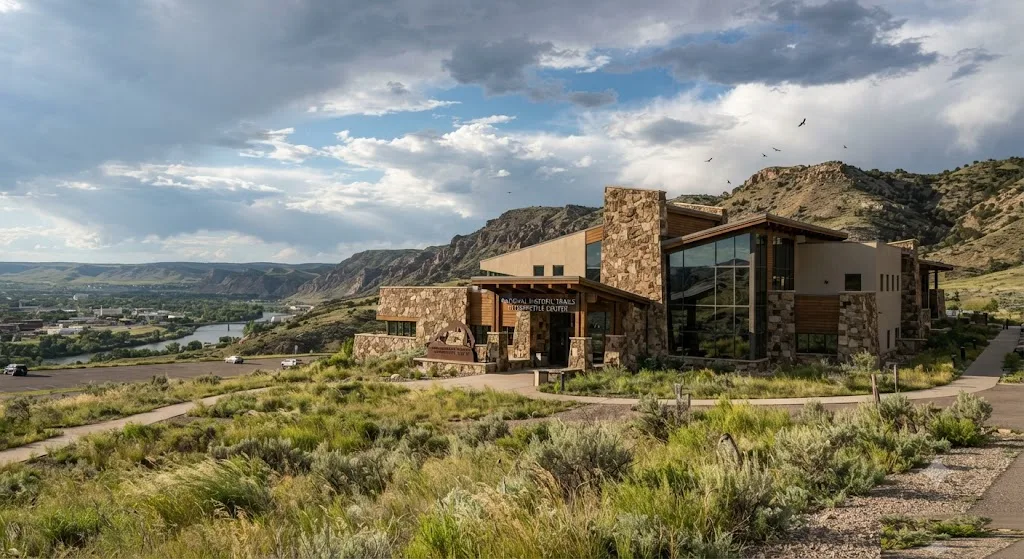
Beyond the compelling narratives, the center itself is a marvel, designed to blend seamlessly with its dramatic ten-acre sand dune site high above the North Platte River. From its vantage point, you can gaze upon the actual historic trails, important landmarks, and the inspiring Wyoming landscape. It's a powerful experience to stand where countless pioneers once stood, looking out at the same horizons they faced. The interactive nature of the exhibits ensures that visitors of all ages can engage with the stories, making history tangible and unforgettable.
Who It's Best For
The National Historic Trails Interpretive Center caters to a wide array of visitors, making it a truly inclusive destination. **History buffs** will find themselves engrossed in the meticulously researched accounts, authentic journal entries, and detailed exhibits that chronicle the challenges and triumphs of westward expansion. **Families with children** will particularly appreciate the hands-on and interactive elements, which transform learning into an engaging adventure. Kids can experience what it was like to push a handcart or ride in a simulated covered wagon, making abstract historical concepts concrete and exciting.
**Outdoor enthusiasts** will also find value here, as the center provides context for the vast Wyoming wilderness and offers direct access to interpretive walking paths. Those on a broader American West road trip, perhaps heading to Yellowstone National Park or Grand Teton National Park, will find it an enriching stop to understand the historical significance of the landscapes they're traversing. Even if you only have a couple of hours, the center offers a rich, free experience that provides a deeper understanding of the region's heritage.
Getting There & Parking
The National Historic Trails Interpretive Center is conveniently located at 1501 North Poplar Street, Casper, Wyoming. We recommend using a GPS for the most direct route, but it's generally accessible from Interstate 25, situated northwest of Casper.
When it comes to parking, visitors will be pleased to know that ample space is available. The center provides dedicated parking for both RVs and buses, making it an easy stop for larger vehicles or groups. As of 2026, there are no specific parking fees mentioned for the center itself. We always advise checking the official Bureau of Land Management (BLM) website for any last-minute updates on directions or parking logistics before your visit.
For those interested in how to get to National Historic Trails Interpretive Center via public transport, options are limited, so driving is generally the most practical method of arrival. Once you arrive, the center's location high above the North Platte River provides not only easy access but also stunning views of the historic trails and surrounding Casper landscape.
Top Things to Do
There are numerous things to do at National Historic Trails Interpretive Center, ensuring a memorable and educational experience for every visitor. Our team consistently finds new layers of understanding with each visit. The center features seven engaging galleries that tell the stories of American Indians, early explorers, and the legendary Oregon, Mormon, California, and Pony Express trails.
- "Footsteps to the West" Multimedia Program: Begin your journey with this captivating 18-minute film in the center's theater. It uses light, sound, and authentic journal quotes to re-create the daily lives and experiences of the pioneers.
- Interactive Exhibits: These are truly the highlight of things to do at National Historic Trails Interpretive Center. You can "take a wagon ride" across the North Platte River, simulating the perilous crossing pioneers faced. Another popular exhibit allows you to "push a handcart," giving you a physical sense of the arduous trek undertaken by nearly 3,000 Mormon converts. You can also "ride in a stagecoach" and experience the sights and sounds of passengers traveling west.
- Explore the Galleries: Dive deeper into specific aspects of the trails. The Native American Gallery provides crucial context on the indigenous peoples whose lives were forever changed by westward expansion. Other galleries focus on the U.S. looking west, and dedicated sections for each of the major trails, culminating in an epilogue about the trails today.
- Outdoor Demonstration Areas and Interpretive Trails: Step outside to a demonstration area and a walking path with native plants and wildlife signage. The center's 500 acres also encompass more than four miles of interpretive trails, where you can walk alongside actual wagon ruts carved by emigrant wagons and enjoy magnificent vistas.
- Ranger-Guided Programs and Living History: Check the activity calendar for ranger-guided programs and living history demonstrations, which add another layer of authenticity to your visit. These are often seasonal, so verify availability for 2026.
- Gift Shop: Browse for books, souvenirs, and educational materials to commemorate your visit and continue your learning at home.
Our expert verdict: Allow at least two to three hours to fully immerse yourself in the exhibits and outdoor areas. The free admission means you can explore without feeling rushed, soaking in the rich history at your own pace.
Best Time to Visit
Timing your visit to the National Historic Trails Interpretive Center can significantly enhance your experience. The center is open Tuesday through Saturday, from 9:30 a.m. to 5 p.m. MST, and is closed on Sundays, Mondays, and Federal Holidays. Admission is always free.
**Important 2026 Closure Information:** Our research indicates a significant temporary closure for maintenance and exhibit restoration. The center will be closed from **June 12 to July 27, 2026**. During this period, outdoor interpretive opportunities will remain available, and some scheduled events will be moved to Fort Caspar Museum. Another temporary closure for routine maintenance and staff training is scheduled from **January 25 through February 2, 2026**. The center will also be closed for the holidays from **December 24-26 and January 1, 2026**. We strongly advise checking the official BLM website or calling ahead for the most current operating status, especially if your trip falls within these dates.
Generally, late spring (April-May) and early fall (September-October) offer pleasant weather for exploring the outdoor interpretive trails and enjoying the panoramic views without the peak summer crowds. While the center can accommodate over 1,000 visitors per day during the summer, the closure in June and July 2026 means that period should be avoided for indoor exhibits. If you plan to visit outside of the summer closure, weekdays are typically less crowded than Saturdays. For groups larger than 20, advance notice is recommended by calling 307-261-7700.
Where to Stay Nearby
Finding comfortable National Historic Trails Interpretive Center lodging is easy, with a variety of options available in Casper, just a short drive from the center. Whether you're looking for budget-friendly motels or more upscale hotels with amenities, Casper has you covered. Our team frequently stays in the area and can recommend several excellent choices.
For those seeking convenience and a range of amenities, consider hotels like the **Hilton Garden Inn Casper**, **Hampton Inn & Suites Casper**, or the **Hyatt Place Casper**. These often feature complimentary breakfast, pools, and fitness centers, perfect for unwinding after a day of exploration. The **Hampton Inn & Suites Casper**, for example, is noted for being just blocks off I-25 and close to downtown, offering free breakfast and WiFi. The **Homewood Suites by Hilton Casper** is also a great option, with reservations available from October 11, 2026, offering an all-suite, extended-stay experience.
Other reliable National Historic Trails Interpretive Center lodging options include the **Best Western Downtown Casper Hotel**, **Days Inn by Wyndham Casper**, and **AmericInn by Wyndham Casper Event Center Area**. Many of these hotels are centrally located, providing easy access to local restaurants, shopping, and other Casper attractions like David Street Station. For a unique stay, you might also consider the **Riverside Hotel & Conference Center** or the **Casper C'mon Inn Hotel & Suites**, known for their comfortable accommodations.
If you're looking to extend your trip beyond Casper, you'll find other fantastic places to stay across Wyoming, from the charming towns near Yellowstone National Park to the rustic lodges surrounding Grand Teton National Park. However, for direct access to the interpretive center and the amenities of a city, Casper remains our top recommendation for accommodation.
Sample 2-Day Itinerary
To truly experience the rich history and natural beauty surrounding the National Historic Trails Interpretive Center, we recommend a two-day itinerary. This allows ample time to explore the center thoroughly and discover other gems in Casper and its environs.
Day 1: Immersion in History
- Morning (9:30 AM - 1:00 PM): National Historic Trails Interpretive Center
Start your day right when the center opens. Begin with the "Footsteps to the West" multimedia program to set the historical context. Spend the rest of the morning exploring the seven interactive galleries. Take your time with the simulated wagon and stagecoach rides, and try pushing a handcart to truly grasp the pioneers' challenges. Don't forget to step outside to walk some of the interpretive trails and see the actual wagon ruts, offering panoramic views of the historic routes. - Lunch (1:00 PM - 2:00 PM): Downtown Casper
Head into downtown Casper for lunch. There are several local eateries offering a range of cuisines. We suggest checking out options around David Street Station for a vibrant atmosphere. - Afternoon (2:00 PM - 5:00 PM): Fort Caspar Museum & Historic Site
Continue your historical journey at the Fort Caspar Museum & Historic Site. This reconstructed 1865 military post sits at a convergence point of four historic trails and provides further insight into the frontier era. Explore the exhibits and walk the grounds to imagine life at an outpost during the westward expansion. - Evening: Dinner & Relaxation
Enjoy dinner at one of Casper's highly-rated restaurants. Many hotels in Casper offer excellent dining options, or you can explore local favorites like Wyoming's Rib & Chop House. Afterward, relax at your hotel, perhaps taking a dip in the pool or hot tub if available.
Day 2: Nature, Art & Local Culture
- Morning (9:00 AM - 12:00 PM): Casper Mountain Recreation
Embrace the natural beauty of Casper Mountain, just a short drive from the city. Hike or bike on the expansive trails, visit Garden Creek Falls at Rotary Park for stunning views, or simply enjoy the serene surroundings. In winter, Hogadon Basin Ski Area offers skiing and snowboarding. - Lunch (12:00 PM - 1:00 PM): Picnic or Casual Dining
Pack a picnic to enjoy on Casper Mountain, or head back into Casper for a casual lunch. - Afternoon (1:00 PM - 4:00 PM): Art and Wildlife
Choose between two excellent Casper attractions:- Nicolaysen Art Museum: Explore contemporary and regional art collections.
- Werner Wildlife Museum: Discover a diverse collection of mounted animals from around the world, a fascinating stop for all ages and a free thing to do in Casper.
- Late Afternoon (4:00 PM onwards): North Platte River Trails
Take a leisurely stroll or bike ride along the Platte River Trails. Edness Kimball Wilkins State Park offers beautiful riverfront access and opportunities for birdwatching and enjoying the peaceful scenery. - Evening: Dinner & Entertainment
Cap off your trip with another delightful dinner in Casper. Check local listings for any events at the Ford Wyoming Center or live music at David Street Station. Casper is known for its combination of outdoor recreation and touchable history, making it an ideal location for family fun.
FAQ
National Historic Trails Interpretive Center camping
While there is no camping directly at the National Historic Trails Interpretive Center, Casper and its surrounding areas offer numerous camping options. For RV and tent camping, you can consider the Casper KOA Journey, located about five miles north of downtown Casper in Bar Nunn, which features full hook-up sites, a pool, mini-golf, and a dog park. Other RV parks include Casper East RV Park/Campground and Rivers Edge RV & Cabins Resort, both offering amenities and proximity to the North Platte River. Fort Caspar Campground is another year-round option with various hookups and amenities. Additionally, public camping is available on nearby BLM land (managed by the Bureau of Land Management) and in Medicine Bow National Forest. Casper Mountain also hosts several reservable campgrounds like Archery Range, Beartrap, and Deer Haven. State parks such as Glendo State Park also provide camping opportunities.
things to do in Casper
Casper offers a diverse range of activities beyond the National Historic Trails Interpretive Center. History enthusiasts can explore Fort Caspar Museum, a reconstructed 1865 military post. For outdoor adventures, Casper Mountain County Park provides extensive trails for hiking and biking, with highlights like Garden Creek Falls and the Hogadon Basin Ski Area for winter sports. The North Platte River is excellent for fly-fishing, floating, or enjoying the Platte River Trails. Downtown Casper features David Street Station, a bustling hub with seasonal activities like ice skating and a splash pad, often hosting live music and events. Other attractions include the Werner Wildlife Museum, Nicolaysen Art Museum, The Science Zone, and the Casper Planetarium, offering family-friendly educational experiences. Don't forget to check the local events calendar for rodeos, concerts, and festivals, especially during the College National Finals Rodeo in June.
National Historic Trails Interpretive Center with kids
The National Historic Trails Interpretive Center is an excellent destination for families visiting with kids. Our team finds that the interactive exhibits are particularly engaging for younger audiences, allowing them to experience history hands-on. Children can try pushing a handcart, take a simulated wagon ride across the North Platte River, and "ride" in a stagecoach, making the pioneer experience tangible and exciting. The center also offers a Junior Ranger book and a visitor center scavenger hunt, which encourage active learning and exploration. The 18-minute "Footsteps to the West" multimedia program is also captivating for all ages. Outside, the interpretive trails offer a chance to stretch legs and see actual wagon ruts. Many of Casper's hotels are family-friendly, and other local attractions like The Science Zone and Fort Caspar Museum also provide engaging activities for children.
best hotels near National Historic Trails Interpretive Center
For the best hotels near the National Historic Trails Interpretive Center, we recommend focusing on Casper's well-regarded establishments. The **Hampton Inn & Suites Casper** is a strong contender, offering budget-friendly comfort, free breakfast, and WiFi, and is located just steps from the center. The **Hilton Garden Inn Casper** and **Hyatt Place Casper** are also excellent choices, known for their modern amenities and comfortable stays. For those seeking an extended stay or more space, the **Homewood Suites by Hilton Casper** will be accepting reservations from October 11, 2026, and the **Residence Inn by Marriott Casper** offers a residential-style experience. Other reliable options include the **Best Western Downtown Casper Hotel**, **Casper C'mon Inn Hotel & Suites**, and **AmericInn by Wyndham Casper Event Center Area**, all providing good value and convenient access to the center and other local attractions.
National Historic Trails Interpretive Center tips
To make the most of your visit to the National Historic Trails Interpretive Center, our team offers these practical tips. First, check the official BLM website or call ahead for the most current operating hours and any temporary closures, especially given the planned maintenance in January and the extended closure from June 12 to July 27, 2026. Arrive shortly after opening (9:30 a.m. Tuesday-Saturday) to enjoy the exhibits with fewer crowds. Allow at least 2-3 hours to fully explore the seven galleries, watch the "Footsteps to the West" film, and walk the outdoor interpretive trails. Admission is free, so you can take your time without worrying about ticket costs. Wear comfortable shoes for walking the outdoor paths, and consider bringing water, especially during warmer months. If you're visiting with a group of 20 or more, remember to provide advance notice by calling 307-261-7700. Finally, take advantage of the knowledgeable staff and volunteers who are always available to answer questions and enhance your experience.
where to stay near National Historic Trails Interpretive Center
For visitors wondering where to stay near National Historic Trails Interpretive Center, the city of Casper provides the most convenient and comprehensive selection of accommodations. We recommend staying in Casper proper, as it offers a variety of hotels, motels, and even camping options just a short drive from the center. Popular hotel choices include the **Hampton Inn & Suites Casper**, known for its proximity to the center and complimentary amenities. Other excellent options include the **Hilton Garden Inn Casper**, **Hyatt Place Casper**, and the **Best Western Downtown Casper Hotel**, all providing comfortable lodging and easy access to local dining and attractions. For those preferring camping, the **Casper KOA Journey** and **Fort Caspar Campground** are nearby, offering RV and tent sites. Choosing accommodation in Casper allows you to easily reach the National Historic Trails Interpretive Center while also exploring other local sights like Fort Caspar Museum, David Street Station, and Casper Mountain.
The National Historic Trails Interpretive Center Wyoming offers an unparalleled journey into the heart of America's westward expansion. Our team is confident that whether you're a history enthusiast, a family seeking engaging activities, or simply a traveler passing through, you'll leave with a profound appreciation for the trails and the stories they tell. We encourage you to plan your visit carefully, especially noting the 2026 closures, to ensure the most enriching experience at this truly remarkable destination on your plan your US trip.
Last updated: 2026-07-08 by the Roam States team.