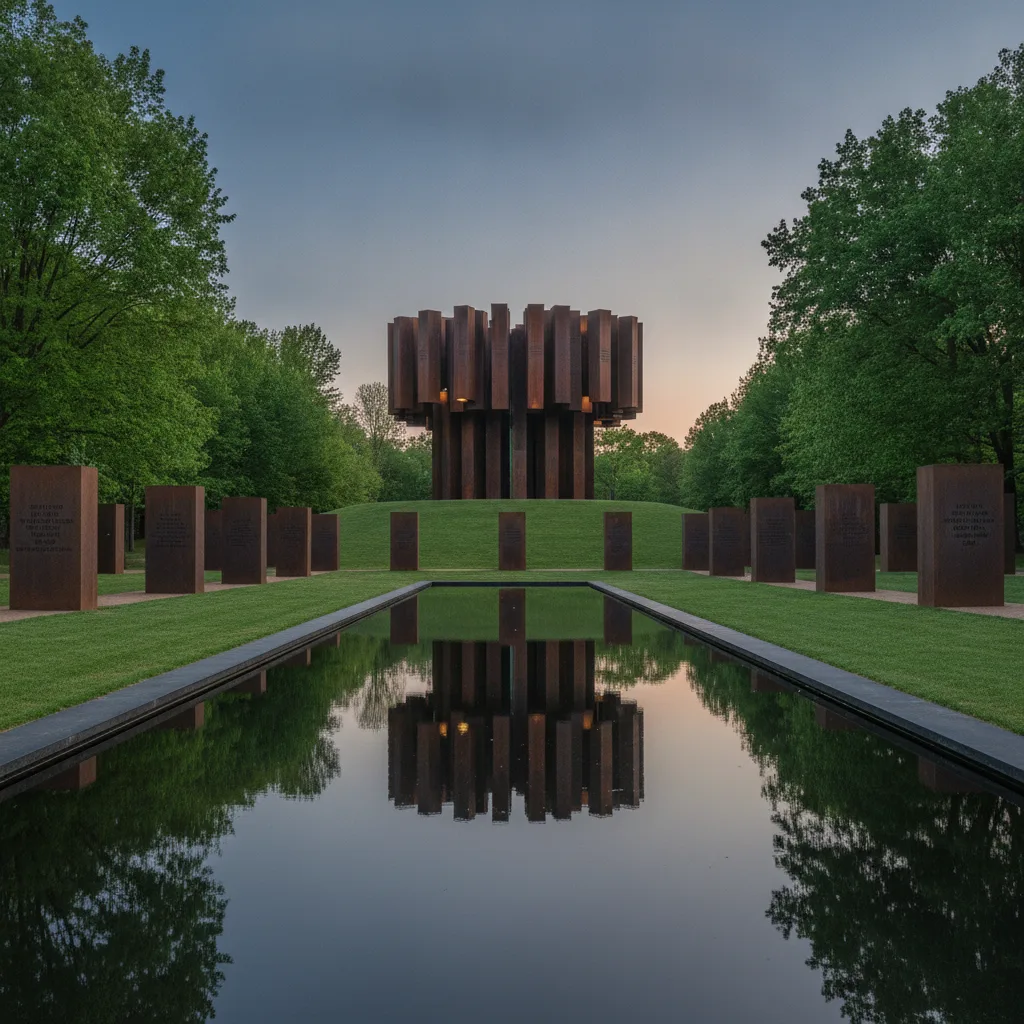
As the Roam States editorial team, we believe in travel that enriches, educates, and inspires. Our guide to the best places in Alabama would be incomplete without a deep dive into one of the nation's most profoundly moving destinations. The National Memorial for Peace and Justice Alabama stands as a solemn, essential pilgrimage for anyone seeking to understand the full scope of American history. Colloquially known as 'the lynching memorial,' this powerful memorial in Montgomery is the United States' first national memorial to the victims of racial terror, offering an unparalleled journey into the raw, unvarnished truth of racial injustice in America.
Why Visit National Memorial for Peace and Justice
Visiting the National Memorial for Peace and Justice is an unparalleled journey into the raw, unvarnished truth of racial injustice in America. This isn't a typical tourist attraction; it's a sacred space designed for truth-telling and reflection, compelling visitors to confront the harrowing realities of racial terrorism and its enduring consequences. The memorial, located on a hilltop overlooking Montgomery, is the nation's first comprehensive memorial dedicated to the legacy of Black Americans who were enslaved, terrorized by lynching, humiliated by racial segregation, and burdened with contemporary presumptions of guilt and police violence.
Over 4,400 Black individuals killed in racial terror lynchings between 1877 and 1950 are remembered here, their names engraved on more than 800 corten steel monuments—one for each county where a racial terror lynching took place. The experience is designed to foster a deeper understanding of our nation's history and its ongoing impact, serving as a powerful catalyst for recovery and reconciliation. Our team finds that the memorial creates a profound sense of introspection, making it a truly transformative experience for all who visit.
Who It's Best For
The National Memorial for Peace and Justice is best suited for mature visitors and those with a genuine interest in American history, civil rights, and social justice. While children are welcome, the somber and graphic nature of the exhibits at the adjacent Legacy Museum and the memorial itself may be intense for younger audiences. We recommend that parents of younger children consider the emotional maturity of their kids before visiting, as the experience is designed to confront difficult truths.
Educators, historians, activists, and anyone seeking a deeper understanding of systemic injustice will find this site invaluable. It's a destination for those ready to engage with challenging narratives and reflect on the past to inform a more just future. The memorial and its associated Legacy Sites provide a crucial educational opportunity for individuals and groups committed to learning and advocating for human rights.
Getting There & Parking
Understanding how to get to National Memorial for Peace and Justice and managing parking are key to a smooth visit. The memorial is centrally located at 417 Caroline Street, Montgomery, AL 36104. Montgomery is well-connected by major interstate highways, making it accessible by car from various Southern cities. For instance, the drive from Birmingham, Alabama, is approximately 90-92 miles, taking about 1.5 to 2 hours via I-65 South. From Atlanta, Georgia, the distance is around 160-162 miles, typically a 2.5 to 3-hour drive.
For National Memorial for Peace and Justice parking, visitors will be pleased to know that free parking is available at each of the Legacy Sites, which include the National Memorial, the Legacy Museum, Freedom Monument Sculpture Park, and Montgomery Square. We strongly recommend arriving early, especially on weekends, to secure a spot. The City of Montgomery manages approximately 2,500 parking spaces throughout the city, and a parking app is available for convenience.
To enhance your experience, a complimentary shuttle service operates between all four Legacy Sites from 9:00 AM to 5:45 PM, making it easy to navigate between the memorial, the Legacy Museum (400 N. Court Street), Freedom Monument Sculpture Park (831 Walker Street), and Montgomery Square (540 Montgomery Street) without moving your car. This shuttle is a convenient way to ensure you can fully immerse yourself in each site without worrying about re-parking.
Top Things to Do
When you visit the National Memorial for Peace and Justice, you're embarking on an immersive historical journey. Our team recommends dedicating ample time to fully absorb the weight and significance of the site, as well as exploring other pivotal things to do in Montgomery.
At the National Memorial for Peace and Justice and Legacy Museum
- The National Memorial for Peace and Justice: This outdoor monument is the heart of the experience. As you walk through the hanging steel monuments, each representing a county where racial terror lynchings occurred, you'll witness the names of over 4,400 victims engraved into the weathered steel. The memorial also features powerful sculptures, including the "Raise Up" sculpture near the entrance, depicting enslaved people, and a tranquil reflection space. Plan for 1-2 hours here.
- The Legacy Museum: From Enslavement to Mass Incarceration: Located just a short, free shuttle ride from the memorial, the Legacy Museum provides essential context and expands on the themes presented at the memorial. The museum is situated on a site where enslaved people were once warehoused, offering a deeply immersive journey through America's history of racial injustice, from the transatlantic slave trade to modern mass incarceration. We suggest beginning your visit here and allocating 3-5 hours, or even an entire day, as your general admission ticket allows for same-day re-admission.
- Freedom Monument Sculpture Park: Your general admission ticket to the Legacy Sites also includes entry to this newer site, which can be reached by a free shuttle or a 15-minute boat ride on the Alabama River. The park pays homage to the journey of enslaved individuals and features powerful sculptures. Allow 1-2 hours for this outdoor sculpture park.
- Montgomery Square: Also accessible via the complimentary shuttle, Montgomery Square is located next to the Elevation Hotel and Convening Center, just a short walk from the memorial. It offers another opportunity to reflect on the decade that changed the world, particularly the Montgomery Bus Boycott and the Selma to Montgomery voting rights march. No admission ticket is required for Montgomery Square.
Beyond the Memorial: Things to Do in Montgomery
Montgomery is rich with Civil Rights history and other attractions. After experiencing the National Memorial for Peace and Justice, we highly recommend exploring these significant sites:
- Civil Rights Memorial Center: This powerful memorial, designed by Maya Lin, honors those who died during the Civil Rights Movement. It’s a must-visit for further historical context. You can find more details on our Civil Rights Memorial Center, Alabama guide.
- Rosa Parks Museum: Dedicated to the "Mother of the Civil Rights Movement," this museum tells the story of Rosa Parks' courageous act and the Montgomery Bus Boycott.
- Freedom Rides Museum: Housed in the historic Greyhound bus station, this museum commemorates the brave Freedom Riders who challenged segregation in interstate travel.
- Dexter Avenue King Memorial Baptist Church: This historic church is where Dr. Martin Luther King Jr. served as pastor and organized the Montgomery Bus Boycott.
- Alabama State Capitol: A significant landmark where the Selma to Montgomery voting rights march concluded, and the Confederate States of America were formed.
- Museum of Alabama: Located within the Alabama Department of Archives and History, this museum showcases Alabama's history from prehistoric times to the present. In 2026, it features a new Military Tribute and "Grandma's Attic" for kids.
- Scott and Zelda Fitzgerald Museum: Explore the former home of the famous literary couple F. Scott and Zelda Fitzgerald, offering a glimpse into their lives and work.
- Hank Williams Museum: Dedicated to the legendary country music icon, this museum celebrates his life and musical legacy.
- Montgomery Zoo and Mann Wildlife Learning Museum: For a family-friendly outing, the Montgomery Zoo is welcoming visitors with a new entrance, an expanded gift shop, and new baby ostrich chicks in 2026.
- Riverfront Park: Stroll along the Alabama River, enjoy the Riverwalk, or catch a Harriott II Riverboat cruise. Sunny weekends might even feature live music at the Riverwalk Amphitheater.
- Old Alabama Town: This living history experience allows you to see how Alabamians lived in the past, with historic buildings including the Lucas Tavern, the oldest building in Montgomery.
- Centennial Hill: As Centennial Hill continues to reemerge as a cultural and creative district, bronze reliefs telling the neighborhood's history have been installed, transforming an everyday streetscape into an immersive history walk.
For more ideas on exploring the diverse offerings of the state, be sure to check out our main Alabama travel guide.
Best Time to Visit
Choosing the best time to visit the National Memorial for Peace and Justice and the broader Montgomery area can significantly impact your experience. Montgomery experiences a humid subtropical climate, with mild, rainy winters and hot, muggy summers.
The hot season typically lasts from May 20 to September 23, with average daily high temperatures above 85°F. July is the hottest month, with an average high of 92°F and a low of 73°F. The wet season also aligns with summer, from February 19 to August 28, with July seeing the most wet days, averaging 14.3 days with at least 0.04 inches of precipitation. High heat and humidity are common during these months.
Conversely, the cool season runs from November 30 to February 23, with average daily high temperatures below 65°F. January is the coldest month, with an average high of 58°F and a low of 39°F.
For the most comfortable and reflective visit to the National Memorial for Peace and Justice, our team suggests aiming for spring or fall weekday mornings. The best times of year for warm-weather activities are from mid-April to late May and from mid-September to late October. During these periods, you'll find pleasant temperatures and less humidity, allowing for a more enjoyable outdoor experience at the memorial and other sites. The drier season, from late August to mid-February, also sees fewer wet days, with October having the fewest at an average of 6.2 days.
While the Equal Justice Initiative offers free admission to the Legacy Sites on Martin Luther King Jr. Day (January 19, 2026), this can be a meaningful but potentially busy time to visit. The sites are closed on Thanksgiving, Christmas, and New Year's Day.
Where to Stay Nearby
Finding the right National Memorial for Peace and Justice lodging is crucial for a comfortable and convenient visit. Montgomery offers a range of accommodations, particularly in the downtown area, which places you close to the memorial and other significant Civil Rights sites. Our team recommends focusing on hotels that offer easy access to the Legacy Sites, either by walking or via the complimentary shuttle service.
For National Memorial for Peace and Justice lodging, consider these highly-rated options:
- Elevation Convening Center and Hotel: This hotel is uniquely positioned directly across the street from Montgomery Square Park and the National Memorial for Peace and Justice. It offers a complimentary shuttle service to The Legacy Museum and the Freedom Monument Sculpture Park, making it an ideal choice for visitors focused on the Legacy Sites. Designed to complement the historical journey, Elevation provides a serene environment for reflection.
- Renaissance Montgomery Hotel & Spa at the Convention Center: A luxurious option, this hotel is minutes from the National Memorial for Peace and Justice and other downtown attractions. It offers a full-service spa, dining options, and comfortable rooms.
- Embassy Suites by Hilton Montgomery Hotel & Conference Center: Known for its spacious suites and amenities, this hotel is another excellent choice close to the memorial.
- Trilogy Hotel Montgomery, Autograph Collection: This hotel provides a stylish and comfortable stay, highly recommended by travelers for its proximity and quality.
- Staybridge Suites Montgomery - Downtown by IHG: Offering apartment-style accommodations, this is a great option for longer stays or those seeking more space, located conveniently downtown.
- Hampton Inn & Suites Montgomery-Downtown: Located in the heart of Montgomery's redeveloped historic area, this hotel offers comfortable rooms and suites just minutes from the memorial and local restaurants.
- Home2 Suites By Hilton Montgomery Downtown: Another excellent extended-stay option with modern amenities and a central location.
- SpringHill Suites by Marriott Montgomery Downtown: This hotel provides spacious suites and is well-regarded for its downtown location.
- Residence Inn by Marriott Montgomery Downtown: Ideal for longer visits, offering suites with kitchens and a convenient location near the Legacy Sites.
Staying downtown allows for easy access to the Civil Rights Trail and other historical sites, many of which are within walking distance or a short shuttle ride. For those looking to plan their trip to Alabama, the Alabama Tourism Department website offers additional resources.
Sample 2-Day Itinerary
To make the most of your visit to the National Memorial for Peace and Justice Alabama and the surrounding historical city, we've crafted a sample two-day itinerary. This plan balances deep reflection at the Legacy Sites with exploration of Montgomery's other significant attractions.
Day 1: Immersive History at the Legacy Sites
- Morning (9:00 AM - 1:00 PM): The Legacy Museum: From Enslavement to Mass Incarceration. Begin your day at the Legacy Museum, located at 400 N. Court Street. We recommend starting here to gain essential historical context before visiting the memorial. Allow at least 3-4 hours, or even more, as the museum is incredibly comprehensive and your ticket allows for same-day re-entry.
- Lunch (1:00 PM - 2:00 PM): Downtown Montgomery. Grab lunch at one of the nearby downtown eateries. Many options are available within walking distance or a short shuttle ride.
- Afternoon (2:00 PM - 4:30 PM): The National Memorial for Peace and Justice. Take the complimentary shuttle from the Legacy Museum to the National Memorial for Peace and Justice (417 Caroline Street). This solemn outdoor memorial requires 1-2 hours for a thorough and reflective experience.
- Late Afternoon (4:30 PM - 6:00 PM): Freedom Monument Sculpture Park & Montgomery Square. Utilize the shuttle to visit Freedom Monument Sculpture Park (831 Walker Street) and Montgomery Square (540 Montgomery Street). Each offers unique perspectives and additional opportunities for reflection, and you can spend 1-2 hours at each site.
- Evening: Dinner & Reflection. Enjoy dinner in downtown Montgomery. Consider a quiet evening to process the profound experiences of the day.
Day 2: Civil Rights & Montgomery Highlights
- Morning (9:00 AM - 12:00 PM): Civil Rights Trail. Dive deeper into Montgomery's Civil Rights history. Start at the Civil Rights Memorial Center, then visit the Rosa Parks Museum and the Freedom Rides Museum. These sites are all relatively close to each other downtown.
- Lunch (12:00 PM - 1:00 PM): Local Cuisine. Experience some local Montgomery flavor for lunch.
- Afternoon (1:00 PM - 4:00 PM): Historic Landmarks. Explore the Dexter Avenue King Memorial Baptist Church, where Dr. King preached, and the Alabama State Capitol, a site of immense historical significance for both the Confederacy and the Civil Rights Movement. You could also visit the Museum of Alabama to learn more about the state's broader history.
- Late Afternoon (4:00 PM - 6:00 PM): Cultural or Recreational Activity. Depending on your interests, consider a visit to the Scott and Zelda Fitzgerald Museum, the Hank Williams Museum, or a relaxing stroll through Riverfront Park. If traveling with family, the Montgomery Zoo (with its new ostrich chicks in 2026) offers a delightful alternative.
- Evening: Farewell Dinner. Conclude your trip with a memorable dinner in Montgomery.
For those planning a broader USA road trip planner, Montgomery makes an excellent stop, especially when combined with other significant Civil Rights destinations like the Birmingham Civil Rights Institute, Alabama. If you have more time in Alabama, consider exploring natural wonders like Cathedral Caverns State Park, Alabama or the unique Ave Maria Grotto, Alabama.
National Memorial for Peace and Justice with kids
While the National Memorial for Peace and Justice is a profoundly important site, its content, particularly at the adjacent Legacy Museum, can be very intense and emotionally challenging for younger children. We recommend that parents carefully consider the maturity and sensitivity of their children before visiting. For older children and teenagers, it can be an incredibly impactful educational experience, fostering empathy and historical understanding. If visiting with younger kids, consider focusing primarily on the outdoor memorial and perhaps discussing the themes in an age-appropriate manner beforehand. The Montgomery Zoo, with its new baby ostrich chicks in 2026, or Riverfront Park might be more suitable activities for very young children.
best hotels near National Memorial for Peace and Justice
The best hotels near National Memorial for Peace and Justice are primarily located in downtown Montgomery, offering convenience and easy access to the Legacy Sites. Our top recommendation is the Elevation Convening Center and Hotel, which is directly across the street from the memorial and provides a complimentary shuttle to the other Legacy Sites. Other highly-rated options include the Renaissance Montgomery Hotel & Spa at the Convention Center, Embassy Suites by Hilton Montgomery Hotel & Conference Center, Trilogy Hotel Montgomery, Autograph Collection, and Staybridge Suites Montgomery - Downtown by IHG. These hotels offer a range of amenities and are well-suited for visitors focused on exploring the historical heart of Montgomery.
National Memorial for Peace and Justice tips
To make your visit to the National Memorial for Peace and Justice as impactful as possible, our team offers these key tips:
- Purchase Tickets in Advance: Timed entry tickets are required for the Legacy Museum, and it's highly recommended to purchase tickets online beforehand, especially during peak seasons.
- Allocate Ample Time: Plan for at least 3-5 hours for the Legacy Museum and 1-2 hours for the memorial itself. Many visitors spend an entire day exploring all four Legacy Sites.
- Utilize the Free Shuttle: A complimentary shuttle service connects all four Legacy Sites, saving you the hassle of re-parking.
- Visit the Museum First: We recommend starting at the Legacy Museum to gain vital historical context before experiencing the memorial.
- Dress Comfortably: The memorial is an outdoor space, so wear comfortable shoes and dress appropriately for the weather.
- Prepare for Emotional Impact: The experience is designed to be deeply moving and confrontational. Allow yourself time and space for reflection afterward.
- Consider a Weekday Visit: Weekday mornings in spring or fall offer the most comfortable and less crowded experience.
where to stay near National Memorial for Peace and Justice
When considering where to stay near National Memorial for Peace and Justice, the downtown Montgomery area is your best bet for convenience and immersion in the city's rich history. Hotels like the Elevation Convening Center and Hotel are directly across from the memorial. Other excellent options within close proximity include the Renaissance Montgomery Hotel & Spa, Embassy Suites by Hilton Montgomery, Trilogy Hotel Montgomery, and the Hampton Inn & Suites Montgomery-Downtown. These establishments not only offer comfortable accommodations but also place you within easy reach of the memorial, the Legacy Museum, and other significant Civil Rights landmarks, many accessible via a complimentary shuttle service.
National Memorial for Peace and Justice parking
Regarding National Memorial for Peace and Justice parking, visitors will find free parking available at each of the four Legacy Sites: the National Memorial, the Legacy Museum, Freedom Monument Sculpture Park, and Montgomery Square. While specific fees for the memorial's parking aren't always explicitly detailed, the City of Montgomery manages numerous parking spaces, and a parking app is available for general city parking. We advise arriving early, particularly on weekends, to secure a spot. Additionally, a complimentary shuttle service runs regularly between all the Legacy Sites from 9:00 AM to 5:45 PM, offering a convenient way to visit each location without needing to move your car.
best time to visit National Memorial for Peace and Justice
The best time to visit National Memorial for Peace and Justice for a comfortable and reflective experience is during the spring (mid-April to late May) or fall (mid-September to late October). During these seasons, Montgomery experiences pleasant temperatures and lower humidity, making the outdoor memorial more enjoyable. Weekday mornings are generally less crowded, allowing for a more serene visit. While the Legacy Sites offer free admission on Martin Luther King Jr. Day (January 19, 2026), it can be a very busy time. Summers are hot and humid with more rainfall, and winters are mild but can have short cold spells.
Our team's expert verdict: The National Memorial for Peace and Justice is not merely a destination; it is an imperative journey for anyone seeking to understand the foundational truths of American history. We consider it one of the most significant and essential sites in the United States, offering a profound opportunity for education, reflection, and a deeper commitment to justice. Plan your visit with an open mind and heart, and prepare for an experience that will stay with you long after you leave Montgomery.
Last updated: 2026-07-12 by the Roam States team.