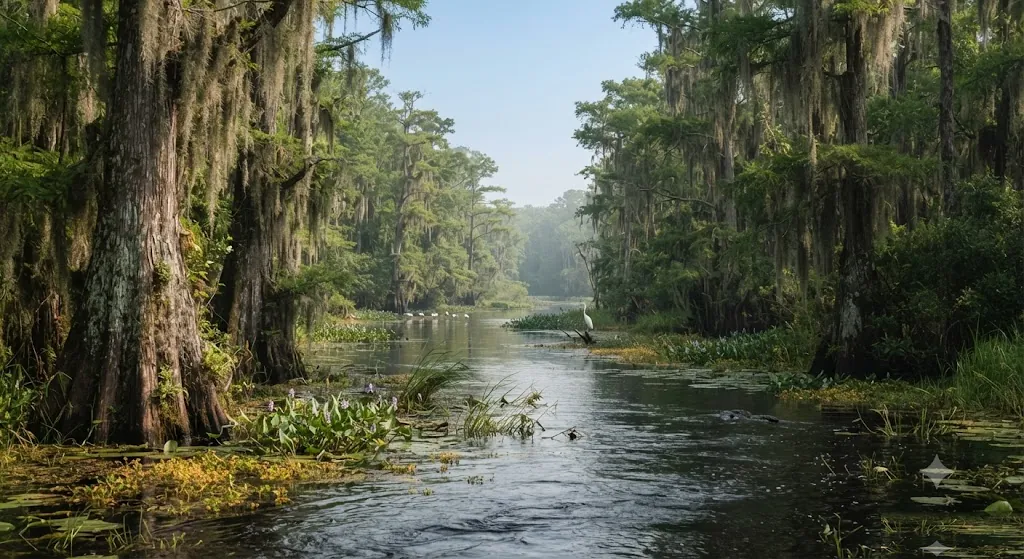
Okefenokee NWR Travel Guide — Georgia
For those seeking an unparalleled wilderness experience in the American South, the Okefenokee National Wildlife Refuge (NWR) in Folkston, Georgia, offers an immersive journey into one of North America's largest and most pristine blackwater swamps. Our team considers the Okefenokee NWR Georgia a must-visit destination for nature enthusiasts, wildlife photographers, and anyone looking to connect with a truly wild landscape. This vast refuge, spanning over 400,000 acres, provides a unique opportunity to explore diverse habitats, from cypress forests and wet prairies to pine uplands, teeming with an incredible array of flora and fauna.
Why Visit Okefenokee NWR
The Okefenokee NWR stands as an ecological wonder, a testament to untouched wilderness. It's the headwaters of both the Suwannee and St. Marys rivers, a critical ecosystem that supports a rich biodiversity. We're talking about a place where you can witness American alligators in their natural habitat, spot rare birds like the red-cockaded woodpecker and wood stork, and marvel at carnivorous plants thriving in the unique swamp environment.
Beyond its incredible wildlife, the Okefenokee offers a profound sense of solitude and a chance to truly unplug. The dark, tannin-rich waters, reflective of the cypress and gum trees, create a mesmerizing landscape that feels ancient and mysterious. It's a place where the sounds of nature dominate, from the chorus of frogs to the calls of wading birds, making it an ideal escape for those craving peace and quiet. The refuge has even been recognized as a Wetland of International Importance.
Who It's Best For
The Okefenokee NWR caters to a wide range of visitors, though it particularly shines for those with an adventurous spirit and a deep appreciation for nature. It's an ideal destination for:
- Wildlife Enthusiasts and Birdwatchers: With an estimated 15,000 alligators, 234 species of birds, 50 species of mammals, and numerous reptiles and amphibians, the refuge is a hotspot for wildlife viewing. Keep an eye out for white-tailed deer, American black bears, bobcats, and various wading birds.
- Paddlers (Canoeists & Kayakers): The extensive network of water trails offers unparalleled opportunities for self-guided or guided paddling excursions, allowing for deep immersion into the swamp's interior.
- Photographers: The unique landscapes, diverse wildlife, and stunning sunrises and sunsets over the blackwater provide endless photographic opportunities.
- Families: With boardwalks, short hiking trails, and guided boat tours, the refuge offers accessible ways for children to experience the swamp safely and learn about its ecology through programs like the Junior Ranger program.
- Campers: Both remote wilderness camping and developed campgrounds near the entrances offer distinct overnight experiences.
Getting There & Parking
Understanding how to get to Okefenokee NWR is key to planning your visit, as there are multiple entrances, each offering a distinct experience. The main entrance, and the most popular, is the Suwannee Canal Recreation Area (SCRA) near Folkston, Georgia. This is where you'll find the Richard S. Bolt Visitor Center and Okefenokee Adventures, the official concessionaire.
Other notable entrances include Stephen C. Foster State Park on the western side near Fargo, and Kingfisher Landing, north of Folkston. Each entrance provides access to different parts of the refuge and offers varying facilities.
For those traveling by car, parking is available at each entrance. At the Suwannee Canal Recreation Area, visitors will find ample parking near the Richard S. Bolt Visitor Center and the boat ramp. It's important to note that a daily or annual entrance pass is required for all visitors. A daily pass costs $5 per non-commercial vehicle and is valid for 7 days. Annual passes are $15 per vehicle. These passes can be purchased in-person at Okefenokee Adventures or Stephen C. Foster State Park, or as a digital pass online via Recreation.gov.
When considering how to get to Okefenokee NWR, remember that the refuge is approximately an hour's drive from Jacksonville, Florida, and about a three-hour drive from Atlanta.
Top Things to Do
There are numerous things to do at Okefenokee NWR, whether you prefer exploring by land or water. The refuge offers a wealth of activities designed to immerse you in its unique environment.
- Guided Boat Tours: Okefenokee Adventures, located at the Suwannee Canal Recreation Area, offers naturalist-guided boat tours. These 90-minute to 4-hour excursions are an excellent way to see alligators, birds, and learn about the swamp's ecology from experienced guides. Sunset tours are also available on select evenings.
- Canoeing and Kayaking: With nearly 120 miles of day-use paddling trails, exploring the blackwater by canoe or kayak is a quintessential Okefenokee experience. Rentals are available through Okefenokee Adventures. Remember that swimming and paddleboarding are not permitted due to alligator presence.
- Swamp Island Drive: This 7.2-mile auto tour loop at the Suwannee Canal Recreation Area allows you to drive, bike, or hike through upland habitats, offering opportunities for wildlife viewing and stops at historical sites like the Chesser Island Homestead.
- Wildlife Viewing and Photography: The refuge is a haven for wildlife. Early mornings and evenings are generally the best times to spot animals. Look for alligators, various bird species, deer, and even black bears. Bring binoculars and a zoom lens for optimal viewing.
- Fishing: Sport fishing is allowed year-round in designated areas, requiring a valid fishing license.
Okefenokee NWR Hiking Trails
While paddling is a primary draw, the Okefenokee NWR hiking trails offer fantastic opportunities to explore the refuge's diverse landscapes on foot. Most trails are flat and family-friendly, providing easy access to wildlife viewing.
- Chesser Island Boardwalk: This is one of the most popular Okefenokee NWR hiking trails, a 0.75-mile one-way (1.5 miles out-and-back) boardwalk that traverses cypress forests, scrub-shrub, and prairies, leading to the 50-foot Owl's Roost Tower for panoramic views of the swamp. It's an excellent spot for seeing alligators, frogs, water snakes, and various birds. Pets are not allowed on the boardwalk due to the presence of alligators.
- Upland Discovery Trail: A short 0.25-mile loop that takes visitors through red-cockaded woodpecker territory, ideal for birdwatching.
- Cane Pole Trail: A 0.35-mile paved trail that parallels the historic Suwannee Canal, leading to an observation platform on the prairie.
- Phernetton Trail: A 1.3-mile loop near the East Entrance Road, offering a walk through managed upland habitat.
Okefenokee NWR Camping
For those looking to extend their adventure, Okefenokee NWR camping offers unique experiences, from remote wilderness platforms to more developed campgrounds outside the refuge. Wilderness camping within the refuge requires a permit and is accessible only by canoe or kayak.
- Wilderness Platform Camping: The refuge features eight elevated platforms and two islands for overnight camping, accessible by paddling up to 12 miles. These platforms provide a basic shelter above the water and often include a picnic table and pit toilet. Reservations are mandatory and can be made up to two months in advance by calling the Camping Permit Reservation Line (912-496-3331) on Tuesdays, Wednesdays, and Thursdays from 7:00 am to 10:00 am EST. Note that current low water levels may impact access to some water trails and platforms, so it's advisable to call ahead.
- Stephen C. Foster State Park: Located on the western side of the refuge, this state park offers developed campsites for car camping, as well as cabins. It's a great option for families or those preferring more amenities.
- Nearby Campgrounds: Several private campgrounds and cabins, such as Okefenokee Pastimes Cabins & Campground in Folkston, offer comfortable stays just outside the refuge entrances, providing amenities like hot showers, laundry, and RV sites.
Best Time to Visit
The best time to visit Okefenokee NWR largely depends on your priorities, but generally, spring and fall are considered ideal.
- Spring (March to May): Offers warm but not overly hot temperatures and manageable humidity, making it pleasant for hiking and boating. Wildlife is very active, with bird migrations, alligators basking, and wildflowers in bloom.
- Fall (September to November): Temperatures drop, and humidity eases, providing comfortable conditions for exploration and fewer crowds. Wildlife remains active, and the changing colors of cypress trees can be beautiful. Late fall is particularly nice as biting insects become less prevalent.
- Winter (December to February): Mild temperatures, lower humidity, and fewer bugs make winter a comfortable time for hiking and wildlife viewing. Alligators can still be seen sunning themselves on warmer days, and birds are plentiful.
- Summer (June to August): While hot, humid, and buggy, summer offers peak wildlife activity and a true "swamp atmosphere." Early morning trips are recommended to avoid the worst of the heat and insects.
Regardless of the season, we recommend bringing insect repellent, especially during warmer months, and being prepared for changing weather conditions.
Where to Stay Nearby
While wilderness camping within the refuge is an option, many visitors prefer to stay in accommodations just outside the Okefenokee NWR. The town of Folkston, Georgia, serves as a primary gateway to the refuge's eastern entrance and offers a range of lodging choices.
- Hotels and Motels: Folkston has several local hotels and motels, providing convenient access to the refuge. Options like the Relax Inn offer basic, clean accommodations.
- Bed & Breakfasts: For a more charming and personalized experience, consider The Inn at Folkston, known for its Southern hospitality and proximity to the eastern entrance.
- Cabins and Campgrounds: Okefenokee Pastimes Cabins & Campground is a popular choice, offering cabins, RV sites, and tent sites on 13 wooded acres directly across from the main entrance. This is an excellent base for families and outdoor lovers.
- Vacation Rentals: Websites like Vrbo list cottages, houses, and apartments in and around Folkston, providing options for families or groups seeking more space and amenities.
- Stephen C. Foster State Park: As mentioned, this state park within the refuge offers cabins and developed campsites, providing an immersive experience with more amenities than wilderness platforms.
When planning your trip to Georgia, consider exploring other natural wonders like Amicalola Falls State Park or the vast Chattahoochee National Forest for diverse outdoor adventures.
Sample 2-Day Itinerary
To truly experience the Okefenokee NWR, we recommend dedicating at least two full days. Here’s a sample itinerary focusing on the Folkston entrance (Suwannee Canal Recreation Area):
Day 1: Eastern Entrance Exploration
- Morning (7:30 AM - 12:00 PM): Arrive early at the Suwannee Canal Recreation Area. Head to the Richard S. Bolt Visitor Center (opens 10:30 AM Tuesday-Friday, 9:00 AM Saturday, closed Sunday-Monday; refuge open from 30 minutes before sunrise). Pick up maps and information. Embark on a naturalist-guided boat tour with Okefenokee Adventures to get an overview of the swamp and spot wildlife.
- Lunch (12:00 PM - 1:00 PM): Grab a bite at the Camp Cornelia Café at Okefenokee Adventures or enjoy a picnic at one of the designated areas near the Visitor Center.
- Afternoon (1:00 PM - 5:00 PM): Drive or bike the 7.2-mile Swamp Island Drive, stopping at points of interest like the Chesser Island Homestead. Walk the Chesser Island Boardwalk to the Owl's Roost Tower for elevated views of the prairie.
- Evening: Check into your accommodation in Folkston. Consider a sunset boat tour if available for a different perspective of the swamp.
Day 2: Paddling & Deeper Immersion
- Morning (7:30 AM - 12:00 PM): Rent a canoe or kayak from Okefenokee Adventures and explore one of the day-use paddling trails. The Suwannee Canal offers a relatively easy paddle, or you can venture into Chesser Prairie for more open water. Always check current water levels and trail conditions before heading out.
- Lunch (12:00 PM - 1:00 PM): Pack a picnic to enjoy along the water or return to Folkston.
- Afternoon (1:00 PM - 4:00 PM): Explore some of the shorter upland hiking trails near the Visitor Center, such as the Upland Discovery Trail or Cane Pole Trail, to look for different wildlife.
- Late Afternoon: Before departing, revisit the Visitor Center for any last-minute questions or to browse the gift shop.
For more Georgia adventures, consider a visit to Atlanta Botanical Garden or the historic Bonaventure Cemetery in Savannah.
Is It Worth Visiting?
Absolutely, is Okefenokee NWR worth visiting? Our team confidently says yes. The Okefenokee National Wildlife Refuge offers a truly unique and unforgettable encounter with one of America's wildest places. It's a destination that appeals to the senses, from the dark, reflective waters to the symphony of natural sounds, providing a profound connection to nature that is increasingly rare.
For anyone debating, "is Okefenokee NWR worth visiting," consider its status as the largest intact freshwater blackwater swamp on the Atlantic Coastal Plain, a wetland of international importance, and a haven for endangered species. The opportunities for wildlife viewing, paddling, hiking, and simply experiencing the raw beauty of the swamp make it a standout destination in Georgia and the entire Southeastern United States. It's a place that leaves a lasting impression, inspiring a deeper appreciation for conservation and the natural world.
FAQ
things to do in Folkston
Beyond the Okefenokee NWR, Folkston, Georgia, offers a few unique attractions. The most famous is the Folkston Funnel, a popular train-watching platform where you can see up to 60 trains pass in a day. The town also has local restaurants, quaint shops, and a visitor center. You can also arrange kayak trips on the St. Marys River.
Okefenokee NWR with kids
Visiting Okefenokee NWR with kids is highly recommended, provided you plan accordingly. Short, naturalist-led boat tours are an excellent way for young children to see alligators and birds without extensive hiking. Elevated boardwalks, like the Chesser Island Boardwalk, offer safe and accessible wildlife viewing. The refuge also has a Junior Ranger program. We advise staying on designated trails, never approaching alligators, and avoiding swimming in refuge waters. Pack smart for warm, humid weather and biting insects.
Okefenokee NWR tips
Our top tips for visiting Okefenokee NWR include planning your trip for spring or fall to avoid extreme heat and bugs, wearing earth-toned clothing for wildlife viewing, and bringing binoculars, a camera, and plenty of insect repellent. Always stay on marked trails and maintain a respectful distance from wildlife. If paddling, check water levels and trail conditions in advance, as some areas may be impassable due to low water. For wilderness camping, make reservations well in advance.
Okefenokee NWR parking
Parking is available at all major entrances to the Okefenokee NWR, including the Suwannee Canal Recreation Area near Folkston, Stephen C. Foster State Park near Fargo, and Kingfisher Landing. A daily entrance pass of $5 per non-commercial vehicle (valid for 7 days) or an annual pass for $15 is required. Passes can be purchased on-site or online via Recreation.gov.
best time to visit Okefenokee NWR
The best time to visit Okefenokee NWR is generally during the spring (March-May) and fall (September-November) for comfortable temperatures, lower humidity, and active wildlife. Winter (December-February) is also a good option for mild weather and fewer insects. Summer can be hot and humid with more bugs but offers peak wildlife activity, especially in the early mornings.
Okefenokee NWR hours and fees
The Okefenokee NWR is open daily from 30 minutes before sunrise. Closing times vary seasonally: from March 1 to October 31, the refuge closes at 7:30 PM; from November 1 to February 28/29, it closes at 5:30 PM. The Richard S. Bolt Visitor Center at the Suwannee Canal Recreation Area has more limited hours, generally 10:30 AM to 4:00 PM Tuesday-Friday and 9:00 AM to 4:00 PM on Saturday, and is closed on Sunday, Monday, and federal holidays. Entrance fees are $5 per non-commercial vehicle for a 7-day pass or $15 for an annual pass. These can be purchased on-site or online.
Conclusion
The Okefenokee National Wildlife Refuge is more than just a destination; it's an experience. Our team encourages all travelers to Explore Georgia and discover this magnificent blackwater swamp, a true jewel of the American South. From its ancient cypress forests to its teeming wildlife, the Okefenokee offers an unparalleled opportunity to connect with nature on a profound level. Plan your visit, embrace the wild, and prepare to be captivated by the Land of the Trembling Earth. For more inspiration on planning your next adventure, visit our Plan Your US Trip guide or consider a USA Road Trip Planner to integrate this incredible refuge into a larger journey across the country.
Last updated: 2026-07-13 by the Roam States team.