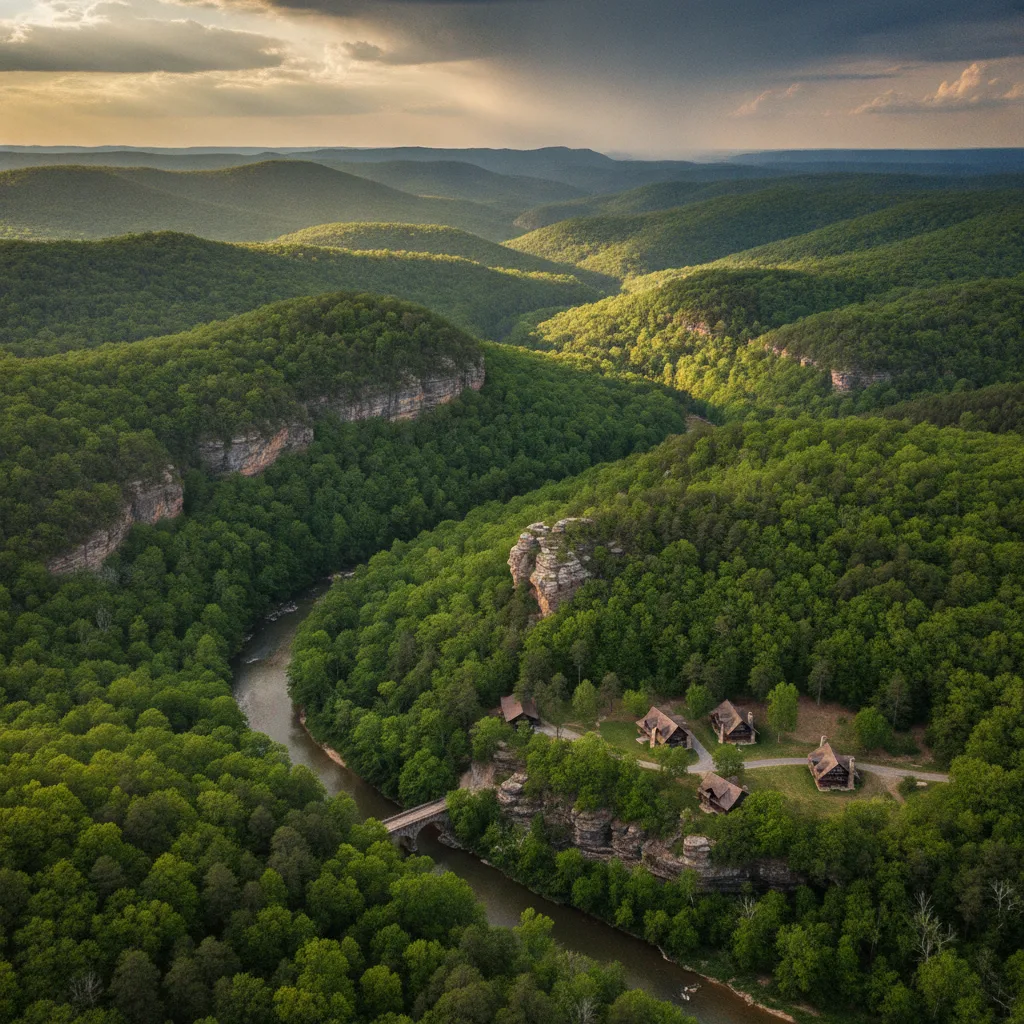
Welcome to our comprehensive guide to the Ozark National Forest Arkansas, a true gem nestled in the northwestern region of the state. Our team at Roam States has meticulously compiled this information to help you plan an unforgettable trip to this vast and verdant expanse. Far from generic travel advice, we offer specific, actionable insights to ensure your visit is as rewarding as the landscape itself.
Why Visit Ozark National Forest
The Ozark National Forest, encompassing 1.2 million acres primarily within the Ozark Mountains, offers a breathtaking escape into nature's embrace. We consider it one of America's most scenic and picturesque areas, providing abundant "natural" beauty in "The Natural State" of Arkansas. Visitors are drawn to its rugged terrain, characterized by unique geological features such as natural bridges, towering bluffs, and dramatic rock pedestals. The forest is a haven for clear mountain streams, hundreds of waterfalls (especially after rain), and an incredible diversity of flora and fauna, including old-growth forests and six endangered species.
Beyond its visual appeal, the Ozark National Forest provides a profound sense of solitude and adventure that can be hard to find in more commercialized destinations. It's a place where you can truly disconnect, whether you're chasing waterfalls, exploring ancient caves like Blanchard Springs Caverns (located within the forest), or simply enjoying the quiet of a remote campsite. The extensive network of trails, rivers, and scenic byways ensures that every visit can uncover something new, making it a destination we wholeheartedly recommend for those seeking authentic outdoor experiences.
Who It's Best For
The Ozark National Forest caters to a wide spectrum of outdoor enthusiasts, from seasoned adventurers to families seeking a refreshing getaway. Our team finds it particularly ideal for:
- **Hikers and Backpackers:** With over 395 miles of hiking trails, including the renowned Ozark Highlands Trail, it's a paradise for those who love to explore on foot.
- **Campers and RVers:** The forest boasts numerous developed campgrounds and ample opportunities for primitive, dispersed camping, offering a range of experiences from amenity-rich sites to secluded wilderness.
- **Water Sports Enthusiasts:** Clear streams and rivers like the Mulberry offer excellent opportunities for fishing, swimming, kayaking, and floating, particularly during warmer months.
- **Mountain Bikers and OHV Riders:** Dedicated trail systems provide thrilling rides for both mountain bikes and off-highway vehicles, with over 1,000 miles designated for OHVs.
- **Nature Photographers and Wildlife Viewers:** The diverse landscapes, waterfalls, and abundant wildlife (including deer, turkey, and bear) offer endless subjects for capturing stunning images and observing nature.
- **Families:** Many trails are suitable for families, and recreation areas often include picnic spots and swimming holes. Nearby attractions like Blanchard Springs Caverns add educational value.
If you appreciate rugged beauty, diverse recreational opportunities, and a chance to immerse yourself in a vast natural environment, the Ozark National Forest Arkansas is undoubtedly a destination for you.
Getting There & Parking
Reaching the Ozark National Forest is primarily done by car, as public transportation options are limited. The forest is spread across northern Arkansas, with its headquarters located in Russellville.
For those flying in, the most convenient airports are Northwest Arkansas Regional Airport (XNA) in Bentonville or Bill and Hillary Clinton National Airport (LIT) in Little Rock. From either airport, you will need to rent a car to access the forest.
Several scenic byways traverse the Ozark National Forest, making the drive itself part of the experience. We recommend considering:
- **Arkansas Scenic 7 Byway:** This route offers a wide variety of Ozark topography and scenic vistas, running for 60 miles within the forest.
- **The Pig Trail Scenic Byway (Highway 23):** Known for its winding roads and dramatic scenery, it's a favorite for motorcyclists and those seeking a thrilling drive.
- **Ozark Highlands Byway:** Provides access to rivers like the Mulberry and Big Piney Creek, popular for fishing and canoeing.
When planning how to get to Ozark National Forest, be aware that while main roads are generally well-maintained state highways, many roads into backcountry areas are unpaved and can be narrow or winding. Inquire locally about road conditions, especially after heavy rains, as some dirt roads may become muddy or washed out.
Ozark National Forest Parking
Parking is generally available at trailheads, visitor centers, and developed recreation areas throughout the forest. Many day-use areas and some trailheads may require a day-use fee. For instance, some recreation areas charge $3.00 per vehicle for day use. We recommend carrying small bills for self-pay stations where available. America the Beautiful passes are also accepted at many fee sites. Be sure to check specific recreation area pages on Recreation.gov or the USDA Forest Service website for the most current parking information and any associated fees for 2026.
Note that Lake Wedington Recreation Area is currently closed for a waterline project, affecting access and parking in that area.
Top Things to Do
The Ozark National Forest is a playground for outdoor enthusiasts, offering a diverse array of activities. Our team has identified the top things to do at Ozark National Forest to help you craft your adventure:
Ozark National Forest Hiking Trails
Hiking is undoubtedly one of the premier activities here, with over 395 miles of trails catering to all skill levels. We highly recommend exploring some of these iconic Ozark National Forest hiking trails:
- **Ozark Highlands Trail (OHT):** This 165-mile trail is recognized as one of the most scenic in the US, traversing diverse landscapes from streamside elevations to high ridges, with abundant bluffs and rock formations. It's open year-round, though some sections may have temporary closures or restrictions for motorized vehicles, bicycles, and horses until December 31, 2026. For maps and detailed information, we suggest visiting the Ozark Highlands Trail Association website.
- **Whitaker Point Trail (Hawksbill Crag):** A popular 2.7-mile (4.3 km) out-and-back trail leading to a prominent rock outcropping with expansive views. It's considered a top favorite among local hikers.
- **Glory Hole Waterfall Trail:** A unique 1.0-mile (1.6 km) easy hike where a creek dramatically plunges through a circular hole in a rock ledge. It's an excellent spot for wildflowers in spring.
- **Pedestal Rocks - Kings Bluff Loop:** An easy 4.0-mile (6.5 km) path featuring distinctive, weathered rock pedestals and views from a high bluff.
- **Alum Cove Natural Bridge Trail:** A 1.1-mile trail near Deer, Arkansas, taking hikers past rock outcrops and a 120-foot natural bridge.
For accessible hiking, the Collier Springs Trail (0.3-mile paved loop) and a 0.2-mile paved trail near the Blanchard Springs Recreation Area offer options for varying mobility levels.
Water Activities
The forest's numerous rivers and creeks provide ample opportunities for cooling off and recreation:
- **Floating and Kayaking:** The National Wild and Scenic Mulberry River is famous for its Class I and II whitewater, ideal for kayaking, canoeing, and rafting. We also recommend exploring the nearby Buffalo National River, offering unparalleled floating experiences.
- **Swimming:** Many beautiful swimming spots are found along scenic rivers and creeks. Developed recreation areas like Shores Lake and Long Pool offer designated swim beaches.
- **Fishing:** With 370 miles of streams, the Ozark National Forest is a prime destination for fishing. You can find trout, bass, catfish, and crappie in its waters.
Scenic Drives
Take advantage of the stunning landscapes by embarking on a scenic drive. The Ozark National Forest Scenic Byway (Highway 7) and the Pig Trail Scenic Byway are highly recommended for their breathtaking views, especially during fall foliage season.
Mountain Biking & OHV Riding
For those seeking more adrenaline, the forest offers extensive trail systems for mountain biking and off-highway vehicles (OHVs). The Huckleberry Mountain Horse Trail System, for example, offers 40 miles of multi-use trails for horseback riding, hiking, mountain biking, and OHVs. The Big Piney and Pleasant Hill Districts are particularly known for their OHV trails, with over 1,000 miles designated for such use. Always check for current trail conditions and closures, as some areas may be severely damaged due to heavy rains.
Caving and Exploration
While not directly in the forest, the nearby Blanchard Springs Caverns offers guided tours of a living underground cave, a truly unique experience.
Best Time to Visit
The Ozark National Forest offers distinct experiences throughout the year, and the best time to visit largely depends on your preferred activities. Our team breaks down the seasons:
- **Spring (March-May):** We consider spring one of the most beautiful times to visit. The landscape bursts into life with blooming wildflowers, and the many waterfalls are at their most spectacular after winter rains. Mild temperatures make it ideal for hiking and exploring.
- **Summer (June-August):** Summer brings warm temperatures (often 80s and 90s°F), perfect for water-based activities like swimming, floating, and kayaking in the forest's rivers and lakes. While popular, it can be crowded, and some trails might be hot.
- **Fall (September-November):** Autumn is arguably the most enchanting season, with the Ozark National Forest blazing with vibrant hues of red, gold, and rust. Cooler temperatures create prime conditions for hiking, scenic drives, and photography. Peak fall foliage typically occurs mid to late October, though this can vary with rainfall.
- **Winter (December-February):** Winter offers a quieter, more solitary experience. The landscape softens, and the trails are less crowded, making it ideal for brisk hikes and peaceful cabin stays. Some facilities, like water pumps and showers in campgrounds, may be turned off for winterization, and camping fees are often reduced during this period.
For those seeking solitude and dramatic scenery, fall and winter are excellent choices. For water activities, summer is king, while spring offers a balance of pleasant weather and natural beauty.
Where to Stay Nearby
Accommodations around the Ozark National Forest range from rustic camping to charming cabins and nearby town hotels. Our team recommends considering these options:
Ozark National Forest Camping
Camping is a quintessential Ozark experience, and the forest offers a variety of choices. The Ozark-St. Francis National Forests feature 16-23 developed campgrounds. These campgrounds provide various amenities, from full facilities to more primitive sites. Many offer beautiful scenery, solitude, and lake or river access.
Popular developed campgrounds include:
- **Blanchard Springs Recreation Area:** Offers campsites and is near the famous caverns. Some sites are available from $3/night.
- **Cove Lake Recreation Area:** Features amenities and scenic surroundings, with sites starting from $15/night.
- **Long Pool Recreation Area:** A larger campground with 41 sites, offering amenities.
- **Shores Lake Recreation Area:** Connects to hiking trails and offers swimming, boating, and fishing.
- **White Rock Mountain Recreation Area:** Known for its scenic views and access to multiple hiking trails.
- **Lake Wedington Recreation Area:** Offers cabins and campsites, though currently closed for a waterline project as of July 2026.
Most campgrounds offer primitive, tent camping sites, and some allow camping trailers, though electrical hookups are often unavailable. Many have water spigots, and some even provide dump stations. Several locations offer hot showers, with some being year-round (e.g., Blanchard Springs, Redding, Cove Lake) and others seasonal (May-Oct at Lake Wedington, Shores Lake, Long Pool).
We strongly advise making campground reservations several months in advance, especially for peak season visits, through Recreation.gov. Camping fees vary, typically from $4.00 - $30.00 per night per site.
For those preferring a more rugged experience, dispersed (primitive) camping is permitted in general forest areas outside developed recreation sites. However, there are restrictions: camping is limited to 30 consecutive days, and once that limit is reached, the camp must be removed for 14 days and cannot be reestablished within one mile of the original site. Total dispersed camping cannot exceed 90 days within a calendar year. Dispersed camping is generally not allowed near developed areas like campgrounds or trailheads.
Cabins & Lodging
For a more comfortable stay, consider renting one of the historic 1930s vintage cabins available within the Ozark National Forest, such as those atop White Rock Mountain or beside Lake Wedington (check current closure status for Lake Wedington). These often feature stone fireplaces and original furniture. Reservations for cabins and lodges can typically be made by calling the concessionaire.
Outside the forest, nearby towns like Eureka Springs offer a variety of cozy bars, live music venues, and unique shops, providing a charming nightlife atmosphere amidst nature's beauty. Other towns like Oark, Ozone, and Pettigrew also have cabins and vacation rentals available.
Sample 2-Day Itinerary
To help you make the most of your visit to the Ozark National Forest Arkansas, our team has crafted a sample 2-day itinerary, focusing on some of the forest's highlights:
Day 1: Waterfalls, Views, and Historic Trails
- **Morning (8:00 AM - 12:00 PM): Whitaker Point & Glory Hole Falls** Begin your day with two iconic hikes. Head to the Whitaker Point Trail (Hawksbill Crag) for a rewarding 2.7-mile round trip hike to one of Arkansas's most photographed spots. Afterward, drive to the Glory Hole Waterfall Trail for an easy 1.0-mile hike to a unique waterfall that plunges through a rock formation.
- **Lunch (12:00 PM - 1:00 PM): Picnic Lunch** Pack a picnic to enjoy at a scenic spot near one of your morning hikes or at a developed picnic area.
- **Afternoon (1:00 PM - 5:00 PM): Scenic Drive & Blanchard Springs Caverns** Embark on a portion of the Ozark National Forest Scenic Byway (Highway 7) or the Pig Trail Scenic Byway, soaking in the panoramic views. If time and interest allow, head to Blanchard Springs Caverns for a guided tour of this impressive living cave. Reservations are recommended for cavern tours.
- **Evening (5:00 PM onwards): Camp Setup & Stargazing** Check into a pre-reserved campsite like Blanchard Springs Recreation Area or Cove Lake Recreation Area. Enjoy a campfire dinner and take advantage of the dark skies for stargazing.
Day 2: River Adventures & Forest Exploration
- **Morning (8:00 AM - 12:00 PM): Mulberry River Floating or Hiking** Depending on the season and water levels, spend your morning kayaking or floating the National Wild and Scenic Mulberry River, known for its whitewater. Alternatively, if you prefer hiking, explore a section of the Ozark Highlands Trail, perhaps near a trailhead accessible from your camping area.
- **Lunch (12:00 PM - 1:00 PM): Local Eatery or Riverside Picnic** Grab a bite at a small town eatery near the Mulberry River (like Oark) or enjoy another riverside picnic.
- **Afternoon (1:00 PM - 4:00 PM): Alum Cove Natural Bridge or Pedestal Rocks** Choose another unique geological feature to explore. The Alum Cove Natural Bridge Trail offers a short, scenic hike to a natural bridge. Alternatively, the Pedestal Rocks - Kings Bluff Loop provides views of distinctive rock formations.
- **Late Afternoon (4:00 PM onwards): Departure or Extended Stay** Begin your journey home or, if you've opted for an extended stay, explore another nearby Arkansas highlight such as Mount Magazine State Park (Arkansas's highest point) or the vibrant arts community of Eureka Springs Historic District. Remember to visit our main Best places in Arkansas guide for more inspiration.
Last updated: 2026-07-13 by the Roam States team.