Our Platte River Valley (for Crane Migration) guide covers practical planning for Platte River Valley (for Crane Migration) Nebraska — best time to visit, getting there, and what to do on the ground.
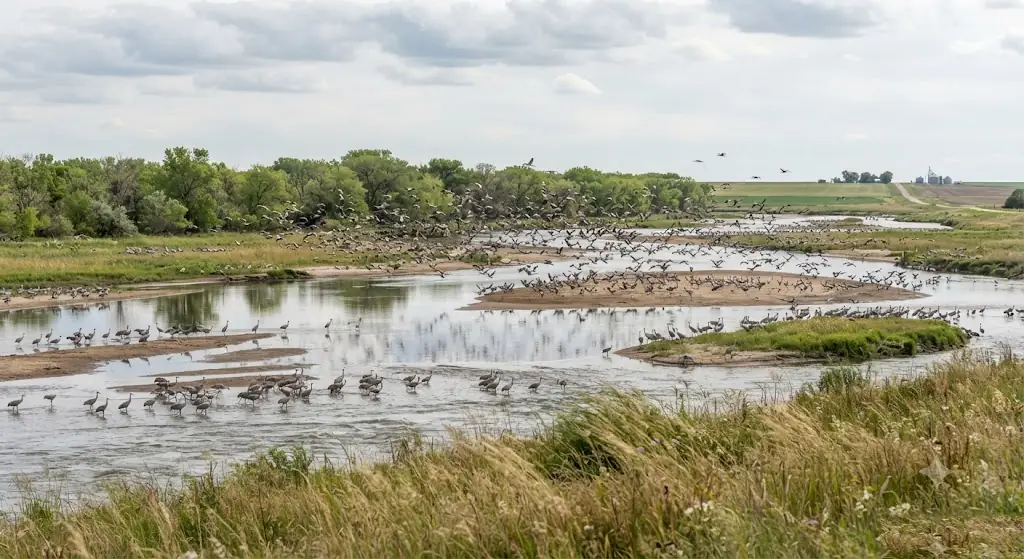
Each spring, the Platte River Valley hosts the spectacular migration of sandhill cranes, with approximately 80% of the world's population stopping here. This natural phenomenon offers breathtaking viewing opportunities for visitors and photographers. The sheer scale of this annual event, where nearly a million sandhill cranes converge on the shallow braided channels of the Platte River, transforms the landscape into a vibrant, cacophonous spectacle. We, the Roam States editorial team, consider this one of North America's most profound wildlife experiences, a testament to the enduring power of nature's cycles. Our team has extensively researched the intricacies of planning a visit to the Platte River Valley (for Crane Migration) Nebraska to ensure you have an unforgettable journey.
Why Visit Platte River Valley (for Crane Migration)
Visiting the Platte River Valley during the sandhill crane migration is an experience unlike any other. It's not just about seeing birds; it's about witnessing a primordial gathering, a tradition millions of years in the making. The Platte River provides a crucial stopover point for these magnificent birds, offering abundant food in nearby farmlands and the safety of shallow, braided river channels for roosting overnight. Without the energy gained here, cranes might arrive at their breeding grounds in a weakened condition, where food may be limited until the spring growing season begins.
The spectacle of hundreds of thousands of cranes taking flight at sunrise or returning to the river at sunset is truly awe-inspiring. Their distinctive calls, a guttural rattling that fills the air, create an unforgettable soundtrack to this natural wonder. For photographers, the opportunities are endless, from capturing dramatic silhouettes against the dawn sky to intimate portraits of cranes foraging in the fields. Beyond the cranes, the Platte River Valley ecosystem supports a diverse array of other migratory waterfowl, including ducks and geese, adding to the rich birdwatching experience. This unique convergence of wildlife and landscape makes the Platte River Valley a truly worthwhile destination for anyone seeking a profound connection with the natural world.
Who It's Best For
The Platte River Valley (for Crane Migration) is ideally suited for a diverse range of travelers. Foremost, it's a paradise for **birdwatchers and wildlife enthusiasts** who seek to witness one of the planet's most significant avian migrations. The sheer volume of sandhill cranes, coupled with the possibility of spotting endangered whooping cranes, makes it a premier birding destination.
**Photographers** will find endless inspiration in the dramatic sunrises and sunsets, the dynamic movements of thousands of birds, and the unique behaviors of the cranes. Whether you're a seasoned pro or an enthusiastic amateur, the photographic opportunities are exceptional. **Nature lovers** of all ages will appreciate the opportunity to connect with a wild, untamed spectacle, far removed from urban distractions. Families with older children who have an interest in wildlife or nature photography will also find this a rewarding trip, offering educational insights into avian ecology and conservation. While some viewing sites have amenities, the primary focus is on observing wildlife, so those seeking a highly structured, entertainment-heavy vacation might find other destinations more suitable. However, for those who appreciate the quiet majesty of the natural world and are prepared for early mornings and late evenings, the Platte River Valley offers an unparalleled experience.
Getting There & Parking
Accessing the Platte River Valley (for Crane Migration) is relatively straightforward, with several key towns serving as hubs for visitors. The cities of Kearney and Grand Island are central to the viewing areas, both easily reached via Interstate 80.
How to get to Platte River Valley (for Crane Migration)
The most common way to get to Platte River Valley (for Crane Migration) is by car. Interstate 80 runs directly through central Nebraska, providing convenient access to the primary viewing locations. If you're flying, the nearest airports are in Kearney (Kearney Regional Airport), Grand Island (Central Nebraska Regional Airport), Lincoln (Lincoln Airport), and Omaha (Eppley Airfield). Kearney Airport offers daily non-stop flights to Denver and Chicago, with rental cars available. From these airports, you'll rent a car to navigate to the viewing sites and your chosen lodging. We recommend checking flight availability and car rental options well in advance, especially during peak migration season.
Parking at Viewing Sites
Parking availability varies by viewing site. For instance, the Richard Plautz Crane Viewing Site near Gibbon (Exit 285 off I-80) and the Alda Crane Viewing Site near Alda (Exit 305 off I-80) both offer free public access and parking. These sites have been updated with new viewing decks and concrete trails.
At Fort Kearny State Recreation Area, where the Hike/Bike Bridge provides excellent over-river viewing, a Nebraska State Park Permit is required to park. This permit can be purchased at the Fort Kearny Visitors Center or at kiosks within the recreation area. Roadside turnouts are also available for safe daytime viewing, particularly south and east of the Alda interchange on Platte River Drive, and west of Rowe Sanctuary on Elm Island Road. When using roadside viewing, it's crucial to stay in your vehicle to avoid disturbing the birds and to respect private property. Always be mindful of designated parking areas and avoid stopping on roadways or private farm roads.
Top Things to Do
The primary focus of a visit to the Platte River Valley (for Crane Migration) is, of course, witnessing the spectacular sandhill crane migration. However, there are several ways to experience this phenomenon, along with other enriching activities in the area. Our team recommends prioritizing guided tours for the most immersive and educational experience, but self-guided options are also readily available.
Guided Crane Viewing Experiences
For an unparalleled experience of the sandhill crane migration, we highly recommend booking a guided tour. These tours provide access to strategically placed viewing blinds (discovery stations) that minimize human disturbance while offering exceptional views of the cranes on their river roosts.
- Audubon's Rowe Sanctuary (Gibbon/Kearney): Located about 20 minutes from Kearney, Rowe Sanctuary is a central hub for crane viewing. They offer daily guided tours at sunrise and sunset from early March through early April (March 4 to April 7 for 2026). Reservations for the 2026 crane season opened on January 8, 2026, at 9:00 AM CST, and are highly recommended due to popularity. These tours last approximately two hours and are led by trained guides. Guided tours cost $60 per person, plus taxes and fees. Rowe Sanctuary also offers guided photography experiences and overnight photography experiences for those seeking specialized access. Children under 12 are generally not allowed in the river blinds at Rowe Sanctuary.
- Crane Trust Nature & Visitor Center (Wood River/Grand Island): Situated near Wood River, the Crane Trust offers a variety of guided viewing blind tours, daytime driving tours, and evening footbridge tours. Riverfront blind tours are offered in the early morning and evening for $55 per participant, plus fees, for ages 12 and up. Daytime driving tours, which depart at 10 AM, are available for ages 6 and up at $35 per participant, plus fees. Evening footbridge tours, departing at 6 PM, cost $15 per participant for ages 12 and up. They also offer VIP overnight experiences. The Crane Trust is dedicated to protecting and preserving nearly 10,000 acres of critical habitat in the Central Platte River Valley.
- Dusty Trails (North Platte): Further west, Dusty Trails in North Platte offers guided bus tours and morning/evening blind tours. Sandhill Crane tours are scheduled from March 10, 2026, to March 31, 2026. These tours include information about crane behavior and the migration.
When participating in guided tours, it's crucial to follow viewing etiquette guidelines, which typically include remaining quiet, avoiding flash photography, and staying within designated areas to prevent disturbing the cranes.
Self-Guided Crane Viewing
For those preferring a more independent experience, there are several public viewing sites and roadside turnouts for things to do at Platte River Valley (for Crane Migration). These sites are generally free and open year-round with free parking.
- Fort Kearny State Recreation Area Hike/Bike Bridge (Kearney): This old railroad bridge spans the Platte River and is an excellent spot for sunrise or sunset viewing. It's about a 300-yard walk from the parking area. A Nebraska State Park Permit is required for parking.
- Plautz Viewing Platform (Gibbon): Located 1.5 miles south of I-80 Exit 285, this platform provides safe and spectacular views of cranes and other birds. It offers free public access and parking.
- Alda Crane Viewing Site (Alda): Situated 2 miles south of I-80 Exit 305, this is another public viewing deck along the Platte River with free parking.
- Roadside Turnouts: Various designated roadside turnouts allow for safe daytime viewing of cranes foraging in cornfields and marshes. These are particularly useful for seeing cranes outside of their river roosts. Remember to stay in your vehicle to avoid disturbing the birds.
- Crane Trust Nature & Visitor Center (Self-Guided): Even without a guided tour, the Visitor Center offers information on current daytime viewing locations, an observation tower, and pedestrian bridges.
When engaging in self-guided viewing, remember that most land in the Platte River Valley is private, so always respect property boundaries.
Platte River Valley (for Crane Migration) Hiking Trails
While the primary focus is on crane viewing, several areas offer opportunities for light hiking and exploring the unique prairie and riparian habitats. These trails provide a chance to stretch your legs and observe other wildlife in the Platte River Valley (for Crane Migration).
- Rowe Sanctuary Trails: Rowe Sanctuary features 15 miles of gravel trails along the river. During crane season (mid-February to mid-April), these trails are generally open daily from 10:00 AM to 4:00 PM, though this may be subject to change. Access to trails is strictly prohibited outside these times to protect the birds from disturbance. It's important to note that visitors will not be able to see cranes on the river from Rowe's trails, as these are meant for exploring the prairie and woodlands.
- Crane Trust Nature & Visitor Center Trails: The Crane Trust offers 10 miles of hiking trails through tallgrass prairie, forest, and wetland habitats. There's also a smaller trail along the river with viewing bridges and a 35-foot-high platform, which is very educational with placards explaining the ecosystem. Some trails may be closed to protect roosting cranes.
- Fort Kearny State Recreation Area Trails: The Fort Kearny Hike/Bike Trail System connects Fort Kearny to Cottonmill Park, a distance of 13.1 miles. This offers ample opportunities for walking and cycling, with potential for wildlife viewing.
- Windmill State Recreation Area: Located 14 miles east of Kearney, this park features a 2-mile nature trail in addition to its unique windmills and campgrounds.
When exploring Platte River Valley (for Crane Migration) hiking trails, we advise wearing appropriate footwear, dressing in layers, and bringing binoculars to enhance your wildlife observations. Always check for current trail conditions and closures before heading out.
Other Central Nebraska Attractions
While the cranes are the main draw, the Central Platte River Valley offers other attractions worth exploring:
- The Archway (Kearney): This iconic museum spans Interstate 80 and tells the story of the Great Platte River Road and the pioneers who traveled it. It features interactive exhibits on the history of westward expansion and the railroad.
- Stuhr Museum of the Prairie Pioneer (Grand Island): This living history museum features an 1890s Railroad Town with costumed actors, exhibits on prairie life, and early farm equipment. It's an excellent family-friendly attraction.
- Museum of Nebraska Art (MONA) (Kearney): Showcasing the art of Nebraska, MONA provides cultural enrichment and a different perspective on the state's history.
- Raising Nebraska (Grand Island): Located at Fonner Park, this interactive education center focuses on agriculture in Nebraska and how food goes from farms to tables.
- Carhenge (Alliance): While a bit of a drive from the immediate crane viewing areas, this quirky roadside attraction is a must-see for those on a USA road trip planner and is worth the detour for its unique artistic statement. You can learn more about it on our Carhenge destination guide.
- Ashfall Fossil Beds State Historical Park (Royal): Another significant natural history site, offering a glimpse into prehistoric Nebraska. Our Ashfall Fossil Beds guide provides more details.
- Boys Town (Omaha): A historic village with a unique story of helping children, located further east but a notable Nebraska destination. Explore our Boys Town guide for more information.
These additional attractions provide a well-rounded experience, complementing your crane migration adventure.
Best Time to Visit
The best time to visit the Platte River Valley (for Crane Migration) is during the spring migration season, which typically runs from **mid-February to mid-April**. During this period, approximately one million sandhill cranes converge on the Platte River Valley to rest and refuel before continuing their northward journey.
The **peak of the migration is generally the last week of March**. However, with warmer weather patterns, the bulk of the birds may arrive a little earlier. In fact, recent data suggests cranes are arriving, on average, one day earlier each year, and the average peak has moved forward by about 10 days over the last decade. For 2026, significant numbers of cranes were already present in the Platte River between Chapman and Overton by February 23.
To witness the most dramatic spectacles, plan your viewing for **one hour before sunrise and one hour before sunset**. These are the times when the cranes are most active on the river, leaving their roosts in the morning or returning to them in the evening. During the day, the cranes disperse into nearby cornfields and wet meadows to feed.
Weather in March can be unpredictable, ranging from mild to cold, windy, or rainy. We strongly advise dressing in warm, layered clothing to prepare for varying conditions. Reservations for guided tours, especially at popular sites like Rowe Sanctuary, open in early January (January 8, 2026, for the 2026 season) and are highly recommended due to demand.
Where to Stay Nearby
Finding comfortable and convenient Platte River Valley (for Crane Migration) lodging is essential for a successful trip, especially given the early morning and late evening viewing times. The cities of Kearney and Grand Island serve as the primary hubs for accommodation, offering a range of options from hotels to unique cabin rentals.
Hotels in Kearney
Kearney is a popular choice for visitors due to its proximity to Rowe Sanctuary and various public viewing sites. The city offers a wide selection of hotels to suit different budgets and preferences. Some highly-rated options for Platte River Valley (for Crane Migration) lodging in 2026 include:
- Crowne Plaza Kearney by IHG: A favorite for families and events, offering a resort-like feel with an indoor water park, restaurant, and spacious rooms.
- Hampton Inn Kearney: Known for reliability and comfort, a solid mid-range option with free breakfast and convenient access to I-80.
- Fairfield Inn & Suites Kearney: A clean, modern hotel offering good value with updated rooms and strong customer service.
- Comfort Inn Kearney I-80: An affordable and comfortable option right off the interstate, ideal for travelers passing through.
- Days Inn & Suites by Wyndham Kearney: A well-regarded option with good reviews.
- Microtel Inn & Suites by Wyndham Kearney: A budget-friendly and pet-friendly option.
- New Victorian Inn & Suites Kearney: Another well-reviewed choice.
- Younes Conference Center North: One of the newest and most modern hotels in Kearney, suitable for business travelers and events.
Many hotels in Kearney offer amenities like indoor pools, free breakfast, and Wi-Fi. We recommend booking your accommodation well in advance, particularly if your visit coincides with the peak migration period in March.
Hotels in Grand Island
Grand Island, located further east along the Platte River, also provides excellent lodging options and is close to the Crane Trust Nature & Visitor Center, as well as the Alda Crane Viewing Site. While specific 2026 hotel reviews are less detailed than Kearney, you can expect a range of chain hotels and local establishments. Some commonly found options include Super 8, Travelodge, and Motel 6. The city also features attractions like the Stuhr Museum and Raising Nebraska.
Unique Stays & Cabins
For a more immersive experience, consider renting a cabin or a unique stay directly on the Platte River. Several private rentals offer front-row seats to the migration.
- Crane Cabin Retreat: Nestled in the Platte River Valley, this retreat offers cabin comforts and access to river blinds for viewing.
- Private Riverfront Cabins: Various Airbnbs and Vrbo listings provide cozy cabins directly on the Platte River, allowing you to wake up to the sounds of cranes and watch them from your accommodation. These often include amenities like full kitchens and comfortable living spaces.
These unique Platte River Valley (for Crane Migration) lodging options can provide an unforgettable connection to the migration, though they often require booking far in advance and may come at a higher price point.
Sample 2-Day Itinerary
To help you make the most of your visit to the Platte River Valley (for Crane Migration) Nebraska, we've crafted a sample 2-day itinerary. This plan balances prime crane viewing with opportunities to explore the region's other attractions.
Day 1: Arrival & Rowe Sanctuary Immersion (Kearney Area)
- Morning (Arrival & Check-in): Arrive in Kearney, Nebraska. Check into your pre-booked hotel or cabin. We recommend choosing lodging with easy access to I-80 for convenience.
- Late Morning (Exploration & Lunch): Head to The Archway in Kearney, an impressive museum spanning I-80, to learn about the historical significance of the Platte River Road. Enjoy lunch at a local eatery in Kearney.
- Afternoon (Rowe Sanctuary Visitor Center & Trails): Drive to the Iain Nicolson Audubon Center at Rowe Sanctuary. Spend time at the visitor center, learning about the sandhill cranes and their migration. If time permits and trails are open (typically 10 AM - 4 PM during crane season), explore some of the 15 miles of gravel trails, keeping in mind you won't see cranes on the river from these trails.
- Late Afternoon/Evening (Guided Sunset Tour): Participate in a pre-booked guided sunset tour at Rowe Sanctuary. This is a prime opportunity to witness thousands of cranes returning to their river roosts for the night, a truly spectacular and noisy event. Remember to arrive early and follow all viewing etiquette.
- Dinner: Enjoy dinner in Kearney.
Day 2: Crane Trust & Central Nebraska Highlights (Grand Island Area)
- Pre-Dawn (Optional Guided Sunrise Tour): For the most dedicated birders and photographers, consider booking a guided sunrise tour at either Rowe Sanctuary or the Crane Trust. Witnessing the cranes depart their roosts at dawn is as captivating as their return.
- Morning (Crane Trust Nature & Visitor Center): Drive east to the Crane Trust Nature & Visitor Center near Wood River. Explore their exhibits, learn about conservation efforts, and visit the observation tower and pedestrian bridges. Consider a daytime driving tour with the Crane Trust to see cranes foraging in the fields.
- Lunch: Have lunch in Grand Island.
- Afternoon (Stuhr Museum or Public Viewing):
- Option A (History & Culture): Visit the Stuhr Museum of the Prairie Pioneer in Grand Island, a living history museum that transports you back to the 1890s.
- Option B (More Crane Viewing): Utilize the free public viewing decks, such as the Alda Crane Viewing Site (2 miles south of I-80 Exit 305) or the Richard Plautz Crane Viewing Site (1.5 miles south of I-80 Exit 285) for additional daytime or sunset viewing.
- Evening (Departure or Extended Stay): Depending on your schedule, begin your journey home or enjoy a final dinner in Grand Island or Kearney.
This itinerary is flexible and can be adjusted based on your interests and the availability of guided tours. Remember to build in travel time between locations and always check the latest hours and reservation requirements for all attractions and viewing sites.
FAQ
Platte River Valley (for Crane Migration) camping
Camping near the Platte River Valley (for Crane Migration) is a fantastic option for those who want to stay close to nature and potentially hear the cranes throughout the night. Fort Kearny State Recreation Area offers both electrical and primitive camp pads, along with showers, modern restrooms, and a dump station. It also provides access to eight sandpit lakes for fishing, a swimming beach, and nature trails. Windmill State Recreation Area, located 14 miles east of Kearney at the Gibbon Interchange, also has campgrounds and a 2-mile nature trail. Both Fort Kearny and Windmill State Recreation Areas require a Nebraska State Park Permit for entry and camping. We recommend making reservations well in advance, especially during the peak migration season in March.
things to do in Central Nebraska
Beyond the spectacular crane migration, Central Nebraska offers a variety of things to do. In Kearney, you can explore The Archway, a museum spanning I-80 that tells the story of the Great Platte River Road. The Museum of Nebraska Art (MONA) is also located in Kearney. Grand Island boasts the Stuhr Museum of the Prairie Pioneer, a living history museum with an 1890s Railroad Town, and Raising Nebraska, an interactive agricultural education center. Other attractions include Fonner Park and the Heartland Events Center in Grand Island, and the University of Nebraska Kearney campus. For outdoor enthusiasts, Calamus Reservoir offers recreational opportunities. You can also find unique shops and local dining in towns like Kearney and Grand Island. For more ideas, visit Visit Nebraska.
Platte River Valley (for Crane Migration) with kids
Visiting the Platte River Valley (for Crane Migration) with kids can be a memorable educational experience, though some considerations apply. While children under 12 are generally not allowed in the river blinds at Rowe Sanctuary, the Crane Trust Nature & Visitor Center offers activities suitable for younger visitors, including an animal display room, footbridges, and nature trails. The Visitor Center can also provide information on where to find cranes feeding in nearby fields, offering a comfortable viewing opportunity for families. Public viewing platforms, such as the Plautz Viewing Platform and the Alda Crane Viewing Site, are also good options for families, providing safe access and free parking. Daytime activities like exploring The Archway in Kearney with its interactive exhibits or the Stuhr Museum of the Prairie Pioneer in Grand Island with its 1890s Railroad Town and children's interactive play area can keep kids engaged. We recommend packing warm clothes, snacks, and binoculars for everyone, and being prepared for early mornings or late evenings for prime crane viewing.
best hotels near Platte River Valley (for Crane Migration)
The best hotels near Platte River Valley (for Crane Migration) are primarily found in Kearney and Grand Island. In Kearney, top-rated options for 2026 include the Crowne Plaza Kearney by IHG, known for its family-friendly amenities like an indoor water park, and the Hampton Inn Kearney, offering reliable comfort and free breakfast. Other well-regarded hotels include Fairfield Inn & Suites Kearney, Comfort Inn Kearney I-80, and Days Inn & Suites by Wyndham Kearney. Many of these hotels are conveniently located off I-80, providing easy access to viewing sites. For a unique experience, consider private cabin rentals along the Platte River, which can offer direct crane viewing from your accommodation. We advise booking your preferred lodging well in advance, especially for visits during the peak migration season in March.
Platte River Valley (for Crane Migration) tips
To make your Platte River Valley (for Crane Migration) experience truly exceptional, our team offers these essential tips:
- Book Early: Guided tours at Rowe Sanctuary and the Crane Trust, as well as popular accommodations, sell out quickly. Reservations for 2026 crane season tours at Rowe Sanctuary opened on January 8, 2026.
- Dress in Layers: March weather in Nebraska is highly unpredictable. Expect cold temperatures, wind, and potentially rain, especially during sunrise and sunset viewing.
- Respect the Birds and Private Property: Always stay in designated viewing areas and never approach the cranes in fields or on private land. Use your vehicle as a blind for daytime viewing. Silence your phone and avoid flash photography during tours.
- Bring Binoculars and a Camera: These are indispensable for a detailed viewing experience and capturing memorable photos. A tripod is also recommended for photography.
- Plan for Sunrise and Sunset: These are the prime times to see the cranes on the river, either leaving their roosts or returning for the night.
- Consider Guided Tours: While public viewing is available, guided tours offer expert insights and access to prime viewing blinds, enhancing your understanding and experience of the migration.
- Explore Beyond the Cranes: Central Nebraska offers other attractions like The Archway and Stuhr Museum to fill your daytime hours.
where to stay near Platte River Valley (for Crane Migration)
When deciding where to stay near Platte River Valley (for Crane Migration), your best options are the cities of Kearney and Grand Island. Kearney is particularly well-situated for accessing Audubon's Rowe Sanctuary and public viewing sites like the Fort Kearny Hike/Bike Bridge. It offers a wide array of hotels, including well-known chains like Crowne Plaza, Hampton Inn, Fairfield Inn & Suites, and Days Inn & Suites. Grand Island, to the east, is convenient for visiting the Crane Trust Nature & Visitor Center and the Alda Crane Viewing Site. Both cities provide dining options and other local attractions. For a more unique and secluded experience, consider booking a private cabin rental directly on the Platte River, offering unparalleled crane viewing opportunities. We advise securing your accommodation as early as possible, especially if traveling during the peak migration period in March, to ensure the best selection and availability.
Our team at Roam States believes that the Platte River Valley (for Crane Migration) offers an unparalleled wildlife spectacle, a truly bucket-list experience for any nature enthusiast. The sheer scale of the sandhill crane migration, combined with the dedicated conservation efforts and diverse viewing opportunities, makes it a destination we wholeheartedly recommend. Whether you opt for a guided tour or explore the public viewing sites, the primal calls and dramatic movements of these magnificent birds will leave an indelible impression. Prepare adequately, plan ahead, and immerse yourself in one of North America's greatest natural wonders. For more incredible Nebraska experiences, check out our guide to the Best Places in Nebraska.
Last updated: 2026-07-13 by the Roam States team.