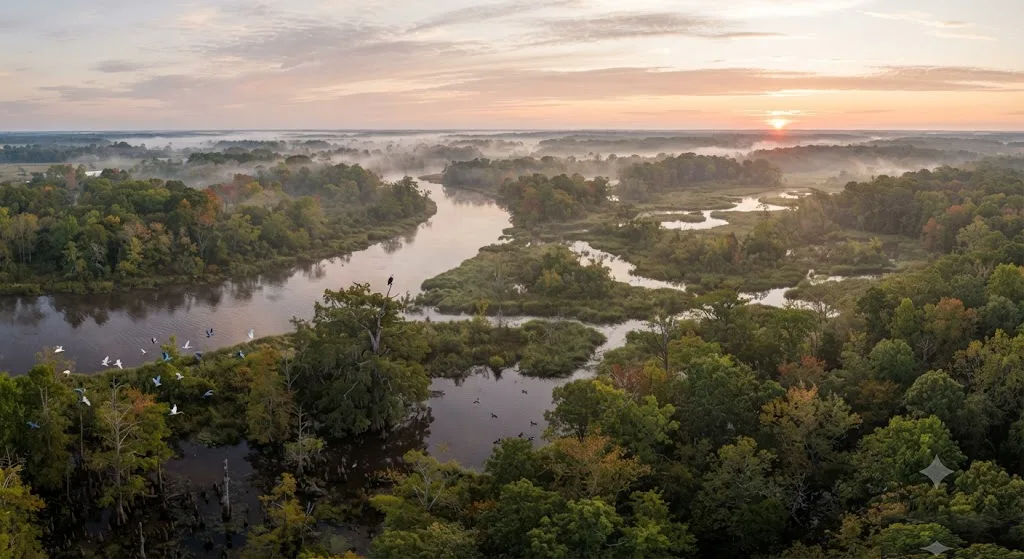
Our Roanoke River National Wildlife Refuge guide covers practical planning for Roanoke River National Wildlife Refuge North Carolina — best time to visit, getting there, and what to do on the ground. We’ve poured over the details to ensure you have all the specifics for an unforgettable trip to this vital ecological haven.
The Roanoke River National Wildlife Refuge North Carolina is a true gem, safeguarding one of the largest and most ecologically significant bottomland hardwood forests in the Mid-Atlantic. This sprawling refuge, covering over 30,000 acres across five counties in northeastern North Carolina, is a testament to conservation, offering a sanctuary for an incredible diversity of migratory birds and other wildlife. Our team at Roam States has explored its depths to bring you an independent and confident guide to planning your visit, ensuring you experience the best of its paddling trails, fishing spots, and unparalleled wildlife observation opportunities.
Why Visit Roanoke River National Wildlife Refuge
Visiting the Roanoke River National Wildlife Refuge is an immersion into a vibrant, untouched ecosystem. We recommend it for anyone seeking a genuine connection with nature, far from the crowds often found in more commercialized destinations. This refuge is a critical stopover and breeding ground for migratory birds, making it a birder's paradise, especially during spring and fall migrations. But it’s not just for birders; the refuge’s extensive network of waterways and ancient forests provides a serene backdrop for kayakers, canoeists, and anglers. The sheer scale of the protected bottomland hardwood forest is awe-inspiring, offering a glimpse into what much of the eastern US once looked like. It’s a place where the rhythm of the river dictates the pace of life, and every turn can reveal a new natural wonder.
Who It's Best For
The Roanoke River National Wildlife Refuge caters to a specific kind of traveler – those who appreciate raw, untamed nature and are willing to engage with it on its own terms. It's ideal for:
- **Paddlers:** With miles of designated canoe and kayak trails, it's a dream destination for those who love to explore by water.
- **Birdwatchers:** The refuge is a globally important bird area, especially for waterfowl, wading birds, and Neotropical migrants.
- **Anglers:** The Roanoke River is renowned for its striped bass run, and the refuge offers excellent freshwater fishing opportunities.
- **Wildlife Photographers:** Opportunities abound to capture stunning images of diverse flora and fauna in their natural habitat.
- **Nature Enthusiasts:** Anyone looking for quiet contemplation, a chance to observe wildlife, and an escape into a pristine forest environment will find their solace here.
- **Families with Older Children:** While not a playground, older children interested in nature, fishing, or paddling will find engaging activities.
If your idea of a perfect trip involves bustling tourist attractions and curated experiences, this might not be your primary destination. However, if you're drawn to the wild beauty of North Carolina's natural landscapes, perhaps after exploring the best places in North Carolina like the Biltmore Estate or the Great Smoky Mountains National Park, the refuge offers a refreshing contrast.
Getting There & Parking
Understanding how to get to Roanoke River National Wildlife Refuge is crucial, as the refuge is spread out with multiple access points rather than a single main entrance. The primary visitor contact point and headquarters are located in Windsor, North Carolina. We recommend starting your journey here for maps, information, and the latest updates on conditions.
To reach Windsor, you'll typically take US-17 or NC-308. From major cities like Raleigh or Norfolk, Virginia, plan for a drive of approximately 1.5 to 2 hours. Once in the vicinity, signage to specific refuge units or access points can be sparse, so a reliable GPS or pre-downloaded maps are essential. The refuge is comprised of various units, including the Broadneck Creek, Conine Island, and Sans Souci Ferry units, each offering different access points for trails, boat launches, and observation platforms.
Parking at the Roanoke River National Wildlife Refuge is generally available at designated trailheads and boat launches. As of 2026, there are no specific parking fees for general access to the refuge. We've found that parking areas are typically gravel lots or roadside pull-offs, varying in size. Always ensure your vehicle is completely off the main road and does not obstruct any access points. While parking is usually ample, during peak seasons for hunting or specific wildlife events, popular spots can fill up. We always advise checking the official U.S. Fish & Wildlife Service website for the Roanoke River National Wildlife Refuge before your visit for any specific advisories or temporary closures related to parking or access.
Top Things to Do
The things to do at Roanoke River National Wildlife Refuge are centered around its natural environment, offering a tranquil escape for outdoor enthusiasts. Our team has highlighted the best ways to experience this unique refuge:
- **Paddling the Roanoke River:** This is arguably the premier activity here. The refuge protects a significant portion of the Roanoke River, offering incredible opportunities for canoeing and kayaking. We highly recommend exploring the designated canoe trails, which wind through ancient cypress swamps and bottomland forests. These trails provide intimate access to wildlife and offer a unique perspective of the refuge's ecology. Keep an eye out for bald eagles, ospreys, and various waterfowl.
- **Wildlife Observation and Photography:** The refuge is a haven for wildlife. Birdwatchers will be thrilled by the sheer number of species, especially during migration. Look for warblers, vireos, and various wading birds in the wetlands. Mammals like white-tailed deer, black bears, and river otters also call the refuge home, though they can be more elusive. Bring binoculars and a good camera; the photographic opportunities are endless.
- **Fishing:** The Roanoke River is famous for its anadromous fish runs, particularly the striped bass. Anglers flock here in spring for the "striper run." Beyond that, the river and its oxbow lakes offer excellent fishing for largemouth bass, catfish, and various panfish. Always check North Carolina's fishing regulations before casting a line.
- **Hiking and Nature Trails:** While extensive long-distance hiking isn't the primary focus, the refuge offers several shorter trails and boardwalks that provide excellent opportunities for nature walks and wildlife viewing. We detail these further in a dedicated section below.
- **Environmental Education Programs:** The refuge occasionally hosts educational programs and guided tours, often led by refuge staff or volunteers. These can offer deeper insights into the refuge's ecology and conservation efforts. Check the official website for scheduled events.
These things to do at Roanoke River National Wildlife Refuge ensure a rich and rewarding experience for anyone eager to connect with the natural world.
Best Time to Visit
Choosing the best time to visit the Roanoke River National Wildlife Refuge significantly impacts your experience. Our team has identified the optimal periods based on wildlife activity, weather, and potential river conditions:
- **Spring (March to May):** This is arguably the most popular and vibrant time to visit. The weather is generally mild and pleasant, making it ideal for paddling and hiking. More importantly, spring brings the spectacular striped bass run, drawing anglers from across the region. Migratory birds are also abundant, making it a prime time for birdwatching as species return and begin nesting. However, be prepared for potential spring showers and rising river levels.
- **Fall (September to November):** Another excellent season, fall offers cooler temperatures, fewer insects, and stunning foliage as the bottomland hardwoods change color. This period is also crucial for fall bird migration, with many species moving south. Hunting seasons for certain game species may begin in fall, so always be aware of designated hunting areas and wear blaze orange if hiking during this time.
- **Winter (December to February):** While colder, winter can be a magical time, especially for waterfowl enthusiasts. Large numbers of ducks, geese, and swans use the refuge as a wintering ground. The bare trees offer clearer views of wildlife, and fewer visitors mean more solitude. Be prepared for cold temperatures and potentially icy conditions on trails or waterways.
- **Summer (June to August):** Summer can be challenging due to high temperatures, humidity, and an abundance of insects (mosquitoes and biting flies can be intense). However, if you're prepared for these conditions, you can still enjoy paddling and fishing, particularly in the early mornings or late evenings. Wildlife can be less active during the heat of the day.
We generally recommend spring and fall for the most comfortable weather and abundant wildlife viewing opportunities. Always check the weather forecast and river levels before your trip, especially if planning to paddle.
Where to Stay Nearby
When planning your trip, understanding Roanoke River National Wildlife Refuge lodging options is essential, as there are no accommodations within the refuge itself. Our team recommends looking to nearby towns for a comfortable stay that allows easy access to the refuge's various units.
- **Windsor, North Carolina:** As the home to the refuge headquarters, Windsor is a natural choice. It's a small, historic town that offers a few local motels and bed and breakfasts. While options are limited, staying here provides the closest proximity to refuge information and some access points.
- **Plymouth, North Carolina:** Located to the east, Plymouth is another good option, offering a slightly wider selection of budget-friendly hotels and motels. It's a bit larger than Windsor and sits directly on the Roanoke River, providing convenient access to some of the eastern refuge units.
- **Williamston, North Carolina:** To the south, Williamston offers more chain hotel options, restaurants, and amenities. It’s a slightly longer drive to some refuge units but provides more choices for comfort and dining.
- **Edenton, North Carolina:** For those seeking a more charming and historic experience, Edenton, a beautiful colonial port town, is about an hour's drive east. It boasts a selection of elegant bed and breakfasts and boutique hotels, offering a lovely base for exploring both the refuge and the town's rich history. This might be a good option if you want to combine your nature trip with a cultural experience.
When considering Roanoke River National Wildlife Refuge lodging, we always advise booking in advance, especially during peak seasons like the spring striped bass run, as local accommodations can fill up quickly. For a broader North Carolina experience, consider combining your refuge visit with a stay in other parts of the state, perhaps along the Blue Ridge Parkway or the Outer Banks, which offer vastly different but equally compelling lodging experiences.
Sample 2-Day Itinerary
Our team has crafted a sample 2-day itinerary for the Roanoke River National Wildlife Refuge to help you maximize your visit and experience the best of what this incredible area has to offer.
Day 1: Paddling and Wildlife Immersion
- **Morning (8:00 AM - 1:00 PM):** Arrive in Windsor, pick up any last-minute supplies, and head to a designated canoe/kayak launch point. We recommend the Broadneck Creek Paddling Trail for its stunning cypress-tupelo swamps and excellent birding opportunities. Spend the morning paddling leisurely, observing the diverse birdlife, and soaking in the tranquility of the bottomland forest. Pack a picnic lunch to enjoy on the water or at a designated stop.
- **Afternoon (2:00 PM - 5:00 PM):** After returning your paddle craft, head to the refuge headquarters in Windsor for any updated information or to explore their small interpretive exhibits. Then, drive to another unit like the Sans Souci Ferry unit, which often has easy access to observation platforms or short walking trails for continued wildlife viewing.
- **Evening:** Check into your lodging in Windsor or Plymouth. Enjoy a local dinner and prepare for an early start tomorrow.
Day 2: Hiking, Fishing, and Exploration
- **Morning (7:00 AM - 12:00 PM):** Start your day with a visit to one of the refuge's hiking trails. The Cut Cypress Trail is a great option, offering a chance to walk through the unique forest ecosystem. Alternatively, if you're an angler, dedicate the morning to fishing the Roanoke River for striped bass (in season) or other freshwater species from a designated bank access point or by boat.
- **Afternoon (1:00 PM - 4:00 PM):** Explore another section of the refuge or revisit a favorite spot for further wildlife photography. Consider driving some of the refuge's public access roads (where permitted) to observe different habitats. This is a good time to look for larger mammals like deer or even black bears, though sightings are never guaranteed.
- **Late Afternoon:** Begin your journey home, filled with memories of the Roanoke River's wild beauty.
This itinerary is flexible and can be adapted based on your interests, whether you're primarily a birder, a paddler, or an angler. Always remember to check current refuge conditions and regulations before heading out.
Roanoke River National Wildlife Refuge Hiking Trails
While the Roanoke River National Wildlife Refuge is primarily known for its extensive waterways, our team has found that the Roanoke River National Wildlife Refuge hiking trails offer fantastic opportunities to explore its unique terrestrial ecosystems. These trails are generally short to moderate in length, designed to immerse visitors in the bottomland hardwood forests and provide excellent wildlife observation points.
- **Broadneck Creek Boardwalk:** This accessible boardwalk trail is a highlight, allowing visitors to venture deep into the cypress-tupelo swamp without getting their feet wet. It's an excellent spot for birdwatching and observing the unique plant life of the wetlands. The boardwalk provides interpretive signs, enhancing the experience.
- **Cut Cypress Trail:** Located in one of the refuge units, the Cut Cypress Trail offers a more traditional forest hiking experience. It winds through mature bottomland hardwoods, providing opportunities to see various tree species, listen for forest birds, and perhaps spot some elusive mammals. The trail surface can be natural and may be muddy after rain, so appropriate footwear is advised.
- **River Access Trails:** Many of the refuge's units have shorter, informal trails that lead to river access points or observation areas. These are often unmaintained paths, so be prepared for rustic conditions. They are perfect for a quick stroll to enjoy river views or try some bank fishing.
When exploring the Roanoke River National Wildlife Refuge hiking trails, always be prepared for the environment. Wear sturdy shoes, bring insect repellent (especially in warmer months), and carry water. Remember that these are wild areas, so be aware of your surroundings and any potential wildlife encounters. We advise checking the official refuge website for the most current information on trail conditions and any temporary closures before your visit.
Is It Worth Visiting?
Our confident answer to "is Roanoke River National Wildlife Refuge worth visiting?" is a resounding yes, but with a clear understanding of what it offers. This is not a theme park or a highly developed national park with extensive visitor services and paved roads. Instead, it is a raw, expansive, and vital natural area focused on conservation and providing low-impact recreational opportunities.
For those who cherish solitude, appreciate the intricate beauty of a bottomland hardwood forest, and seek genuine wildlife encounters, the Roanoke River National Wildlife Refuge is absolutely worth visiting. We believe its value lies in its authenticity and the critical ecological role it plays. It offers unparalleled opportunities for paddlers to explore serene waterways, for birdwatchers to spot rare migratory species, and for anglers to pursue the famed striped bass. The absence of commercialization means a more immersive and less crowded experience, allowing for a deeper connection with nature.
However, if your travel preferences lean towards structured attractions, paved trails, or extensive amenities, you might find the refuge's rustic nature less appealing. It requires a certain level of self-sufficiency and a willingness to embrace the wild. But for those who are prepared for this, the rewards are immense. The chance to witness one of the Mid-Atlantic's largest intact bottomland forests, teeming with life, makes the Roanoke River National Wildlife Refuge an incredibly worthwhile destination for any true nature lover.
Last updated: 2026-07-08 by the Roam States team.