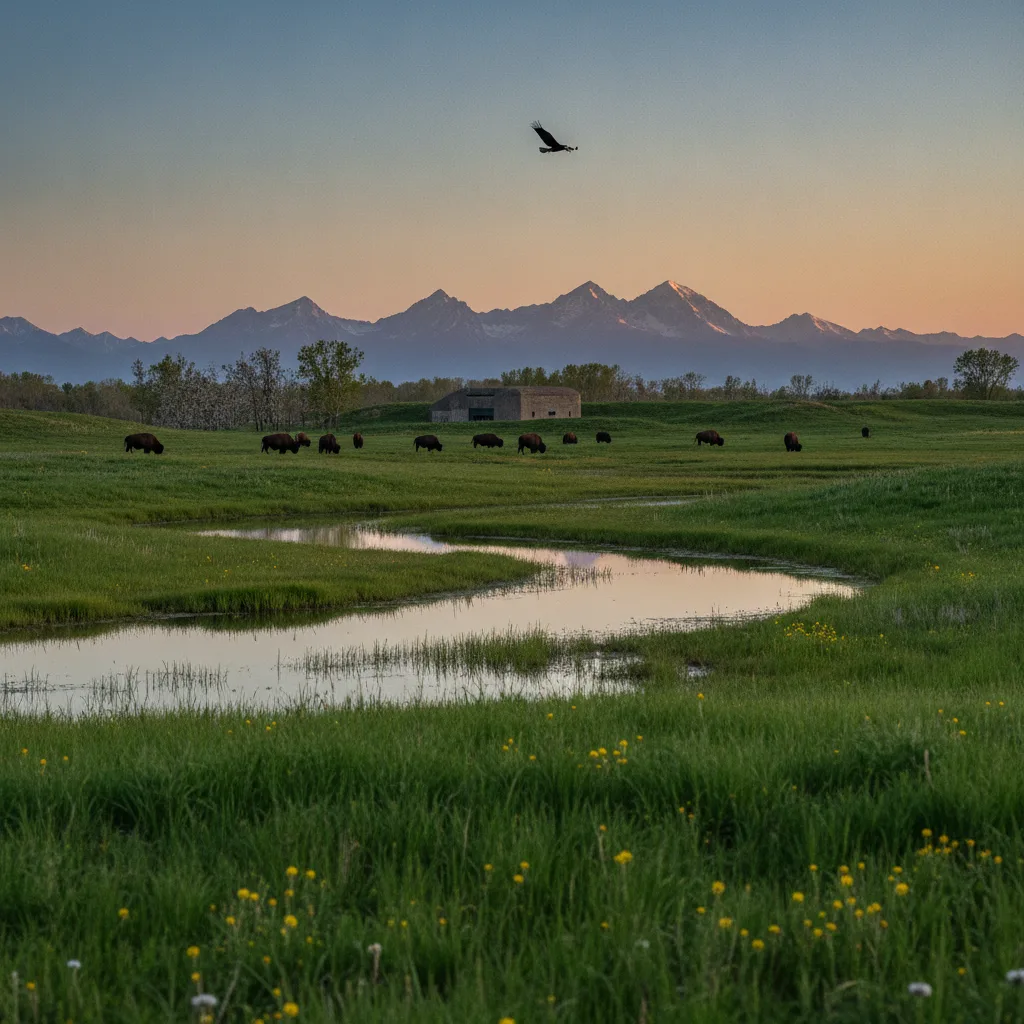
Our Rocky Mountain Arsenal National Wildlife Refuge guide covers practical planning for Rocky Mountain Arsenal National Wildlife Refuge Colorado — best time to visit, getting there, and what to do on the ground. We cut through the noise to bring you the essential details for an unforgettable visit to this remarkable prairie ecosystem, ensuring you make the most of your time observing bison, deer, and diverse bird species.
Rocky Mountain Arsenal National Wildlife Refuge Travel Guide — Colorado
Why Visit Rocky Mountain Arsenal National Wildlife Refuge
We believe the Rocky Mountain Arsenal National Wildlife Refuge offers one of Colorado's most surprising and rewarding natural escapes. Just 10 miles northeast of downtown Denver, this expansive 15,000-acre refuge is a testament to successful ecological restoration, transforming from a former chemical weapons manufacturing facility into a thriving sanctuary for over 330 species of wildlife. It’s a place where you can witness American bison herds roaming freely against the backdrop of the Rocky Mountains, observe majestic bald eagles soaring overhead, and spot elusive black-footed ferrets – one of North America's most endangered mammals.
For us, the draw is the sheer accessibility of such a rich wildlife experience so close to a major metropolitan area. It provides a unique opportunity to connect with nature without venturing deep into the wilderness. Whether you're a seasoned birder, a family looking for an easy outdoor adventure, or simply seeking a peaceful retreat, the refuge delivers. The diversity of habitats—grasslands, wetlands, and woodlands—supports an incredible array of life, making every visit a new discovery. We find it to be a compelling alternative or complement to the more strenuous mountain parks, offering a different perspective on Colorado's natural beauty.
Who It's Best For
Our team sees Rocky Mountain Arsenal National Wildlife Refuge as an ideal destination for a wide range of visitors. It's particularly well-suited for families with young children, as many of the trails are easy and flat, even accommodating strollers. The 11-mile Wildlife Drive provides an excellent opportunity for all ages and mobility levels to observe wildlife from the comfort of a vehicle, making it perfect for those who prefer a less strenuous experience or have limited mobility.
Birdwatchers will find themselves in paradise, with over 280 recorded bird species, including raptors, waterfowl, and migrating songbirds. Photographers, both amateur and professional, will appreciate the abundant wildlife and stunning prairie landscapes, especially during the golden hours of early morning and late afternoon. It's also a fantastic spot for casual hikers and cyclists looking for accessible trails without significant elevation gain. Anyone interested in conservation and environmental history will be fascinated by the refuge's remarkable transformation story from a Superfund site to a vibrant wildlife haven.
Getting There & Parking
Reaching the Rocky Mountain Arsenal National Wildlife Refuge is straightforward, as it's conveniently located just 10 miles northeast of downtown Denver.
Directions:
From I-70, take exit 278 (Quebec Street) and head north. Travel approximately 2.8 miles to Prairie Parkway/64th Avenue. Turn east onto Prairie Parkway and drive 0.6 miles to Gateway Road. Turn north onto Gateway Road, and this will lead you directly to the refuge entrance.
Parking:
We've found that parking at the refuge is generally ample and well-distributed across several designated areas. There are multiple parking lots available, including at the Visitor Center, along the south side of 64th Avenue, and at 96th Avenue and Chambers Road. When driving the 11-mile Wildlife Drive, visitors are required to park only in designated areas on the map and stay on paved roads. We always recommend checking the official refuge website for the most current parking information and any temporary closures or detours, especially during the Commerce City's 96th Avenue widening project, which may affect access to the Perimeter Trail.
Fees & Reservations:
One of the best aspects of visiting Rocky Mountain Arsenal National Wildlife Refuge Colorado is that entrance to the refuge is entirely free. You do not need an America the Beautiful pass to enter. While general admission is free, some special events or guided tours might require advance booking or a ticket. Fishing at Lake Mary and Lake Ladora, for example, requires a daily fee of $3 for anglers 16 and older, or a $60 season pass, in addition to a valid Colorado Fishing License. We recommend checking the official website for any specific program fees or reservation requirements for guided activities.
Top Things to Do
When you visit Rocky Mountain Arsenal National Wildlife Refuge, our team suggests focusing on activities that highlight its unique wildlife and expansive prairie landscape. There are many things to do at Rocky Mountain Arsenal National Wildlife Refuge, catering to various interests and energy levels.
- Wildlife Drive: The 11-mile self-guided Wildlife Drive is a must-do. It offers a fantastic opportunity to see bison, deer, raptors, and prairie dogs from your vehicle. An audio tour is available to enhance your experience, corresponding to mile markers along the route. Remember to stay in your vehicle when the road becomes one-way in the bison area and maintain a distance of at least 75 feet (23 meters) from bison.
- Visitor Center: We always recommend starting your visit at the Visitor Center. It features exhibits on the refuge's history, wildlife, and conservation efforts, including a black-footed ferret exhibit with live ferrets. You can pick up maps, ask helpful volunteers about recent wildlife sightings, and learn about children's programs. The Visitor Center is open Wednesday through Sunday from 9:00 AM to 4:00 PM (closed on federal holidays).
- Birdwatching: With over 280 species of birds recorded, the refuge is a premier birding destination. Bring your binoculars and look for bald eagles, ferruginous hawks, burrowing owls, and various waterfowl and songbirds. Early mornings and late afternoons are generally the best times for wildlife viewing.
- Fishing: Catch-and-release fishing is permitted seasonally at Lake Mary and Lake Ladora, typically from the first Saturday in April through November 30. A daily fee of $3 or a $60 season pass is required for anglers 16 and older, along with a valid Colorado Fishing License. Barbless hooks and no live bait are required.
- Archery: The refuge offers a free walk-up archery range with 10 lanes and shooting distances of 10-60 yards, located at the Havana Ponds Trail on the south side of the refuge. Note that the archery range may be closed for maintenance on specific dates, so check the refuge alerts.
- Nature Programs: Free nature programs are offered for all ages at the Visitor Center or designated locations, often without reservations. Kids can also participate in the Junior Ranger program.
These things to do at Rocky Mountain Arsenal National Wildlife Refuge provide a comprehensive experience of its natural and historical significance.
Rocky Mountain Arsenal National Wildlife Refuge Hiking Trails
Our team recognizes that exploring the Rocky Mountain Arsenal National Wildlife Refuge hiking trails is one of the best ways to immerse yourself in its unique prairie environment. The refuge boasts approximately 20 miles of easy hiking trails that traverse grasslands, wetlands, and woodlands. Most of these trails are open year-round and are generally accessible, making them suitable for all skill levels.
Some of the notable Rocky Mountain Arsenal National Wildlife Refuge hiking trails include:
- Discovery Trail: This 1-mile trail starts from the back patio of the Visitor Center and is a great option for a quick, informative walk, often leading to the black-footed ferret exhibit.
- Lake Mary Loop Trail: A 0.6-mile loop (or 1.7-mile loop when combined with Lake Ladora Loop) that winds along the shores of Lake Mary, offering boardwalks and piers for excellent wildlife viewing opportunities, especially for waterfowl and shorebirds.
- Perimeter Trail: At 14.2 miles (or 20.6 miles according to some sources), this is the longest trail, almost completely circling the refuge. Unlike interior trails, the Perimeter Trail is open for walking leashed pets. However, be aware of potential detours due to ongoing construction projects.
- Bluestem Loop Trail: A 1.3-mile trail through mixed and tall grass prairie, connecting with the Southwest Loop Trail and the regional Rocky Mountain Greenway Trail.
- Buckley Trail: Also 1.3 miles, this short-grass prairie trail offers great views of the Rocky Mountains and connects to the Henderson Hill Overlook Trail.
We advise visitors to stay on designated trails to protect habitats and ensure personal safety. Hiking and biking are not permitted in the bison enclosure areas, and pets (other than service animals) are generally prohibited on most refuge trails, with the Perimeter Trail being an exception for leashed pets. Maps of the Rocky Mountain Arsenal National Wildlife Refuge hiking trails are available at the Visitor Center and online.
Best Time to Visit
Our expert verdict is that the Rocky Mountain Arsenal National Wildlife Refuge offers something special in every season, but the "best" time to visit largely depends on your priorities.
We generally recommend **spring and fall** for the most comfortable weather and abundant wildlife viewing.
- Spring (March-May): This is an excellent time to witness migrating songbirds, frolicking bison calves, fawns, and prairie dog pups. Wildflowers begin to bloom, adding vibrant colors to the prairie. The weather is usually mild, making it ideal for hiking.
- Summer (June-August): While warmer, summer brings white pelicans, chorus frogs, and painted turtles to the wetlands, and wildflowers are in full bloom. Wildlife is active, but so are the crowds, especially on weekends. The refuge hours extend to 8:00 PM from May 1 to August 1, allowing for longer visits.
- Fall (September-November): We particularly love the fall for its mild temperatures and the dramatic display of mule and white-tailed deer bucks showing off their antlers. Sandhill cranes may make brief appearances during their migration. The changing colors of the grasses add a beautiful dimension to the landscape.
- Winter (December-February): For those seeking solitude and unique photographic opportunities, winter is fantastic. The skies are dotted with raptors, including migrating bald eagles, which feed on rabbits and prairie dogs. Snow-frosted bison can be seen on blustery days, offering a truly serene experience. Some trails are also suitable for snowshoeing or cross-country skiing during rare snowfalls.
Regardless of the season, wildlife viewing is often best in the early morning or late afternoon when animals are most active. The refuge is closed only on Thanksgiving, Christmas, and New Year's Day.
Rocky Mountain Arsenal National Wildlife Refuge Lodging: Where to Stay Nearby
While there is no Rocky Mountain Arsenal National Wildlife Refuge camping allowed within the refuge itself, our team recommends several excellent options for Rocky Mountain Arsenal National Wildlife Refuge lodging in the surrounding areas. Given its proximity to Denver and Commerce City, you'll find a range of accommodations to suit different budgets and preferences.
Commerce City, where the refuge is located, offers convenient access to various hotels. Many hotels near Denver International Airport (DIA) are also a short drive away, providing good value and amenities, often with complimentary airport shuttles.
Recommended Hotels:
- DoubleTree by Hilton Denver International Airport: This hotel offers a fitness center and is minutes from DIA, with a complimentary shuttle and on-site dining. It's a solid choice for convenience.
- Embassy Suites by Hilton Denver Central Park: A serene retreat offering American cuisine, an indoor pool, 24-hour fitness center, and free breakfast. It's about 10 minutes from Children's Hospital and close to the Denver Zoo.
- Hyatt Place Peña Station/Denver Airport: A highly-rated option near the airport, providing modern amenities and comfort.
- Residence Inn by Marriott Denver Central Park: For those seeking extended-stay amenities like kitchens, this is a good choice, often with positive reviews.
- Drury Plaza Hotel Denver Central Park: Known for its excellent guest ratings, this hotel often includes perks like free breakfast and an indoor pool.
- Woodspring Suites Denver Commerce City: A good option for budget-conscious travelers, offering extended-stay features.
These hotels provide comfortable bases for exploring the refuge and other nearby attractions in Denver and Commerce City. We always suggest booking your Rocky Mountain Arsenal National Wildlife Refuge lodging in advance, especially during peak travel seasons, to secure the best rates and availability.
Sample 2-Day Itinerary
To truly experience the Rocky Mountain Arsenal National Wildlife Refuge and its surroundings, our team recommends a two-day itinerary, allowing for a comprehensive exploration at a relaxed pace.
Day 1: Wildlife Immersion at the Refuge
- Morning (9:00 AM - 1:00 PM): Start your day at the Visitor Center to gather maps, learn about current wildlife sightings, and explore the exhibits, including the black-footed ferret display. Afterwards, embark on the 11-mile Wildlife Drive. Take your time, stopping at overlooks and listening to the audio tour. Keep your eyes peeled for bison, deer, coyotes, and various bird species.
- Lunch (1:00 PM - 2:00 PM): Pack a picnic to enjoy at one of the designated picnic areas within the refuge, or head to a local eatery in Commerce City.
- Afternoon (2:00 PM - 5:00 PM): Dedicate your afternoon to hiking some of the refuge's easy trails. We suggest the Lake Mary Loop Trail (0.6 miles) for its scenic boardwalks and waterfowl viewing, or the Discovery Trail (1 mile) for a quick, informative walk near the Visitor Center. If you're an avid birder, spend more time at the birding blinds.
- Evening: Enjoy dinner in Commerce City or venture into Denver for more dining options. Consider an early night to be ready for another day of exploration.
Day 2: More Refuge Exploration & Nearby Attractions
- Morning (8:00 AM - 12:00 PM): Return to the refuge for a different perspective. This morning, focus on a longer hike, such as a section of the Perimeter Trail (if open for hiking) or the Bluestem Loop Trail, to experience more of the diverse prairie habitats. Alternatively, if you're interested in fishing, spend the morning at Lake Mary or Lake Ladora (with the required permit).
- Lunch (12:00 PM - 1:00 PM): Grab lunch in Commerce City.
- Afternoon (1:00 PM - 5:00 PM): Explore some of Colorado's other incredible destinations. You could head west to Rocky Mountain National Park for a taste of the high country, or visit Garden of the Gods near Colorado Springs for its stunning red rock formations. For a cultural experience, Red Rocks Amphitheatre is a short drive away and offers scenic views even without a concert.
- Evening: Enjoy dinner in Denver or return to your lodging in Commerce City. Reflect on the diverse beauty of Colorado, from the urban prairie to the majestic mountains.
Last updated: 2026-07-05 by the Roam States team.