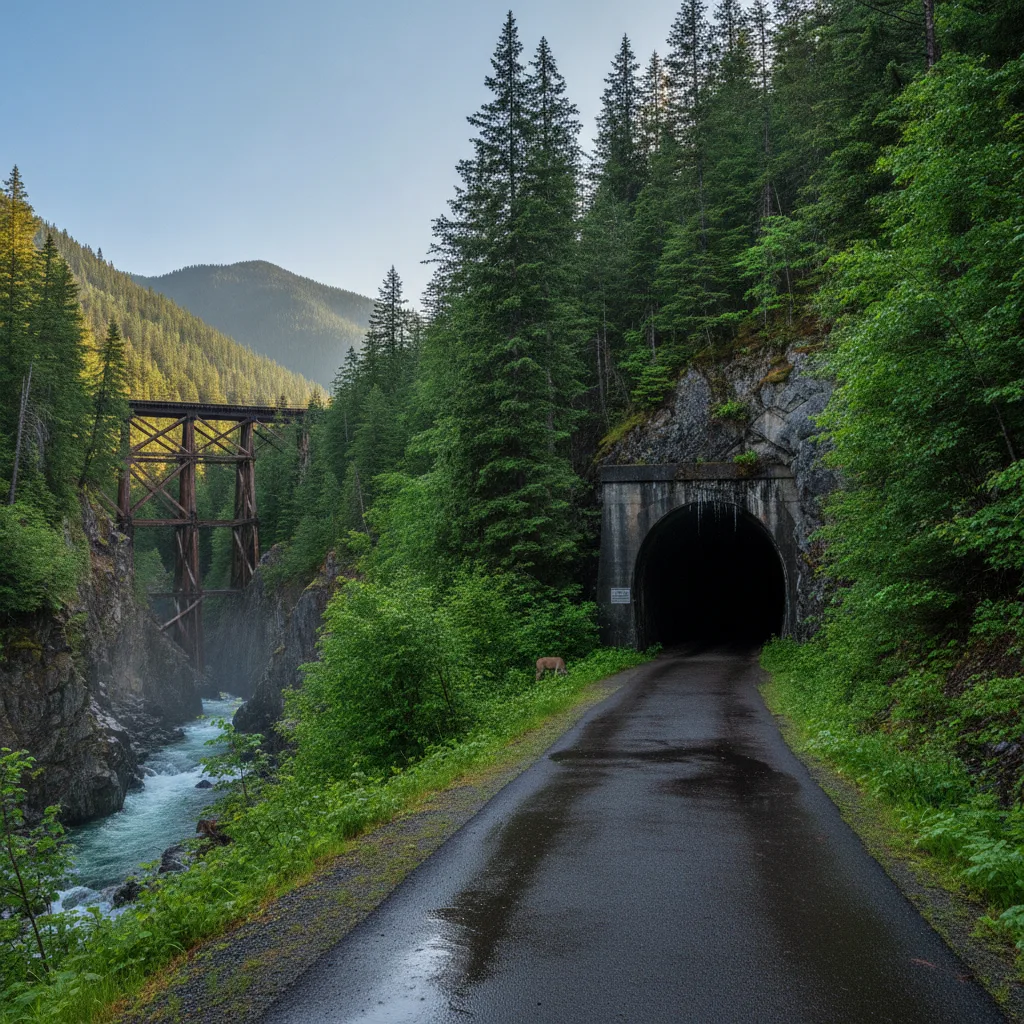
We've compiled everything you need to know for an unforgettable adventure on this premier rail-to-trail bike path, featuring numerous tunnels and high trestle bridges through the stunning Bitterroot Mountains.
As the Visit America editorial team, we pride ourselves on delivering confident, specific, and never generic travel advice. The Route of the Hiawatha Idaho is more than just a bike trail; it's a journey through history and breathtaking natural beauty. This 15-mile (one-way) path, often called the "Crown Jewel" of rail-to-trail adventures, promises an experience unlike any other, weaving through dark tunnels and soaring over majestic trestles.
Why Visit Route of the Hiawatha
The allure of the Route of the Hiawatha is multifaceted. For outdoor enthusiasts, it offers a unique blend of gentle downhill cycling and spectacular scenery. Imagine pedaling through a historic railway tunnel, emerging onto a sky-high trestle bridge with panoramic views of untouched forests and valleys below. This trail, managed by Lookout Pass Ski Area in partnership with the U.S. Forest Service, provides an accessible adventure for nearly all ages and skill levels.
Beyond the sheer thrill of the ride, the Route of the Hiawatha offers a tangible connection to America's industrial past. This former Milwaukee Railroad line, once a vital artery connecting the Midwest to the Pacific Northwest, was considered one of the most scenic stretches of railroad in the country. The engineering marvels of its construction, particularly the 1.66-mile (8,771-foot) St. Paul Pass Tunnel (also known as the Taft Tunnel), are a testament to human ingenuity. Today, as you traverse these same paths, you're not just cycling; you're stepping back in time, experiencing the rugged beauty that once challenged and inspired railroad builders. The cool, dark tunnels provide a refreshing break, while the towering trestles offer unparalleled photo opportunities and a sense of soaring above the landscape.
Who It's Best For
The Route of the Hiawatha is remarkably versatile, catering to a wide range of visitors. Families with young children will find the gentle 1.6% to 2% downhill grade from the East Portal to Pearson incredibly manageable and enjoyable. The excitement of riding through long, dark tunnels and over high trestles creates lasting memories for kids and adults alike.
For casual cyclists and those new to mountain biking, the well-maintained gravel surface and consistent downhill slope make for a relaxed and rewarding ride. You won't find strenuous climbs here, allowing you to focus on the scenery rather than your exertion. Even super seniors can easily enjoy this family-friendly trail.
Adventure seekers looking for a unique experience will appreciate the thrill of the long tunnels, which require bike lights, and the exhilarating feeling of crossing the high trestles. History buffs will be captivated by the trail's railroad heritage and the interpretive signs along the way. Nature lovers will revel in the dense forests, mountain views, and the chance to spot local wildlife. It's truly a destination that offers something for everyone, from those seeking a leisurely outing to those craving a dose of outdoor adventure.
How to Get There
Getting to the Route of the Hiawatha requires a bit of planning, as its primary access points are nestled in the rugged Bitterroot Mountains on the Idaho-Montana border. The most common starting point for the downhill ride is the East Portal Trailhead, which is technically in Montana, just a short drive from the Idaho state line.
If you're driving from Idaho, take Interstate 90 east to Exit 0 at the Idaho-Montana state line, which leads to Lookout Pass Ski Area. This is where you can purchase trail passes, shuttle tickets, and rent bikes and lights. From Lookout Pass, it's a scenic 7-mile drive down to Taft, Montana, and then approximately 2 miles up Forest Road 506 (a dirt road) to the East Portal parking area. This road is generally accessible for all cars, no 4-wheel drive is typically needed.
Alternatively, you can access the trail from the Idaho side, specifically the Pearson Trailhead, which is the bottom of the trail. This option is suitable if you plan to ride uphill (less common) or if you are being dropped off and picked up. To reach Pearson from Wallace, Idaho, take Exit 61 off I-90, follow the I-90 Business Loop to Bank Street, turn right on King Street, which becomes Forest Road 456, and follow it for about 20 miles. From Coeur d'Alene, you could also take I-90 east to the Rose Lake (State Highway 3) exit, then follow State Highway 3 to Forest Highway 50, and then Forest Road 456 to Pearson. However, most visitors prefer to start at the East Portal for the predominantly downhill experience.
When considering how to get to Route of the Hiawatha, be aware that cell service can be spotty in the immediate vicinity of the trailheads, so downloading maps or directions beforehand is advisable. Parking is available at the East Portal trailhead, and while reservations for parking aren't typically required, arriving earlier in the day is always a good strategy, especially on weekends and holidays, to ensure a spot.
Top Things to Do
The primary and most celebrated activity at the Route of the Hiawatha is, without a doubt, biking the trail. This 15-mile (24 km) rail-to-trail path offers an unparalleled cycling experience, primarily downhill, making it accessible and enjoyable for a wide range of ages and abilities.
The journey begins with the iconic St. Paul Pass Tunnel, also known as the Taft Tunnel, which burrows 1.66 miles (2.7 km) through the Bitterroot Mountains. This long, dark tunnel is a highlight, requiring bike lights and often a jacket due to its year-round cool temperature of about 47 degrees Fahrenheit. Emerging from the tunnel into the Idaho sunshine is an exhilarating moment. From there, the trail winds its way through nine additional shorter tunnels and over seven breathtaking sky-high trestle bridges, some as high as 232 feet and as long as 950 feet. These trestles offer stunning vistas of the surrounding forests and canyons, providing ample opportunities for photos and moments of awe. The gentle grade means you'll be pedaling, but not strenuously, allowing you to soak in the incredible scenery.
Beyond the main ride, other things to do at Route of the Hiawatha include:
- Shuttle Service: Most riders opt for the convenient shuttle service that transports you and your bike from the Pearson Trailhead (the bottom) back up to the Roland Trailhead (near the West Portal of the St. Paul Pass Tunnel). This allows you to enjoy the entire 15-mile downhill ride without having to pedal back uphill. Shuttles run frequently, though wait times can occur on busy days, especially after 12:30 PM.
- Bike and Equipment Rentals: If you don't have your own mountain bike, helmets, or lights, you can rent them at Lookout Pass Ski Area, located at I-90 Exit 0. Reservations for rentals are recommended. Powerful lights (300-400 lumens) are mandatory for the tunnels, and helmets are strongly recommended for all, and required for riders under 18.
- Photography: The Route of the Hiawatha is a photographer's dream. The dramatic tunnels, towering trestles, and lush forest scenery provide endless opportunities for capturing stunning images.
- Interpretive Stops: Along the trail, you'll find interpretive kiosks and signs that share the history of the Milwaukee Railroad and the natural environment, enriching your understanding of this remarkable area.
- Moonlight Rides: For a truly unique experience, consider one of the special Moonlight Night Rides offered on select dates during the season. These guided rides through the tunnels and over the trestles under the moonlight are by reservation only and often sell out.
These things to do at Route of the Hiawatha ensure that every visitor can tailor their adventure to their preferences, making it a truly memorable Idaho experience.
Best Time to Visit
The Route of the Hiawatha operates seasonally, and choosing the best time to visit significantly enhances the experience. The trail typically opens in late May, around Memorial Day weekend, and runs through late September or early October. For 2026, the trail officially opened on May 22nd and will operate seven days a week through September 13th.
Here's a breakdown by season:
- Late Spring (May-Early June): This is an excellent time to visit if you prefer cooler temperatures and fewer crowds. The surrounding forests are vibrant green, and waterfalls fed by melting snow can be particularly impressive. However, be prepared for potentially chilly conditions, especially in the long St. Paul Pass Tunnel, which maintains a constant 47°F (8°C) year-round.
- Summer (Mid-June to August): Summer is the peak season, offering the warmest weather and longest daylight hours. This is ideal for families and those who prefer comfortable temperatures. However, expect larger crowds, especially on weekends and holidays. Shuttle wait times can be longer during peak summer afternoons. Reservations for bike rentals are highly recommended during this period.
- Early Fall (September-Early October): As the leaves begin to change, the scenery becomes even more spectacular. The crowds thin out after Labor Day, making for a more serene experience. Temperatures are cooler but generally pleasant for cycling. The trail closes for the season in mid-September, so plan accordingly. The trail is closed during the fall and winter months due to hunting season and snow.
Regardless of when you visit, we recommend starting your ride early in the day, ideally by 8:30 AM when the trail facilities open. This helps you avoid potential shuttle queues at the bottom and allows for a more leisurely ride. It's also wise to check the official website (ridethehiawatha.com) for current trail conditions, opening and closing dates, and any alerts before your trip, as these can be subject to weather.
Where to Stay Nearby
While the Route of the Hiawatha is a destination in itself, there are several charming towns and areas nearby that offer excellent lodging options, allowing you to extend your adventure in Idaho.
- Wallace, Idaho: Located just 12 miles east of Lookout Pass Ski Area, Wallace is a historic mining town brimming with character. It offers a variety of lodging, from cozy motels and B&Bs to vacation rentals. Wallace boasts a vibrant main street with restaurants, unique shops, and an enjoyable bar scene. It’s a fantastic base for exploring the Silver Valley and other regional attractions.
- Kellogg, Idaho: A bit further west on I-90 from Wallace, Kellogg is home to Silver Mountain Resort, which offers a range of accommodations, including condos and a water park. It's a great option for families and those looking for more resort-style amenities.
- Mullan, Idaho: This small town is very close to the East Portal trailhead, offering a more rustic and convenient option for those who want to minimize drive time on the morning of their ride. Lodging here might be more limited but provides immediate access to the trail's vicinity.
- Coeur d'Alene, Idaho: Approximately an hour's drive west of the Hiawatha, Coeur d'Alene is a larger city with a wide array of hotels, resorts, and vacation rentals, particularly along the picturesque Lake Coeur d'Alene. If you're looking for a more upscale experience with diverse dining and entertainment options, and don't mind the drive, Coeur d'Alene makes an excellent hub for exploring North Idaho, including destinations like Lake Coeur d'Alene itself.
- Camping: For those who prefer to sleep under the stars, there are several camping options. Primitive, streamside campsites can be found along Loop Creek, FS Road 326, and the North Fork of the St. Joe River near the Pearson trailhead. Limited primitive sites are also available along Rainy Creek Road, which leads to the East Portal. Self-contained RVs may park overnight in the Lookout Pass Ski Area parking lot. Additionally, established campgrounds like Wallace RV Park in Wallace, ID, and Turner Flat Campground and Tin Can Flat Campground along the St. Joe River Road offer more amenities. For a more developed camping experience a bit further afield, Farragut State Park, about an hour and a half away, is another popular choice.
When planning your stay, we recommend booking accommodations in advance, especially during peak summer months, as popular options can fill up quickly.
Sample 2-Day Itinerary
To truly immerse yourselves in the beauty and history of the Route of the Hiawatha and its surrounding area, we recommend a two-day itinerary. This allows for a relaxed pace on the trail and time to explore the charming communities of North Idaho.
Day 1: Arrival, History, and Local Charm
Morning/Afternoon: Travel and Check-in
- Arrive in the Silver Valley region of Idaho. We suggest basing yourselves in the historic town of Wallace, Idaho, known for its rich mining heritage and proximity to the Hiawatha. Check into your chosen accommodation.
- If you haven't already, head to Lookout Pass Ski Area (Exit 0 on I-90) to pick up your trail passes, shuttle tickets, and any bike rentals you may need for tomorrow. It's always best to get these sorted the day before to save time.
Late Afternoon: Explore Wallace
- Take time to wander through Wallace's historic downtown. This entire town is listed on the National Register of Historic Places. Explore the mining museums, browse the antique shops, and soak in the old-west atmosphere.
- Consider a visit to the Wallace District Mining Museum or take an underground mine tour for a deeper dive into the region's past.
Evening: Dinner and Relaxation
- Enjoy dinner at one of Wallace's local eateries. Many offer hearty meals perfect after a day of travel.
- Relax and prepare for your big biking adventure tomorrow. Ensure your bike lights are charged and all gear is ready.
Day 2: The Route of the Hiawatha Adventure
Morning: The "Crown Jewel" Ride
- Start your day early. We recommend being at the East Portal Trailhead (via I-90 Exit 5 in Montana, then Forest Road 506) by 8:30 AM when the trail and facilities open.
- Begin your 15-mile, mostly downhill journey on the Route of the Hiawatha. Turn on your bike lights and venture into the 1.66-mile St. Paul Pass Tunnel.
- Enjoy the exhilarating ride across the seven sky-high trestles and through the nine shorter tunnels, taking plenty of stops to admire the stunning Bitterroot Mountain scenery. Remember to pack water, snacks, and a jacket for the cool tunnels.
Late Morning/Early Afternoon: Shuttle Back and Lunch
- Upon reaching the Pearson Trailhead at the bottom, catch the shuttle bus back up to the Roland Trailhead. From Roland, you'll ride back through the St. Paul Pass Tunnel to the East Portal parking area where your vehicle is. Shuttles run frequently, but expect potential waits on busy days.
- Head back to Wallace or find a spot for a well-deserved lunch.
Afternoon: Post-Ride Exploration or Relaxation
- Depending on your energy levels, you could visit nearby Lake Coeur d'Alene for some lakeside relaxation or explore more of the Silver Valley.
- Alternatively, enjoy a leisurely afternoon back in Wallace, perhaps visiting a local brewery or simply unwinding after your ride.
Evening: Departure or Extended Stay
- Depart for your next destination, perhaps heading west towards Coeur d'Alene or Spokane, or east into Montana.
- If time allows, consider extending your trip to explore other incredible Idaho destinations like the Sawtooth National Recreation Area, or even the unique Shoshone Falls further south. Idaho truly offers endless adventures! For more ideas, explore our guide to the Best Places in Idaho.
Route of the Hiawatha Hiking Trails
While the Route of the Hiawatha is primarily renowned as a world-class rail-to-trail biking destination, it's important to clarify its role as a hiking trail. The 15-mile path is open to both mountain bikers and hikers. However, given its gentle downhill grade and the sheer length, most visitors choose to bike it.
Our team recognizes that the appeal of the Route of the Hiawatha hiking trails lies in its unique features: the ten dark tunnels and seven sky-high trestles. Hiking through the 1.66-mile St. Paul Pass Tunnel, with a headlamp illuminating your path, is an experience in itself. The trestles, offering expansive views, are equally impressive when traversed on foot. However, if you plan to hike the entire 15 miles, be prepared for a long walk, and consider the shuttle service for the return trip from Pearson to Roland.
It's crucial to note that while hiking is permitted, you'll be sharing the trail with cyclists, so awareness and adherence to trail etiquette (staying to the right, yielding to uphill traffic, and giving audible warnings when passing) are essential. Powerful lights are mandatory for all users in the tunnels, whether biking or hiking.
For those seeking dedicated hiking trails in the surrounding Idaho Panhandle National Forests, there are numerous options off the Hiawatha itself. While the Hiawatha offers an incredible scenic walk, if you're looking for traditional hiking experiences with varied terrain and elevation gains, you might explore trails around Lookout Pass or in the St. Joe Ranger District. These can offer a different perspective of the Bitterroot Mountains, but they won't feature the unique rail-to-trail tunnels and trestles that define the Route of the Hiawatha hiking trails experience.
Route of the Hiawatha Camping
For those who wish to extend their adventure and truly immerse themselves in the natural beauty surrounding the trail, Route of the Hiawatha camping options are available, ranging from primitive dispersed sites to more developed campgrounds. Our team understands the appeal of waking up close to the trail, ready for an early start.
Near the trailheads, you'll find several choices:
- Dispersed Camping: There are numerous primitive, streamside campsites available along Loop Creek, Forest Service Road 326, and the North Fork of the St. Joe River, particularly near the bottom trailhead at Pearson. A limited number of primitive sites can also be found along Rainy Creek Road, the access road to the upper trailhead at the East Portal. These sites are generally free but lack amenities like water, restrooms, or picnic tables, so you must be self-sufficient and practice Leave No Trace principles. Some visitors even report dispersed camping spots at the base of the hill to the East Portal trailhead.
- Lookout Pass Ski Area: Self-contained RVs are permitted to park overnight in the Lookout Pass Ski Area parking lot, which is conveniently located just off I-90 at the Idaho/Montana border (Exit 0). This offers a convenient, albeit basic, overnight stay before or after your ride.
- Developed Campgrounds: For those preferring more amenities, several fee-based campgrounds are within a reasonable drive.
- Wallace RV Park (Wallace, ID): Located in the historic town of Wallace, this RV park offers full hookups, showers, and other facilities, and is open from spring through October.
- Turner Flat Campground & Tin Can Flat Campground: These campgrounds are located about 8-10 miles east of Avery on St. Joe River Road (FH50), offering camp units, potable water (June-October), and vault toilets. They are excellent choices for experiencing the St. Joe Wild and Scenic River.
- Further Afield: If you're willing to drive a bit further, Farragut State Park, located about an hour and a half away near Lake Coeur d'Alene, offers extensive camping facilities and is a popular option, especially for families looking to combine their Hiawatha trip with other activities.
When planning your Route of the Hiawatha camping trip, remember that cell service can be limited in remote areas, and it's essential to pack all necessary supplies, including water, food, and firewood. Always check for any fire restrictions or specific regulations from the U.S. Forest Service before setting up camp.
Is It Worth Visiting?
After experiencing the Route of the Hiawatha firsthand, our team can confidently declare: yes, it is absolutely worth visiting. This isn't just another bike path; it's a meticulously preserved piece of American history, transformed into an accessible outdoor adventure that captivates all who traverse it. The unique combination of engineering marvels and stunning natural beauty sets it apart from other rail-trails across the country.
The thrill of riding through the pitch-black, 1.66-mile St. Paul Pass Tunnel, feeling the cool air and hearing the echoes of your own progress, is a truly unforgettable sensation. Emerging from the darkness onto a towering trestle, with vast, unspoiled forests stretching out below and mountains piercing the sky, is a moment that stays with you long after the ride is over. This trail delivers on its promise of spectacular scenery and a gentle, mostly downhill ride that makes it enjoyable for families, casual cyclists, and seasoned adventurers alike.
Beyond the physical ride, the Route of the Hiawatha offers a unique educational experience, connecting you to the incredible story of the Milwaukee Railroad and the thousands of workers who built this ambitious line through challenging terrain. The interpretive signs along the way enrich the journey, providing context and appreciation for the historical significance of the route.
Considering the modest fees for trail passes and shuttle service, and the availability of bike rentals, the value for money is exceptional. It's an adventure that feels grand and epic, yet remains entirely approachable. So, if you're asking "is Route of the Hiawatha worth visiting?", our unequivocal answer is yes. It's a bucket-list experience that offers a perfect blend of adventure, history, and natural splendor, solidifying its reputation as the "Crown Jewel" of rail-to-trail adventures.
Last updated: 2026-07-05 by the Visit America team.