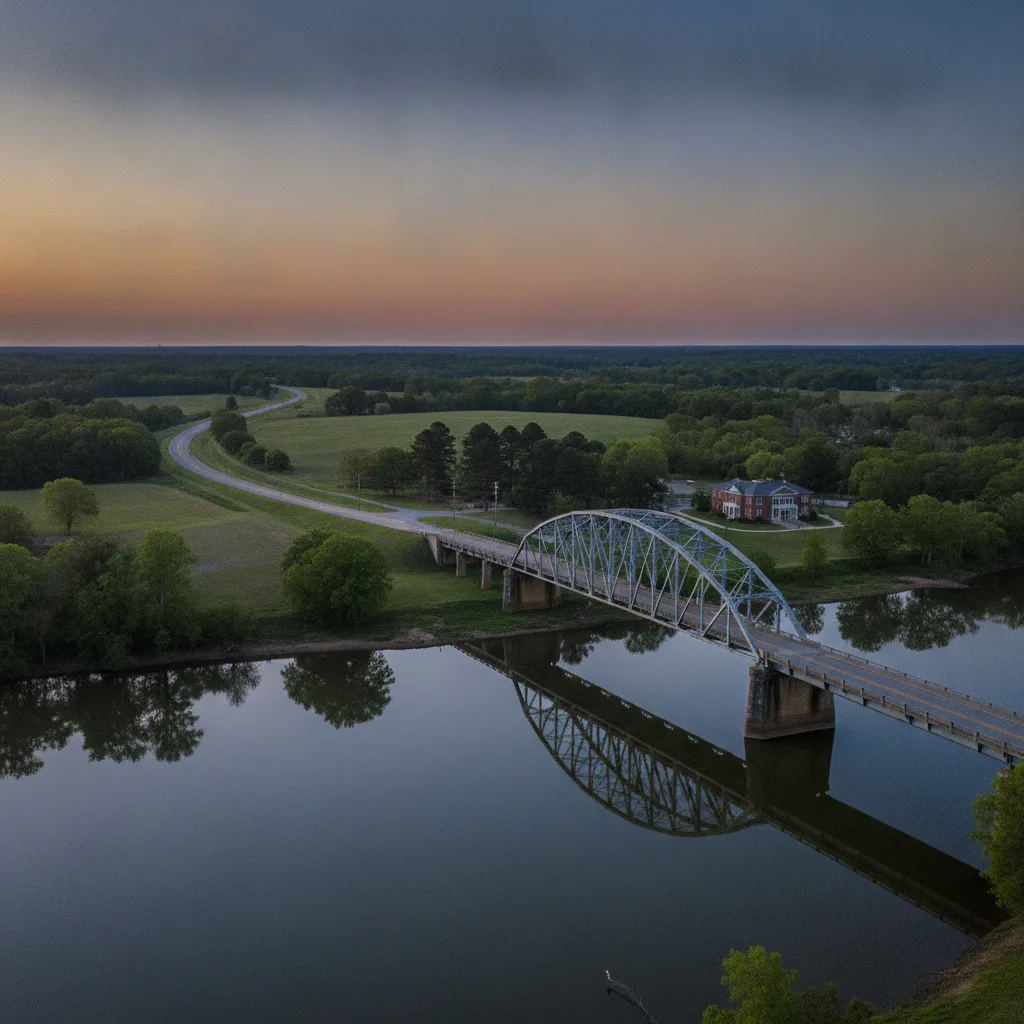
We believe this powerful destination offers an unparalleled journey into American history, and our team is here to help you navigate it.
Selma to Montgomery National Historic Trail Travel Guide — Alabama
The Selma to Montgomery National Historic Trail Alabama commemorates one of the most pivotal moments in the American Civil Rights Movement: the 1965 Voting Rights Marches. This 54-mile trail allows visitors to trace the courageous path of civil rights activists, serving as a powerful and essential reminder of the struggle for equality that reshaped our nation. Our team at Visit America has meticulously researched this trail to provide you with the most accurate and insightful guide for your 2026 visit.
Why Visit Selma to Montgomery National Historic Trail
Visiting the Selma to Montgomery National Historic Trail is more than just a trip; it's a pilgrimage into the heart of American democracy. This trail, designated a National Historic Trail, offers a profound educational experience, allowing us to connect directly with the sacrifices made for voting rights. We believe it's essential for every American, and indeed every global citizen, to understand the events that unfolded here. The trail preserves the memory of "Bloody Sunday" on March 7, 1965, when peaceful marchers were brutally attacked, and the subsequent successful march from March 21-25, 1965, which ultimately led to the passage of the Voting Rights Act.
As you traverse the route, you'll encounter interpretive centers, historic markers, and the very landscapes where history was forged. It's a chance to reflect on the courage of ordinary people who stood up against injustice and changed the course of history. Our team finds that the raw, honest presentation of this history is incredibly moving and provides a deeper understanding of the ongoing fight for civil and human rights.
Who It's Best For
The Selma to Montgomery National Historic Trail is best for history enthusiasts, civil rights advocates, students, and anyone seeking a deeper understanding of American history and the struggle for justice. It's particularly impactful for those interested in the Civil Rights Movement and its enduring legacy. While the subject matter is serious, we find that the interpretive centers and sites are designed to be accessible and thought-provoking for a wide range of visitors, including older children and teenagers who are studying American history. Travelers who appreciate immersive historical experiences over passive sightseeing will find this trail incredibly rewarding. If you're looking for a reflective journey that combines education with a tangible connection to the past, this trail is for you.
Getting There & Parking
Understanding how to get to Selma to Montgomery National Historic Trail and where to park is crucial for a smooth visit. The 54-mile trail primarily follows U.S. Highway 80, connecting Selma to Montgomery.
Starting Point: Selma
The journey typically begins in Selma, Alabama, at the historic Brown Chapel A.M.E. Church, the staging ground for the marches. From there, you'll cross the iconic Edmund Pettus Bridge. The Selma Interpretive Center, located at the foot of the Edmund Pettus Bridge, serves as a welcome center for the trail. As of July 2026, the main Selma Interpretive Center is undergoing major construction for renovation and expansion, with project completion expected by 2028. However, a temporary location is open at the Selma Welcome Center (14 Broad St.), operating Monday through Saturday from 9:00 a.m. to 4:30 p.m. Central Time.
Parking in Selma is generally available near the historic sites. For instance, the Selma Welcome Center has parking, and you can often find street parking or small lots near Brown Chapel A.M.E. Church and the Edmund Pettus Bridge. We recommend arriving early, especially during peak seasons or special events like the annual Bridge Crossing Jubilee in March, to secure convenient parking.
Mid-Point: Lowndes County
Approximately halfway between Selma and Montgomery, along U.S. Highway 80, you'll find the Lowndes Interpretive Center in White Hall. This center is open Monday through Saturday from 9:00 a.m. to 4:30 p.m. Central Time. Parking is readily available at the center.
End Point: Montgomery
The trail culminates at the Alabama State Capitol in Montgomery. The Montgomery Interpretive Center, located on the Alabama State University campus (1521 Harris Way, Montgomery, AL 36106), offers additional information and exhibits. It operates Monday through Saturday from 9:00 a.m. to 4:30 p.m. Central Time. The Alabama State Capitol itself is open Monday through Friday from 9:00 a.m. to 4:00 p.m., with guided tours on Saturdays at 9:00 a.m., 11:00 a.m., 1:00 p.m., and 3:00 p.m. Admission to the Capitol is free. Parking in downtown Montgomery can be found in various lots and garages, though availability may vary. We advise checking for specific parking options near the Capitol and other downtown attractions.
The entire trail is well-marked with blue-and-white signs, making it easy to follow by car. There are no entrance fees for the Selma to Montgomery National Historic Trail or any of its visitor centers.
Top Things to Do
When exploring the Selma to Montgomery National Historic Trail, our team recommends focusing on the key historical sites that bring the story of the Voting Rights Movement to life. These are the top things to do at Selma to Montgomery National Historic Trail:
- Walk the Edmund Pettus Bridge: This iconic bridge in Selma is where "Bloody Sunday" occurred. Walking across it is a solemn and powerful experience, allowing you to retrace the steps of the marchers.
- Visit the Selma Interpretive Center (Temporary Location): While the main center is under renovation, the temporary Selma Welcome Center provides essential context, exhibits, and a bookstore to begin your journey.
- Explore Brown Chapel A.M.E. Church: Located in Selma, this church served as the organizational hub and starting point for the marches. It's a National Historic Landmark and a powerful symbol of the movement.
- Immerse Yourself at the Lowndes Interpretive Center: Roughly halfway along the trail, this National Park Service site offers an introductory film and interactive exhibits detailing the events of the march, including the "Tent City" that housed families after the Voting Rights Act.
- Discover the Campsites: Along the 54-mile route, you'll find markers for the original campsites where marchers rested. These include David Hall Farm (Campsite #1) and Rosie Steele Farm (Campsite #2). While often undeveloped, they offer a poignant sense of the marchers' journey.
- Visit the City of St. Jude: This historic complex in Montgomery provided sanctuary and support to the marchers on their final night before reaching the Capitol.
- Conclude at the Alabama State Capitol: The march ended on the steps of this historic building in Montgomery. Tour the Capitol to see its impressive architecture and learn about its role in state history.
- Visit the Montgomery Interpretive Center: Located on the Alabama State University campus, this center provides further insights into the conclusion of the marches and their impact.
Beyond the trail itself, consider exploring other significant civil rights sites in Selma, such as the National Voting Rights Museum and Institute and the Museum of Slavery and Civil Rights. In Montgomery, don't miss the Civil Rights Memorial Center, the Rosa Parks Museum, and The National Memorial for Peace and Justice.
Best Time to Visit
Our team agrees that the best time to visit the Selma to Montgomery National Historic Trail is during the spring (March to May) or fall (September to November). During these seasons, the weather is generally mild and pleasant, making it ideal for walking the outdoor portions of the trail, such as the Edmund Pettus Bridge, and exploring the various sites without the discomfort of extreme temperatures.
March holds particular significance as it marks the anniversary of the original Selma to Montgomery marches. The annual Bridge Crossing Jubilee takes place in Selma around this time, commemorating "Bloody Sunday" and the subsequent march, with numerous cultural and historic events. While this can be a very powerful time to visit, it also means larger crowds and potentially higher lodging prices. If you plan to visit in March 2026, we strongly advise booking accommodations and any necessary arrangements well in advance.
Summers in Alabama (June to August) can be very hot and humid, with high temperatures increasing the risk of heat-related illnesses. If you visit during this time, we recommend wearing light, comfortable clothing, using sunscreen, and staying hydrated. Winters (December to February) can be unpredictable, ranging from mild to cold and damp.
Where to Stay Nearby
Finding comfortable and convenient Selma to Montgomery National Historic Trail lodging is essential for a rewarding visit. Our team has identified options in both Selma and Montgomery to suit different preferences and itineraries.
Selma Lodging
Selma offers several hotel options, particularly along US-80 and Highland Avenue. These provide a good base for exploring the initial sites of the trail.
- Hampton Inn Selma: Located off US-80, this hotel offers amenities like free WiFi, free hot breakfast, and an indoor pool. It's a reliable choice for comfort and convenience.
- Holiday Inn Express Selma by IHG: This recently renovated hotel also provides free breakfast, WiFi, and parking, with easy access to historic sites.
- Luxury Inn and Suites: Another well-rated option in Selma, offering comfortable stays.
- Baymont by Wyndham Selma: A budget-friendly option with a welcoming atmosphere.
For those seeking a more unique experience, there are also mentions of historic farm stays in the heart of Alabama's Black Belt Region near Selma.
Montgomery Lodging
Montgomery, as the state capital and the trail's endpoint, offers a wider array of lodging choices, from boutique hotels to major chains, many within walking distance of civil rights sites and the Alabama State Capitol.
- Trilogy Hotel Montgomery, Autograph Collection: One of the city's newer and highly-rated hotels, located in beautifully restored warehouses and within walking distance of downtown civil rights sites.
- Springhill Suites Montgomery Downtown: A comfortable hotel set in a renovated building, just blocks from the Legacy Museum.
- Renaissance Montgomery Hotel & Spa at the Convention Center: A larger, modern hotel near the riverfront park and convention center, within walking distance of many sites.
- Red Bluff Cottage Bed and Breakfast: For a taste of Southern hospitality, this B&B offers antique-furnished rooms.
- Dwella at Kress on Dexter: A condo hotel offering unique stays, including Airbnb options in the former home of F. Scott Fitzgerald.
Numerous other hotel/motel chains are located along I-85 and throughout downtown Montgomery. We recommend booking in advance, especially if your visit coincides with legislative sessions or major events in Montgomery, as lodging can be tight.
Sample 2-Day Itinerary
To fully appreciate the Selma to Montgomery National Historic Trail, we recommend dedicating at least two days. This allows for a comprehensive and reflective experience without feeling rushed.
Day 1: Selma and the Road to Lowndes
- Morning (Selma): Begin your day in Selma. Start at the temporary Selma Welcome Center (14 Broad St.) to gather information and gain initial context. From there, walk to the historic Brown Chapel A.M.E. Church, a pivotal meeting place for activists. Then, make the solemn walk across the Edmund Pettus Bridge, reflecting on the events of "Bloody Sunday."
- Lunch (Selma): Enjoy lunch at a local eatery in Selma.
- Afternoon (Selma & Lowndes County): Visit the National Voting Rights Museum and Institute in Selma to deepen your understanding of the struggle for suffrage. Afterwards, begin your drive east on U.S. Highway 80, following the trail markers. Your next major stop will be the Lowndes Interpretive Center in White Hall. Allow ample time here to explore the exhibits and watch the introductory film, which powerfully narrates the story of the march and "Tent City."
- Evening (Selma or En Route): Depending on your pace, you can choose to stay overnight in Selma or continue a bit further towards Montgomery, perhaps stopping at one of the marked campsites along the trail for a moment of reflection before checking into your accommodation.
Day 2: Lowndes to Montgomery and Beyond
- Morning (Lowndes & Montgomery): If you stayed in Selma, drive to the Lowndes Interpretive Center first thing. Then, continue your drive along U.S. Highway 80 towards Montgomery. Keep an eye out for additional historical markers and campsites along the way, such as the City of St. Jude, which offered refuge to the marchers.
- Late Morning/Lunch (Montgomery): Arrive in Montgomery. Head directly to the Alabama State Capitol, the endpoint of the march. Explore the Capitol building (open Monday-Friday 9am-4pm, Saturday guided tours only) and its grounds. Have lunch in downtown Montgomery.
- Afternoon (Montgomery Civil Rights Sites): Dedicate your afternoon to Montgomery's other significant civil rights landmarks. We recommend visiting the Civil Rights Memorial Center, the Rosa Parks Museum (check for potential closures due to staffing shortages), and The National Memorial for Peace and Justice. These sites collectively offer a comprehensive and moving account of the broader Civil Rights Movement and its ongoing impact.
- Evening (Montgomery): Enjoy dinner in Montgomery, perhaps exploring the vibrant downtown area or Riverfront Park.
This itinerary allows for a deep dive into the history of the Selma to Montgomery National Historic Trail and its surrounding civil rights context. Remember to wear comfortable walking shoes and bring water, especially during warmer months.
Frequently Asked Questions
Selma to Montgomery National Historic Trail camping
Our team has found that there are no designated camping facilities directly on the Selma to Montgomery National Historic Trail itself. The trail follows public roads, and the historic campsites used by the marchers are generally undeveloped and not set up for modern camping. However, if you're looking for Selma to Montgomery National Historic Trail camping options nearby, there are several campgrounds in the broader region, such as Gunter Hill Campground, Paul Grist State Park, and Prairie Creek Campground. These are typically a short drive from the main trail route.
Things to do in Selma to Montgomery
Beyond the core sites of the Selma to Montgomery National Historic Trail, there are many things to do in Selma and Montgomery. In Selma, explore the Old Town Historic District, visit the Museum of Slavery and Civil Rights, and the Old Depot Museum. In Montgomery, immerse yourself in the city's rich history at the Civil Rights Memorial Center, Rosa Parks Museum, and The National Memorial for Peace and Justice. You can also enjoy cultural attractions like the Alabama Shakespeare Festival, the Montgomery Museum of Fine Arts, and the Montgomery Zoo.
Selma to Montgomery National Historic Trail with kids
Visiting the Selma to Montgomery National Historic Trail with kids can be a powerful educational experience, though it requires careful planning due to the serious nature of the history. Our team suggests preparing children beforehand with age-appropriate resources. The interpretive centers (Lowndes and Montgomery) offer films and interactive exhibits that can engage older children. In Montgomery, family-friendly activities like the Montgomery Zoo and Mann Wildlife Learning Museum or a stroll along Riverfront Park can provide a lighter balance to the historical immersion.
Best hotels near Selma to Montgomery National Historic Trail
For the best hotels near Selma to Montgomery National Historic Trail, our team recommends considering accommodations in both Selma and Montgomery. In Selma, the Hampton Inn Selma and Holiday Inn Express Selma by IHG are popular choices offering comfort and amenities. In Montgomery, the Trilogy Hotel Montgomery, Autograph Collection, and Springhill Suites Montgomery Downtown are excellent options, often within walking distance of key civil rights sites and the Alabama State Capitol. Numerous other hotel chains are available in Montgomery along I-85 and downtown.
Selma to Montgomery National Historic Trail tips
Our key Selma to Montgomery National Historic Trail tips for visitors include: wear comfortable walking shoes, as you'll be doing a fair amount of walking, especially across the Edmund Pettus Bridge. Bring water and sunscreen, particularly during warmer months, as temperatures can be high. Allow ample time at each interpretive center and historical site for reflection. Consider visiting during spring or fall for the most comfortable weather. While there are no fees for the trail or visitor centers, some associated museums may have admission costs. Finally, remember that the Selma Interpretive Center is currently undergoing major renovations, but a temporary location is available.
Where to stay near Selma to Montgomery National Historic Trail
When considering where to stay near Selma to Montgomery National Historic Trail, our team suggests dividing your stay between Selma and Montgomery, or choosing one city as a central hub. Selma offers convenient access to the trail's starting points and the Edmund Pettus Bridge, with hotels like the Hampton Inn Selma and Holiday Inn Express Selma by IHG. Montgomery provides a broader range of accommodations, including upscale options and those closer to the Capitol and other civil rights museums, such as the Trilogy Hotel Montgomery or Springhill Suites Montgomery Downtown. This allows for flexibility in exploring the 54-mile route.
The Selma to Montgomery National Historic Trail is a profound journey into the heart of America's civil rights struggle. We encourage every traveler to experience this powerful path and reflect on its enduring lessons. For more incredible experiences in the state, explore our guide to Best places in Alabama, or delve into specific destinations like Gulf Shores & Orange Beach or the U.S. Space & Rocket Center.
Last updated: 2026-07-05 by the Visit America team.