Seven Magic Mountains Travel Guide — Nevada
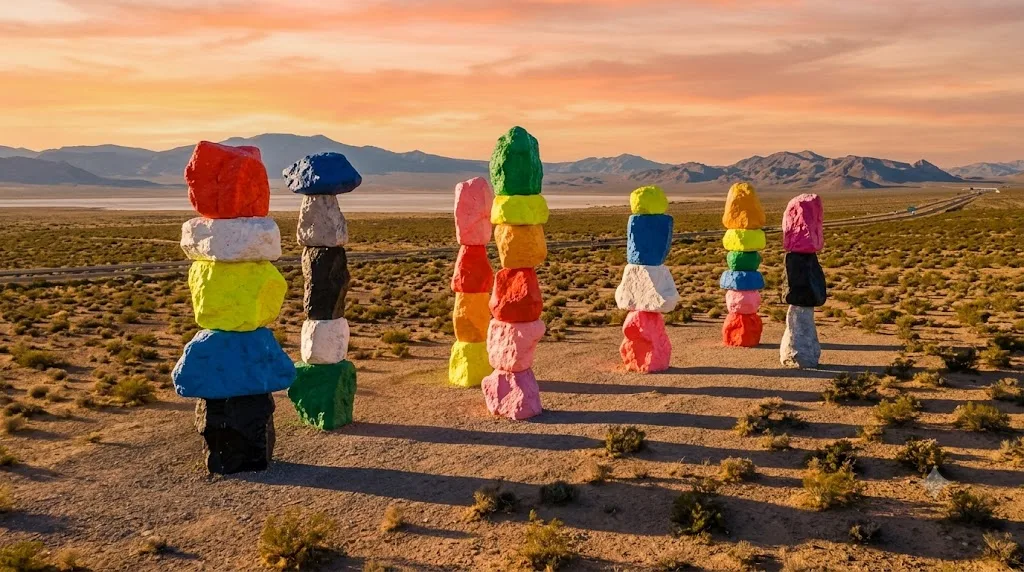
Seven Magic Mountains Nevada, a large-scale desert art installation creating a stark, colorful juxtaposition against the Mojave landscape. This guide provides an independent, expert perspective on visiting this unique attraction, ensuring you have all the necessary information for a confident and specific trip.
Why Visit Seven Magic Mountains
We believe that some of the most memorable attractions in Nevada extend beyond the dazzling lights of the Las Vegas Strip. Seven Magic Mountains is a prime example, offering a vibrant, otherworldly experience that stands in stark contrast to its natural desert surroundings. This public art installation, created by internationally acclaimed Swiss artist Ugo Rondinone, features seven towering stacks of brightly painted limestone boulders, each reaching heights of over 30 feet.
The installation's location is strategically chosen, nestled within the Ivanpah Valley, symbolically positioned between the natural beauty of the surrounding mountain ranges and Jean Dry Lake, and the artificiality of nearby Interstate 15 and the constant flow of traffic between Los Angeles and Las Vegas. It's a creative expression of human presence in the desert, punctuating the Mojave with a poetic burst of form and color. Originally opened in May 2016 and scheduled for a two-year exhibition, its immense popularity has led to ongoing efforts to keep the artwork on view for several years into the future, with plans to extend it until at least December 31, 2026.
For us, the appeal lies in its striking visual impact and the thought-provoking interplay between nature and art. It's a must-see for anyone seeking a unique photo opportunity or a moment of contemplation amidst the vastness of the Mojave Desert. The sheer scale of the boulders, some weighing between 18,000 to 26,000 kilograms, and the vibrant, almost neon colors, create an unforgettable spectacle that feels both ancient and contemporary.
Who It's Best For
Seven Magic Mountains caters to a diverse range of visitors, making it a versatile stop on any Nevada itinerary. Our team finds it particularly appealing to:
- Photographers: The vibrant colors against the natural desert backdrop provide unparalleled opportunities for stunning photography, especially during sunrise or sunset when the light is softer.
- Art Enthusiasts: Those interested in land art, public installations, and the work of contemporary artists like Ugo Rondinone will appreciate the artistic vision and engineering behind the project.
- Road Trippers: Located just off Interstate 15, it's an ideal, quick, and free stop for those traveling between Las Vegas and Southern California, offering a refreshing break from the drive.
- Families with Kids: The bright colors and unique stacked rocks are captivating for children, making it an easy and engaging outing. The short, flat walk from the parking lot ensures accessibility for all ages.
- Nature Lovers (with a twist): While not a traditional wilderness experience, it offers a fascinating perspective on the Mojave Desert, highlighting the interplay between human creativity and the natural environment.
It's a spot that encourages a brief, impactful visit, perfect for those looking to add a touch of unexpected art to their desert adventure.
Getting There & Parking
Understanding how to get to Seven Magic Mountains is straightforward, as it's conveniently located a short drive from Las Vegas. The installation is approximately 10 miles south of the intersection of Las Vegas Boulevard and St. Rose Parkway in Henderson, Nevada. From the center of the Las Vegas Strip, the drive typically takes about 20 to 30 minutes, covering roughly 20-22 miles depending on your exact starting point.
To reach the site from Las Vegas, we recommend taking I-15 South to Sloan Road (exit 25). Turn left (east) onto Sloan Road, then drive approximately 7 miles south on Las Vegas Boulevard, and the artwork will appear on your left (east). If you're approaching from Los Angeles, drive north on I-15 to Jean, NV (exit 12). Turn right (east) on NV-161 toward Las Vegas Boulevard, then drive approximately 5 miles north on Las Vegas Boulevard, and the artwork will be on your right (east).
For parking, there is a free, dedicated on-site parking lot available near the installation. Street parking is discouraged, and we advise using the designated lot for safety and to respect the desert environment. From the parking area, visitors follow a short gravel path to reach the artwork, which is about 500 feet, or a one-minute walk. There is no public transportation directly to the site, so a rental car, rideshare service like Uber or Lyft (though return rides can be scarce), or a guided tour are your best options for how to get to Seven Magic Mountains. We always recommend a rental car for maximum flexibility when exploring Nevada's unique destinations, including a trip to the Las Vegas Strip or Hoover Dam.
Top Things to Do
While the primary draw is the art itself, there are several things to do at Seven Magic Mountains that enhance the experience. Our team suggests focusing on these activities:
- Photography: This is arguably the top activity. Capture the vibrant colors against the desert backdrop. Experiment with different angles, wide shots to capture the scale, and close-ups of the painted boulders. Early morning or late afternoon light (golden hour) is ideal for photography, offering softer light and fewer crowds. Remember that professional photography equipment like tripods or lighting umbrellas may not be used for commercial purposes without prior arrangement.
- Appreciate the Art: Take time to walk around each of the seven towers, observing the unique stacking patterns and the artist's intention. Ugo Rondinone's work mediates between geological formations and abstract compositions, evoking meditative rock balancing and commenting on the interplay between the natural and artificial.
- Utilize the Guide-By-Cell: For a deeper dive into the artwork, artist, and land art in Southern Nevada, call the Guide-By-Cell number (702.381.5182) available on interpretive signage at the site. This self-guided audio tour provides valuable context and insights.
- Explore the Immediate Area: While extensive hiking trails aren't directly at the site, there is an unpaved walking path along a naturally occurring wash that abuts the paved parking lot. This allows for a short stroll to take in the desert flora and fauna, but always stay on designated paths to protect public lands and local wildlife, including the endangered desert tortoise.
- Combine with Nearby Attractions: Many visitors integrate Seven Magic Mountains into a larger itinerary. Consider pairing your visit with other iconic Nevada sights like the Las Vegas Strip, the Hoover Dam, or the Sloan Canyon National Conservation Area, which offers hiking and ancient petroglyphs. These combinations make for a fulfilling day trip and expand the range of things to do at Seven Magic Mountains and its surroundings.
Remember to bring plenty of water, wear comfortable shoes, and protect yourself from the sun, especially during warmer months.
Best Time to Visit
To truly experience the magic of Seven Magic Mountains, timing is everything. Our team strongly recommends visiting during specific periods to avoid crowds and enjoy optimal lighting for photography.
Time of Day: The best times to visit are early morning (shortly after sunrise) or late afternoon (an hour or two before sunset). During these "golden hours," the angled light casts a unique atmosphere over the colorful boulders, making the vibrant hues truly pop and creating ideal conditions for photographs. Early mornings also benefit from thinner crowds, allowing for a more serene and personal experience. Sunset, while beautiful, tends to be the busiest time, making it challenging to get clear shots without other visitors in the frame. We advise avoiding the peak hours between 12 p.m. and 2 p.m. when tour buses frequently stop.
Season: The cooler months of late fall, winter, and early spring (October through April) offer the most comfortable temperatures for exploring the outdoor installation. Daytime high temperatures during the summer months (May through September) can average 104°F (40°C) and above, making midday visits particularly challenging due to the intense heat and lack of shade. If visiting in cooler months, an early morning trip might require a light jacket.
Weather Considerations: The Mojave Desert can experience sudden weather changes. While typically dry, seasonal monsoons can occur with little warning, leading to flash flood possibilities. Always check the weather forecast before heading out. High winds can also kick up dust, so be prepared with eye protection and consider putting your hair up.
In summary, for the best experience, plan your visit for a weekday morning in the cooler seasons.
Where to Stay Nearby
While Seven Magic Mountains is a desert installation, its proximity to major population centers means you have excellent accommodation options. Our team recommends focusing on two main areas:
- Las Vegas Strip: For those who want to combine their art appreciation with world-class entertainment, dining, and nightlife, staying on the Las Vegas Strip is the most popular choice. The installation is only a 20-30 minute drive away, making it an easy day trip. You'll find every type of accommodation imaginable, from luxurious resorts to more budget-friendly hotels. This option provides the most amenities and activities for your downtime.
- Primm, Nevada: Located further south on I-15, near the California border, Primm offers a few casino-hotels. While not as extensive as Las Vegas, it's closer to the Seven Magic Mountains (about a 15-minute drive south) and can be a convenient stop for those traveling to or from California. Options here are more limited but can sometimes offer more competitive rates.
Since overnight camping is prohibited at the Seven Magic Mountains site itself, these nearby towns offer the closest and most comfortable lodging solutions. We suggest booking accommodations in advance, especially if your visit coincides with a major event in Las Vegas.
Sample 2-Day Itinerary
To make the most of your trip to Seven Magic Mountains and the surrounding Southern Nevada area, our team has crafted a sample 2-day itinerary:
Day 1: Art, Engineering, and Red Rocks
- Morning (Sunrise): Seven Magic Mountains Nevada
Start your day early with a visit to Seven Magic Mountains Nevada. Arrive just before sunrise to capture the stunning colors against the changing desert light and avoid the crowds. Spend about an hour exploring the installation, taking photos, and listening to the Guide-By-Cell audio tour. - Late Morning: Hoover Dam
From Seven Magic Mountains, head southeast for approximately 45 minutes to an hour to reach the Hoover Dam. Marvel at this engineering marvel, take a tour, and walk across the Mike O'Callaghan–Pat Tillman Memorial Bridge for panoramic views of the dam and Lake Mead. - Afternoon: Boulder City & Lunch
After the dam, explore historic Boulder City, a charming town originally built to house the dam workers. Enjoy lunch at one of its local eateries. - Late Afternoon: Red Rock Canyon National Conservation Area
Drive west to the Red Rock Canyon National Conservation Area, about 30 minutes from the Las Vegas Strip. Take the scenic 13-mile loop drive, stopping at various viewpoints. If time and energy permit, enjoy a short, easy hike like the Calico Tanks Trail for impressive desert scenery. - Evening: Las Vegas Strip
Return to the Las Vegas Strip for dinner, a show, or to experience the vibrant nightlife.
Day 2: Fire, Fossils, and Fun
- Morning: Valley of Fire State Park
Head northeast from Las Vegas (about an hour's drive) to the breathtaking Valley of Fire State Park. Spend the morning hiking among the vibrant red sandstone formations. Our team particularly enjoys the Fire Wave trail or exploring Elephant Rock and Mouse's Tank for ancient petroglyphs. Remember there's an entry fee of approximately $15 per vehicle, and reservations are recommended, especially on weekends and holidays. - Lunch: Overton or Packed Picnic
Enjoy a picnic lunch amidst the stunning scenery of Valley of Fire, or head to the nearby town of Overton for local dining options. - Afternoon: Sloan Canyon National Conservation Area or Goodsprings Ghost Town
Choose your adventure:- Option A (Nature & History): Visit Sloan Canyon National Conservation Area for more hiking and to see ancient petroglyphs. This offers a different perspective on the Mojave Desert's natural beauty and history.
- Option B (History & Quirky): Drive to Goodsprings, a small ghost town with the historic Pioneer Saloon (built in 1913). Enjoy a drink, a burger, and explore the memorabilia, or even visit the nearby cemetery.
- Evening: Return to Las Vegas or Depart
Head back to Las Vegas for your departure or to enjoy another evening in the city. For those interested in wider Nevada exploration, consider extending your trip to other incredible destinations like Great Basin National Park or Lake Tahoe (Nevada Side).
This itinerary provides a balanced mix of art, nature, history, and entertainment, showcasing the diverse offerings of Southern Nevada. For more comprehensive planning, check out our guide to Plan Your US Trip.
Seven Magic Mountains Camping
For those hoping to extend their desert experience with an overnight stay, it's important to note that Seven Magic Mountains camping is not permitted directly at the installation site. The artwork is located on open public land, but overnight camping is prohibited to preserve the site and ensure visitor safety.
However, if you're keen on Seven Magic Mountains camping, there are options in the broader Southern Nevada area. You'll need to venture a bit further to designated campgrounds or dispersed camping areas on Bureau of Land Management (BLM) land. For example, nearby state parks like Valley of Fire State Park offer developed campgrounds with amenities, though they are a drive away. Red Rock Canyon National Conservation Area also has a campground. Always research specific regulations, permits, and availability for any camping you plan, especially on BLM land, as rules can vary and conditions are often primitive. Be prepared for desert conditions, including extreme temperatures, lack of water, and potential wildlife encounters. We always advocate for Leave No Trace principles to protect these fragile environments.
Seven Magic Mountains Hiking Trails
While Seven Magic Mountains itself is primarily an art installation with a short walking path, the immediate vicinity and surrounding Ivanpah Valley offer limited dedicated Seven Magic Mountains hiking trails. The walk from the parking lot to the art is a flat, gravel path of about 500 feet, which is more of a stroll than a hike.
However, for those looking to stretch their legs and explore the desert landscape, you can walk along the unpaved path that abuts the parking lot. This allows for some exploration of the natural desert environment surrounding the art. We advise visitors to stay on designated paths and be mindful of their surroundings, as the area is home to protected cultural artifacts, sensitive flora, fauna, and animal species like the endangered desert tortoise and even snakes.
For more substantial Seven Magic Mountains hiking trails, you'll need to venture to nearby conservation areas. Sloan Canyon National Conservation Area, for instance, offers hiking trails and ancient petroglyphs, providing a completely different perspective on the Mojave Desert. Red Rock Canyon National Conservation Area, a short drive away, boasts numerous trails ranging from easy strolls to challenging climbs, like the Turtlehead Peak Trail or Calico Tanks Trail. Valley of Fire State Park also features excellent hiking opportunities among its fiery red rock formations. These locations provide the true hiking experiences that the immediate Seven Magic Mountains site does not.
Is It Worth Visiting?
Our expert verdict is a resounding yes, is Seven Magic Mountains worth visiting. This vibrant art installation offers a truly unique and memorable experience that breaks the monotony of typical desert landscapes. It's a striking juxtaposition of human creativity and natural beauty, providing an excellent photo opportunity and a moment of artistic contemplation.
The fact that it's free to visit, open to the public, and easily accessible from Las Vegas makes it an attractive stop for a wide range of travelers. Whether you're a dedicated art enthusiast, a casual road tripper, or a family looking for a quick and engaging outing, the Seven Magic Mountains delivers on its promise of a visually arresting spectacle. The short walk from the parking lot means it's accessible for almost everyone, requiring minimal effort for maximum visual reward.
However, it's important to manage expectations. This is an art installation in the desert, not a sprawling national park. There are no facilities on-site (restrooms are several miles away), and shade is non-existent. If you go expecting extensive amenities or long hiking trails directly at the site, you might be disappointed. But if you approach it as a unique, open-air gallery, a quick and colorful detour, and a fantastic photo op, then is Seven Magic Mountains worth visiting becomes an easy question to answer affirmatively. We believe it's a worthwhile addition to any Southern Nevada itinerary, especially when combined with other nearby attractions like the best places in Nevada.
Things to do in Ivanpah Valley
Beyond Seven Magic Mountains, the Ivanpah Valley offers a classic Mojave Desert experience. While not densely populated with attractions, you can explore the vast, flat Jean Dry Lake Bed, which is great for surreal photos and has historical significance in land art. The surrounding McCullough, Bird Spring, and Goodsprings mountain ranges provide a scenic backdrop. For more structured activities, nearby Sloan Canyon National Conservation Area offers hiking and ancient petroglyphs, and the historic Goodsprings Ghost Town with its Pioneer Saloon is a charming step back in time.
Seven Magic Mountains with kids
Visiting Seven Magic Mountains with kids is an excellent idea! Our team finds that children are often captivated by the bright, neon colors and the sheer size of the stacked boulders. It’s an easy outing, as the walk from the free parking lot to the installation is short and flat. This means less complaining about long walks! We recommend going in the morning to avoid the intense desert heat and crowds, and bringing plenty of water and snacks. Encourage them to pose for fun photos and talk about the colors and shapes. Just remind them not to climb on the sculptures for safety and preservation.
Seven Magic Mountains tips
To ensure a smooth and enjoyable visit, our team offers these essential Seven Magic Mountains tips: Arrive early in the morning or late afternoon for the best light and fewer crowds. Bring plenty of water, wear comfortable, closed-toe shoes suitable for uneven desert terrain, and apply sunscreen and wear a hat, especially in summer. There are no restrooms or amenities on-site, so plan accordingly (the nearest restrooms are about five miles away in Jean). Stay on designated paths to protect the artwork and local wildlife, and remember that commercial photography requires prior permission.
Seven Magic Mountains parking
Seven Magic Mountains parking is free and readily available in a dedicated on-site lot directly adjacent to the installation. We strongly advise against street parking, as it is discouraged and potentially unsafe. From the parking area, it's a very short, flat walk of about 500 feet to reach the colorful towers. There are no fees associated with parking or entry to the site.
Best time to visit Seven Magic Mountains
The best time to visit Seven Magic Mountains is during the cooler months of late fall, winter, or early spring (October to April) to avoid extreme desert heat. Within those seasons, the ideal time of day is early morning, shortly after sunrise, or late afternoon, about an hour before sunset. These times offer softer, more flattering light for photography and generally mean fewer crowds, especially on weekdays. Avoid midday visits, particularly in summer, due to intense heat and strong, harsh sunlight.
Seven Magic Mountains hours and fees
Seven Magic Mountains is an open-air public art installation and is generally accessible 24 hours a day, 7 days a week. However, our team recommends visiting between sunrise and sunset for safety and the best viewing experience, as there is no artificial lighting after dark. There are no admission fees to visit Seven Magic Mountains; it is completely free and open to the public. Parking is also free on-site. No reservations are necessary.
Our team at Roam States confidently asserts that Seven Magic Mountains is more than just an Instagram backdrop; it's a powerful statement of art in nature, offering a vibrant, accessible, and thought-provoking experience in the heart of the Mojave. It serves as a perfect complement to any Nevada adventure, from the glitz of Las Vegas to the rugged beauty of its state parks. We encourage all travelers to witness this unique spectacle for themselves.
Last updated: 2026-07-07 by the Roam States team.