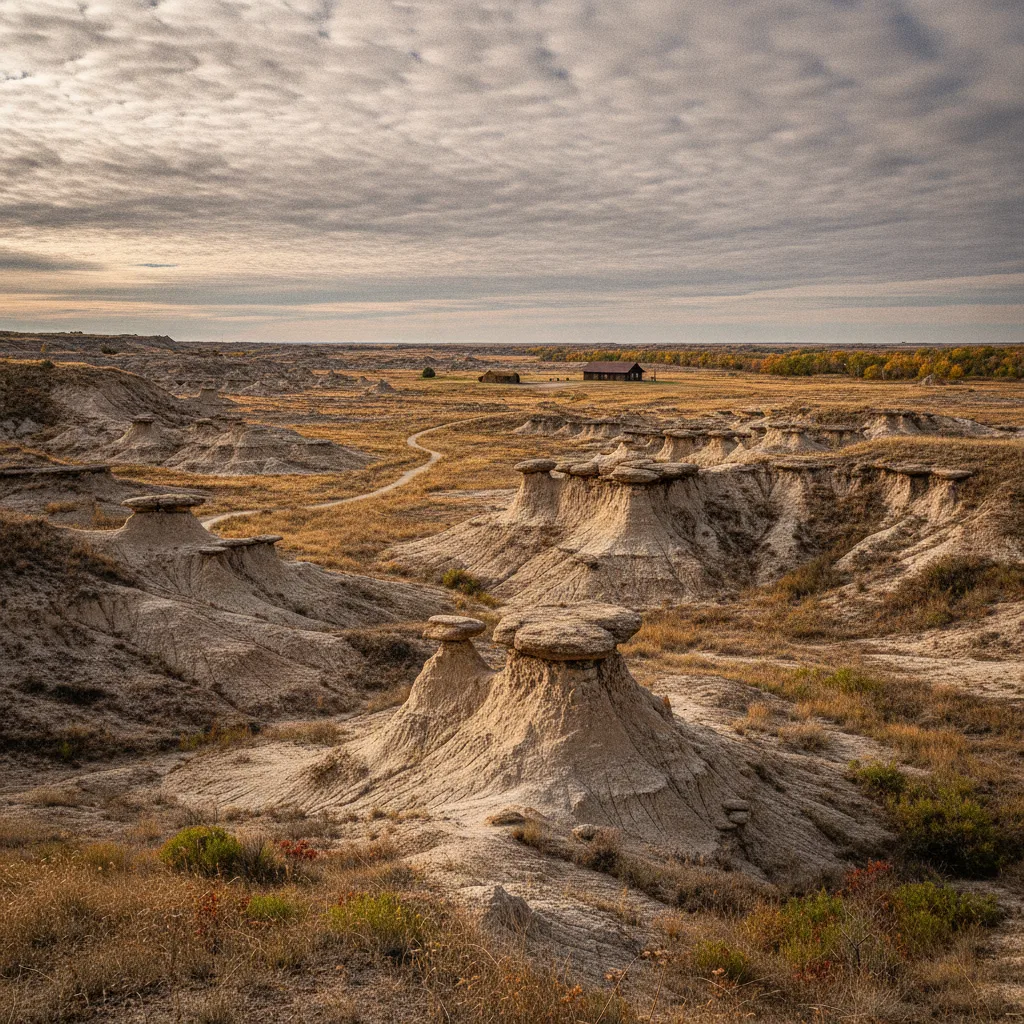
Welcome to our essential guide for exploring Toadstool Geologic Park Nebraska, a truly unique landscape that stands in stark contrast to the rolling plains you might expect from the Cornhusker State. Our team at Roam States has meticulously researched and visited this geological marvel to bring you confident, specific, and actionable advice for planning your trip. Forget generic travel fluff; we're here to provide the independent authority you need to navigate this "Badlands of Nebraska" and uncover its ancient secrets. From its mushroom-shaped rock formations to its rich fossil beds, Toadstool Geologic Park Nebraska offers an unforgettable adventure for those willing to venture off the beaten path.
Why Visit Toadstool Geologic Park
Toadstool Geologic Park is not just another stop on a road trip; it's a journey back in time, an otherworldly landscape carved by millions of years of wind and water erosion. Located within the Oglala National Grassland in far northwestern Nebraska, this park is aptly named for its distinctive rock formations—narrow clay pedestals topped with slabs of sandstone, many resembling giant toadstools. The formations are a result of differential erosion, where softer claystone erodes faster than the harder sandstone caps, creating these unique mushroom-like structures.
What truly sets Toadstool Geologic Park apart is its incredible paleontological significance. The park is a treasure trove of scientifically valuable fossil deposits, preserving remnants of ancient life from 30 to 40 million years ago. Visitors can find fossils and footprints of extinct species such as tortoises, rhinos, saber-toothed cats, early three-toed horses, and camels. One particularly exciting discovery is a 0.75-mile long trackway revealing an ancient pursuit: hungry entelodonts chasing two species of rhinoceros. An interpretive kiosk at the park explains the local geology and history, offering insights into the behavior of animals that roamed this area millions of years ago.
Beyond the scientific intrigue, the park offers a profound sense of solitude and a chance to immerse yourself in a rugged, "moonscape" terrain. It's a place where the vastness of the prairie meets dramatic badlands, providing stunning photographic opportunities and a unique outdoor experience unlike anywhere else in Nebraska. We believe it's a must-see for anyone with an interest in geology, paleontology, or simply a desire to witness a truly unique natural wonder.
Who It's Best For
Toadstool Geologic Park truly shines for a specific type of traveler, making it a destination we highly recommend for:
- Geology Enthusiasts: If you're fascinated by the earth's history and how landscapes are formed, the park's unique geological formations and interpretive exhibits will captivate you. It's considered the "type section for the White River Geologic Group," a standard for comparing similar-aged deposits across North America.
- Paleontology Buffs: With its rich fossil beds, including evidence of ancient rhinos, saber-toothed cats, and a remarkable trackway of prehistoric chases, this park is a dream for anyone interested in ancient life. Remember, fossil collection is strictly prohibited to preserve these invaluable resources for everyone.
- Hikers and Nature Lovers: Those who appreciate rugged, open spaces and unique natural beauty will find the park's trails rewarding. While none of the trails are exceptionally easy due to uneven surfaces and steep inclines, the interpretive loop offers a manageable experience.
- Photographers: The dramatic formations, contrasting colors, and expansive skies provide endless opportunities for stunning landscape and astrophotography, especially given the remote location and minimal light pollution.
- Families with Older Children: While younger children might find the hiking challenging, older kids with an interest in science and exploration will be thrilled by the "moonscape" terrain and the hunt for fossilized clues (viewing only!).
This isn't a destination for those seeking luxurious amenities or bustling crowds. It's for the adventurer, the curious, and those who find beauty in the raw, untamed power of nature. If you're looking for a quiet retreat where you can connect with ancient history and stunning landscapes, Toadstool Geologic Park is for you.
Getting There & Parking
Reaching Toadstool Geologic Park requires a bit of commitment, but the journey is part of the adventure. The park is located in the Oglala National Grassland in far northwestern Nebraska, approximately 20 miles north of Crawford, NE. We advise travelers to prepare for gravel and dirt roads, which can become challenging, or even impassable, after heavy rain or snow. It's always a good idea to check local weather conditions before heading out.
From Crawford, Nebraska, you'll generally take Nebraska Highway 2/71 north for about 4 miles, then turn left onto Toadstool Road. Follow Toadstool Road for approximately 10-15 miles, then turn left at the sign for Toadstool Park, continuing for another 1.4 to 1.5 miles to reach the campground and parking area. Another route from Hot Springs, SD, involves taking Highway 71 south for 37 miles to Toadstool Road, then following it for 11.4 miles to FS Road #902 and continuing for 1.4 miles to the campground.
As for parking, there is ample space available at the park's campground, including designated areas for day-use visitors. Each of the 12 campsites also has its own gravel parking apron. For day-use visitors, a fee of $3 per vehicle is charged from Memorial Day through Labor Day. This day pass can be purchased on-site using cash or check through provided fee envelopes, or via credit card using the Recreation.gov mobile app. We recommend downloading the app before you arrive, as cell service can be limited or nonexistent in this remote area.
The roads leading to Toadstool Geologic Park can be a bit bumpy, but they are generally navigable by standard vehicles in dry conditions. However, if there has been recent precipitation, a four-wheel-drive vehicle might be advisable, and it's best to wait until the roads are dry.
Top Things to Do
When you visit Toadstool Geologic Park, you'll find that the primary draw is immersing yourself in its unique geological and paleontological wonders. Our team has identified the top things to do at Toadstool Geologic Park to make your visit truly memorable:
- Hike the Interpretive Loop Trail: This one-mile self-guided loop is the most popular activity and a fantastic introduction to the park's formations. As you walk, you'll encounter numerous examples of the eroded clay and sandstone formations, with an interpretive brochure available at the trailhead to explain the fascinating geology and history of the area. The trail offers varying degrees of difficulty, with some uneven surfaces and steep inclines, but it's generally manageable.
- Explore the Bison Trail to Hudson-Meng Education and Research Center: For a more extended adventure, the Bison Trail branches off the interpretive loop and leads three miles one-way to the Hudson-Meng Education and Research Center. This hike takes you through a canyon and across the Oglala Grassland, offering stunning views and a chance to connect with another significant paleontological site. The Hudson-Meng site houses one of North America's most important paleo-archeological discoveries: a large bonebed of extinct bison.
- Discover the Five-Mile Loop: Starting at the campground, this loop proceeds along a graveled section of the interpretive trail before heading north through the badlands and grasslands on the Great Plains Trail. It's a longer option for those seeking a deeper exploration of the surrounding landscape.
- Visit the Reconstructed Sod House: Near the campground, you'll find a reconstructed sod house, built in 1984, offering a glimpse into the lives of early homesteaders on the grasslands. It's a fascinating historical feature that complements the natural wonders.
- Fossil Viewing (No Collection!): Keep your eyes peeled for signs of fossils embedded in the rocks. The park is rich with remnants of ancient animals, providing scientists with insights into life 30 million years ago. Remember, collecting fossils is strictly prohibited by federal law to preserve these resources.
- Stargazing: Given its remote location and minimal light pollution, Toadstool Geologic Park offers an excellent opportunity for stargazing. On a clear night, the dark skies reveal a spectacular display of stars.
These things to do at Toadstool Geologic Park provide a comprehensive experience, blending geological wonder, ancient history, and outdoor activity.
Best Time to Visit
Timing your visit to Toadstool Geologic Park can significantly impact your experience. Our team at Roam States generally recommends visiting during the **spring (April-May)** or **fall (September-October)**.
During these shoulder seasons, temperatures are typically milder and more comfortable for hiking and exploring the exposed landscape. The spring brings the possibility of wildflowers, while the fall offers crisp air and potentially beautiful prairie colors. These seasons also tend to have fewer visitors, allowing for a more serene and solitary experience with nature.
Summer (June-August) can be quite hot, with July often being the hottest month, characterized by sunny weather and light rain. While early mornings and evenings can still be pleasant for activities, midday heat can be intense, making strenuous hiking less enjoyable. If you do visit in summer, be sure to bring plenty of water, wear sun protection, and plan your activities for cooler parts of the day.
Winter (November-March) can be cold, with February being the coolest month, often sunny with no rain. The park remains open year-round, 24 hours a day, but snow and ice can make the gravel roads leading to the park impassable, especially after storms. Facilities like restrooms are available, but there is no running water at the campground, so prepare accordingly.
Ultimately, the best time to visit Toadstool Geologic Park depends on your weather preferences and tolerance for heat or cold, but spring and fall offer the most balanced conditions for enjoyment.
Where to Stay Nearby
Given the remote nature of Toadstool Geologic Park, lodging options directly adjacent to the park are limited to its primitive campground. However, several towns within a reasonable driving distance offer a range of accommodations. Our team has identified the best options for where to stay nearby:
- Toadstool Geologic Park Campground: For the most immersive experience, consider camping directly in the park. The campground offers 12 primitive sites, each equipped with a picnic table, fire ring, and upright grill. There are accessible vault toilets, but importantly, there is no potable water or electricity available, so you must bring your own water. Camping operates on a first-come, first-served honor system, with a fee of $15 per night, which includes the day-use fee. The campground is open year-round.
- Harrison, Nebraska: As the closest town, Harrison offers a peaceful retreat with some local lodging options and campgrounds. While specific hotel chains are limited, you might find local motels or a bed & breakfast like the Sowbelly Bed & Breakfast Hideaway. Harrison is a small village with a true Old West flavor, offering local cafés and diners for hearty meals.
- Crawford, Nebraska: Located about 20 miles south of Toadstool Geologic Park, Crawford is a larger hub with more lodging choices. You can find vacation rentals, cabins, and possibly some local motels. Crawford is also home to Fort Robinson State Park, which offers additional camping, cabins, and lodge rooms, making it a great base for exploring the wider Pine Ridge region.
- Chadron, Nebraska: Approximately 46.5 km (28.9 miles) from Toadstool Geologic Park, Chadron offers the widest selection of hotels and amenities. Options include Best Western West Hills Inn, Chadron Inn & Suites, and Holiday Inn Express & Suites Chadron by IHG. Chadron provides more dining choices, grocery stores, and services, making it a convenient base for day trips to the park.
When planning where to stay nearby, remember that Toadstool Geologic Park is quite remote, so booking accommodations in Chadron or Crawford in advance, especially during peak seasons, is a good idea. For those seeking a truly rustic experience, the park's campground offers unparalleled access to the unique landscape.
Sample 2-Day Itinerary
To fully appreciate the unique geological formations and ancient history of Toadstool Geologic Park Nebraska, we recommend dedicating at least two days. Here’s a sample itinerary crafted by our team to help you make the most of your visit:
Day 1: Arrival & Geological Exploration
- Morning (Arrival & Setup):
- Arrive at Toadstool Geologic Park. If you plan on Toadstool Geologic Park camping, set up your site at the primitive campground. Remember to bring all your water and supplies, as there is no potable water available.
- Pay your day-use fee ($3 per vehicle) or camping fee ($15 per night, which includes day-use) at the self-pay station or via the Recreation.gov app.
- Late Morning (Interpretive Loop Hike):
- Embark on the one-mile interpretive loop trail. Pick up a brochure at the kiosk to guide your self-guided tour of the "toadstool" formations, learning about the fascinating geology and paleontology of the area. This is a fantastic way to get acquainted with the park's unique landscape.
- Afternoon (Sod House & Fossil Spotting):
- Visit the reconstructed sod house near the campground, offering a glimpse into pioneer life on the grasslands.
- Spend time exploring off-trail (respecting park boundaries and fragile formations) to look for signs of fossils. Remember, fossil collection is strictly prohibited.
- Evening (Sunset & Stargazing):
- Enjoy a picnic dinner at one of the campground's sites.
- Witness a spectacular sunset over the badlands.
- As darkness falls, prepare for incredible stargazing. The remote location offers exceptionally dark skies, perfect for viewing the Milky Way.
Day 2: Bison Trail & Nearby Attractions
- Morning (Bison Trail Hike):
- After an early breakfast at your campsite, tackle the three-mile (one-way) Bison Trail. This trail leads from Toadstool Geologic Park to the Hudson-Meng Education and Research Center. It’s a moderate hike that offers different perspectives of the Oglala National Grassland.
- Late Morning (Hudson-Meng Education and Research Center):
- Explore the Hudson-Meng Education and Research Center, home to one of the largest concentrations of extinct bison bones in North America. Learn about the ongoing archaeological research and theories surrounding this mysterious site.
- Afternoon (Pine Ridge Exploration or Departure):
- Depending on your schedule, you can either:
- Head south towards Crawford and explore Fort Robinson State Park, a historic former U.S. Army post with a rich history and numerous recreational opportunities.
- Or, if time allows, consider a visit to Scotts Bluff National Monument, another iconic Western Nebraska landmark, about 90 minutes south of Toadstool.
- Begin your journey home, perhaps stopping in Chadron for a more substantial meal before hitting the road.
- Depending on your schedule, you can either:
This itinerary balances active exploration with opportunities for reflection and learning, ensuring a comprehensive experience of Toadstool Geologic Park and its surroundings. For those extending their trip in Nebraska, consider visiting Chimney Rock National Historic Site or Omaha's Henry Doorly Zoo for other incredible Nebraska experiences.
Is It Worth Visiting?
Our resounding answer is yes, Toadstool Geologic Park is worth visiting for the right kind of traveler. This isn't a destination that caters to mass tourism with paved paths and gift shops on every corner. Instead, it offers a raw, authentic encounter with a landscape that feels truly ancient and otherworldly. If you appreciate unique geological formations, have an interest in paleontology, or simply seek solitude in a dramatic natural setting, then Toadstool Geologic Park will exceed your expectations.
The "badlands of Nebraska" provides a stark contrast to the state's agricultural reputation, showcasing millions of years of natural history etched into its clay and sandstone formations. The opportunity to hike among these mushroom-shaped rocks, imagine ancient creatures roaming the land, and witness spectacular dark skies makes Toadstool Geologic Park a truly special place. It offers a sense of discovery and connection to the deep past that few other places can provide. We firmly believe that for those who venture here, the rewards are immense, making Toadstool Geologic Park worth visiting for an unforgettable experience.
How to Get There
Reaching Toadstool Geologic Park is an adventure in itself, as it's nestled in a remote corner of the Oglala National Grassland. Our team wants to ensure you have clear directions on how to get to Toadstool Geologic Park, as the final miles involve gravel and dirt roads.
The park is located approximately 20 miles north of Crawford, Nebraska, and about 15 miles north of Harrison. The most common approach is from Crawford:
- From Crawford, NE: Take Nebraska Highway 2/71 north for about 4 miles. Then, turn left onto Toadstool Road. You will follow Toadstool Road for approximately 10-11.4 miles. Finally, turn left at the sign for Toadstool Park (or FS Road #902) and continue for another 1.4 to 1.5 miles to reach the campground and parking area.
- From Hot Springs, SD: Take Highway 71 south for approximately 37 miles until you reach Toadstool Road. Follow Toadstool Road for 11.4 miles, then turn onto FS Road #902 and continue for 1.4 miles to the campground.
It's crucial to note that the roads leading to the park are gravel and dirt. While generally passable for standard vehicles in dry conditions, they can become very difficult or impassable after heavy rain or snow due to muddy clay. We strongly advise checking local weather and road conditions before you depart. Cell service can be spotty in this remote area, so download offline maps or bring a physical map. This detailed guidance on how to get to Toadstool Geologic Park should help you plan your route effectively.
Toadstool Geologic Park Camping
For those seeking a truly immersive experience, Toadstool Geologic Park camping offers a unique opportunity to sleep under the vast Nebraska sky amidst its "moonscape" formations. Our team highly recommends this option for adventurers who appreciate primitive camping.
The park features a small campground with 12 primitive campsites. Each site is equipped with a picnic table (often with a shade structure), a fire ring, and an upright grill. While these amenities provide comfort, it's essential to understand the primitive nature of the facilities: there is no potable water or electricity available at the campground. You must bring all your own drinking water and be prepared for a rustic experience. Two accessible vault toilets are on-site.
Toadstool Geologic Park camping operates on a first-come, first-served basis, meaning reservations are not typically taken. Payment is handled through an honor system, with fee envelopes and a collection box located near the entrance. The fee for camping is $15 per night, which also covers the day-use fee for the park. The campground is open year-round.
The sites are generally well-spaced, offering a good degree of privacy, though there is little natural shade from trees. This open environment, however, makes for exceptional stargazing opportunities at night. When planning your Toadstool Geologic Park camping trip, remember to pack out everything you pack in, as trash services may be limited, especially in the off-season. Be prepared for changing weather conditions, and enjoy the quiet solitude of this remarkable badlands landscape.
Last updated: 2026-07-05 by the Roam States team.