Valle de Oro National Wildlife Refuge Travel Guide — New Mexico
Our Valle de Oro National Wildlife Refuge guide covers practical planning for Valle de Oro National Wildlife Refuge New Mexico — best time to visit, getting there, and what to do on the ground.
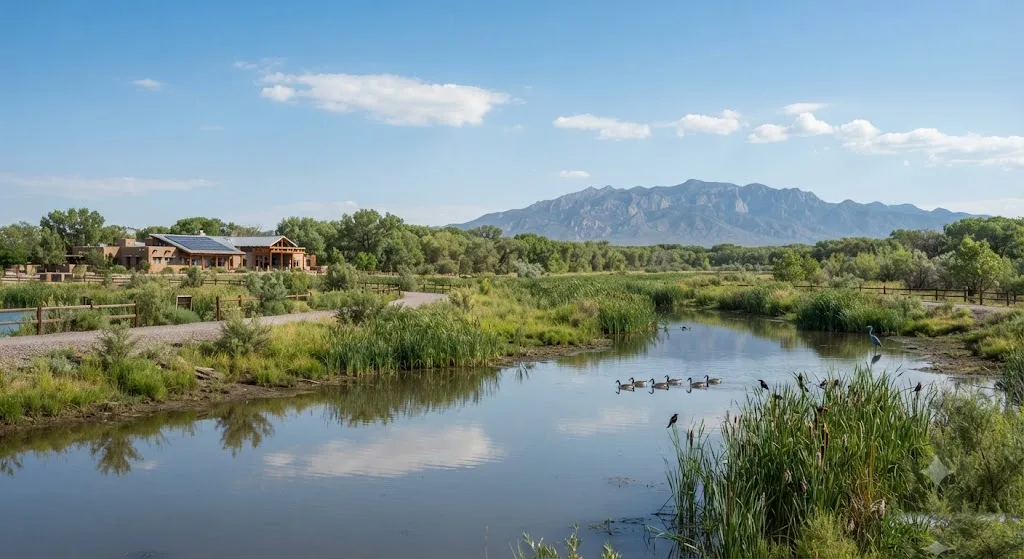
Welcome to Valle de Oro National Wildlife Refuge New Mexico, the Southwest's first urban national wildlife refuge. Our team at Roam States has explored this unique oasis, a testament to community-led conservation, transforming former farmland into a thriving ecosystem for both wildlife and people. Established in 2012, this 570-acre refuge, located just seven miles south of Albuquerque, offers a vital green space for migratory birds, local wildlife, and a place for the community to engage with nature.
Why Visit Valle de Oro National Wildlife Refuge
We believe Valle de Oro National Wildlife Refuge offers a truly special experience, blending urban accessibility with critical habitat restoration. It’s not every day you find a place where thousands of sandhill cranes gather in the fall and winter, just a short drive from a major city. This refuge is a living laboratory, showcasing how a community can come together to re-wild land and create a haven for over 200 bird species, coyotes, hawks, hummingbirds, and even the state bird, the roadrunner.
Beyond the impressive wildlife viewing opportunities, Valle de Oro provides a peaceful escape from the hustle and bustle of city life. It's a place where you can witness the ongoing transformation of an old dairy farm into diverse wetlands, grasslands, and bosque ecosystems. We've seen firsthand the dedication to conservation here, with efforts including planting cottonwood trees and seasonal flooding to mimic natural river cycles. It's an inspiring example of ecological restoration and community engagement, making it a compelling destination for anyone interested in nature, conservation, or simply a tranquil outdoor experience.
In 2019, Valle de Oro was also recognized by DarkSky International as an Urban Night Sky Place, offering occasional stargazing events and a chance to appreciate the night sky just outside the city. This commitment to preserving natural darkness further enhances its appeal as a unique natural wonder.
Who It's Best For
Valle de Oro National Wildlife Refuge is ideal for a wide range of visitors. Our team finds it particularly well-suited for:
- **Birdwatchers and Wildlife Enthusiasts:** With over 200 species of birds recorded, including thousands of sandhill cranes in cooler months, it's a prime spot for birding. You might also spot coyotes, hawks, hummingbirds, and various insects and reptiles.
- **Families with Children:** The refuge offers accessible trails, educational programs like "Tracks & Signs" (July 17, 2026) and "Macroinvertebrates" (July 11, 2026), and opportunities for hands-on learning about wildlife and the environment. Pets are also allowed on trails, making it a great family outing.
- **Hikers, Bikers, and Equestrians:** Miles of trails, including multi-use paths, cater to various outdoor activities. The flat terrain makes it accessible for many skill levels.
- **Nature Photographers:** The diverse landscapes, abundant wildlife, and stunning sunsets provide ample opportunities for capturing beautiful images.
- **Community-Minded Travelers:** Those interested in seeing a successful urban conservation project in action and learning about community stewardship will find the refuge's story and ongoing efforts deeply engaging.
- **Anyone Seeking a Peaceful Escape:** The refuge offers a serene environment to relax, walk, and reconnect with nature without venturing far from Albuquerque.
Getting There & Parking
Reaching Valle de Oro National Wildlife Refuge is straightforward, whether you're driving or cycling. The refuge is located at 7851 2nd Street SW, Albuquerque, NM 87105, approximately 5 miles south of downtown Albuquerque.
How to Get There
If you're driving from Interstate 25, take Exit 220 (Rio Bravo) and head west. Turn left (south) at the third light onto 2nd Street. Continue south for about 3.5 miles past Desert Road, and the refuge entrance will be on your right. From downtown Albuquerque, simply travel south on 2nd Street past Rio Bravo, Prosperity Ave, and Desert intersection, then turn left (west) into the refuge entrance.
For those cycling, the Valle de Oro Trail provides a convenient off-road path leading north from the refuge to southern Albuquerque, connecting to the Chris Chavez Trail. You can also access the refuge from the Paseo del Bosque Trail by traveling south to the southern diversion channel, turning left (east) to 2nd Street, then right (south) onto the 2nd Street bike path. Cross at the Desert intersection and continue on the bike path to the refuge entrance. Our team recommends this as a scenic and eco-friendly way to arrive.
Parking
Parking is readily available at the visitor center. There is no public driving access to the refuge beyond the visitor center parking lot, ensuring a peaceful experience for those on foot or bike. Bike racks and a repair station are conveniently located west of the visitor center. There are no fees to visit the refuge, including for parking. The entrance road gate off of 2nd Street SW opens one hour before sunrise and closes one hour after sunset every day.
Top Things to Do
There are many things to do at Valle de Oro National Wildlife Refuge, catering to a variety of interests and activity levels. Our team recommends dedicating at least a few hours to explore the refuge's offerings.
Valle de Oro National Wildlife Refuge Hiking Trails
The refuge boasts miles of trails, perfect for walking, jogging, biking, and even horseback riding. The Valle de Oro National Wildlife Refuge hiking trails are generally flat and accessible, making them suitable for most visitors, including those with strollers or wheelchairs. Some trails are pedestrian-only, while others are multi-use.
- **Pond Loop:** A short, quarter-mile trail around a wetland demonstration pond near the visitor center, offering excellent views and interpretive panels. It's a great spot for quick wildlife viewing.
- **Mural Loop:** This one-mile trail features local artist renditions depicting the refuge's future landscapes. It's a unique blend of nature and art.
- **Camino Real de Tierra Adentro Trail:** Stretching 1.5 miles, this dirt and gravel trail is located south of the visitor center.
- **North Field Loop:** Another 1.5-mile dirt trail located north of the visitor center.
- **Bosque Loop:** The longest trail at 2.5 miles round trip, it takes you from the visitor center out to the Rio Grande, allowing you to see restored bosque habitat. This trail also provides access to the Rio Grande Bosque State Park's trail system, located on the western boundary of the refuge. Be aware that access to the bosque trails is about 1.25 miles from the visitor center parking lot. Certain sections of this trail may be closed at times due to habitat restoration.
Remember to wear comfortable, closed-toe shoes, bring water, and apply sunscreen, as parts of the trails have limited shade. Pets are welcome on all Valle de Oro National Wildlife Refuge hiking trails but must be kept on a 6-foot non-retractable leash at all times.
Wildlife Viewing and Photography
Valle de Oro is a haven for wildlife. We highly recommend bringing binoculars (you can even borrow them from the visitor center) to enhance your birdwatching experience. Key species to look for include American kestrels (the refuge's unofficial mascot), various hawks, hummingbirds, and thousands of sandhill cranes during the fall and winter migration. You might also spot coyotes and big brown bats at night. Remember to keep a safe distance from wildlife and avoid disturbing their natural behaviors.
Electric Shuttle Tours
For a different perspective, the refuge offers a free open-air electric shuttle service. Starting in April 2026, tours are available from 9:30 AM to 2:00 PM on the first Friday and Saturday of every month, as well as on the last Saturday of each month. These tours, operated by volunteers, can take up to nine visitors on a route around the refuge, including a stop at the Rio Grande Bosque. Check in at the visitor center for on-demand tours and the most up-to-date schedule.
Visitor Center and Educational Programs
The visitor center is a great starting point for any visit. It's open Tuesday through Saturday from 9 AM to 4 PM. Here, you can learn about the refuge's history, ongoing restoration efforts, and pick up trail maps. The center also features interpretive exhibits and an environmental justice resource library. The refuge hosts free community events throughout the year, including educational programs like "Tracks & Signs" for children and "Macroinvertebrates" talks, as well as creative activities like pressed flower bookmark making. Check the Friends of Valle de Oro website for a current event calendar.
Best Time to Visit
The best time to visit Valle de Oro National Wildlife Refuge largely depends on what you hope to experience, but our team has some clear recommendations:
- **Fall and Winter (October to March):** This is arguably the most spectacular time for wildlife viewing, especially for birdwatchers. Thousands of sandhill cranes migrate to the refuge, creating breathtaking spectacles. You'll also see a wider variety of migratory birds. The weather is generally cooler and more pleasant for hiking.
- **Spring (April to May):** Spring brings new life to the refuge, with blooming wildflowers and increased activity among resident wildlife. Migratory birds are still present, and the temperatures are comfortable for outdoor activities.
- **Summer (June to September):** While hot, summer offers opportunities to see nesting swallows and other summer residents. Early mornings and late evenings are best to avoid the heat and catch wildlife when they are most active. The refuge is also an Urban Night Sky Place, making it a good spot for stargazing events on clear summer nights.
The refuge property itself is open daily from one hour before sunrise to one hour after sunset. The visitor center, however, operates from Tuesday through Saturday, 9 AM to 4 PM. We always advise checking the official Valle de Oro National Wildlife Refuge website or the Friends of Valle de Oro event calendar for any specific closures or special events before your visit, such as the visitor center being closed on Friday, July 3rd, 2026, for Independence Day.
Where to Stay Nearby
While there is no Valle de Oro National Wildlife Refuge lodging directly within the refuge (camping and overnight parking are generally prohibited, except for special youth-oriented events or RV volunteers with a permit), Albuquerque offers a wide range of accommodations to suit every budget and preference. The refuge is conveniently located just south of the city, making access easy from most areas.
For visitors seeking Valle de Oro National Wildlife Refuge lodging, we recommend looking in the South Valley or downtown Albuquerque areas for the shortest commute. However, the city's robust hotel scene means you can find excellent options further afield if you prefer to be closer to other attractions.
- **Downtown Albuquerque:** Offers a variety of hotels, from boutique stays to larger chains, with easy access to restaurants, cultural sites, and nightlife. It's a short drive north to the refuge.
- **Old Town Albuquerque:** If you prefer historic charm and a more traditional New Mexico experience, Old Town has several unique inns and hotels.
- **Uptown/Northeast Heights:** This area provides more modern hotels, shopping centers, and a slightly longer but still manageable drive to the refuge.
Consider booking accommodations with amenities like complimentary breakfast or kitchenettes, especially if you plan to pack picnics for your refuge visits. Our team always recommends checking reviews and booking in advance, particularly during peak bird migration seasons or if your trip coincides with major Albuquerque events like the Albuquerque International Balloon Fiesta.
Sample 2-Day Itinerary
To make the most of your visit to Valle de Oro National Wildlife Refuge and the surrounding area, our team has crafted a sample 2-day itinerary:
Day 1: Immersion in the Refuge
- **Morning (Sunrise - 12:00 PM):** Arrive early to catch the refuge as it opens (one hour before sunrise) for prime birdwatching opportunities when wildlife is most active. Head straight to the visitor center (opens 9 AM, Tuesday-Saturday) to pick up a trail map and get current wildlife sighting information. Spend your morning exploring the Valle de Oro National Wildlife Refuge hiking trails. We suggest starting with the Pond Loop and Mural Loop for easy access and diverse views. If you're up for a longer trek, tackle the Bosque Loop to reach the Rio Grande.
- **Lunch (12:00 PM - 1:00 PM):** Enjoy a packed lunch at one of the picnic areas or on the refuge patio near the visitor center.
- **Afternoon (1:00 PM - 4:00 PM):** If available, take the free electric shuttle tour (seasonal, check schedule for 2026 dates) for a guided exploration of habitat restoration projects. Alternatively, explore the visitor center exhibits in depth or participate in any scheduled educational programs or events.
- **Late Afternoon/Evening:** Depart the refuge and head back to Albuquerque. Consider visiting Meow Wolf for an evening of immersive art, or explore the historic Santa Fe Plaza if you're willing to make the drive north.
Day 2: Albuquerque Exploration & Nearby Nature
- **Morning:** Explore more of Albuquerque's natural side. We recommend a visit to the Rio Grande Nature Center State Park for additional birdwatching and interpretive exhibits, especially if you're traveling with kids. The Paseo del Bosque Trail also offers extensive biking and walking opportunities along the Rio Grande.
- **Lunch:** Enjoy lunch at a local Albuquerque restaurant, perhaps sampling some authentic New Mexican cuisine.
- **Afternoon:** Depending on your interests, you could visit Petroglyph National Monument for a dose of ancient history and outdoor exploration, or explore the vibrant cultural scene of Albuquerque.
- **Evening:** Enjoy a relaxing dinner in Albuquerque.
For those extending their New Mexico adventure, consider adding iconic destinations like White Sands National Park or Carlsbad Caverns National Park to your itinerary, both offering vastly different but equally stunning natural wonders. You can find more ideas for your trip on our Best places in New Mexico guide.
Is It Worth Visiting?
Absolutely, our team firmly believes that Valle de Oro National Wildlife Refuge is worth visiting. This urban oasis offers a unique blend of accessibility and significant ecological value, making it a standout destination in New Mexico. It's a place where you can witness the powerful impact of conservation efforts firsthand, as a former dairy farm is transformed into a vibrant habitat for diverse wildlife.
For birdwatchers, the refuge is an undeniable gem, especially during the fall and winter when thousands of sandhill cranes arrive. But even beyond the spectacular bird migrations, the refuge provides a peaceful and educational outdoor experience for everyone. The free admission, well-maintained trails, and engaging community events make it an excellent value for travelers of all ages. Whether you're looking for a quiet walk in nature, an opportunity to teach children about wildlife, or simply a beautiful place to enjoy a sunset, Valle de Oro delivers. We confidently say that your time spent at Valle de Oro National Wildlife Refuge will be both rewarding and inspiring.
How to Get There
Getting to Valle de Oro National Wildlife Refuge is quite straightforward, whether you're arriving by car or bicycle. The refuge is strategically located in the South Valley of Albuquerque, making it an accessible natural escape.
The physical address to navigate to is 7851 2nd Street SW, Albuquerque, NM 87105. From Interstate 25, the most common route, you'll take Exit 220 for Rio Bravo. Head west on Rio Bravo, and then turn left (south) at the third traffic light onto 2nd Street. Continue on 2nd Street for approximately 3.5 miles, passing the intersection at Desert Road. The entrance to Valle de Oro National Wildlife Refuge will be on your right-hand side. If you're coming from downtown Albuquerque, simply travel south on 2nd Street, continuing past Rio Bravo, Prosperity Avenue, and the Desert intersection, then turn left (west) into the refuge entrance. Our team found these directions clear and easy to follow.
For cyclists, there are excellent options to reach the refuge. The Valle de Oro Trail is a paved off-road trail that leads directly to the refuge from northern points in southern Albuquerque, and it connects to the Chris Chavez Trail. Another popular cycling route is via the Paseo del Bosque Trail. You can follow this trail south to the southern diversion channel, turn left (east) to reach 2nd Street, then turn right (south) onto the 2nd Street bike path. After crossing at the Desert intersection, continue on the bike path on the west side of the road, and turn right (west) into the refuge. Bike racks and a repair station are available near the visitor center. Knowing how to get to Valle de Oro National Wildlife Refuge is key to a smooth start to your visit.
FAQ
Valle de Oro National Wildlife Refuge camping
Our team confirms that camping or overnight parking anywhere on Valle de Oro National Wildlife Refuge is generally not allowed. However, special youth-oriented camping events may be permitted with a refuge-approved permit, and overnight parking is allowed for youth crews and RV volunteers. For most visitors, the refuge is a day-use-only area, open from one hour before sunrise to one hour after sunset.
things to do in Albuquerque
Beyond Valle de Oro National Wildlife Refuge, Albuquerque offers a wealth of activities. Our team suggests exploring Old Town for history and culture, riding the Sandia Peak Tramway for panoramic views, or visiting the Indian Pueblo Cultural Center. For more outdoor adventures, consider the Rio Grande Nature Center State Park or Petroglyph National Monument. If you're visiting in October, the Albuquerque International Balloon Fiesta is a must-see. For unique art, don't miss Meow Wolf. You can find more ideas on our Best places in New Mexico guide.
Valle de Oro National Wildlife Refuge with kids
Valle de Oro National Wildlife Refuge is an excellent destination for families with kids. Our team highlights the accessible, flat trails, which are stroller and wheelchair-friendly. Children can enjoy birdwatching, spotting other wildlife like coyotes and hummingbirds, and participating in hands-on educational programs like "Tracks & Signs" and "Macroinvertebrates" offered throughout the year. The visitor center also has exhibits that engage young minds. Remember to bring water, hats, and sunscreen, as shade can be limited.
best hotels near Valle de Oro National Wildlife Refuge
The best hotels near Valle de Oro National Wildlife Refuge are primarily found in Albuquerque. Our team recommends looking for accommodations in downtown Albuquerque or the South Valley for convenient access to the refuge. Options range from well-known hotel chains to unique boutique hotels. While there isn't Valle de Oro National Wildlife Refuge lodging directly on-site, the proximity to Albuquerque means you have plenty of choices just a short drive away.
Valle de Oro National Wildlife Refuge tips
Our top tips for visiting Valle de Oro National Wildlife Refuge include: arrive early for the best wildlife viewing, especially for birds; bring binoculars (you can borrow them from the visitor center); wear comfortable walking shoes, a hat, and sunscreen, and carry plenty of water, as shade can be limited. Keep pets on a 6-foot non-retractable leash and always pick up after them. Check the refuge's official website or the Friends of Valle de Oro event calendar for current hours, special events, and any temporary trail closures before your visit.
where to stay near Valle de Oro National Wildlife Refuge
When considering where to stay near Valle de Oro National Wildlife Refuge, your best bet is to find accommodations in Albuquerque. The refuge is located just south of the city, making hotels in downtown Albuquerque or the South Valley particularly convenient. These areas offer a range of hotels to fit various budgets and preferences. While there's no direct Valle de Oro National Wildlife Refuge lodging, the short drive from Albuquerque ensures you'll have comfortable options for your stay.
Our Expert Verdict: Valle de Oro National Wildlife Refuge is a remarkable example of urban conservation, offering an accessible and enriching natural experience right on Albuquerque's doorstep. Its ongoing transformation into a vibrant ecosystem, coupled with its role as a community hub for environmental education and recreation, makes it a truly special place. We highly recommend a visit to witness the incredible bird migrations, explore the diverse trails, and connect with the inspiring story of this unique refuge. It's a destination that beautifully encapsulates the spirit of New Mexico's "Land of Enchantment."
Last updated: 2026-07-08 by the Roam States team.