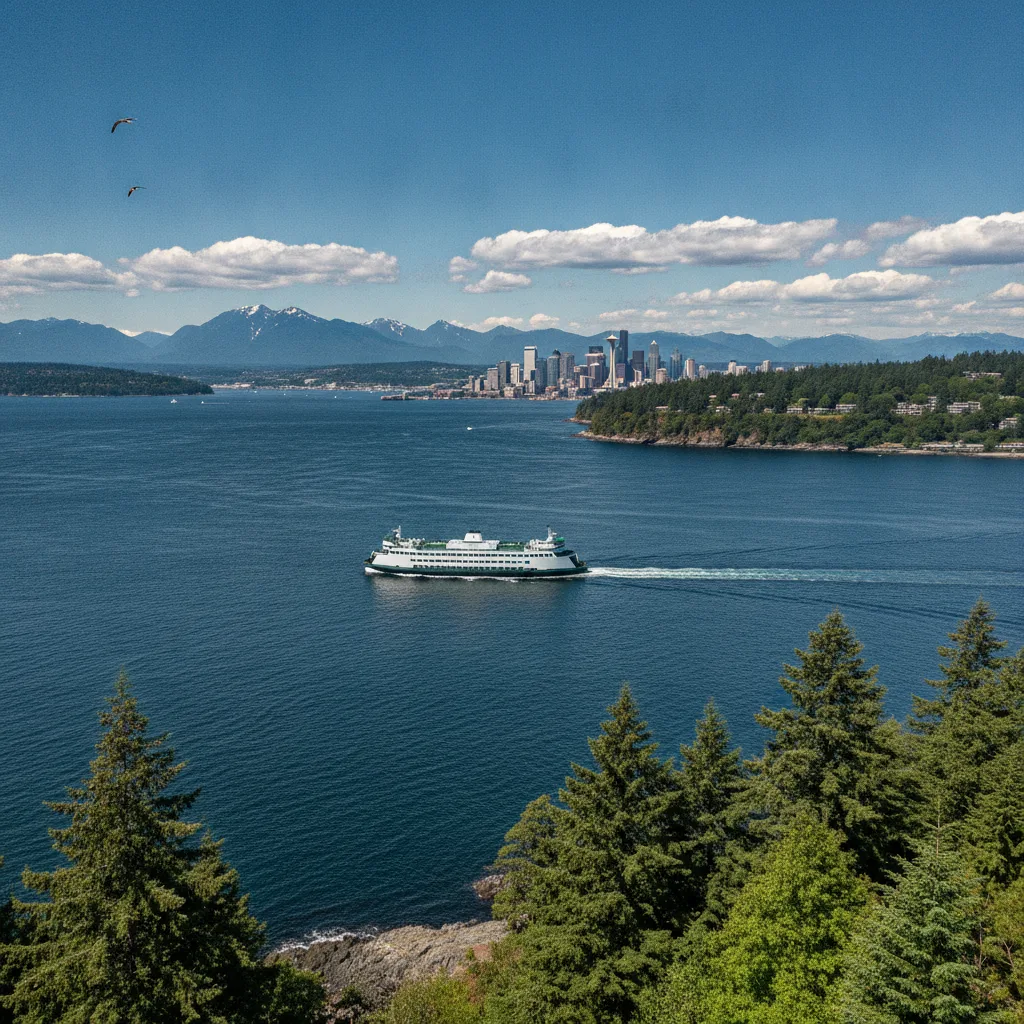
Welcome to our comprehensive guide to Washington State Ferries Washington. As the largest ferry system in the United States, Washington State Ferries serves as both an essential transit network for commuters and an unparalleled scenic journey for tourists exploring the Puget Sound and Salish Sea. Our team at Roam States has navigated these iconic waterways countless times, and we’re here to share our expert insights to help you plan your perfect trip in 2026.
Why Visit Washington State Ferries
There's a unique charm to traveling by ferry in Washington State, offering a perspective of the region you simply can't get from land. The ferries are an integral part of the state's highway system, connecting vibrant cities and tranquil islands across the Puget Sound and Salish Sea. This dual function means you're not just taking a ride; you're experiencing a vital piece of Pacific Northwest life. Whether you're seeking breathtaking views of the Seattle skyline and Olympic Mountains, hoping to spot marine wildlife, or simply looking for a relaxing way to reach an island destination, the ferries deliver. The Seattle to Bainbridge Island route, for instance, is often hailed as one of the most scenic ferry experiences in the country, providing stunning vistas of the city receding behind you and the majestic Olympic Mountains ahead.
Our team finds that the true magic of Washington State Ferries lies in its ability to transform a simple commute into a memorable journey. It's an affordable way to gain incredible perspectives of the region's natural beauty and urban landscapes. The experience is about more than just transportation; it's about embracing the rhythm of life on the water.
Who It's Best For
Washington State Ferries caters to a diverse range of travelers. It's ideal for sightseers looking for unparalleled panoramic views of the Puget Sound, particularly on routes like Seattle to Bainbridge Island or the longer Anacortes to San Juan Islands journey.
For families, Washington State Ferries with kids offers an exciting adventure. Children under 19 travel free as passengers, making it an economical option for family outings. The open decks provide plenty of space for kids to explore, watch for marine life, and enjoy the fresh sea air. Many ferries also feature cafeterias, which can be a welcome amenity on longer crossings.
The ferries are also perfect for day-trippers and weekend adventurers. Destinations like Bainbridge Island and Whidbey Island are easily accessible for a quick escape from city life. For those planning a multi-day exploration of the San Juan Islands or the Olympic Peninsula, bringing a car on the ferry allows for greater flexibility to explore beyond the immediate terminal areas.
Getting There & Parking
Understanding how to get to Washington State Ferries terminals and manage parking is crucial for a smooth journey. Washington State Ferries operates ten routes across Puget Sound and the Salish Sea, with terminals located in various cities and islands.
For Seattle departures, the Colman Dock (Pier 52) in downtown Seattle serves routes to Bainbridge Island and Bremerton. Parking near Colman Dock can be challenging and expensive, with several paid parking garages available within walking distance. For many day trips, especially to walkable towns like Winslow on Bainbridge Island, we recommend walking on the ferry to avoid vehicle fares and parking hassles at both ends.
The Anacortes terminal, serving the San Juan Islands, is a significant hub. Vehicle reservations are required for the Anacortes to San Juan Islands route from June 14 through September 19, 2026, and are strongly recommended year-round, especially on weekends and holidays. Reservations are free but do not include the cost of your ferry ticket, and a $10 fee is charged for no-shows. If you don't have a reservation, you can join the standby line, but arriving early is essential. Checking terminal cameras on the WSDOT website can help gauge standby line lengths in real-time. Walk-on passengers and cyclists never need a reservation on any route.
Other major terminals include Edmonds (to Kingston), Mukilteo (to Clinton on Whidbey Island), and Port Townsend (to Coupeville on Whidbey Island). The Mukilteo/Clinton route will experience midday service suspensions for four hours over nine days in January and February 2026 due to construction, with adjusted overnight schedules. Travelers during these times should plan alternative routes or travel before/after closure times.
For most routes, vehicles, drivers, and passengers must be in position with tickets at least 20 minutes prior to departure. Walk-on passengers should arrive at least five minutes before departure.
Top Things to Do
Beyond simply getting from point A to point B, there are many things to do at Washington State Ferries and surrounding areas, transforming your journey into an experience in itself.
- Enjoy the Scenic Views: The primary attraction is the breathtaking scenery. From the deck, you'll witness the majestic Olympic and Cascade mountain ranges, dense evergreen forests, and potentially marine wildlife like seals, porpoises, and even orcas. The Seattle to Bainbridge Island route offers iconic views of the Seattle skyline, including the Space Needle, and the Olympic Mountains.
- Explore Island Destinations: Use the ferry as a gateway to charming islands.
- Bainbridge Island: A 35-minute ride from Seattle, Bainbridge Island offers a delightful escape. In Winslow, the town center near the ferry terminal, you can browse independent shops, art galleries, and bookstores like Eagle Harbor Book Co. Explore the Bloedel Reserve, a stunning 150-acre woodland garden, or visit the Bainbridge Island Japanese American Exclusion Memorial.
- San Juan Islands: From Anacortes, the ferry takes you to Lopez, Shaw, Orcas, and San Juan Island (Friday Harbor). These islands are renowned for whale watching, kayaking, hiking, and charming towns.
- Whidbey Island: Accessible from Mukilteo or Port Townsend, Whidbey Island boasts picturesque villages, beaches, and natural reserves like Ebey's Landing and Deception Pass State Park.
- Vashon Island: A quieter option, Vashon Island, accessible from Fauntleroy (West Seattle), is known for its rural charm, farms, and arts community.
- Wildlife Spotting: Keep an eye out for marine mammals. Orcas and humpback whales are often seen in the San Juan Islands, and sometimes even on Puget Sound crossings.
- Onboard Amenities: Many larger ferries include cafeterias serving hot food, snacks, and beverages, making longer journeys more comfortable.
Beyond the ferry itself, there are countless things to do in Puget Sound. Visit Pike Place Market in Seattle, explore the vibrant waterfront, or venture further afield to iconic natural wonders like Mount Rainier National Park or Olympic National Park. The ferry system provides excellent access to many of these regional highlights, making it an integral part of any comprehensive Washington State itinerary.
Best Time to Visit
The best time to visit Washington State Ferries largely depends on your travel goals and tolerance for crowds. The summer season, from June 14 to September 19, 2026, is the most popular time for visitors due to warm weather and longer daylight hours. During this peak season, vehicle reservations are required for the Anacortes/San Juan Islands and Port Townsend/Coupeville routes, and traffic is significantly heavier on all routes.
If you plan to travel during the summer, especially on weekends or holidays, expect long lines and potential wait times for vehicles, even with reservations. We highly recommend booking vehicle reservations as soon as they become available (typically in mid-April for summer sailings) and arriving at the terminal well in advance of your scheduled departure.
For a more relaxed experience with fewer crowds, consider visiting during the spring (March 22 to June 13, 2026) or fall (September 20, 2026 to January 2, 2027). The weather can still be pleasant, and you'll often find shorter lines and more availability, especially for vehicles. Winter travel (December 28, 2025 to March 21, 2026) offers a stark, beautiful landscape, though some routes may experience rougher waters. Walk-on passengers generally have more flexibility and can almost always board any sailing, regardless of the season.
Where to Stay Nearby
Choosing accommodation near a ferry terminal can significantly reduce stress, especially for early morning sailings or late-night arrivals. Here are some recommendations:
- Seattle: If you're departing from Colman Dock, staying in downtown Seattle offers a wide range of hotels, from luxury to budget-friendly. This puts you close to attractions like Pike Place Market, the Space Needle, and Chihuly Garden and Glass.
- Anacortes: For those heading to the San Juan Islands, Anacortes provides various lodging options, including hotels, motels, and charming bed & breakfasts. Staying here the night before an early ferry can make your morning much smoother.
- Bainbridge Island: If you plan a multi-day trip to Bainbridge, the town of Winslow has boutique hotels and vacation rentals, allowing you to easily explore the island's offerings on foot or by bike after disembarking.
- Port Townsend/Coupeville (Whidbey Island): Both Port Townsend on the Olympic Peninsula and Coupeville on Whidbey Island offer unique lodging experiences, from historic inns to waterfront rentals, perfect for exploring these distinct areas.
Sample 2-Day Itinerary
Here’s how our team would suggest a two-day adventure incorporating Washington State Ferries Washington, focusing on the popular Seattle to Bainbridge Island route and exploring the Olympic Peninsula.
Day 1: Seattle to Bainbridge Island & Olympic Peninsula Gateway
- Morning (8:00 AM): Begin your journey by walking onto the Washington State Ferry from Seattle's Colman Dock to Bainbridge Island. Enjoy the 35-minute crossing, taking in the iconic Seattle skyline and views of the Olympic Mountains.
- Late Morning (9:00 AM - 1:00 PM): Explore Winslow, Bainbridge Island. Walk along Winslow Way, browse local shops and galleries, and grab a coffee or pastry. Consider a visit to the Bainbridge Island Japanese American Exclusion Memorial.
- Lunch (1:00 PM): Enjoy lunch at one of Winslow's local eateries.
- Afternoon (2:00 PM): Take the ferry back to Seattle. Pick up your rental car (if you don't have one already) and begin your drive towards the Olympic Peninsula.
- Late Afternoon (4:00 PM): Drive to Port Townsend, a charming Victorian seaport on the Olympic Peninsula. Check into your accommodation.
- Evening (6:00 PM): Explore Port Townsend's historic downtown, enjoy dinner at a local restaurant, and perhaps catch the sunset over the water.
Day 2: Olympic Peninsula Exploration & Return
- Morning (9:00 AM): Depart from Port Townsend. If you have a vehicle, take the Port Townsend to Coupeville ferry to Whidbey Island. Vehicle reservations are recommended for this route.
- Late Morning (10:00 AM - 1:00 PM): Explore the southern part of Whidbey Island, including the charming town of Coupeville or nearby Fort Casey State Park.
- Lunch (1:00 PM): Have lunch on Whidbey Island.
- Afternoon (2:00 PM): Drive north on Whidbey Island towards Deception Pass State Park, a must-see for its dramatic bridge and scenic overlooks.
- Late Afternoon (4:00 PM): Begin your drive back to Seattle, either via the Deception Pass Bridge and I-5, or by taking the Mukilteo to Clinton ferry (first-come, first-served) and driving south through Whidbey Island.
- Evening: Arrive back in Seattle, concluding your ferry adventure.
Washington State Ferries tips
To ensure a smooth trip, we advise checking the WSDOT Ferries website or app for real-time schedules, rider alerts, and terminal conditions before you leave. Arrive early, especially if traveling by car during peak season or on routes requiring reservations. Consider walking or biking onto the ferry for shorter routes to avoid vehicle lines and fares.
Washington State Ferries parking
Parking availability varies by terminal. Major terminals like Seattle (Colman Dock) and Anacortes have paid parking lots, but spaces can fill up quickly. For many day trips, parking your car away from the terminal and walking on is often the easiest and most cost-effective option.
best time to visit Washington State Ferries
The summer season (June 14 - September 19, 2026) offers the best weather but also the largest crowds and longest waits. For fewer crowds and pleasant weather, consider spring (March 22 - June 13, 2026) or fall (September 20, 2026 - January 2, 2027).
Washington State Ferries hours and fees
Ferry schedules vary by route and season. You can find detailed 2026 schedules on the WSDOT Ferries website. Fares depend on the route, vehicle size, and number of passengers. As of May 1, 2026, passenger and vehicle ticket prices increased by an average of 3%, and a 35% peak season surcharge applies to single-ride vehicle and motorcycle fares from May 1 to September 30. A 3% fee also applies to credit and debit card transactions as of March 1, 2026. Children and youth under 19 travel free as passengers.
Washington State Ferries travel guide
This guide provides comprehensive information for planning your trip. Remember to check current conditions, consider reservations for vehicle travel on specific routes (Anacortes/San Juan Islands and Port Townsend/Coupeville), and embrace the journey as part of your Washington State adventure.
Washington State Ferries itinerary
Our sample 2-day itinerary above offers a starting point for exploring Bainbridge Island and the Olympic Peninsula. For other destinations, tailor your itinerary around the specific ferry routes, keeping in mind travel times and the attractions at your chosen island or peninsula destination.
The Washington State Ferries system is more than just a mode of transport; it's an iconic Pacific Northwest experience. We encourage you to embrace the journey, take in the incredible scenery, and let the ferries connect you to the diverse beauty of Washington State. Our team is confident that with a little planning, your ferry adventure will be a highlight of your travels.
Last updated: 2026-07-08 by the Roam States team.