Hidden Gems & Scenic Wonders

Wetlands & Wildlife National Scenic Byway Travel Guide

Central Kansas, Kansas

By Roam States Team · Updated July 2026 · 25 min read

Jump to section

Our Wetlands & Wildlife National Scenic Byway guide covers practical planning for Wetlands & Wildlife National Scenic Byway Kansas — best time to visit, getting there, and what to do on the ground.

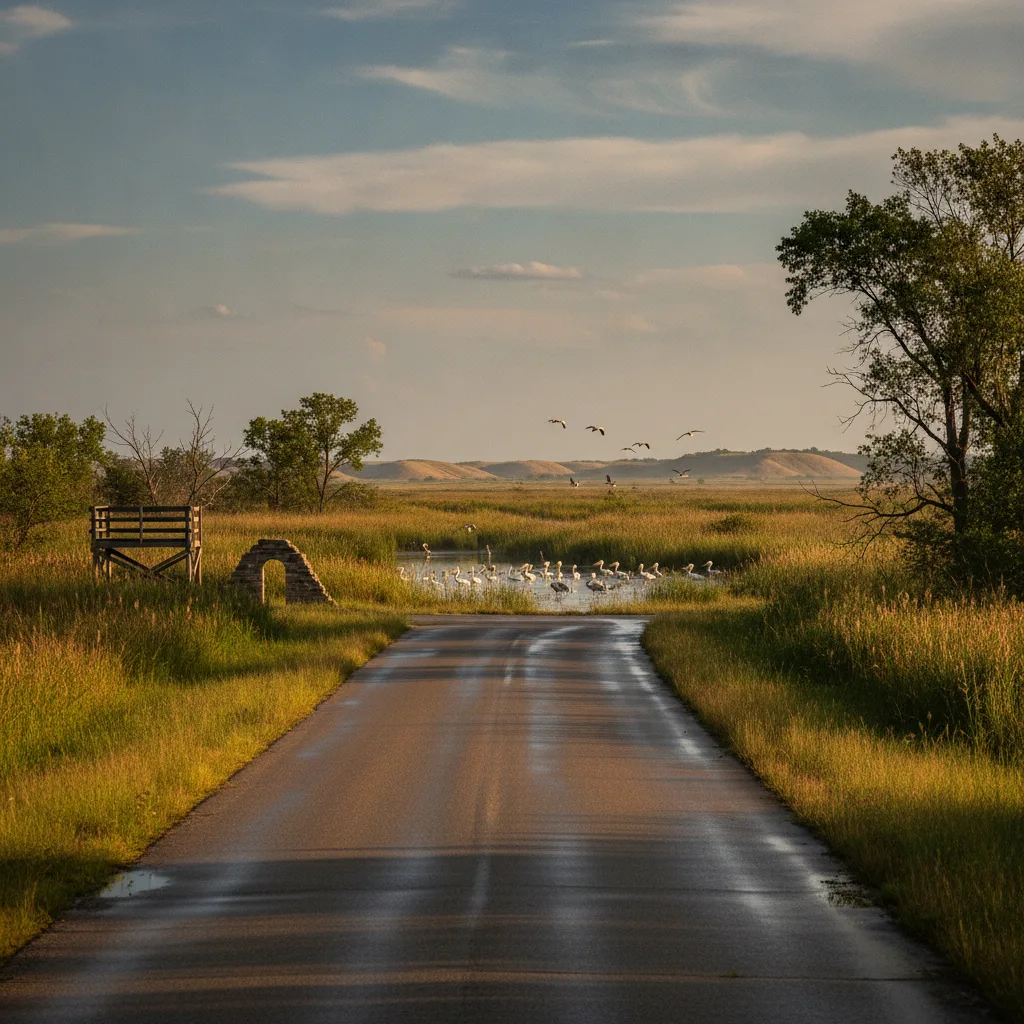
As the editorial team at Roam States, we’ve explored the vast and varied landscapes of the United States, but few places capture the raw, migratory magic of the Central Flyway quite like the Wetlands & Wildlife National Scenic Byway Kansas. This 77-mile route, nestled in the heart of central Kansas, is a testament to the enduring power of nature, connecting two internationally significant wetland ecosystems: Cheyenne Bottoms and Quivira National Wildlife Refuge. Here, millions of migrating birds find essential rest and sustenance, creating a spectacle that draws nature enthusiasts, photographers, and curious travelers from around the globe.

Why Visit Wetlands & Wildlife National Scenic Byway

The Wetlands & Wildlife National Scenic Byway offers an unparalleled opportunity to witness one of North America's most incredible natural phenomena: bird migration. This byway isn't just a road; it's a gateway to over 60,000 acres of vital wetlands that serve as a crucial stopover for millions of birds traversing the Central Flyway. Imagine skies filled with sandhill cranes, pelicans, and countless species of waterfowl and shorebirds, all pausing in this rich ecosystem. Cheyenne Bottoms alone has recorded 356 of Kansas's 482 bird species.

Beyond the avian spectacle, the byway itself is a journey through a landscape shaped by ancient geological movements, immense blue skies, and the resilient spirit of rural Kansas communities. You'll find charming towns like Great Bend, Stafford, and Ellinwood, each offering a glimpse into local history, from native stone buildings to underground tunnels and WPA art projects. It’s a place where you can feel the pulse of the prairie and connect with a landscape that has sustained life for millennia.

Our team believes that the Wetlands & Wildlife National Scenic Byway provides a profound connection to the natural world, offering a dynamic and ever-changing display of wildlife that truly sets it apart from other scenic drives. It's a journey that leaves a lasting impression.

Who It's Best For

This scenic byway is a dream destination for a diverse range of travelers. **Birdwatchers and wildlife photographers** will find themselves in paradise, with opportunities to observe rare and endangered species like whooping cranes, bald eagles, and interior least terns. The sheer numbers of migratory birds during peak seasons are breathtaking and offer endless photographic possibilities.

**Nature lovers and outdoor enthusiasts** will appreciate the tranquil beauty of the wetlands, the vast prairie vistas, and the chance to explore hiking trails and auto-tour routes. It's a place to slow down, breathe in the fresh air, and immerse yourself in a unique natural environment.

**Families with curious children** will also find the byway engaging. The Kansas Wetlands Education Center at Cheyenne Bottoms offers interpretive displays and educational programs that make learning about wetlands and wildlife fun and accessible. Exploring the diverse landscapes and spotting different animals can be an exciting adventure for all ages.

**Road trippers** looking for an authentic Kansas experience, away from the bustling interstates, will discover a route rich in natural beauty and small-town charm. The byway communities offer unique stops and local flavor, making it a rewarding journey for those who love to explore off the beaten path.

Getting There & Parking

The Wetlands & Wildlife National Scenic Byway is conveniently located in central Kansas, making it accessible from various points. The 77-mile route traverses Barton, Stafford, and Reno counties.

If you're approaching from I-70, we recommend taking exit 184 at Russell and driving south approximately 12 miles on Highway 281. The northern end of the byway officially begins at the intersection of Highways 281 and 4 near Hoisington. The southern end is marked approximately four miles north of St. John.

For navigating the byway, there are two primary informational kiosks at Cheyenne Bottoms: one at Highway 281 & NE 80th Rd and another at Highway 4 & NE 20th Ave. The byway itself is best explored by vehicle, with auto-tour roads providing excellent viewing opportunities within both Cheyenne Bottoms and Quivira National Wildlife Refuge.

Parking: * Cheyenne Bottoms: Visitors can drive on the gravel and sand dike roads within the wildlife area to view wildlife. Parking is generally available along these roads at designated pull-offs. The Kansas Wetlands Education Center, located along K-156 Highway, also provides ample parking for visitors. * Quivira National Wildlife Refuge: The refuge offers two auto-tour roads for exploring. Parking is available at various points along these roads, as well as at the Visitor Center. It’s important to note that parking in front of gates, on bridges, or on water control structures is prohibited. The refuge is open from 1.5 hours before sunrise to 1.5 hours after sunset daily.

When planning how to get to Wetlands & Wildlife National Scenic Byway, we advise checking the official websites for any current road conditions or specific access alerts, especially during inclement weather.

Top Things to Do

The Wetlands & Wildlife National Scenic Byway is brimming with opportunities for exploration and discovery. Here are the top things to do at Wetlands & Wildlife National Scenic Byway and in the surrounding Central Kansas region:

Birdwatching and Wildlife Viewing

This is undeniably the main attraction. Both Cheyenne Bottoms and Quivira National Wildlife Refuge are critical habitats along the Central Flyway. At Cheyenne Bottoms, nearly 45% of all migratory shorebirds nesting in North America stage here, including over 90% of the continent's populations of Wilson's Phalarope, Long-billed Dowitcher, White-rumped Sandpiper, Baird's Sandpiper, and Stilt Sandpiper. Quivira National Wildlife Refuge, a Wetland of Global Importance, hosts over 300 species of migratory and resident birds annually. Keep an eye out for endangered whooping cranes, bald eagles, and golden eagles, which are often spotted during migration and winter months.

Auto-Tour Roads and Photography Blinds

Both wetland areas offer excellent auto-tour routes, allowing you to observe wildlife from the comfort of your vehicle. Quivira has a 14-mile scenic drive, and Cheyenne Bottoms is best toured by vehicle, starting at one of its informational kiosks. For photographers, Quivira National Wildlife Refuge provides dedicated photography blinds and a wildlife observation tower, perfect for capturing stunning shots of the diverse birdlife.

Hiking and Nature Trails

While much of the byway is enjoyed by car, there are opportunities for stretching your legs. Quivira National Wildlife Refuge features a 1.2-mile nature trail with a marsh boardwalk, offering an immersive experience into the wetlands. All of Quivira is open to hiking unless otherwise posted.

Kansas Wetlands Education Center (KWEC)

Located at Cheyenne Bottoms, the KWEC is an essential stop for anyone visiting the byway. It provides interpretive displays about the wetlands, migratory birds, and the importance of conservation. The center also offers guided birdwatching van tours, which are a fantastic way to learn from experts and get closer to the action (pre-registration and a fee of $5 per person for ages 12 and older are required for these 2-hour tours). The Education Center is open Monday through Saturday from 9 AM to 5 PM and on Sundays from 1 PM to 5 PM.

Exploring Byway Communities

The byway connects seven rural communities: Hoisington, Claflin, Ellinwood, Great Bend, Hudson, St. John, and Stafford. These towns offer a blend of history, local culture, and amenities. For example, Great Bend boasts the Brit Spaugh Zoo and the Barton County Historical Society Museum and Village. Stafford is known as the "Gateway to Quivira" and hosts an Oktoberfest celebration in early October, complete with "Weiner Dog Races". The Stafford County Historical Museum is also a notable stop.

Beyond the Byway in Central Kansas

If you're looking for more things to do in Central Kansas, consider these nearby attractions:

  • Tallgrass Prairie National Preserve: A bit further east, this preserve offers a chance to experience the vastness of the prairie and learn about its ecosystem. (Tallgrass Prairie Preserve)
  • Hutchinson Cosmosphere: In Hutchinson, this world-class space museum and STEM education center is a must-see, featuring artifacts from the space race and beyond. (Hutchinson Cosmosphere)
  • Strataca Salt Mine: Also in Hutchinson, descend 650 feet underground into an active salt mine for a unique geological adventure. (Strataca Salt Mine)
  • Monument Rocks: West of the byway, these chalk pyramids and spires are a stunning natural landmark, often called the "Chalk Pyramids." (Monument Rocks)

Best Time to Visit

The **Wetlands & Wildlife National Scenic Byway** offers something unique in every season, but for the most spectacular wildlife viewing, we highly recommend visiting during the spring and fall migrations.

Spring Migration (March to May): This is arguably the most vibrant time to visit. Migrating ducks and cranes reach peak numbers in late March and early April. Shorebird numbers peak from late April to late May. Waterfowl and sandhill cranes begin arriving as early as February, with wading birds like herons and egrets appearing in March and April. April, in particular, is an ideal time to catch sight of many migratory birds as they stop to rest before continuing their journey north. The bird migration usually peaks around the last two weeks of April through the first two weeks of May.

Fall Migration (July to November): The southward migration in fall is also incredibly rewarding. Fall shorebird migration can begin as early as July and extend into September and October. Peak duck viewing typically occurs in early to mid-October. Whooping cranes are most apt to stop at Cheyenne Bottoms in late October into early November, and Quivira also sees large numbers of whooping cranes and sandhill cranes passing through in late October. Thousands of Canada geese, ducks, and sandhill cranes pass through Quivira from September through December. Bald and golden eagles winter on the refuges from November through March.

Summer (June to August): While not peak migration, summer still offers opportunities to see resident birds and nesting species like snowy plovers and American avocets. August can be a good time to visit Cheyenne Bottoms, as some early fall migrants begin to appear alongside summer residents. Temperatures can be hot, but the crowds are typically smaller.

Winter (December to February): The winter months bring bald and golden eagles to the refuges, making it an excellent time for raptor enthusiasts. While cold, the lack of crowds and the stark beauty of the prairie under winter skies can be a unique experience. However, be prepared for potential ice storms and check road conditions.

Ultimately, the best time to visit depends on what you hope to see. For the greatest diversity and sheer numbers of birds, we recommend targeting late April to early May or mid-October to early November. Always check recent bird sightings reports (like eBird for Barton County) for the most current information before your trip.

Where to Stay Nearby

Finding comfortable and convenient Wetlands & Wildlife National Scenic Byway lodging is key to a successful trip. While there's no camping directly within Quivira National Wildlife Refuge, several nearby communities offer a range of accommodations, from hotels to local lodges.

Great Bend: Located between Cheyenne Bottoms and Quivira, Great Bend is the largest community along the byway and offers the most extensive selection of lodging options. Our team recommends it as an ideal basecamp for exploring both wetlands.

  • Holiday Inn Express & Suites Great Bend by IHG: This hotel is highly rated and offers amenities like complimentary hot breakfast, free WiFi, an indoor pool, and a fitness center. It's also pet-friendly.
  • Best Western Angus Inn: Another popular choice in Great Bend, known for its amenities including two restaurants, a bar, an indoor pool, and a hot tub. Guests often praise its quiet atmosphere.
  • Super 8 by Wyndham Great Bend: A budget-friendly option offering free breakfast, free WiFi, and free parking.
  • Quality Inn Great Bend: Provides a convenient stay with amenities like free breakfast and WiFi.
  • Days Inn by Wyndham Great Bend: Offers complimentary breakfast, free WiFi, and parking.
  • Baltzell Lodge: A 3-star hotel in Great Bend with air-conditioned rooms and free WiFi.

Hoisington: Located closer to Cheyenne Bottoms, Hoisington offers a few options.

  • Park View Inn & Suites Hoisington: A clean hotel with accommodating staff.

Stafford: As the "Gateway to Quivira," Stafford has some local options, though fewer than Great Bend. Many travelers opt for hotels in nearby Pratt or Great Bend when visiting Quivira.

  • Stafford Inn and Suites: Offers standard accommodations.
  • Lyons Inn: A bed and breakfast option in nearby Lyons.
  • Hotels in Pratt (approx. 22-23 miles from Stafford): If you prefer chain hotels, Pratt offers several well-regarded options such as Holiday Inn Express Hotel & Suites Pratt by IHG, Best Western Plus Pratt, Baymont by Wyndham Pratt, and Quality Inn - Pratt.

For those seeking a more rustic experience, there are also private lodges and vacation rentals in the area, some catering specifically to hunters and birdwatchers. When considering Wetlands & Wildlife National Scenic Byway lodging, we always recommend booking in advance, especially during peak migration seasons.

Sample 2-Day Itinerary

To truly experience the magic of the Wetlands & Wildlife National Scenic Byway, we recommend a minimum of two full days. This allows ample time to explore both major wetland areas and soak in the local culture.

Day 1: Cheyenne Bottoms & Great Bend

Morning (9:00 AM - 12:00 PM): Kansas Wetlands Education Center & Cheyenne Bottoms Wildlife Area Start your day at the Kansas Wetlands Education Center (KWEC) located along K-156 Highway at Cheyenne Bottoms. This is an excellent place to get an overview of the wetlands, learn about the Central Flyway, and understand the species you're likely to encounter. The center is open Monday through Saturday from 9 AM to 5 PM. Consider joining one of their 2-hour birdwatching van tours if available (pre-registration and fee required). Afterward, embark on a self-guided driving tour of the Cheyenne Bottoms Wildlife Area and Cheyenne Bottoms Preserve. Drive the gravel and sand dike roads, stopping at observation points and informational kiosks to spot waterfowl, shorebirds, and perhaps even whooping cranes or bald eagles depending on the season.

Lunch (12:00 PM - 1:30 PM): Great Bend Head into Great Bend, the largest city along the byway, for lunch. You’ll find a variety of local eateries and chain restaurants.

Afternoon (1:30 PM - 5:00 PM): Great Bend Exploration After lunch, explore some of the things to do in Central Kansas within Great Bend. Visit the Brit Spaugh Zoo, a free, city-run zoo. You could also delve into local history at the Barton County Historical Society Museum and Village. If time allows, a stroll through Veterans Memorial Park is a pleasant way to spend some time.

Evening: Dinner & Overnight in Great Bend Enjoy dinner in Great Bend. Options range from casual dining to local favorites. For your Wetlands & Wildlife National Scenic Byway lodging, consider one of the recommended hotels like the Holiday Inn Express & Suites Great Bend or the Best Western Angus Inn.

Day 2: Quivira National Wildlife Refuge & Stafford

Morning (8:00 AM - 1:00 PM): Quivira National Wildlife Refuge Begin your day early at Quivira National Wildlife Refuge, located near Stafford. The refuge is open from 1.5 hours before sunrise to 1.5 hours after sunset. Drive the auto-tour roads around Big Salt Marsh and Little Salt Marsh, which are excellent for birdwatching and photography. Take advantage of the wildlife observation tower and photography blinds. Consider a hike on the 1.2-mile nature trail, which includes a marsh boardwalk. Keep an eye out for avocets, glossy ibis, pelicans, and potentially whooping cranes during migration.

Lunch (1:00 PM - 2:30 PM): Stafford or Picnic You can pack a picnic to enjoy within Quivira (remember to pack out all trash) or head to the charming town of Stafford for a local meal. Stafford is known as the "Gateway to Quivira".

Afternoon (2:30 PM - 5:00 PM): Stafford & Departure In Stafford, visit the Stafford County Historical Museum to learn about the area's heritage. If you're traveling with kids, check if the museum is participating in the Sunflower Summer program for free admission for eligible Kansas families (July 9-August 2, 2026). Before heading home, you might explore some of the other unique points of interest mentioned along the byway, such as native stone buildings or local art.

This itinerary provides a comprehensive overview of the Wetlands & Wildlife National Scenic Byway, allowing you to fully appreciate its natural wonders and the communities that embrace them. Remember to check current conditions and hours for all attractions before your visit.

FAQ Longtails

Wetlands & Wildlife National Scenic Byway with kids

Visiting the Wetlands & Wildlife National Scenic Byway with kids can be a fantastic educational and engaging experience. Our team recommends starting at the Kansas Wetlands Education Center at Cheyenne Bottoms, which offers interactive exhibits and sometimes even guided van tours designed to teach children about wetlands and wildlife. The auto-tour routes at both Cheyenne Bottoms and Quivira National Wildlife Refuge allow kids to spot birds and other animals from the car, which can be great for younger children. Quivira also has a 1.2-mile nature trail with a boardwalk, which is an easy and fun walk. In Great Bend, the Brit Spaugh Zoo and Wetlands Waterpark offer additional family-friendly activities. The Stafford County Historical Museum participates in the 2026 Kansas Tourism Sunflower Summer program, offering free admission to eligible Kansas families with school-aged children from July 9 to August 2, 2026, which can be a great way to explore local history.

best hotels near Wetlands & Wildlife National Scenic Byway

The best hotels near the Wetlands & Wildlife National Scenic Byway are primarily found in Great Bend, due to its central location between Cheyenne Bottoms and Quivira National Wildlife Refuge, and its wider range of amenities. Top recommendations from our team include the Holiday Inn Express & Suites Great Bend by IHG, known for its complimentary breakfast, indoor pool, and pet-friendly policy. The Best Western Angus Inn is another excellent choice, offering two restaurants, an indoor pool, and a hot tub. Other reliable options in Great Bend include the Super 8 by Wyndham Great Bend and the Quality Inn Great Bend. For those visiting Quivira, hotels in nearby Pratt (about 22-23 miles from Stafford) like the Holiday Inn Express Hotel & Suites Pratt or Best Western Plus Pratt are also good choices.

Wetlands & Wildlife National Scenic Byway tips

To make the most of your trip along the Wetlands & Wildlife National Scenic Byway, our team offers these essential tips: 1) **Visit during migration:** Spring (late March to May) and Fall (September to November) offer the most spectacular birdwatching opportunities. 2) **Bring binoculars and a camera:** You'll want to get a closer look at the diverse birdlife and capture the stunning landscapes. 3) **Allow ample time:** Don't rush. The byway is best enjoyed with frequent stops for observation and exploration. 4) **Check water levels:** Bird activity can vary with water levels in the wetlands, especially during drought years. 5) **Dress in layers:** Kansas weather can change quickly, so be prepared for varying temperatures. 6) **Pack snacks and water:** While communities offer amenities, stretches of the byway are remote. 7) **Respect wildlife:** Maintain a safe distance and avoid disturbing the animals. 8) **Utilize visitor centers:** The Kansas Wetlands Education Center and Quivira National Wildlife Refuge Visitor Center provide invaluable information and maps.

where to stay near Wetlands & Wildlife National Scenic Byway

When planning where to stay near the Wetlands & Wildlife National Scenic Byway, your best bet for a variety of options is Great Bend, Kansas. This city is centrally located relative to both Cheyenne Bottoms and Quivira National Wildlife Refuge. You'll find numerous hotels such as the Holiday Inn Express & Suites Great Bend, Best Western Angus Inn, Super 8 by Wyndham Great Bend, and Quality Inn Great Bend. These offer a range of prices and amenities, including complimentary breakfast and pools. For those focusing primarily on Quivira, the town of Stafford has limited local lodging, but nearby Pratt (approximately 22-23 miles away) provides additional hotel chains like Holiday Inn Express Hotel & Suites Pratt and Best Western Plus Pratt. Hoisington, closer to Cheyenne Bottoms, also has a few options like the Park View Inn & Suites.

Wetlands & Wildlife National Scenic Byway parking

Parking along the Wetlands & Wildlife National Scenic Byway is generally straightforward and free, primarily consisting of designated pull-offs and parking areas within the wildlife refuges and at visitor centers. At Cheyenne Bottoms, visitors can drive on the gravel and sand dike roads and park at various observation points. The Kansas Wetlands Education Center also provides ample parking. For Quivira National Wildlife Refuge, parking is available along the auto-tour roads and at the Visitor Center. It is crucial to note that parking in front of gates, on bridges, or on water control structures is strictly prohibited to ensure safety and access. Always look for official signs indicating appropriate parking spots.

best time to visit Wetlands & Wildlife National Scenic Byway

The best time to visit the Wetlands & Wildlife National Scenic Byway is during the spring and fall bird migrations. **Spring migration**, from late March to May, sees peak numbers of migrating ducks, cranes, and shorebirds. April, in particular, is an ideal time with a diverse range of species. **Fall migration**, from September to November, is equally spectacular, with shorebirds starting to arrive in July, peak duck viewing in October, and whooping cranes making their stops in late October to early November. While summer offers resident birds and winter brings raptors like bald eagles, the sheer volume and diversity of migratory birds during spring and fall make these seasons the most rewarding for a visit. Always check current bird sightings for the most up-to-date information.

The Wetlands & Wildlife National Scenic Byway is more than just a road; it's a vibrant corridor through the heart of Kansas, offering a profound connection to the natural world and the incredible journey of migratory birds. Our team encourages you to plan your visit, embrace the vast skies and rich wetlands, and discover the unique charm of central Kansas. Whether you're a dedicated birder, a nature photographer, or simply seeking a peaceful escape, this byway promises an unforgettable experience.

Last updated: 2026-07-05 by the Roam States team.

Our Wetlands & Wildlife National Scenic Byway guide covers practical planning for Wetlands & Wildlife National Scenic Byway Kansas — best time to visit, getting there, and what to do on the ground.

As the editorial team at Roam States, we’ve explored the vast and varied landscapes of the United States, but few places capture the raw, migratory magic of the Central Flyway quite like the Wetlands & Wildlife National Scenic Byway Kansas. This 77-mile route, nestled in the heart of central Kansas, is a testament to the enduring power of nature, connecting two internationally significant wetland ecosystems: Cheyenne Bottoms and Quivira National Wildlife Refuge. Here, millions of migrating birds find essential rest and sustenance, creating a spectacle that draws nature enthusiasts, photographers, and curious travelers from around the globe.

Why Visit Wetlands & Wildlife National Scenic Byway

The Wetlands & Wildlife National Scenic Byway offers an unparalleled opportunity to witness one of North America's most incredible natural phenomena: bird migration. This byway isn't just a road; it's a gateway to over 60,000 acres of vital wetlands that serve as a crucial stopover for millions of birds traversing the Central Flyway. Imagine skies filled with sandhill cranes, pelicans, and countless species of waterfowl and shorebirds, all pausing in this rich ecosystem. Cheyenne Bottoms alone has recorded 356 of Kansas's 482 bird species.

Beyond the avian spectacle, the byway itself is a journey through a landscape shaped by ancient geological movements, immense blue skies, and the resilient spirit of rural Kansas communities. You'll find charming towns like Great Bend, Stafford, and Ellinwood, each offering a glimpse into local history, from native stone buildings to underground tunnels and WPA art projects. It’s a place where you can feel the pulse of the prairie and connect with a landscape that has sustained life for millennia.

Our team believes that the Wetlands & Wildlife National Scenic Byway provides a profound connection to the natural world, offering a dynamic and ever-changing display of wildlife that truly sets it apart from other scenic drives. It's a journey that leaves a lasting impression.

Who It's Best For

This scenic byway is a dream destination for a diverse range of travelers. **Birdwatchers and wildlife photographers** will find themselves in paradise, with opportunities to observe rare and endangered species like whooping cranes, bald eagles, and interior least terns. The sheer numbers of migratory birds during peak seasons are breathtaking and offer endless photographic possibilities.

**Nature lovers and outdoor enthusiasts** will appreciate the tranquil beauty of the wetlands, the vast prairie vistas, and the chance to explore hiking trails and auto-tour routes. It's a place to slow down, breathe in the fresh air, and immerse yourself in a unique natural environment.

**Families with curious children** will also find the byway engaging. The Kansas Wetlands Education Center at Cheyenne Bottoms offers interpretive displays and educational programs that make learning about wetlands and wildlife fun and accessible. Exploring the diverse landscapes and spotting different animals can be an exciting adventure for all ages.

**Road trippers** looking for an authentic Kansas experience, away from the bustling interstates, will discover a route rich in natural beauty and small-town charm. The byway communities offer unique stops and local flavor, making it a rewarding journey for those who love to explore off the beaten path.

Getting There & Parking

The Wetlands & Wildlife National Scenic Byway is conveniently located in central Kansas, making it accessible from various points. The 77-mile route traverses Barton, Stafford, and Reno counties.

If you're approaching from I-70, we recommend taking exit 184 at Russell and driving south approximately 12 miles on Highway 281. The northern end of the byway officially begins at the intersection of Highways 281 and 4 near Hoisington. The southern end is marked approximately four miles north of St. John.

For navigating the byway, there are two primary informational kiosks at Cheyenne Bottoms: one at Highway 281 & NE 80th Rd and another at Highway 4 & NE 20th Ave. The byway itself is best explored by vehicle, with auto-tour roads providing excellent viewing opportunities within both Cheyenne Bottoms and Quivira National Wildlife Refuge.

Parking:

  • Cheyenne Bottoms: Visitors can drive on the gravel and sand dike roads within the wildlife area to view wildlife. Parking is generally available along these roads at designated pull-offs. The Kansas Wetlands Education Center, located along K-156 Highway, also provides ample parking for visitors.
  • Quivira National Wildlife Refuge: The refuge offers two auto-tour roads for exploring. Parking is available at various points along these roads, as well as at the Visitor Center. It’s important to note that parking in front of gates, on bridges, or on water control structures is prohibited. The refuge is open from 1.5 hours before sunrise to 1.5 hours after sunset daily.

When planning how to get to Wetlands & Wildlife National Scenic Byway, we advise checking the official websites for any current road conditions or specific access alerts, especially during inclement weather.

Top Things to Do

The Wetlands & Wildlife National Scenic Byway is brimming with opportunities for exploration and discovery. Here are the top things to do at Wetlands & Wildlife National Scenic Byway and in the surrounding Central Kansas region:

Birdwatching and Wildlife Viewing

This is undeniably the main attraction. Both Cheyenne Bottoms and Quivira National Wildlife Refuge are critical habitats along the Central Flyway. At Cheyenne Bottoms, nearly 45% of all migratory shorebirds nesting in North America stage here, including over 90% of the continent's populations of Wilson's Phalarope, Long-billed Dowitcher, White-rumped Sandpiper, Baird's Sandpiper, and Stilt Sandpiper. Quivira National Wildlife Refuge, a Wetland of Global Importance, hosts over 300 species of migratory and resident birds annually. Keep an eye out for endangered whooping cranes, bald eagles, and golden eagles, which are often spotted during migration and winter months.

Auto-Tour Roads and Photography Blinds

Both wetland areas offer excellent auto-tour routes, allowing you to observe wildlife from the comfort of your vehicle. Quivira has a 14-mile scenic drive, and Cheyenne Bottoms is best toured by vehicle, starting at one of its informational kiosks. For photographers, Quivira National Wildlife Refuge provides dedicated photography blinds and a wildlife observation tower, perfect for capturing stunning shots of the diverse birdlife.

Hiking and Nature Trails

While much of the byway is enjoyed by car, there are opportunities for stretching your legs. Quivira National Wildlife Refuge features a 1.2-mile nature trail with a marsh boardwalk, offering an immersive experience into the wetlands. All of Quivira is open to hiking unless otherwise posted.

Kansas Wetlands Education Center (KWEC)

Located at Cheyenne Bottoms, the KWEC is an essential stop for anyone visiting the byway. It provides interpretive displays about the wetlands, migratory birds, and the importance of conservation. The center also offers guided birdwatching van tours, which are a fantastic way to learn from experts and get closer to the action (pre-registration and a fee of $5 per person for ages 12 and older are required for these 2-hour tours). The Education Center is open Monday through Saturday from 9 AM to 5 PM and on Sundays from 1 PM to 5 PM.

Exploring Byway Communities

The byway connects seven rural communities: Hoisington, Claflin, Ellinwood, Great Bend, Hudson, St.

Build your trip

Planning a Kansas road trip?

Use our interactive planner for stop-by-stop routes, 2026 fuel and lodging budgets, and a printable before-you-go checklist.

Plan your visit

Book stays, tours, and road-trip essentials for Wetlands & Wildlife National Scenic Byway.

Some links on this page are affiliate links. If you book through them, we may earn a commission at no extra cost to you.

More in Kansas

Browse all Hidden Gems & Scenic Wonders guides →