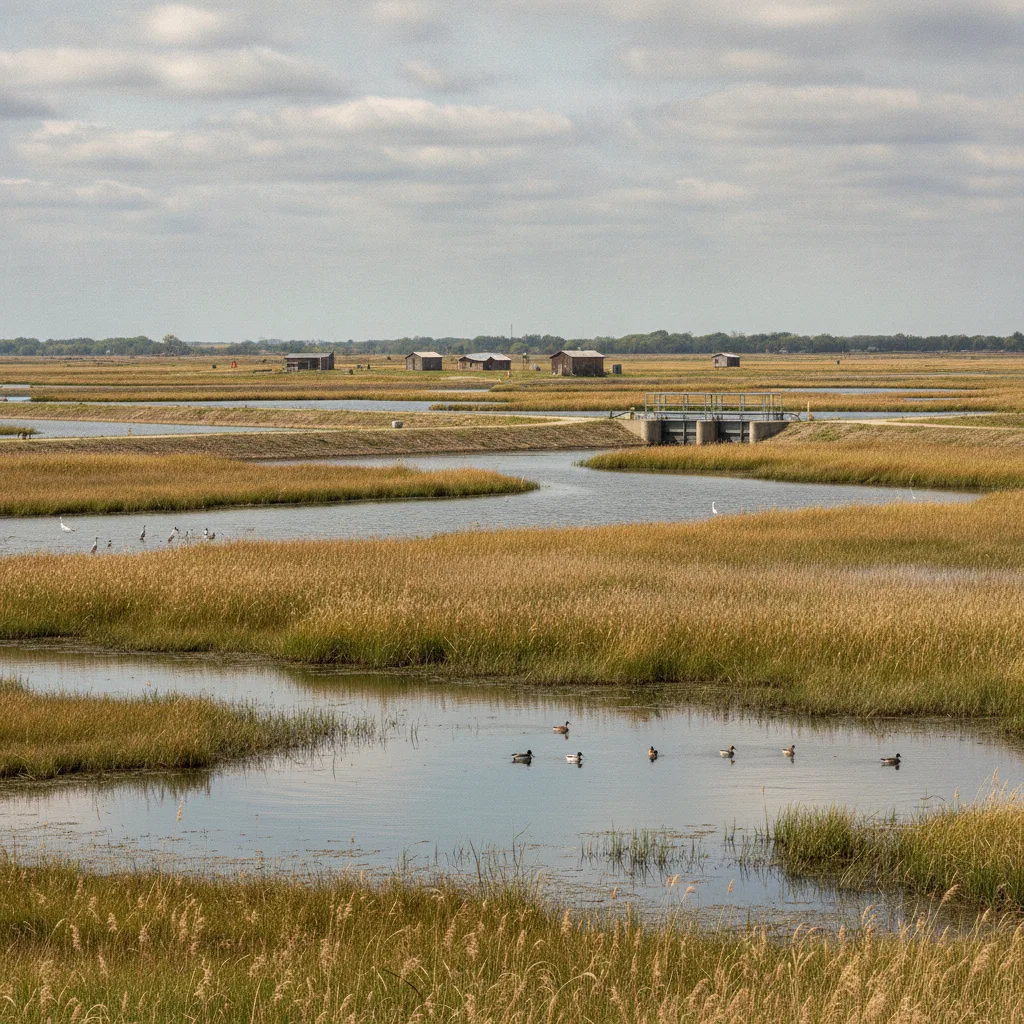
Cheyenne Bottoms Travel Guide — Kansas
For travelers seeking an unparalleled encounter with North America’s migratory bird spectacle, Cheyenne Bottoms Kansas is not just a destination; it's a critical waypoint on the Central Flyway, recognized globally as a Wetland of International Importance. This vast inland marsh, located in the heart of the Great Plains, offers an immersive experience into a vibrant ecosystem teeming with wildlife. Our team at Visit America has compiled this comprehensive guide to help you navigate this natural wonder, ensuring your visit is as enriching and seamless as possible.
Why Visit Cheyenne Bottoms
Cheyenne Bottoms stands as a testament to the enduring power of nature, a sprawling 41,000-acre natural land sink that serves as the largest freshwater marsh in the interior United States. Its significance cannot be overstated: it's a designated Ramsar Wetland of International Importance, a critical stopover for millions of migrating birds annually. Birdwatchers, photographers, and nature enthusiasts flock here to witness the incredible diversity of species, from tiny shorebirds to majestic bald eagles. Imagine standing amidst a landscape where the sky is alive with the movement and calls of hundreds of thousands of birds – that's the daily reality at Cheyenne Bottoms.
Beyond the sheer numbers, the area offers a unique blend of managed wildlife habitat and pristine natural beauty. Approximately 20,000 acres are managed by the Kansas Department of Wildlife and Parks (KDWP) as the Cheyenne Bottoms Wildlife Area, while an additional 8,616 acres are overseen by The Nature Conservancy as the Cheyenne Bottoms Preserve. This dual management approach ensures the wetlands are meticulously maintained to support the delicate balance of its ecosystem, providing vital foraging and resting grounds for species traversing the Central Flyway. It's a place where conservation efforts are tangible, and the rewards are visible in the thriving wildlife populations.
Who It's Best For
Cheyenne Bottoms is a paradise for serious birdwatchers and wildlife photographers. With over 350 bird species recorded, including a significant percentage of North American shorebirds, it’s a premier location for adding rare sightings to your life list or capturing stunning images. The sheer scale of migration, particularly in spring and fall, is a breathtaking spectacle that draws enthusiasts from around the globe. Our team has witnessed firsthand the awe-inspiring sight of thousands of ducks, geese, and shorebirds taking flight – it’s an experience that stays with you long after you’ve left.
However, its appeal extends beyond the dedicated birder. Families with an interest in nature will find the Kansas Wetlands Education Center (KWEC) an invaluable resource, offering interactive exhibits and educational programs designed to engage all ages. The accessible nature trails and guided van tours make it easy for visitors of all mobility levels to experience the wetlands. Hunters, particularly waterfowl enthusiasts, also find Cheyenne Bottoms to be a prime destination during open seasons, with specific areas managed for this purpose. Whether you're a seasoned naturalist or simply looking for a peaceful escape into the wild heart of Kansas, Cheyenne Bottoms offers a rewarding experience.
Getting There & Parking
Reaching Cheyenne Bottoms is straightforward, thanks to its central Kansas location. The area is situated just north of Great Bend, Kansas. If you're coming from Great Bend, simply travel 5 miles north on US Highway 281, then 2 miles east. Alternatively, from Hoisington, head 5 miles south on US Highway 281 and then 2 miles east. Access is also available from K-156 or by turning south off K-4 Highway at Redwing. The Kansas Wetlands Education Center, a great starting point for any visit, is located 10 miles northeast of Great Bend along the Wetlands and Wildlife National Scenic Byway.
Once you arrive, you'll find that parking at Cheyenne Bottoms is generally ample, with vehicles permitted only on established roads and designated parking areas. The KDWP-managed Wildlife Area has several specific parking lots and boat ramps, such as the Pool 2 Parking Lot (Witt Lot) and areas for Pools 4A and 4B. The Kansas Wetlands Education Center also provides a dedicated parking lot, with the George Stumps Nature Trailhead conveniently located at its west end. When navigating the area, it’s crucial to observe signage and avoid blocking roads, gates, boat ramps, or foot crossings to ensure smooth access for all visitors and wildlife management operations. Our team always recommends picking up a map from the Kansas Wetlands Education Center to help you navigate the various access points and observation areas for a comprehensive experience of Cheyenne Bottoms.
Top Things to Do
There's a wealth of things to do at Cheyenne Bottoms, catering to every type of nature lover. The primary draw, of course, is birdwatching. With over 350 species identified, including a staggering 45% of all North American shorebirds during migration, you'll want your binoculars and camera ready. The Kansas Wetlands Education Center (KWEC) is an excellent place to begin, offering interactive exhibits, live animal displays, and a gift store. From the KWEC, you can embark on self-guided driving tours using maps and brochures provided, or opt for a guided van tour for an interpretive experience.
Beyond birding, other things to do at Cheyenne Bottoms include:
- Wildlife Photography: Capture stunning images of diverse wildlife against the backdrop of the expansive wetlands. The observation tower along K-4 Highway offers incredible panoramic views, perfect for photography.
- Nature Trails: The George Stumps Nature Trail, a half-mile paved and wheelchair-accessible loop at the KWEC, provides an easy walk through different ecosystems.
- Hunting: During open seasons, Cheyenne Bottoms Wildlife Area is a popular destination for waterfowl, pheasant, snipe, rail, quail, and deer hunting. Hunters must check in/out via the GoOutdoorsKS app or website.
- Fishing: While limited, carp and bullheads are common, with occasional catches of channel cat, crappie, and bass after consistent water levels.
- Educational Programs: The KWEC offers numerous programs, including summer discovery camps for kids and specialized bird migration tours.
- Scenic Driving: Explore the Wetlands and Wildlife National Scenic Byway, which connects Cheyenne Bottoms with the Quivira National Wildlife Refuge, offering diverse landscapes and communities.
Cheyenne Bottoms Hiking Trails
While Cheyenne Bottoms is primarily known for its driving tours and accessible viewing platforms, there are dedicated Cheyenne Bottoms hiking trails for those who wish to stretch their legs and immerse themselves further in the landscape. The most prominent and accessible is the George Stumps Nature Trail, located at the Kansas Wetlands Education Center. This paved, half-mile loop is wheelchair accessible, making it suitable for visitors of all abilities. Along this trail, you can observe various ecosystems – grassland, marsh, and wooded areas – and spot nesting birds in summer or migrating monarchs in the fall.
It's important to note the distinction between the KDWP-managed Wildlife Area and The Nature Conservancy's Preserve. On The Nature Conservancy's Cheyenne Bottoms Preserve, off-road hiking is prohibited to protect sensitive habitats. Visitors are encouraged to stay on public roads. However, within the broader Cheyenne Bottoms Wildlife Area, while formal, long Cheyenne Bottoms hiking trails are not extensively developed, the dikes and service roads can offer opportunities for walking and observation, particularly outside of hunting seasons and in areas not designated as refuges. Always consult a current map from the Kansas Wetlands Education Center and be aware of any posted regulations or closures before venturing off established paths.
Cheyenne Bottoms Camping
For those who wish to extend their visit and truly experience the tranquility of the wetlands under the stars, Cheyenne Bottoms camping offers a primitive, no-frills option. A small, free primitive campground is located approximately 0.5 to 1 mile west of the Cheyenne Bottoms office. This campground provides basic amenities, typically including picnic tables and vault toilets, making it ideal for self-sufficient campers. Our team has found that while simple, it offers a peaceful overnight stay, often with the sounds of the marsh as your lullaby.
It's important to be prepared for primitive Cheyenne Bottoms camping. Services are limited or non-existent, so bring all necessary supplies, including water. Road conditions to the campground can vary, with the gravel access road potentially becoming muddy and challenging for heavier vehicles during wet periods. While reservations are not typically required for this primitive site, it's always a good idea to contact the Cheyenne Bottoms office at 620-793-3066 for the most current information on conditions and availability, especially during peak seasons like waterfowl hunting. For those seeking more amenities, nearby Great Bend offers several established hotels and motels.
Best Time to Visit
The best time to visit Cheyenne Bottoms largely depends on your interests, but the spring and fall migrations offer the most spectacular wildlife viewing opportunities. During these periods, millions of birds utilize the wetlands as a critical stopover on the Central Flyway.
- Spring Migration (Late March to Late May): This is arguably the peak season for birdwatching. Migrating ducks and cranes reach their highest numbers in late March and early April. Shorebird numbers peak from late April to late May, with an astonishing 600,000 shorebirds from 39 species passing through.
- Fall Migration (July to November): While spread out over a longer period, the fall migration is equally impressive. Shorebirds begin arriving as early as July and continue into September and October. Peak duck viewing typically occurs in early to mid-October. Sandhill and Whooping Cranes are most likely to stop over in late October into early November.
- Winter (November to March): For those interested in raptors, bald eagles are present on the area from November to March, often seen standing on the frozen waters.
- Summer (June to August): While migration numbers are lower, summer offers opportunities for viewing nesting birds and resident wildlife. The Kansas Wetlands Education Center also hosts various summer discovery camps and nature craft workshops for children during this time.
Our team recommends checking the Kansas Department of Wildlife and Parks (KDWP) waterfowl reports and the Kansas Wetlands Education Center's recent bird sightings for the most up-to-date information on bird activity before your visit. Weather can also play a significant role, so be prepared for various conditions.
Where to Stay Nearby
While primitive camping is available directly at Cheyenne Bottoms, many visitors prefer the comfort and amenities of nearby towns. Great Bend, Kansas, located just a short drive south, serves as the primary hub for accommodations and services. Our team has identified several reliable options:
- Hotels and Motels in Great Bend: You'll find a range of choices, including well-known chains such as Quality Inn, Days Inn by Wyndham, Super 8 by Wyndham, Holiday Inn Express & Suites, and Best Western Angus Inn. Other local options include the Baltzell Lodge and Frontier Inn. For a unique stay, consider The Historic Wolf Hotel and Events Center. Many of these offer comfortable rooms, often with amenities like refrigerators, microwaves, and coffee makers, which are convenient for early morning birding excursions.
- Hoisington: Located north of Cheyenne Bottoms, Hoisington also offers lodging, such as the Park View Inn & Suites.
- Primitive Camping: As mentioned, a free primitive campground is available about 0.5 to 1 mile west of the Cheyenne Bottoms office. It offers picnic tables and vault toilets, ideal for a rustic experience.
Booking accommodations in Great Bend provides easy access to dining options, supplies, and other local attractions, making it a convenient base for exploring Cheyenne Bottoms and the surrounding area. When planning your trip, we recommend reserving your lodging in advance, especially during peak migration seasons.
Sample 2-Day Itinerary
To fully appreciate the wonders of Cheyenne Bottoms Kansas, we recommend dedicating at least two days. Here’s a sample itinerary designed by our team to maximize your experience:
Day 1: Arrival & Immersion into the Wetlands
- Morning (9:00 AM - 12:00 PM): Kansas Wetlands Education Center & George Stumps Trail
Arrive at the Kansas Wetlands Education Center (KWEC) to kickstart your visit. Admission is free, and the center offers state-of-the-art interactive exhibits that provide essential context about the geology, ecology, and wildlife of Cheyenne Bottoms. Pick up maps, brochures, and recent bird sighting checklists. Afterwards, take a leisurely stroll along the half-mile, paved, and wheelchair-accessible George Stumps Nature Trail located right outside the center. This easy walk offers immediate opportunities for bird and plant identification.
- Lunch (12:00 PM - 1:00 PM): Picnic or Local Eatery
Enjoy a packed lunch at one of the picnic areas near the KWEC or head into Great Bend for a quick bite. Great Bend offers various dining options, from casual diners to fast food.
- Afternoon (1:00 PM - 5:00 PM): Self-Guided Driving Tour & Scenic Overlook
Utilize the map from KWEC for a self-guided driving tour of the Cheyenne Bottoms Wildlife Area. Drive along the dikes and established roads, stopping at designated parking areas and observation points. Keep an eye out for waterfowl, shorebirds, and raptors. Make sure to visit the Cheyenne Bottoms Scenic Overlook along K-4 Highway, which boasts a wheelchair-accessible tower offering incredible panoramic views of the basin – perfect for photography. Remember to stay on established roads, especially within The Nature Conservancy's Preserve areas where off-road travel is prohibited.
- Evening: Dinner & Stargazing
Return to Great Bend for dinner at one of the local restaurants. Consider the Best Western Angus Inn, which has two restaurants on-site. If conditions are clear, head back to a quiet spot within Cheyenne Bottoms for some incredible stargazing, far from city lights.
Day 2: Deeper Exploration & Nearby Attractions
- Morning (8:00 AM - 12:00 PM): Guided Tour or Focused Birding
For a more personalized experience, pre-book a guided van tour from the Kansas Wetlands Education Center. They offer both a 30-minute "Get to Know Cheyenne Bottoms" tour and a 90-minute "Deluxe Tour" focusing on bird and wildlife identification. Alternatively, if you're a keen birder, revisit specific pools or areas of the Wildlife Area based on recent sightings or your target species, focusing on different light conditions for photography.
- Lunch (12:00 PM - 1:00 PM): Local Flavors
Grab lunch in Great Bend or Hoisington, perhaps trying a different local spot than the day before.
- Afternoon (1:00 PM - 5:00 PM): Explore the Wetlands & Wildlife National Scenic Byway or Nearby Attractions
Spend the afternoon exploring more of the Wetlands & Wildlife National Scenic Byway, which connects Cheyenne Bottoms to the Quivira National Wildlife Refuge. This scenic drive offers insights into the region’s unique geology and diverse communities. For those interested in other Kansas highlights, consider a visit to the Hutchinson Cosmosphere, a world-class space museum about an hour's drive southeast, or explore other natural wonders like Tallgrass Prairie National Preserve further east. This is a great opportunity to see more of Kansas.
- Evening: Departure or Extended Stay
Depart for home, or if time allows, enjoy another evening in Great Bend, reflecting on the incredible natural beauty and biodiversity you’ve experienced at Cheyenne Bottoms.
Is It Worth Visiting?
Without a doubt, our team believes that Cheyenne Bottoms is worth visiting for anyone with an appreciation for nature, wildlife, and conservation. This globally significant wetland offers an experience unlike any other in the American interior. The sheer scale of bird migration, particularly during spring and fall, is a truly awe-inspiring spectacle. Where else can you witness hundreds of thousands of shorebirds, ducks, and geese in a single basin? It's a place where the pulse of the Central Flyway is palpable, and every visit offers the potential for new and exciting sightings.
Beyond the birds, the educational opportunities at the Kansas Wetlands Education Center are top-notch, providing valuable insights into wetland ecology for all ages. The accessibility of the driving tours and the George Stumps Nature Trail ensures that everyone can enjoy the beauty of the Bottoms. While amenities are modest, the focus here is on the natural world, and that's precisely why Cheyenne Bottoms is worth visiting. It's a vital ecosystem, a birder's paradise, and a serene escape into the wild heart of Kansas that leaves a lasting impression.
FAQ Longtails
things to do in Great Bend
Beyond Cheyenne Bottoms, Great Bend, Kansas, offers a variety of attractions and activities for visitors. Our team recommends exploring the Great Bend Brit Spaugh Zoo, a popular family destination. You can also enjoy the outdoors at Brit Spaugh Park or Veterans Memorial Park. For summer fun, the Wetlands Waterpark is a great option, and the My BackYard Playground provides entertainment for younger visitors. The Great Bend Sports Complex hosts various events, and you can check the Great Bend Chamber of Commerce calendar for local happenings like the annual Party in the Park in August 2026 or the Barton County Fair in June 2026. Fishing enthusiasts might enjoy trying their luck at Stone Lake or Vet's Lake, which sometimes feature tagged fish programs.
Cheyenne Bottoms with kids
Cheyenne Bottoms is an excellent destination for families visiting with kids. The Kansas Wetlands Education Center (KWEC) is a fantastic starting point, offering engaging, free interactive exhibits and live animal displays that educate children about wetland ecosystems. The George Stumps Nature Trail, a half-mile paved and wheelchair-accessible loop at the KWEC, is perfect for little legs and strollers. Throughout July 2026, the KWEC is hosting various "Drop-in Nature Craft" workshops and "Summer Discovery Day Camps" designed to get kids exploring nature, with camp fees at $10 per day. Guided van tours are also available and can be a comfortable way for families to see the wildlife, with reduced fees for children. Remember to pack binoculars, snacks, water, and sunscreen for a comfortable and engaging experience for the whole family.
Cheyenne Bottoms tips
To make the most of your visit to Cheyenne Bottoms, our team offers these essential tips:
- Visit the Kansas Wetlands Education Center First: This is your best resource for maps, current bird sightings, and educational context.
- Bring Binoculars and a Camera: These are indispensable for birdwatching and wildlife photography.
- Dress in Layers & Be Prepared for Weather: Kansas weather can change rapidly. Check the forecast before you go.
- Stay on Established Roads and Paths: This protects sensitive habitats and ensures your safety, especially on The Nature Conservancy's Preserve where off-road hiking is prohibited.
- Respect Wildlife: Maintain a respectful distance and avoid disturbing animals, especially during nesting seasons.
- Pack Essentials: Bring water, snacks, sunscreen, insect repellent, and a hat.
- Plan for Peak Migration: For the most spectacular birding, aim for spring (late March to late May) or fall (July to November).
- Hunters, Check Regulations: If you plan to hunt, be aware of specific pool closures, check-in/check-out requirements, and non-toxic shot rules.
- Consider a Guided Tour: The KWEC offers guided van tours that provide expert insight and can enhance your understanding of the wetlands.
Cheyenne Bottoms parking
Parking at Cheyenne Bottoms is generally available in designated areas. For visitors to the Kansas Wetlands Education Center, a large parking lot is provided, with the George Stumps Nature Trailhead conveniently located at its west end. Within the Cheyenne Bottoms Wildlife Area, the Kansas Department of Wildlife and Parks has established several parking lots and boat ramps, such as the Pool 2 Parking Lot (Witt Lot) and areas serving Pools 4A and 4B. It is crucial to park only in these established areas and to ensure you are not blocking any roads, gates, boat ramps, or foot crossings, as these are vital for wildlife management and emergency access. While there are no specific parking fees mentioned for general access to the Wildlife Area or Preserve, adhering to these rules helps maintain the integrity of this important natural resource.
best time to visit Cheyenne Bottoms
The best time to visit Cheyenne Bottoms for prime wildlife viewing is during the spring and fall migrations. The spring migration, from late March through late May, sees an incredible influx of ducks, cranes, and shorebirds, with shorebird numbers peaking in late April to late May. The fall migration, which can start as early as July and extend through November, also brings millions of birds, with peak duck viewing in early to mid-October and Whooping Cranes often present in late October to early November. Winter offers opportunities to spot bald eagles (November to March), while summer is good for resident species and educational programs at the Kansas Wetlands Education Center. Our team always recommends checking current bird reports from the KDWP or the KWEC website closer to your travel dates for the most accurate information on what species are present.
Cheyenne Bottoms hours and fees
Cheyenne Bottoms offers largely free and accessible experiences. The Cheyenne Bottoms Wildlife Area is open year-round to vehicles, with no general entrance fees for visitors. However, specific activities like hunting and fishing require appropriate Kansas licenses and permits, and trapping requires a free special permit. The Kansas Wetlands Education Center (KWEC) is also free to enter and explore its exhibits. For those seeking a more in-depth experience, guided van tours offered by the KWEC have fees: $5 for adults and $3 for children under 12 for the 90-minute Deluxe Tour, and $3 for adults and $1.50 for children under 12 for the 30-minute "Get to Know" tour. The KWEC operates Monday through Saturday from 9 a.m. to 5 p.m. and Sunday from 1 p.m. to 5 p.m., but is closed on Sundays and Mondays from November 1 through March 31, and on major holidays. Summer Discovery Day Camps for children are $10 per day, and special bird migration tours cost $5 per person for ages 12 and older.
In conclusion, Cheyenne Bottoms Kansas is a jewel in the heartland, offering an unparalleled opportunity to connect with nature on a grand scale. From the incredible migrations to the dedicated conservation efforts, it's a destination that promises wonder and education in equal measure. We encourage you to plan your visit and discover the magic of this globally significant wetland for yourselves.
Last updated: 2026-07-05 by the Visit America team.