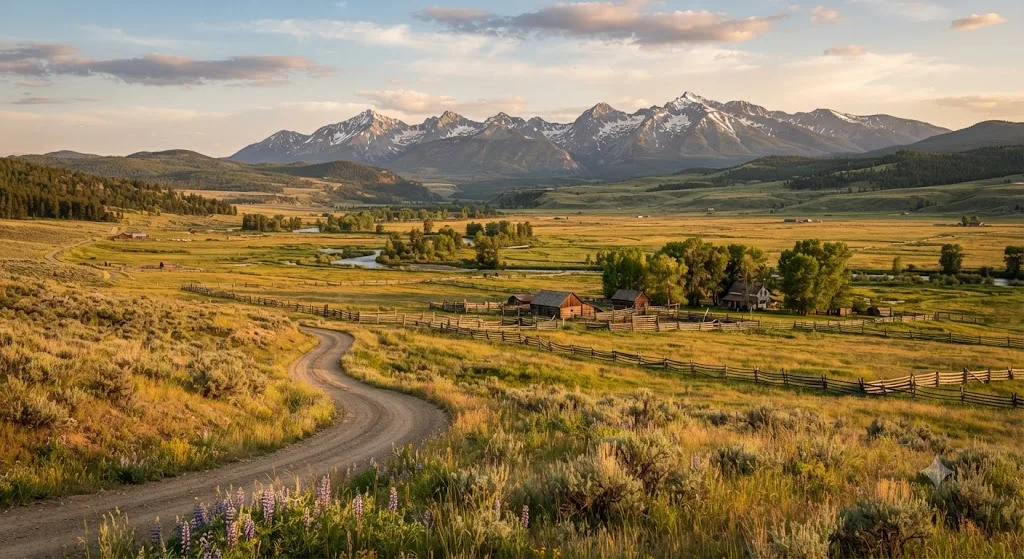
Our Big Hole Valley guide covers practical planning for Big Hole Valley Montana — best time to visit, getting there, and what to do on the ground.
Welcome to the Big Hole Valley, Montana. Our team at Roam States has explored countless corners of the American West, and few places capture the essence of rural Montana quite like this vast, high-altitude valley. It's a place where time seems to slow, where the rhythm of ranching life dictates the pace, and where the natural beauty is both rugged and profoundly serene. If you're seeking an escape from the crowds and a genuine connection with the landscape, the Big Hole Valley Montana offers an experience unlike any other.
Why Visit Big Hole Valley
The Big Hole Valley is a destination for those who appreciate unspoiled wilderness, rich history, and the quiet grandeur of the Rocky Mountains. We find ourselves drawn back to its expansive meadows, framed by towering peaks, and the meandering Big Hole River – a legendary fly-fishing destination. This isn't a place of bustling attractions or curated experiences; rather, its allure lies in its authenticity. Here, you'll witness working ranches, historic towns like Wisdom and Jackson, and a community deeply connected to the land. It's a chance to unplug, breathe deeply, and immerse yourself in a landscape that has largely resisted the pressures of modern development.
Beyond the stunning scenery, the valley holds significant historical weight, particularly at the Big Hole National Battlefield, where a pivotal moment in the Nez Perce War unfolded. For anglers, the Big Hole River offers some of the best wild trout fishing in the Lower 48, while hikers and wildlife enthusiasts will find endless opportunities to explore. It’s a place that speaks to the soul, inviting contemplation and a deep appreciation for Montana's enduring spirit.
Who It's Best For
The Big Hole Valley is not for everyone, and that's precisely part of its charm. We confidently recommend it for:
- **Anglers:** If fly fishing is your passion, the Big Hole River is practically hallowed ground. Its reputation for large, wild trout is well-earned.
- **History Buffs:** The Big Hole National Battlefield offers a poignant and educational experience, shedding light on a critical period in American history.
- **Nature Enthusiasts & Wildlife Viewers:** The valley is home to abundant wildlife, including moose, elk, deer, and a variety of bird species. The vast, open spaces are perfect for quiet observation.
- **Ranching Culture Aficionados:** This is a living landscape of traditional Montana ranching. You'll see cattle drives, historic homesteads, and experience a way of life that defines the American West.
- **Those Seeking Solitude:** If your ideal vacation involves quiet mornings, starry nights, and a profound sense of peace, the Big Hole Valley delivers in spades. It's an antidote to crowded tourist traps.
Conversely, if you're looking for luxury resorts, vibrant nightlife, or a packed itinerary of adrenaline-pumping activities, this might not be your ideal destination. The Big Hole Valley is about slowing down, appreciating the subtle beauty, and connecting with a rugged, authentic slice of Montana life.
Getting There & Parking
The Big Hole Valley is accessible but requires a bit of driving, as it's truly off the beaten path. Plan your route carefully, especially outside of summer months.
The Big Hole Valley is located in southwestern Montana, nestled between several mountain ranges. There are no major airports directly in the valley, so most visitors will fly into a larger regional airport and drive in. The closest major airports are:
- **Missoula International Airport (MSO):** Approximately a 2.5 to 3-hour drive to the northern end of the valley (e.g., Wisdom).
- **Bert Mooney Airport (BTM) in Butte:** Approximately a 1.5 to 2-hour drive to the eastern side of the valley.
- **Bozeman Yellowstone International Airport (BZN):** Approximately a 2.5 to 3-hour drive, offering more flight options.
From these airports, you'll need a rental car. We strongly recommend a vehicle with good ground clearance, especially if you plan to explore unpaved county roads or visit during shoulder seasons when conditions can be variable. The primary routes into and through the valley are Montana Highway 43 (running east-west) and Montana Highway 278 (running north-south). These are generally well-maintained, but always check road conditions, particularly in winter. For current road conditions in Montana, we always consult the official Montana Department of Transportation website.
How to get to Big Hole Valley: Specific Driving Directions
- **From Missoula:** Take US-93 South to MT-43 East towards Wisdom. This is a scenic drive through the Bitterroot Valley.
- **From Butte:** Take I-15 South to MT-43 West towards Divide and then into the Big Hole Valley.
- **From Bozeman:** Take I-90 West to Butte, then follow the directions from Butte.
Parking in Big Hole Valley
Parking is generally not an issue in the Big Hole Valley. In the small towns of Wisdom and Jackson, you'll find ample street parking. At attractions like the Big Hole National Battlefield, there is a dedicated parking lot. For fishing access sites along the Big Hole River, designated parking areas are available. These are typically gravel lots with enough space for vehicles and trailers. Always be mindful of private property and respect signage regarding access. When exploring national forest lands, follow all posted regulations regarding parking and dispersed camping, if applicable. We always advise carrying a good map (physical or downloaded offline) as cell service can be spotty throughout the valley.
Top Things to Do
While the Big Hole Valley is about embracing tranquility, there are several compelling things to do at Big Hole Valley that offer insights into its history, natural beauty, and local culture. We’ve curated our top picks for things to do in Southwest Montana, focusing on this unique region.
Big Hole National Battlefield
This is a must-visit for anyone in the area. The Big Hole National Battlefield preserves the site of a tragic battle that occurred in August 1877 during the Nez Perce War. Our team found the interpretive trails and visitor center to be incredibly moving and informative. The visitor center is open daily from 9:00 AM to 5:00 PM during the summer season (typically late May through September), with reduced hours in the shoulder seasons. There is no entrance fee to the battlefield. Allow at least 2-3 hours to walk the trails and absorb the history. It's a powerful reminder of the complex history of the American West. This is one of the most significant things to do at Big Hole Valley.
Fly Fishing on the Big Hole River
The Big Hole River is legendary among anglers for its healthy populations of brown trout, rainbow trout, cutthroat trout, and Arctic grayling. We consider it one of Montana's premier fly-fishing destinations. Access points are numerous, including several designated fishing access sites managed by Montana Fish, Wildlife & Parks. A Montana fishing license is required, which can be purchased online or at local sporting goods stores. While guided trips are highly recommended for beginners or those looking to maximize their success, experienced anglers can find plenty of wade-fishing opportunities. Always check current regulations and river conditions before heading out.
Exploring the Towns of Wisdom and Jackson
These small, authentic ranching towns offer a glimpse into the heart of the Big Hole Valley. Wisdom, often called the "Gateway to the Big Hole," has a few services, a general store, and a couple of eateries. Jackson is even smaller, known for its historic Jackson Hot Springs Lodge. While there aren't many traditional "attractions," simply driving through, stopping for a coffee, or chatting with locals provides a genuine experience of rural Montana life. These towns are central to the experience of things to do in Southwest Montana.
Jackson Hot Springs
After a day of exploring, a soak in the natural hot springs at Jackson Hot Springs Lodge is a welcome treat. The lodge features a large indoor pool fed by natural hot springs. We recommend checking their website or calling ahead for current hours and admission fees, as these can vary seasonally. It's a relaxing way to unwind and enjoy the therapeutic waters.
Scenic Drives and Photography
The entire Big Hole Valley is a photographer's dream. We recommend simply driving the scenic byways, pulling over safely at designated viewpoints, and capturing the expansive landscapes, historic barns, and wildlife. The drive along MT-278 between Wisdom and Jackson offers particularly stunning vistas of the valley floor and surrounding mountains. Keep an eye out for moose and elk, especially during dawn and dusk.
Hiking and Wildlife Viewing
While formal hiking trails are less common than in national parks, opportunities for hiking and wildlife viewing abound on public lands surrounding the valley, particularly in the Beaverhead-Deerlodge National Forest. We suggest consulting local forest service maps for specific trailheads or simply enjoying walks along quiet county roads (respecting private property). This is an excellent area for spotting raptors, waterfowl, and larger mammals. Always carry bear spray and know how to use it, as this is grizzly country.
Best Time to Visit
The ideal time to visit the Big Hole Valley largely depends on your interests, but we generally recommend late spring through early fall for the most accessible and enjoyable experience.
- **Summer (June-August):** This is peak season for good reason. The weather is generally warm and sunny, perfect for fishing, hiking, and exploring. All services and attractions are typically fully operational. However, it's also the busiest time, though "busy" in the Big Hole Valley is relative compared to places like Glacier National Park or Yellowstone National Park (North). Fishing is excellent, and the long daylight hours allow for extensive exploration.
- **Spring (May-early June):** A beautiful time as the valley greens up and wildflowers begin to bloom. Fishing can be phenomenal, especially for pre-runoff hatches. However, some higher elevation roads might still be closed due to snow, and weather can be unpredictable, with chances of rain or late-season snow.
- **Fall (September-October):** Our team finds fall to be a truly magical time in the Big Hole Valley. The aspens and cottonwoods turn golden, creating stunning photographic opportunities. Fishing remains strong, and wildlife is often more active as they prepare for winter. Crowds thin out significantly, offering a more solitary experience. Be prepared for cooler temperatures and the possibility of early snow.
- **Winter (November-April):** The Big Hole Valley transforms into a snowy wonderland. While incredibly beautiful, winter travel can be challenging due to heavy snow and cold temperatures. Many services may be limited, and some roads could be closed. This season is best for experienced winter adventurers, snowmobilers, and cross-country skiers who are well-prepared for remote conditions.
Where to Stay Nearby
Big Hole Valley lodging options are limited but offer an authentic Montana experience. Don't expect large chain hotels; think historic lodges, cabins, and guesthouses. We advise booking well in advance, especially for summer travel.
Jackson Hot Springs Lodge
Located in Jackson, this historic lodge offers rustic charm and the convenience of on-site hot springs. It's a classic Big Hole Valley lodging experience, providing both accommodation and a relaxing amenity. Rooms are comfortable, and the atmosphere is distinctly old-Montana.
The Stonefly Inn & Outfitters (Twin Bridges)
While technically just outside the Big Hole Valley in Twin Bridges (about an hour's drive east), The Stonefly Inn is a highly regarded option, especially for anglers. They offer comfortable lodging and can arrange guided fishing trips on the Big Hole River and other nearby waters. It's a great base if you plan to explore a wider area of Southwest Montana.
Local Motels and Guesthouses in Wisdom
Wisdom, being the largest town directly in the Big Hole Valley, offers a few small, independent motels and guesthouses. These are typically no-frills but clean and comfortable, providing a convenient base for exploring the immediate area. Check online travel sites or call directly for availability and reservations. These provide essential Big Hole Valley lodging.
Ranch Stays
For a truly immersive experience, consider a stay at one of the working ranches in or near the Big Hole Valley. These often offer cabins or guesthouses and provide a unique opportunity to experience ranch life firsthand. Options vary, so searching for "Montana guest ranch Big Hole Valley" can yield some unique results. These are often booked far in advance.
Camping
For those who prefer to sleep under the stars, there are several developed campgrounds in the surrounding Beaverhead-Deerlodge National Forest. Additionally, dispersed camping is allowed in many areas of the national forest, provided you follow Leave No Trace principles and local regulations. Always check with the Forest Service for current fire restrictions and camping guidelines. We find that camping offers the most intimate connection with the Big Hole Valley's natural environment.
Sample 2-Day Itinerary
This itinerary focuses on the highlights of the Big Hole Valley, blending history, outdoor activity, and relaxation. Adjust based on your interests, especially if fly fishing is your primary focus.
Day 1: History and Hot Springs
- **Morning:** Arrive in the Big Hole Valley (e.g., drive from Butte or Missoula). Head directly to the Big Hole National Battlefield. Spend 2-3 hours exploring the visitor center and walking the interpretive trails. This is a profound and essential experience for understanding the region.
- **Lunch:** Have a casual lunch in Wisdom, perhaps at a local cafe or with provisions you brought.
- **Afternoon:** Take a scenic drive along MT-278 south towards Jackson. Stop to photograph the expansive valley views and historic structures.
- **Late Afternoon/Evening:** Check into Jackson Hot Springs Lodge. Enjoy a relaxing soak in the hot springs pool.
- **Dinner:** Dine at the lodge or enjoy a picnic if you've brought supplies.
Day 2: River and Ranching Life
- **Morning:** Dedicate the morning to the Big Hole River. If you're an angler, this is your prime time for fly fishing. Consider hiring a local guide for the best experience. If not fishing, explore one of the public fishing access sites for a walk along the river, enjoying the tranquility and watching for wildlife.
- **Lunch:** Pack a picnic to enjoy by the river or grab a bite in Wisdom.
- **Afternoon:** Explore the surrounding Beaverhead-Deerlodge National Forest. Take a leisurely drive on a well-maintained forest road, looking for wildlife like moose and elk. Alternatively, visit a local ranching museum or gallery if one is open.
- **Late Afternoon:** Begin your journey out of the Big Hole Valley, or if time permits, revisit a favorite scenic viewpoint for golden hour photography.
- **Evening:** Depart for your next destination, perhaps heading towards Big Sky Resort or continuing your journey through Best places in Montana.
Last updated: 2026-07-07 by the Roam States team.