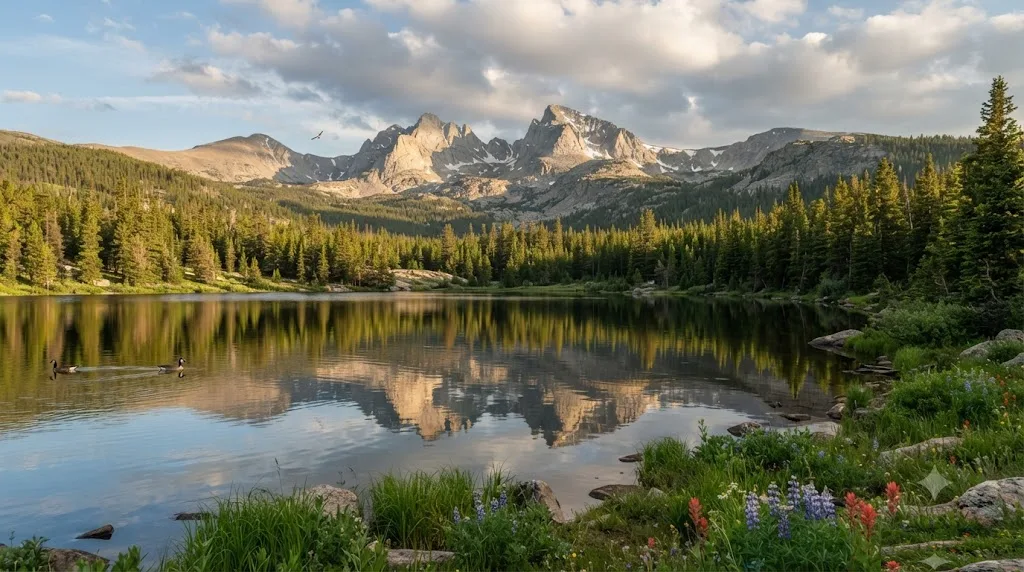
Our Big Horn National Forest guide covers practical planning for Big Horn National Forest Wyoming — best time to visit, getting there, and what to do on the ground.
Encompassing a vast area of mountains and forests, Big Horn National Forest Wyoming offers unparalleled opportunities for camping, hiking, fishing, and scenic drives. Our team at Roam States has compiled this comprehensive guide to help you navigate this magnificent wilderness, ensuring you make the most of your visit to one of Wyoming's most stunning natural treasures. From practical details like hours and fees to insider tips on the best trails and lodging, we've got you covered for your 2026 adventure.
Why Visit Big Horn National Forest
The Big Horn National Forest is a destination that truly embodies the spirit of the American West. Located in north-central Wyoming, it serves as a stunning natural bridge between Mount Rushmore and Yellowstone National Park, making it an ideal stop on a larger USA road trip. We find that visitors are consistently captivated by its diverse landscape, which transitions from expansive grasslands to lush alpine meadows, pristine lakes, and dramatic glacial-carved valleys. You'll discover rolling hills giving way to sheer mountain cliffs, offering a visual feast around every bend.
Beyond its breathtaking scenery, the Big Horn National Forest provides a rich tapestry of recreational opportunities throughout the year. Whether you're drawn to the solitude of the wilderness, the thrill of outdoor adventure, or a deeper connection with nature, this forest delivers. It's a place where history and solitude intertwine, with a landscape that has provided for Native Americans, homesteaders, and explorers for centuries. The deep connection locals feel for "the mountain" is palpable, and we believe you'll quickly understand why this accessible landscape contributes so much to the quality of life in surrounding communities. For more on Wyoming's natural wonders, explore our guide to the Best places in Wyoming.
Who It's Best For
The Big Horn National Forest truly offers something for every type of traveler, making it an incredibly versatile destination. We recommend it for:
- Outdoor Enthusiasts: With over 1,200 miles of trails, the forest is a paradise for hikers, backpackers, mountain bikers, and horseback riders. The opportunities for fishing in its abundant streams and lakes are also exceptional.
- Families: Many campgrounds accommodate both tents and RVs, and numerous easy hiking trails are suitable for all skill levels, including children. Events like the annual Kids Fishing Day, held on Saturday, June 27, 2026, at Bear Lodge Pond, provide a fantastic, free opportunity for young anglers to learn about fish habitat and develop a passion for fishing.
- Scenic Drivers: The Big Horn Scenic Byway (US 14), Cloud Peak Skyway (US 16), and Medicine Wheel Passage (US 14A) offer stunning vistas and are considered some of the most beautiful roads in the country.
- Wildlife Viewers: Keep an eye out for moose, bears, elk, and a variety of bird species as you explore the diverse habitats within the forest.
- Those Seeking Solitude: While popular, the vastness of the Big Horn National Forest means there's ample opportunity to find peaceful, uncrowded spots, particularly within the nearly 192,000-acre Cloud Peak Wilderness.
- History and Culture Buffs: The Medicine Wheel National Historic Landmark, a sacred site for Indigenous peoples, offers a profound cultural experience.
Whether you're looking for an adrenaline-pumping adventure or a tranquil escape into nature, the Big Horn National Forest provides a memorable setting. We believe its diverse offerings make it an excellent choice for a wide range of visitors.
Getting There & Parking
How to Get There
The Big Horn National Forest is conveniently situated in north-central Wyoming, making it accessible from several directions. The primary gateways to the forest are the towns of Sheridan to the east, Buffalo to the southeast, and Lovell and Greybull to the west.
- From the East (Sheridan): US Highway 14, known as the Big Horn Scenic Byway, is your main route. It connects Sheridan directly with the forest and offers stunning views as it ascends into the mountains.
- From the Southeast (Buffalo): US Highway 16, the Cloud Peak Skyway, provides direct access to the southern part of the forest, including breathtaking views of Cloud Peak.
- From the West (Lovell/Greybull): US Highway 14A, the Medicine Wheel Passage, rises sharply from the Bighorn Basin near Lovell and travels through high alpine meadows to Burgess Junction, where it intersects with US 14. This route is particularly notable for accessing the Medicine Wheel National Historic Landmark. US 14 also connects Greybull to the forest.
For those flying in, regional airports in Sheridan (SHR) and Cody (COD) offer the closest access. From these points, you would rent a car to drive into the forest. We strongly recommend checking Wyoming Department of Transportation (WYDOT) for current road statuses before your trip, especially during late spring and fall, as higher elevation passes like Granite Pass on US-14 can be seasonally closed, typically reopening late May or June.
Parking and Fees
Generally, parking within the Big Horn National Forest is available at trailheads, campgrounds, and scenic overlooks. Most parking areas do not require a specific fee for day use. However, some developed recreation sites, such as certain campgrounds, may have fees associated with their use. We advise checking the specific recreation site on Recreation.gov or contacting a local Forest Service office for the most up-to-date information on any potential fees for 2026. Permits are required for some activities, such as removing forest products like firewood or Christmas trees. Firewood permits are available online or at local offices in Buffalo and Sheridan.
For organized events or commercial activities, special use permits may be required. These include guided tours, competitive races, or large gatherings of 75 or more people. Deadlines for submitting proposals for temporary outfitter and guide and recreation event requests are March 15 for activities from May 1 through October 31, and September 15 for activities from November 1 through April 30.
Top Things to Do
When planning your visit to Big Horn National Forest, our team recommends prioritizing these experiences to truly capture the essence of this magnificent area. There are so many things to do at Big Horn National Forest, you'll want to plan your time wisely.
Scenic Drives
Embark on one of the forest's renowned scenic byways, which are destinations in themselves. The Big Horn Scenic Byway (US 14) connects Sheridan and Greybull, offering 45 miles of stunning mountain landscapes. The Cloud Peak Skyway (US 16), running between Buffalo and Ten Sleep, provides breathtaking views of the snow-capped Cloud Peak along its 45-mile stretch. Don't miss the Medicine Wheel Passage (US 14A), which climbs from Lovell through high alpine meadows to Burgess Junction, featuring the ancient Medicine Wheel National Historic Landmark. These routes are among the most beautiful roads in the country and are essential things to do at Big Horn National Forest.
Hiking and Backpacking
Big Horn National Forest Hiking Trails
The Big Horn National Forest boasts an extensive network of trails, catering to all levels of hikers. Whether you're seeking a leisurely stroll or a challenging multi-day trek, you'll find numerous Big Horn National Forest hiking trails to explore.
- Medicine Wheel Trail: An easy 2.7-mile (4.3 km) trail that takes about 1 hour and 15 minutes to complete, leading to the sacred Medicine Wheel National Historic Landmark. This is an accessible path suitable for all skill levels.
- Mirror Lake & Lost Twin Lakes from West Tensleep Lake: This is a challenging 11.4-mile (18.3 km) route, typically taking around 5 hours and 25 minutes, leading to multiple alpine lakes.
- Misty Moon Trail from West Tensleep Lake to Lake Helen: A moderate 9.6-mile (15.5 km) path that follows a route to Lake Helen within the Cloud Peak Wilderness.
- Tongue River Canyon: Located about 20 minutes from downtown Sheridan, this moderate 7-mile out-and-back hike takes you through a narrow limestone canyon with towering walls.
- Cloud Peak Wilderness: For experienced hikers and backpackers, this nearly 192,000-acre wilderness offers serious high-alpine terrain and multi-day adventure opportunities. Popular longer Big Horn National Forest hiking trails here include Florence Pass via Middle Paintrock Trail and Solitude Loop Trail (17.7 miles, difficult) and Lake Solitude via Trail 164 and Solitude Trail (7.6 miles, moderate).
- Red Grade Trails Systems: Near Story, these easy trails offer gorgeous lookouts at a relaxing pace and are known for wildlife viewing, including potential black bear sightings.
Remember to prepare for changing mountain weather and carry appropriate gear, including waterproof hiking boots. Always check for current trail conditions and any temporary closures, such as the one near Sibley Lake due to timber sales.
Camping
With over a million acres, the Big Horn National Forest offers abundant opportunities for camping, from developed campgrounds to dispersed sites. Many campgrounds are available on a first-come, first-served basis, while some can be reserved through Recreation.gov. Reservations are highly recommended for holiday weekends and can often be made six months in advance. Popular campgrounds include South Fork Campground, West Tensleep Lake Campground, Tie Flume Campground, and Shell Creek Campground. We recommend bringing warm sleeping gear, as nights can be cold even in summer due to high elevations.
Fishing
The Big Horn National Forest is a prime destination for anglers, boasting numerous alpine streams and lakes teeming with trout, including brook, brown, rainbow, cutthroat, and even grayling. Tensleep Creek, near Boulder Park Campground, is known as a great trout fishing stream. Don't miss the annual Kids Fishing Day on June 27, 2026, at Bear Lodge Pond, a free event for youth to learn and enjoy fishing. Nonresident children 13 and under need an adult with a valid Wyoming fishing license on site.
Wildlife Viewing and Photography
The diverse ecosystems of the Big Horns support a wide array of wildlife. Keep your camera ready for moose, elk, deer, and various bird species. While encounters with mountain lions are rare, it's wise to be aware of safety guidelines, such as hiking in groups and avoiding dawn and dusk excursions.
Off-Highway Vehicle (OHV) Riding
For those seeking motorized adventure, the Big Horn National Forest offers hundreds of miles of trails and forest roads suitable for UTVs, ATVs, dirt bikes, and 4-wheel drive vehicles. The Bighorn Mountains Jamboree, scheduled for August 6-8, 2026, at Burgess Junction, provides a scenic and challenging off-roading experience with trails of varying difficulty. We recommend checking the WY State Parks, Historic Sites, and Trails website for ORV information and maps.
Visit Medicine Wheel National Historic Landmark
This sacred site, created by Indigenous peoples, is a profound cultural and historical point of interest. The wheel, comprised of concentric circles of stones, is still used in ceremonies today. We urge visitors to be respectful when visiting this National Historic Landmark.
Best Time to Visit
The best time to visit Big Horn National Forest Wyoming largely depends on the activities you plan to pursue, as each season offers a distinct experience.
- Summer (June to September): This is peak season and deservedly so. The Bighorns are fully accessible, wildflowers are extraordinary in July, and the weather is generally favorable for hiking, camping, fishing, and scenic drives. Temperatures are pleasant, though nights can still be cool at higher elevations. We recommend making reservations for campgrounds and lodging well in advance, especially for popular weekends like the Sheridan WYO Rodeo in mid-July.
- Fall (September to Mid-October): Often considered the "local's season," fall brings stunning aspen foliage, particularly along the Bighorn Scenic Byway in late September. Crowds thin out significantly after Labor Day, offering a more tranquil experience. This is also a popular time for hunting. Be aware that some higher elevation roads and facilities may begin to close as winter approaches.
- Winter (November to April): The Big Horn National Forest transforms into a winter wonderland, offering opportunities for snowmobiling, skiing, and snowshoeing. However, many roads are closed, and access is limited. Prepare for extremely cold temperatures and deep snow.
- Spring (May to Early June): Spring can be a transitional period. Lower elevations become accessible first, but higher passes and trails may still be snow-covered or muddy. Road openings typically occur in late May or June. This can be a beautiful time to witness the landscape awakening, but requires flexibility and checking current conditions.
Our team recommends summer for the widest range of activities and full accessibility, while early fall offers a quieter experience with spectacular scenery. Always check current road conditions and weather forecasts before heading out, especially for mountain passes.
Where to Stay Nearby
Big Horn National Forest Lodging
When planning your trip to Big Horn National Forest, you'll find a variety of lodging options both within and around the forest, catering to different preferences and budgets. Our team has identified several excellent choices for Big Horn National Forest lodging.
Within the Forest
- Campgrounds: The forest offers numerous developed campgrounds, many of which can be reserved through Recreation.gov. Popular options include South Fork Campground, West Tensleep Lake Campground, Tie Flume Campground, and Shell Creek Campground. We recommend booking six months in advance for peak season.
- Recreational Cabin Rentals: The U.S. Forest Service offers unique lodging experiences like Sheep Mountain Lookout or the Muddy Guard Cabin, former fire lookout and guard stations available for rent. These offer a more rustic experience, often without plumbing, but provide an immersive forest stay.
- Mountain Lodges: Lodges like South Fork Mountain Lodge and Outfitters, located on US Highway 16 between Buffalo and Ten Sleep, offer cabins, dining, and a range of outdoor excursions year-round. Elk View Inn is another option in the northern Bighorn Mountains, offering UTV rentals and proximity to hiking and fishing.
- Shell Campground & Cabins: Located conveniently on US Highway 14, this full-service campground offers 9 cabins, 8 RV sites (remodeled in 2026), and 4 glamping tents, serving as a great basecamp for exploring the Big Horns.
Near the Forest (Towns)
For those preferring more amenities or a wider selection of dining and services, nearby towns provide excellent bases for exploring the Big Horn National Forest. These towns offer a range of hotels, motels, and vacation rentals.
- Sheridan, Wyoming: Often considered the eastern gateway to the Big Horns, Sheridan offers a variety of hotels. Options include Comfort Inn & Suites Sheridan, Hampton Inn Sheridan, Best Western Sheridan Center, Ramada Plaza by Wyndham Sheridan Hotel & Convention Center, and Holiday Inn Express & Suites Sheridan South. Many of these hotels offer amenities like complimentary breakfast, indoor pools, and fitness centers. Sheridan is also home to a vibrant downtown with shops, restaurants, and cultural attractions like the WYO Theater and King's Saddlery.
- Buffalo, Wyoming: Located at the southern end of the Cloud Peak Skyway, Buffalo offers convenient access to the forest. Hotels here include SureStay Plus Hotel by Best Western Buffalo, Hampton Inn & Suites Buffalo, and Creekside Downtown Vacation Suites.
- Ten Sleep, Wyoming: A smaller town on the western side, offering a more intimate experience and access to the Cloud Peak Skyway.
- Lovell & Greybull, Wyoming: These towns on the western side provide access to the Medicine Wheel Passage and the western slopes of the Big Horns. The Historic Hotel Greybull is a highly-rated option in Greybull.
When considering Big Horn National Forest lodging, our team advises booking in advance, especially during the summer and during major events like the Sheridan WYO Rodeo (July 8-11, 2026).
Sample 2-Day Itinerary
This itinerary focuses on experiencing the diverse landscapes and key attractions of Big Horn National Forest Wyoming, with a base in Sheridan or Buffalo.
Day 1: Scenic Byways & Cultural Immersion
- Morning (8:00 AM - 12:00 PM): Big Horn Scenic Byway (US 14) & Medicine Wheel Passage (US 14A)
Start your day early from Sheridan. Drive west on US Highway 14, the Big Horn Scenic Byway, enjoying the ascent into the mountains. At Burgess Junction, turn north onto US Highway 14A, the Medicine Wheel Passage. This route offers dramatic scenery as it winds towards the Medicine Wheel National Historic Landmark. Allow ample time to explore this sacred site, reflecting on its historical and cultural significance. Remember to be respectful of the site.
- Lunch (12:00 PM - 1:30 PM): Picnic with a View or Local Eatery
Pack a picnic to enjoy at one of the scenic pull-offs along US 14A, or head to a small eatery in Lovell or Greybull if you venture further west.
- Afternoon (1:30 PM - 5:00 PM): Shell Falls & Canyon Exploration
Return along US 14A and then connect back to US 14. Stop at Shell Falls Interpretive Site (note: currently closed for construction as of March 2026, so check for reopening updates). Even without the interpretive site, the waterfall itself is easily accessible and a beautiful sight, tumbling over granite in Shell Canyon. Explore some of the shorter, easy hikes in the Shell Canyon area, if available and open.
- Evening (5:00 PM onwards): Return to Base & Dinner
Drive back to your chosen lodging in Sheridan or Buffalo. Enjoy dinner at a local restaurant, perhaps sampling some Wyoming cuisine. Consider exploring downtown Sheridan if you're staying there, with its historic charm and places like King's Saddlery.
Day 2: Alpine Lakes & Mountain Recreation
- Morning (8:00 AM - 12:00 PM): Cloud Peak Skyway (US 16) & High-Altitude Hike
Depart from your base and head to US Highway 16, the Cloud Peak Skyway. This scenic drive offers spectacular views of the Cloud Peak Wilderness. Choose one of the Big Horn National Forest hiking trails that suits your fitness level. For a moderate option, consider a portion of the Misty Moon Trail towards Lake Helen from West Tensleep Lake (9.6 miles, moderate), or for a shorter, easier option, explore trails around Sibley Lake (check for temporary closures near Sibley Lake due to timber sales).
- Lunch (12:00 PM - 1:30 PM): Lakeside Picnic or Campground Meal
Enjoy a packed lunch at a scenic spot along one of the alpine lakes or at a picnic area within a campground like Boulder Park Campground, which is along Tensleep Creek.
- Afternoon (1:30 PM - 5:00 PM): Fishing or Wildlife Spotting
Spend the afternoon fishing in one of the many clear mountain streams or lakes, known for their trout populations. Alternatively, take a leisurely drive along less-traveled forest roads, keeping an eye out for wildlife such as moose and elk. If you brought an OHV, this is a great time to explore some of the designated trails.
- Evening (5:00 PM onwards): Relax & Reflect
Return to your lodging. Enjoy a relaxed evening, perhaps stargazing, as the Big Horns offer incredible dark skies. Reflect on the stunning natural beauty and diverse experiences of your Big Horn National Forest Wyoming adventure.
Last updated: 2026-07-12 by the Roam States team.