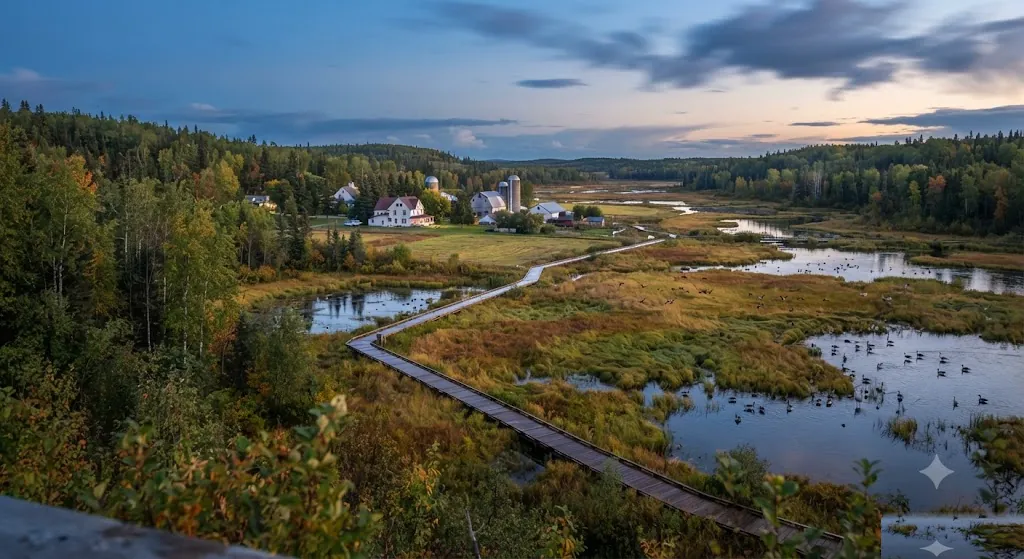
Our Creamer's Field Migratory Waterfowl Refuge guide covers practical planning for Creamer's Field Migratory Waterfowl Refuge Alaska — best time to visit, getting there, and what to do on the ground.
For those drawn to the wild beauty of Alaska and the spectacle of avian migration, Creamer's Field Migratory Waterfowl Refuge Alaska stands as an essential destination. This remarkable 2,200-acre preserve, nestled within the Fairbanks North Star Borough, offers a unique blend of natural splendor and rich history, making it a vital stopover for countless migratory birds and a cherished spot for wildlife enthusiasts. Originally a bustling dairy farm, Creamer's Field has been carefully managed since 1968 by the Alaska Department of Fish and Game to protect and enhance critical migratory bird habitat, particularly for waterfowl.
Why Visit Creamer's Field Migratory Waterfowl Refuge
We recommend a visit to Creamer's Field Migratory Waterfowl Refuge for its unparalleled birdwatching opportunities, especially during the spring and fall migrations. The refuge provides a diverse mosaic of open fields, boreal forests, and wetlands, attracting over 150 different bird species throughout the year, with about 60 species present in the summer. Imagine witnessing thousands of sandhill cranes, trumpeter swans, Canada geese, and various ducks descending upon the fields to rest and feed—a truly awe-inspiring sight.
Beyond the avian spectacle, the refuge offers a tranquil escape into nature, easily accessible from downtown Fairbanks. It's a place where history intertwines with conservation; the historic farmhouse and barns, once part of the largest and most successful dairy in Interior Alaska, are now listed on the National Register of Historic Places and serve as an interpretive center. The fields themselves are actively managed, with various grains planted to provide optimal foraging for the migratory birds. This dedication to habitat preservation makes every visit a chance to connect with a thriving ecosystem and a piece of Alaskan heritage.
Who It's Best For
Creamer's Field Migratory Waterfowl Refuge is an ideal destination for a wide array of visitors. Birdwatchers and nature photographers will find themselves in paradise, particularly during the peak migration seasons when the fields teem with feathered life. The refuge's accessible and well-maintained trails make it perfect for families with young children, offering easy strolls and opportunities for kids to learn about local ecology and history.
Casual walkers and joggers seeking a peaceful outdoor experience close to Fairbanks will appreciate the flat terrain and scenic paths. Even in winter, the refuge transforms into a haven for cross-country skiers, skijorers, and dog mushers. Educational groups and those interested in Alaskan history will also find value in the interpretive center and the story of the Creamer Dairy. Overall, if you appreciate wildlife, easy outdoor recreation, and a touch of local history, Creamer's Field is a perfect fit.
Getting There & Parking
Navigating to Creamer's Field Migratory Waterfowl Refuge is straightforward, as it's conveniently located at 1300 College Road, on the edge of downtown Fairbanks and near the University of Alaska. If you're arriving from Fairbanks International Airport (FAI), the drive typically takes no more than 10-15 minutes. Simply head north on Airport Way, then turn onto University Avenue and College Road.
For those wondering how to get to Creamer's Field Migratory Waterfowl Refuge via public transportation, buses from the city center run toward the refuge, with stops directly on College Road, just a short walk from the entrance.
We're pleased to confirm that free parking for visitors is available near the historic farmhouse, making access hassle-free. The refuge itself is open 24 hours a day, seven days a week, allowing for early morning or late evening wildlife viewing when birds are often most active. While the refuge grounds are always open, the Farmhouse Visitor Center has specific operating hours: Monday to Friday from 9:00 AM to 5:00 PM, and on Saturdays and Sundays from 9:30 AM to 5:00 PM. Special summer tours usually run in the morning.
Top Things to Do
There are many things to do at Creamer's Field Migratory Waterfowl Refuge, catering to a variety of interests throughout the year. Our team highly recommends focusing on the unique natural and historical offerings of this special place.
Birdwatching and Wildlife Viewing
The primary draw for many visitors, and one of the best things to do at Creamer's Field Migratory Waterfowl Refuge, is birdwatching. The refuge is renowned as a critical stopover for migratory birds, especially during the spring (late April to early June) and fall (late July to late September) seasons. During these periods, you can expect to see thousands of sandhill cranes, trumpeter swans, various geese (including Canada and white-fronted), and numerous duck species. Observation platforms and an elevated viewing tower provide excellent vantage points. Year-round residents include raptors, ravens, grouse, chickadees, and redpolls. Beyond birds, keep an eye out for about 30 mammal species, including moose, fox, coyotes, and snowshoe hares.
Hiking and Walking the Trails
The refuge boasts a network of well-maintained trails that are perfect for easy walks and leisurely hikes. Our team particularly enjoys the diverse landscapes encountered along these paths. The total length of the routes is approximately 2 to 3 miles, with some trails featuring wooden boardwalks over wetter areas for comfortable crossing.
Creamer's Field Migratory Waterfowl Refuge Hiking Trails
The Creamer's Field Migratory Waterfowl Refuge hiking trails offer something for every fitness level, primarily consisting of flat terrain through boreal forests, seasonal wetlands, and open fields. One popular option is the **Boreal Forest and Seasonal Wetland Trail**, an easy 1.9-mile (3.0 km) path that takes about 45 minutes to complete. This trail provides insights into local geology, plants, and animals, with observation towers for enhanced wildlife viewing. Another favorite is the **Farm Road Trail and Chickadee Loop**, an easy 1.7-mile (2.7 km) route offering a gentle stroll through open areas and forest edges. For a slightly longer excursion, the **Creamer's Field and Wander Lake Loop** is a 3.6-mile (5.8 km) trail that circles Wander Lake and connects to the Wedgewood Wildlife Sanctuary. These Creamer's Field Migratory Waterfowl Refuge hiking trails are generally accessible and well-marked, with some being wheelchair accessible during snow-free months. Remember to wear waterproof footwear, especially during snowmelt, and bring bug spray in warmer months.
Visiting the Farmhouse Visitor Center
The historic Creamer farmstead, including the farmhouse and barns, now serves as a visitor center and environmental education hub. Here, you can explore nature and historic exhibits, learn about the refuge's programs, and pick up trail guides and lists of recent wildlife sightings. Volunteer naturalists lead guided walks during the summer, offering deeper insights into the refuge's ecology and history.
Seasonal Events and Festivals
Creamer's Field hosts several engaging events throughout the year. The Spring Migration Celebration in late April is a free public event with guided nature walks, wildlife viewing, and crafts for children. In August, the Tanana Valley Sandhill Crane Festival highlights the arrival of thousands of migrating cranes. Other events include Outdoor Day in May, the Design Alaska Wild Arts Walk, Thanksgiving for the Birds in November, and Winter Solstice Walks. Check the Friends of Creamer's Field website for the most current schedule.
Winter Activities
When the snow falls, Creamer's Field transforms into a winter wonderland, offering groomed multi-use trails for cross-country skiing, skijoring, and dog mushing. A winter guide with a map of ski and mushing trails is available at the Visitor Center.
Best Time to Visit
The best time to visit Creamer's Field Migratory Waterfowl Refuge largely depends on your interests, but the spring and fall migrations offer the most spectacular wildlife viewing opportunities. We recommend planning your trip around these peak periods for an unforgettable experience.
- Spring Migration (Late April to Early June): This is when thousands of birds, including trumpeter swans, Canada geese, white-fronted geese, and various duck species, arrive in Fairbanks on their way to northern breeding grounds. The Spring Migration Celebration in late April is a fantastic event to witness this spectacle.
- Fall Migration (Late July to Late September): As summer wanes, the birds gather once again before heading south. August and September are particularly good for observing sandhill cranes, with the annual Tanana Valley Sandhill Crane Festival celebrating their arrival.
- Summer (June to August): While the peak migration numbers might be lower, summer still offers excellent birdwatching, with many species nesting in the refuge. The fields are often in bloom with fireweed, creating beautiful photographic opportunities. Guided nature walks are available during this time. Mosquitoes can be active, so bug spray is essential.
- Winter (October to March): For those interested in winter sports, the refuge's groomed trails are perfect for cross-country skiing, skijoring, and dog mushing. While migratory birds are largely absent, you can still spot resident birds like owls, chickadees, and ravens, and look for tracks of mammals like lynx and foxes.
Early mornings and late afternoons during migration seasons generally offer the best activity and softest light for photography.
Where to Stay Nearby
When planning your visit to Creamer's Field Migratory Waterfowl Refuge, you'll find a range of comfortable lodging options in Fairbanks, just a short drive away. We've identified several excellent choices for Creamer's Field Migratory Waterfowl Refuge lodging, ensuring you have a convenient and pleasant stay.
- Wedgewood Resort / Bear Lodge: Located on 105 acres, the Wedgewood Resort includes the 75-acre Wedgewood Wildlife Sanctuary, directly neighboring Creamer's Field. Bear Lodge, a summer-only hotel within the resort, offers spacious rooms with private balconies and amenities like a restaurant and free Wi-Fi. For longer stays or extended families, the Wedgewood suites provide residential-style accommodations with full kitchens.
- Bridgewater Hotel, Trademark Collection by Wyndham: This boutique hotel in downtown Fairbanks offers a contemporary retreat with free Wi-Fi and parking. It's conveniently located near the Chena River and provides a free shuttle to Fairbanks International Airport (FAI).
- Candlewood Suites Fairbanks: An extended-stay hotel, Candlewood Suites Fairbanks provides suites with full kitchens and oversized executive desks, making it a great option for those seeking home-like comforts. It's close to downtown Fairbanks and the Chena River, and near a bike path that leads to Creamer's Field.
- A Suite Alaskan Inn Fairbanks: This option offers apartments with free private parking and Wi-Fi, located about 1.9 miles from Creamer's Field Migratory Waterfowl Refuge, and steps away from the Downtown Area.
- Clarion Hotel & Suites Fairbanks near Ft. Wainwright: A welcoming 3-star hotel located approximately 2.7 miles from Creamer's Field, offering family-friendly amenities.
Other highly-rated options in Fairbanks include Pike's Waterfront Lodge, Hampton Inn & Suites Fairbanks, Westmark Fairbanks Hotel & Conference Center, Hyatt Place Fairbanks, and Best Western Plus Pioneer Park Inn. For a more unique experience, consider Alaska Heritage House Bed and Breakfast. Many of these options are just a few minutes from downtown Fairbanks, providing easy access to both the refuge and other city attractions.
Sample 2-Day Itinerary
To help you make the most of your visit, our team has crafted a sample 2-day itinerary focusing on Creamer's Field Migratory Waterfowl Refuge and its surroundings in Fairbanks.
Day 1: Immersion in Nature and History
- Morning (8:00 AM - 12:00 PM): Birdwatching at Creamer's Field. Start your day early at Creamer's Field Migratory Waterfowl Refuge to catch the peak bird activity. Explore the Creamer's Field Migratory Waterfowl Refuge hiking trails, such as the Boreal Forest and Seasonal Wetland Trail, utilizing the observation towers and platforms for prime viewing. Bring binoculars, a camera, and plenty of bug spray, especially in warmer months.
- Lunch (12:00 PM - 1:30 PM): Picnic at the Refuge or Local Eatery. Enjoy a packed lunch at one of the refuge's picnic areas, or head to a nearby Fairbanks restaurant for a casual meal.
- Afternoon (1:30 PM - 4:00 PM): Farmhouse Visitor Center & Guided Walk. Visit the historic Farmhouse Visitor Center to learn about the refuge's dairy farm past and current conservation efforts. If available, join a volunteer naturalist for a guided walk, gaining deeper insights into the local ecology and history.
- Late Afternoon (4:00 PM - 6:00 PM): Explore Pioneer Park. Head to Pioneer Park, Alaska's only historical theme park, featuring museums, Gold Rush-era buildings, and a pleasant riverwalk along the Chena River.
- Evening: Dinner in Fairbanks & Northern Lights (seasonal). Enjoy dinner at one of Fairbanks' diverse restaurants. If visiting between late August and April, consider a northern lights viewing excursion, as Fairbanks is an excellent location to witness the aurora borealis.
Day 2: Fairbanks Exploration & Nearby Alaskan Wonders
- Morning (9:00 AM - 12:00 PM): University of Alaska Museum of the North. Delve into Alaska's natural and cultural history at the University of Alaska Museum of the North. See hand-carved Alaska Native art, the state's largest gold display, and an Ice Age bison mummy.
- Lunch (12:00 PM - 1:30 PM): Downtown Fairbanks. Grab lunch in downtown Fairbanks and explore local shops.
- Afternoon (1:30 PM - 5:00 PM): Choose Your Adventure.
- Option A (Wildlife Focus): Visit the Alaska Wildlife Center (a longer drive but worth it for dedicated wildlife enthusiasts) or the Running Reindeer Ranch for a unique encounter.
- Option B (Relaxation): Drive to Chena Hot Springs Resort for a relaxing soak in the geothermal pools and a visit to the Aurora Ice Museum (about an hour's drive).
- Option C (Outdoor Recreation): Explore other nearby trails like those at Wedgewood Wildlife Sanctuary around Wander Lake, which connects to Creamer's Field.
- Late Afternoon/Evening: Chena Riverwalk or Cultural Center. Stroll along the Chena Riverwalk, passing the Morris Thompson Cultural & Visitors Center, where you can learn more about Alaska Native cultures and see the iconic Antler Arch. Consider an early dinner before heading to your next Alaskan adventure, perhaps to Denali National Park & Preserve or exploring more of Fairbanks & Northern Lights.
Is It Worth Visiting?
Without a doubt, our team confidently asserts that Creamer's Field Migratory Waterfowl Refuge is worth visiting. This 2,200-acre sanctuary offers a unique and accessible window into Alaska's incredible wildlife, particularly its migratory bird populations. It’s not merely a stopover for birds; it's a place where visitors can truly connect with nature just moments from the urban center of Fairbanks.
The refuge's value extends beyond its ecological significance. The historic Creamer's Dairy farm buildings, listed on the National Register of Historic Places, add a fascinating layer of cultural heritage to the natural experience. Whether you're an avid birder hoping to spot sandhill cranes and trumpeter swans, a family seeking easy and educational outdoor activities, or simply looking for a peaceful stroll amidst stunning Alaskan scenery, Creamer's Field delivers. The well-maintained trails, interpretive center, and the sheer volume of wildlife, especially during spring and fall migrations, make it an exceptional destination that we wholeheartedly recommend. Creamer's Field Migratory Waterfowl Refuge is worth visiting for anyone seeking an authentic and accessible Alaskan nature experience.
Frequently Asked Questions
Creamer's Field Migratory Waterfowl Refuge camping
There is no camping directly at Creamer's Field Migratory Waterfowl Refuge. However, Fairbanks and the surrounding areas offer various camping options, including public campgrounds and RV parks. For those looking to integrate camping into a broader Alaskan adventure, we recommend exploring resources like the National Park Service or Plan Your US Trip for nearby state parks or privately operated sites.
Things to do in Fairbanks
Fairbanks, known as the "Golden Heart City," offers a wide array of activities beyond Creamer's Field. Our team suggests visiting the University of Alaska Museum of the North to learn about Alaskan history and art, exploring Pioneer Park with its historic village and museums, or soaking in the geothermal waters of Chena Hot Springs. Depending on the season, you can chase the Northern Lights (late August to April), go dog sledding, gold panning, or enjoy various festivals. For more ideas, explore our guides on Fairbanks & Northern Lights, or consider a USA Road Trip Planner that includes Fairbanks.
Creamer's Field Migratory Waterfowl Refuge with kids
Creamer's Field Migratory Waterfowl Refuge is an excellent destination for families with kids. The refuge features easy, flat walking trails, many with boardwalks, making them suitable for strollers and young children. Observation platforms provide great opportunities for kids to spot birds and other wildlife. The Farmhouse Visitor Center offers educational exhibits, and the Friends of Creamer's Field often host family-friendly events, guided nature walks, and even summer camps focused on nature discovery. Remember to bring bug spray and sturdy shoes for muddy areas.
Best hotels near Creamer's Field Migratory Waterfowl Refuge
Several excellent hotels are located conveniently close to Creamer's Field Migratory Waterfowl Refuge. Our top recommendations for the best hotels near Creamer's Field Migratory Waterfowl Refuge include the Wedgewood Resort and its seasonal Bear Lodge, which directly neighbors the refuge and offers rooms with private balconies. Other highly-rated options in Fairbanks include the Bridgewater Hotel, Trademark Collection by Wyndham, and Candlewood Suites Fairbanks, both offering comfortable amenities and easy access to the refuge and downtown attractions.
Creamer's Field Migratory Waterfowl Refuge tips
To enhance your visit to Creamer's Field Migratory Waterfowl Refuge, our team offers these essential tips:
- Visit During Migration: For the best birdwatching, plan your trip during spring (late April-early June) or fall (late July-late September) migrations.
- Bring Binoculars & Camera: You'll want to get a closer look at the diverse birdlife and capture the stunning Alaskan scenery.
- Wear Appropriate Footwear: Trails can be muddy, especially during snowmelt, so waterproof boots are highly recommended.
- Pack Bug Spray: Mosquitoes can be prevalent, particularly in summer when fireweed is in bloom.
- Check Visitor Center Hours: While the refuge grounds are always open, the Farmhouse Visitor Center has specific operating hours for exhibits and information.
- Look for Events: Check the Friends of Creamer's Field website for scheduled guided walks, festivals, and other special programs.
- Respect Wildlife: Maintain a respectful distance from all animals and do not disturb their natural behaviors.
- Leash Your Dog: Dogs are welcome on the trails but must be leashed.
Where to stay near Creamer's Field Migratory Waterfowl Refuge
For visitors seeking comfortable accommodations, we recommend staying in Fairbanks, which offers a variety of hotels and inns just a short drive from Creamer's Field Migratory Waterfowl Refuge. The Wedgewood Resort and its Bear Lodge are excellent choices due to their proximity and serene setting next to the refuge. Other convenient options for where to stay near Creamer's Field Migratory Waterfowl Refuge include the Bridgewater Hotel, Trademark Collection by Wyndham, and Candlewood Suites Fairbanks, both providing good access to the refuge and other Fairbanks attractions. These establishments offer a range of amenities to suit different travel needs and budgets.
Creamer's Field Migratory Waterfowl Refuge is a testament to Alaska's commitment to preserving its natural wonders and sharing them with the world. From the historic dairy barns to the expansive fields teeming with migratory birds, it offers an enriching experience that blends education, recreation, and awe-inspiring wildlife viewing. We encourage all travelers to Fairbanks to make this vital stopover a highlight of their Alaskan journey, perhaps alongside other iconic destinations like Chugach State Park Alaska or the Anchorage Coastal Trail.
Last updated: 2026-07-13 by the Roam States team.