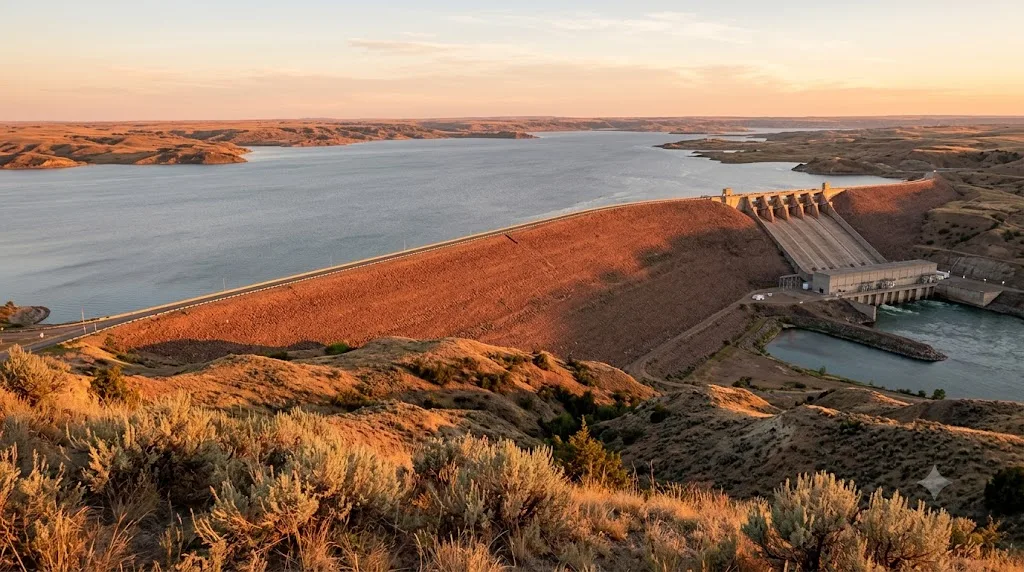
Our Fort Peck Dam guide covers practical planning for Fort Peck Dam Montana — best time to visit, getting there, and what to do on the ground.
As the Roam States editorial team, we pride ourselves on delivering independent, specific, and actionable travel advice, steering clear of generic fluff. Today, our focus is on a true marvel of American engineering and natural beauty: Fort Peck Dam Montana. This colossal structure, the largest hydraulically filled dam in the world, has sculpted the landscape of northeastern Montana, giving rise to Fort Peck Lake, a vast reservoir that beckons outdoor enthusiasts with promises of exceptional fishing, boating, and wildlife viewing opportunities. We've compiled this comprehensive guide to ensure your visit to this remarkable destination is nothing short of extraordinary.
Why Visit Fort Peck Dam
For those contemplating a journey to the remote expanses of eastern Montana, you might wonder, "is Fort Peck Dam worth visiting?" Our emphatic answer is yes. This isn't just a dam; it's a testament to human ingenuity during a pivotal moment in American history and a gateway to an immense natural playground. Construction on Fort Peck Dam began in 1933 as a cornerstone project of President Franklin D. Roosevelt's New Deal, providing jobs to over 10,500 workers at its peak during the Great Depression. The sheer scale of the dam is staggering: at over four miles long and 250 feet high, it was the largest dam of any type in the world for over 30 years after its completion in 1940.
Beyond its historical significance and impressive engineering, the area offers unparalleled outdoor recreation. Fort Peck Lake, the fifth-largest artificial lake in the United States, boasts more than 1,520 miles of shoreline — longer than the entire coast of California. This vastness ensures ample space for all types of adventurers, from serene anglers to energetic boaters. The surrounding Charles M. Russell National Wildlife Refuge further enhances its appeal, providing critical habitat for diverse wildlife and breathtaking scenic vistas. So, if you're asking, "is Fort Peck Dam worth visiting?", consider the blend of historical depth, engineering marvel, and boundless outdoor activities that await you here.
Who It's Best For
Fort Peck Dam and its surrounding lake country cater to a specific type of traveler: those who appreciate vast, unspoiled wilderness, a rich historical narrative, and a slower pace of life. This destination is ideal for:
- **Anglers:** Fort Peck Lake is renowned nationwide as a hotspot for walleye fishing, but it also offers excellent opportunities for northern pike, bass, and Chinook salmon. Serious fishermen will find themselves in paradise, whether casting from shore or venturing out onto the expansive lake.
- **Boaters and Water Sports Enthusiasts:** With 1,520 miles of shoreline and plenty of open water, Fort Peck Lake is perfect for everything from leisurely pontoon cruises to more adventurous speed boating, kayaking, and tubing. Numerous recreation areas provide access for launching boats and enjoying the water.
- **Wildlife Viewers and Hunters:** The Fort Peck Lake area lies within the Charles M. Russell National Wildlife Refuge, a haven for hundreds of wildlife species, including bighorn sheep, mule deer, and a variety of waterfowl and bald eagles. Hunting is managed by the U.S. Fish and Wildlife Service in accordance with state laws, with specific restrictions in assigned areas.
- **History Buffs:** The dam itself is a living museum of the Great Depression era and the New Deal. The Fort Peck Interpretive Center and Museum offers detailed exhibits on the dam's construction, worker accounts, and the boomtowns that sprang up around it. The historic Fort Peck Theater, built in 1934, also offers summer productions.
- **Campers and RV Travelers:** With 9 campgrounds offering various amenities, from developed sites with electrical hookups to more primitive backcountry spots, Fort Peck Project provides ample opportunities for overnight stays amidst nature.
- **Families (with a caveat):** While the wide-open spaces and outdoor activities are great for families, the remoteness means fewer structured "kid-specific" attractions beyond nature and the Interpretive Center. Families who enjoy fishing, camping, and exploring together will thrive here.
If you're seeking bustling nightlife, upscale resorts, or a curated theme park experience, Fort Peck Dam might not be your ideal destination. But if you crave solitude, natural beauty, and a tangible connection to American history, you've found your spot.
How to Get There & Parking
Reaching Fort Peck Dam Montana is part of the adventure, as it's situated in a relatively remote part of the state. Understanding how to get to Fort Peck Dam and where to park is crucial for a smooth trip.
Driving Directions
The most common way to get to Fort Peck Dam is by car. The dam is located near the town of Fort Peck, Montana, adjacent to Glasgow.
- **From Glasgow, MT:** Take Highway 24 south for approximately 17 miles directly to the town of Fort Peck.
- **From Nashua, MT:** Take Highway 117 south for about 12 miles to the town of Fort Peck.
- **From Interstate 94 (Glendive/Circle exit):** Take Montana Highway 200 west to Montana Highway 24 north for about 59 miles, then follow signs to Downstream Campground and the dam area.
While the main roads to the dam site and primary recreation areas are paved, some more remote areas around Fort Peck Lake are accessed via gravel roads. These can be dusty in dry conditions and muddy in wet weather, and may not be suitable for all vehicles, particularly large RVs or those towing trailers. Winter conditions can also make many access roads impassable.
Parking at Fort Peck Dam
Parking is generally available at key attractions and recreation areas. For instance, the Fort Peck Interpretive Center and Museum has dedicated parking. Recreation areas like Downstream Campground and Kiwanis Park Day Use Area also offer parking facilities. During winter, specific guidance for motorized access to Fort Peck Reservoir ice has been announced by the U.S. Army Corps of Engineers, with vehicles permitted on developed ice access routes such as public roads, boat ramps, or designated routes within USACE-owned recreation areas. Always look for designated parking areas and follow posted signs.
We recommend checking the official U.S. Army Corps of Engineers Fort Peck Project website or calling their Natural Resource Management office at (406) 526-3411 for the most current information on how to get to Fort Peck Dam, road conditions, and parking regulations, especially if you plan to visit during off-peak seasons or explore more remote sections of the lake.
Top Things to Do
When planning your visit to this magnificent area, you'll find a wealth of things to do at Fort Peck Dam and the surrounding region. From delving into history to embracing the vast outdoors, there are ample things to do in Fort Peck to fill your days.
Explore the Fort Peck Dam Interpretive Center and Museum
Our team highly recommends starting your journey at the Fort Peck Interpretive Center and Museum. This facility, a cooperative effort between the U.S. Army Corps of Engineers and the U.S. Fish and Wildlife Service, offers a deep dive into the area's rich history, from ancient dinosaurs to the dam's monumental construction. Visitors are greeted by a life-size model of "Peck's Rex," a nearly complete Tyrannosaurus rex discovered nearby. The center also features impressive wildlife dioramas, aquariums showcasing native fish of Fort Peck Lake and the Missouri River, and extensive exhibits on the dam's construction history, including firsthand accounts from workers. Admission to the Interpretive Center is free. For 2026, the Interpretive Center will be open Friday, Saturday, Sunday, and Monday from 9 a.m. to 4 p.m., from May 22 through September 7.
While powerhouse tours are not currently available due to health and safety concerns, the Interpretive Center remains a fantastic resource for understanding the dam's impact and the region's ecology.
Fishing on Fort Peck Lake and the Missouri River
For many, the primary draw to the area is the exceptional fishing. Fort Peck Lake enjoys nationwide recognition as a prime spot for walleye, northern pike, and bass. The Missouri River below the dam also offers fantastic opportunities. Anglers need to be aware of Montana's fishing regulations, which are updated biennially. For 2025-2026, a valid Montana fishing license is required. Paddlefish season, for instance, has specific regulations, including a lottery system for tags in the Upper Missouri River section (from Fort Peck Dam to Fort Benton) and an archery-only season in the Fort Peck Dredge Cuts. Tribal fishing licenses are also required for non-members fishing within reservation boundaries. We strongly advise checking the Montana Fish, Wildlife & Parks (FWP) website for the most current regulations and to purchase licenses. These fishing opportunities are among the best things to do at Fort Peck Dam.
Boating and Water Recreation
With its immense size, Fort Peck Lake is a boater's paradise. Whether you prefer cruising in a speed boat, a pontoon boat, or a fishing boat, the lake offers endless possibilities. Kayaking and canoeing are also popular for quieter explorations. Several marinas and access points dot the shoreline, including Fort Peck Marina, Rock Creek Marina, and Hell Creek Marina. Remember that a Montana conservation license is required to access state lands for launching boats. For those interested in winter activities, the U.S. Army Corps of Engineers has announced specific guidance for motorized access to the ice on Fort Peck Reservoir for 2026, with designated routes for snowmobiles, ATVs, and side-by-sides.
Wildlife Viewing in Charles M. Russell National Wildlife Refuge
The Charles M. Russell National Wildlife Refuge, which encompasses Fort Peck Lake, is a sprawling 1.1-million-acre sanctuary. It's an incredible place for wildlife viewing, with opportunities to spot bighorn sheep, mule deer, elk, and a wide array of bird species, including bald eagles and various waterfowl. The Leo B. Coleman Wildlife Pasture, near the town of Fort Peck and Downstream Campground, is home to the Fort Peck Bison Herd and offers an excellent auto route for viewing. Don't forget your binoculars and camera!
Hiking and Nature Trails
For those who prefer to explore on foot, several trails offer opportunities to experience the rugged terrain and panoramic views. A three-mile paved nature trail runs adjacent to the Interpretive Center, popular for birding and nature walks. The refuge itself offers an array of trails where you can explore the landscape and spot wildlife.
Visit the Historic Fort Peck Theater
Step back in time with a visit to the historic Fort Peck Theater. Constructed in 1934 during the dam's building, it has been beautifully restored to its original grandeur and hosts three productions each summer, enjoyed by all ages. It's a charming piece of local history and a unique cultural experience in this remote setting.
Best Time to Visit
The best time to visit Fort Peck Dam Montana largely depends on your preferred activities, as the region experiences distinct seasons.
- **Summer (June-August):** This is peak season for a reason. The weather is generally warm and sunny, ideal for all water-based activities like boating, fishing, and swimming. All campgrounds and recreation areas are typically fully operational, and the Fort Peck Interpretive Center and Museum is open extended hours (Friday-Monday, 9 a.m. to 4 p.m., May 22 through September 7, 2026). The Fort Peck Theater also hosts its summer productions during these months. However, it's also the busiest time, so expect more people and make reservations for camping well in advance.
- **Spring (April-May):** Spring brings milder temperatures and fewer crowds. This can be an excellent time for fishing, especially for species like walleye as they become more active. Wildlife viewing is also good as animals emerge from winter. Some facilities might still be on reduced hours, and certain access roads may be muddy or impassable due to spring thaw. Paddlefish season typically begins in May.
- **Fall (September-October):** Our team considers fall one of the most beautiful times to visit. The crowds thin out, the weather is crisp and pleasant, and the changing foliage adds a splash of color to the landscape. Fishing remains strong, and wildlife viewing opportunities are excellent as animals prepare for winter. Many facilities begin to close or operate on limited schedules after Labor Day, so verify hours before you go.
- **Winter (November-March):** Winter at Fort Peck is for the truly adventurous, offering a stark, serene beauty and opportunities for ice fishing, cross-country skiing, and snowmobiling. Motorized access to the ice on Fort Peck Reservoir is permitted on designated routes, but caution is advised due to varying ice conditions. Many services and facilities will be closed, and roads can be challenging. This is a time for self-sufficient travelers.
For general fishing, the season is open all year in the Eastern District, which includes Fort Peck. However, specific species and areas have different regulations and optimal times. Always check the current Montana FWP regulations for the 2025-2026 season before planning your fishing trip.
Fort Peck Dam lodging
Finding suitable Fort Peck Dam lodging can be a bit different than in more populated tourist destinations. The immediate vicinity of Fort Peck Dam is not overflowing with large hotel chains, preserving its remote charm. However, we've found several excellent options, ranging from historic hotels to modern vacation rentals and well-equipped campgrounds, ensuring comfortable Fort Peck Dam lodging for every type of traveler.
Hotels and Motels
The closest town with a selection of traditional hotels and motels is **Glasgow**, located about 17 miles north of Fort Peck. Here are some highly-rated options for Fort Peck Dam lodging:
- **Rundle Suites (Glasgow):** An excellent 2.5-star property with strong reviews, offering comfortable stays.
- **Rustic Lodge (Glasgow):** A 2-star motel known for its reasonable prices and easy access, especially for luggage.
- **Campbell Lodge (Glasgow):** Another good 2-star option in Glasgow, praised for being surprisingly quiet and reasonably priced.
- **Homestead Inn Wolf Point Hwy 2 (Wolf Point):** While a bit further afield (Wolf Point is east of Glasgow), this 2-star inn offers good value.
Historic Fort Peck Hotel
For a truly unique experience, consider the **Historic Fort Peck Hotel**, located directly in the town of Fort Peck. This wooden hotel, built in the 1930s during the dam's construction, is listed on the National Register of Historic Buildings and offers a step back in time. It provides lodging, fine dining (from May to September), and a fully stocked lounge. Deer are often seen on the front lawn, and it's minutes from the lake and the Charles M. Russell National Wildlife Refuge. It's a haven for sports enthusiasts and those seeking to unwind.
Vacation Rentals
For those desiring more space, privacy, or home-like amenities, vacation rentals are a growing option for Fort Peck Dam lodging. You can find several highly-rated homes and guesthouses in Fort Peck, Nashua, and Glasgow through platforms like Expedia and Travelocity. Examples include:
- **Waterfront guesthouse in Park Grove (Nashua):** Offers direct beach access and is ideal for adventure seekers.
- **Modern retreat in Fort Peck:** Pet-friendly and just minutes from the marina.
- **Spacious and quiet 2-bedroom homes:** Available in Glasgow, offering comfort and convenience.
Camping and RV Parks
For the full outdoor experience, camping is a fantastic choice. The Fort Peck Project offers 9 campgrounds with various amenities and settings. The **Downstream Campground**, located just below Fort Peck Dam along the Missouri River, is a Class A facility with 86 campsites, 71 of which have electrical hookups. It offers comfort stations with hot showers, flush toilets, an RV dump station, playgrounds, and picnic shelters. Reservations for Downstream Campground for the 2026 season opened in February 2026 and can be made via Recreation.gov. Other campgrounds include Kiwanis Park and West End Tent and Trailer Campground.
For RV travelers, many campgrounds at Fort Peck Project can accommodate units up to 40 feet in length, with electrical hookups available. Some sites even offer water and sewer hookups. While reservations are recommended during peak season (May-September), camping is available on a first-come, first-serve basis in April and October.
Sample 2-Day Itinerary
To help you make the most of your visit to Fort Peck Dam Montana, our team has crafted a sample 2-day itinerary, blending history, outdoor adventure, and local charm.
Day 1: History and Lake Exploration
- **Morning (9:00 AM - 12:00 PM): Fort Peck Interpretive Center & Museum.** Begin your day by immersing yourself in the history and ecology of the region. Explore the exhibits on the dam's construction, the "Peck's Rex" dinosaur, and the diverse wildlife of the Charles M. Russell National Wildlife Refuge. Allow at least 2-3 hours to fully appreciate the displays. Remember, the Interpretive Center is open Friday-Monday from 9 a.m. to 4 p.m. from May 22 through September 7, 2026, and admission is free.
- **Lunch (12:00 PM - 1:00 PM): Picnic at Kiwanis Park or Local Eatery.** Enjoy a packed lunch at one of the picnic shelters in Kiwanis Park, adjacent to the Interpretive Center, or head to the historic Fort Peck Hotel for a meal in their dining room (seasonal).
- **Afternoon (1:00 PM - 5:00 PM): Dam Overlook and Lake Access.** Drive across the impressive Fort Peck Dam for panoramic views of Fort Peck Lake and the Missouri River. Then, head to one of the nearby recreation areas like West End or Duck Creek for some initial lake access. Consider a short hike on the paved nature trail near the Interpretive Center for some fresh air and birding.
- **Evening (5:00 PM onwards): Dinner and Fort Peck Theater.** Enjoy dinner at the Fort Peck Hotel for a taste of local history and cuisine. If visiting during the summer, catch a performance at the historic Fort Peck Theater. Check their schedule in advance for showtimes and ticket information.
Day 2: Fishing, Boating, or Wildlife Adventure
- **Morning (8:00 AM - 1:00 PM): Fishing or Boating Excursion.** Dedicate your second day to the lake's primary attractions. If you're an angler, either hire a local fishing guide or launch your own boat (or a rental from Fort Peck Marina) for a morning of walleye, northern pike, or bass fishing on Fort Peck Lake. Remember to have your Montana fishing license. If boating is more your style, explore the vast stretches of the lake, perhaps cruising to a secluded cove for swimming or simply enjoying the open water.
- **Lunch (1:00 PM - 2:00 PM): Lakeside Lunch.** Pack a lunch to enjoy on the boat or at a scenic lakeside picnic spot in one of the many recreation areas.
- **Afternoon (2:00 PM - 5:00 PM): Charles M. Russell National Wildlife Refuge.** Spend the afternoon exploring the Charles M. Russell National Wildlife Refuge. Drive the auto route through the Leo B. Coleman Wildlife Pasture to spot the resident bison herd and other wildlife. Alternatively, choose one of the refuge's trails for a more immersive hiking experience and birdwatching.
- **Evening (5:00 PM onwards): Relax and Stargaze.** Enjoy a relaxed dinner, perhaps grilling at your campsite if you're staying at Downstream Campground. As night falls, take advantage of Fort Peck's remote location away from city lights for some incredible stargazing – the Milky Way is often visible in all its glory.
This itinerary is flexible and can be adapted to your interests. Whether you spend more time on the water, exploring the refuge, or delving deeper into the dam's history, Fort Peck Dam Montana promises a memorable experience.
FAQ
Fort Peck Dam with kids
Visiting Fort Peck Dam with kids can be a rewarding experience, especially for families who love the outdoors. The Fort Peck Interpretive Center and Museum is a great starting point, featuring a life-size dinosaur model ("Peck's Rex") and aquariums that captivate young minds. Outside the center, a three-mile paved nature trail is perfect for easy walks and bird identification. Downstream Campground and Kiwanis Park Day Use Area offer playgrounds, basketball courts, volleyball courts, and horseshoe pits, providing ample space for kids to burn off energy. Fishing and boating on Fort Peck Lake are also popular family activities, but ensure children wear appropriate life jackets and understand water safety. The Leo B. Coleman Wildlife Pasture offers an exciting opportunity for kids to see bison and other wildlife from the car. While not a destination with theme parks, Fort Peck offers a chance for children to connect with nature, history, and outdoor adventure.
best hotels near Fort Peck Dam
The best hotels near Fort Peck Dam are primarily found in the nearby town of Glasgow, approximately 17 miles north. Top choices include Rundle Suites, known for excellent staff, and Rustic Lodge and Campbell Lodge, offering good value and comfortable stays. For a unique, historic experience directly in Fort Peck, the Historic Fort Peck Hotel is highly recommended. Additionally, vacation rentals in Fort Peck, Nashua, and Glasgow provide spacious and private lodging options. For those preferring to camp, the Downstream Campground at Fort Peck Project offers well-equipped sites with electrical hookups and amenities like hot showers.
Fort Peck Dam tips
Our top Fort Peck Dam tips for a successful trip include: always check current conditions and hours for attractions like the Interpretive Center, especially outside of peak summer season. If you plan to fish, acquire your Montana fishing license and review the latest regulations from Montana FWP well in advance, as they are updated biennially. For camping, make reservations early, particularly for popular spots like Downstream Campground, which open months in advance for the 2026 season. Be prepared for varying road conditions, as some remote access roads are gravel and can be challenging in wet or winter weather. Pack layers of clothing, as Montana weather can change quickly, and bring insect repellent, especially during warmer months. Finally, embrace the remote nature of the area; cell service can be spotty, and amenities are fewer than in urban areas, so plan accordingly and enjoy the tranquility.
where to stay near Fort Peck Dam
When considering where to stay near Fort Peck Dam, your primary options are the town of Glasgow for traditional hotels and motels, the town of Fort Peck for a historic hotel experience, or various campgrounds and vacation rentals closer to the lake. In Glasgow, you'll find options like Rundle Suites, Rustic Lodge, and Campbell Lodge. The Historic Fort Peck Hotel in Fort Peck offers unique, charming lodging. For those seeking direct access to nature, the U.S. Army Corps of Engineers manages 9 campgrounds, with the Downstream Campground being a popular choice with many amenities. Vacation rentals in Fort Peck and Nashua also offer excellent choices for groups or longer stays.
Fort Peck Dam parking
Parking at Fort Peck Dam and its associated recreation areas is generally available and well-marked. The Fort Peck Interpretive Center and Museum has dedicated parking for visitors. Recreation areas such as the Downstream Campground, Kiwanis Park, and various boat launches also provide ample parking facilities. During the winter months, the U.S. Army Corps of Engineers has specific guidelines for motorized vehicle access to the ice on Fort Peck Reservoir, allowing vehicles on designated routes and boat ramps. Always adhere to posted signs and regulations regarding parking, especially in recreation areas, to ensure safety and preserve the natural environment.
best time to visit Fort Peck Dam
The best time to visit Fort Peck Dam depends on your interests. For warm weather activities like boating, swimming, and enjoying all facilities, **summer (June-August)** is ideal, though it's the busiest. **Fall (September-October)** offers pleasant weather, fewer crowds, and excellent wildlife viewing and fishing. **Spring (April-May)** is also good for fishing and wildlife, with milder temperatures and fewer visitors. Winter (November-March) is for hardy adventurers interested in ice fishing and snow sports, but many facilities are closed and conditions can be challenging. Always check specific operating hours for attractions like the Interpretive Center and current fishing regulations for your chosen season.
We hope this guide inspires your journey to Fort Peck Dam Montana. This incredible destination offers a unique blend of history, engineering marvel, and untamed wilderness that truly captures the spirit of Big Sky Country. Whether you're casting a line into the vast lake, exploring the stories of its creation, or simply soaking in the expansive views, we're confident you'll find an unforgettable experience.
Last updated: 2026-07-07 by the Roam States team.