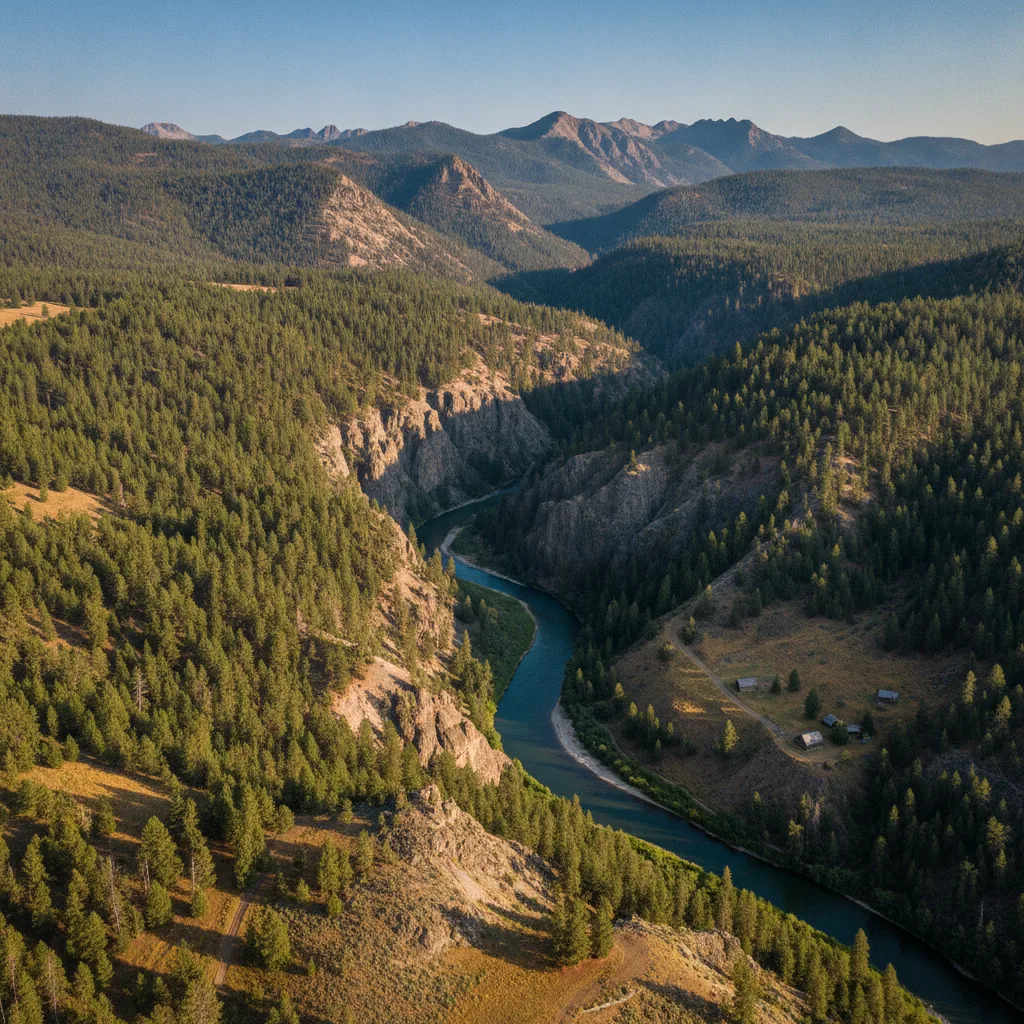
Our Frank Church-River of No Return Wilderness guide covers practical planning for Frank Church-River of No Return Wilderness Idaho — best time to visit, getting there, and what to do on the ground.
Frank Church-River of No Return Wilderness Travel Guide — Idaho
Welcome to the heart of Idaho's untamed spirit, where the Frank Church-River of No Return Wilderness Idaho stretches across an incredible 2.3 million acres, making it the largest contiguous wilderness area in the Lower 48 states. This isn't just a destination; it's an immersive experience into true solitude and raw natural beauty. Our team at Roam States believes that to truly understand Idaho, you must venture into "The Frank," as it's affectionately known. Here, towering mountain ranges, deep river canyons, and pristine forests converge to create an unparalleled landscape for adventurers seeking to disconnect and explore.
Why Visit Frank Church-River of No Return Wilderness
The Frank Church-River of No Return Wilderness is a testament to the power of untouched nature. We consider it an essential visit for anyone craving genuine wilderness immersion. The sheer scale of this area means you can spend days, even weeks, without encountering another soul, offering a level of solitude rarely found elsewhere in the United States. It's a place where the Salmon River Canyon, one of North America's deepest gorges, carves its way through rugged terrain, often surpassing the Grand Canyon in depth. The landscape is a dramatic tapestry of soaring peaks like the Bighorn Crags, dense forests, and crystal-clear alpine lakes, all contributing to a sense of awe and wonder. Beyond the breathtaking scenery, the wilderness offers a chance to witness diverse ecosystems thriving, home to a wide array of wildlife, from elk and bighorn sheep to black bears and river otters.
A visit here is an opportunity to reconnect with nature on its most fundamental terms, to challenge yourself, and to create memories that will last a lifetime. Whether you're navigating the wild whitewater of the Middle Fork of the Salmon River, exploring ancient pictographs left by the Sheepeater people, or simply finding a quiet spot to absorb the vastness, the Frank Church-River of No Return Wilderness promises an adventure unlike any other.
Who It's Best For
This wilderness is ideal for experienced backpackers, whitewater rafting enthusiasts, and anyone seeking profound solitude. If you thrive on self-reliance, enjoy navigating challenging terrain, and appreciate the absence of modern amenities, "The Frank" will speak to your soul. It's a prime destination for those who want to truly unplug, as cell service is virtually nonexistent. Anglers will find world-class fly fishing opportunities, particularly for native trout. Wildlife photographers and observers will be rewarded with incredible sightings of animals in their natural habitat. While not typically a family-focused destination for extended backcountry trips, adventurous families with older children can certainly enjoy guided river trips or day hikes from accessible trailheads. Ultimately, it’s for those who embrace the wild, understand Leave No Trace principles, and are prepared for a truly rugged experience.
Getting There & Parking
Accessing the Frank Church-River of No Return Wilderness typically involves a journey into remote Idaho. The primary gateway towns are Salmon to the east and McCall or Stanley to the west. Given the vastness of the area, there isn't one single entry point, but rather numerous trailheads and river access points. When considering how to get to Frank Church-River of No Return Wilderness, planning your specific entry is crucial.
By Road
One common access point from the east is via North Fork, Idaho, on US-93. From there, you can follow the Salmon River Road for approximately 45 miles to the Corn Creek Campground and Boat Launch. Be aware that only the first 15 miles are paved, with the remainder being a well-maintained gravel road. This route provides access to the Main Salmon River. For those approaching from the west, towns like McCall offer routes to trailheads such as Lick Creek Trailhead or Roosevelt Trailhead, which lead into the wilderness.
There are 32 Forest Service Roads that lead to 66 trailheads around the perimeter of the wilderness, providing a network of access points. It's important to consult detailed maps and current road conditions, as many of these roads can be unpaved and challenging, especially with larger vehicles. For example, the Custer Motorway (NFSR 40070) has sections not recommended for RVs longer than 25 feet.
By Air
For the most remote access, several primitive airstrips are located within or on the edge of the wilderness, allowing for fly-in access. These include Big Creek, Cabin Creek, and Cold Meadows airstrips. Chartering a flight into one of these airstrips is an excellent way to reach areas otherwise inaccessible by car or foot, offering a truly unique wilderness experience. However, it's worth noting that the continued operation of some of these airstrips is a subject of debate among wilderness advocates.
Parking
Parking is generally available at designated trailheads and boat launches. Given the remote nature of the wilderness, these are often primitive parking areas. We recommend securing your vehicle and not leaving valuables in plain sight. No specific parking fees for 2026 were found, but always check with the managing Forest Service district (Salmon-Challis, Payette, Nez Perce-Clearwater, or Bitterroot National Forests) for the latest information before your trip.
Top Things to Do
The Frank Church-River of No Return Wilderness offers an incredible array of activities for the intrepid traveler. When planning things to do at Frank Church-River of No Return Wilderness, prepare for adventure and self-sufficiency.
Whitewater Rafting and Kayaking
The Middle Fork of the Salmon River is world-renowned for its whitewater rafting, offering 100 miles of Class II to Class IV rapids. A permit is required year-round to float the Middle Fork, with a highly competitive lottery system for the control season (late May through early September). Applications for the 2026 control season are accepted from December 1, 2025, through January 31, 2026, with notifications on February 14, 2026, and confirmation by March 15, 2026. Outside the control season, permits are available on a first-come, first-served basis. Fees for private permits in 2026 include a $6 non-refundable application fee, and if successful, $4 per person per day, a $25 launch reservation fee, and costs for Idaho invasive species stickers for all watercraft. Permits are issued via email 5-6 days before your launch date, and a camp request form is sent 14 days prior, requiring completion 7 days before launch. The Main Salmon River also offers thrilling whitewater, and jet boats are permitted on certain sections, providing a unique way to experience the "River of No Return."
Backpacking and Hiking
With over 2,600 miles of maintained trails and 1.5 million acres of trail-free wilderness, the Frank Church-River of No Return Wilderness is a hiker's paradise. While no permits are required for hiking, group sizes are limited to 20 people, and stays are capped at 14 days. Popular routes include the Yellowjacket Lake Trail, an 18.9-mile round trip moderate hike with wildflowers and a waterfall, and the challenging Dagger Falls via Marsh Creek Trail. Other notable trails for things to do at Frank Church-River of No Return Wilderness include the Bighorn Crags Trail, Harbor Lake Trail, and the Loon Creek Trail. Be prepared for rugged conditions, including faint paths and deadfall.
Fishing
The wilderness boasts a world-class trout fishery, with abundant Westslope cutthroat, rainbow, and bull trout, as well as sockeye and Chinook salmon in the Main Salmon River. The Middle Fork of the Salmon is strictly catch-and-release for fishing. Summer and fall are generally the best seasons for fishing. Many outfitters offer guided fly-fishing trips deep into the wilderness.
Wildlife Viewing
The Frank Church-River of No Return Wilderness is a haven for wildlife. Keep an eye out for elk, bighorn sheep, mule deer, black bears, mountain goats, and moose. River otters, bald eagles, and osprey are also commonly sighted along the rivers. Mid-summer through fall offers the highest probability for spotting bighorn sheep, while September is prime for observing the elk rut.
Hot Springs
Natural hot springs are a unique feature of the wilderness, offering a chance to soak and relax amidst stunning scenery. Notable hot springs along the Middle Fork include Sunflower and Loon Creek.
Best Time to Visit
Choosing the best time to visit the Frank Church-River of No Return Wilderness largely depends on your desired activities and tolerance for rugged conditions. Our team recommends careful consideration of the seasons:
- Spring (Late March to Mid-May): This is an excellent time for hiking the lower elevation trails, as wildflowers bloom and temperatures are mild. However, be prepared for rapidly changing weather and high water levels in rivers due to snowmelt.
- Summer (June to August): Summer is the peak season for most outdoor recreation. Long days and warm temperatures are perfect for camping, hiking, boating, and rafting. Early summer (June and early July) offers higher water levels for thrilling whitewater experiences. Late July and August are often recommended for families with children on rafting trips due to potentially lower, more manageable water flows.
- Fall (September to November): Fall brings excellent conditions for fishing and wildlife viewing, particularly with the elk rut in September. Temperatures begin to cool, and the changing foliage adds a beautiful dimension to the landscape. Be mindful of hunting seasons during this time and dress in layers.
- Winter (December to March): The wilderness transforms into a snow-covered expanse, making access extremely challenging. Most roads and trails are impassable, and only experienced winter adventurers with proper gear and knowledge should consider visiting.
Always check current conditions, weather forecasts, and potential closures with the Forest Service before embarking on your trip, as conditions can change rapidly in this remote region.
Where to Stay Nearby
While the Frank Church-River of No Return Wilderness is primarily a backcountry destination, several unique lodging options exist both within its boundaries and in nearby gateway towns. For those seeking Frank Church-River of No Return Wilderness lodging, options range from rustic to comfortable.
Within the Wilderness
- Big Creek Lodge: This backcountry lodge, accessible by fly-in, offers a unique wilderness stay. For the 2026 season, Big Creek Lodge is scheduled to open on May 22, 2026. While lodge rooms are available, the Kif Brown Yurt is not available for booking in 2026.
- Salmon River Lodge: Nestled within the wilderness at the edge of the "River of No Return," this lodge provides nightly stays with optional adventures like whitewater rafting and horseback riding.
- Frank Church Wilderness Lodge: A partially constructed, large lodge property located about 30 miles from Riggins and 50 miles from McCall, accessible only by 4-wheeler or helicopter. This is a very remote and unique option for those with the resources to manage it.
Gateway Towns (Salmon, Idaho)
The town of Salmon, Idaho, serves as a primary hub for accessing the eastern side of the wilderness and offers a range of accommodations. As of July 2026, popular choices include:
- Stagecoach Inn: Located along the Salmon River, this hotel offers complimentary breakfast, an outdoor pool, and pet-friendly rooms.
- Super 8 by Wyndham Salmon: A budget-friendly option with free WiFi, parking, and breakfast.
- Americas Best Value Inn Salmon by Sonesta: Provides complimentary breakfast, free WiFi, parking, and an indoor pool, with pet-friendly rooms available.
- Sacajawea Inn: Offers free WiFi and parking.
- River's Fork Lodge (North Fork): Located a short drive from Salmon, this motel offers onsite kayaking, rafting, and pickleball courts, along with complimentary WiFi and parking.
Other nearby towns like Challis also offer lodging options such as the Northgate Inn Motel, The Village Inn Motel and Restaurant, and Red Rock Lodge.
Sample 2-Day Itinerary
This sample itinerary focuses on experiencing the eastern edge of the Frank Church-River of No Return Wilderness, ideal for those based out of Salmon, Idaho.
Day 1: River Immersion and Hot Springs
- Morning: Start your day early with a guided jet boat tour on the Main Salmon River. These tours offer an exhilarating way to penetrate deep into the "River of No Return" canyon, providing stunning views and wildlife spotting opportunities without requiring extensive permits or backcountry skills. Many operators depart from near Salmon.
- Afternoon: After your river excursion, head to one of the accessible natural hot springs in the region. While many are deep within the wilderness, some are reachable with a shorter hike or drive from the main roads. Research local hot springs options available near Salmon or North Fork.
- Evening: Enjoy a hearty dinner in Salmon, perhaps at a local eatery, and prepare for an early start the next day.
Day 2: Hiking and Scenic Views
- Morning: Drive to an accessible trailhead leading into the wilderness. A good option could be a section of the Lower Salmon River Trail, accessible from areas like Corn Creek. This trail offers picturesque riverside walking and a taste of the wilderness's vastness. Alternatively, explore trails leading to the Bighorn Crags for more challenging, rewarding climbs and panoramic views.
- Afternoon: Continue your hike, taking in the diverse flora and fauna. Pack a picnic lunch to enjoy amidst the wilderness scenery. Remember to practice Leave No Trace principles diligently.
- Late Afternoon: Return to your vehicle, perhaps stopping at a scenic overlook for a final panoramic view of the Salmon River Mountains or the Clearwater Mountains.
- Evening: Head back to Salmon or your chosen accommodation, reflecting on your two days in one of America's wildest places.
For those interested in a multi-day river trip, a guided Middle Fork Salmon River rafting expedition typically lasts 6 to 8 days and requires significant advance planning due to the permit lottery.
Last updated: 2026-07-06 by the Roam States team.