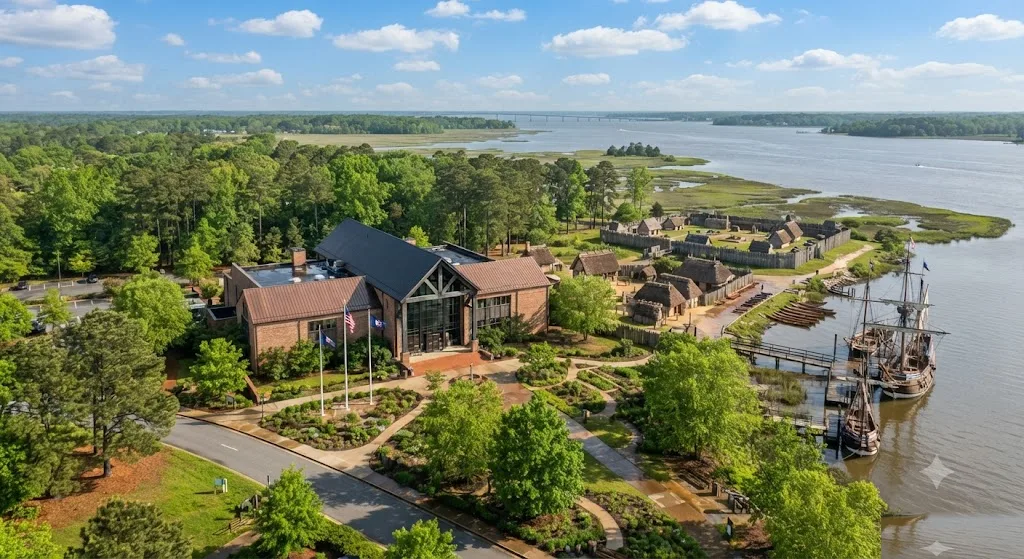
Welcome to our comprehensive guide for Jamestown Settlement Virginia, an essential stop for any traveler seeking a deep dive into America's earliest days. As the Roam States editorial team, we've explored the living-history museum firsthand, and we're here to tell you it's far more than just a collection of old buildings. It's an immersive journey back to the 17th century, a vibrant complement to the archaeological site of Historic Jamestowne, featuring meticulously recreated Powhatan villages, the iconic English ships that brought the first colonists, and a bustling colonial fort. Forget generic tourist traps; this is where history truly comes alive, offering a nuanced perspective on the cultures that converged to shape a nation.
Why Visit Jamestown Settlement
For those of us who believe travel should be about genuine discovery, Jamestown Settlement stands out as a premier destination in Virginia. It’s not simply a museum; it’s an active, engaging experience that transports you to the formative years of America. We find that its strength lies in its ability to bring history to life through direct interaction and authentic recreations, offering a vital understanding of the Powhatan, English, and West Central African cultures that intertwined here in the 1600s.
Unlike Historic Jamestowne, which focuses on the archaeological exploration of the original 1607 settlement, Jamestown Settlement provides a broader, interpretive lens. Here, you'll walk through a re-created Paspahegh Town, explore full-scale replicas of the three ships that sailed to Virginia in 1607, and step inside a re-created colonial fort from 1610-1614. Our team particularly appreciates the historical interpreters who are always on hand, ready to share insights, demonstrate period skills, and answer questions, transforming passive observation into active learning. It’s this blend of authentic settings and expert interpretation that makes the experience so profound.
Who It's Best For
Jamestown Settlement is a remarkably versatile destination, appealing to a wide range of visitors. We wholeheartedly recommend it for history enthusiasts of all ages, from serious scholars to curious families. Its living-history approach makes complex historical narratives accessible and engaging, particularly for visual and kinesthetic learners.
It's an ideal spot for families with children, as the hands-on nature of the exhibits and the interactive demonstrations keep younger visitors captivated. Educational groups will find it an invaluable resource, providing a tangible connection to early American history that textbooks simply cannot replicate. Solo travelers or couples looking for a deeper understanding of the nation's origins will also appreciate the depth of information and the opportunity for quiet reflection in certain gallery spaces.
However, if your primary interest is in active archaeological digs and the raw, untouched remnants of the original settlement, then Historic Jamestowne, located just 1.5 miles away, would be your more direct focus. We often suggest combining both sites for the most complete historical picture, as they offer complementary perspectives on the same pivotal period.
Getting There & Parking
Navigating to Jamestown Settlement is straightforward, whether you're arriving from nearby Williamsburg or further afield. The museum is conveniently located on Route 31 South, adjacent to Historic Jamestowne and just a 10-minute drive from the restored area of Colonial Williamsburg.
If you're driving, take I-64 to Exit 234 (Lightfoot), then turn right onto Route 199. Follow Route 199 for eight miles, then turn right at the second traffic light onto Jamestown Road (Route 31 South). Drive four miles on Jamestown Road, then turn left at the Jamestown Settlement sign onto Route 359, and finally turn right into the museum parking lot.
For those wondering how to get to Jamestown Settlement, rest assured that parking is one less thing to worry about. Our team can confirm that parking at Jamestown Settlement is entirely free, with ample designated spaces available for cars, buses, and RVs near the entrances. This convenience allows you to focus on your historical exploration without the added stress of parking fees or searching for a spot.
It's worth noting that the scenic Colonial Parkway connects Jamestown, Williamsburg, and Yorktown, offering a picturesque drive. However, be aware that the Colonial Parkway is undergoing infrastructure restoration, with intermittent lane closures and detours expected to conclude by the nation's 250th birthday in 2026.
Top Things to Do
There are countless things to do at Jamestown Settlement that will enrich your understanding of early American history. Our team suggests allocating at least three to four hours to fully experience the museum. Here’s a breakdown of the must-see attractions:
- Expansive Gallery Exhibits: Begin your visit indoors with the introductory film and extensive gallery exhibits. These displays delve into the cultures of the Powhatan Indians, the English colonists, and the West Central Africans who converged in 17th-century Virginia. You’ll find rare artifacts, interactive displays, and short films that provide crucial context before heading outside.
- Paspahegh Town: Step into a re-creation of a Powhatan Indian village, based on archaeological findings and historical accounts. Here, you can explore traditional dwellings, learn about daily life, agriculture, and hunting techniques, and witness demonstrations like open-hearth cooking.
- Replicated Ships: Descend to the pier and board full-scale re-creations of two of the three ships that brought the first English colonists to Virginia in 1607: the Godspeed and the Discovery. (The Susan Constant is currently undergoing a multiyear restoration). You can learn about 17th-century seafaring, navigation, and the arduous journey across the Atlantic from historical interpreters.
- James Fort: Explore the re-created 1610-1614 colonial fort, complete with wattle-and-daub structures, a church, and a governor's house. Engage with costumed historical interpreters who demonstrate period trades, military drills, and daily routines, sometimes including musket firings.
- Special Exhibitions and Events: Jamestown Settlement frequently hosts special exhibitions and events that offer unique perspectives. For instance, in early 2026, the "Black Artist Showcase" celebrates Black History Month, and "Following the Dragon: Chinese Ming Porcelain in Early Jamestown" explores unexpected connections between the colony and Asia until July 12, 2026. Annual events like "Military Through the Ages" in March and "Jamestown Day" in May provide additional immersive experiences.
Beyond the settlement, there are many other things to do in Williamsburg and the surrounding Historic Triangle. We highly recommend visiting Colonial Williamsburg, the world's largest living-history museum, to experience 18th-century colonial life. Just a short drive away, the American Revolution Museum at Yorktown offers another immersive journey into the nation's founding. You can also explore Historic Jamestowne, the actual archaeological site of the original 1607 fort, or venture to the Yorktown Battlefield, where the decisive battle of the Revolutionary War took place.
Best Time to Visit
Choosing the best time to visit Jamestown Settlement can significantly enhance your experience. Our team generally recommends spring (April-May) and fall (September-October) for the most pleasant weather and manageable crowds. During these seasons, the temperatures are mild, making it comfortable to explore the outdoor living-history areas for extended periods.
Spring brings blooming flowers and a sense of renewal, often coinciding with special events like Jamestown Day in May, which commemorates the 1607 founding. The "Military Through the Ages" event in March 2026 is another highlight, featuring hundreds of re-enactors and demonstrations spanning centuries of military history. Fall offers beautiful foliage and comfortable conditions for walking the extensive grounds.
Summer (June-August) is popular, especially for families, but expect larger crowds and higher temperatures. Hydration and early morning visits are key during these months. The "Civic Season" from June 19 to July 4, 2026, offers civics-related programs at both Jamestown Settlement and the American Revolution Museum at Yorktown. Winter (November-March) sees fewer visitors, which can be ideal for a more intimate experience, though some outdoor programs might be limited due to weather. The museums are closed on Thanksgiving, Christmas, and New Year's Day. Special holiday programming, such as "Foods & Feasts of Colonial Virginia" and "Christmastide in Virginia," takes place in November and December.
Where to Stay Nearby
To fully immerse yourself in the Historic Triangle, we suggest staying in or around Williamsburg, which offers a wide range of accommodations to suit every budget and preference. From charming historic inns to modern hotels and family-friendly resorts, you'll find plenty of options just a short drive from Jamestown Settlement.
For those seeking a truly immersive experience, staying within walking distance of Colonial Williamsburg allows easy access to its historic taverns, shops, and evening programs. Many hotels in this area also offer shuttle services to nearby attractions, including Jamestown Settlement.
If you prefer a quieter setting, consider accommodations along Jamestown Road or further out towards Yorktown. These areas often provide a more relaxed atmosphere while still being conveniently located for exploring the entire region. For a more extensive Virginia adventure, consider combining your trip with a visit to Shenandoah National Park for stunning natural beauty, or exploring other historical gems like Mount Vernon or Monticello, though these are further afield.
Sample 2-Day Itinerary
To make the most of your visit to Jamestown Settlement and the surrounding area, our team has crafted a sample 2-day itinerary:
Day 1: Jamestown's Beginnings
- Morning (9:00 AM - 1:00 PM): Jamestown Settlement. Arrive early at Jamestown Settlement Virginia. Start with the indoor galleries and introductory film to gain essential historical context. Then, head outside to explore the Powhatan Indian village, the re-created ships (Godspeed and Discovery), and James Fort. Engage with historical interpreters and catch any scheduled demonstrations like musket firings. Allow ample time to absorb the details and interact with the staff.
- Lunch (1:00 PM - 2:00 PM): Jamestown Settlement Café. Grab a quick and convenient lunch at the Jamestown Settlement Café, which offers soups, sandwiches, and beverages.
- Afternoon (2:00 PM - 5:00 PM): Historic Jamestowne. Drive a short distance (approximately 1.5 miles) to Historic Jamestowne, the actual site of the original 1607 fort. Here, you can witness active archaeological digs, visit the Archaearium museum showcasing unearthed artifacts, and see the original 17th-century church tower. Note that Historic Jamestowne requires a separate ticket or an America's Historic Triangle pass.
- Evening: Dinner in Williamsburg. Head into Colonial Williamsburg for dinner at one of its historic taverns or modern restaurants, soaking in the colonial atmosphere.
Day 2: Revolution & Colonial Life
- Morning (9:00 AM - 1:00 PM): Colonial Williamsburg. Dedicate your morning to exploring Colonial Williamsburg. Purchase a day pass to access the historic buildings, trade shops, and interact with costumed interpreters portraying 18th-century residents. Focus on areas like the Governor's Palace, the Capitol, and various artisan shops.
- Lunch (1:00 PM - 2:00 PM): Colonial Williamsburg. Enjoy lunch at one of Colonial Williamsburg's many dining options, from casual cafes to more formal taverns.
- Afternoon (2:00 PM - 5:00 PM): American Revolution Museum at Yorktown & Yorktown Battlefield. Drive the scenic Colonial Parkway to Yorktown (approximately 20 miles from Jamestown Settlement). Explore the American Revolution Museum at Yorktown, which offers immersive films, gallery exhibits, and outdoor re-creations of a Continental Army encampment and a Revolution-era farm. Afterwards, visit the nearby Yorktown Battlefield to see where the decisive battle of the Revolutionary War was fought.
- Evening: Departure or Extended Stay. Depending on your schedule, you can depart or enjoy another evening in Williamsburg, perhaps catching an evening ghost tour or a performance.
Is It Worth Visiting?
From our perspective as seasoned travelers, the question "is Jamestown Settlement worth visiting?" is an emphatic yes. This living-history museum offers an unparalleled opportunity to connect with the very foundations of American history in a way that is both educational and deeply engaging. It's a place where the stories of the Powhatan, English, and West Central African peoples are told with nuance and respect, providing a crucial understanding of the complex beginnings of the nation.
The value extends beyond mere historical facts. The immersive environments, from the re-created ships to the colonial fort and Powhatan village, allow visitors to visualize and understand the daily lives, challenges, and triumphs of those who lived here centuries ago. The dedicated historical interpreters are experts in their fields, making every interaction a learning opportunity. We believe that for anyone seeking to understand the origins of the United States, Jamestown Settlement Virginia is not just worth visiting, but truly an indispensable experience.
FAQ
Jamestown Settlement tips
Our top tips for visiting Jamestown Settlement include arriving early, especially during peak seasons, to make the most of your day. Wear comfortable shoes, as you'll be doing a lot of walking across varied terrain, including brick and gravel paths. Plan to spend at least 3-4 hours to fully explore the indoor galleries and outdoor living-history areas. Consider purchasing a combination ticket with the American Revolution Museum at Yorktown or an America's Historic Triangle Ticket if you plan to visit multiple sites, as these offer significant value and multi-day access. Don't hesitate to engage with the historical interpreters; they are a wealth of information. Check the Jamestown-Yorktown Foundation website for special events or exhibitions during your visit.
Jamestown Settlement parking
Parking at Jamestown Settlement is free and readily available for all visitors, including designated spaces for buses and RVs. You'll find the parking lots conveniently located near the museum's entrance.
Best time to visit Jamestown Settlement
The best time to visit Jamestown Settlement is generally during the spring (April-May) and fall (September-October). These seasons offer pleasant weather, ideal for exploring the outdoor exhibits, and often have fewer crowds than the summer months. Special events like "Military Through the Ages" in March and "Jamestown Day" in May can also be excellent times to visit for unique programming.
Jamestown Settlement hours and fees
Jamestown Settlement is open daily from 9 a.m. to 5 p.m. throughout the year, with exceptions for Thanksgiving Day, Christmas Day, and New Year's Day. As of 2026, general admission tickets for Jamestown Settlement are $21 for adults, $19 for seniors (62+), and $11 for youth (ages 6-12), with children 5 and under admitted free. A combination ticket for Jamestown Settlement and the American Revolution Museum at Yorktown, valid for 7 consecutive days, is available for $28.90 per person. Note that a 2.3% service fee applies to credit and debit card payments, which can be avoided by paying with cash on-site. Residents of James City County, York County, and the City of Williamsburg, including William & Mary students, receive complimentary admission with proof of residency.
Jamestown Settlement itinerary
A typical itinerary for Jamestown Settlement involves starting with the indoor galleries and introductory film (1-1.5 hours), followed by exploring the Powhatan Indian village (1 hour), the re-created ships (0.5-1 hour), and James Fort (1-1.5 hours). This allows for engaging with interpreters and catching demonstrations. We recommend allocating 3-4 hours for a thorough visit. If combining with Historic Jamestowne, plan for a full day, dedicating the morning to Jamestown Settlement and the afternoon to the archaeological site. For a multi-day trip, integrate visits to Colonial Williamsburg and the American Revolution Museum at Yorktown.
Jamestown Settlement travel guide
This Jamestown Settlement travel guide provides comprehensive information for planning your visit. We've covered why to visit, who it's best for, how to get there and parking (which is free), top things to do, the best time to visit, and where to stay nearby. We've also included a sample 2-day itinerary and addressed frequently asked questions regarding tips, parking, hours, fees, and planning your visit. Our goal is to equip you with all the details needed for a confident and enriching historical journey to America's first permanent English colony.
Our team's expert verdict is clear: Jamestown Settlement is a cornerstone of American history, offering an unparalleled living-history experience. It’s a must-visit for anyone traveling through Virginia, providing a profound and engaging look at the birth of a nation. We're confident that your visit will be as enlightening as it is memorable. For more incredible destinations in the Old Dominion, explore our guide to the best places in Virginia.
Last updated: 2026-07-08 by the Roam States team.
Welcome to our comprehensive guide for Jamestown Settlement Virginia, an essential stop for any traveler seeking a deep dive into America's earliest days. As the Roam States editorial team, we've explored the living-history museum firsthand, and we're here to tell you it's far more than just a collection of old buildings. It's an immersive journey back to the 17th century, a vibrant complement to the archaeological site of Historic Jamestowne, featuring meticulously recreated Powhatan villages, the iconic English ships that brought the first colonists, and a bustling colonial fort.
Why Visit Jamestown Settlement
For those of us who believe travel should be about genuine discovery, Jamestown Settlement stands out as a premier destination in Virginia. It’s not simply a museum; it’s an active, engaging experience that transports you to the formative years of America. We find that its strength lies in its ability to bring history to life through direct interaction and authentic recreations, offering a vital understanding of the Powhatan, English, and West Central African cultures that intertwined here in the 1600s.
Unlike Historic Jamestowne, which focuses on the archaeological exploration of the original 1607 settlement, Jamestown Settlement provides a broader, interpretive lens. Here, you'll walk through a re-created Paspahegh Town, explore full-scale replicas of the three ships that sailed to Virginia in 1607, and step inside a re-created colonial fort from 1610-1614. Our team particularly appreciates the historical interpreters who are always on hand, ready to share insights, demonstrate period skills, and answer questions, transforming passive observation into active learning. It’s this blend of authentic settings and expert interpretation that makes the experience so profound.
Who It's Best For
Jamestown Settlement is a remarkably versatile destination, appealing to a wide range of visitors. We wholeheartedly recommend it for history enthusiasts of all ages, from serious scholars to curious families. Its living-history approach makes complex historical narratives accessible and engaging, particularly for visual and kinesthetic learners.
It's an ideal spot for families visiting Jamestown Settlement with kids, as the hands-on nature of the exhibits and the interactive demonstrations keep younger visitors captivated. Educational groups will find it an invaluable resource, providing a tangible connection to early American history that textbooks simply cannot replicate. Solo travelers or couples looking for a deeper understanding of the nation's origins will also appreciate the depth of information and the opportunity for quiet reflection in certain gallery spaces.
However, if your primary interest is in active archaeological digs and the raw, untouched remnants of the original settlement, then Historic Jamestowne, located just 1.5 miles away, would be your more direct focus. We often suggest combining both sites for the most complete historical picture, as they offer complementary perspectives on the same pivotal period.
Getting There & Parking
Navigating to Jamestown Settlement is straightforward, whether you're arriving from nearby Williamsburg or further afield. The museum is conveniently located on Route 31 South, adjacent to Historic Jamestowne and just a 10-minute drive from the restored area of Colonial Williamsburg.
If you're driving, take I-64 to Exit 234 (Lightfoot), then turn right onto Route 199. Follow Route 199 for eight miles, then turn right at the second traffic light onto Jamestown Road (Route 31 South). Drive four miles on Jamestown Road, then turn left at the Jamestown Settlement sign onto Route 359, and finally turn right into the museum parking lot.
For those wondering how to get to Jamestown Settlement, rest assured that parking is one less thing to worry about. Our team can confirm that parking at Jamestown Settlement is entirely free, with ample designated spaces available for cars, buses, and RVs near the entrances. This convenience allows you to focus on your historical exploration without the added stress of parking fees or searching for a spot.
It's worth noting that the scenic Colonial Parkway connects Jamestown, Williamsburg, and Yorktown, offering a picturesque drive. However, be aware that the Colonial Parkway is undergoing infrastructure restoration, with intermittent lane closures and detours expected to conclude by the nation's 250th birthday in 2026.
Top Things to Do
There are countless things to do at Jamestown Settlement that will enrich your understanding of early American history. Our team suggests allocating at least three to four hours to fully experience the museum. Here’s a breakdown of the must-see attractions:
- Expansive Gallery Exhibits: Begin your visit indoors with the introductory film and extensive gallery exhibits. These displays delve into the cultures of the Powhatan Indians, the English colonists, and the West Central Africans who converged in 17th-century Virginia. You’ll find rare artifacts, interactive displays, and short films that provide crucial context before heading outside.
- Paspahegh Town: Step into a re-creation of a Powhatan Indian village, based on archaeological findings and historical accounts. Here, you can explore traditional dwellings, learn about daily life, agriculture, and hunting techniques, and witness demonstrations like open-hearth cooking. This is a fantastic area for Jamestown Settlement with kids, as the hands-on nature truly brings history to life.
- Replicated Ships: Descend to the pier and board full-scale re-creations of two of the three ships that brought the first English colonists to Virginia in 1607: the Godspeed and the Discovery. (The Susan Constant is currently undergoing a multiyear restoration). You can learn about 17th-century seafaring, navigation, and the arduous journey across the Atlantic from historical interpreters.
- James Fort: Explore the re-created 1610-1614 colonial fort, complete with wattle-and-daub structures, a church, and a governor's house. Engage with costumed historical interpreters who demonstrate period trades, military drills, and daily routines, sometimes including musket firings.
- Special Exhibitions and Events: Jamestown Settlement frequently hosts special exhibitions and events that offer unique perspectives. For instance, in early 2026, the "Black Artist Showcase" celebrates Black History Month until March 29, 2026, and "Following the Dragon: Chinese Ming Porcelain in Early Jamestown" explores unexpected connections between the colony and Asia until July 12, 2026. Annual events like "Military Through the Ages" in March and "Jamestown Day" in May provide additional immersive experiences.
Beyond the settlement, there are many other things to do in Williamsburg and the surrounding Historic Triangle. We highly recommend visiting Colonial Williamsburg, the world's largest living-history museum, to experience 18th-century colonial life. Just a short drive away, the American Revolution Museum at Yorktown offers another immersive journey into the nation's founding. You can also explore Historic Jamestowne, the actual archaeological site of the original 1607 fort, or venture to the Yorktown Battlefield, where the decisive battle of the Revolutionary War took place.
Best Time to Visit
Choosing the best time to visit Jamestown Settlement can significantly enhance your experience. Our team generally recommends spring (April-May) and fall (September-October) for the most pleasant weather and manageable crowds. During these seasons, the temperatures are mild, making it comfortable to explore the outdoor living-history areas for extended periods.
Spring brings blooming flowers and a sense of renewal, often coinciding with special events like Jamestown Day on May 9, 2026, which commemorates the 1607 founding. The "Military Through the Ages" event on March 21 and 22, 2026, is another highlight, featuring hundreds of re-enactors and demonstrations spanning centuries of military history. Fall offers beautiful foliage and comfortable conditions for walking the extensive grounds.
Summer (June-August) is popular, especially for families, but expect larger crowds and higher temperatures. Hydration and early morning visits are key during these months. The "Civic Season" from June 19 to July 4, 2026, offers civics-related programs at both Jamestown Settlement and the American Revolution Museum at Yorktown. Winter (November-March) sees fewer visitors, which can be ideal for a more intimate experience, though some outdoor programs might be limited due to weather. The museums are closed on Thanksgiving, Christmas, and New Year's Day. Special holiday programming, such as "Foods & Feasts of Colonial Virginia" and "Christmastide in Virginia," takes place in November and December.
Where to Stay Nearby
To fully immerse yourself in the Historic Triangle, we suggest staying in or around Williamsburg, which offers a wide range of accommodations to suit every budget and preference. From charming historic inns to modern hotels and family-friendly resorts, you'll find plenty of options just a short drive from Jamestown Settlement.
For those seeking a truly immersive experience, staying within walking distance of Colonial Williamsburg allows easy access to its historic taverns, shops, and evening programs. Many hotels in this area also offer shuttle services to nearby attractions, including Jamestown Settlement.
If you prefer a quieter setting, consider accommodations along Jamestown Road or further out towards Yorktown. These areas often provide a more relaxed atmosphere while still being conveniently located for exploring the entire region. For a more extensive Virginia adventure, consider combining your trip with a visit to Shenandoah National Park for stunning natural beauty, or exploring other historical gems like Mount Vernon or Monticello, though these are further afield.
Sample 2-Day Itinerary
To make the most of your visit to Jamestown Settlement and the surrounding area, our team has crafted a sample 2-day itinerary:
Day 1: Jamestown's Beginnings
- Morning (9:00 AM - 1:00 PM): Jamestown Settlement. Arrive early at Jamestown Settlement Virginia. Start with the indoor galleries and introductory film to gain essential historical context. Then, head outside to explore the Powhatan Indian village, the re-created ships (Godspeed and Discovery), and James Fort. Engage with historical interpreters and catch any scheduled demonstrations like musket firings. Allow ample time to absorb the details and interact with the staff.
- Lunch (1:00 PM - 2:00 PM): Jamestown Settlement Café. Grab a quick and convenient lunch at the Jamestown Settlement Café, which offers soups, sandwiches, and beverages.
- Afternoon (2:00 PM - 5:00 PM): Historic Jamestowne. Drive a short distance (approximately 1.5 miles) to Historic Jamestowne, the actual site of the original 1607 fort. Here, you can witness active archaeological digs, visit the Archaearium museum showcasing unearthed artifacts, and see the original 17th-century church tower. Note that Historic Jamestowne requires a separate National Park Service ticket (currently $15 per adult) and a Preservation Virginia ticket (currently $15 per adult), or an America's Historic Triangle pass.
- Evening: Dinner in Williamsburg. Head into Colonial Williamsburg for dinner at one of its historic taverns or modern restaurants, soaking in the colonial atmosphere.
Day 2: Revolution & Colonial Life
- Morning (9:00 AM - 1:00 PM): Colonial Williamsburg. Dedicate your morning to exploring Colonial Williamsburg. Purchase a day pass to access the historic buildings, trade shops, and interact with costumed interpreters portraying 18th-century residents. Focus on areas like the Governor's Palace, the Capitol, and various artisan shops.
- Lunch (1:00 PM - 2:00 PM): Colonial Williamsburg. Enjoy lunch at one of Colonial Williamsburg's many dining options, from casual cafes to more formal taverns.
- Afternoon (2:00 PM - 5:00 PM): American Revolution Museum at Yorktown & Yorktown Battlefield. Drive the scenic Colonial Parkway to Yorktown (approximately 20 miles from Jamestown Settlement). Explore the American Revolution Museum at Yorktown, which offers immersive films, gallery exhibits, and outdoor re-creations of a Continental Army encampment and a Revolution-era farm. Afterwards, visit the nearby Yorktown Battlefield to see where the decisive battle of the Revolutionary War was fought.
- Evening: Departure or Extended Stay. Depending on your schedule, you can depart or enjoy another evening in Williamsburg, perhaps catching an evening ghost tour or a performance.
Is It Worth Visiting?
From our perspective as seasoned travelers, the question "is Jamestown Settlement worth visiting?" is an emphatic yes. This living-history museum offers an unparalleled opportunity to connect with the very foundations of American history in a way that is both educational and deeply engaging. It's a place where the stories of the Powhatan, English, and West Central African peoples are told with nuance and respect, providing a crucial understanding of the complex beginnings of the nation.
The value extends beyond mere historical facts. The immersive environments, from the re-created ships to the colonial fort and Powhatan village, allow visitors to visualize and understand the daily lives, challenges, and triumphs of those who lived here centuries ago. The dedicated historical interpreters are experts in their fields, making every interaction a learning opportunity. We believe that for anyone seeking to understand the origins of the United States, Jamestown Settlement Virginia is not just worth visiting, but truly an indispensable experience.
FAQ
Jamestown Settlement tips
Our top tips for visiting Jamestown Settlement include arriving early, especially during peak seasons, to make the most of your day. Wear comfortable shoes, as you'll be doing a lot of walking across varied terrain, including brick and gravel paths. Plan to spend at least 3-4 hours to fully explore the indoor galleries and outdoor living-history areas. Consider purchasing a combination ticket with the American Revolution Museum at Yorktown or an America's Historic Triangle Ticket if you plan to visit multiple sites, as these offer significant value and multi-day access. Don't hesitate to engage with the historical interpreters; they are a wealth of information. Check the Jamestown-Yorktown Foundation website for special events or exhibitions during your visit.
Jamestown Settlement parking
Parking at Jamestown Settlement is free and readily available for all visitors, including dedicated spaces for buses and RVs. You'll find the parking lots conveniently located near the museum's entrance.
Best time to visit Jamestown Settlement
The best time to visit Jamestown Settlement is generally during the spring (April-May) and fall (September-October). These seasons offer pleasant weather, ideal for exploring the outdoor exhibits, and often have fewer crowds than the summer months. Special events like "Military Through the Ages" in March and "Jamestown Day" in May can also be excellent times to visit for unique programming.
Jamestown Settlement hours and fees
Jamestown Settlement is open daily from 9 a.m. to 5 p.m. throughout the year, with exceptions for Thanksgiving Day, Christmas Day, and New Year's Day. As of 2026, general admission tickets for Jamestown Settlement are $21 for adults, $19 for seniors (62+), and $11 for youth (ages 6-12), with children 5 and under admitted free. Combination tickets for Jamestown Settlement and the American Revolution Museum at Yorktown, valid for 7 consecutive days, are available starting from approximately $28.90 for adults, though prices can range up to $34 depending on the vendor. Note that a 2.3% service fee applies to credit and debit card payments, which can be avoided by paying with cash on-site. Residents of James City County, York County, and the City of Williamsburg, including William & Mary students, receive complimentary admission with proof of residency.
Jamestown Settlement itinerary
A typical itinerary for Jamestown Settlement involves starting with the indoor galleries and introductory film (1-1.5 hours), followed by exploring the Powhatan Indian village (1 hour), the re-created ships (0.5-1 hour), and James Fort (1-1.5 hours). This allows for engaging with interpreters and catching demonstrations. We recommend allocating 3-4 hours for a thorough visit. If combining with Historic Jamestowne, plan for a full day, dedicating the morning to Jamestown Settlement and the afternoon to the archaeological site. For a multi-day trip, integrate visits to Colonial Williamsburg and the American Revolution Museum at Yorktown.
Jamestown Settlement travel guide
This Jamestown Settlement travel guide provides comprehensive information for planning your visit. We've covered why to visit, who it's best for, how to get there and parking (which is free), top things to do, the best time to visit, and where to stay nearby. We've also included a sample 2-day itinerary and addressed frequently asked questions regarding tips, parking, hours, fees, and planning your visit. Our goal is to equip you with all the details needed for a confident and enriching historical journey to America's first permanent English colony.
Our team's expert verdict is clear: Jamestown Settlement is a cornerstone of American history, offering an unparalleled living-history experience. It’s a must-visit for anyone traveling through Virginia, providing a profound and engaging look at the birth of a nation. We're confident that your visit will be as enlightening as it is memorable. For more incredible destinations in the Old Dominion, explore our guide to the best places in Virginia.
Last updated: 2026-07-08 by the Roam States team.