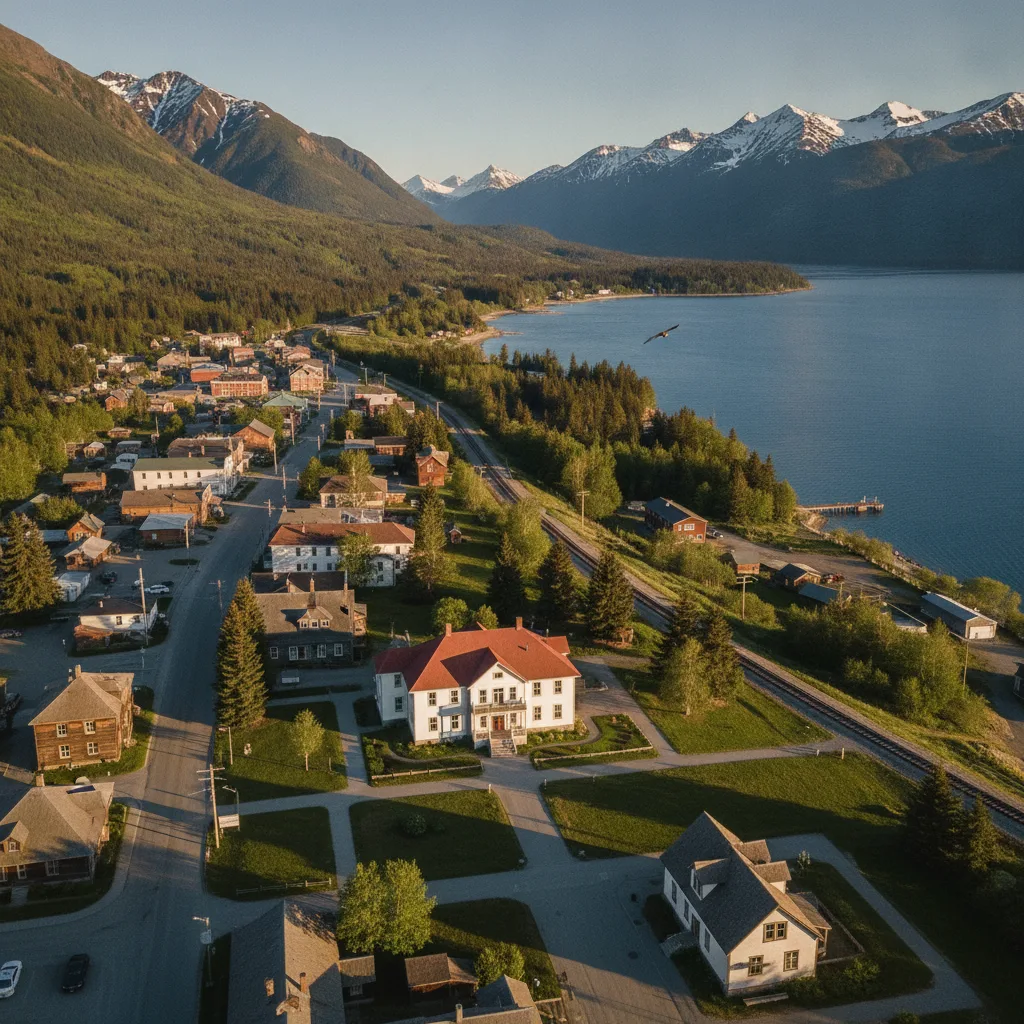
Our Klondike Gold Rush National Historical Park guide covers practical planning for Klondike Gold Rush National Historical Park Alaska — best time to visit, getting there, and what to do on the ground.
As the Roam States editorial team, we’ve explored countless corners of the United States, but few destinations captivate us quite like the Klondike Gold Rush National Historical Park Alaska. This isn't just another national park; it's a living, breathing testament to one of history's most audacious human endeavors. Nestled in the charming town of Skagway, this park preserves the indelible legacy of the 1898 Klondike Gold Rush, offering a vivid glimpse into the arduous journey undertaken by thousands of prospectors. From meticulously restored buildings to engaging exhibits, we find it an essential stop for anyone seeking to connect with Alaska’s rugged past and the relentless spirit of those who chased a golden dream.
Why Visit Klondike Gold Rush National Historical Park
Visiting Klondike Gold Rush National Historical Park is like stepping directly into a history book, but with the added thrill of Alaska's breathtaking scenery. We believe it's a must-see for several compelling reasons. First, the park offers an unparalleled immersion into the Klondike Gold Rush story. You won't just read about the stampeders; you'll walk the same streets they did, gaze upon the same mountains, and imagine the hardships and hopes that drove them north. The park encompasses the Skagway Historic District, the ghost town of Dyea, and the legendary Chilkoot and White Pass Trails, all integral to the gold rush narrative.
The restored historic buildings in Skagway are a particular highlight. Our team appreciates the National Park Service's dedication to preserving and interpreting these structures, which include saloons, public buildings, and homes that once buzzed with gold rush activity. The Mascot Saloon, for example, offers a fascinating look at one of the 70 saloons that operated during Skagway's boomtown days. The Moore House, built by Skagway's founder Captain William Moore, is another excellent example, restored to its 1904 appearance and furnished with original family possessions, providing a personal window into pioneer life.
Beyond the historical buildings, the park provides a perfect balance of outdoor activities and historical interpretation. Whether you're interested in a challenging hike on the Chilkoot Trail or a scenic train ride on the White Pass & Yukon Route Railroad, the stunning Alaskan landscape serves as a dramatic backdrop to the human drama of the gold rush. It’s a place where history buffs, outdoor adventurers, and families can all find something deeply engaging and educational.
Who It's Best For
Our team finds Klondike Gold Rush National Historical Park to be an incredibly versatile destination, appealing to a wide range of travelers. It’s particularly ideal for:
- History Enthusiasts: If you're fascinated by American history, particularly the late 19th century and the spirit of frontier exploration, this park is for you. The detailed exhibits, restored buildings, and interpretive programs bring the Klondike Gold Rush vividly to life.
- Outdoor Adventurers: The park offers serious hiking opportunities, most notably the challenging Chilkoot Trail. While the full trail is a multi-day backpacking experience, there are also numerous shorter day hikes for those looking for a taste of the Alaskan wilderness.
- Families with School-Age Children: We highly recommend this park for families. With hands-on history, ranger talks, and kid-focused activities like the Junior Ranger program, children can learn about the gold rush in an engaging and fun way. Family-friendly hikes, such as the Dyea to Finnegan's Point trail, are also available and designed to keep younger visitors interested.
- Cruise Ship Passengers: Skagway is a popular port of call for Alaska cruises, and the park's main visitor center is conveniently located downtown. Many of the park's attractions are easily accessible for those with limited time ashore.
- Cultural Explorers: Beyond the gold rush, the park offers insights into the Tlingit and First Nations trade routes that predated the stampede, providing a broader cultural context to the region's history.
Ultimately, if you appreciate a destination that seamlessly blends historical significance with natural beauty and offers diverse activities, you'll find Klondike Gold Rush National Historical Park to be an exceptional choice.
Getting There & Parking
Reaching Klondike Gold Rush National Historical Park, situated in Skagway, Alaska, can be an adventure in itself, but our team can confirm there are several straightforward ways to get there in 2026. Skagway is somewhat remote, but well-connected for its location.
By Cruise Ship
For many, cruising is the most popular and economical way to visit Skagway. All major cruise lines call on Skagway throughout the summer season. Your day in port will typically allow plenty of time to explore the town and partake in various excursions.
By Air
While you can't fly directly into Skagway from major hubs, you can fly into Juneau, Alaska (the state capital), which is served by Alaska Airlines and seasonally by Delta Airlines. From Juneau, a short 45-minute commuter flight via Alaska Seaplanes offers daily service to Skagway, making it an efficient way to arrive. The Skagway Airport is only a 10-minute walk from the train depot. Alternatively, you can fly into Whitehorse, Yukon Territory, which has daily service from Vancouver, BC, via Air North, Air Canada, and WestJet. From Whitehorse, Skagway is a scenic two-hour drive along the South Klondike Highway.
By Ferry
Skagway is the northern terminus of the Alaska Marine Highway System, a fleet of car-carrying vessels that serves Southeast Alaska. You can access the system as far south as Bellingham, Washington, or from Prince Rupert, British Columbia. The route from Bellingham to Skagway takes approximately three days. Many travelers choose to "camp" in the solarium on the top deck for a more affordable and adventurous trip, though stateroom accommodations are also available. Ferries also connect Skagway daily with Haines and Juneau. For example, the Juneau-Skagway ferry offers regular service with a crossing time of approximately 3 hours and 30 minutes, running 3-5 times weekly in 2026, with tickets priced from $55 to $220.
By Road
Skagway is one of the few communities in Southeast Alaska with road access. You can reach Skagway by driving the South Klondike Highway, which is paved and maintained year-round, connecting Skagway to the Yukon Territory and the contiguous 48 states. It's approximately 110 miles from Whitehorse or 98 miles from the Alaska Highway. This modern two-lane highway is an easy drive, passing through communities like Carcross, where you can find gas, food, and other visitor services.
Parking at Klondike Gold Rush National Historical Park
Parking in Skagway is generally available, especially for day visitors exploring the historic district. While specific 2026 parking fees for the main park areas are not typically charged, as the park itself has no entrance fee, we always recommend arriving early during peak season (May to September) to secure convenient spots, particularly if you are visiting by car or RV. For those arriving by cruise ship, the port is usually within easy walking distance of the downtown historic district, which constitutes a significant portion of the park. For trailheads like Dyea, accessible by road about 10 miles from Skagway, parking is typically available at the trailhead.
Top Things to Do
Our team has explored the breadth of experiences offered at Klondike Gold Rush National Historical Park, and we can confidently say there's something for every interest. Here are our top recommendations for things to do at Klondike Gold Rush National Historical Park:
Explore the Skagway Historic District
The heart of the park lies within Skagway's historic downtown. We encourage you to take a self-guided stroll along Broadway Street, admiring the meticulously restored buildings from the gold rush era. These structures, many of which are part of the Klondike Gold Rush National Historical Park, house museums, shops, and restaurants. Be sure to visit the National Park Service Visitor Center, located in the restored 1898 Railroad Depot at 2nd Avenue and Broadway. Here, you can watch a film about the gold rush, get maps, and learn about daily ranger programs.
Tour the Historic Museums
Within the Skagway Historic District, several museums offer deeper dives into the past. The Mascot Saloon, once one of Skagway's many watering holes, is now a museum that depicts the lively atmosphere of the gold rush era. The Moore House, Skagway's oldest building, showcases family life during the gold rush, furnished with original possessions. For a unique experience, grab a free, limited, timed-entry ticket from the Visitor Center for the Jeff. Smiths Parlor Museum, once the headquarters of notorious outlaw "Soapy" Smith, now a quirky museum filled with artifacts and animatronic figures.
Ride the White Pass & Yukon Route Railroad
Hands down, one of the most iconic things to do in Skagway is a ride on the White Pass & Yukon Route Railroad. This historic narrow-gauge railway, built during the gold rush, climbs through Alaska's rugged terrain, offering breathtaking mountain vistas, glaciers, and a direct connection to gold rush history. While not owned by the National Park Service, it's a quintessential Klondike Gold Rush National Historical Park experience, with various excursions available, including summit tours. The 2.5-hour White Pass Summit Excursion is a popular choice, passing waterfalls, tunnels, and trestles.
Visit the Dyea Townsite
Just 10 miles from Skagway, the ghost town of Dyea was once a bustling gold rush hub, comparable in size to Skagway. Today, it's a quiet forest with scattered ruins and old foundations, offering a poignant contrast to Skagway's preserved vibrancy. Our team recommends taking a self-guided walking tour to explore the crumbling cabins, the pilings of Dyea Wharf, and the Slide Cemetery, where victims of a Chilkoot Trail avalanche are buried. Dyea also serves as the trailhead for the Chilkoot Trail.
Attend Ranger Programs
The park offers a variety of free ranger programs and talks that delve into different aspects of the gold rush, from "Gold Rush 101" to stories of the women who participated. These are excellent opportunities to gain expert insights and ask questions. While ranger-led walking tours of Skagway are no longer offered, the visitor center remains a hub for information.
Klondike Gold Rush National Historical Park Hiking Trails
For those eager to lace up their boots and experience the Alaskan wilderness, Klondike Gold Rush National Historical Park offers a range of hiking opportunities, from easy strolls to challenging multi-day treks. Our team considers the Klondike Gold Rush National Historical Park hiking trails to be among the most historically significant and scenic in the state.
The Chilkoot Trail
The crown jewel of Klondike Gold Rush National Historical Park hiking trails is undoubtedly the Chilkoot Trail. Known as "the world's longest outdoor museum," this 33-mile (53 km) international trail traces the arduous path of the stampeders from Dyea, Alaska, to Bennett Lake in British Columbia, Canada. It's a challenging backpacking route, typically taking 3-4 days to complete, with an elevation gain of about 3500 feet over the entire trail.
For 2026, it's crucial to note that the international border at Chilkoot Pass remains closed to through travel. Hikers can hike the U.S. side or the Canadian side only, and must turn around at the border. Backcountry camping permits are required for overnight use on the U.S. side from June 1 through September 12. These permits must be reserved in advance via Recreation.gov and validated at the Trail Center in Skagway. All group members must attend an in-person safety orientation at the Trail Center, which is open daily from 9 a.m. to 4:30 p.m.. There is a non-refundable permit fee of $20 per trip for the U.S. side, covering all reserved Chilkoot Trail campsites. Canadian-side permits and fees are separate and managed by Parks Canada.
Along the Chilkoot Trail, you'll find nine designated campgrounds, each offering a unique experience. Popular stops include Finnegan's Point, Canyon City, Pleasant Camp, and Sheep Camp, which hosts a backcountry ranger station and evening ranger chats. Remember, there is no cellular service on the Chilkoot Trail, so a satellite-enabled communication device is recommended.
Day Hikes from Skagway and Dyea
For those seeking shorter excursions, Klondike Gold Rush National Historical Park offers several excellent day hikes:
- Dyea to Finnegan's Point: This 5-mile one-way trail is relatively flat and forested, offering views of the Irene Glacier. It's considered family-friendly and a great way to experience a portion of the Chilkoot Trail without committing to the full trek.
- Dyea to Canyon City: A slightly longer option at 7.7 miles one-way, this trail also follows the Chilkoot route and includes historic gold rush ruins.
- Lower Dewey Lake Trail: Accessible directly from Skagway, this is a popular local hike offering scenic views of the town and harbor. It's a moderate trail that can be completed in a few hours.
- Skagway – The White Pass Snow Fleet loop: An easy 3.6-mile (5.8 km) trail that takes about 1 hour and 37 minutes to complete, offering views of the historic White Pass Snow Fleet. Another popular option is the Port of Skagway – The White Pass Snow Fleet loop, an easy 2.2-mile (3.5 km) path with minimal elevation gain.
When planning any Klondike Gold Rush National Historical Park hiking trails, we advise checking current trail conditions at the Trail Center, being prepared for variable Alaskan weather, and carrying bear spray.
Best Time to Visit
Our team at Roam States has found that the best time to visit Klondike Gold Rush National Historical Park largely depends on your priorities, but the summer months generally offer the most accessible and active experience.
Peak Season: June to August
The vast majority of visitors, approximately 1 million people, flock to Skagway between May 1st and September 30th, with June, July, and August being the busiest. During these months, the weather is typically mildest, with long daylight hours that allow for extended exploration. All park facilities, museums, and ranger programs are fully operational, and the White Pass & Yukon Route Railroad runs its full schedule. This is also the prime time for hiking the Chilkoot Trail, as permits for overnight camping are required from June 1 through September 12. While the crowds are larger, the vibrant atmosphere and full range of activities make this an ideal time for a comprehensive visit.
Shoulder Seasons: May and September
Visiting in May or September offers a fantastic balance of good weather and fewer crowds. In early May, you might still encounter some lingering snow on higher elevations, but the town and lower trails are typically accessible. By mid-May, most operations are in full swing. September brings crisp air, the possibility of fall colors, and a noticeable decrease in visitor numbers after the cruise ship season begins to wind down. The Chilkoot Trail permits are still required through mid-September, making it a good option for backpackers seeking more solitude.
Off-Season: October to April
The winter months in Skagway are quiet and can be very beautiful, but many tourist-oriented businesses and some park facilities close or operate on reduced hours. The Chilkoot Trail does not require permits between November 1 and April 15, but winter hiking conditions are extreme and only recommended for experienced, well-equipped individuals. The South Klondike Highway remains open year-round, allowing road access. If you're seeking a serene, snow-covered landscape and don't mind limited services, a winter visit can be uniquely rewarding, but it requires careful planning and preparedness for cold weather.
For most travelers, we recommend aiming for the summer season, particularly late June through August, to maximize access to all the Klondike Gold Rush National Historical Park has to offer.
Where to Stay Nearby
When planning your visit to Klondike Gold Rush National Historical Park, securing comfortable lodging is key to a memorable experience. Our team has identified several excellent options for Klondike Gold Rush National Historical Park lodging, primarily located in Skagway itself or its immediate vicinity.
Hotels and Inns in Skagway
Skagway offers a charming selection of hotels and inns, many of which are housed in historic buildings, adding to the gold rush ambiance. We recommend booking well in advance, especially for peak summer months, as accommodation can fill up quickly due to cruise ship traffic.
- Holland America Skagway Inn: This is a popular choice, often praised for its friendly staff and good food. It's conveniently located just steps from Klondike Gold Rush National Historical Park and offers a free transfer service to Skagway Airport. We've seen rates around $220 nightly, with potential discounts for early May and two-night stays in May and June 2026.
- At the White House: With an exceptional guest rating, this guesthouse offers a charming experience in Skagway, known for its helpful staff and cleanliness. It's about 5 minutes drive from Klondike Gold Rush National Historical Park.
- Historic Skagway Inn: Guests consistently rate this inn highly for its wonderful owners, proactive and friendly staff, comfortable beds, and well-designed rooms. It's also noted for having a superb complimentary breakfast. It is located about 1.5 miles from Klondike Gold Rush National Historical Park.
- Pack Train Inn: A budget-friendly option in the heart of Skagway, the Pack Train Inn offers complimentary continental breakfast and free WiFi. It's located just minutes from attractions like Grizzly Falls Ziplining Expedition and Captain William Moore Cabin.
- Westmark Inn Skagway: Another well-known option, often chosen for its convenient location near popular attractions like the White Pass and Yukon Route and Red Onion Saloon Brothel Museum.
Camping Options
For those who prefer to sleep under the Alaskan sky, there are a couple of camping options near Klondike Gold Rush National Historical Park:
- Dyea Campground: The National Park Service operates a 22-site campground in the Dyea area, at the start of the Chilkoot Trail. This front-country campground accommodates both tent and RV campers. Sites are $10 per night and are available on a first-come, first-served basis; no reservations are taken.
- Chilkoot Trail Backcountry Campgrounds: For experienced backpackers tackling the Chilkoot Trail, there are nine developed backcountry campgrounds along the trail. A permit is required for all overnight camping in these sites from June 1 to September 12, which must be reserved via Recreation.gov.
- Private RV Parks: Skagway also has private RV parks, such as Skagway RV Parks, which are praised for their breathtaking views and proximity to natural landscapes, offering amenities like restrooms, showers, and laundry services.
Regardless of your chosen Klondike Gold Rush National Historical Park lodging, we strongly advise making arrangements well in advance, especially during the busy summer season, to ensure the best availability and rates.
Sample 2-Day Itinerary
To help you make the most of your visit to Klondike Gold Rush National Historical Park, our team has crafted a sample two-day itinerary designed to immerse you in the history and natural beauty of Skagway and its surroundings.
Day 1: Skagway Historic District & White Pass
- Morning (9:00 AM - 12:00 PM): Immerse in Downtown History
- Begin your day at the Klondike Gold Rush National Historical Park Visitor Center (2nd Ave & Broadway). Pick up maps, learn about daily programs, and watch the park film, "Gold Fever: Race to the Klondike".
- Take a self-guided walking tour of the Skagway Historic District. Explore Broadway Street, admiring the restored buildings. Don't miss the Mascot Saloon Museum and the Moore House to get a sense of gold rush life.
- If time permits, secure a free, timed-entry ticket at the Visitor Center for the Jeff. Smiths Parlor Museum tour later in the day.
- Lunch (12:00 PM - 1:00 PM): Local Flavors
- Enjoy lunch at one of Skagway's local eateries. Many offer classic Alaskan fare and casual dining.
- Afternoon (1:00 PM - 4:30 PM): White Pass & Yukon Route Railroad
- Embark on the iconic White Pass Summit Excursion aboard the White Pass & Yukon Route Railroad. This 2.5-hour round trip offers stunning scenic views of mountains, gorges, and waterfalls, tracing a portion of the historic gold rush trail.
- Late Afternoon/Evening (4:30 PM onwards): More History or Leisure
- If you have a Jeff. Smiths Parlor Museum ticket, take your tour.
- Browse the local shops for souvenirs or enjoy a drink at a historic saloon.
- Consider attending an evening ranger talk if one is scheduled, or simply relax and soak in the historic atmosphere.
- Dinner in Skagway.
Day 2: Dyea & Chilkoot Trail Exploration
- Morning (9:00 AM - 1:00 PM): Discover Dyea and the Chilkoot Trailhead
- Drive or take a shuttle to the Dyea Townsite, about 10 miles from Skagway.
- Explore the ghost town of Dyea with a self-guided walk, visiting the remnants of the wharf, crumbling cabins, and Slide Cemetery.
- From Dyea, embark on a day hike along the U.S. side of the Chilkoot Trail. A popular and manageable option is the 5-mile (one-way) hike to Finnegan's Point, offering forested trails and glacier views. Remember to turn around before the international border.
- Lunch (1:00 PM - 2:00 PM): Picnic or Return to Skagway
- Pack a picnic to enjoy at Dyea, or return to Skagway for lunch.
- Afternoon (2:00 PM - 5:00 PM): Additional Skagway Activities or Scenic Drive
- Depending on your interests and energy levels, you could:
- Visit the Gold Rush Cemetery and Reid Falls for a short, scenic walk.
- Take a scenic drive further along the South Klondike Highway towards the Yukon border for panoramic views (ensure you have appropriate documentation if crossing the border).
- Explore the Skagway Museum for more local history.
- Depending on your interests and energy levels, you could:
- Evening: Farewell Skagway
- Enjoy a final dinner in Skagway, perhaps at a different restaurant than the previous night.
This itinerary provides a robust experience of Klondike Gold Rush National Historical Park. For those with more time, consider extending your Chilkoot Trail hike or exploring other parts of Alaska, such as Denali National Park & Preserve or Kenai Fjords National Park, for a broader Alaskan adventure. Don't forget to check our Best Places in Alaska guide for more inspiration.
Last updated: 2026-07-05 by the Roam States team.