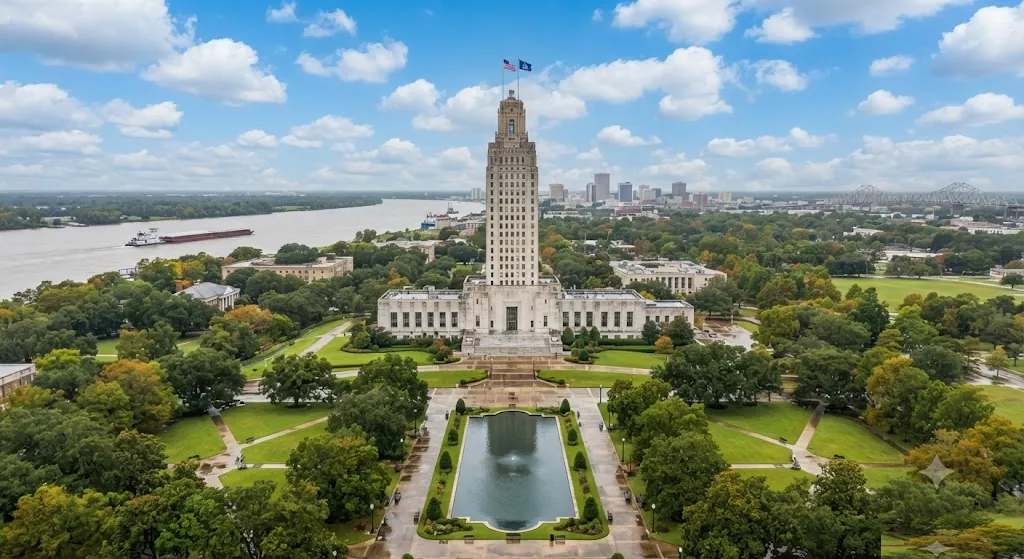
The Louisiana State Capitol in Louisiana is more than just a government building; it's a towering testament to the state's unique history, political drama, and architectural ambition. As the tallest state capitol in the United States, this Art Deco masterpiece in Baton Rouge offers visitors a compelling blend of civic importance and engaging attractions. Our team at Roam States has compiled this comprehensive guide to help you navigate your visit, ensuring you experience the grandeur and stories held within its walls and on its expansive grounds.
Why Visit Louisiana State Capitol
Visiting the Louisiana State Capitol offers a unique opportunity to delve into the heart of Louisiana's political and architectural heritage. This isn't just another government office; it's a 34-story Art Deco skyscraper, standing 450 feet tall, making it the tallest state capitol in the country. Its construction in the 1930s was spearheaded by the colorful and controversial Governor Huey P. Long, whose vision shaped its distinctive design and enduring legacy. The building itself is a National Historic Landmark, recognized for its exceptional architecture and historical significance.
Beyond its impressive height, the Capitol is a treasure trove of intricate details, from the allegorical busts and reliefs adorning its exterior to the names of all 50 U.S. states engraved into its grand 49-step staircase. Inside, Memorial Hall, often referred to as the rotunda, features a relief map of Louisiana embedded in its floor, offering a geographical overview of the state. The ornate House and Senate Chambers, when not in official use, provide a glimpse into the legislative process that governs Louisiana.
A visit here allows you to walk through halls where pivotal decisions were made and where the dramatic assassination of Huey P. Long took place in 1935, an event commemorated by a statue of Long in the adjacent State Capitol Park. We find that the blend of stunning architecture, significant historical events, and the ongoing function as a seat of government makes the Louisiana State Capitol a truly compelling destination for anyone interested in American history and civic life.
Who It's Best For
The Louisiana State Capitol caters to a diverse range of visitors, making it a versatile stop on any Louisiana itinerary. It is particularly well-suited for history buffs and architecture enthusiasts who will appreciate the Art Deco design and the stories embedded within its walls. Those interested in American politics and civics will find the legislative chambers and historical exhibits particularly engaging.
Families with older children can also find a visit rewarding, as it offers an educational experience about state government and history, though younger children might find the self-guided tours less captivating without specific interactive elements. Students, from high school to university level, will benefit from seeing a working government building and learning about its past. Additionally, photographers will be drawn to the building's unique aesthetics and the panoramic views from the observation deck (when open). If you're planning a broader trip through the state, consider combining your visit with other historical sites in Louisiana to fully immerse yourself in the region's rich past.
Getting There & Parking
Navigating to the Louisiana State Capitol is straightforward, as it's prominently located in downtown Baton Rouge at 900 North Third Street. For those driving, the most common approach is via I-10 or I-110. From I-10 East or West, take I-110 North (which becomes MLK Expressway) into downtown Baton Rouge. At the curve, exit right onto Capitol Access Road/Dept. of Transportation & Development (Exit 1-E). This ramp will loop you back over I-110, directing you onto Capitol Access Road towards the State Capitol.
If you're approaching from I-110 South, exit right on Capitol Access Road (Exit 1-E). Regardless of your direction, you'll eventually be on Capitol Access Road, passing the Department of Transportation and Development on your right, then the Governor's Mansion, before seeing the Capitol tower.
Regarding parking for the Louisiana State Capitol, visitors have several options. Parking is available along Capitol Access Road, which circles the capitol, and in the Claiborne Building lot on North 3rd Street. Public parking is also accessible on Spanish Town Road and streets to its south, as well as in parking lots off River Road, which runs parallel to the Capitol building. Metered street parking is also available on the south side of State Capitol Park. Our team recommends checking for specific signage, as areas with reserved signs, orange cones, or designated fire lanes are off-limits. For a convenient option, the River Road levee parking lot, located in front of the Capitol Park Welcome Center, directly across River Road, is a paved, open-air lot. There's also the Welcome Center Parking Garage at the corner of North Street and River Road.
When you arrive, be aware that the Capitol Building is currently undergoing a multi-year waterproofing and rehabilitation project, which began in late 2025 and is expected to continue until January 2030. During this time, the visitor's entrance is located on the eastern side of the building near Arsenal Park, and the front steps are closed. Security measures include metal detectors and X-ray machines at all public entrances, so be prepared to remove metal items and have your belongings scanned. No weapons, including pocket knives, are allowed inside.
Top Things to Do
When you visit the Louisiana State Capitol, you'll discover a wealth of historical and architectural marvels. Our team recommends allocating 1 to 2 hours for a leisurely self-guided tour to fully appreciate the main halls and exhibits. Here are some of the top things to do at the Louisiana State Capitol:
- Ascend to the Observation Deck: Although the observation deck on the 27th floor is currently closed for renovations, when it reopens, it offers breathtaking panoramic views of Baton Rouge and the Mississippi River. This is a must-see for incredible photo opportunities.
- Explore Memorial Hall (Rotunda): Marvel at the stunning architecture and intricate details of the Capitol's central rotunda. Here, you'll find a relief map of Louisiana embedded in the floor and symbolic touches that reflect the state's story.
- Tour the Legislative Chambers: Witness where history is made by visiting the House and Senate chambers when they are not in session. Guided tours are available, offering deeper insights into the Capitol's history and architecture.
- Admire the Art Deco Architecture: Take your time to appreciate the 34-story Art Deco design, which stands out among state capitols. Look for allegorical busts, reliefs, and sculptures of Louisiana's state symbols on the exterior.
- Walk the Capitol Grounds: Step outside to explore the beautifully landscaped Capitol Park, which includes shaded walkways, open green spaces, and seasonal blooms. Don't miss the memorial statue of Governor Huey P. Long, who was instrumental in the building's construction.
- Visit the "The Shop at the Top" Gift Shop: Located on the 27th floor near the observation deck, this gift shop is open daily from 9:00 AM to 3:00 PM (subject to changes due to renovations).
Beyond the Capitol itself, there are many other things to do in Baton Rouge that our team highly recommends:
- Louisiana's Old State Capitol: Just a short distance away, this gothic-style castle-like structure is a historical museum and a fascinating contrast to the new Capitol. It offers free admission and features impressive stained-glass windows and exhibits. Note that the Old State Capitol closes for annual maintenance, typically reopening in late January.
- Capitol Park Museum: Located nearby, this museum provides an excellent overview of Louisiana's rich history and culture.
- USS KIDD Veterans Museum: Explore a preserved WWII destroyer and learn about naval history.
- Louisiana Art & Science Museum: This downtown museum offers diverse exhibits, a planetarium, and an observatory.
- Explore Downtown Baton Rouge: Wander through the historic downtown area, discovering boutiques, cafes, and restaurants. The Mississippi River levee trail offers a beautiful walk with views of the river and cityscape.
- Swamp Tours: Experience Louisiana's unique natural environment with a Cajun Country Swamp Tour or a kayak tour through the historic cypress forest in the Atchafalaya National Basin.
- Plantation Homes: Take a day trip to explore historic plantation homes like Houmas House Mansion or Oak Alley Plantation, offering a glimpse into Louisiana's past.
Best Time to Visit
Choosing the best time to visit the Louisiana State Capitol largely depends on your priorities, whether it's avoiding crowds, enjoying pleasant weather, or witnessing legislative sessions. Our team generally recommends visiting during weekdays, especially in the morning, to beat the crowds. Weekends and event days can be busier.
The Capitol is open daily from 8:00 AM to 4:30 PM, though it's closed on New Year's Day, Easter Sunday, Thanksgiving Day, Christmas Eve, and Christmas Day. The observation deck is typically open from 8:00 AM to 4:00 PM, but as of 2026, it is temporarily closed for renovations.
From a weather perspective, spring (March to May) and fall (September to November) offer the most comfortable temperatures for exploring Baton Rouge. Summers can be hot and humid, with temperatures often pushing past 100 degrees Fahrenheit, making early mornings or late evenings preferable for outdoor activities. Winters are generally mild, though occasional cold snaps can lead to temporary closures of state offices due to inclement weather, as seen in January 2026.
If you're interested in observing the legislative process, plan your visit during a legislative session. In 2026, the Louisiana State Legislature was scheduled to convene on March 9 and adjourn on June 1. Visiting during these times offers a unique glimpse into state government, though it can also impact access and atmosphere due to increased activity. Events like "4-H Day at the Capitol," which took place on April 28, 2026, also offer a chance to see the building in action with specific programs.
Where to Stay Nearby
Baton Rouge offers a variety of accommodation options, particularly in the downtown area, which provides convenient access to the Louisiana State Capitol and other attractions. Our team recommends staying downtown for easy walkability to many key sites. Here are some highly-rated hotels near the Capitol:
- Hilton Baton Rouge Capitol Center: Located just 0.6 miles from the Capitol, this 4-star hotel offers a luxurious experience with views of the Mississippi River. It's LGBTQIA-friendly and pet-friendly.
- Hampton Inn & Suites Baton Rouge Downtown: A 3-star option approximately 0.4 miles from the Capitol, known for excellent guest reviews and a convenient location.
- WATERMARK Baton Rouge, Autograph Collection: This 3.5-star hotel offers a distinctive blend of comfort and style, also highly rated by guests.
- Hotel Indigo Baton Rouge Downtown by IHG: Another well-regarded 3-star hotel in the downtown area, popular for its location and service.
- Courtyard by Marriott Baton Rouge Downtown: A favored 3-star hotel located about 0.5 miles from the Capitol, offering comfortable stays.
- Origin Baton Rouge, a Wyndham Hotel: This 3-star hotel is another excellent choice downtown, offering good value and proximity to attractions.
- Bally's Baton Rouge Hotel: A 3.5-star option that combines lodging with entertainment, located close to the Capitol.
For those looking for slightly different amenities or locations, other options include:
- Quality Inn & Suites Baton Rouge West – Port Allen: About 3 miles from the Capitol, this hotel caters to business travelers with a 24-hour business center and complimentary breakfast.
- L'Auberge Casino Hotel Baton Rouge: Offers a resort experience with a casino, located further from downtown but still accessible.
Many hotels in Baton Rouge also offer amenities like free WiFi, free parking, and breakfast options. When planning your stay, consider your preferred style of travel and proximity to other attractions in addition to the Louisiana State Capitol. For a broader look at accommodations across the state, visit Explore Louisiana.
Sample 2-Day Itinerary
Our team has crafted a sample 2-day itinerary for Baton Rouge, focusing on the Louisiana State Capitol and other key attractions, ensuring a rich historical and cultural experience.
Day 1: Capitol Immersion and Downtown Exploration
- Morning (9:00 AM - 12:00 PM): Louisiana State Capitol Louisiana. Begin your day with a comprehensive visit to the Louisiana State Capitol. Allow ample time to explore Memorial Hall, view the House and Senate Chambers (when not in session), and admire the Art Deco architecture. Though the observation deck is currently closed, the historical significance and grandeur of the building itself are captivating. We recommend taking advantage of any available guided tours for deeper insights.
- Lunch (12:00 PM - 1:00 PM): Downtown Dining. Enjoy lunch at one of the many downtown Baton Rouge restaurants. Options range from casual cafes to more upscale dining, many within walking distance of the Capitol.
- Afternoon (1:00 PM - 4:00 PM): Old State Capitol & Capitol Park Museum. Walk over to the nearby Louisiana's Old State Capitol, a stunning Gothic Revival "castle" that now functions as a museum of political history. Afterward, visit the Capitol Park Museum to gain a broader understanding of Louisiana's history and culture through interactive exhibits.
- Late Afternoon (4:00 PM - 6:00 PM): USS KIDD Veterans Museum. Conclude your historical deep dive with a visit to the USS KIDD Veterans Museum, where you can explore a WWII destroyer and learn about naval history on the Mississippi Riverfront.
- Evening: Riverfront Stroll & Dinner. Take a leisurely stroll along the Mississippi River levee trail, enjoying the views as the sun sets. Then, choose from Baton Rouge's diverse culinary scene for dinner.
Day 2: Cultural Exploration & Natural Beauty
- Morning (9:00 AM - 12:00 PM): Louisiana Art & Science Museum. Start your second day at the Louisiana Art & Science Museum, which features art galleries, a permanent ancient Egypt exhibit, and a planetarium. It's an excellent choice if you're visiting Louisiana State Capitol with kids.
- Lunch (12:00 PM - 1:00 PM): Perkins Rowe or Local Eatery. Head to Perkins Rowe for a variety of dining options and some boutique shopping, or try another local favorite.
- Afternoon (1:00 PM - 5:00 PM): Atchafalaya Basin Swamp Tour. Dedicate your afternoon to experiencing Louisiana's unique natural environment. We highly recommend a Cajun Country Swamp Tour or a kayak tour through the historic cypress forest in the Atchafalaya National Basin. This offers a stark and beautiful contrast to the urban and historical sites.
- Late Afternoon/Evening: Avery Island & Tabasco (Optional Day Trip). For those with extra time and an interest in culinary history, consider a scenic drive to Avery Island & Tabasco, home of the famous Tabasco sauce. It's about a 1.5-hour drive from Baton Rouge, offering tours and tastings. This can extend your day but is a truly unique Louisiana experience.
- Evening: Dinner & Entertainment. Enjoy a final Baton Rouge dinner, perhaps catching live music if available, or simply relaxing after two days of exploration. Consider checking local listings for events at the Raising Cane's River Center.
This itinerary provides a robust overview of Baton Rouge's highlights, ensuring you make the most of your visit to the Louisiana State Capitol and its surroundings. For more ideas on planning your trip, consult our Plan Your US Trip guide or our USA Road Trip Planner.
Is It Worth Visiting?
The question "is Louisiana State Capitol worth visiting?" is one we unequivocally answer with a resounding yes. Our team believes this iconic landmark offers an enriching experience that extends far beyond a typical government building tour. It stands as a powerful symbol of Louisiana's distinct history, political narrative, and architectural prowess.
Firstly, its status as the tallest state capitol in the United States, an impressive 34-story Art Deco skyscraper, provides a unique visual and historical draw. The intricate details of its design, from the carved reliefs to the grand Memorial Hall, are a testament to the craftsmanship of its era and offer a compelling aesthetic experience. Even with the observation deck temporarily closed for renovations in 2026, the interior and exterior remain rich with stories and visual appeal.
Secondly, the Louisiana State Capitol is a living museum of political history. It's where Huey P. Long's ambitious vision came to life and where he met his tragic end, events that profoundly shaped Louisiana. Walking through these halls provides a tangible connection to the state's past and present legislative processes. The free admission makes this a highly accessible and valuable educational experience for all visitors.
For those questioning "is Louisiana State Capitol worth visiting," consider the broader context of Baton Rouge. The Capitol is situated amidst other significant attractions like the Old State Capitol, the Capitol Park Museum, and the Mississippi Riverfront, allowing for a full day or more of exploration. It's a key piece of the puzzle that makes Baton Rouge a worthwhile stop on any Louisiana road trip. The opportunity to witness such a significant piece of American architecture and history, free of charge, truly makes the Louisiana State Capitol an essential and rewarding visit.
Visiting With Kids
Visiting the Louisiana State Capitol with kids can be a surprisingly engaging and educational experience, provided you approach it with a plan. While it's not a theme park, the sheer scale and historical significance can capture a child's imagination. Our team suggests focusing on the visual and dramatic elements to keep younger visitors interested.
Firstly, highlight the fact that it's the "tallest capitol building in the country" – a fact that often impresses children. The Art Deco architecture, with its unique carvings and statues on the exterior, can be a fun scavenger hunt for older kids to spot different symbols of Louisiana. Inside, the grand Memorial Hall (rotunda) with its large relief map of Louisiana on the floor can be a good starting point, allowing kids to visually trace the state's geography.
Although the observation deck is currently closed for renovations, when it reopens, the panoramic views are usually a huge hit with children, offering a "bird's-eye" perspective of Baton Rouge. Even without it, walking through the impressive halls and briefly peeking into the legislative chambers can give them a sense of where important decisions are made.
When visiting the Louisiana State Capitol with kids, remember that the tours are primarily self-guided, allowing you to tailor the pace to your children's attention spans. We recommend combining the Capitol visit with other nearby, more interactive attractions in Baton Rouge. For example, the Louisiana Art & Science Museum, with its planetarium and exhibits, is a great follow-up. The USS KIDD Veterans Museum, featuring a real WWII destroyer, also offers a hands-on experience that appeals to many children. Outside the Capitol, the surrounding Capitol Park provides space for kids to stretch their legs after being inside. Keep an eye out for special events like "4-H Day at the Capitol" which might offer specific kid-friendly activities. Always remind children about the security procedures, including metal detectors, and the rule against bringing weapons.
FAQ
Louisiana State Capitol tips
Our top tips for visiting the Louisiana State Capitol include planning your visit on a weekday morning to avoid crowds, as weekends and legislative sessions can be busy. Allow 1-2 hours for a self-guided tour. Wear comfortable shoes, as you'll be doing a fair amount of walking. Be aware that the observation deck is currently closed for renovations, and the visitor's entrance is on the eastern side near Arsenal Park due to ongoing construction. Remember that admission is free. Always check the official website for any updated hours or closures before your visit.
Louisiana State Capitol parking
Parking for the Louisiana State Capitol is available along Capitol Access Road, which encircles the building, and in the Claiborne Building lot on North 3rd Street. You can also find public parking on Spanish Town Road and streets to its south, as well as in lots off River Road. Metered street parking is an option on the south side of State Capitol Park. For convenience, the River Road levee parking lot and the Welcome Center Parking Garage (at North Street and River Road) are also available. Avoid areas with reserved signs, orange cones, or fire lane designations.
best time to visit Louisiana State Capitol
The best time to visit the Louisiana State Capitol is during the spring (March-May) or fall (September-November) for pleasant weather. To avoid crowds, aim for weekday mornings. If you're interested in observing legislative sessions, plan your trip between March and early June when the legislature typically convenes. However, be mindful that legislative sessions can lead to increased activity and potentially impact access. The Capitol is closed on major holidays like New Year's Day, Easter Sunday, Thanksgiving Day, Christmas Eve, and Christmas Day.
Louisiana State Capitol hours and fees
The Louisiana State Capitol is open daily from 8:00 AM to 4:30 PM. It is closed on New Year's Day, Easter Sunday, Thanksgiving Day, Christmas Eve, and Christmas Day. Admission to the Capitol is free for all visitors. While the observation deck is typically open from 8:00 AM to 4:00 PM, it is currently closed for renovations as of 2026. Guided tours are available, but it's recommended to contact staff for availability.
Louisiana State Capitol travel guide
This comprehensive guide serves as your Louisiana State Capitol travel guide. We recommend starting with the Capitol's Art Deco architecture and historical exhibits, then exploring nearby attractions like the Old State Capitol and Capitol Park Museum. Plan for 1-2 hours at the Capitol. Utilize public parking options around the building. Consider combining your visit with a Cajun Country Swamp Tour or a trip to Avery Island & Tabasco for a full Louisiana experience. For more detailed planning, refer to our full guide above.
Louisiana State Capitol itinerary
A recommended itinerary for the Louisiana State Capitol involves a morning visit to the Capitol itself, focusing on Memorial Hall and the legislative chambers. Afterward, head to the Old State Capitol and the Capitol Park Museum, both within walking distance. For a two-day trip, dedicate the second day to other Baton Rouge attractions like the Louisiana Art & Science Museum and a swamp tour in the Atchafalaya National Basin. This allows for a blend of history, culture, and natural beauty. For a detailed breakdown, see our "Sample 2-Day Itinerary" section.
The Louisiana State Capitol stands as a monumental testament to the state's vibrant history and distinctive character. Our team at Roam States hopes this guide empowers you to experience the grandeur, the stories, and the architectural brilliance of this iconic landmark. From its towering Art Deco design to the echoes of political drama within its halls, the Capitol offers a truly unique and enriching travel experience in the heart of Baton Rouge. We encourage you to delve into the history, appreciate the artistry, and explore the surrounding city to fully grasp the spirit of Louisiana.
Last updated: 2026-07-13 by the Roam States team.