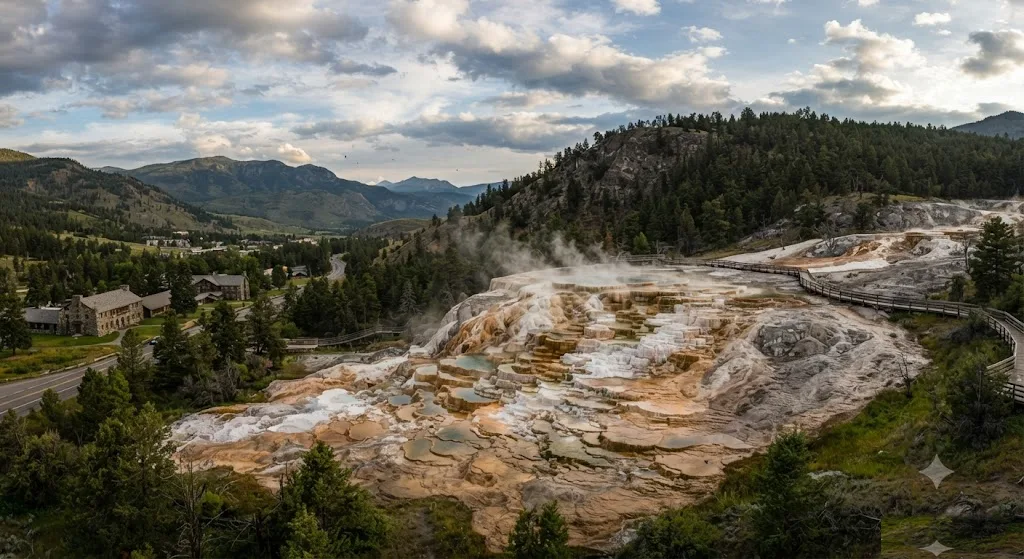
Mammoth Hot Springs Travel Guide — Wyoming
Welcome to our comprehensive guide to Yellowstone National Park's most visually distinct geothermal area, **Mammoth Hot Springs Wyoming**. Our team at Roam States has explored this fascinating landscape extensively, and we’re here to share our insider knowledge to help you plan an unforgettable trip. Unlike the explosive geysers and vibrant pools found elsewhere in Yellowstone, Mammoth Hot Springs presents a unique spectacle: a large complex of hot springs cascading down a hill of travertine, creating an ever-changing, ethereal landscape of white, orange, and brown terraces. This guide will cover everything from how to get there and what to do, to where to stay and how to make the most of your visit in 2026.
Why Visit Mammoth Hot Springs
Mammoth Hot Springs offers a stark contrast to the geyser basins and colorful hot springs that define much of Yellowstone. Here, the magic lies in the delicate, ever-evolving travertine terraces. Hot, acidic water from deep within the earth dissolves calcium carbonate from the underlying limestone, carrying it to the surface. As this water cools and evaporates upon exposure to the air, it deposits the dissolved minerals, forming intricate, stair-step formations that are constantly growing and changing. This geological process creates a landscape unlike any other in the park, with some terraces appearing stark white, while others are painted in shades of brown, orange, and green by thermophilic algae.
Visiting Mammoth Hot Springs is an opportunity to witness geology in action, a living, breathing sculpture shaped by water and time. The sheer scale of the terraces, combined with the subtle beauty of their colors and textures, makes for a truly captivating experience. It's a place where you can spend hours simply observing the subtle shifts in water flow and mineral deposition, a testament to the powerful, yet often gentle, forces at work beneath Yellowstone's surface.
Who It's Best For
Mammoth Hot Springs appeals to a wide range of travelers, making it a versatile destination within Yellowstone. It's particularly well-suited for:
- **Families with Young Children:** The boardwalks are generally easy to navigate, and the unique formations are fascinating for all ages. Many areas are accessible, allowing families to enjoy the views without strenuous hiking.
- **Photographers:** The intricate details of the terraces, the steam rising into the crisp air, and the unique color palette provide endless photographic opportunities. Early morning or late afternoon light often enhances the visual drama.
- **Geology Enthusiasts:** For those interested in geological processes, Mammoth Hot Springs is a live laboratory, showcasing the formation of travertine terraces in real-time.
- **Wildlife Watchers:** The Mammoth area, particularly Fort Yellowstone, is known for its resident elk herds, which often graze openly on the lawns, especially during spring and fall.
- **Those Seeking a Quieter Yellowstone Experience:** While popular, Mammoth Hot Springs can often feel less crowded than the Old Faithful area, especially during shoulder seasons. It provides a more contemplative experience of Yellowstone's geothermal wonders.
- **Winter Visitors:** As the only area accessible by personal vehicle year-round, Mammoth Hot Springs is an excellent base for winter exploration, offering access to cross-country skiing, snowshoeing, and wildlife viewing in nearby Lamar Valley.
Getting There & Parking
Understanding how to get to Mammoth Hot Springs is crucial for planning your visit. Mammoth Hot Springs is located in the northwestern part of Yellowstone National Park, approximately 5 miles south of the North Entrance in Gardiner, Montana.
How to Get There
The **North Entrance** at Gardiner, Montana, is the only entrance to Yellowstone National Park that is open year-round to private vehicles. This makes it the primary access point for Mammoth Hot Springs, especially during the winter months when other park roads are closed to regular traffic. The drive from Gardiner to Mammoth Hot Springs is short, typically taking about 10 minutes.
During the spring, summer, and fall, you can also reach Mammoth Hot Springs from other park entrances once interior roads open. For example, from the **West Entrance** at West Yellowstone, Montana, the drive is approximately 1 hour and 20 minutes. You would take US-191 to Madison Junction, then turn onto US-89 North, passing Norris Geyser Basin on your way to Mammoth.
Travelers should be aware of potential road construction in 2026. The Gardiner River High Bridge, located about 0.5 miles southeast of Mammoth Hot Springs towards Tower Junction, is undergoing improvements, which may result in single-lane traffic and delays of up to 15 minutes, 24 hours a day, seven days a week, through late October 2026. There are also ongoing improvements on the North Entrance Road realignment ("Old Gardiner Road") which could cause up to 30-minute delays. Always check the official NPS road status or call (307) 344-2117 for the latest conditions before you go.
Parking at Mammoth Hot Springs
Parking at Mammoth Hot Springs can be challenging, especially during peak season. Our team advises arriving early in the morning or later in the afternoon to secure a spot. There are several parking areas available:
- **Upper Terraces:** You'll find two small parking lots near the Upper Terraces, which also provide access to the Upper Terrace Loop Drive.
- **Lower Terraces:** There are about five parking lots dedicated to the Lower Terraces.
- **Mammoth Hot Springs Hotel & Terrace Grill:** If the terrace lots are full, additional parking is available at the Mammoth Hot Springs Hotel and the Terrace Grill, roughly 0.2 miles from the hot springs.
If you're struggling to find parking at the Upper Terraces, our tip is to drive the one-way Upper Terrace Loop Drive a few times. This allows you to view some of the terraces from your vehicle while waiting for a parking space to open up.
Top Things to Do
There are many incredible things to do at Mammoth Hot Springs, offering a blend of natural wonder, history, and outdoor activity. Our team recommends allocating at least half a day to fully explore this unique area.
Explore the Travertine Terraces
The primary attraction, and undoubtedly one of the top things to do at Mammoth Hot Springs, is exploring the Upper and Lower Terraces. These can be viewed via a combination of boardwalks and a scenic drive.
- **Lower Terraces:** These are best explored on foot via an extensive network of boardwalks. Key features include Minerva Terrace, Palette Spring, and Canary Spring. The boardwalks allow you to get up close to the vibrant formations and observe the hot water flowing over them. Be sure to stay on the designated boardwalks for your safety and to protect the fragile formations.
- **Upper Terraces:** A one-way scenic loop drive allows you to see several features from your car, with pullouts for closer inspection and short walks. Features like Orange Spring Mound and Devil's Thumb are visible here. You can also access some of the Upper Terraces via boardwalks and stairs from the Lower Terraces.
The appearance of the terraces is constantly changing as water flow shifts and new mineral deposits form. This means that a terrace that was vibrant last year might be dry and white this year, while a new feature might be emerging elsewhere. This dynamic nature is part of what makes Mammoth Hot Springs so captivating. We recommend picking up an interpretive brochure at the Albright Visitor Center to help identify specific features.
Visit the Albright Visitor Center & Fort Yellowstone
Located in the historic Fort Yellowstone complex, the Albright Visitor Center is an essential stop for any visitor to Mammoth Hot Springs. It's the only visitor center in Yellowstone that is open year-round. The building itself was once a bachelor officers' quarters, built in 1909, during the period when the U.S. Army administered Yellowstone National Park.
Inside, you'll find exhibits on the history and exploration of Yellowstone, including displays on the predator-prey theme. Park rangers are available to answer questions and provide trip-planning information. During the summer season, the center is typically open from 8:00 AM to 6:00 PM, with shorter hours (9:00 AM to 5:00 PM) during the rest of the year. A bookstore/gift shop is also available. The Albright Visitor Center is a great place to begin your Yellowstone adventure, offering valuable insights into the park's natural and cultural history.
Explore the Historic Fort Yellowstone
The buildings surrounding the terraces form Fort Yellowstone, a National Historic Landmark District. This area served as the park headquarters when the U.S. Army managed Yellowstone from 1886 to 1918. Take a stroll around the parade ground to admire the historic structures, which now house park administrative offices, employee housing, and the visitor center. It’s a fascinating glimpse into the early days of national park management.
Mammoth Hot Springs Hiking Trails
For those looking to stretch their legs beyond the boardwalks, Mammoth Hot Springs offers several hiking trails. These trails provide different perspectives of the terraces and the surrounding landscape.
- **Upper Terrace Loop Trail:** While much of this is a scenic drive, there are sections of boardwalk and dirt trail that allow for closer exploration of features like Orange Spring Mound and the overlook of the upper terrace.
- **Lower Terrace Trails:** Beyond the main boardwalks, some dirt trails branch off, allowing for a more immersive experience. For instance, after Minerva Terrace, a dirt trail continues past Cleopatra Terrace, ascending towards Mound Terrace and New Blue Spring. Be aware that these trails can involve stairs and uphill sections.
- **Beaver Ponds Trail:** This popular 5-mile loop trail starts near the Mammoth Hot Springs Hotel and winds through forests and meadows, offering opportunities to spot wildlife like beaver, elk, and various bird species. It provides a good option for a longer hike away from the thermal features.
- **Sepulcher Mountain Trail:** For a more strenuous adventure, the Sepulcher Mountain Trail offers panoramic views of the Mammoth area, Gardiner, and the Yellowstone River valley. This trail is typically a full-day hike.
When exploring Mammoth Hot Springs hiking trails, always carry water, stay on marked trails, and be aware of wildlife, especially elk that frequent the area. Check with the Albright Visitor Center for current trail conditions and any closures.
Is Mammoth Hot Springs Worth Visiting?
Our unequivocal answer is yes, Mammoth Hot Springs is absolutely worth visiting. While it may not have the explosive drama of Old Faithful or the vibrant colors of Grand Prismatic Spring, its unique beauty and geological significance offer a distinct and equally compelling Yellowstone experience. The constantly changing travertine terraces are a marvel to behold, showcasing the subtle yet powerful forces that shape our planet. For those wondering if Mammoth Hot Springs is worth visiting, consider its accessibility, especially as the North Entrance is open year-round, making it a reliable destination even in winter.
Furthermore, the blend of natural wonders with the rich history of Fort Yellowstone provides a well-rounded visit. The opportunity to see elk grazing freely, explore historic buildings, and embark on diverse hiking trails adds layers to the experience. Whether you're a first-time visitor to Yellowstone or a seasoned park-goer, the unique charm and geological spectacle of Mammoth Hot Springs make it a truly rewarding stop on any US trip.
Best Time to Visit
The best time to visit Mammoth Hot Springs largely depends on what you hope to experience, as each season offers a unique perspective.
- **Spring (April-May):** This is a fantastic shoulder season. The Mammoth Hot Springs Hotel & Cabins opens in late April (April 24, 2026). Roads to other parts of the park begin to open in phases from mid-April through May. You'll encounter fewer crowds, and the rising temperatures mean more water flowing over the terraces, often making them more vibrant. Wildlife, especially elk, are abundant. Be prepared for unpredictable weather, including snow, and limited services in some areas.
- **Summer (June-August):** Summer brings the warmest weather and full access to all park roads and facilities. However, it also means the largest crowds. Parking can be challenging, and popular boardwalks can be busy. If visiting in summer, our team strongly recommends arriving at Mammoth Hot Springs early in the morning (before 9 AM) or later in the afternoon (after 5 PM) to avoid the peak crowds.
- **Fall (September-October):** Another excellent shoulder season. Crowds begin to thin, wildlife activity increases (especially the elk rut), and the changing autumn foliage adds another layer of beauty to the landscape. Weather can be variable, with crisp days and the possibility of early snow. Most park roads typically close in mid-October or early November.
- **Winter (November-March):** Mammoth Hot Springs is one of the few areas of Yellowstone accessible by private vehicle in winter, as the road from Gardiner to Mammoth and on to Cooke City remains open year-round. This offers a serene, snow-covered experience, with steam rising dramatically from the terraces against a white backdrop. It's an exceptional time for wildlife viewing, particularly wolves in Lamar Valley. The Mammoth Hot Springs Hotel & Cabins is open throughout the winter season.
For a comprehensive answer to "best time to visit Mammoth Hot Springs," our team suggests late spring or early fall for a balance of good weather, fewer crowds, and vibrant thermal features.
Where to Stay Nearby
Choosing where to stay near Mammoth Hot Springs can significantly impact your visit. We recommend two primary options, depending on your preference for convenience versus amenities.
Inside the Park: Mammoth Hot Springs Hotel & Cabins
The most convenient lodging is the Mammoth Hot Springs Hotel & Cabins, located right within the historic Fort Yellowstone area. This historic hotel, with parts dating back to 1911 and 1936, offers a variety of accommodations, from hotel rooms and suites to rustic cabins. It's the only hotel in Yellowstone accessible by personal vehicle during the winter months, making it an ideal base for year-round exploration.
The Mammoth Hot Springs Hotel & Cabins is scheduled to open for the 2026 season on April 24, 2026, and will remain open through the fall season into winter 2027. Hot Tub Cabins are available year-round. Amenities typically include a dining room, a Terrace Grill, a gift shop, and the famous Map Room Bar. Reservations are highly recommended, especially for peak season, and can be made online or by calling 307-344-7311.
Outside the Park: Gardiner, Montana
Just 5 miles north of the North Entrance, Gardiner, Montana, serves as Yellowstone's only year-round gateway town. This charming town offers a wider range of lodging options, including hotels, motels, vacation rentals, and restaurants, often at a more budget-friendly price point than in-park lodging.
Gardiner is an excellent choice if you prefer to stay outside the park but still want easy access to Mammoth Hot Springs and the northern range (Lamar Valley). It's a small town with essential services like gas stations, grocery stores, and various dining establishments. Our team finds Gardiner to be a practical and convenient base, especially for those planning to focus on wildlife viewing in the northern part of Yellowstone National Park.
Mammoth Hot Springs Camping
For those who prefer to sleep under the stars, Mammoth Hot Springs camping is an excellent option. The **Mammoth Campground** is the only campground in Yellowstone National Park that is open year-round. It is located just south of the Mammoth Hot Springs terraces and offers a convenient base for exploring the area.
The campground operates on a first-come, first-served basis during certain periods, but reservations are typically required during the peak summer season. While we don't have specific 2026 reservation details for Mammoth Campground, it's always best to check the official Yellowstone National Park website for the most up-to-date information on availability, fees, and reservation policies. This campground offers basic amenities, including flush toilets and potable water, but typically no hookups for RVs. Staying at Mammoth Hot Springs camping allows for early morning access to the terraces and nearby wildlife viewing opportunities, which can be a significant advantage during busy times.
Sample 2-Day Itinerary
To help you make the most of your visit to Mammoth Hot Springs and the surrounding area, our team has crafted a sample 2-day itinerary.
Day 1: Mammoth Hot Springs & Fort Yellowstone
- **Morning (8:00 AM - 12:00 PM):** Arrive early at Mammoth Hot Springs to beat the crowds and secure parking. Begin your exploration with the **Lower Terraces**, walking the extensive boardwalks to see Minerva Terrace, Palette Spring, Canary Spring, and other active features. Take your time to observe the intricate formations and the ever-changing flow of water.
- **Lunch (12:00 PM - 1:00 PM):** Enjoy lunch at the Terrace Grill or the Mammoth Hot Springs Hotel Dining Room (seasonal availability) or pack a picnic to enjoy at a designated picnic area.
- **Afternoon (1:00 PM - 4:00 PM):** Drive the **Upper Terrace Loop Drive**, stopping at pullouts for views of Orange Spring Mound and other formations. Afterwards, explore the **Fort Yellowstone Historic District** on foot, visiting the Albright Visitor Center for exhibits and ranger programs. Learn about the park's history and pick up souvenirs.
- **Late Afternoon/Evening (4:00 PM onwards):** Head back to your lodging in Mammoth or Gardiner. Consider an early dinner in Gardiner and then a leisurely drive towards the North Entrance to look for wildlife, such as elk and bison, which are often active in the late afternoon.
Day 2: Northern Range & Beyond
- **Morning (7:00 AM - 12:00 PM):** Dedicate your morning to exploring Yellowstone's renowned **Northern Range**, famous for its abundant wildlife. Drive east from Mammoth Hot Springs towards Tower-Roosevelt and then into **Lamar Valley**. This area is often called the "Serengeti of North America" and is one of the best places in the park to spot bison, elk, pronghorn, and even wolves or bears. Bring binoculars and a spotting scope for optimal viewing.
- **Lunch (12:00 PM - 1:00 PM):** Pack a picnic to enjoy in Lamar Valley, or grab a quick bite at Roosevelt Lodge (seasonal).
- **Afternoon (1:00 PM - 5:00 PM):** Depending on your interests, you have a few options:
- **Option A (Hiking):** Explore one of the Mammoth Hot Springs hiking trails you didn't get to on Day 1, such as the Beaver Ponds Trail.
- **Option B (Geothermal Features):** Drive south towards Norris Geyser Basin (approximately 20 miles from Mammoth), home to Steamboat Geyser (the world's tallest active geyser) and Porcelain Basin.
- **Option C (Scenic Drive):** Continue your scenic drive towards the Northeast Entrance and explore the charming mountain town of Cooke City, Montana.
- **Evening:** Return to your lodging. If staying in Gardiner, enjoy dinner at one of the local restaurants. Consider a final evening wildlife drive if conditions are favorable.
This itinerary provides a robust exploration of Mammoth Hot Springs and its immediate surroundings. For longer trips, consider venturing further into Yellowstone National Park to see iconic sites like Old Faithful, or extend your adventure to explore the stunning landscapes of Grand Teton National Park to the south, or even the vibrant Jackson Hole Town Square.
FAQ Longtails
What are the top things to do in Yellowstone NP?
The top things to do in Yellowstone National Park include witnessing the eruption of Old Faithful, exploring the vibrant Grand Prismatic Spring, driving through Hayden and Lamar Valleys for wildlife viewing, hiking to the Lower Falls of the Grand Canyon of the Yellowstone, and experiencing the unique travertine terraces of Mammoth Hot Springs. Other popular activities include boating on Yellowstone Lake, fishing, and visiting Norris Geyser Basin.
Is Mammoth Hot Springs with kids a good idea?
Yes, visiting Mammoth Hot Springs with kids is an excellent idea! The boardwalks are generally easy for children to navigate, and the unique, ever-changing formations are visually engaging. The historic Fort Yellowstone area is also interesting, and elk often graze on the lawns, providing exciting wildlife viewing opportunities for families. The Albright Visitor Center offers exhibits that can be educational and fun for children.
What are some essential Mammoth Hot Springs tips for visitors?
Our essential Mammoth Hot Springs tips include: arrive early or late to avoid crowds and secure parking; stay on designated boardwalks and trails for safety and to protect fragile formations; pick up an interpretive brochure from the Albright Visitor Center; carry water, especially if hiking; dress in layers as weather can change quickly; and always maintain a safe distance from wildlife, particularly elk.
What should I know about Mammoth Hot Springs parking?
Mammoth Hot Springs parking can be limited, especially during peak summer months. There are small lots near the Upper Terraces and several at the Lower Terraces. If these are full, additional parking is available at the Mammoth Hot Springs Hotel and Terrace Grill. Our team recommends arriving early in the morning or later in the afternoon to increase your chances of finding a spot. You can also drive the Upper Terrace Loop a few times to look for openings.
When is the best time to visit Mammoth Hot Springs?
The best time to visit Mammoth Hot Springs depends on your priorities. For fewer crowds and vibrant terraces, late spring (April-May) or early fall (September-October) are ideal. Summer (June-August) offers full accessibility but also peak crowds. Winter (November-March) provides a serene, snow-covered landscape and excellent wildlife viewing, with the North Entrance and Mammoth Hot Springs remaining open year-round.
What are the Mammoth Hot Springs hours and fees?
Mammoth Hot Springs itself, as a natural feature, does not have specific "hours" and can be viewed at any time. However, access is tied to Yellowstone National Park entrance hours and fees. Yellowstone National Park is open 24 hours a day, 365 days a year, though road closures are seasonal. The North Entrance, which provides year-round access to Mammoth Hot Springs, is open 24/7.
As of 2026, the entrance fee for Yellowstone National Park is $35 per vehicle, valid for seven days. A Yellowstone Annual Pass costs $70, and an America the Beautiful Annual Pass (covering all U.S. national parks) costs $80. Non-US residents aged 16 and older will incur an additional $100 per person surcharge, unless admitted with an Annual or America the Beautiful Pass.
The Albright Visitor Center at Mammoth Hot Springs is open year-round, typically from 8:00 AM to 6:00 PM in summer and 9:00 AM to 5:00 PM during the rest of the year. The Mammoth Hot Springs Hotel & Cabins opens seasonally, with its 2026 opening date scheduled for April 24, 2026, and remaining open through winter 2027.
Our team at Roam States believes that Mammoth Hot Springs is a truly essential stop for anyone exploring Wyoming's natural wonders. Its unique travertine terraces offer a geological spectacle unlike any other, a testament to the dynamic forces shaping our planet. Combined with the rich history of Fort Yellowstone and the abundant wildlife, it provides a well-rounded and deeply rewarding experience that will linger long after your visit. We encourage you to immerse yourself in this incredible landscape, embracing its ever-changing beauty and the serene atmosphere that sets it apart.
Last updated: 2026-07-08 by the Roam States team.