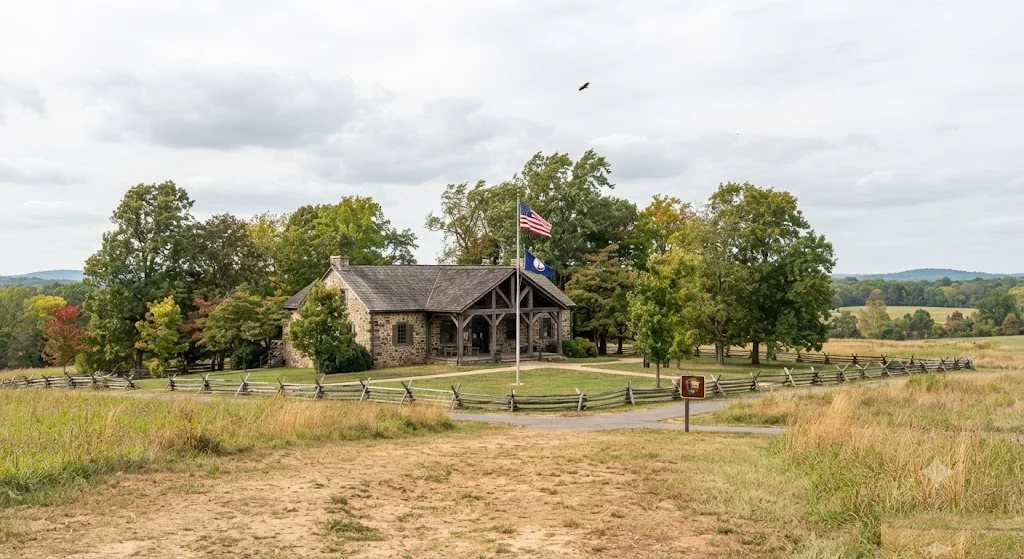
Manassas National Battlefield Park Travel Guide — Virginia
For those seeking a profound connection to America's past, a visit to Manassas National Battlefield Park Virginia is an essential journey. Our team at Roam States has meticulously compiled this guide to help you navigate the hallowed grounds where two pivotal Civil War battles, known as the Battles of Bull Run, dramatically reshaped the course of the nation. We cut through the noise to bring you the precise details you need for an impactful and seamless visit, from navigating the historic landscape to understanding its enduring legacy.
Why Visit Manassas National Battlefield Park
Manassas National Battlefield Park offers an unparalleled opportunity to walk the ground where the first major land battle of the Civil War unfolded, effectively shattering illusions of a swift conflict. Here, in 1861, the First Battle of Manassas (or First Bull Run) saw enthusiastic, yet largely untrained, armies clash, revealing the brutal reality of modern warfare. Just over a year later, the Second Battle of Manassas (Second Bull Run) cemented Confederate military prowess and set the stage for crucial campaigns.
Visiting this historic site allows us to grasp the immense human cost and strategic significance of these engagements. The park preserves nearly 5,100 acres of rolling Virginia countryside, maintaining much of the landscape as it appeared during the battles. It’s a place of quiet contemplation, where monuments, cannons, and wayside exhibits mark key positions and tell the stories of soldiers and civilians alike. Beyond its historical weight, the park also offers a unique natural escape, with extensive grasslands and diverse wildlife that thrive in the carefully maintained environment.
Who It's Best For
This destination is ideal for history enthusiasts, particularly those with a keen interest in the American Civil War. The depth of interpretive materials, from museum exhibits to ranger-led tours, provides rich context for understanding the battles. Educators and students will find it an invaluable outdoor classroom.
Beyond history buffs, Manassas National Battlefield Park appeals to outdoor adventurers. With over 40 miles of hiking and equestrian trails, it's a fantastic spot for walking, running, and horseback riding amidst a serene, historic landscape. Families with older children (we recommend ages 10 and up due to the film's content) will find engaging activities like the Junior Ranger program and interpretive programs that bring history to life. Nature lovers and birdwatchers will also appreciate the park's diverse ecosystems and abundant wildlife, including grassland species and migratory birds.
How to Get There
Manassas National Battlefield Park is conveniently located in Northern Virginia, approximately 30 miles west of Washington, D.C.
The primary entry point for most visitors is the Henry Hill Visitor Center, located at 6511 Sudley Road, Manassas, VA 20109. If you are driving from Washington, D.C., or areas east, you will typically take I-66 West to Exit 47 (Route 234 North/Sudley Road). The visitor center is approximately three-quarters of a mile north of this exit.
Parking at Manassas National Battlefield Park
Ample free parking is available at the Henry Hill Visitor Center. We recommend starting your visit here to gather maps and information. For those exploring other areas of the park, additional designated parking lots are available at key historical sites such as the Stone House, Sudley Road, Chinn Ridge, and Brawner Farm. Always park in designated spaces only to protect the historic landscape and ensure safety.
While the park is crisscrossed by city streets and highways, each tour stop has its own parking area. Be mindful of local traffic, especially during rush hour, which can impact travel times to and from the park.
Top Things to Do
There are a multitude of enriching things to do at Manassas National Battlefield Park, catering to various interests. Our team suggests prioritizing these experiences to fully immerse yourself in the park's history and natural beauty.
- Henry Hill Visitor Center: Begin your journey here. The center offers a museum with artifacts from both battles, a 6-minute electronic battle map program detailing troop movements, and the powerful 45-minute orientation film, "Manassas: End of Innocence." The film provides a vivid, albeit at times graphic, portrayal of the battles, recommended for visitors aged 10 and older. You can also pick up essential park brochures and trail guides here.
- Ranger-Led Programs: Join a park ranger for a walking tour. These programs offer in-depth insights into specific aspects of the First or Second Battle of Manassas, providing context and bringing the stories of the soldiers and civilians to life. Check the park's calendar for daily schedules.
- Self-Guided Driving Tours: Explore the expansive battlefield at your own pace. A 20-mile self-guided driving tour covers key sites of both battles, with interpretive stops along the way. For the Second Manassas battlefield, a twelve-stop tour is available, though many stops require short hikes to fully appreciate the historical context. An audio tour and booklet, the "Second Manassas Field Guide," is available for purchase at the Henry Hill Visitor Center.
- Visit Historic Structures: Explore significant sites like the Stone House, which served as a field hospital during both battles, and the Brawner Farm Interpretive Center, which focuses on the Second Battle of Manassas. Note that these buildings have seasonal hours; confirm their operating status with the Henry Hill Visitor Center before your visit.
- Picnicking: Enjoy a meal amidst the historic landscape. Picnicking is permitted in designated areas, such as the Brownsville Picnic Area.
- Junior Ranger Program: For younger visitors, the Junior Ranger program offers an engaging way to learn about the park's history and natural resources.
- Horseback Riding: Designated trails are available for horseback riding, offering a unique way to experience the battlefield.
These things to do at Manassas National Battlefield Park provide a comprehensive and moving experience for all visitors.
Manassas National Battlefield Park Hiking Trails
The extensive network of Manassas National Battlefield Park hiking trails offers unparalleled opportunities to explore the historic landscape on foot. With over 40 miles of trails crisscrossing the battlefield, visitors can choose routes ranging from short, easy loops to more extended, challenging hikes. These trails are not just for exercise; they are integral to understanding the battles, passing historic sites, artillery exhibits, cemeteries, and numerous wayside exhibits that narrate the events.
We highly recommend picking up a detailed trail map at the Henry Hill Visitor Center before setting out, as some sections of the Manassas National Battlefield Park hiking trails can be poorly marked. Key trails include:
- Henry Hill Loop Trail: This 1.1-mile loop explores the climactic fighting grounds of the First Battle of Manassas, with interpretive panels along the way.
- First Manassas Loop Trail: A more extensive 5.4-mile loop that takes you around the broader area of the first battle.
- Second Manassas Loop Trail: This 6.2-mile trail covers significant sites of the Second Battle of Manassas.
- Stone Bridge Loop Trail: A 1.3-mile loop that follows Bull Run, showcasing both historical significance and the park's biodiversity.
- Brawner Farm Loop Trail: Access this trail from the Brawner Farm parking area, offering insights into the first day of the Second Battle of Manassas.
- Chinn Ridge Loop Trail: A relatively level trail with compacted dirt, extending along Chinn Ridge and featuring markers about the Second Battle.
The trails are generally easy to moderate, with mostly smooth surfaces, making them popular even for runners. Remember to wear sturdy shoes, bring plenty of water, and be aware of ticks, especially during warmer months. Pets are welcome on the hiking trails but must be kept on a leash at all times. Bicycles, however, are prohibited on all trails.
Best Time to Visit
Choosing the optimal time to visit Manassas National Battlefield Park can significantly enhance your experience. Our team recommends considering the following:
- Spring (March to June): This is an excellent time to visit. Temperatures are mild, typically ranging from the 60s to 70s°F, and the battlefield comes alive with blooming wildflowers. It's ideal for hiking and exploring without the intense summer heat. Special events, such as the 163rd Anniversary of the First Battle, may also occur in late spring/early summer.
- Autumn (September to November): Fall offers vibrant foliage and crisp weather, with temperatures similar to spring. The changing leaves provide a beautiful backdrop to the historic landscape, and living history reenactments often take place during this season.
- Summer (July to August): While summer brings warmer temperatures (80s-90s°F) and humidity, it's a prime time for living history events and the anniversary of the First Battle of Manassas in July. If visiting in summer, plan your outdoor activities for the cooler morning hours and stay hydrated.
- Winter (December to February): The park is generally quieter in winter. While some interpretive buildings may have reduced hours or be closed, the grounds remain open from dawn to dusk. Winter offers a stark, reflective beauty to the landscape and can be excellent for cross-country skiing or sledding on specific slopes near the Stone House if snow conditions allow.
Overall, spring and autumn offer the most comfortable weather for extensive exploration, but each season provides a unique perspective on this significant historical site.
Where to Stay Nearby
While Manassas National Battlefield Park itself is a day-use park, there are numerous lodging options in the surrounding areas to suit various preferences and budgets.
- Manassas, VA: The city of Manassas is the closest urban center and offers a range of hotels, from budget-friendly to mid-range. You'll find familiar hotel chains and local establishments, along with dining options and other amenities.
- Gainesville, VA: Located just west of the park, Gainesville offers newer hotels and a variety of restaurants, often catering to travelers on I-66.
- Centreville, VA: To the east of the park, Centreville provides additional hotel choices and is a convenient option if you're traveling from the Washington, D.C. area.
- Fairfax, VA / Chantilly, VA: A bit further east, these larger suburban areas offer an even wider selection of accommodations, dining, and shopping, with easy access to the park via I-66.
For those looking to combine their historical exploration with other Virginia attractions, consider extending your stay to explore the wider region. Virginia is rich in history and natural beauty, from the solemn grounds of Arlington National Cemetery to the scenic vistas of the Blue Ridge Parkway. For a different kind of excitement, Busch Gardens Williamsburg is a popular choice further east. You can find more information on planning your trip to the state on our Best Places in Virginia guide.
Manassas National Battlefield Park Camping
It is important for visitors to know that general public camping is not permitted within Manassas National Battlefield Park. The park's primary mission is the preservation and interpretation of its historic and cultural resources, and camping activities are generally deemed incompatible with this purpose.
Camping within Manassas National Battlefield is only allowed under very specific circumstances, such as in association with a special event or public gathering for which a permit has been issued, or as part of a park-sponsored event or administrative function. Therefore, if you are planning to visit and wish to stay overnight in a campground, you will need to look for accommodations outside the park boundaries.
Nearby options for camping can be found in surrounding state parks or private campgrounds in Prince William County and beyond. We recommend researching campgrounds in the broader Northern Virginia region, such as Prince William Forest Park (approximately 19 miles away), or other state parks in Virginia. These facilities offer a range of camping experiences, from tent sites to RV hookups, allowing you to enjoy the natural beauty of the area while still being within a reasonable driving distance of Manassas National Battlefield Park.
Sample 2-Day Itinerary
To fully appreciate the depth and breadth of Manassas National Battlefield Park, we recommend a two-day visit. This allows ample time to explore both major battlefields without feeling rushed.
Day 1: First Manassas (Henry Hill)
- Morning (9:00 AM - 1:00 PM): Arrive at the Henry Hill Visitor Center. Watch the "Manassas: End of Innocence" film and explore the museum exhibits, including the electronic battle map. Pick up a park map and trail guide. Join a ranger-led walking tour of Henry Hill, or take the self-guided 1.1-mile Henry Hill Loop Trail to understand the climactic moments of the First Battle.
- Lunch (1:00 PM - 2:00 PM): Enjoy a picnic at the Brownsville Picnic Area or grab a meal at a nearby restaurant in Manassas or Gainesville.
- Afternoon (2:00 PM - 5:00 PM): Continue your exploration of the First Manassas battlefield. Hike the longer 5.4-mile First Manassas Loop Trail, which encompasses more of the initial engagements, or drive to and walk around the Stone House, a crucial landmark during the battle.
- Evening: Check into your accommodation in Manassas or a nearby town.
Day 2: Second Manassas (Brawner Farm & Driving Tour)
- Morning (9:00 AM - 1:00 PM): Begin your day at the Brawner Farm Interpretive Center (check seasonal hours). Explore its exhibits and the electronic map focusing on the Second Battle of Manassas. From here, take a ranger-led walk or hike the Brawner Farm Loop Trail to understand the fierce fighting that initiated the second conflict.
- Lunch (1:00 PM - 2:00 PM): Enjoy lunch in the area.
- Afternoon (2:00 PM - 5:00 PM): Embark on the 20-mile self-guided driving tour of the Second Manassas battlefield. Utilize the "Second Manassas Field Guide" audio tour for detailed narration as you drive to stops like Deep Cut, Chinn Ridge, and Stuart's Hill. Take short walks at each stop to read wayside exhibits and appreciate the terrain. Consider hiking portions of the 6.2-mile Second Manassas Loop Trail if time and energy permit.
- Late Afternoon: Before departing, you might revisit the Henry Hill Visitor Center for any final questions or to browse the park store.
This itinerary provides a comprehensive overview, but feel free to adjust it based on your interests and available time.
Is It Worth Visiting?
Without a doubt, Manassas National Battlefield Park is worth visiting for anyone with an interest in American history, particularly the Civil War. Our team considers it a premier historical destination that offers profound insights into a pivotal period of the nation's past.
The park's ability to transport visitors back in time, allowing them to walk the very fields where history was made, is truly impactful. The well-preserved landscape, combined with excellent interpretive materials, ranger programs, and extensive hiking trails, creates a rich and engaging experience. Furthermore, the fact that Manassas National Battlefield Park is worth visiting is underscored by its status as a fee-free park, making this significant historical site accessible to all.
Virginia Is For Lovers, the official state tourism website, highlights the park as a must-see for its historical significance and ongoing preservation efforts. The recent victory in halting destructive data center development adjacent to the park further affirms its irreplaceable value and the collective commitment to maintaining its serene atmosphere and historical integrity for future generations. This commitment ensures that the park remains a vital place for reflection and learning, far from generic tourist traps.
Frequently Asked Questions (FAQs)
What are things to do in Manassas?
In Manassas National Battlefield Park, you can explore the Henry Hill Visitor Center, watch the park film, take ranger-led or self-guided tours of the First and Second Battlefields, hike over 40 miles of trails, visit historic structures like the Stone House and Brawner Farm, and enjoy picnicking. Beyond the park, the city of Manassas offers a historic downtown with shops, restaurants, and local events.
Is Manassas National Battlefield Park with kids a good idea?
Yes, visiting Manassas National Battlefield Park with kids can be a very educational experience, especially for older children. The park's orientation film is recommended for ages 10 and up due to battle scenes. Younger children can still enjoy the open spaces, walking shorter trails, and participating in the Junior Ranger program. We recommend focusing on interactive elements and ranger programs to keep them engaged.
What are some Manassas National Battlefield Park tips for visitors?
Our top tips for visiting Manassas National Battlefield Park include: starting at the Henry Hill Visitor Center for maps and orientation, wearing comfortable shoes for walking, bringing water, checking the park calendar for ranger programs and seasonal building hours, and using a trail map for hiking. Remember that bicycles are prohibited on trails, and pets must be leashed.
Where is Manassas National Battlefield Park parking available?
Parking is available at the Henry Hill Visitor Center, which serves as the main entry point. Additional designated parking lots are located at key sites throughout the park, including the Stone House, Sudley Road, Chinn Ridge, and Brawner Farm. Always park in designated spaces.
What is the best time to visit Manassas National Battlefield Park?
The best time to visit Manassas National Battlefield Park is during spring (March to June) or autumn (September to November) for mild temperatures and pleasant outdoor conditions, ideal for hiking and exploring. Summer can be hot and humid but offers living history events.
What are the Manassas National Battlefield Park hours and fees?
The park grounds of Manassas National Battlefield Park are open daily from dawn until dusk. The Henry Hill Visitor Center is open daily from 9:00 AM to 5:00 PM, except for Thanksgiving, Christmas Eve, Christmas Day, December 26th, and New Year's Day. There is no entrance fee to Manassas National Battlefield Park.
Conclusion
Manassas National Battlefield Park stands as a powerful testament to a pivotal era in American history. Our team believes that a visit here is more than just a trip; it's an immersive educational experience that deepens one's understanding of the Civil War and its profound impact. From the solemn battlefields to the informative visitor centers and extensive hiking trails, the park offers a rich tapestry of history and natural beauty. We encourage you to plan your journey to this irreplaceable national treasure and connect with the stories etched into the very landscape of Manassas National Battlefield Park Virginia.
Last updated: 2026-07-12 by the Roam States team.