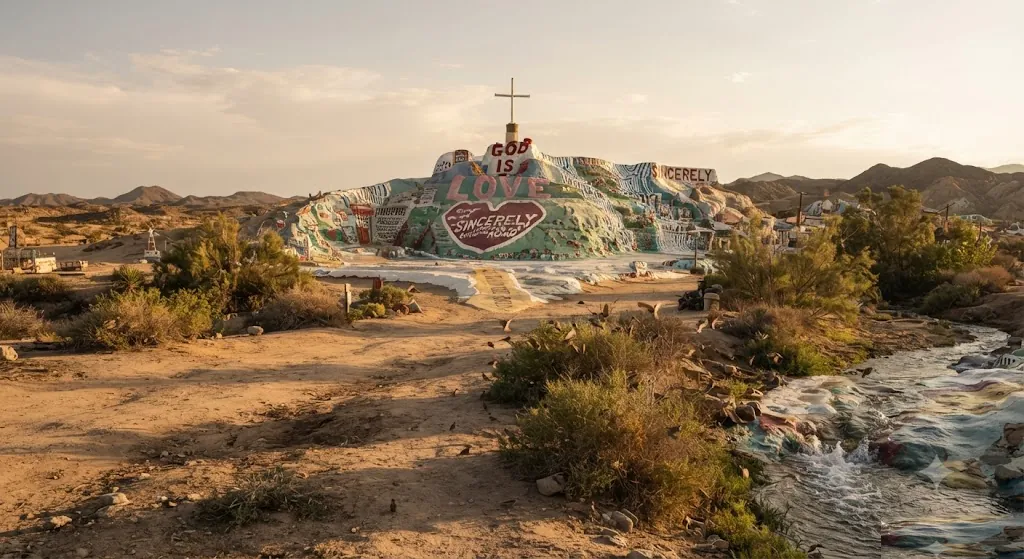
Salvation Mountain Travel Guide — California
Our Salvation Mountain guide covers practical planning for Salvation Mountain California — best time to visit, getting there, and what to do on the ground. We’re here to help you navigate this vibrant, colorful art installation in the Colorado Desert, created by Leonard Knight as a tribute to God's love, featuring biblical verses and painted messages.
Why Visit Salvation Mountain
Salvation Mountain is more than just a roadside attraction; it's a profound statement of faith and an extraordinary example of outsider art. For over 30 years, Leonard Knight dedicated his life to building this monumental tribute to God's love, using adobe clay, donated paint, and salvaged materials. The result is a sprawling, technicolor landscape that commands attention in the stark beauty of the Imperial Valley desert.
We believe that visiting Salvation Mountain offers a truly unique cultural experience. It's a place where vibrant folk art meets a powerful, yet simple, message: "God Is Love". The mountain is adorned with biblical verses, the Sinner's Prayer, and countless depictions of flowers, trees, waterfalls, and bluebirds, all contributing to its whimsical and awe-inspiring atmosphere. It's a testament to one man's unwavering passion and dedication, a legacy now maintained by Salvation Mountain, Inc., a non-profit organization ensuring its preservation for future generations.
So, is Salvation Mountain worth visiting? Absolutely. Its sheer scale—50 feet high and 150 feet wide—and the intricate detail of its painted surfaces are truly captivating. Even if you're not religious, the artistic merit and the inspiring story behind its creation make it a compelling stop. It's often described as a "candy-colored fantasy world" and a "photogenic spot" that stands in stark contrast to its desert surroundings. Many visitors find it to be a profoundly strange, beautifully accessible, and unforgettable experience. We recommend it for anyone seeking an off-the-beaten-path destination that offers both visual spectacle and a touching human story.
Who It's Best For
Salvation Mountain appeals to a diverse range of travelers, making it a unique stop for many. Our team finds it particularly suited for:
- **Art Enthusiasts:** Those with an appreciation for folk art, outsider art, or large-scale installations will be mesmerized by Leonard Knight's singular vision and the sheer volume of paint and dedication involved. Every inch of the mountain offers intricate details and vibrant colors to explore.
- **Road Trippers:** If you're on a USA road trip planner through Southern California, especially en route to or from destinations like Joshua Tree National Park or Palm Springs, Salvation Mountain makes for an excellent and memorable detour. It's an ideal stop for those who love quirky, off-the-beaten-path attractions.
- **Photographers and Content Creators:** The vibrant colors and unique textures of Salvation Mountain provide an incredibly "Instagrammable" backdrop. The interplay of light and shadow on the painted surfaces offers endless creative opportunities, especially during the golden hours of sunrise or sunset.
- **Spiritual Seekers:** For those who resonate with its message of "God Is Love" and appreciate a non-denominational expression of faith, the mountain offers a peaceful and inspiring atmosphere.
- **Families with Older Children:** While not a traditional playground, the bright colors and unique structures can capture the imagination of children. We recommend guiding them to respect the artwork and stick to designated paths.
- **Anyone Seeking the Unusual:** If you're tired of generic tourist traps and crave something truly original and thought-provoking, Salvation Mountain delivers an experience unlike almost anything else in the United States.
It's important to note that the desert environment can be harsh, so visitors should be prepared for heat and dust. However, for those seeking an authentic and visually stunning encounter with American folk art, Salvation Mountain is an unparalleled destination.
Getting There & Parking
Understanding how to get to Salvation Mountain is key to a smooth visit, as it's located in a remote part of the Colorado Desert, just outside Niland, California, in Imperial County. There is no public transportation directly to the site, so driving is essential.
The address for Salvation Mountain is 603 Beal Road, Niland, CA 92257. You can typically input "Salvation Mountain" into your GPS, and it will guide you there.
Here are common driving distances and times to help you plan how to get to Salvation Mountain:
- From Palm Springs: Approximately 84 miles, 1.5 hours.
- From Joshua Tree National Park: Approximately 115 miles, 2 hours.
- From San Diego: Approximately 150 miles, 2.5 hours.
- From Los Angeles: Approximately 188 miles, 3 hours.
The drive often involves taking Highway 111 south to Niland, then turning east onto Main Street, which eventually becomes Beal Road. Salvation Mountain will appear on your right after about 3-5 miles. You'll pass through the small community of Slab City, known as the "last free place in America," just before reaching the mountain.
**Parking:** Parking at Salvation Mountain is free and readily available on-site. You can park in the designated dirt areas around the mountain. We advise staying in marked areas and respecting any painted or display areas by at least 10 feet. There is typically plenty of room to park safely.
**Important Considerations for the Drive:**
- **Vehicle Condition:** The roads leading to Salvation Mountain can be rough, so ensure your vehicle is in good condition. High-clearance vehicles are recommended by some, though many standard cars make the trip.
- **Fuel and Supplies:** Salvation Mountain is deep in the desert, with limited services nearby. We strongly recommend filling up your gas tank and bringing plenty of water and snacks before you leave a larger town like Indio or Brawley.
- **Roadside Assistance:** Cell service can be spotty in remote desert areas, so be prepared for potential lack of connectivity.
Upon arrival, you'll find the mountain impossible to miss, standing out vividly against the desert backdrop.
Top Things to Do
When you arrive at this remarkable site, you'll discover a wealth of visual wonders. Here are the top things to do at Salvation Mountain:
- **Explore the Main Mountain:** The centerpiece of the attraction, the main mountain is a massive adobe mound covered in vibrant, hand-painted religious messages and symbols. We recommend taking your time to walk around its base, admiring the intricate details, biblical verses, and recurring "LOVE" theme. The sheer scale and dedication are truly impressive.
- **Walk the Yellow Brick Road:** Follow the iconic "Yellow Brick Road" that winds its way up and around the mountain. This designated path allows you to ascend parts of the structure and gain different perspectives of the artwork. From higher vantage points, you can see for miles across the desert landscape. Please note that some sections of the mountain, including certain upper levels and interior corridors, may be closed for preservation and repairs, so always stick to the marked paths.
- **Visit the "Museum" and Hogan:** Attached to the side and rear of the main mountain, you'll find a "museum" area composed of several domed structures. These unique spaces, supported by tree-like structures made from salvaged materials, contain more of Knight's murals and intricate designs. The hogan, a traditional Native American dwelling, was another structure Leonard built. Exploring these areas gives you a deeper sense of the artist's vision and the immersive nature of his work.
- **Photograph the Artwork:** Salvation Mountain is a photographer's dream. The vivid colors, unique textures, and desert backdrop create stunning photo opportunities. We encourage you to capture the various murals, sculptures, and messages, but remember to respect the art and avoid climbing on fragile structures or defacing the artwork.
- **Learn About Leonard Knight's Story:** Volunteers are often on-site and can provide insights into Leonard Knight's life and the ongoing preservation efforts. Reading about his dedication and the message he sought to spread enriches the experience of seeing his masterpiece. The official website, SalvationMountain.org, also offers a wealth of information.
- **Appreciate the Surrounding Environment:** While the mountain itself is the main draw, take a moment to appreciate its setting in the vast Colorado Desert. The contrast between the colorful art and the muted desert tones is striking.
While Salvation Mountain hiking trails are not a primary feature of the site itself, the surrounding desert offers opportunities for exploration. Many visitors combine their trip with visits to nearby natural attractions like Anza-Borrego Desert State Park or the Salton Sea, where more traditional hiking can be found. However, at Salvation Mountain, the focus is on appreciating the art on foot. Most people spend between 30 minutes to an hour exploring the site.
Best Time to Visit
To truly enjoy your experience at Salvation Mountain, timing your visit is crucial. Our team highly recommends planning your trip during the cooler months of the year to avoid the extreme desert heat.
The best time to visit Salvation Mountain is generally from **October to April**. During these months, the temperatures are much more pleasant, making it comfortable to walk around and explore the outdoor art installation. Expect daytime temperatures to be mild and enjoyable, ideal for photography and leisurely exploration.
Conversely, we strongly advise against visiting between **May and September**. The summer months in the Colorado Desert can be brutally hot, with temperatures often soaring between 105°F and 120°F (40°C-49°C). Such extreme heat can make your visit uncomfortable and even unsafe, especially with limited shade available on site.
Regardless of the season, we recommend visiting **early in the morning** or **late in the afternoon**.
- **Mornings (sunrise to mid-morning):** This is often the best time for photography, with softer light and fewer crowds. The desert air is also at its coolest.
- **Late Afternoons (pre-sunset):** The golden hour light can beautifully illuminate the mountain's vibrant colors, creating a magical glow. However, be mindful of sunset times to ensure you have enough daylight to explore fully.
Salvation Mountain is open daily from sunrise to sunset, 365 days a year, and admission is free. While it's always accessible, visiting on a weekday might offer a quieter experience compared to weekends and holidays, which can attract more visitors. Keep in mind that the desert environment is dusty and sandy, so closed-toe shoes are a practical choice, and bringing plenty of water, sunscreen, and a hat is essential year-round.
Where to Stay Nearby
Given its remote desert location, finding Salvation Mountain lodging requires a bit of planning. While there are no hotels directly adjacent to the art installation, several towns within a reasonable driving distance offer accommodations. Our team has identified the best options for Salvation Mountain lodging, ranging from budget-friendly hotels to unique desert stays.
The closest towns with traditional lodging options include Niland, Calipatria, Westmorland, Brawley, and El Centro. Niland itself is only a few minutes' drive from Salvation Mountain, but choices are minimal.
Here are some recommended areas and specific hotels for Salvation Mountain lodging:
**Closest Options (within 10-20 miles):**
- **Calipatria:** The Calipatria Inn And Suites is a budget-friendly option located just 8 miles from Salvation Mountain. It offers a relaxed ambiance and is pet-friendly.
- **Westmorland:** Americas Best Value Inn Westmorland is about 16 miles from Salvation Mountain. This hotel is known for its welcoming atmosphere and is also pet-friendly, offering essential amenities for travelers.
**Wider Selection (within 30-60 miles):**
- **Brawley:** Brawley offers more choices, including the Brawley Inn, Best Western Plus Main Street Inn, and Days Inn by Wyndham Brawley. These hotels provide a range of amenities and are good bases for exploring the wider Imperial Valley.
- **El Centro/Imperial:** For a broader selection of hotels and more amenities, El Centro and Imperial are excellent choices, though they are further out (around 45-60 minutes drive). Options include the Cambria Hotel El Centro - Imperial and Travelodge by Wyndham Imperial/El Centro.
**Unique Stays & Camping:**
- **Bombay Beach:** This quirky, artistic community on the Salton Sea, about 15 miles from Salvation Mountain, offers unique vacation rentals and RV camping options. You might find "safari-style RVs" or "surreal art houses" for a memorable experience.
- **Slab City Camping:** For the adventurous, camping is permitted in Slab City, the off-grid community adjacent to Salvation Mountain. While not on the mountain itself, you can find a spot nearby. It's a free camping experience, but be prepared for minimal facilities and a truly "off-the-grid" environment. We recommend respecting existing campsites and being self-sufficient.
- **Palm Springs:** Many visitors choose to make Salvation Mountain a day trip from Palm Springs, which offers a wide array of upscale hotels and resorts. While a longer drive (1.5 hours), it provides a comfortable base with many dining and entertainment options.
When considering Salvation Mountain lodging, we advise booking in advance, especially during peak season (October to April), as options can be limited in this remote region. Always check recent reviews and amenities to ensure they meet your travel needs.
Sample 2-Day Itinerary
While Salvation Mountain itself can be explored in a few hours, its remote location makes it an ideal anchor for a longer exploration of the unique Southern California desert. Our team suggests a 2-day itinerary to fully appreciate the area's eccentric charm and natural beauty, minimizing driving time and maximizing discovery.
Day 1: Art, Off-Grid Living, and the Salton Sea
- Morning (Sunrise – 10:00 AM): Arrive at Salvation Mountain California
Start your day early to catch the best light for photos and avoid crowds. Dedicate 1-2 hours to exploring Leonard Knight's masterpiece. Walk the Yellow Brick Road, marvel at the vibrant murals, and visit the "museum" and hogan areas. Take plenty of photos and soak in the unique atmosphere.
- Late Morning (10:00 AM – 12:00 PM): Explore Slab City & East Jesus
Just a mile down the road from Salvation Mountain is Slab City, an off-grid community known as "the last free place in America". Drive through to experience its unique culture and makeshift art installations. Don't miss East Jesus, an outdoor sculpture garden made from discarded materials, offering another fascinating display of outsider art.
- Lunch (12:00 PM – 1:00 PM): Local Eats in Niland or Packed Lunch
Grab a casual lunch in Niland, or, as services are limited, we highly recommend packing a picnic to enjoy amidst the desert landscape or at a scenic spot near the Salton Sea.
- Afternoon (1:00 PM – 4:00 PM): Salton Sea & Bombay Beach
Head west to the Salton Sea, a fascinating and somewhat eerie inland lake. Visit Bombay Beach, an abandoned resort town on the eastern shore, famous for its art installations, decaying structures, and the "Bombay Beach Drive-In" featuring old cars as cinema seats. The stark beauty and post-apocalyptic vibe make for incredible photography. You can also visit the Sonny Bono Salton Sea National Wildlife Refuge Visitor Center for birdwatching and easy trails.
- Late Afternoon/Evening: Check into Accommodation
Drive to your chosen lodging in Calipatria, Westmorland, Brawley, or El Centro. Settle in and enjoy dinner at a local establishment.
Day 2: Desert Parks or Hot Springs Relaxation
- Morning (8:00 AM – 12:00 PM): Option A - Anza-Borrego Desert State Park
For nature lovers, a visit to Anza-Borrego Desert State Park is a must. It's about an hour's drive from Niland. Explore slot canyons, palm oases, and look for the famous metal sculptures scattered throughout Borrego Springs. We recommend focusing on a specific area like Borrego Palm Canyon for a scenic hike, or driving the Badlands Loop for impressive desert vistas.
- Morning (8:00 AM – 12:00 PM): Option B - Hot Mineral Springs & Relaxation
If relaxation is more your style, head to one of the nearby hot mineral spas, such as Bashford's Hot Mineral Spa, located at the base of the Chocolate Mountains. Enjoy a rejuvenating soak in the healing mineral waters. Many of these spas also offer RV campgrounds and other amenities.
- Lunch (12:00 PM – 1:00 PM):
Enjoy lunch in Borrego Springs if you chose Option A, or at your hot springs resort/nearby town if you chose Option B.
- Afternoon (1:00 PM – 4:00 PM): Return Journey or Further Exploration
Begin your journey back to your next destination, or if time permits and you chose Option A, explore more of Anza-Borrego, perhaps visiting the Galleta Meadows Metal Sculptures in Borrego Springs. If you chose Option B, enjoy more leisure time at the hot springs or explore a nearby town like Brawley.
This itinerary offers a comprehensive look at the unique attractions surrounding Salvation Mountain, ensuring a memorable desert adventure. Remember to pack plenty of water, sunscreen, and snacks for all your desert explorations, and always check for current conditions and operating hours.
Last updated: 2026-07-13 by the Roam States team.