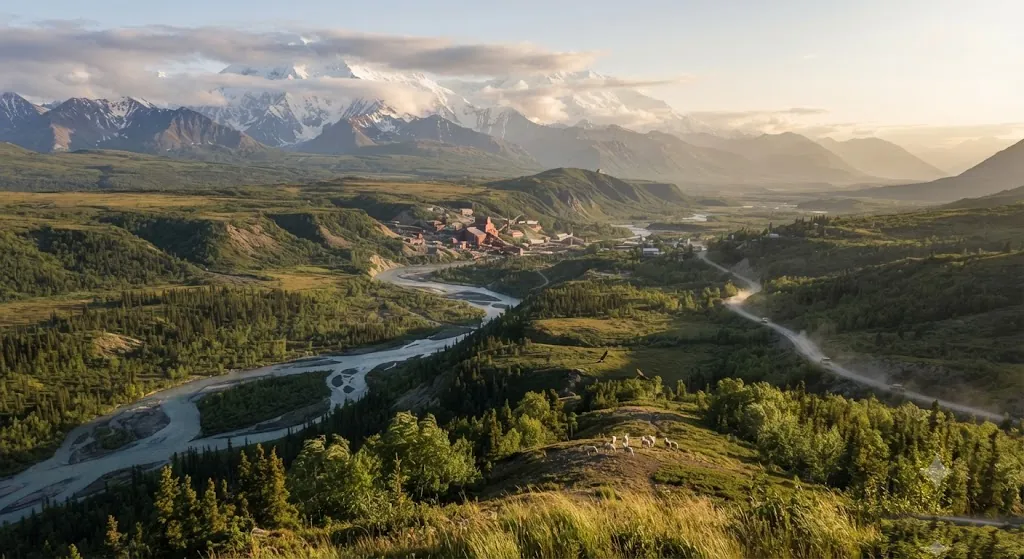
Welcome to the heart of America's largest national park. Our team at Roam States is dedicated to providing you with the most accurate and inspiring travel information, and when it comes to raw, untamed wilderness, nothing compares to Wrangell-St. Elias NP Alaska. This isn't your average national park experience; it's an immersive journey into a landscape of colossal mountains, active volcanoes, and immense glaciers. We've compiled this comprehensive guide to help you navigate its vastness and uncover its unparalleled beauty, ensuring your Alaskan adventure is nothing short of epic.
Why Visit Wrangell-St. Elias NP
Wrangell-St. Elias National Park and Preserve is a place of superlatives. It's the largest national park in the United States, spanning 13.2 million acres—an area equivalent to Yellowstone, Yosemite, and Switzerland combined. This immense wilderness is home to four major mountain ranges, including the Wrangell and Chugach Mountains, and boasts nine of the 16 highest peaks in the U.S., with the towering 18,008-foot Mount St. Elias being the second tallest. You'll find over 3,000 glaciers here, an active volcano, and a boreal forest that plays a significant role in carbon storage. It's a place where the land rises dramatically from the ocean to over 18,000 feet, offering landscapes unique to North America.
For those seeking genuine wilderness and a profound connection with nature, Wrangell-St. Elias delivers. It's a park designed for maximum wilderness preservation with minimal visitor infrastructure, rewarding the prepared traveler with unparalleled solitude and adventure. Whether you're drawn to its geological grandeur, its rich mining history, or the sheer scale of its wild spaces, a visit here is an unforgettable encounter with the raw power of Alaska.
Who It's Best For
Wrangell-St. Elias National Park is ideal for adventurous travelers who appreciate remote, untamed landscapes and are prepared for self-sufficient exploration. It's perfect for:
- Backpackers and Hikers: With countless miles of off-trail terrain, alpine ridges, glacial valleys, and river crossings, it's a backpacker's paradise. Guided backpacking trips are available for those looking to delve deep into the wilderness.
- Outdoor Enthusiasts: Activities like glacier hiking, ice climbing, packrafting, mountain biking, and flightseeing are popular here.
- History Buffs: The Kennecott Mines National Historic Landmark offers a fascinating glimpse into Alaska's copper mining past.
- Wildlife Viewers: The park's diverse ecosystems provide opportunities to spot Dall sheep, bears, moose, caribou, and eagles.
- Photographers: The dramatic landscapes, from towering peaks to vast glaciers and vibrant fall colors, offer extraordinary photographic opportunities.
This park is not for those seeking paved roads, extensive visitor amenities, or a quick drive-through experience. It requires preparation, a spirit of adventure, and an appreciation for the wild. However, for those willing to embrace its ruggedness, Wrangell-St. Elias offers a truly authentic Alaskan experience.
How to Get There
Getting to Wrangell-St. Elias National Park requires planning, as it's one of Alaska's most remote and least-visited national parks. The park has no entrance fee, and public lands are open year-round, though visitor centers operate seasonally.
Driving to Wrangell-St. Elias NP Alaska
There are two main roads providing access to the park: the McCarthy Road and the Nabesna Road. Both are gravel roads maintained by the State of Alaska and are open year-round, though winter maintenance is infrequent.
- McCarthy Road: This approximately 60-mile gravel road begins at mile 33 of the Edgerton Highway in Chitina. It follows the historic Copper River and Northwestern Railway route, leading to McCarthy and Kennecott. While most passenger vehicles can make the trip under normal summer conditions, the road is unpaved, with rough terrain, potholes, and remnants of railroad ties. Many rental car companies do not permit their vehicles on this road, so check your rental agreement carefully. An advisory speed limit of 35 mph is often in effect. The drive takes at least 2.5 hours one way. Services like gas stations and cell coverage are unavailable along the road, so fuel up in Glennallen, Kenny Lake, or Chitina. At the end of McCarthy Road, vehicles must park at a designated lot near the Kennicott River footbridge for a fee. From there, you can cross the footbridge and use a shuttle system or bicycle to reach McCarthy (half a mile) and Kennecott (5 miles). The McCarthy Road is typically open for public travel and regular maintenance from early spring through mid-fall, usually until October 1. Travelers can check real-time road conditions at 511.alaska.gov.
- Nabesna Road: Located in the northern part of the park, this 42-mile unpaved road begins at mile 60 of the Glenn Highway (Tok Cutoff). It offers views of the Wrangell, Mentasta, and Nutzotin Mountains. High-clearance or four-wheel-drive vehicles are often recommended, especially in June and early July due to creek crossings where water levels can rise after rainfall. The posted speed limit is 35 mph. There is no fuel available in Slana or along the Nabesna Road, so travelers should fuel up in Chistochina, approximately 28 miles south. Before heading out, stop at the Slana Ranger Station for current road and trail conditions.
Flying to Wrangell-St. Elias NP Alaska
For those looking to save time or experience the park from a different perspective, flightseeing tours and air taxis are available. You can fly to McCarthy from Chitina, or arrange bush plane drop-offs for backcountry adventures.
Parking at Wrangell-St. Elias NP
As Wrangell-St. Elias National Park does not charge an entrance fee, parking fees are generally associated with privately owned businesses operating within the park. Specifically, there is private overnight parking available for a fee at mile 60 at the Kennicott River Bridge, about half a mile west of McCarthy town.
Top Things to Do
Wrangell-St. Elias National Park offers an incredible array of activities, from exploring historic sites to embarking on challenging wilderness expeditions. Here are some of the top things to do at Wrangell-St. Elias NP:
- Hike Root Glacier: This is a must-do for many visitors. The Root Glacier Trail is a well-maintained 4-mile hiking trail from the main street in Kennecott. It's one of the few glaciers where you can still walk onto the ice yourself without being required to book a tour, though guided experiences are highly recommended for safety. Guided half-day hikes are available, where you can strap on crampons and explore features like crevasses, blue pools, and moulins. The hike offers incredible views of the glacier and surrounding peaks like Mt. Blackburn and Regal Mountain.
- Explore Kennecott Mines National Historic Landmark: Step back in time by visiting the abandoned copper mining town of Kennecott, a National Historic Landmark. You can explore many of the well-preserved buildings on your own, or take a guided tour to get inside the impressive 14-story Concentration Mill.
- Take a Flightseeing Tour: To truly grasp the immense scale of Wrangell-St. Elias, a flightseeing tour is an unparalleled experience. Soaring over towering peaks and vast glaciers offers breathtaking perspectives that are otherwise impossible to achieve. Many visitors consider this a "must-do" if their budget allows.
- Visit McCarthy: This quaint frontier town, located half a mile from the end of McCarthy Road, serves as a jumping-off point for many park adventures. Explore the McCarthy-Kennicott Historical Museum to learn about the area's rich past. You'll also find lodging, dining, and a unique local atmosphere here.
- Go Ice Climbing or Packrafting: For a more adventurous experience, guided ice climbing on the glaciers or packrafting among icebergs on glacial lakes are available. These activities offer an intimate and thrilling encounter with the park's icy landscapes.
- Backcountry Adventures: For experienced adventurers, Wrangell-St. Elias is a prime destination for multi-day backpacking and packrafting trips into its vast, seldom-explored wilderness. Outfitters offer guided expeditions ranging from rugged traverses to basecamp explorations.
- Scenic Drives: The journeys along McCarthy Road and Nabesna Road are attractions in themselves, offering expansive scenery and opportunities for wildlife viewing. Along McCarthy Road, you can see historic sites like the Gilahina Trestle and cross the Kuskulana Bridge.
These things to do at Wrangell-St. Elias NP provide a diverse range of experiences, from accessible historical tours to challenging wilderness expeditions, ensuring something for every type of adventurous traveler.
Wrangell-St. Elias NP Hiking Trails
For hikers, Wrangell-St. Elias National Park offers a range of experiences, from well-maintained trails to challenging off-trail routes. The most popular and accessible of the Wrangell-St. Elias NP hiking trails is the Root Glacier Trail, which is approximately 4 miles long (one way) from Kennecott to the glacier. This trail is relatively moderate and allows hikers to walk directly onto the glacier, often with the aid of crampons during guided tours.
For those seeking a more strenuous challenge, the Bonanza Mine Trail is an excellent option. This 8-mile round trip hike from Kennecott involves a significant elevation gain of 4,000 feet, but rewards hikers with impeccable views of the glacier and valley below, as well as the ruins of the Bonanza Mine. Another challenging option is the Jumbo Mine Trail, which is slightly longer and includes a creek crossing.
Beyond these established paths, the park is largely a wilderness of unmaintained trails and off-trail hiking. Guided backpacking trips often involve traversing alpine ridges, glacial valleys, and river crossings, requiring a good level of fitness and experience. The Nabesna Road area also offers various day hiking and backpacking opportunities, such as the Caribou Creek Trail and the Copper Lake Trailhead. Remember that backcountry permits are not required for hiking or camping in the backcountry, but restrictions apply to large groups.
Best Time to Visit
The best time to visit Wrangell-St. Elias National Park is generally from June through August, which is considered the only fully accessible season. During these months, the weather is typically mild and warm, with temperatures in McCarthy reaching 22-24°C (72-75°F) in July and August. The McCarthy Road is usually open by late May, though conditions can vary. June also offers the phenomenon of the midnight sun, providing near-continuous daylight for extended exploration and photography.
The shoulder seasons of June and September can offer good value with fewer crowds and potentially better prices. However, by September, the weather can deteriorate rapidly, with snowfall possible at Kennecott elevations by mid-month. Despite this, early September brings extraordinary fall colors, with gold and red tundra against glacier blue, creating stunning photographic opportunities.
From October through May, the McCarthy Road often becomes impassable, and the park is essentially closed to most visitors, with limited services and facilities available. Only hardy individuals with extreme expedition experience typically visit during the winter months, often arriving by ski plane.
Park visitor centers, including the main Wrangell-St. Elias Visitor Center in Copper Center, operate seasonally. For 2026, the Copper Center Visitor Center is open daily from May 11 to September 20, from 9 a.m. to 5 p.m. The Kennecott Visitor Center is open daily from May 23 to September 13, from 9 a.m. to 5 p.m.
Where to Stay Nearby
Given the remote nature of Wrangell-St. Elias National Park, lodging options are concentrated in specific areas or require a degree of self-sufficiency. Our team recommends planning your accommodations well in advance, especially during the peak summer season.
- McCarthy and Kennecott: These are the primary hubs for visitors exploring the heart of the park. McCarthy offers more budget-friendly and rustic options, while Kennecott, located 5 miles further, is home to the historic Kennicott Glacier Lodge. Options like Ma Johnson's Hotel in McCarthy offer a unique historic stay. Shuttles connect McCarthy and Kennecott.
- Copper Center Area: Located near the park's main visitor center, Copper Center and nearby Glennallen offer a range of accommodations including bed and breakfasts, lodges, and RV parks. The Copper River Princess Lodge is situated on the edge of the park, about six miles south of the visitor center. Wrangell View RV Park, near the park entrance, offers full hookups and stunning mountain views. Reservations for their 2026 season opened on January 1, 2026.
- Nabesna Road Area: Lodging along the Nabesna Road is limited and rustic, catering to travelers comfortable with remote travel. You'll find several campsites, public-use historic cabins (some requiring reservations), and a couple of privately operated lodges. Kendesnii Campground at Mile Post 27.8 is the only NPS campground in the park.
For those interested in guided expeditions, many outfitters, such as Expeditions Alaska, Kennicott Wilderness Guides, and Chugach Mountain Institute, offer package trips that may include lodging or basecamp setups.
Sample 2-Day Itinerary
While we recommend spending at least three days to fully appreciate Wrangell-St. Elias, a well-planned two-day itinerary can provide a memorable glimpse into its wonders. This itinerary focuses on the McCarthy-Kennecott area, which offers the most accessible and iconic experiences.
Day 1: Journey to Kennecott & Glacier Exploration
- Morning (Travel to McCarthy/Kennecott): Begin your journey from Anchorage or Glennallen, driving the scenic yet rugged McCarthy Road. Remember to check road conditions at 511.alaska.gov before you depart. Park your vehicle at the designated lot near the Kennicott River footbridge (for a fee) and take the shuttle or walk the half-mile into McCarthy. From McCarthy, take another shuttle (or walk the 5 miles) to Kennecott.
- Afternoon (Root Glacier Hike): Upon arrival in Kennecott, join a guided half-day hike onto the Root Glacier. This is a truly unique experience, allowing you to walk on the ice with crampons and explore glacial features. Guides will provide all necessary equipment and ensure your safety.
- Evening (Kennecott Exploration & Dinner): After your glacier adventure, explore the historic Kennecott Mill Town. Consider a guided tour of the 14-story Concentration Mill to learn about its fascinating past. Enjoy dinner at one of the lodges in Kennecott or take the shuttle back to McCarthy for more dining options.
Day 2: McCarthy History & Flightseeing
- Morning (McCarthy Exploration): Start your day exploring the charming town of McCarthy. Visit the McCarthy-Kennicott Historical Museum to delve deeper into the region's history. Wander through the town, soak in the unique atmosphere, and perhaps grab a coffee or breakfast.
- Late Morning/Afternoon (Flightseeing Tour): This is often cited as a highlight of any Wrangell-St. Elias trip. Book a flightseeing tour from the McCarthy airstrip. These tours offer unparalleled aerial views of the park's vast glaciers, towering peaks, and braided rivers, giving you a true sense of its immense scale.
- Late Afternoon (Departure): After your flight, begin your journey back out of the park. Take the shuttle from McCarthy to the footbridge parking lot, and then drive the McCarthy Road back towards Chitina and beyond.
This itinerary provides a balance of guided adventure, historical immersion, and breathtaking scenic views. Remember to book tours and accommodations in advance, especially during peak season.
Last updated: 2026-07-13 by the Roam States team.