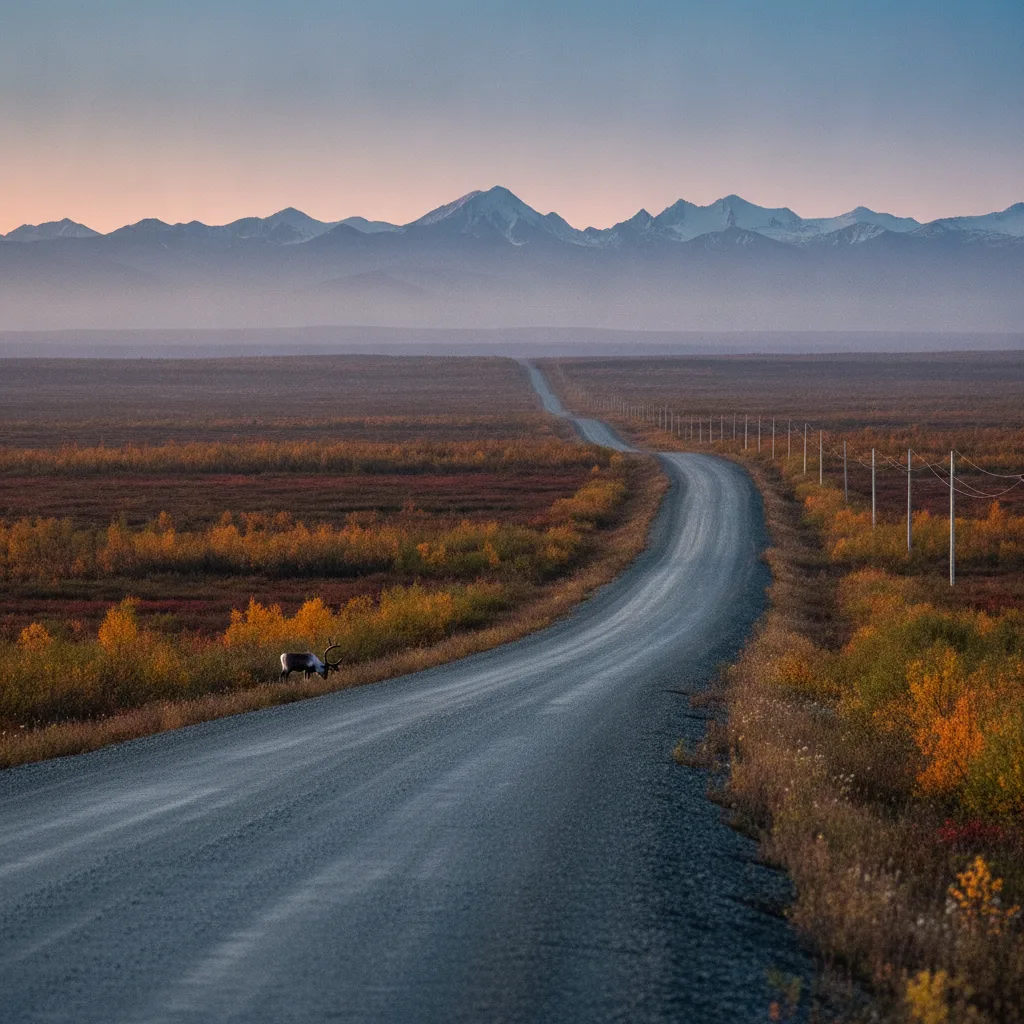
Our Dalton Highway (James W. Dalton Highway) guide covers practical planning for Dalton Highway (James W. Dalton Highway) Alaska — best time to visit, getting there, and what to do on the ground.
Dalton Highway (James W. Dalton Highway) Travel Guide — Alaska
The Dalton Highway (James W. Dalton Highway) Alaska is not just a road; it's an epic journey into the heart of the Alaskan wilderness, a 414-mile (666 km) stretch of mostly gravel that parallels the Trans-Alaska Pipeline and crosses the Arctic Circle. This rugged route, often referred to by locals and truckers as "The Haul Road," challenges drivers with its isolation, unpredictable conditions, and limited services, offering an unparalleled adventure through some of North America's most remote landscapes. Our team at Roam States has traversed these wild expanses, and we're here to provide the confident, specific guidance you need to prepare for this extraordinary drive, ensuring your trip is as safe and rewarding as possible.
Why Visit Dalton Highway (James W. Dalton Highway)
Visiting the Dalton Highway (James W. Dalton Highway) is about embracing the raw, untamed spirit of Alaska. It’s a pilgrimage for those who crave true wilderness, a place where the scale of nature is breathtaking and human presence is minimal. We come here for the profound sense of accomplishment that comes with conquering one of the world's most challenging roads, a route that takes you deep into boreal forests, over the majestic Brooks Range, and across the Arctic Circle.
The highway offers unparalleled opportunities to witness the engineering marvel of the Trans-Alaska Pipeline up close, a constant companion for much of the journey. Wildlife abounds, with chances to spot caribou, moose, bears, and even Dall sheep in their natural habitats. For photographers, the ever-changing light, from the midnight sun of summer to the ethereal glow of the aurora borealis in colder months, provides endless inspiration. This isn't a casual drive; it's an immersive experience that tests your limits and rewards you with memories that will last a lifetime.
Who It's Best For
The Dalton Highway is unequivocally for the intrepid, the self-reliant, and those with a deep respect for the wild. It's best suited for experienced drivers comfortable with gravel roads, challenging conditions, and long stretches without services. Overlanders, adventure motorcyclists, and dedicated nature enthusiasts will find this route particularly appealing. It's a destination for those who prioritize solitude and raw natural beauty over amenities and creature comforts. If you thrive on meticulous planning, enjoy navigating remote terrain, and are prepared for potential vehicle issues far from assistance, then the Dalton Highway is calling your name.
This journey is not for those seeking a pampered vacation. Cell service is virtually non-existent for most of the route, and medical facilities are hours away. Travelers must be prepared for extreme weather, from summer dust and mud to winter ice and snow, which can occur any month of the year north of Coldfoot. If you're looking for an "easy" Alaskan road trip, we suggest exploring other incredible destinations like Denali National Park & Preserve or Kenai Fjords National Park. But if you're ready for the ultimate frontier challenge, the Dalton Highway delivers.
Getting There & Parking
To embark on your Dalton Highway (James W. Dalton Highway) adventure, you'll first need to reach Fairbanks, Alaska, which serves as the primary gateway. From Fairbanks, drive north on the Steese (AK-6) and Elliott (AK-2) Highways. At Elliott Highway Mile 73.1, stay right to get onto the Dalton Highway (AK-11), which officially begins at Livengood, approximately 84 miles north of Fairbanks.
Regarding how to get to Dalton Highway (James W. Dalton Highway), it's crucial to understand that most major rental car companies in Alaska prohibit driving their vehicles on the Dalton Highway due to its rugged nature. We strongly recommend renting from specialized companies that permit and equip vehicles for this route, such as GoNorth, Alaska 4x4 Rentals, Arctic Outfitters, or Alaska Auto Rental. A 4x4 or AWD vehicle with high clearance is highly advisable, especially if you anticipate rain or winter conditions. Always carry at least one, preferably two, full-size spare tires, along with a jack and tire-changing tools.
For Dalton Highway (James W. Dalton Highway) parking, formal parking lots are scarce outside of the few designated stops like Yukon River Camp, Coldfoot Camp, and Deadhorse. Along the majority of the highway, you'll find numerous pullouts and turnoffs where you can safely stop. If you plan to park overnight for camping, ensure you pull well off the road, at least 10 feet, and are not blocking any pipeline access roads or Department of Transportation maintenance stations. Remember that this is primarily an industrial corridor, and trucks have the right of way; always be mindful of their movements.
Top Things to Do
The Dalton Highway offers a unique array of experiences that go far beyond a typical road trip. Our team has identified these as the essential things to do at Dalton Highway (James W. Dalton Highway) and things to do in Fairbanks to Prudhoe Bay.
- Cross the Arctic Circle: This is a quintessential Dalton Highway experience. At Mile 115, you'll find the iconic Arctic Circle sign, a mandatory photo opportunity and a significant milestone in your journey into the true Arctic. There's also an Arctic Circle Campground nearby.
- Witness the Trans-Alaska Pipeline: Running parallel to the highway for much of its length, the 800-mile Trans-Alaska Pipeline is an engineering marvel. You'll have countless opportunities to view and photograph this vital piece of Alaskan infrastructure.
- Visit Coldfoot Camp: Located at Mile 175, Coldfoot Camp is often considered the halfway point and the world's northernmost truck stop. It offers fuel, a cafe with a full menu, lodging, tire repair, and a post office. It's also home to the Arctic Interagency Visitor Center, a valuable resource for information on the region's history, environment, and recreation opportunities.
- Explore Wiseman: Just a short detour off the highway at Mile 188, Wiseman is a historic gold rush town established in 1907 with a population of about 12. It offers a glimpse into remote Alaskan living and some lodging options.
- Conquer Atigun Pass: At Mile 244, you'll cross Atigun Pass, the highest point on the Dalton Highway at 4,739 feet (1,444 m) and the continental divide of the Brooks Range. This area is known for its dramatic scenery and potential wildlife sightings, including Dall sheep. Be prepared for steep grades and potentially challenging conditions.
- Reach Prudhoe Bay/Deadhorse: The northern terminus of the Dalton Highway is Deadhorse, the industrial hub for the Prudhoe Bay oilfields. While public access to the Arctic Ocean is restricted, many hotels in Deadhorse offer guided tours of the oil fields and access to the Arctic Ocean. Reservations for these tours are essential.
- Camping and Hiking: The BLM maintains several developed campgrounds along the Dalton, including Five Mile Campground (Mile 60), Arctic Circle Campground (Mile 115), Marion Creek Campground (Mile 180), and the spectacular Galbraith Lake Campground (Mile 275). These offer basic amenities like pit toilets and potable water. From Galbraith Lake, you can hike into the Arctic National Wildlife Refuge.
- Wildlife Viewing: Keep your eyes peeled for caribou, moose, bears, and various bird species. The vast, open landscapes provide excellent opportunities for spotting wildlife, especially in the tundra north of the Brooks Range.
Best Time to Visit
The best time to visit the Dalton Highway largely depends on your desired experience and tolerance for extreme conditions. We generally recommend the summer months, from **late May to early September**, for most travelers. During this period, you'll experience longer daylight hours, including the magical midnight sun north of the Arctic Circle, and generally "better" (though still challenging) road conditions. The Dalton Highway Express, a shuttle service, operates during these months, with its 2026 season running from June 2nd to August 30th.
However, "better" is a relative term on the Dalton. Summer still brings dust, potholes, and slick mud, especially after rain. North of Coldfoot, snow and ice can be encountered any month of the year. If you're seeking the aurora borealis, late August into September can offer a chance to see the northern lights while still having relatively accessible road conditions. For the truly adventurous, winter travel (November to April) is possible, but it comes with extreme challenges, including temperatures plunging below -50°F, heavy snow, ice, avalanches, and whiteouts. Winter travel requires specialized vehicles, studded tires or chains, and extensive preparation. Always check current road conditions via 511.alaska.gov before and during your trip.
Where to Stay Nearby
When planning your Dalton Highway (James W. Dalton Highway) lodging, it's crucial to understand that options are extremely limited, and advance reservations are highly recommended, especially during the busy summer months. The highway is renowned for its remoteness, with only a handful of places offering services and accommodations along its 414-mile length.
Your primary Dalton Highway (James W. Dalton Highway) lodging options include:
- Yukon River Camp (Mile 56): This truck stop offers basic inn accommodations with running water and generator-powered electricity, along with fuel and snacks. It's a convenient first stop north of Fairbanks.
- Coldfoot Camp (Mile 175): Often considered the main hub on the Dalton, Coldfoot Camp provides more extensive services. Here, you'll find an inn with rustic but clean rooms, some with private bath facilities, a full-service cafe, fuel, tire repair, and a post office. It's also the location of the Arctic Interagency Visitor Center. Coldfoot serves as an excellent base for exploring the central Brooks Range.
- Wiseman (Mile 188.6): A small, historic gold mining community, Wiseman offers limited lodging options, often in cabins or guesthouses, providing a truly authentic Arctic experience. These are typically very rustic and require advance booking.
- Deadhorse/Prudhoe Bay (Mile 414): At the northern end of the highway, Deadhorse primarily caters to oilfield workers but does offer hotel/camp accommodations for travelers. Deadhorse Camp is one such option, providing a comfortable stay for those reaching Prudhoe Bay. These facilities often include dining and can arrange tours to the Arctic Ocean.
For those preferring to camp, the Bureau of Land Management (BLM) maintains several developed campgrounds, including Five Mile, Arctic Circle, Marion Creek, and Galbraith Lake, which are generally open from late May through early September. These campgrounds offer basic amenities like pit toilets and potable water at some locations.
Before heading out, we recommend securing reservations for any lodging well in advance, especially for Coldfoot and Deadhorse, as availability is extremely limited. For those starting their journey, Fairbanks offers a wide range of hotels and services to stock up and get a good night's rest before hitting the Dalton.
Sample 2-Day Itinerary
While a full round trip of the Dalton Highway to Prudhoe Bay typically takes 4-5 days, we've crafted a focused 2-day itinerary that allows you to experience the essence of the Dalton Highway (James W. Dalton Highway) and cross the Arctic Circle, perfect for those with limited time or seeking a taste of this iconic road.
Day 1: Fairbanks to Coldfoot (approx. 259 miles / 6-7 hours driving)
Begin your day early in Fairbanks, ensuring your vehicle is fully fueled, stocked with food, water, and emergency supplies. Drive north on the Elliott Highway, transitioning onto the Dalton Highway at Livengood. Your first significant stop will be the Yukon River Camp at Mile 56, where you can refuel, grab a snack, and take in views of the impressive Yukon River Bridge.
Continue north, keeping an eye out for wildlife and the Trans-Alaska Pipeline. Around Mile 115, you'll reach the Arctic Circle sign. Stop here for photos and to receive your official Arctic Circle Adventure Certificate if you're on a guided tour. You can also explore the nearby Arctic Circle Campground.
Proceed through increasingly remote terrain, passing viewpoints like Gobbler's Knob (Mile 132) with views of the Brooks Range. Arrive at Coldfoot Camp (Mile 175) in the late afternoon. Check into your lodging at Coldfoot Camp. Spend the evening exploring the Arctic Interagency Visitor Center, enjoying a hearty meal at the truck stop cafe, and perhaps taking a short walk to stretch your legs.
Day 2: Coldfoot Exploration & Return to Fairbanks (approx. 259 miles / 6-7 hours driving)
After breakfast at Coldfoot Camp, you have a few options. You could take a short drive further north to Wiseman (Mile 188.6) to experience a historic gold rush village. Alternatively, spend more time at the Arctic Interagency Visitor Center, learning about the Gates of the Arctic National Park and the Arctic National Wildlife Refuge, both of which are accessible from this region (though typically requiring bush flights or extensive backcountry travel).
For those wanting to experience a bit more of the Brooks Range, you could drive a short distance past Coldfoot towards Atigun Pass, but be mindful of road conditions and time, as the full pass is a significant commitment. Remember, north of Coldfoot, services are non-existent for a 240-mile stretch.
By late morning, begin your drive south back to Fairbanks. The return journey offers different perspectives of the vast landscapes you encountered on the way north. Plan for another 6-7 hours of driving, arriving back in Fairbanks by evening. This itinerary provides a substantial taste of the Dalton Highway's unique challenges and rewards without requiring a full week.
Is It Worth Visiting?
The question "is Dalton Highway (James W. Dalton Highway) worth visiting?" is one we get often, and our answer is a resounding yes – for the right traveler. This is not a road for the faint of heart or those seeking a leisurely drive. It demands preparedness, resilience, and a deep appreciation for extreme wilderness. But for those who embrace its challenges, the rewards are immeasurable.
We believe that the Dalton Highway offers an unparalleled opportunity to experience a truly wild and remote part of Alaska, a journey that few undertake. The sense of adventure, the stunning landscapes, the unique wildlife encounters, and the sheer isolation combine to create an experience unlike any other. Crossing the Arctic Circle, witnessing the Trans-Alaska Pipeline, and navigating the rugged terrain of the Brooks Range are all bucket-list accomplishments.
However, it's crucial to reiterate that this journey requires meticulous planning, a well-maintained and appropriate vehicle, and a comprehensive understanding of the limited services available. If you're looking for a comfortable, paved drive with frequent amenities, then the Dalton Highway might not be for you. But if you're an adventurer at heart, seeking an authentic, challenging, and profoundly rewarding encounter with the Alaskan frontier, then yes, the Dalton Highway (James W. Dalton Highway) is absolutely worth visiting.
FAQ
Dalton Highway (James W. Dalton Highway) with kids
Traveling the Dalton Highway with kids is possible, but it requires significant preparation and realistic expectations. The long stretches of gravel, limited services, and potential for rough conditions mean it's not a trip for very young children or those who need constant entertainment. We recommend older children who can appreciate the unique landscapes and understand the remote nature of the journey. Pack plenty of snacks, drinks, entertainment, and be prepared for long hours in the vehicle. Consider shorter segments of the highway, such as a day trip to the Arctic Circle, rather than the full run to Prudhoe Bay. Emphasize the adventure, the wildlife spotting, and the educational aspects of the Trans-Alaska Pipeline and Arctic geography.
best hotels near Dalton Highway (James W. Dalton Highway)
The "best" hotels near the Dalton Highway are relative to its remote nature. They are typically rustic but clean accommodations designed for travelers and industrial workers. Your primary options for Dalton Highway (James W. Dalton Highway) lodging are Yukon River Camp (Mile 56), Coldfoot Camp (Mile 175), and Deadhorse/Prudhoe Bay (Mile 414). Coldfoot Camp is often highlighted for its central location, offering a cafe, fuel, and the Arctic Interagency Visitor Center. Wiseman (Mile 188.6) also offers limited, more intimate lodging options. We strongly advise making reservations well in advance, especially during the summer of 2026, as rooms are scarce.
Dalton Highway (James W. Dalton Highway) tips
Our top Dalton Highway (James W. Dalton Highway) tips include: **Prepare your vehicle meticulously:** A 4x4 or AWD is recommended, and carry at least one, preferably two, full-size spare tires, plus repair kits and tools. **Pack for self-sufficiency:** Bring extra fuel, food, water, a first-aid kit, and emergency supplies. **Communication is key:** Cell service is almost non-existent; carry a satellite phone or a CB radio (tuned to channel 19 for truckers). **Drive defensively:** Expect gravel, dust, mud, potholes, and heavy truck traffic. Always yield to commercial vehicles, slow down when passing, and keep headlights on. **Check conditions:** Consult 511.alaska.gov for current road and weather conditions before and during your trip. **Plan your stops:** Know where the limited fuel and services are located.
where to stay near Dalton Highway (James W. Dalton Highway)
Beyond the limited on-highway options, Fairbanks is the closest major city with a full range of accommodations, serving as the natural starting and ending point for your Dalton Highway adventure. Within the Dalton corridor, your choices are the Yukon River Camp (Mile 56), Coldfoot Camp (Mile 175), Wiseman (Mile 188.6), and Deadhorse/Prudhoe Bay (Mile 414). These are primarily basic inns or camps. For camping, the BLM maintains several campgrounds along the route, including Five Mile, Arctic Circle, Marion Creek, and Galbraith Lake.
Dalton Highway (James W. Dalton Highway) parking
Formal, designated parking areas are rare along the Dalton Highway outside of the main service points like Yukon River Camp, Coldfoot Camp, and Deadhorse. For the most part, Dalton Highway (James W. Dalton Highway) parking involves pulling over safely into one of the numerous informal pullouts or turnoffs along the road. It is imperative to pull completely off the main driving surface, at least 10 feet, to allow for the passage of large commercial trucks and to avoid creating hazards. Do not park on bridges, hills, curves, or at pipeline access points. If camping overnight, ensure your vehicle is well off the road and your camp is set up away from traffic.
best time to visit Dalton Highway (James W. Dalton Highway)
The best time to visit the Dalton Highway (James W. Dalton Highway) for most travelers is during the summer months, from **late May to early September**. This period offers the longest daylight hours, including the midnight sun, and the most favorable (though still challenging) road conditions. For those interested in guided tours, the Dalton Highway Express operates from early June to late August in 2026. While winter travel is possible for extreme adventurers, it brings severe cold, snow, ice, and increased risks. Spring and fall can offer a balance of fewer crowds and potential aurora viewing, but also more unpredictable weather and road conditions.
The Dalton Highway is a journey into the wild heart of Alaska, a road that demands respect and meticulous preparation. Our team at Roam States confidently asserts that for those seeking an unparalleled adventure, a true test of self-reliance, and an intimate encounter with the Arctic, this highway delivers. It's an experience that transcends mere sightseeing, offering a profound connection to one of the last great wildernesses on Earth. Prepare wisely, drive cautiously, and you'll be rewarded with an unforgettable expedition into the Alaskan frontier. Don't forget to explore more of what this incredible state has to offer, from the vast landscapes of Alaska to its iconic national parks like Denali National Park & Preserve and the stunning coastal beauty of Kenai Fjords National Park.
Last updated: 2026-07-05 by the Roam States team.