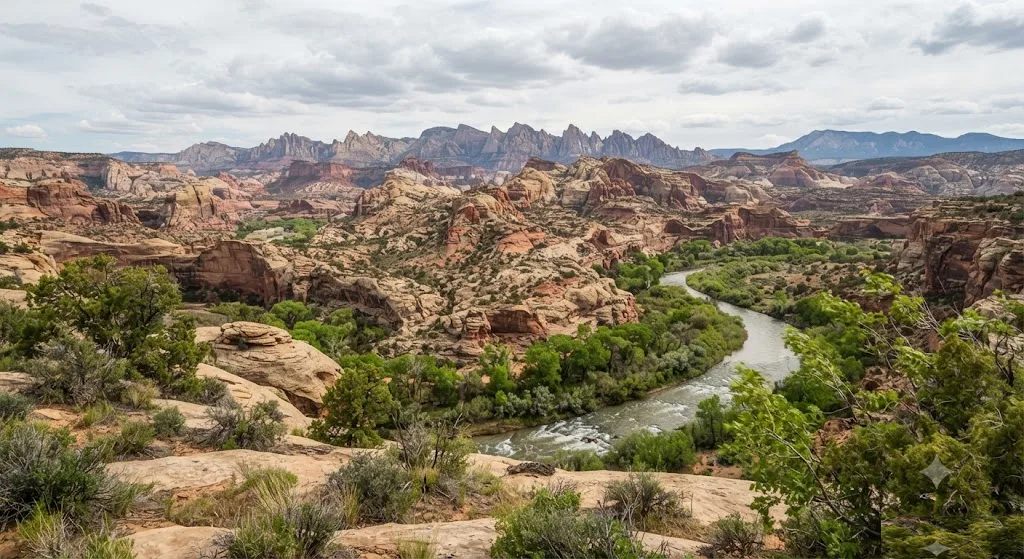
Grand Staircase-Escalante Travel Guide — Utah
For those seeking an unparalleled encounter with raw, untamed wilderness and a deep dive into Earth's ancient history, Grand Staircase-Escalante Utah stands as an undisputed titan. This monumental landscape, a designated national monument, is far more than just a scenic drive; it's a living geological textbook, a vast expanse of remote canyons, plateaus, and badlands that demands respect and rewards intrepid exploration. Our team at Roam States has compiled this definitive guide to help you navigate its immense beauty and plan an unforgettable journey.
Why Visit Grand Staircase-Escalante
Grand Staircase-Escalante National Monument is a place of staggering scale and profound scientific importance. We recommend it for its sheer geological grandeur, showcasing millions of years of Earth's history laid bare in a series of dramatic, multi-hued rock layers. This is where you'll find the "Grand Staircase" itself—a colossal sequence of sedimentary rocks stretching from the Grand Canyon in Arizona up through Zion and Bryce Canyon, culminating in the high plateaus of Utah. The monument is particularly renowned for its continuous paleontological discoveries, consistently yielding new insights into prehistoric life. It's a place where you can truly feel the immense power of geological time and witness landscapes largely untouched by human development. Beyond the science, it offers an escape into profound solitude, a chance to disconnect and immerse yourself in the quiet majesty of the American Southwest.
Who It's Best For
Grand Staircase-Escalante is not for the faint of heart, nor is it a drive-through park. We believe it's best suited for adventurous travelers, experienced hikers, and those with a strong sense of self-reliance. If you thrive on solitude, enjoy navigating by map and compass, and are prepared for challenging terrain and unpredictable conditions, this is your paradise. Backpackers, canyoneers, and serious photographers will find endless inspiration here. It's also a dream destination for geology enthusiasts and amateur paleontologists, offering a unique opportunity to witness ongoing scientific exploration. While families with older, adventurous children might enjoy certain accessible trails, those seeking paved paths, abundant facilities, or easy access to attractions might find it less accommodating. This is a destination for those who prefer to earn their views and relish the journey as much as the destination itself.
How to Get There & Parking
Reaching Grand Staircase-Escalante National Monument requires planning, as it's intentionally remote. The monument is bisected by two main scenic byways: Scenic Byway 12 (Highway 12), a designated All-American Road, runs east-west through the northern section, connecting the towns of Escalante and Boulder. Highway 89 runs along the southern boundary, linking Kanab to Page, Arizona. The monument's immense size means there isn't one single entrance; rather, access points are scattered along these highways and various unpaved roads leading into the interior.
From major hubs, consider the following approaches:
- From Salt Lake City, Utah: The drive is approximately 5-6 hours. We recommend heading south on I-15, then east on Highway 20 or Highway 12.
- From Las Vegas, Nevada: Expect a 4-5 hour drive. Take I-15 north, then Highway 9 east through Zion National Park (which requires an entrance fee and potential reservation) to Highway 89 north, or continue further north on I-15 to Highway 20 or Highway 12.
- From Phoenix, Arizona: The drive is roughly 6-7 hours. Head north on I-17 to Flagstaff, then east on US-89 to Page, Arizona, and then north on US-89 into the monument's southern reaches.
Parking throughout Grand Staircase-Escalante primarily consists of roadside pull-offs and small, undeveloped parking areas at trailheads. These are generally free of charge. For popular trailheads, especially those off Highway 12, spaces can fill up quickly during peak season. We strongly advise arriving early, particularly for well-known hikes. Always ensure your vehicle is completely off the main road and not obstructing any traffic. For deeper exploration, many backcountry roads require high-clearance, 4x4 vehicles. Be prepared for washboard conditions, deep sand, and potential flash flood hazards on these unpaved routes. Always check current road conditions with a visitor center before venturing onto unpaved roads. As of 2026, there are no specific parking fees for general access to the monument, but some developed recreation sites or specific trailheads might have day-use fees, though these are rare within the monument itself.
Top Things to Do
The sheer scale of Grand Staircase-Escalante offers an overwhelming array of experiences, from scenic drives to multi-day backcountry treks. Our team has distilled the essence of this vast wilderness into these essential things to do at Grand Staircase-Escalante:
- Scenic Drives: Highway 12, the "All-American Road," is a destination in itself. It winds through stunning landscapes, offering panoramic views of the monument's diverse geology. Don't miss the section between Escalante and Boulder, known as "The Hogback," where the road traverses a narrow ridge with steep drop-offs on both sides. Other notable drives include Hole-in-the-Rock Road (a challenging unpaved route leading to historic pioneer sites) and Cottonwood Canyon Road, offering access to slot canyons and unique geological formations.
- Hiking and Canyoneering: This is where Grand Staircase-Escalante truly shines. We'll delve deeper into specific Grand Staircase-Escalante hiking trails below, but know that options range from easy strolls to strenuous multi-day expeditions. The monument is also a world-class destination for canyoneering, with numerous slot canyons awaiting experienced adventurers. Always go with proper gear, a permit if required, and never enter a slot canyon if there's any chance of rain.
- Paleontology Exploration: The monument is a hotbed of paleontological discoveries. While active dig sites are typically restricted, you can visit interpretive displays at visitor centers to learn about the incredible dinosaur and ancient marine life fossils unearthed here. Keep an eye out for fossilized shells and plant imprints during your hikes, but remember that collecting fossils is strictly prohibited.
- Stargazing: With its remote location and minimal light pollution, Grand Staircase-Escalante offers some of the darkest night skies in the contiguous United States. We highly recommend setting aside an evening to simply look up and marvel at the Milky Way.
- Photography: From sweeping vistas to intricate slot canyon textures, the photographic opportunities are endless. Early morning and late afternoon light dramatically enhance the colors of the rock formations.
- Visitor Centers: Stop at one of the monument's visitor centers in Cannonville, Escalante, Big Water, or Kanab. Here, you can get up-to-date information on road conditions, trail closures, weather forecasts, and obtain maps and permits. The visitor centers are invaluable resources for planning your things to do at Grand Staircase-Escalante. As of 2026, typical operating hours for the main visitor centers are generally 8 AM to 4:30 PM daily, though these can vary seasonally, so it's wise to check the official Bureau of Land Management (BLM) website before your visit.
Grand Staircase-Escalante Hiking Trails
For those eager to lace up their boots, Grand Staircase-Escalante hiking trails offer an unparalleled connection to the landscape. Remember that many trails are unmarked or minimally signed, requiring strong navigational skills. Always carry plenty of water, a map, compass or GPS, and inform someone of your itinerary.
- Lower Calf Creek Falls Trail: This is one of the most popular and accessible Grand Staircase-Escalante hiking trails, a relatively easy 6.7-mile roundtrip hike to a stunning 126-foot waterfall cascading into a lush pool. It's an oasis in the desert and a fantastic option for families. The trailhead is located off Highway 12 between Escalante and Boulder.
- Escalante River Trail: Offering a different experience, this trail involves extensive wading and crossing the Escalante River. It provides access to numerous side canyons and natural arches, such as Phipps Arch and Escalante Natural Bridge. This is a multi-day backpacking opportunity for the prepared, but shorter out-and-back sections are possible.
- Peek-a-Boo and Spooky Gulch Slot Canyons: Located off Hole-in-the-Rock Road, these are iconic slot canyons known for their narrow passages and sculpted sandstone. Peek-a-Boo requires a short climb to enter, while Spooky is incredibly narrow, often requiring you to turn sideways. These are challenging and not for the claustrophobic.
- Devils Garden: An easily accessible area off Hole-in-the-Rock Road, featuring unique hoodoos, arches, and other weathered rock formations. It's a great spot for a short walk and photography.
- Willis Creek Slot Canyon: An easier slot canyon hike, often involving walking in shallow water. It's a good introduction to slot canyons and suitable for many skill levels. Access is via a dirt road off Skutumpah Road.
When exploring Grand Staircase-Escalante hiking trails, always be aware of weather conditions, especially the risk of flash floods in slot canyons. Permits are generally not required for day hikes, but overnight backcountry trips often necessitate a free permit from a visitor center or self-registration trailhead.
Grand Staircase-Escalante Camping
Experiencing the monument under a blanket of stars is an essential part of any visit. Grand Staircase-Escalante camping offers both developed campgrounds and extensive opportunities for dispersed camping.
- Developed Campgrounds:
- Calf Creek Campground: Located near Lower Calf Creek Falls, this small campground offers individual sites with picnic tables, fire rings, and vault toilets. It's a popular spot and operates on a first-come, first-served basis.
- Deer Creek Campground: Another small campground along Highway 12, offering similar amenities to Calf Creek.
- Escalante Petrified Forest State Park: While technically outside the monument, this state park near Escalante offers a more developed campground with hookups and amenities, along with hiking trails through petrified wood. Reservations are recommended, especially during peak season.
- Dispersed Camping: This is the most prevalent form of Grand Staircase-Escalante camping. It's permitted on most BLM lands within the monument, typically within 300 feet of designated routes. Look for existing campsites to minimize your impact. Always practice Leave No Trace principles: pack out everything you pack in, use a portable toilet or dig catholes at least 200 feet from water sources and trails, and avoid building new fire rings. Campfires may be restricted during dry periods, so check current fire restrictions. As of 2026, dispersed camping is free and does not require a permit, but adherence to Leave No Trace is critical.
Regardless of your chosen Grand Staircase-Escalante camping method, come prepared. There is no water, electricity, or cell service in many areas. Bring all the water you'll need, and be ready for self-sufficiency.
Best Time to Visit
The best time to visit Grand Staircase-Escalante is during the shoulder seasons of **spring (April-May)** and **fall (September-October)**. During these months, temperatures are generally mild and pleasant for hiking and exploration, typically ranging from 60-80°F (15-27°C) during the day. Wildflowers bloom in spring, and the autumn foliage, particularly along the Escalante River and in higher elevations, can be stunning.
Summer (June-August) brings intense heat, with daytime temperatures often exceeding 90-100°F (32-38°C). This makes strenuous activity risky and requires significant hydration planning. Summer also brings the monsoon season, typically from July through September, which can lead to dangerous flash floods in slot canyons and make unpaved roads impassable. Winter (November-March) offers solitude and unique photographic opportunities, but many roads may be impassable due to snow and ice, and temperatures can drop well below freezing. We generally advise against extensive backcountry exploration in winter unless you are experienced in cold-weather desert conditions and have appropriate gear.
Where to Stay Nearby
While the monument itself is largely undeveloped, several charming towns border its vast expanse, offering accommodations, supplies, and a base for your explorations. We recommend booking well in advance, especially during peak season.
- Escalante, Utah: Located on Scenic Byway 12, Escalante is arguably the most central hub for exploring the monument. It offers a range of motels, lodges, and vacation rentals, along with a few restaurants, gas stations, and a small grocery store. It's home to one of the monument's main visitor centers.
- Boulder, Utah: Further east on Highway 12, Boulder is a smaller, more secluded community known for its scenic beauty and access to the eastern parts of the monument. It has a few unique lodging options and excellent dining.
- Cannonville, Utah: Situated near the monument's western boundary and close to Bryce Canyon National Park, Cannonville has a visitor center and a few lodging and dining choices, making it a good base for exploring the western sections.
- Tropic, Utah: Just north of Cannonville and very close to Bryce Canyon, Tropic offers more amenities and lodging options, serving as a convenient base for exploring both the monument and Bryce.
- Kanab, Utah: Located on Highway 89 near the monument's southern boundary, Kanab is a larger town with more extensive services, including multiple hotels, restaurants, and supermarkets. It's a great base for exploring the southern reaches of the monument, as well as nearby destinations like Zion National Park and the Coral Pink Sand Dunes.
- Page, Arizona: While technically in Arizona, Page is a popular gateway town on the southern edge of the monument, particularly for visitors coming from the Grand Canyon or Lake Powell. It offers a wide range of accommodations and services.
For a truly immersive experience, consider a stay at one of the rustic lodges or cabins found in these smaller communities, offering a taste of authentic rural Utah hospitality.
Sample 2-Day Itinerary
This itinerary focuses on a mix of scenic drives and iconic hikes, assuming a base in Escalante or Boulder. Adjust as needed for your chosen base and interests.
Day 1: Scenic Byway 12 & Waterfalls
- Morning (8:00 AM): Start your day with a hearty breakfast in Escalante. Pick up any last-minute supplies, plenty of water, and check current conditions at the Escalante Interagency Visitor Center.
- Late Morning (9:30 AM): Drive east on Scenic Byway 12 towards Boulder. Enjoy the breathtaking views, especially along "The Hogback."
- Midday (10:30 AM): Arrive at the Lower Calf Creek Falls Trailhead. Embark on the 6.7-mile roundtrip hike to the stunning waterfall. Allow 3-4 hours for the hike, including time to relax at the falls.
- Afternoon (2:30 PM): After your hike, enjoy a picnic lunch or grab a bite in Boulder. Explore the small town and perhaps visit the Anasazi State Park Museum (Anasazi State Park Museum) for a glimpse into ancient Puebloan culture.
- Late Afternoon (4:30 PM): Drive back west on Highway 12, stopping at overlooks for different lighting conditions. Consider a short, easy walk at Escalante Petrified Forest State Park if time allows.
- Evening: Dinner in Escalante. Enjoy stargazing from your accommodation or a nearby pull-off.
Day 2: Slot Canyons & Backcountry Roads
- Morning (8:00 AM): Fuel up and pack a lunch. Head south on Hole-in-the-Rock Road from Escalante. This unpaved road requires careful driving and often a high-clearance vehicle.
- Late Morning (9:30 AM): Drive approximately 26 miles down Hole-in-the-Rock Road to the trailhead for Peek-a-Boo and Spooky Gulch Slot Canyons. This challenging loop hike can take 3-5 hours, depending on conditions and your comfort level with narrow spaces. Ensure you have appropriate gear and are not claustrophobic.
- Midday (2:00 PM): After the slot canyons, continue a short distance down Hole-in-the-Rock Road to visit Devils Garden, an area of whimsical hoodoos and rock formations perfect for a leisurely stroll and photography.
- Late Afternoon (4:00 PM): Begin your drive back to Escalante. Alternatively, if you're feeling adventurous and have a capable 4x4, consider exploring a section of Cottonwood Canyon Road (check conditions first) for a different perspective of the monument.
- Evening: Enjoy a well-deserved dinner and reflect on your Grand Staircase-Escalante adventure.
Our team finds that two full days provide a solid introduction to the monument's diverse offerings. However, to truly delve into its remote canyons and expansive wilderness, we recommend dedicating at least 4-5 days, especially for those interested in multi-day backpacking or extensive canyoneering. Consider combining your visit with other incredible Utah destinations like Bryce Canyon National Park or Capitol Reef National Park, both relatively close by along Scenic Byway 12. For more planning resources, we often refer to the official Visit Utah website.
Is It Worth Visiting?
Without a doubt, our team believes Grand Staircase-Escalante is worth visiting for the right kind of traveler. This isn't a destination for a quick photo op or a casual drive-through. It's a place that demands time, preparation, and a spirit of adventure. If you're seeking pristine wilderness, unparalleled geological formations, and a chance to disconnect from the modern world, then Grand Staircase-Escalante will exceed your expectations. Its vast, untamed beauty offers a profound sense of scale and solitude that few other places can match. For those who relish the challenge of navigating remote landscapes and finding beauty in the raw, unpolished corners of the earth, then yes, Grand Staircase-Escalante is absolutely worth visiting.
However, if your idea of a national park experience involves paved trails, frequent ranger programs, and readily available amenities, you might find Grand Staircase-Escalante less appealing. It requires self-sufficiency and a willingness to embrace the wild. For us, the rewards of exploring this magnificent monument far outweigh the challenges, offering an authentic and unforgettable encounter with the American West.
Last updated: 2026-07-13 by the Roam States team.