Welcome to our comprehensive Jeffers Petroglyphs Historic Site guide, designed by the Roam States editorial team. We cover practical planning for Jeffers Petroglyphs Historic Site Minnesota — including the best time to visit, how to get there, and what to do on the ground.
Discover thousands of ancient rock carvings, or petroglyphs, created by Native Americans over 7,000 years ago. This sacred site offers a profound connection to Minnesota's earliest inhabitants. Located in the heart of southwestern Minnesota, the Jeffers Petroglyphs Historic Site is a truly unique destination, preserving not only a remarkable collection of ancient art but also a vibrant tallgrass prairie ecosystem. We’ve explored this site extensively, and our team is here to share everything you need to know for a meaningful visit.
Why Visit Jeffers Petroglyphs Historic Site
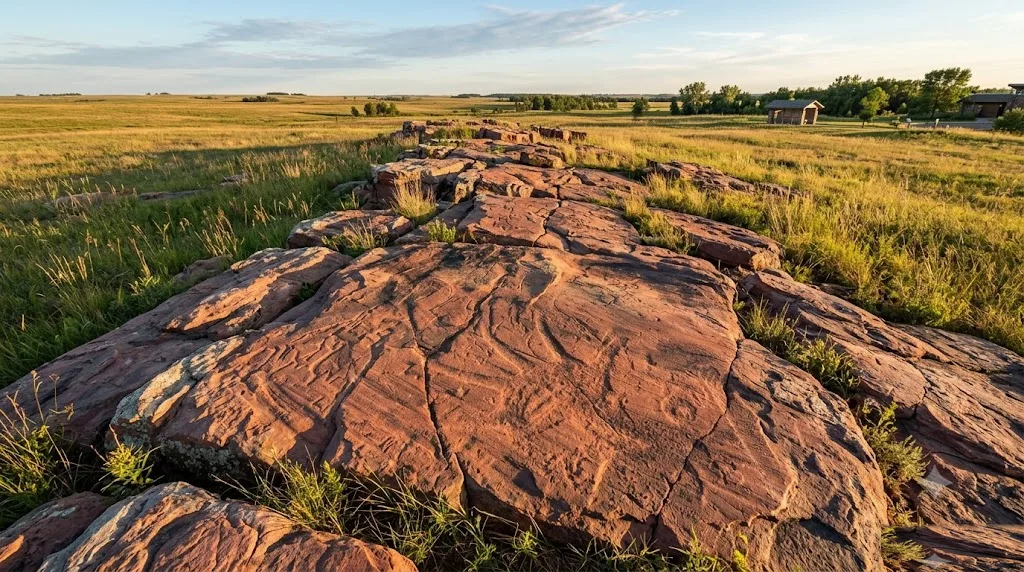
The Jeffers Petroglyphs Historic Site is far more than just a collection of old rocks; it's a living, breathing testament to thousands of years of human history and cultural continuity. We consider it one of Minnesota's most significant historical sites, offering an unparalleled glimpse into the lives, beliefs, and artistic expressions of Native Americans who inhabited this region for millennia. The site is home to approximately 5,000 sacred rock carvings, some dating back as far as 7,000 years, making them older than Stonehenge and the Egyptian pyramids. These carvings depict a rich tapestry of images, including humans, deer, elk, buffalo, turtles, thunderbirds, atlatls (spear-throwing devices), and arrows, each telling a piece of an ancient story.
What truly sets Jeffers apart is its profound spiritual significance. It's considered one of the world's oldest continuously used sacred sites. Modern descendants of the original carvers still consider the site powerful, viewing the petroglyphs as marks left by the Great Spirit. Visiting offers a rare opportunity to connect with this deep spiritual heritage and reflect on the enduring human connection to the land.
Beyond the petroglyphs themselves, the site encompasses a beautifully restored native prairie, teeming with over 250 species of grasses, wildflowers, and lichens. This ecological richness provides a stunning backdrop to the ancient art and offers additional opportunities for exploration and appreciation of Minnesota's natural heritage. We believe that experiencing the prairie, with its diverse flora and fauna, is an integral part of understanding the context in which these carvings were made.
Who It's Best For
The Jeffers Petroglyphs Historic Site caters to a diverse range of visitors, each seeking a unique experience. We find it particularly appealing to:
- History Buffs and Archaeology Enthusiasts: Those fascinated by ancient civilizations, Native American history, and archaeological discoveries will be captivated by the 7,000-year-old rock carvings and the stories they suggest. The interpretive center provides valuable context, and guided tours offer deeper insights into the archaeological significance of the site.
- Nature Lovers and Prairie Enthusiasts: The site is nestled within a vibrant tallgrass prairie, offering extensive trails for exploring diverse plant life, including over 250 species of grasses and wildflowers. Birdwatchers will also appreciate the opportunity to spot prairie birds like Dickcissels, Grasshopper Sparrows, Bobolinks, and Western Meadowlarks.
- Families with Curious Children: The interactive exhibits at the visitor center and the sheer wonder of discovering ancient art can spark a child's imagination. We recommend preparing younger visitors with some background on the petroglyphs to enhance their engagement. The open spaces of the prairie also provide room for kids to explore and burn off energy.
- Spiritual Seekers and Those Interested in Indigenous Cultures: For many, Jeffers is a sacred place. Visitors can experience a profound sense of connection to the past and the spiritual traditions of Native Americans. The site's serene atmosphere encourages contemplation and respect for indigenous heritage.
- Photographers: The unique rock formations, intricate carvings, and vast prairie landscapes offer incredible photographic opportunities, especially during the golden hours of dawn and dusk when the carvings are most visible.
While the site is largely outdoors and involves walking on uneven surfaces, the Minnesota Historical Society provides accessibility accommodations, including all-terrain wheelchairs and golf cart shuttles, ensuring that a wide range of visitors can experience the petroglyphs.
Getting There & Parking
Understanding how to get to Jeffers Petroglyphs Historic Site is crucial for a smooth journey to this somewhat remote but rewarding destination. The site is located in southwestern Minnesota, near the town of Comfrey. Its address is 27160 County Road 2, Comfrey, MN 56019.
Driving Directions:
We recommend planning your route in advance, as cell service can be spotty in some rural areas.
- From Minneapolis-St. Paul: There are a couple of routes. One option is to take US 169 South to Mankato, then MN 60 West to Bingham Lake. From there, turn North onto Cottonwood County Road 2 and continue for about 13 miles to the site. Another route involves taking US 212 West to Olivia, then turning left onto US Highway 71 South. Continue for about 35 miles, then turn left (east) onto Cottonwood County Road 10 for 3 miles. Finally, turn right onto Cottonwood County Road 2 for 1 mile to reach the site.
- From Sioux Falls, South Dakota: Take I-90 East to Worthington, then take MN Highway 60 East to Bingham Lake. Turn North onto Cottonwood County Road 2 and continue for 13 miles to the site.
For more detailed directions, we always recommend checking the official Minnesota Historical Society website or using GPS navigation.
Jeffers Petroglyphs Historic Site Parking:
Upon arrival, you'll find that Jeffers Petroglyphs Historic Site parking is straightforward and readily available. A gravel parking lot is provided free of charge for both cars and oversized vehicles, including buses. There is also one designated disability parking spot in the lot. The parking lot is approximately 300 feet from the visitor center. We've found the parking area to be ample, even on busier days, ensuring a stress-free start to your visit.
For visitors with mobility challenges, it's worth noting that while the parking lot is gravel, all-terrain wheelchairs are available on-site, and golf cart shuttles can transport guests to the rock outcropping upon request.
Top Things to Do
When planning your visit, you'll find plenty of things to do at Jeffers Petroglyphs Historic Site that immerse you in both ancient history and natural beauty. Our team has explored every corner to bring you the most rewarding experiences.
Explore the Petroglyphs
The primary draw, of course, is the rock carvings themselves. With over 5,000 individual petroglyphs, some dating back 7,000 years, this is a truly awe-inspiring collection. We highly recommend taking a guided tour to fully appreciate the carvings. Staff lead 45-minute walking tours, highlighting significant carvings and sharing insights from Native American Elders, along with historical and archaeological context. Guided tours are limited to 15 people and require in-person sign-up upon arrival.
If you prefer to explore at your own pace, self-guided tours are also available. You can pick up a self-guided tour booklet from the visitor center and follow the designated rope path on the rock face. Reservations are not necessary for self-guided tours, and visitors can arrive any time during open hours.
Pro Tip: The best time to view the carvings is at dawn and dusk, when the angle of the sun casts deep shadows that make the images appear more visible and almost three-dimensional. The site offers evening hours on Thursdays, Fridays, and Saturdays in the summer to facilitate optimal viewing. There are also special "Barefoot Walking Tours" in the evening, allowing visitors to explore beyond the roped path (socks are also permitted).
Hike the Prairie Trails
Surrounding the petroglyphs is a stunning expanse of native prairie, part of the larger Rock Ridge Prairie Scientific and Natural Area and Red Rock Prairie preserve. We encourage you to discover the trails through this native prairie, which boasts over 250 species of grasses, wildflowers, and lichens. These trails offer a chance to experience the landscape as ancient inhabitants would have, providing a peaceful and scenic walk. Keep an eye out for prairie wildlife, including various bird species.
Visit the Interpretive Center
Your visit should begin or end at the newly updated visitor center. Here, you'll find interactive exhibits that delve into Native American culture, prairie ecology, and the archaeology of the site. A recent update in 2026 introduced new displays, interactive elements, and multimedia installations, including a mural by Dakota artist Holly Young and a giant buffalo hide artwork by Sisseton Wahpeton Oyate artist Fern Cloud. This center provides crucial context and enhances your understanding of the petroglyphs and the people who created them.
Attend Special Events
The Jeffers Petroglyphs Historic Site frequently hosts special programs and events. These can include "Starry Night, Prairie Night" events, where amateur astronomers are invited to use the park's dark skies for stargazing. There are also sunrise tours that offer unique viewing opportunities of the carvings. Check the Minnesota Historical Society's website for a current schedule of events during your planned visit. For instance, in 2026, there is a "Free Admission Day" on Saturday, June 27, where visitors can explore the updated exhibit.
Things to do in Comfrey and Nearby
While the petroglyphs are the main attraction, there are a few things to do in Comfrey and the surrounding area if you're looking to extend your visit:
- Comfrey Community Days: If your visit aligns, Comfrey hosts "Comfrey Community Days" from July 10-13, 2026, offering local festivities.
- Sod House on the Prairie: Located nearby, this attraction offers a glimpse into pioneer life.
- Pipestone National Monument: About an hour west, this site features significant quartzite quarries and an interpretive center with petroglyphs that are often easier to see than those at Jeffers. It's a powerful companion visit for understanding the region's cultural significance.
- Blue Mounds State Park: Just north of Luverne, this park features dramatic cliffs of jagged quartzite and a bison herd. It's a great spot for hiking and experiencing more of Minnesota's unique prairie landscape.
- Laura Ingalls Wilder Museum (Walnut Grove): For fans of the "Little House on the Prairie" books, this museum offers a historical perspective on pioneer life in the region.
- Flandrau State Park (New Ulm): Offers camping, hiking, and access to the Cottonwood River.
Best Time to Visit
Choosing the best time to visit Jeffers Petroglyphs Historic Site can significantly enhance your experience, primarily due to weather conditions and the visibility of the carvings.
Summer (May through September)
We generally recommend visiting during the warmer months, as the site's visitor center is open from May through September. The peak season runs from late May through early September. For 2026, the visitor center is open Thursday through Sunday from May 28 to August 2, with specific hours: 10:00 AM - 8:00 PM Thursday-Saturday, and 11:00 AM - 5:00 PM on Sundays. From August 3 to September 6, 2026, hours remain similar, with extended evening hours on some days.
- Pros: This is when the prairie wildflowers are in bloom, creating a vibrant and colorful landscape. Guided tours are readily available, and the visitor center offers full programming. The warmer weather makes for comfortable exploration of the outdoor trails. Evening hours are specifically designed to allow visitors to see the carvings when the light is optimal.
- Cons: Summer can bring heat and humidity, and the site can be busier, especially on weekends.
Fall (September and October)
The early fall can also be a wonderful time to visit. For 2026, the site will be open Saturdays only from October 1 to October 17, from 10:00 AM to 5:00 PM. After October 17, the site closes for the season until the following spring.
- Pros: Cooler temperatures and fewer crowds make for a more peaceful visit. The prairie grasses turn golden, offering a different kind of beauty.
- Cons: Shorter operating hours as the season winds down.
Spring (April and May)
The site is generally closed for the season from November 1 to May 27, 2026, though it opens for field trips starting in April.
- Pros: Fresh prairie growth and potentially fewer visitors if you catch it just as it opens.
- Cons: Weather can be unpredictable, and full programming may not be in effect until late May.
Winter (November through March)
The Jeffers Petroglyphs Historic Site is closed for the season from November 1 to December 31, 2026. While the visitor center is closed, some sources suggest that visitors can still walk out to the petroglyphs even when the center is closed, and that winter, with the low arc of the sun, can be a good season for viewing the carvings. However, we strongly advise checking the Minnesota Historical Society's official site for current access information during the off-season, as conditions can be challenging.
Optimal Viewing Conditions
Regardless of the season, the absolute best times to see the carvings are at dawn and dusk. The low angle of the sun at these times creates shadows that make the subtle carvings stand out from the rock face. The site offers evening hours during the summer to take advantage of this, and even sunrise tours are available on select dates.
Where to Stay Nearby
Finding comfortable Jeffers Petroglyphs Historic Site lodging is an important part of planning your trip. While Comfrey itself is a small town, several nearby communities offer a range of accommodations, from budget-friendly motels to unique vacation rentals. We've scouted the best options to ensure you have a pleasant stay after a day of exploring ancient history.
Hotels and Motels
You'll find a selection of hotels and motels in towns within a reasonable driving distance of the Jeffers Petroglyphs Historic Site. These are generally located in slightly larger communities and offer standard amenities.
- Springfield, MN: Approximately 20-25 minutes drive.
- Microtel Inn & Suites by Wyndham Springfield: This is a highly-rated option, with many recent excellent reviews. It offers a comfortable stay with amenities like free breakfast and WiFi.
- Lamberton, MN: Approximately 20-25 minutes drive.
- OYO Hotel Lamberton Hwy 14: Another well-reviewed motel, praised for its cleanliness and value. It offers free WiFi and parking.
- Sleepy Eye, MN: Approximately 30-35 minutes drive.
- AmericInn by Wyndham Sleepy Eye: This hotel provides amenities like free continental breakfast and free WiFi.
- Windom, MN: Approximately 35-40 minutes drive.
- Red Carpet Inn: A budget-friendly motel with free continental breakfast, WiFi, and parking.
- AmericInn by Wyndham Windom: Offers an indoor pool, hot tub, free breakfast, and WiFi.
- New Ulm, MN: Approximately 45-50 minutes drive.
- Best Western Plus New Ulm: A business-friendly hotel with free breakfast, WiFi, and parking. Guests often praise the helpful staff.
- Microtel Inn & Suites by Wyndham New Ulm: Another option with free breakfast, WiFi, and parking.
- Harmony Inn: Offers a comfortable stay with good reviews.
- St. James, MN: Approximately 40-45 minutes drive.
- Super 8 by Wyndham St. James: Features an indoor pool and hot tub, along with free continental breakfast and WiFi.
When searching for Jeffers Petroglyphs Historic Site lodging, we recommend checking current prices and availability on sites like Expedia, Travelocity, or Hotels.com, as rates can vary. Many hotels offer flexible booking options and free cancellation.
Vacation Rentals and Unique Stays
For those seeking a more unique or private experience, vacation rentals are a fantastic option in the broader region. We've found several intriguing choices:
- "Cozy and quaint farmhouse on an acreage" (Mountain Lake, MN area): Praised for its peaceful setting.
- "Pioneer-Era Retreat in Sanborn w/ Museum Access" (Sanborn, MN): Offers a historical experience.
- "Split Rock Ranch" (Franklin, MN): A highly-rated farm stay with a private cabin overlooking the Minnesota River Valley, offering a peaceful retreat with fire pits and stargazing.
- "Lakefront! HotTub, Kayaks & Firepit" (Currie, MN): A guest suite with lake access, perfect for outdoor activities like kayaking and fishing, and near Shetek State Park.
- "1880 Norwegian Settlers Cabin" (Franklin, MN): For a true pioneer experience, this unmodernized cabin offers a rustic charm (no AC).
These types of accommodations can be found on platforms like Airbnb or through local tourism sites. They often provide a more immersive sense of place and are ideal for families or groups.
Sample 2-Day Itinerary
To help you make the most of your visit to the Jeffers Petroglyphs Historic Site and the surrounding area, our team has crafted a sample 2-day itinerary. This plan balances historical exploration with natural beauty and local charm.
Day 1: Immerse in Ancient History at Jeffers Petroglyphs
- Morning (10:00 AM - 1:00 PM): Arrival and Guided Exploration
- Arrive at the Jeffers Petroglyphs Historic Site (27160 County Road 2, Comfrey, MN 56019). Park in the free gravel lot.
- Head to the visitor center. We recommend starting here to gain context from the updated exhibits, which feature Native American art and interactive displays.
- Sign up for a guided tour of the petroglyphs. These 45-minute tours are invaluable for understanding the carvings and their significance.
- After the guided tour, spend some time exploring the rock face on a self-guided basis, using a booklet from the visitor center to spot additional carvings.
- Lunch (1:00 PM - 2:00 PM): Picnic on the Prairie
- Pack a picnic lunch to enjoy at one of the picnic areas at the site, surrounded by the native prairie. Alternatively, the visitor center may have light refreshments.
- Afternoon (2:00 PM - 5:00 PM): Prairie Trails and Reflection
- Walk the prairie trails, immersing yourself in the natural landscape. Look for wildflowers and listen for prairie birds like Dickcissels and Bobolinks.
- Spend some quiet time reflecting on the ancient history of the site and the spiritual connection to the land.
- Evening (5:00 PM - 8:00 PM): Optimal Carving Viewing & Dinner
- Take advantage of the site's evening hours (Thurs-Sat during summer) for optimal viewing of the petroglyphs as the sun sets, casting deep shadows that highlight the carvings. Consider participating in a "Barefoot Walking Tour" if available.
- Head to a nearby town like Springfield or Lamberton for dinner. Options may include local diners or casual restaurants.
- Check into your chosen accommodation in Springfield, Lamberton, or a nearby town.
Day 2: Regional Exploration and Natural Wonders
- Morning (9:00 AM - 12:00 PM): Pipestone National Monument
- After breakfast, drive approximately one hour west to Pipestone National Monument. This site is sacred to many Native American tribes, who quarry the red pipestone for ceremonial pipes.
- Explore the quarries, hike the Circle Trail to see the Winnewissa Falls, and visit the interpretive center to learn about the cultural significance of the pipestone and see additional petroglyphs.
- Lunch (12:00 PM - 1:00 PM): Lunch in Pipestone
- Enjoy lunch at a local eatery in the town of Pipestone.
- Afternoon (1:00 PM - 5:00 PM): Blue Mounds State Park or Sod House on the Prairie
- Option A: Blue Mounds State Park (near Luverne, approx. 30 minutes from Pipestone): Hike along the quartzite cliffs, look for the resident bison herd, and enjoy the vast prairie views. This is an excellent opportunity to experience more of Minnesota's unique natural landscapes.
- Option B: Sod House on the Prairie (near Sanborn, approx. 45 minutes from Pipestone, closer to Jeffers): Step back in time and experience life in a sod house, a common dwelling for early settlers on the prairie. This offers a different historical perspective on the region.
- Late Afternoon/Evening: Departure or Extended Stay
- Begin your journey home or choose to extend your stay to explore more of Southern Minnesota. You might consider visiting Flandrau State Park near New Ulm or the Laura Ingalls Wilder Museum in Walnut Grove.
Is It Worth Visiting?
As the Roam States editorial team, we can confidently say: Yes, is Jeffers Petroglyphs Historic Site worth visiting. This isn't just another stop on a road trip; it's a profoundly moving experience that offers a direct connection to Minnesota's deep past and the enduring legacy of Native American cultures. We believe it stands out as one of the most significant historical and cultural sites in the entire state, and indeed, the Midwest.
What makes it so compelling? First and foremost, the sheer age and volume of the petroglyphs are astounding. To stand before carvings that predate some of the world's most famous ancient monuments is a humbling experience. It's a place where you can literally touch history, feeling the grooves left by hands thousands of years ago. The stories etched into the Sioux quartzite, even if their full meaning is lost to time, speak volumes about the lives, beliefs, and artistic expressions of ancient peoples.
Beyond the carvings, the site's setting within a vibrant tallgrass prairie is equally captivating. It provides a crucial ecological context for understanding the lives of the early inhabitants and offers a beautiful natural escape. We've found that the combination of ancient art and pristine prairie creates a unique sense of peace and wonder that is hard to replicate elsewhere.
While some visitors might find the carvings subtle to see in bright sunlight, the Minnesota Historical Society has made significant efforts to enhance the visitor experience. The newly updated visitor center provides excellent interpretive materials, and the availability of guided tours, evening viewing hours, and special sunrise tours ensures that everyone has an opportunity to appreciate the petroglyphs under optimal conditions. Accessibility features, such as all-terrain wheelchairs and golf cart shuttles, further ensure that the site is welcoming to a broad audience.
We believe that a visit to Jeffers Petroglyphs Historic Site offers a unique blend of historical education, cultural immersion, and natural beauty. It's a place that sparks curiosity, encourages reflection, and leaves a lasting impression. If you're looking for an authentic, non-generic travel experience that connects you deeply to the spirit of Minnesota, then yes, is Jeffers Petroglyphs Historic Site worth visiting is an emphatic yes from our team.
Last updated: 2026-07-06 by the Roam States team.