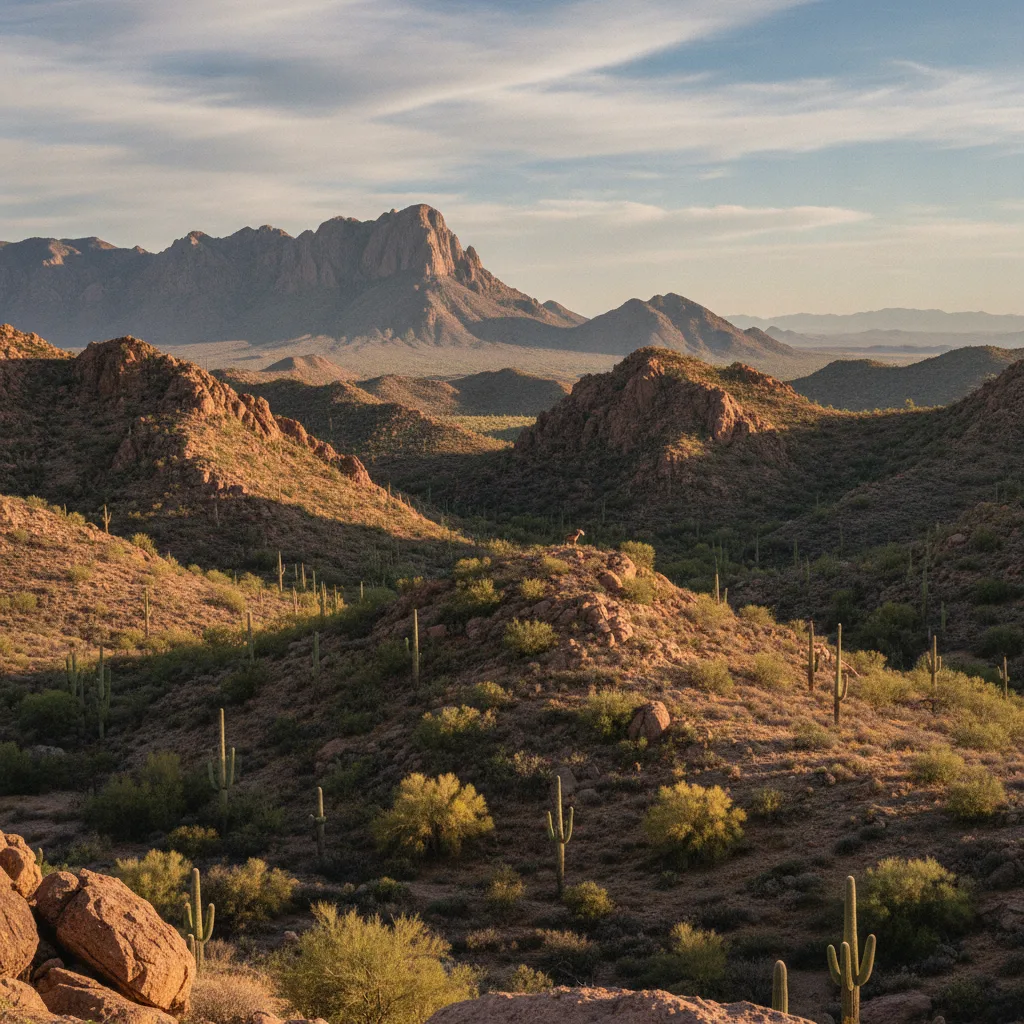
Kofa National Wildlife Refuge Travel Guide — Arizona
Established in 1939 to protect the iconic desert bighorn sheep, the Kofa National Wildlife Refuge Arizona spans over 665,000 acres of rugged Sonoran Desert landscape, offering an unparalleled experience for those seeking solitude, diverse wildlife viewing, and opportunities for dispersed camping and exploration. This vast expanse, with over 80% designated as wilderness, is a testament to the raw, untamed beauty of the American Southwest.
Why Visit Kofa National Wildlife Refuge
We believe the Kofa National Wildlife Refuge offers a truly unique escape from the ordinary. It's a place where the desert's silence is profound, broken only by the rustle of wind or the distant call of a coyote. Our team is drawn to its rugged beauty, the dramatic mountain ranges like the Kofa and Castle Dome Mountains, and the striking rhyolite formations that rise dramatically from the desert floor.
The primary reason for its establishment was the protection of desert bighorn sheep, and the chance to spot these elusive creatures in their natural habitat is a major draw. Beyond the bighorns, the refuge is a haven for a variety of desert wildlife, from jackrabbits and lizards to coyotes and the occasional mountain lion.
For those who crave genuine wilderness, Kofa delivers. With minimal infrastructure and vast open spaces, it provides an authentic boondocking and backcountry experience unlike many more developed national parks. The night skies here are particularly breathtaking, offering incredible stargazing opportunities far from urban light pollution.
Who It's Best For
Kofa National Wildlife Refuge is ideal for adventurous travelers who appreciate self-sufficiency and a deep connection with nature. It's perfect for:
- **Experienced Campers & Boondockers:** With extensive opportunities for free, primitive dispersed camping, it's a paradise for those who enjoy being off-grid.
- **Wildlife Enthusiasts:** Patience is key, but the rewards of spotting desert bighorn sheep, diverse birdlife, and other Sonoran Desert creatures are immense.
- **Hikers & Backpackers:** From easy strolls to strenuous climbs, the refuge offers a range of Kofa National Wildlife Refuge hiking trails for all skill levels, though many require excellent route-finding skills.
- **Off-Roading & 4x4 Adventurers:** Many of the refuge's primitive roads require high-clearance or 4WD vehicles, opening up vast areas for exploration.
- **Photographers:** The dramatic landscapes, unique flora, and stunning night skies provide endless photographic opportunities.
- **Those Seeking Solitude:** If you're looking to escape crowds and immerse yourself in quiet desert wilderness, Kofa is an exceptional choice.
It's important to note that Kofa is not for those seeking resort-style amenities or paved trails. It demands preparation and respect for its remote, rugged environment.
Getting There & Parking
Understanding how to get to Kofa National Wildlife Refuge is crucial, as it's a remote destination with limited services. The refuge is located approximately 40 miles north of Yuma, Arizona, on the east side of State Highway 95. For those coming from Quartzsite, it's about 30 minutes south.
The main entrances from Highway 95 include Palm Canyon, King Valley, Crystal Hill, and Castle Dome. We recommend planning your route carefully and downloading maps offline, as cell phone coverage is absent over most of the refuge.
Parking is generally available at trailheads and along designated roads for dispersed camping. There are no formal parking lots with fees; visitors simply find suitable pull-off areas. Remember that vehicles must remain within 100 feet of designated roads.
Most refuge roads are not maintained, and many require four-wheel-drive vehicles. Some roads may be passable by two-wheel-drive, high-clearance vehicles. For example, Palm Canyon Road is generally accessible for regular passenger cars for the initial few miles, but roads like Kofa Queen Canyon Road will require high clearance and preferably 4WD. Always check current road conditions, especially after rain, which can make washes impassable. Off-road driving is strictly prohibited.
The Refuge Headquarters/Visitor Center in Yuma, AZ, is a great starting point for visitors, offering maps, brochures, and exhibits. It's open Monday through Friday from 8:00 a.m. to 4:00 p.m.
Top Things to Do
The Kofa National Wildlife Refuge offers a wealth of activities for the prepared adventurer. Here are the top things to do at Kofa National Wildlife Refuge:
- Wildlife Viewing: This is the refuge's raison d'être. Early mornings and late evenings offer the best chances to spot desert bighorn sheep, coyotes, jackrabbits, and various bird species. Look for bighorns near water sources.
- Hiking & Backpacking: Explore the vast wilderness on foot. While only Palm Canyon has a maintained trail, cross-country hiking is encouraged in many areas. We'll delve deeper into Kofa National Wildlife Refuge hiking trails shortly.
- Dispersed Camping: Enjoy free, primitive camping throughout much of the refuge. Find a spot along a designated road and immerse yourself in the desert's quiet. Remember to pack out everything you pack in.
- Off-Roading & Scenic Drives: With approximately 240 miles of primitive roads, Kofa is a prime destination for Jeeps and UTVs. Explore routes like Kofa Queen Canyon Road, Kofa Manganese Road, or McPherson Pass for stunning scenery and access to remote areas.
- Stargazing & Night Photography: The remote location and lack of light pollution make Kofa an exceptional spot for observing the night sky. Bring your camera for incredible astrophotography.
- Rock & Mineral Collecting at Crystal Hill: This is the only designated area within the refuge where recreational (noncommercial) rock or mineral collecting is permitted. You can collect up to 10 specimens or 10 pounds (whichever comes first) in any 12-month period, but only from the surface and without tools.
- Visit Palm Canyon: Hike the short trail to see the native California fan palms, a unique desert oasis.
- Explore Historic Mining Sites: The refuge's name comes from the "King of Arizona" (Kofa) Mine, and remnants of old mining operations and homesteads can still be found. Be respectful of these historical remains.
These things to do at Kofa National Wildlife Refuge offer a blend of adventure, natural beauty, and historical intrigue.
Best Time to Visit
Our team strongly recommends visiting Kofa National Wildlife Refuge during the cooler months, from **October through March**.
- Winter (December-February): This is the most popular time due to mild daytime temperatures, making hiking and camping comfortable. Nighttime temperatures can drop significantly, so come prepared for cold evenings. Wildlife is also more active during these cooler periods, especially at dawn and dusk.
- Spring (March): Often brings pleasant temperatures and the possibility of wildflower blooms, adding vibrant color to the desert landscape.
- Fall (October-November): Offers a transition from the intense summer heat, with comfortable temperatures returning for outdoor activities.
We advise against visiting during the **summer months (May-September)**. Temperatures routinely exceed 100 degrees Fahrenheit, often reaching over 115 degrees, making it incredibly dangerous for human activity and causing most wildlife to be inactive. The refuge is virtually devoid of human activity during these hot months.
Where to Stay Nearby
When considering Kofa National Wildlife Refuge lodging, it's important to remember that the refuge itself offers only primitive dispersed camping. There are no developed campgrounds with facilities within the refuge boundaries.
For those seeking traditional accommodations, the closest towns with hotels are Yuma to the south and Quartzsite to the north.
- Yuma, Arizona: Located about 40 miles south of the refuge, Yuma offers a wider range of Kofa National Wildlife Refuge lodging options, from budget-friendly motels to more comfortable hotels. You'll find familiar chains like Best Western Plus Yuma Foothills Inn & Suites and Comfort Inn and Suites Yuma I-8. Yuma is a larger city with more dining and service options.
- Quartzsite, Arizona: Approximately 30 minutes north of the refuge, Quartzsite is a popular winter destination for RVers. While smaller, it does offer some lodging, notably the Super 8 by Wyndham Quartzsite, which is often the only chain lodging available in town. Quartzsite is particularly convenient if you plan to explore the northern sections of the refuge.
Many visitors choose to base themselves in these towns and make day trips into the refuge, or combine a few nights of dispersed camping with a stay in a hotel for amenities. Remember that the closest hotel to the refuge itself is about 65 miles north in Quartzsite.
Sample 2-Day Itinerary
To truly experience the Kofa National Wildlife Refuge, we recommend at least two full days. This itinerary assumes you have a high-clearance or 4WD vehicle for optimal exploration.
Day 1: Arrival, Palm Canyon, and Dispersed Camping
- Morning (Arrival & Visitor Center): Drive to Yuma and stop at the Kofa National Wildlife Refuge Headquarters/Visitor Center (9300 E. 28th Street, Yuma, AZ) to pick up maps and get the latest conditions. It's open Monday-Friday, 8:00 a.m. to 4:00 p.m.
- Late Morning (Drive to Palm Canyon): Head north on US-95. Turn east onto Palm Canyon Road (approximately 19 miles south of Quartzsite). This initial gravel road is generally well-maintained.
- Lunch & Hike (Palm Canyon): Drive 3.8 miles down Palm Canyon Road to the Palm Canyon Trail parking area. Hike the easy 0.9-mile (1.4 km) trail to see Arizona's native California fan palms. There's an information board at the trailhead.
- Afternoon (Explore Kofa Queen Canyon Road): From Palm Canyon Road, turn onto Kofa Queen Canyon Road (requires high-clearance/4WD). Explore this rugged route, looking for Skull Rock and keeping an eye out for bighorn sheep on the hillsides.
- Evening (Dispersed Camping & Stargazing): Find a suitable dispersed campsite along one of the designated roads, ensuring you are at least ¼ mile from any water sources and within 100 feet of the road. Set up camp, prepare a campfire (using only dead, down, detached wood, or bring your own), and enjoy the spectacular dark skies.
Day 2: Crystal Hill, Off-Roading, and Departure
- Morning (Crystal Hill Exploration): After breakfast at your campsite, head towards Crystal Hill, located in the northern part of the refuge. This 1.5-square-mile area is where you can legally collect up to 10 pounds or 10 specimens of rocks and minerals from the surface (no tools allowed).
- Late Morning/Afternoon (Off-Roading Adventure): Choose an off-road trail based on your vehicle's capability and your interest. Options include Kofa Manganese Road for scenic views or exploring other primitive roads that crisscross the refuge. Remember that many trails are full-width roads accessible by high-clearance vehicles.
- Late Afternoon (Wildlife Spotting & Departure): As the sun begins to lower, take one last drive through a scenic area, keeping an eye out for wildlife as they become more active. Begin your drive out of the refuge, heading towards your next destination or back to Yuma/Quartzsite.
Is It Worth Visiting?
Our team unequivocally believes that Kofa National Wildlife Refuge is worth visiting for the right kind of traveler. If you seek pristine desert wilderness, abundant solitude, and a chance to truly disconnect, then Kofa will exceed your expectations. It offers an authentic Arizona experience, far removed from the more commercialized tourist hubs.
However, it's crucial to manage expectations. Is Kofa National Wildlife Refuge worth visiting for someone who prefers paved roads, visitor amenities, and guided tours? Probably not. The refuge is rugged, requires self-reliance, and demands careful preparation. There are no restaurants, gas stations, or potable water sources within the refuge itself.
For those who embrace its wild nature, the rewards are immense: the thrill of spotting a desert bighorn sheep, the quiet beauty of a desert sunrise, and the profound silence of a starlit night. It's a place that leaves a lasting impression, reminding us of the raw power and delicate balance of the Sonoran Desert. For a truly immersive experience of Arizona's untamed heart, Kofa National Wildlife Refuge is absolutely worth visiting.
How to Get There
Understanding how to get to Kofa National Wildlife Refuge is key to a smooth trip. The refuge is situated in southwestern Arizona, roughly 40 miles north of Yuma and 30 minutes south of Quartzsite.
The primary access is via **U.S. Highway 95**. From this highway, several unpaved roads lead into the refuge:
- From the South (near Yuma): Drive north on US-95. The southern entrances, such as Castle Dome Mine Road, will be on your east.
- From the North (near Quartzsite): Drive south on US-95. Entrances like Palm Canyon Road, King Valley Road, and Crystal Hill will be on your east.
The coordinates for the King Valley entrance, a common access point, are 33.24977, -114.21724.
We strongly recommend using a high-clearance vehicle, and a 4WD vehicle is often recommended or necessary for many of the interior roads, especially Kofa Queen Canyon Road. Passenger cars may be able to access some initial sections of roads like Palm Canyon Road, but deeper exploration will require more robust vehicles. Always carry plenty of water, extra fuel, and let someone know your itinerary, as cell service is unreliable.
For more detailed directions and current conditions, we advise stopping at the Kofa National Wildlife Refuge Headquarters in Yuma. Knowing how to get to Kofa National Wildlife Refuge safely and prepared is your first step to an incredible desert adventure.
Kofa National Wildlife Refuge Hiking Trails
While Kofa National Wildlife Refuge is largely a wilderness area with unmaintained routes, it offers incredible opportunities for Kofa National Wildlife Refuge hiking trails and cross-country exploration. Over 80% of the refuge is designated wilderness, meaning minimal human impact and a focus on natural processes.
The U.S. Fish & Wildlife Service maintains only one mile of trail into Palm Canyon, which is the most accessible and popular hiking destination.
- Palm Canyon Trail: This easy 0.9-mile (1.4 km) path leads to a canyon where you can observe the native California fan palms. The trailhead has an information board. While relatively short, it offers a unique desert oasis experience.
- Signal Peak Trail: For experienced and physically fit hikers, the Signal Peak trail is a challenging 3.4-mile (5.5 km) moderate route to the highest point in the Kofa Mountains. It involves steep slopes, loose rock scree, and some scrambling, requiring careful navigation. The views from the top are incredibly rewarding.
- Skull Rock via Kofa Queen Canyon Road: This 13.6-mile (21.9 km) difficult trail leads through Kofa Queen Canyon, often taking about 6 hours. It features unique rock formations, including Skull Rock itself. Access requires a high-clearance or 4WD vehicle.
- Kofa Dam and Kofa Butte Trail: A moderate 7.9-mile adventure offering panoramic views and a historic dam.
- Cross-Country Hiking: For the truly adventurous, much of the rolling terrain and sparse vegetation is amenable to cross-country hiking. This requires excellent navigation skills, a map, compass, or GPS, and a thorough understanding of desert survival. Always be aware of your surroundings due to sharp and spiny plants and potential wildlife.
When embarking on Kofa National Wildlife Refuge hiking trails, always carry plenty of water, wear appropriate hiking boots, and be aware of the desert environment, including venomous reptiles and sharp rocks. Dogs are permitted but must be on a leash at all times.
For more adventures in Arizona, consider exploring other incredible destinations like Grand Canyon National Park, Monument Valley Navajo Park, or Saguaro National Park.
Kofa National Wildlife Refuge camping
Kofa National Wildlife Refuge offers free, primitive dispersed camping throughout much of its 665,000 acres. There are no designated campsites, facilities, water, toilets, or hookups. Campers can select their own sites anywhere on refuge lands, but vehicles must remain on numbered roads and campsites cannot be located within 100 feet of the road or ¼ mile of water sources. Stays are typically limited to 14 days within any 12-month period. Campfires are permitted using dead, down, and detached wood, but wood is scarce, so consider bringing your own supply. Always practice Leave No Trace principles.
things to do in Yuma / Quartzsite area
Beyond the refuge, the Yuma and Quartzsite areas offer additional attractions. In Yuma, you can explore historic sites like the Yuma Territorial Prison State Historic Park or enjoy the Colorado River. Quartzsite, especially popular in winter, is known for its massive RV and gem shows, attracting visitors for rock hounding at places like Crystal Hill (within the refuge, but often accessed from Quartzsite's direction) or exploring the Tyson Wells Museum. The region also offers numerous off-road ATV trails as part of the Arizona Peace Trail.
Kofa National Wildlife Refuge with kids
Visiting Kofa National Wildlife Refuge with kids can be an enriching experience, but requires careful planning due to its primitive nature. We recommend focusing on accessible areas like the Palm Canyon trail for a relatively easy hike to see the unique palms. Wildlife viewing from your vehicle along the main roads can also be exciting for children. Emphasize safety: bring plenty of water, snacks, sunscreen, and proper clothing. Be vigilant about sharp desert plants and potential wildlife. Dispersed camping can be a fantastic adventure, teaching kids about nature and self-reliance, but ensure they understand Leave No Trace principles and stay close to camp. For younger children, shorter visits may be preferable.
best hotels near Kofa National Wildlife Refuge
As there are no hotels within the refuge, the best hotels near Kofa National Wildlife Refuge are found in nearby towns. In Yuma, approximately 40 miles south, popular options include the Best Western Plus Yuma Foothills Inn & Suites and Comfort Inn and Suites Yuma I-8. In Quartzsite, about 30 minutes north, the Super 8 by Wyndham Quartzsite is a common choice. These hotels provide a base for day trips into the refuge, offering amenities like air conditioning, beds, and restrooms after a day of desert exploration.
Kofa National Wildlife Refuge tips
Our top Kofa National Wildlife Refuge tips for a successful visit include:
- Be Self-Sufficient: Carry ample water (more than you think you'll need), food, extra fuel, and a first-aid kit. There are no services on the refuge.
- Vehicle Preparedness: A high-clearance, 4WD vehicle is highly recommended for exploring beyond the main access roads. Check tire pressure and carry a spare.
- Navigation: Cell service is spotty or non-existent. Bring detailed paper maps, a compass, and/or a reliable GPS device with downloaded offline maps.
- Timing is Key: Visit between October and March to avoid extreme summer heat.
- Leave No Trace: Pack out all trash and waste, respect wildlife from a distance, and stay on designated roads.
- Inform Others: Let someone know your itinerary, including your planned routes and expected return time.
where to stay near Kofa National Wildlife Refuge
For those wondering where to stay near Kofa National Wildlife Refuge, your primary options are dispersed camping within the refuge or hotels in the surrounding towns. Within the refuge, you can enjoy free, primitive dispersed camping, adhering to regulations about vehicle proximity to roads and distance from water sources. Outside the refuge, the town of Yuma (approximately 40 miles south) offers a variety of hotels and motels. To the north, Quartzsite (about 30 minutes away) provides limited hotel options, such as the Super 8 by Wyndham. Many RVers also utilize the numerous dispersed camping areas around Quartzsite.
The Kofa National Wildlife Refuge is an extraordinary testament to Arizona's untamed desert beauty. Our team at Visit America encourages you to explore its rugged landscapes, seek out its diverse wildlife, and immerse yourself in the profound solitude it offers. Whether you're an avid hiker, a dedicated boondocker, or simply someone yearning for an authentic wilderness experience, Kofa promises an unforgettable adventure. Remember to plan meticulously, respect the environment, and prepare for a truly self-reliant journey into the heart of the Sonoran Desert. For more incredible Arizona destinations, be sure to check out our guide to the Best places in Arizona, including icons like Grand Canyon National Park and the stunning Monument Valley Navajo Park.
Expert Verdict: Kofa National Wildlife Refuge offers an unparalleled opportunity for true wilderness immersion. Its lack of developed facilities is its greatest asset, providing a raw, unfiltered desert experience. We consider it a must-visit for adventurers seeking solitude and self-reliance amidst stunning natural beauty.
Last updated: 2026-07-05 by the Visit America team.