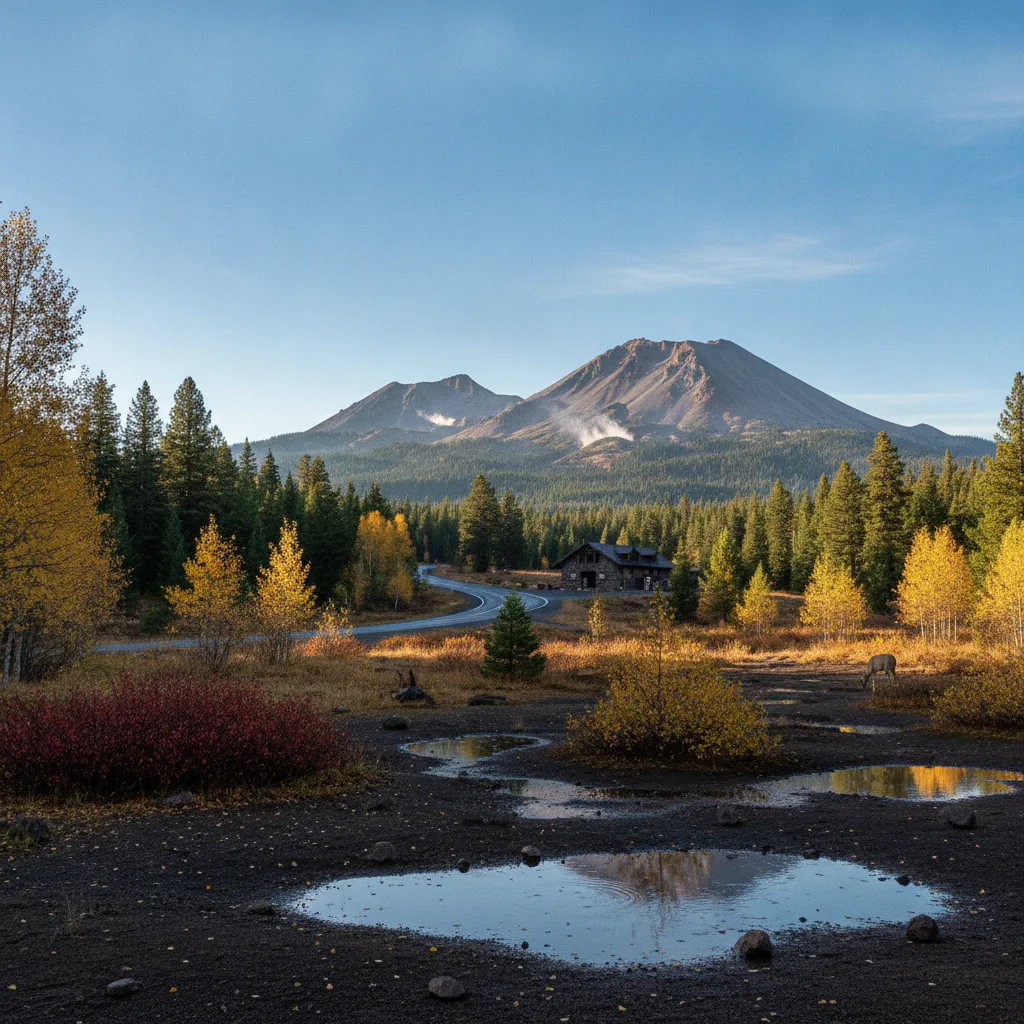
We've compiled this comprehensive guide to help you navigate one of California's most unique and geologically active national parks.
Why Visit Lassen Volcanic National Park
Lassen Volcanic National Park offers an unparalleled opportunity to witness all four types of volcanoes found in the world: plug dome, shield, cinder cone, and composite. This makes it a rare and fascinating destination for geology enthusiasts and curious travelers alike. The park's centerpiece, Lassen Peak, is one of the largest plug dome volcanoes globally and last erupted in 1915, leaving a landscape still alive with boiling mud pots, steaming fumaroles, and hissing hot springs.
Beyond its dramatic volcanic features, Lassen boasts clear mountain lakes, meadows freckled with wildflowers, and a vast network of hiking trails. It's a compact yet incredibly diverse park that often feels like a blend of Yellowstone and Mount Rainier, but with significantly smaller crowds than California's more famous national parks like Yosemite National Park or Redwood National Park. This relative solitude allows for a more intimate and immersive experience with nature.
We believe Lassen Volcanic is one of the most underrated national parks in the US, offering a genuine sense of a working volcano and a chance to escape the bustling crowds. Whether you're drawn to the raw power of geothermal activity or the serene beauty of alpine landscapes, Lassen delivers a truly memorable experience.
Who It's Best For
Lassen Volcanic National Park is ideal for adventurers seeking a unique national park experience away from the masses. It caters to a wide range of visitors, from avid hikers and backpackers to families looking for accessible natural wonders. The park's diverse terrain means there's something for everyone, whether you prefer challenging summit climbs or leisurely lakeside strolls.
Geology Enthusiasts: With all four types of volcanoes and active hydrothermal areas like Bumpass Hell and Sulphur Works, those interested in Earth sciences will find Lassen a living laboratory.
Hikers: From strenuous climbs like Lassen Peak to easy interpretive trails, the park offers over 150 miles of hiking opportunities.
Families with Kids: Many trails are suitable for children, and the park's unique features, such as bubbling mud pots, are sure to capture their imagination. Ranger-led programs are also available during the summer.
Nature Photographers: The dramatic volcanic landscapes, vibrant wildflowers (peaking July-September), and pristine lakes provide endless photographic opportunities.
Those Seeking Solitude: Compared to other California national parks, Lassen offers a more tranquil experience, especially during the shoulder seasons.
However, it's important to note that access is highly seasonal due to heavy snow, so visitors planning a trip outside of summer should be prepared for limited road and trail access.
How to Get There & Parking
Reaching Lassen Volcanic National Park California primarily involves driving, as public transportation options are limited. The park has two main entrances: the southwest entrance near Mineral (leading to the Kohm Yah-mah-nee Visitor Center) and the northwest entrance near Shingletown (leading to the Loomis Museum and Manzanita Lake area).
From Sacramento: Take Interstate 5 North to CA-36 East, which leads directly to the park's south entrance.
From Redding: Head east on CA-44 to reach the park's northern entrance, providing access to the scenic Lassen Volcanic National Park Highway.
From Reno: Take US-395 North to Susanville, then switch to CA-36 West for the southern entrance of Lassen Volcanic National Park.
The 30-mile Lassen National Park Highway (Highway 89) connects these two entrances and is the main thoroughfare for accessing many of the park's popular viewpoints and trailheads. In 2026, the Lassen National Park Highway opened to through traffic on May 22, one of the earlier openings in recent years. However, be aware that Google Maps and other third-party sites may sometimes inaccurately show the road as closed; always check the official park conditions.
Parking: Lassen Volcanic National Park is equipped with ample parking, but popular spots like Loomis Plaza, Bumpass Hell, and Kings Creek Falls parking areas tend to fill up between 9 AM and 3 PM during peak season. We recommend arriving earlier or later in the day to secure a spot. There are no guardrails on the historic highway, so observe posted speed limits (25 mph) and use pullouts to take in views and allow other cars to pass. Fuel up before entering the park, as there are no gas stations inside Lassen Volcanic National Park.
Top Things to Do
When considering things to do at Lassen Volcanic National Park, you'll find a diverse array of activities centered around its unique volcanic landscape and natural beauty. Our team has curated the essential experiences that truly capture the spirit of this incredible park.
- Drive the Lassen Park Highway: This 30-mile stretch of California 89 is the main event, climbing past 8,500 feet near Lassen Peak and connecting nearly every major feature, including hydrothermal areas, trailheads, lakes, and overlooks. Allow a half-day with stops, and always check for any repair-related closures.
- Hike to Bumpass Hell: This is the park's largest and most popular hydrothermal area, where boardwalks wind through steaming vents, bubbling mud pots, and the impressive Big Boiler, one of the hottest fumaroles in the world. Note that the Bumpass Hell Trail is often under seasonal closure due to snow until mid-July. When closed, rangers may approve an alternate route via Cold Boiling Lake.
- Visit Sulphur Works: Located near the southwest entrance, Sulphur Works offers the easiest access to an active hydrothermal area. A short walk from the parking lot reveals plopping mud pots and steaming vents.
- Climb Lassen Peak: For a challenging and rewarding experience, hike the Lassen Peak Trail. This 5-mile round-trip climb gains roughly 2,000 feet to the summit of the plug dome volcano, offering panoramic views of the park and surrounding areas. Snow can linger on the trail into August, but it's open for over-the-snow travel.
- Explore Manzanita Lake: This crystal-clear alpine lake near the northwest entrance is perfect for relaxing, non-motorized boating, swimming, and fishing. The Manzanita Lake Loop is an easy, mostly flat trail offering stunning views of Lassen Peak and Chaos Crags.
- Wander through the Devastated Area: This interpretive trail showcases the impact of Lassen Peak's 1914-1917 eruptions, with a landscape slowly recovering from the destruction.
- Discover the Cinder Cone and Painted Dunes: Located in the remote northeast section of the park, this area features a striking landscape including the barren Cinder Cone volcano, colorful Painted Dunes, and lava rock-lined Butte Lake. The Cinder Cone Trail crosses a lava field before climbing a loose cinder slope to the top.
- Stargazing: Lassen Volcanic National Park offers dark Cascade skies, making it an excellent spot for stargazing.
Best Time to Visit
The best time to visit Lassen Volcanic National Park is typically during the summer months, from July through September. This window offers the most accessibility, with the main park road fully open and snowpack melted from most trails.
July and August: These are considered the prime months. Daytime temperatures are comfortable, ranging from 24-31°C (75-88°F) at park level, dropping to 4-8°C at night. Wildflowers are at their peak in late July, and all facilities and services are generally open daily. However, these months also bring the highest prices and crowds.
June and September: These are shoulder season months and offer excellent conditions with fewer crowds and potentially better prices. In June, the main road is usually open by mid-month, though snowfields may still be present on north-facing slopes and trails like Lassen Peak. Wildflowers begin blooming in lower meadows. September is often considered the best month for uncrowded hiking as school resumes, with good weather and thinning crowds. Early fall colors can also be seen, particularly near Paradise Meadows.
Spring (April-May) and Fall (October-November): These seasons are highly variable due to snow. The main park road is not open for vehicles in spring, and snow clearing typically begins in April, with road openings varying by year. Historically, the road opens in late May to mid-June, but has opened as late as July 26. October is the closing window, with snowstorms possible at any time, and the main road usually closes by late October or early November.
Winter (December-March): The interior of the park is inaccessible by car due to extreme snow accumulation. Vehicle access is limited to the Kohm Yah-mah-nee Visitor Center (southwest entrance) and the Loomis Plaza/Manzanita Lake parking area (northwest entrance). Winter offers opportunities for snowshoeing, cross-country skiing, and snow camping.
Where to Stay Nearby
While Lassen Volcanic National Park offers several camping options within its boundaries, many visitors prefer to stay in nearby towns for more amenities and lodging choices. The region surrounding Lassen, known as the Shasta Cascade, provides a variety of accommodations.
Inside the Park:
- Manzanita Lake Camping Cabins: Located near the northwest entrance, these rustic cabins offer convenience, economy, and security. They are available in one-room, two-room, and bunkhouse styles, furnished with beds and mattresses, but no electricity, water, or private bathrooms. The 2026 season runs from May 21 through October 12, and advance reservations are required via Recreation.gov. A nearby camper store provides groceries, supplies, gifts, gasoline, a laundromat, and hot showers.
- Drakesbad Guest Ranch: This historic ranch in Warner Valley is the only lodging facility within the park boundaries. Reservations for lunch and dinner are required, and same-day reservations are not allowed. Drakesbad Guest Ranch was closed for 2024, so it's essential to verify its operating status for 2026.
Outside the Park:
Several towns offer hotels, resorts, and vacation rentals within a reasonable driving distance of Lassen Volcanic National Park.
- Mineral, CA: Located just south of the park's southwest entrance, Mineral offers options like the Lassen Mtn Lodge and other spacious cabin rentals. Highlands Ranch Resort is a new destination resort at the southwest gateway, approximately an hour from Chico or Redding.
- Chester, CA: About 16.5 miles from Lassen Volcanic National Park, Chester is a charming city known for its natural beauty. It offers hotels like St. Bernard Lodge, one of the closest hotels to the park entrance, providing a warm, personal experience and often including full breakfast. Other options include the Best Western Rose Quartz Inn and The Black Forest Lodge.
- Shingletown, CA: Situated near the northwest entrance, Shingletown has options like the Sugar Pine Room at Tall Timbers Bed & Breakfast.
- Old Station, CA: This area offers various accommodations, including charming cabins.
For those preferring a more immersive nature experience without traditional camping, many top-rated campsites and glamping options are available near Lassen Volcanic National Park, such as Mill Creek Resort, which offers cabins, campsites, and glamping tents nestled in 12 acres of cedars and pines on the south side of the park.
Sample 2-Day Itinerary
To truly experience the highlights of Lassen Volcanic National Park California, we recommend at least two full days. This allows for a mix of scenic drives, iconic hikes, and time to appreciate the park's unique geothermal features.
Day 1: Southern & Central Park Highlights
- Morning (Southwest Entrance): Begin your day at the Kohm Yah-mah-nee Visitor Center (open daily 9:30 AM - 4:30 PM). Pick up a park map and check current conditions.
- Late Morning: Head to Sulphur Works, easily accessible right off the main highway, to witness bubbling mud pots and steaming vents.
- Lunch: Enjoy a picnic at Lake Helen, offering unbeatable views of Lassen Peak.
- Afternoon: Embark on the challenging but rewarding Lassen Peak Trail (5 miles round trip, 2,000 ft elevation gain) for panoramic views. Be prepared for potential snow patches into August. Alternatively, if open, hike the Bumpass Hell Trail (3 miles round trip) to explore the park's largest hydrothermal area via boardwalks. Note: Bumpass Hell Trail is often closed until mid-July due to snow.
- Evening: Drive the scenic Lassen Park Highway, stopping at viewpoints like Emerald Lake and the Devastated Area. Consider staying in Mineral or Chester for dinner and lodging.
Day 2: Northern & Eastern Explorations
- Morning (Northwest Entrance): Start at the Loomis Museum (open May 21 - October 12, Thursdays - Mondays, 9:30 AM - 4:30 PM) near Manzanita Lake.
- Late Morning: Enjoy a leisurely stroll around Manzanita Lake on the easy Manzanita Lake Loop trail. Consider renting a kayak or paddleboard for some time on the water.
- Lunch: Grab supplies from the Manzanita Lake Camper Store or enjoy a packed lunch by the lake.
- Afternoon (Butte Lake Area): Drive to the remote Butte Lake area (7 miles via a dirt road off Highway 44). Hike the Cinder Cone Trail to the top of the Cinder Cone and explore the vibrant Painted Dunes and Fantastic Lava Beds. This area offers a striking, less-crowded landscape.
- Late Afternoon: If time permits, visit the Subway Caves on the Lassen National Forest, just outside the park near the 89/44 junction, for a unique lava tube experience.
- Evening: Enjoy a final dinner in one of the nearby towns or at your chosen accommodation.
This itinerary provides a comprehensive overview of the park's diverse offerings. Remember that trail conditions and road openings can vary, so always check the official park website for the most up-to-date information for your 2026 visit.
Lassen Volcanic National Park Hiking Trails
Exploring the Lassen Volcanic National Park hiking trails is undoubtedly one of the best ways to immerse yourself in its geological wonders and natural beauty. The park offers over 150 miles of trails, ranging from easy strolls to strenuous summit climbs. We always advise checking current trail conditions, as snow can linger well into summer, especially at higher elevations.
- Lassen Peak Trail: This is the park's signature hike, a 5-mile round trip gaining nearly 2,000 feet to the summit of Lassen Peak. The path is well-maintained with gradual switchbacks, offering increasingly dramatic views as you ascend through shifting landscapes from pine forest to exposed volcanic slopes. Expect snow patches into August, but the trail is open for over-the-snow travel.
- Bumpass Hell Trail: Leading to the park's largest hydrothermal area, this 3-mile round-trip hike is incredibly popular. Boardwalks guide you safely through steaming vents and bubbling mud pots. However, this trail is frequently closed until mid-July due to snow. When closed, an alternate route via Cold Boiling Lake may be available.
- Manzanita Lake Loop: An easy, mostly flat 1.8-mile loop, perfect for all fitness levels and families. It offers serene views of Lassen Peak and Chaos Crags, and is excellent for spotting waterfowl and raptors.
- Cinder Cone Trail: Located in the remote Butte Lake area, this moderately strenuous hike crosses a lava field before climbing a loose cinder slope to the top of the Cinder Cone. From the rim, you'll overlook the Fantastic Lava Beds, Painted Dunes, and nearby Butte and Snag Lakes.
- Kings Creek Falls Trail: A popular choice for a scenic outing, this 2.8-mile round-trip loop provides expansive vistas, a waterfall overlook, and a climb up a creekside staircase. Parts of this trail can be steep and sun-exposed.
- Brokeoff Mountain Trail: For sheer beauty and rugged mountain scenery, the Brokeoff Mountain trail is highly recommended. It climbs steadily through meadows and forest, eventually reaching above timberline. This is a more strenuous option.
- Devastated Area Interpretive Trail: An easy, accessible walk through an area impacted by Lassen's 1914-1917 eruptions, showcasing the slow recovery of the landscape.
Remember that some trails, like Kings Creek Falls and Sifford Lakes, may be affected by the 2021 Dixie Fire, so exercise caution in burned areas due to potential falling trees. Always stay on established trails, especially in hydrothermal areas where the ground can be scalding and unstable.
Lassen Volcanic National Park Camping
For those who prefer to fully immerse themselves in the natural beauty of Lassen Volcanic National Park, camping offers an unforgettable experience. The park provides various Lassen Volcanic National Park camping opportunities, from developed campgrounds with amenities to primitive backcountry sites.
Developed Campgrounds: Lassen Volcanic National Park has eight campgrounds, with six requiring advance reservations through Recreation.gov. Booking early, especially for peak season, is highly recommended.
- Manzanita Lake Campground: The largest campground in the park, offering 179 sites (30 tent-only), including ADA-accessible options. Some sites can accommodate RVs/vehicle-trailers up to 40 feet long. The 2026 peak season runs from May 15 to October 5, with sites costing $26 per night. From October 6 to November 2, when water is off, sites are discounted to $15 nightly. Reservations are required. Amenities include drinking water, laundry, a dump station, flush and vault toilets, a camp store, and hot showers.
- Manzanita Lake Camping Cabins: These rustic, bare-bones cabins offer a comfortable alternative to traditional tent camping. Available in one-room, two-room, or bunkhouse styles, they are furnished with beds and mattresses, a lockable door, picnic table, fire ring, and bear-proof food storage locker. No electricity, water, or bathrooms inside the cabins, but central restrooms and showers are nearby. The 2026 season is May 21 – October 12, and advance reservations are required.
- Summit Lake North & South Campgrounds: These are popular choices for their central location and access to trails. Summit Lake North is open June 27 - September 8, 2026, while Summit Lake South is open June 27 - September 8, with dry camping until September 23. Sites typically cost around $22-24 per night.
- Butte Lake Campground: Located in the remote northeast section, this campground offers a striking landscape. The 2026 season is May 30 - September 1, with Loop B open until October 14. Sites are $22 per night.
- Southwest Campground: This campground is open year-round for walk-in tent sites, with locations changing when snow is present. During winter, self-contained vehicle camping is permitted in the Southwest Area parking lot.
- Lost Creek Group Campground: Open June 13 - July 28 and August 7 - September 16 in 2026, with fees of $62 during peak season.
Backcountry Camping: For a more rugged experience, backcountry camping is allowed with a free wilderness permit. A $5 per person recreation fee is also required for wilderness permits (15 years and under are free). Tent camping is permitted in the Lassen Volcanic backcountry (half a mile from any park road open to vehicle traffic) and in the adjacent Lassen National Forest. Fires and fire pans are not permitted in the backcountry; self-contained barbecues and gas stoves are allowed.
Always be mindful of the lasting effects from the 2021 Dixie Fire; some areas may have hazards like fallen trees and undefined trails.
Is It Worth Visiting?
Our team confidently asserts that Lassen Volcanic National Park is absolutely worth visiting. It stands out as a hidden gem among California's national parks, offering a unique blend of geological wonders and pristine wilderness without the overwhelming crowds found at more famous destinations like Yosemite National Park or even the Golden Gate Bridge in San Francisco. If you're looking for an authentic connection with nature and a chance to witness active volcanic features up close, Lassen delivers.
The park's diverse landscape, from steaming fumaroles and boiling mud pots to clear alpine lakes and lush meadows, provides a rich tapestry of experiences. Where else can you see all four types of volcanoes in one place? The opportunity to hike a challenging summit like Lassen Peak or explore the vibrant Bumpass Hell hydrothermal area is truly unparalleled.
While the park's short season due to heavy snow can make planning a bit trickier, this also contributes to its appeal by keeping visitor numbers manageable. The sense of solitude and the raw, untamed beauty you encounter here are a stark contrast to the often-crowded trails of other parks. For those seeking adventure, geological marvels, and a peaceful escape into nature, Lassen Volcanic National Park is undoubtedly worth visiting.
FAQ
What are things to do in Shasta Cascade?
The Shasta Cascade region, where Lassen Volcanic National Park is located, offers a wealth of outdoor activities. Beyond Lassen, you can explore other natural attractions like Burney Falls Memorial State Park, Lake Shasta Caverns, and the Trinity Alps Wilderness. Activities include hiking, fishing, boating on numerous lakes (such as Lake Almanor and Whiskeytown Lake), whitewater rafting, and exploring charming small towns. The region is also home to parts of the Pacific Crest Trail.
Is Lassen Volcanic National Park good with kids?
Yes, Lassen Volcanic National Park is excellent for families with kids. Many trails are accessible and relatively easy, such as the Manzanita Lake Loop and the Devastated Area Interpretive Trail. The park's unique hydrothermal features like Sulphur Works and Bumpass Hell (when open) are fascinating for children. Ranger-led programs are available during the summer, and the Volcano Adventure Camp offers youth group camping. The Manzanita Lake area is particularly family-friendly with camping cabins and a camper store.
What are some Lassen Volcanic National Park tips?
- Check Road & Trail Conditions: The main park highway and many trails are subject to seasonal snow closures, often well into July. Always check the official NPS website before your visit.
- Fuel Up & Bring Water: There are no gas stations inside the park, and water refill stations are limited.
- Arrive Early for Popular Spots: Parking areas for Bumpass Hell, Lassen Peak, and Kings Creek Falls fill up between 9 AM and 3 PM.
- Be Prepared for Changing Weather: Temperatures can drop significantly with elevation, and afternoon thunderstorms are possible in summer. Dress in layers.
- Stay on Trails: Especially in hydrothermal areas, the ground is unstable and scalding.
- Download Information Offline: Cell service is limited and unreliable within the park. Download maps and park information via the NPS app before arriving.
- Consider Shoulder Seasons: June and September offer good weather and fewer crowds.
What is the parking situation at Lassen Volcanic National Park?
Lassen Volcanic National Park offers ample parking at its main attractions and trailheads. However, during peak season (July and August), popular parking areas such as Loomis Plaza, Bumpass Hell, and Kings Creek Falls tend to fill up between 9 AM and 3 PM. We advise arriving early or later in the afternoon to secure a spot. There are designated pullouts along the Lassen Park Highway for scenic views and to allow other vehicles to pass. Large vehicle parking and carpooling sites are also available, such as the ML Lassen Crossroads, open daily from 7 AM to 3 PM.
What is the best time to visit Lassen Volcanic National Park?
The best time to visit Lassen Volcanic National Park is from July through September. During these summer months, the main park highway is fully open, and most trails are free of snow, allowing full access to the park's dramatic landscapes and geothermal features. July and August offer peak wildflowers and warm daytime temperatures, though with more crowds. September provides excellent conditions with thinning crowds and comfortable weather, often making it ideal for uncrowded hiking.
What are Lassen Volcanic National Park hours and fees?
Lassen Volcanic National Park is open 24 hours a day, 365 days a year. However, facility hours and road access are highly seasonal due to snow.
- Kohm Yah-mah-nee Visitor Center: Open year-round, typically daily from 9:30 AM to 4:30 PM, with extended hours in summer (May 1 - Oct 31: 9 AM to 5 PM daily).
- Loomis Museum: Open seasonally, from May 21 to October 12, 2026, Thursdays - Mondays, 9:30 AM - 4:30 PM.
- Lassen Park Highway (Highway 89): Opened to through traffic on May 22, 2026, for the season. It typically closes in late October or early November due to snow.
Entrance Fees (valid for 1-7 days):
- Private Vehicle (April 16 - November 30): $30.00.
- Private Vehicle (December 1 - April 15): $10.00.
- Motorcycle (April 16 - November 30): $25.00.
- Motorcycle (December 1 - April 15): $10.00.
- Per Person (on foot or bicycle, 16 years or older): $15.00 (April 16 - November 30), $10.00 (December 1 - April 15).
- An Annual Park Entrance Pass is available for $55.00, admitting the pass holder and all passengers in a non-commercial vehicle for one year.
The park accepts credit/debit only at entrance stations, but the Lassen Association (a park partner) sells passes for cash or credit at the Kohm Yah-mah-nee Visitor Center bookstore or the Loomis Residence.
Additionally, there are several fee-free days in 2026 for US citizens and residents, including Presidents' Day (February 16), Memorial Day (May 25), Flag Day (June 14), Independence Day weekend (July 3-5), the 110th Birthday of the National Park Service (August 25), and Constitution Day (September 17).
For more adventures in the Golden State, be sure to check out our guide to the Best places in California, including iconic spots like Yosemite National Park and the Golden Gate Bridge.
Last updated: 2026-07-05 by the Visit America team.