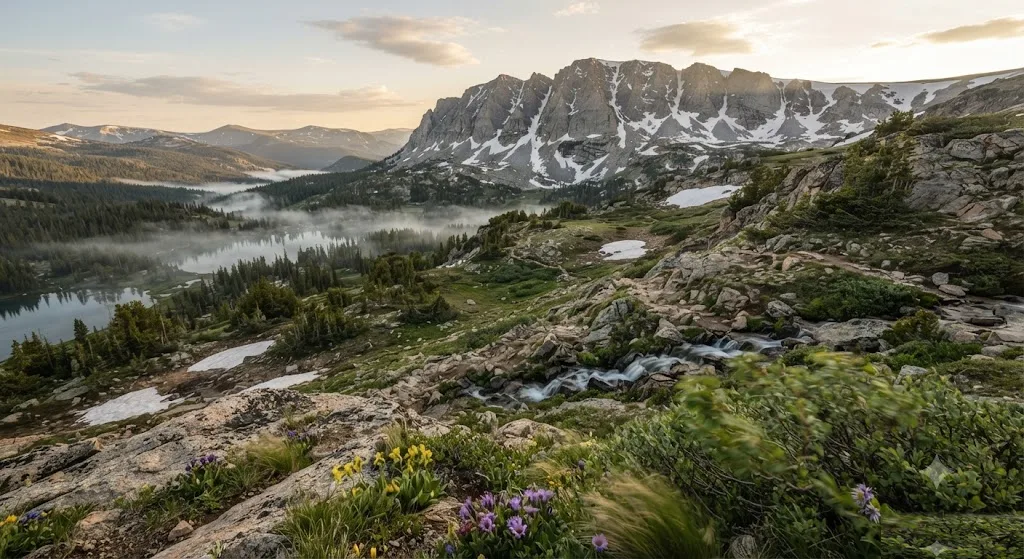
Medicine Bow Peak Trail Travel Guide — Wyoming
Our Medicine Bow Peak Trail guide covers practical planning for Medicine Bow Peak Trail Wyoming — best time to visit, getting there, and what to do on the ground. This challenging trail leads to the highest point in the Snowy Range, offering panoramic views of the surrounding mountains and lakes. It is a popular destination for experienced hikers seeking stunning vistas.
Why Visit Medicine Bow Peak Trail
For those of us at Roam States, the question isn't "is Medicine Bow Peak Trail worth visiting?" but rather, "how soon can we go back?" Medicine Bow Peak, standing majestically at 12,013 to 12,018 feet, is the highest point in Wyoming's stunning Snowy Range, offering an unparalleled alpine experience. The panoramic 360-degree views from the summit are nothing short of breathtaking, extending across glacial lakes, vast alpine meadows, and distant mountain ranges, even as far as Rocky Mountain National Park on a clear day.
This isn't just another hike; it's an immersion into a rugged, high-altitude wilderness that feels worlds away from the everyday. The raw beauty of the landscape, carved by ancient glaciers, features crystal-clear lakes like Lake Marie, Mirror Lake, and Lewis Lake at its base, reflecting the dramatic quartzite cliffs. Wildflowers carpet the meadows in vibrant hues during peak season, adding splashes of color to the already picturesque scenery. For us, the sheer grandeur and the sense of accomplishment that comes with reaching the summit make Medicine Bow Peak Trail an absolutely essential Wyoming adventure. The relative solitude compared to more crowded parks further south in Colorado only enhances its appeal, making it clear why we believe this trail is unequivocally worth visiting.
Who It's Best For
The Medicine Bow Peak Trail Wyoming is primarily suited for experienced hikers who are comfortable with strenuous, high-altitude terrain. The trails are rated moderate to difficult, involving significant elevation gain and rocky sections, including boulder scrambles near the summit. Hikers should be prepared for rapid weather changes, including afternoon thunderstorms and potential snowfields, even in summer.
However, while challenging, the loop options, typically ranging from 6.9 to 8.8 miles, are considered achievable for those with a good fitness level. Some shorter, less steep routes are also available, making it accessible for those looking for a less intense experience or even families with older, active children who are comfortable with distance and rocky paths. The key is respecting the mountain environment and being adequately prepared. Acclimatization to the high elevation (trailheads start around 10,500 feet) is also crucial for visitors coming from lower altitudes. If you're seeking a rewarding challenge and breathtaking views, this trail is for you. If you're looking for other incredible experiences in the state, be sure to check out our guide to Best places in Wyoming.
How to Get There
Reaching the Medicine Bow Peak Trail involves a scenic drive through the heart of the Snowy Range. The primary access route is via Wyoming Highway 130, also known as the Snowy Range Scenic Byway. This stunning byway is located about 35-45 minutes west of Laramie.
From Laramie, take Exit 311 from I-80 for Snowy Range Road (Highway 130) and head west. If approaching from the west, you can exit I-80 at Walcott Junction, east of Rawlins, and follow signs for Saratoga, then connect to Highway 130.
Seasonal Road Closures: It's crucial to note that the Snowy Range Scenic Byway (Highway 130) is a high-elevation mountain road that closes annually due to heavy snow. It typically closes in mid-November and traditionally reopens around Memorial Day weekend. However, the higher sections, particularly near the trailheads for Medicine Bow Peak, can remain snow-covered and inaccessible until mid-July in some years. In 2026, the byway officially reopened on May 7th, but motorists should still be aware that severe weather and snow are possible at higher elevations in late spring. Always check road conditions before you go.
Parking: Several trailheads offer access to Medicine Bow Peak. The most popular starting points for the loop trails are the West Lake Marie Trailhead and the Lewis Lake Trailhead. There is ample parking at both Lewis Lake and West Lake Marie, though these lots can fill up quickly on busy summer weekends, so we recommend arriving early. Mirror Lake also has parking, but it is more limited. A day-use parking fee of $5 may apply at certain trailheads and recreation areas, such as the West Lake Marie Trailhead. While there's no charge to simply drive through Medicine Bow National Forest, stopping for activities like hiking often incurs this small fee.
Top Things to Do
Beyond the iconic summit push, there are numerous things to do at Medicine Bow Peak Trail and within the surrounding Medicine Bow National Forest. Our team always recommends extending your visit to fully appreciate the diverse recreational opportunities available.
Medicine Bow Peak Trail Hiking Trails
The primary draw, of course, is hiking the Medicine Bow Peak Trail hiking trails themselves. The most popular route is the Medicine Bow Peak Loop, which typically combines the Medicine Bow Peak Trail and the Lakes Trail for a roughly 7-mile journey. This loop can be hiked clockwise or counterclockwise, with many preferring clockwise to enjoy views of the peaks with the lakes in the foreground on the descent. Another option is starting from Lewis Lake for a shorter, but steeper, ascent to the summit. The trails traverse varied terrain, from alpine meadows bursting with wildflowers in July and August to rocky switchbacks and boulder fields near the peak. Always look for rock piles with wooden poles (cairns) that mark the trail, especially where snow might still be present in early summer.
For those seeking other Medicine Bow Peak Trail hiking trails or different experiences within the Medicine Bow National Forest, options abound. You can explore the easier Lakes Trail around Mirror Lake, or venture to other nearby trails like the North Gap Lake Loop, Lost-Glacier Lakes Trail, or Lookout Lakes Trail. The Medicine Bow-Routt National Forests offer hundreds of miles of trails for day hiking and backpacking, catering to various skill levels.
Fishing and Water Activities
The numerous alpine lakes and streams in the Snowy Range are a major draw for anglers. The lakes are stocked with various trout species, including grayling and splake trout. Popular spots include Brooklyn Lake, Lewis Lake, and Lake Marie. Internal-combustion motors are prohibited on Brooklyn Lake, making it ideal for peaceful canoeing. Many campgrounds, like Brooklyn Lake Campground, offer direct fishing access. Water-based recreation, including paddleboarding and kayaking, is popular on the high alpine lakes.
Scenic Drives
Even if you're not an avid hiker, the Snowy Range Scenic Byway (Highway 130) itself is a destination. This 29-mile stretch offers breathtaking views of deep glacial lakes, alpine meadows, and the majestic peaks of the Snowy Range. There are numerous pull-offs and picnic sites, such as the Mirror Lake Picnic Ground, which was recently reconstructed and includes accessible features. Take your time on this road, as it's only open a few months a year, typically from late May to mid-November.
Wildlife Viewing and Photography
The Medicine Bow National Forest is home to a variety of wildlife. Keep an eye out for marmots and pika among the rocks, especially at higher elevations. Moose, elk, mule deer, and red foxes are also commonly spotted, particularly in the lower elevations and along the scenic byway. The vibrant wildflowers in July and August make for incredible photographic opportunities.
Exploring Nearby Areas
While focused on Medicine Bow Peak, we also encourage exploring other gems in the region. The Vedauwoo Recreation Area, with its unique granite rock formations, is visible from I-80 and offers hiking, climbing, and camping. It's a fantastic spot for picnics and stretching your legs. For those interested in more of Wyoming's natural beauty, consider extending your trip to Yellowstone National Park or Grand Teton National Park, both iconic destinations that showcase the state's incredible landscapes.
Best Time to Visit
Timing is everything when planning a trip to the Medicine Bow Peak Trail Wyoming. We strongly recommend visiting between mid-July and August. This period generally offers the best conditions for hiking, with most of the snow having melted from the higher elevations, making trails more accessible. Early June can still see significant snowfields, and the drivable Snowy Range Pass (Highway 130) itself often doesn't fully open until late May or even mid-July in heavy snow years.
Beyond accessibility, mid-to-late summer is when the alpine meadows truly come alive with a spectacular display of wildflowers. The weather is typically warmer, though afternoon thunderstorms are common and can develop rapidly, especially at such high altitudes. We advise starting your hike early in the morning to reach the summit and be below the treeline by noon, minimizing your exposure to potential lightning and severe weather. Fall months can also be an option, but be mindful that snow and ice return quickly to this elevation.
While the Snowy Range Scenic Byway closes in mid-November for the winter, the Medicine Bow National Forest offers year-round recreation, including snowshoeing, snowmobiling, and skiing in the colder months. However, for hiking Medicine Bow Peak, the short window of late summer is undoubtedly the prime time.
Medicine Bow Peak Lodging: Where to Stay Nearby
When planning your adventure to the Medicine Bow Peak Trail, finding the right lodging is key to a comfortable and convenient experience. While there isn't direct lodging at the trailhead, several nearby towns and campgrounds offer excellent options. We've scouted the best choices for Medicine Bow Peak lodging, ensuring you have a great base for your high-altitude explorations.
Laramie, Wyoming
Approximately 35-45 minutes east of the Snowy Range, Laramie is the largest nearby town and offers the widest selection of hotels, restaurants, and services. You'll find a range of accommodations, from well-known chains to local inns. Options include the Hampton Inn Laramie, Fairfield Inn & Suites Laramie, and various other hotels like Holiday Inn Express & Suites Laramie West and AmericInn by Wyndham Laramie. These hotels typically offer amenities like free Wi-Fi, complimentary breakfast, and pools. Laramie also serves as a great hub for exploring other attractions like the Vedauwoo Recreation Area.
Saratoga, Wyoming
Located to the west of the Snowy Range, Saratoga is another excellent option for Medicine Bow Peak Trail lodging, offering a more tranquil, small-town atmosphere, about an hour's drive from the peak. Saratoga is renowned for its natural hot springs, which are free to the public and open year-round. Key lodging options here include the historic Saratoga Hot Springs Resort, which blends a western lodge feel with mineral hot springs pools, and the Hotel Wolf. Other choices include the Riviera Motor Lodge and the Medicine Bow Lodge & Adventure Guest Ranch, which offers a dude ranch experience with cabins.
Centennial, Wyoming
Closer to the eastern entrance of the Snowy Range Scenic Byway, Centennial is a small community that provides a very convenient base for accessing the trails. Here, you'll find a few local lodging options like the Old Corral Hotel & Steakhouse and Vee Bar Guest Ranch. These offer a more rustic, authentic Wyoming experience and are perfect for those who want to minimize driving time to the trailheads.
Camping Near Medicine Bow Peak Trail
For those who prefer to sleep under the stars, the Medicine Bow National Forest offers numerous campgrounds. Popular choices include Sugarloaf Campground, Brooklyn Lake Campground, and North Fork Campground.
- Sugarloaf Campground: Located near the Medicine Bow Peak Trailheads, this campground is first-come, first-served and popular, so arrive early to secure a spot.
- Brooklyn Lake Campground: Situated on Brooklyn Lake with views of Browns Peak, this campground offers 19 sites with tables and fire rings. It operates from mid-July to early October, weather permitting. Some sites are reservable via Recreation.gov, while others are first-come, first-served. A single site costs $20 per night (2026 rates).
- North Fork Campground: A large, RV-friendly campground at 9,200 feet, popular for RV camping, fishing, hiking, and mountain biking. It offers a mix of reservation and first-come, first-served sites for the 2026 season. Handpump water may be available from July to September, but bringing your own water is encouraged.
- Dispersed Camping: Dispersed camping is also permitted in many areas of the Medicine Bow-Routt National Forests, particularly in the Thunder Basin National Grassland, for those seeking a more primitive experience.
Campground reservations for many sites typically open several months in advance on Recreation.gov, and we recommend booking as early as possible for peak season visits.
Sample 2-Day Itinerary
To truly experience the grandeur of the Medicine Bow Peak Trail Wyoming and its surroundings, we recommend dedicating at least two full days. This allows for ample hiking, scenic drives, and time to soak in the high-alpine environment without feeling rushed.
Day 1: Arrival, Scenic Drive, and Lake Exploration
- Morning (Arrival & Drive): Arrive in Laramie, Wyoming, and pick up any last-minute supplies. Then, embark on the breathtaking drive along the Snowy Range Scenic Byway (Highway 130). We suggest taking your time, stopping at various pull-offs to admire the views of the glacial lakes and peaks.
- Lunch: Pack a picnic to enjoy at one of the scenic picnic areas, such as Mirror Lake Picnic Ground, which offers accessible facilities.
- Afternoon (Lakes Trail & Acclimatization): Spend the afternoon exploring the lower elevation Lakes Trail. This gentle path meanders around Mirror Lake, Lake Marie, and Lookout Lake, offering stunning reflections of the peaks and opportunities for easy walking, fishing, or photography. This is also an excellent opportunity to begin acclimatizing to the high altitude before your summit attempt.
- Evening (Dinner & Stargazing): Head to your chosen lodging in Centennial, Saratoga, or Laramie. Enjoy a hearty dinner. If staying closer to the mountains, take advantage of the dark skies for some incredible stargazing – the Milky Way is often visible.
Day 2: Medicine Bow Peak Summit & Departure
- Early Morning (Summit Hike): Start your day before sunrise. We cannot stress enough the importance of an early start to avoid afternoon thunderstorms and crowds on the Medicine Bow Peak Trail hiking trails. Drive to the West Lake Marie Trailhead or Lewis Lake Trailhead. Embark on the Medicine Bow Peak Loop Trail (approximately 7-8 miles, 4-6 hours). Hike clockwise, ascending the steeper sections early, and enjoy the gradual descent past the alpine lakes. Be prepared for rocky terrain, potential snowfields, and rapid weather changes.
- Late Morning/Afternoon (Summit Views & Descent): Reach the summit of Medicine Bow Peak (12,013-12,018 feet) and savor the incredible 360-degree panoramic views. Take plenty of photos and enjoy a well-deserved snack. Begin your descent, keeping an eye on weather conditions.
- Late Afternoon (Relax & Depart): After your challenging hike, you'll be ready for some relaxation. If staying in Saratoga, consider a soak in the free public hot springs. Alternatively, head back to Laramie or continue your journey through Wyoming. If time allows, consider a detour to Devils Tower National Monument or Jackson Hole Town Square for more iconic Wyoming sights.
Last updated: 2026-07-08 by the Roam States team.