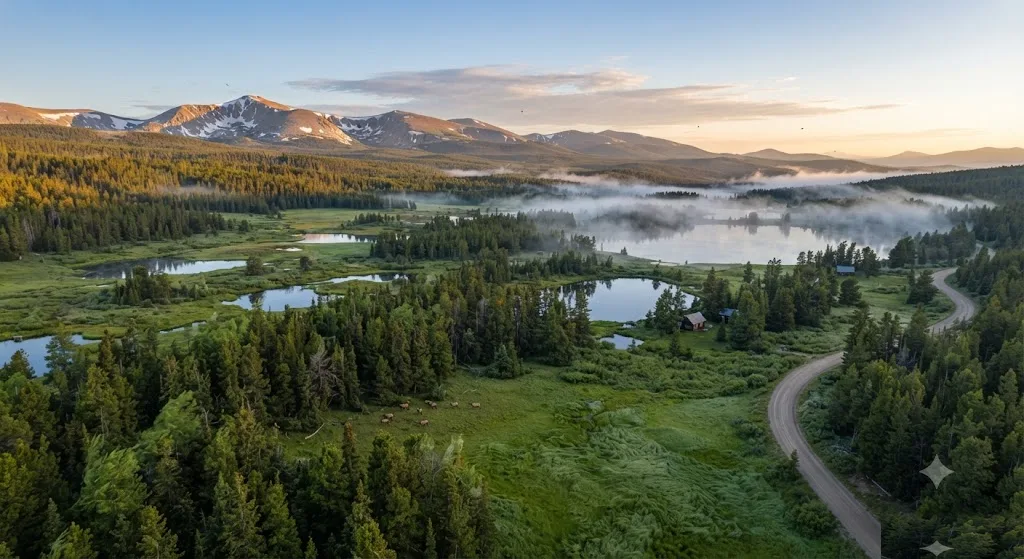
Our Medicine Bow-Routt National Forests guide covers practical planning for Medicine Bow-Routt National Forests Wyoming — best time to visit, getting there, and what to do on the ground.
The vast expanse of the Medicine Bow-Routt National Forests Wyoming offers an unparalleled escape into the wild heart of the American West. Spanning over 2.9 million acres across southeastern Wyoming and northern Colorado, these interconnected forests present a diverse tapestry of landscapes, from towering snow-capped peaks and pristine alpine lakes to dense lodgepole pine forests and expansive sagebrush plains. Our team at Roam States has meticulously compiled this guide to help you navigate the myriad opportunities for adventure, relaxation, and discovery within this magnificent natural treasure.
Why Visit Medicine Bow-Routt National Forests
For those seeking genuine wilderness experiences without the overwhelming crowds of more famous national parks, the Medicine Bow-Routt National Forests offer an exceptional alternative. We find that the sheer scale and variety of terrain here cater to every type of outdoor enthusiast. Imagine tracing the breathtaking curves of the Snowy Range Scenic Byway, a designated National Forest Scenic Byway that carves a path through the highest reaches of the Medicine Bow Mountains, offering panoramic vistas that stretch for miles. Or perhaps you envision casting a line into a crystal-clear mountain stream, hoping to hook a native trout. This is a place where solitude can still be found on a remote hiking trail, and where the night sky truly glitters with an unadulterated brilliance. We believe it's a destination that rewards exploration and provides a profound connection to nature.
Beyond the stunning scenery, the forests are a haven for wildlife. Keep an eye out for moose foraging in willow thickets, mule deer grazing in meadows, and a variety of bird species flitting through the trees. The ecological diversity supports a rich array of flora and fauna, making every outing a potential wildlife viewing opportunity. We also appreciate the accessibility of these forests; while they feel wonderfully remote, they are within a reasonable drive of several major cities and towns, making them an ideal choice for a weekend getaway or a longer vacation. The recreational opportunities are truly boundless, from challenging mountaineering ascents to gentle riverside strolls, ensuring that every visitor can find their perfect adventure.
Who It's Best For
The Medicine Bow-Routt National Forests are a superb destination for a wide array of travelers, particularly those who appreciate self-guided outdoor adventures. We recommend it highly for:
- Outdoor Enthusiasts: Hikers, backpackers, anglers, mountain bikers, rock climbers, and paddlers will find an endless playground of trails, lakes, and rivers. The challenging terrain of the Snowy Range is particularly appealing to experienced hikers and mountaineers.
- Families Seeking Adventure: With numerous campgrounds, picnic areas, and accessible trails, families can enjoy everything from easy nature walks to fishing and wildlife viewing. Many lakes are suitable for kayaking and paddleboarding, offering gentler water activities.
- Nature Photographers: The dramatic landscapes, especially during sunrise and sunset, and the abundant wildlife provide countless opportunities for stunning photography. The fall foliage in particular offers a vibrant palette of colors.
- Campers and RVers: The forests boast a wide selection of developed campgrounds and ample dispersed camping options, catering to both those who prefer amenities and those seeking a more primitive experience.
- Road Trippers: The Snowy Range Scenic Byway and other forest roads offer incredible drives with numerous pull-offs for scenic overlooks and short hikes. It's a fantastic addition to any USA road trip planner.
- Winter Sports Lovers: While often associated with summer, the forests transform into a winter wonderland, offering cross-country skiing, snowshoeing, and snowmobiling opportunities.
If your idea of a perfect vacation involves fresh air, stunning vistas, and the chance to explore at your own pace, then the Medicine Bow-Routt National Forests Wyoming is undoubtedly for you. We find that visitors who thrive in less structured environments and enjoy planning their own itineraries will get the most out of their time here.
Getting There & Parking
Accessing the Medicine Bow-Routt National Forests is relatively straightforward, though the vastness of the area means entry points vary significantly depending on your specific destination within the forests. The primary gateway towns are Laramie and Saratoga in Wyoming, and Steamboat Springs and Walden in Colorado. We recommend planning your route based on the particular area you intend to explore.
How to Get There
- From Laramie, Wyoming: Laramie serves as an excellent jumping-off point for the eastern side of the Medicine Bow National Forest, particularly the popular Snowy Range area. From Laramie, you can take US-130 West, which becomes the Snowy Range Scenic Byway. This route offers direct access to numerous campgrounds, trailheads, and scenic overlooks.
- From Saratoga, Wyoming: Saratoga provides access to the western side of the Medicine Bow National Forest, including areas like the Sierra Madre Range. Wyoming Highway 130 and Wyoming Highway 70 are key routes in this region.
- From Steamboat Springs, Colorado: For the Routt National Forest portion, Steamboat Springs is a prime access point. US-40 runs through Steamboat Springs, with various state highways and county roads branching off to access different sections of the forest.
- From Walden, Colorado: Walden, known as the "Moose Capital of Colorado," offers access to the eastern Routt National Forest and the North Park area. State Highway 14 and State Highway 125 are important routes here.
For those flying in, Denver International Airport (DIA) is the closest major international airport, approximately a 2-3 hour drive to the southern parts of the forest in Colorado or the eastern parts in Wyoming. Smaller regional airports like Laramie Regional Airport (LAR) or Yampa Valley Regional Airport (HDN) near Steamboat Springs offer closer, though often more expensive, options. We always advise checking road conditions, especially during spring and fall, as higher elevation roads, including sections of the Snowy Range Scenic Byway, are subject to seasonal closures due to snow. For 2026, the Snowy Range Scenic Byway (WY 130) typically opens in late May or early June and closes in mid-October or November, depending on snowfall.
Parking
Parking throughout the Medicine Bow-Routt National Forests is generally available at trailheads, campgrounds, picnic areas, and visitor centers. Most parking is free, but some developed recreation sites, particularly those with amenities like boat launches or developed picnic areas, may require a day-use fee or a valid recreation pass. For 2026, we anticipate that standard day-use fees for developed sites will range from $5-10, with annual passes like the America the Beautiful Pass being honored. Always look for signage at specific sites. We recommend arriving early during peak season (July and August) and on weekends, especially at popular trailheads like those leading to Medicine Bow Peak, as parking lots can fill up quickly. Dispersed camping areas often have informal pull-offs for parking, but ensure you are not blocking any roads or access points.
Top Things to Do
The vastness of the Medicine Bow-Routt National Forests ensures that there are virtually limitless things to do at Medicine Bow-Routt National Forests, catering to every interest and energy level. Our team has highlighted some of the most iconic and rewarding experiences.
Scenic Drives
- Snowy Range Scenic Byway (WY-130): This is arguably the crown jewel of the Medicine Bow National Forest. Traversing the crest of the Snowy Range Mountains at elevations over 10,000 feet, this byway offers spectacular alpine scenery, access to numerous trailheads, and breathtaking overlooks. We recommend budgeting ample time for stops, photos, and short walks. Remember, this road is typically closed from mid-November to late May or early June due to snow.
- Battle Pass Scenic Byway (WY-70): Located in the Sierra Madre Range, this byway offers a less-traveled but equally beautiful alternative, winding through dense forests and over a high mountain pass.
Hiking and Backpacking
The Medicine Bow-Routt National Forests hiking trails are among the most diverse and rewarding in the Rockies. From gentle strolls around alpine lakes to strenuous climbs up Wyoming's highest peaks, there's a trail for every ability. When considering Medicine Bow-Routt National Forests hiking trails, here are some of our favorites:
- Medicine Bow Peak Trail: Ascending to 12,014 feet, Medicine Bow Peak is the highest point in the Snowy Range and offers truly panoramic views. The loop trail is challenging, often involving scrambling over rocky terrain and snowfields even in summer. We recommend this for experienced hikers.
- Lake Marie Trail: A much more accessible and family-friendly option, this easy loop around the picturesque Lake Marie offers stunning reflections of the surrounding peaks. It's perfect for a leisurely stroll and photography.
- Continental Divide Trail: Sections of the Continental Divide Trail pass through the Medicine Bow-Routt National Forests, offering challenging multi-day backpacking opportunities for those seeking a truly immersive wilderness experience.
- Zirkel Wilderness Trails: In the Routt National Forest, the Mount Zirkel Wilderness Area offers an extensive network of trails leading to pristine lakes, rugged peaks, and lush meadows. Popular trails include the Gilpin Lake Trail and the Gold Creek Lake Trail.
- North Fork of the Little Snake River Trail: This trail offers a more remote experience, winding through a beautiful canyon with opportunities for fishing and wildlife viewing.
Always carry a map, compass or GPS, plenty of water, and be prepared for rapidly changing weather conditions at higher elevations. Trail conditions for 2026 can be checked with the local ranger districts.
Camping and Picnicking
With dozens of developed campgrounds and extensive opportunities for dispersed camping, spending a night under the stars is one of the quintessential things to do at Medicine Bow-Routt National Forests. Popular developed campgrounds in the Snowy Range include Nash Fork, Sugarloaf, and Libby Creek, offering amenities like vault toilets and picnic tables. Reservations for many developed campgrounds can be made up to six months in advance via Recreation.gov. For 2026, we advise booking well ahead for peak summer weekends. Dispersed camping is allowed in most areas of the forest, typically free of charge, but requires adherence to Leave No Trace principles and local regulations regarding fire restrictions and site selection. Picnic areas are scattered throughout the forests, often near scenic overlooks or along rivers.
Fishing and Boating
The forests are crisscrossed with countless streams, rivers, and high-alpine lakes teeming with trout. Anglers can pursue brook, rainbow, cutthroat, and brown trout. Popular fishing spots include the North Platte River, Encampment River, and numerous lakes along the Snowy Range Scenic Byway such as Lake Marie and Libby Lake. A valid Wyoming or Colorado fishing license is required. Many of the larger lakes, like Hog Park Reservoir and Lake John, are excellent for kayaking, canoeing, and small motorboats. Non-motorized boating is popular on many alpine lakes.
Wildlife Viewing
The Medicine Bow-Routt National Forests are home to a rich diversity of wildlife. Keep your eyes peeled for moose, elk, mule deer, black bears, bighorn sheep, and a variety of smaller mammals and birds. The North Park area near Walden, Colorado, is particularly renowned as the "Moose Capital of Colorado." We recommend visiting during dawn or dusk for the best viewing opportunities and always maintaining a safe distance from all animals.
Horseback Riding and Mountain Biking
Many trails within the forests are open to horseback riding, offering a unique way to experience the wilderness. Local outfitters in nearby towns can arrange guided rides. Mountain biking is also popular on designated trails and forest roads, with options ranging from easy scenic rides to challenging singletrack descents. Always check trail regulations, as some wilderness areas restrict bikes.
Best Time to Visit
The ideal time to visit the Medicine Bow-Routt National Forests largely depends on the activities you have in mind, as the forests experience distinct seasons, each offering a unique charm.
- Summer (June to August): This is the most popular time to visit, and for good reason. All roads, including the Snowy Range Scenic Byway, are typically open, and the high-country trails are mostly snow-free. Wildflowers are in full bloom, and the weather is generally warm and pleasant, though afternoon thunderstorms are common. We recommend summer for hiking, camping, fishing, and scenic drives. Be prepared for crowds, especially on weekends and at popular spots.
- Fall (September to October): Our team considers fall to be a truly spectacular time to visit. The aspen trees ignite with brilliant golden hues, creating breathtaking landscapes. The weather is often crisp and clear, and the summer crowds begin to dissipate. It's an excellent time for hiking, photography, and wildlife viewing. However, be aware that high-elevation roads and some campgrounds may begin to close as early as mid-October due to snow.
- Spring (May to early June): Spring is a transitional period. Lower elevation areas begin to thaw, and wildlife becomes more active. However, many high-country roads and trails remain snow-covered and inaccessible. This is a good time for fishing in lower elevation rivers and enjoying the quiet before the summer rush. We advise checking road and trail conditions closely if planning a spring visit.
- Winter (November to April): The forests transform into a winter wonderland, offering opportunities for cross-country skiing, snowshoeing, and snowmobiling. The Snowy Range Scenic Byway typically closes, but other forest roads may be groomed for winter recreation. This is a quiet and serene time to visit for those equipped for cold weather and winter sports.
Ultimately, the best time to visit Medicine Bow-Routt National Forests depends on your preferred activities, but for most visitors, late June through early October offers the widest range of accessible experiences.
Where to Stay Nearby
While the immersive experience of camping within the Medicine Bow-Routt National Forests is highly recommended, there are also excellent lodging options in surrounding towns for those who prefer more amenities or wish to use the forests as a base for day trips. When considering Medicine Bow-Routt National Forests lodging, we look for comfort, convenience, and a touch of local character.
In Wyoming:
- Laramie: As the largest city near the eastern Medicine Bow National Forest, Laramie offers the widest range of accommodations, from budget-friendly motels to comfortable hotels and charming bed and breakfasts. It's a vibrant college town with dining options and cultural attractions. Laramie is also a good base for exploring other parts of Wyoming, including the Wyoming State Capitol.
- Saratoga: This charming small town on the North Platte River is known for its hot springs and offers a more relaxed, rustic atmosphere. You'll find historic hotels, cabins, and a few resorts. It's an excellent base for exploring the western Medicine Bow National Forest and the Sierra Madre Range.
- Centennial: A tiny mountain community located right at the base of the Snowy Range, Centennial offers a handful of lodges, cabins, and a general store. It's perfect for those who want to be as close to the mountains as possible.
In Colorado:
- Steamboat Springs: A renowned ski resort town, Steamboat Springs offers abundant lodging options, from luxury resorts to condos and hotels. It's a great base for exploring the Routt National Forest, especially the Mount Zirkel Wilderness Area.
- Walden: Located in North Park, Walden is a smaller town with more limited but comfortable lodging options, including motels and guesthouses. It's ideal for those focused on exploring the eastern Routt National Forest and North Park's wildlife.
For those seeking a truly unique experience, consider staying at a guest ranch in the surrounding areas, which often offer guided activities like horseback riding and fishing. We advise booking accommodations well in advance, especially during the peak summer season (July and August), as popular options fill up quickly.
Sample 2-Day Itinerary
To help you make the most of your visit to the Medicine Bow-Routt National Forests Wyoming, our team has crafted a sample 2-day itinerary focusing on the popular Snowy Range area, easily accessible from Laramie. This itinerary assumes a summer visit when the Snowy Range Scenic Byway is fully open.
Day 1: Alpine Lakes and Mountain Peaks
- Morning (8:00 AM - 12:00 PM): Snowy Range Scenic Byway & Lake Marie: Begin your day by heading west from Laramie on US-130, which becomes the Snowy Range Scenic Byway. Enjoy the breathtaking drive, stopping at numerous overlooks. Your first major stop should be Lake Marie. We recommend taking the easy, picturesque loop trail around the lake, offering stunning reflections of the surrounding peaks. This is an excellent spot for photography and a gentle stretch of the legs.
- Lunch (12:00 PM - 1:00 PM): Picnic at Libby Lake: Continue further up the byway to Libby Lake. Find a scenic spot for a packed lunch amidst the alpine beauty. Alternatively, the Libby Creek Campground has picnic facilities.
- Afternoon (1:00 PM - 5:00 PM): Medicine Bow Peak Hike (or alternative): For experienced and well-prepared hikers, embark on the challenging but rewarding hike to Medicine Bow Peak. Allow 4-6 hours for the round trip. If a strenuous hike isn't on your agenda, explore other shorter trails in the area, such as the trails around Mirror Lake or the easy walk to the base of the peak for stunning views without the full climb.
- Evening (5:00 PM onwards): Camping or Return to Laramie: Set up camp at one of the developed campgrounds in the Snowy Range, such as Sugarloaf or Nash Fork (reservations highly recommended for 2026), or find a suitable dispersed camping spot. Enjoy a campfire and stargazing. If camping isn't your preference, head back to Laramie for dinner and a comfortable hotel stay.
Day 2: Rivers, Forests, and Relaxation
- Morning (8:00 AM - 12:00 PM): Fishing or Forest Exploration: After breakfast, head to a different part of the forest. Consider driving south on WY-230 towards the North Platte River for some excellent fly fishing opportunities. If fishing isn't your interest, explore some of the lower elevation hiking trails, perhaps near the Centennial Valley, which offer a different forest experience.
- Lunch (12:00 PM - 1:00 PM): Local Eatery in Centennial: Stop for lunch in the small town of Centennial, where you can find a casual meal and soak in the local atmosphere.
- Afternoon (1:00 PM - 4:00 PM): Vedauwoo Recreation Area: On your way back towards Laramie, make a stop at the Vedauwoo Recreation Area, just east of Laramie off I-80. This unique area features stunning granite rock formations, popular with rock climbers. Enjoy a short hike on the Turtle Rock Trail or simply marvel at the geology.
- Late Afternoon (4:00 PM onwards): Laramie Exploration: Spend the late afternoon exploring Laramie. Visit the Wyoming State Capitol, the University of Wyoming Geological Museum, or simply browse the shops downtown. For more ideas, check out Travel Wyoming.
- Evening: Departure or Extended Stay: Enjoy a farewell dinner in Laramie before heading home or continuing your journey to other Wyoming destinations like Devils Tower National Monument, Grand Teton National Park, or Yellowstone National Park.
This itinerary is just a suggestion; feel free to customize it based on your interests and the amount of time you have. The beauty of the Medicine Bow-Routt National Forests is the freedom to explore at your own pace.
Is It Worth Visiting?
Absolutely, without a doubt, the Medicine Bow-Routt National Forests are worth visiting. Our team confidently asserts that this region offers an unparalleled blend of accessibility and wildness, making it a truly exceptional destination for anyone seeking to connect with nature on a grand scale. If you're wondering, "is Medicine Bow-Routt National Forests worth visiting?", let us assure you that the answer is a resounding yes.
Unlike some of the more heavily trafficked national parks, the Medicine Bow-Routt National Forests provide ample opportunities for solitude and a more intimate experience with the wilderness. We find that the diverse landscapes, from the rugged peaks of the Snowy Range to the tranquil forests and vast plains, ensure that there's always something new to discover, regardless of how many times you visit. The sheer variety of activities available—from challenging hikes and serene fishing to scenic drives and abundant wildlife viewing—means that every member of your travel party can find something to love.
Moreover, the value proposition here is outstanding. While there are fees for some developed campgrounds and day-use areas, the overall cost of experiencing these magnificent forests is significantly lower than many other premier outdoor destinations. The ability to engage in dispersed camping, for instance, offers a truly budget-friendly way to immerse yourself in nature. For those who appreciate stunning natural beauty, abundant recreational opportunities, and a chance to escape the everyday, the question of "is Medicine Bow-Routt National Forests worth visiting?" is easily answered with an enthusiastic endorsement from our team.
Medicine Bow-Routt National Forests Camping
What are the camping options in Medicine Bow-Routt National Forests?
The Medicine Bow-Routt National Forests offer a wide range of camping experiences, from developed campgrounds with amenities to primitive dispersed camping. Developed campgrounds typically feature vault toilets, picnic tables, and fire rings, with some offering potable water. Popular campgrounds in the Medicine Bow area include Nash Fork, Sugarloaf, and Libby Creek in the Snowy Range, and Bottle Creek and Jack Creek in the Sierra Madre. In the Routt National Forest, campgrounds like Fish Creek Falls and Granite Creek are popular. Reservations for many developed sites can be made up to six months in advance via Recreation.gov and are highly recommended for 2026, especially during peak summer weekends. Dispersed camping (boondocking) is generally allowed throughout the forests, outside of developed recreation sites and specific restricted areas, provided you follow Leave No Trace principles, camp at least 200 feet from water sources and roads, and adhere to any fire restrictions. Always check with the local ranger district for current conditions and regulations before setting out.
Things to Do in Laramie
What are some popular things to do in Laramie, Wyoming?
Laramie, a vibrant university town and a primary gateway to the Medicine Bow National Forest, offers a variety of attractions. We recommend exploring the historic downtown area with its unique shops, restaurants, and murals. Visit the Wyoming Territorial Prison State Historic Site, where infamous outlaws like Butch Cassidy were once incarcerated. The University of Wyoming campus is home to the Geological Museum, which houses impressive dinosaur fossils, and the American Heritage Center. For history buffs, the Laramie Plains Museum offers a glimpse into the region's past. Laramie also hosts various events throughout the year. It's an excellent place to stock up on supplies and enjoy a meal before or after your forest adventures. You can also use Laramie as a base to explore other Wyoming gems like Fort Laramie National Historic Site.
Medicine Bow-Routt National Forests with Kids
Is Medicine Bow-Routt National Forests suitable for families with children?
Yes, the Medicine Bow-Routt National Forests are wonderfully suitable for families with children of all ages. We find that the diverse landscape and numerous accessible activities make it an ideal family destination. For younger children, easy nature walks around lakes like Lake Marie or the numerous picnic areas offer gentle exploration. Older children and teens will enjoy more challenging hikes, fishing, kayaking, and mountain biking. Wildlife viewing opportunities abound, which can be thrilling for kids. Many developed campgrounds are family-friendly, providing a safe and comfortable base for adventures. We recommend packing layers of clothing, plenty of snacks and water, and being prepared for changing weather. Always supervise children, especially near water and on trails, and educate them on Leave No Trace principles to foster a love for the outdoors. Consider visiting the Buffalo Bill Center of the West as a family-friendly cultural excursion if you travel further north in Wyoming.
Best Hotels Near Medicine Bow-Routt National Forests
What are the best hotels near Medicine Bow-Routt National Forests?
The "best" hotel depends on your budget and preferred location, but our team can recommend top-rated options in the primary gateway towns. In Laramie, the Hilton Garden Inn Laramie and the Fairfield Inn & Suites by Marriott Laramie consistently receive high ratings for comfort and amenities. For a more boutique experience, consider the Historic Hotel La Fayette. In Saratoga, the Saratoga Hot Springs Resort offers a unique experience with its mineral hot springs. Near the Snowy Range, options are more limited, but the Mountain View Hotel & Cafe in Centennial provides rustic charm. In Steamboat Springs, Colorado, the Steamboat Grand and Sheraton Steamboat Resort Villas are popular luxury choices. We always advise checking recent reviews and booking well in advance, especially during peak season for 2026 travel.
Medicine Bow-Routt National Forests Tips
What are some essential tips for visiting Medicine Bow-Routt National Forests?
To ensure a safe and enjoyable trip to the Medicine Bow-Routt National Forests, our team offers these essential tips:
- Plan Ahead: Research your specific destination within the vast forests, as conditions and access vary greatly. Check road and trail conditions, especially for high-elevation areas, which can remain snow-covered into early summer.
- Be Prepared for Weather: Mountain weather can change rapidly. Pack layers, rain gear, and sun protection, even on seemingly clear days.
- Carry Water and Food: Always bring more water than you think you'll need, especially for hikes. Food sources are limited once you're in the forest.
- Leave No Trace: Practice Leave No Trace principles to minimize your impact. Pack out everything you pack in, stay on designated trails, and properly dispose of human waste.
- Wildlife Awareness: Be aware of wildlife, including bears and moose. Carry bear spray if hiking in bear country and know how to use it. Maintain a safe distance from all animals.
- Fire Safety: Check current fire restrictions before having a campfire. Always ensure fires are completely out before leaving.
- Maps and Navigation: Cell service is often nonexistent. Carry physical maps, a compass, or a reliable GPS device.
- Reservations: For 2026, make reservations for popular developed campgrounds well in advance, particularly for summer weekends.
- Permits: While general forest access is free, some activities like commercial guiding or large group events may require special permits. Fishing requires a state license.
By following these tips, you'll be well-prepared for an incredible adventure in the Medicine Bow-Routt National Forests.
Where to Stay Near Medicine Bow-Routt National Forests
What are the best towns and areas for lodging near Medicine Bow-Routt National Forests?
When planning your visit, choosing where to stay near Medicine Bow-Routt National Forests is crucial for convenience and access. The best towns depend on which part of the forests you plan to explore. For the eastern Medicine Bow National Forest, particularly the Snowy Range, Laramie, Wyoming, is the largest and most comprehensive option, offering a full range of services and accommodations. Closer to the mountains, the small community of Centennial provides immediate access to the Snowy Range Scenic Byway. For the western Medicine Bow and Sierra Madre Range, Saratoga, Wyoming, is an excellent choice, known for its hot springs and charming atmosphere. If your focus is on the Colorado side, specifically the Routt National Forest, Steamboat Springs offers extensive lodging and amenities, while Walden is a smaller, more rustic option for exploring the North Park area. Each town provides a different experience, from bustling resort towns to quiet mountain communities, allowing you to tailor your stay to your preferences. Consider linking your trip with a visit to Bridger-Teton National Forest if you are exploring more of Wyoming's natural wonders, or even Bighorn Canyon National Recreation.
The Medicine Bow-Routt National Forests offer an unparalleled opportunity to immerse yourself in the rugged beauty and serene wilderness of the Rocky Mountains. From the breathtaking vistas of the Snowy Range Scenic Byway to the quiet solitude of a high-alpine fishing stream, these forests promise adventure, relaxation, and a deep connection to the natural world. Our team encourages you to plan your visit with care, embrace the spirit of exploration, and discover the countless treasures that await in this magnificent corner of Wyoming and Colorado. Whether you're a seasoned backpacker or a family seeking a memorable outdoor getaway, the Medicine Bow-Routt National Forests will undoubtedly leave you with lasting memories and a longing to return.
Last updated: 2026-07-13 by the Roam States team.