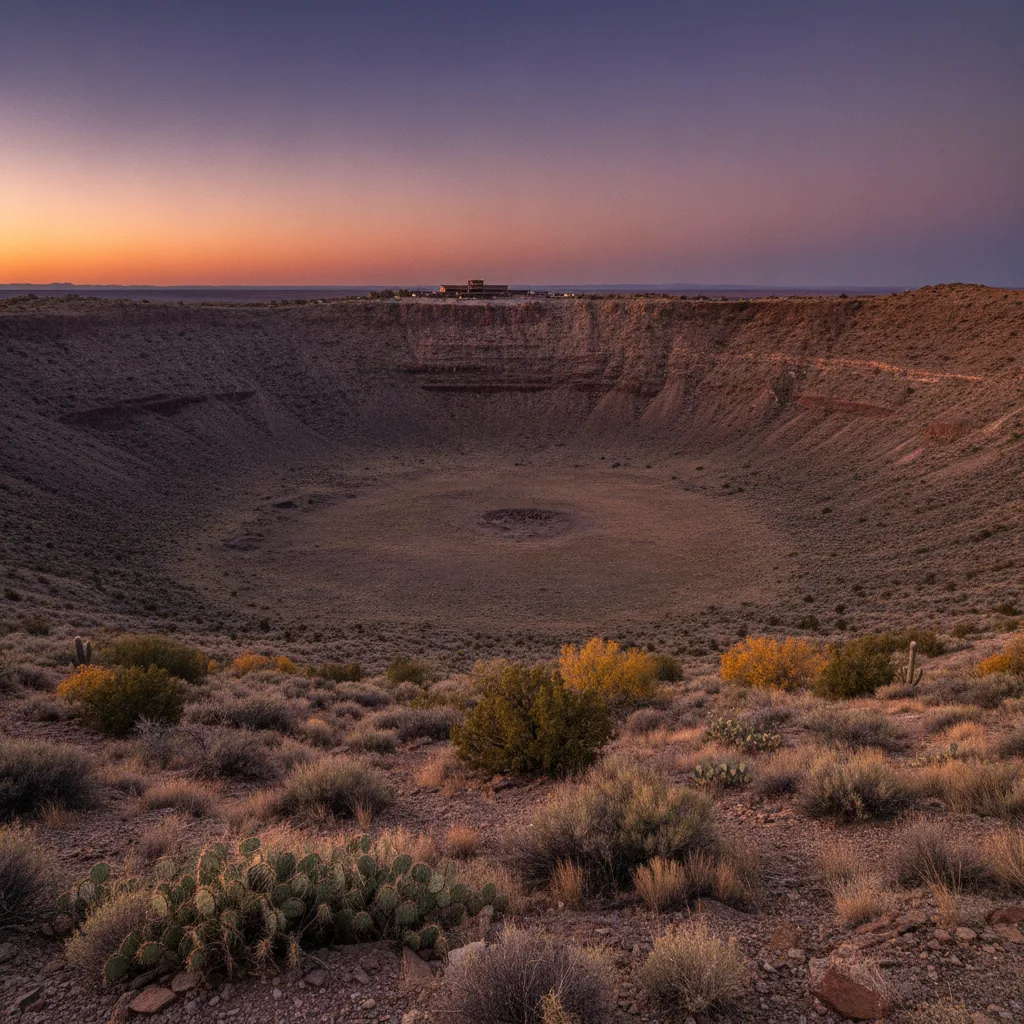
As independent US travel authorities, we at Visit America pride ourselves on delivering confident, specific, and never generic advice. This privately owned, well-preserved impact crater is the result of a meteor strike approximately 50,000 years ago, featuring an interactive discovery center and observation trails. It’s a truly unique stop on any Arizona itinerary, offering a tangible connection to cosmic history that few other places on Earth can provide.
Why Visit Meteor Crater Natural Landmark
For our team, visiting Meteor Crater Natural Landmark Arizona isn't just another checkbox on a travel itinerary; it's an encounter with the raw power of the universe. This isn't a national park, but a privately owned National Natural Landmark, which means it operates with a singular focus on preserving and interpreting this extraordinary site. Approximately 50,000 years ago, a massive iron meteorite, estimated to be about 160 feet in diameter and weighing 300,000 tons, struck the Earth here, exploding with a force equivalent to 20 million tons of TNT. The result is a nearly mile-wide, 570-foot-deep chasm that remains the best-preserved meteorite impact site on Earth.
What makes this site so compelling is its stark, undeniable evidence of a cosmic collision. Unlike many geological formations shaped slowly by erosion, wind, or volcanic activity, this landscape was created in seconds, leaving an indelible mark that scientists still study today. We find it particularly fascinating that NASA once used Meteor Crater as a training ground for Apollo astronauts, preparing them for the lunar landscape they would encounter. This legacy is woven into the experience, offering visitors a glimpse into the rigorous preparations for space exploration. The site offers a profound sense of scale and time, reminding us of Earth's dynamic history and its place in the cosmos. It’s a place where science, history, and awe converge, making it an essential stop for anyone traveling through Northern Arizona.
Who It's Best For
Our team believes Meteor Crater Natural Landmark appeals to a surprisingly broad audience, far beyond just geology buffs and space enthusiasts. It’s an ideal destination for families with curious children, as the interactive Discovery Center and Space Museum make complex scientific concepts accessible and engaging. Kids (age 0-5) even get in free, and juniors (age 6-13) have a reduced admission fee. The hands-on exhibits and the opportunity to touch a real meteorite fragment are sure to spark wonder in young minds.
Adventure seekers and hikers will appreciate the observation trails and, for the truly intrepid, the new guided Floor Tour that descends into the crater itself. History buffs will find the stories of Daniel Barringer's early 20th-century mining efforts and NASA's astronaut training particularly captivating. Road trippers along Historic Route 66 will find it a convenient and profoundly impactful detour, easily combined with other classic roadside attractions. Even those simply seeking a unique and breathtaking natural wonder will be impressed by the sheer scale and preservation of the crater. It’s a destination that encourages reflection on our planet's past and future, making it suitable for anyone with an open mind and a desire for an extraordinary experience.
Getting There & Parking
When planning how to get to Meteor Crater Natural Landmark, we can assure you that accessibility is straightforward. The Meteor Crater Natural Landmark Arizona is conveniently located just off Interstate 40 at Exit 233, between Flagstaff and Winslow. This makes it an easy and essential stop for anyone driving across Northern Arizona, whether you're heading to the Grand Canyon or exploring historic Route 66. The drive itself is scenic, traversing the high desert landscape, which only adds to the anticipation of seeing such a dramatic geological feature.
Upon arrival, you'll find ample and free parking available for all visitors, including designated spaces for RVs and large trucks. This is a significant plus for road trippers and those traveling with larger vehicles, eliminating any stress about finding a spot. There’s also a dedicated Meteor Crater RV Park on-site, offering convenient lodging options for those who wish to stay right at the landmark. The visitor center is located directly on the rim of the crater, meaning you're just steps away from incredible views as soon as you arrive. We highly recommend following the clear signage from I-40, which will guide you directly to the entrance and parking areas.
Top Things to Do
There are numerous things to do at Meteor Crater Natural Landmark, ensuring a fulfilling visit for every type of traveler. Our team always recommends starting your experience at the state-of-the-art Discovery Center and Space Museum. This fully air-conditioned facility features interactive exhibits that delve into meteor science, impact events, and the history of research at the site. You can learn how scientists confirmed the crater's meteoritic origin and explore how similar impacts shaped planetary surfaces. Don't miss the 80-seat widescreen theater, which shows an engaging documentary about the crater's formation, or the "Collision!" 4D Experience Room for a truly immersive sensation. A highlight for many is the chance to touch a real piece of the meteorite that created the crater. The Discovery Center also houses an impressive exhibit featuring an Apollo 11 space capsule, connecting the crater's history to space exploration. For younger visitors, the new "Blast Zone" offers dedicated educational fun.
Beyond the museum, the primary draw, of course, is the crater itself. Step outside onto the observation decks for breathtaking views of the immense impact site. Telescopes are positioned at various points, offering detailed perspectives of the crater floor. We strongly suggest joining one of the guided rim tours, led by knowledgeable guides who share fascinating details about the impact, geology, and the site's role in astronaut training. These tours provide context that enhances the visual spectacle. For the ultimate adventure, consider the new VIP Floor Tour, available Saturdays at 9 a.m. for $125 per person. This advanced-level, two-hour guided hike allows visitors to descend the historic Astronaut Trail into the crater itself, an area previously accessible primarily to NASA astronauts and scientific personnel. It's a strenuous hike, but offers unparalleled insights into the crater's geology, mining history, and astronaut legacy.
While the Meteor Crater Natural Landmark is a destination in itself, our team also encourages exploring the surrounding area, especially the charming city of Winslow. There are plenty of things to do in Winslow, Arizona, that complement a visit to the crater. A must-see is the iconic "Standin' On the Corner Park," immortalized by the Eagles song "Take It Easy." This public square features a two-story mural and a life-sized bronze statue, perfect for a classic Route 66 photo op. History enthusiasts will enjoy the Old Trails Museum, which explores Winslow's past, including its Santa Fe Railway and Route 66 heritage. The historic La Posada Hotel and Gardens, a beautifully restored Fred Harvey railway hotel, is another architectural gem worth visiting, even if just for a meal or a stroll through its grounds. For a moment of solemn reflection, the 9-11 Remembrance Garden features beams recovered from the World Trade Center Towers. If you have more time, consider a drive to nearby McHood Park & Clear Creek for outdoor recreation, or venture further to the Petrified Forest National Park and Painted Desert, less than an hour's drive east of Winslow, offering stunning landscapes and ancient geological formations.
Best Time to Visit
Our team has found that timing your visit to Meteor Crater Natural Landmark can significantly enhance your experience. While the site is open daily from 8 a.m. to 5 p.m. (closed only on Christmas Day), the Arizona desert climate plays a crucial role. The spring (March to May) and fall (September to November) months generally offer the most pleasant temperatures, with warm days and cooler evenings, ideal for exploring the outdoor observation areas and taking advantage of the guided rim tours. These shoulder seasons avoid the intense heat of summer and the occasional chill of winter.
Summer (June to August) sees a surge of tourists in the region, and while the Discovery Center is fully air-conditioned, the outdoor rim trails can be very hot, especially midday. If you visit during summer, we strongly advise going early in the morning or later in the afternoon to avoid the peak heat. Always bring plenty of water, wear sunscreen, and a hat, as shade is minimal. Winter (December to February) can bring colder temperatures, and while snow is rare, it's not unheard of, which could add a unique, albeit chilly, perspective to the crater. Regardless of the season, checking the local weather forecast before your trip is always a good practice. For those interested in the strenuous Floor Tour, remember it's offered on Saturdays at 9 a.m., so plan accordingly if this is a priority.
Where to Stay Nearby
When considering Meteor Crater Natural Landmark lodging, our team recommends focusing on Winslow, Arizona, as the most convenient and well-equipped nearby town. Winslow is approximately 27-29 kilometers (about 17-18 miles) east of the crater, making for a short and easy drive. Here, you'll find a range of accommodations to suit different budgets and preferences.
For a truly unique and historic stay, we highly recommend the La Posada Hotel. This beautifully restored Fred Harvey hotel, originally built in 1929, is a masterpiece of Southwestern architecture and a landmark in itself. It offers a luxurious and atmospheric experience, often highly rated by travelers.
For those seeking more standard and budget-friendly Meteor Crater Natural Landmark lodging, Winslow also offers several familiar chain hotels right off I-40, including the Quality Inn Winslow I-40, Rodeway Inn Winslow I-40, Clarion Pointe Winslow I-40, Motel 6 Winslow, AZ, and Travelodge by Wyndham Winslow. These provide comfortable and reliable options with amenities like free Wi-Fi and parking. There are also vacation rentals and smaller, independently owned motels in Winslow.
Another excellent option for Meteor Crater Natural Landmark lodging, especially if you're looking for a resort experience or are continuing west, is the Twin Arrows Navajo Casino Resort, located about 16 miles northwest of Meteor Crater, closer to Flagstaff.
Finally, for those traveling with an RV, the Meteor Crater RV Park is situated directly at the landmark, offering the ultimate convenience for early morning visits or stargazing opportunities. This allows you to truly immerse yourself in the desert environment.
Sample 2-Day Itinerary
Our team has crafted a sample 2-day itinerary to help you make the most of your visit to Meteor Crater Natural Landmark and the surrounding Northern Arizona region, ensuring a balanced mix of cosmic wonder and local charm.
Day 1: Cosmic Impact & Winslow Charm
- **Morning (8:00 AM - 1:00 PM): Meteor Crater Natural Landmark.** Start your day early to beat any crowds and enjoy the cooler morning temperatures. Head directly to Meteor Crater (I-40, Exit 233). Purchase your tickets (we recommend buying online for convenience, though they are non-refundable and never expire). Begin with the Discovery Center and Space Museum, immersing yourselves in the interactive exhibits, watching the "Collision!" 4D Experience, and touching a real meteorite fragment. Afterward, step outside to the observation decks for panoramic views and join a guided rim tour to gain deeper insights into the crater's history and geology.
- **Lunch (1:00 PM - 2:00 PM): Blasted Bistro at Meteor Crater.** Grab a quick and convenient lunch at the Blasted Bistro located within the visitor center.
- **Afternoon (2:00 PM - 5:00 PM): Exploring Winslow.** Drive the short distance to Winslow, Arizona. Your first stop should be the iconic Standin' On the Corner Park for photos with the mural and statue. Then, explore the Old Trails Museum to delve into Winslow's rich history, from its railway past to Route 66 lore. Take a stroll around the historic downtown.
- **Evening (5:00 PM onwards): Historic Luxury in Winslow.** Check into your Meteor Crater Natural Landmark lodging in Winslow. For a memorable experience, consider the historic La Posada Hotel. Enjoy dinner at La Posada's Turquoise Room, known for its Southwestern cuisine, or choose from other local Winslow eateries.
Day 2: Route 66 & Desert Wonders
- **Morning (8:00 AM - 12:00 PM): Petrified Forest National Park & Painted Desert.** After breakfast in Winslow, embark on a scenic drive east on I-40 to Petrified Forest National Park and the Painted Desert. This stunning national park is less than an hour away and offers incredible landscapes of colorful badlands and ancient petrified wood. Drive the scenic loop, stop at various viewpoints, and take short hikes to truly appreciate the unique geology.
- **Lunch (12:00 PM - 1:00 PM): On the Road.** Pack a picnic to enjoy within Petrified Forest National Park, or grab a bite in Holbrook on your way back west.
- **Afternoon (1:00 PM - 5:00 PM): Optional Adventures or Further Exploration.**
- **Option A (Nature & History):** Head west towards Flagstaff. Consider a stop at Walnut Canyon National Monument, about 50 miles west of Winslow, to explore ancient cliff dwellings.
- **Option B (Scenic Drive):** If you're up for more driving and stunning vistas, explore a portion of the Mogollon Rim, south of Winslow, offering breathtaking views and opportunities for wildlife spotting.
- **Option C (Deep Dive into the Crater):** If your visit aligns with a Saturday and you're an experienced hiker, consider booking the VIP Floor Tour at Meteor Crater Natural Landmark in the morning (note: this would require adjusting Day 1 or making this the primary focus of Day 2).
- **Evening:** Depending on your onward journey, you can either return to Winslow for another night, or continue west to Flagstaff for its vibrant dining scene and access to /destinations/grand-canyon-national-park-arizona or /destinations/sedona-oak-creek-canyon-arizona.
This itinerary provides a solid framework, but feel free to adjust it based on your interests and pace. Remember to check current conditions and operating hours for all attractions.
FAQ Longtails
Meteor Crater Natural Landmark with kids
Absolutely! Our team considers Meteor Crater Natural Landmark an excellent destination for families with kids. The interactive Discovery Center and Space Museum are designed to engage young minds with hands-on exhibits, a 4D movie experience ("Collision!"), and the chance to touch a real meteorite. Children ages 0-5 receive free admission, and juniors (6-13) have a reduced rate. There's also a new "Blast Zone" specifically for kids. The outdoor observation decks are exciting for all ages, and the guided rim tours are educational and keep kids interested with fascinating stories of the impact and astronaut training. We recommend bringing binoculars for a closer look at the crater's features and encouraging them to participate in any available junior ranger-style activities.
Best hotels near Meteor Crater Natural Landmark
The best hotels near Meteor Crater Natural Landmark are primarily located in Winslow, Arizona, about 17-18 miles away. For a unique and luxurious experience, our team highly recommends the historic La Posada Hotel, a beautifully restored Fred Harvey railway hotel. Other well-regarded options in Winslow include the Quality Inn Winslow I-40, Rodeway Inn Winslow I-40, and Clarion Pointe Winslow I-40, offering comfortable and budget-friendly stays. For those seeking a resort feel or traveling further west, the Twin Arrows Navajo Casino Resort is another excellent choice. Additionally, the Meteor Crater RV Park provides convenient on-site lodging for RV travelers.
Meteor Crater Natural Landmark tips
Our top Meteor Crater Natural Landmark tips include arriving early, especially during warmer months, to avoid crowds and intense desert heat. Always bring plenty of water, wear sunscreen, a hat, and comfortable walking shoes, as outdoor shade is minimal. Start your visit at the Discovery Center to gain context before heading to the rim. Don't skip the guided rim tour; the guides offer invaluable insights. Consider purchasing tickets online to streamline your entry. If you're an experienced hiker and visit on a Saturday, the new Floor Tour offers an unparalleled experience, but book in advance. Finally, combine your visit with exploring nearby Winslow for a full day of Arizona history and charm.
Where to stay near Meteor Crater Natural Landmark
For visitors wondering where to stay near Meteor Crater Natural Landmark, our team primarily directs you to Winslow, Arizona, which is the closest and most convenient town. Winslow offers a variety of hotels, from the historic and highly-rated La Posada Hotel to several well-known chain hotels like Quality Inn, Rodeway Inn, and Motel 6. These provide a range of price points and amenities. For those with recreational vehicles, the Meteor Crater RV Park is located directly at the landmark, offering the closest possible accommodation. Alternatively, Flagstaff, about 40 minutes west, provides a larger selection of lodging and dining options, though it's a longer drive to the crater.
Meteor Crater Natural Landmark parking
Parking at Meteor Crater Natural Landmark is straightforward and convenient. Our team can confirm that there is plenty of free parking available directly at the site. This includes ample space for cars, as well as dedicated parking for RVs and large trucks. The parking areas are well-signed from I-40 Exit 233. This eliminates any stress about finding a spot, allowing you to focus on the incredible experience that awaits you at the crater.
Best time to visit Meteor Crater Natural Landmark
The best time to visit Meteor Crater Natural Landmark, according to our team, is during the spring (March to May) and fall (September to November) months. These seasons offer the most comfortable temperatures for exploring the outdoor observation decks and participating in guided rim tours, avoiding the intense heat of the Arizona summer. While the site is open year-round (except Christmas Day), summer visits require extra precautions like ample water, sunscreen, and a hat. If you plan to take the new Floor Tour, remember it's a strenuous hike offered on Saturdays at 9 a.m., so planning for cooler weather is advisable.
The Meteor Crater Natural Landmark Arizona is more than just a hole in the ground; it's a profound educational and awe-inspiring experience that connects us directly to the vastness of space and the dynamic history of our planet. Our team wholeheartedly recommends it as a premier destination in Arizona. When planning your trip, consider combining it with other iconic Arizona destinations like Grand Canyon National Park, Monument Valley Navajo Park, or the stunning landscapes of Arizona. It’s a journey that will leave you with a renewed sense of wonder.
Last updated: 2026-07-05 by the Visit America team.