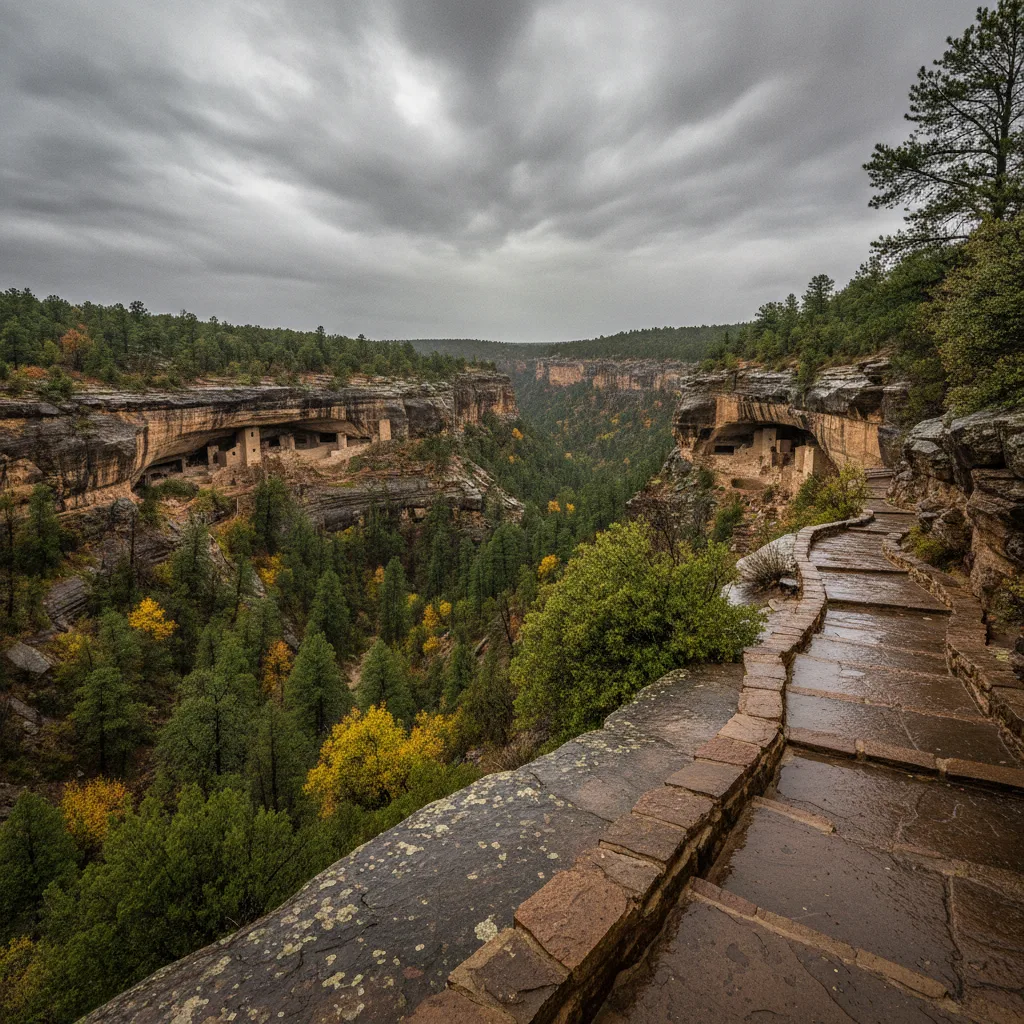
Walnut Canyon National Monument Travel Guide — Arizona
Our Visit America editorial team is dedicated to bringing you the most authentic and actionable travel advice for exploring the United States. This Walnut Canyon National Monument guide targets "Walnut Canyon National Monument Arizona" — We cut through the generic fluff to deliver confident, specific recommendations, ensuring your trip to this remarkable Arizona destination is unforgettable. Here, we delve into the ancient cliff dwellings and breathtaking landscapes of Walnut Canyon National Monument Arizona, offering you an independent and expert perspective on planning your visit.
Tucked away just east of Flagstaff, Walnut Canyon National Monument Arizona stands as a testament to the ingenuity and resilience of the Sinagua people, who carved a life for themselves within its dramatic limestone alcoves centuries ago. This national monument preserves ancient cliff dwellings built by the Sinagua people, allowing visitors to hike trails that offer close-up views of these remarkable structures tucked into limestone alcoves. Our team has explored the canyon's depths and walked its rim, and we can confidently say that a visit here offers a profound connection to a rich past and a stunning natural environment.
Why Visit Walnut Canyon National Monument
Walnut Canyon National Monument offers a unique blend of natural beauty and profound historical insight. We believe it's a must-visit for anyone intrigued by ancient cultures and breathtaking landscapes. The canyon itself is a geological wonder, a deep, winding fissure in the earth, but it's the human story etched into its walls that truly captivates. Imagine a community thriving here, building homes into the natural rock overhangs, utilizing the canyon's resources for survival and community life. Visiting Walnut Canyon provides a tangible link to these ancestral Puebloans, allowing you to literally walk in their footsteps.
Beyond the historical significance, the monument offers a peaceful escape into nature. The crisp Arizona air, the scent of ponderosa pines, and the calls of canyon wrens create a serene atmosphere. It’s a place where you can slow down, reflect, and appreciate both the natural world and the enduring spirit of human adaptation. Unlike some of the larger, more crowded national parks, Walnut Canyon National Monument offers a more intimate and accessible experience with ancient ruins, making it perfect for those seeking a deeper connection without overwhelming crowds.
Who It's Best For
Walnut Canyon National Monument is ideally suited for a diverse range of visitors, though certain groups will find it particularly rewarding. It's an excellent destination for history buffs and archaeology enthusiasts who want to see well-preserved cliff dwellings up close. Families with curious children will appreciate the Junior Ranger program offered at the visitor center, which helps engage younger visitors with the monument's history and ecology.
Hikers, from casual strollers to those seeking a moderate challenge, will find trails that offer incredible views and access to the dwellings. While the Rim Trail is accessible to most, the Island Trail provides a more strenuous but highly rewarding experience. Nature lovers will also appreciate the diverse flora and fauna that thrive in this unique canyon ecosystem. However, those with severe mobility issues might find the Island Trail's numerous steps challenging. Leashed pets are welcome on the Rim Trail and in the parking lot, but not on the Island Trail or inside the visitor center, so plan accordingly if traveling with furry companions.
Getting There & Parking
Reaching Walnut Canyon National Monument is straightforward, making it an easy addition to any Northern Arizona itinerary. The monument is conveniently located approximately 7.5 to 10 miles (12-16 km) east of Flagstaff, Arizona.
From Flagstaff: If you're coming from downtown Flagstaff, we recommend taking Interstate 40 East. Look for Exit 204, which is clearly marked for Walnut Canyon National Monument. Turn south onto Walnut Canyon Road, and follow it for about 3 to 3.3 miles (5 km) until you reach the monument entrance and visitor center.
Parking: Upon arrival, you'll find a large, paved parking lot directly at the entrance to the Walnut Canyon National Monument visitor center. Parking is ample, even during busier times, and provides easy access to the visitor center and trailheads. There is no public transportation directly to the monument, so a private vehicle is essential for your visit.
Fees: As of 2026, the standard entrance fee for Walnut Canyon National Monument is $25 per private vehicle, which grants you unlimited entry for seven consecutive days. If you're arriving by motorcycle, the fee is $20, and for individuals without a private vehicle (pedestrian or cyclist), it's $15 per person (ages 16 and older). Children 15 and under are admitted free. We highly recommend considering an America the Beautiful Pass if you plan on visiting multiple national parks or monuments within a year, as these are honored here. Alternatively, the Flagstaff Area National Monument Annual Pass, priced at $45, provides 12 months of access to Walnut Canyon, Sunset Crater Volcano, and Wupatki National Monument.
Reservations: General entry to Walnut Canyon National Monument does not require advance reservations. However, certain ranger-guided programs, such as the Ranger Ledge Hike, do require pre-registration due to limited group sizes. We advise checking the official National Park Service website for Walnut Canyon closer to your travel date for any updates on conditions or special programs. Cell phone reception can be limited or spotty within the monument, so it's a good idea to download or print any passes or important information beforehand.
Top Things to Do
When you visit Walnut Canyon National Monument, the primary draw is, of course, the ancient cliff dwellings, but there are several ways to experience this remarkable site. Our team recommends focusing on the two main hiking trails and making the most of the visitor center.
Explore the Visitor Center
Your journey into Walnut Canyon National Monument should begin at the visitor center. This is where you'll gain valuable context for the ancient structures you're about to see. The visitor center features a museum with exhibits detailing the lives of the Sinagua people, their culture, and the canyon's geology. A short film provides an excellent overview, and park rangers are on hand to answer questions and offer insights. Don't forget to pick up a Junior Ranger activity booklet if you're traveling with kids. You'll also find a WNPA park store for souvenirs and educational materials, as well as restroom facilities and a canyon viewpoint.
Hike the Island Trail
For the most immersive experience, we highly recommend tackling the Island Trail. This is one of the top things to do at Walnut Canyon National Monument. This one-mile (1.6 km) paved loop trail descends 185 to 370 feet (56-113 m) into the canyon via more than 240 concrete and stone steps. While rated as moderate to strenuous, especially for those not acclimated to the 7,000-foot (2,134 m) elevation, the effort is undeniably worth it. Along the Island Trail, you'll pass more than 25 partially restored cliff dwellings, allowing for an incredibly close-up view of these ancient homes. You can peer inside many of them, imagining the daily lives of the Sinagua people. Remember, stepping inside the dwellings is not permitted to protect these fragile historical sites. The Island Trail typically closes at 4:00 PM, an hour before the monument's gates close, so plan your descent accordingly.
Walk the Rim Trail
If you prefer a less strenuous experience or are visiting with pets (leashed dogs are allowed on this trail), the Rim Trail is another excellent option for things to do at Walnut Canyon National Monument. This 0.7-mile (1.1 km) self-guided loop runs along the canyon rim and is described as easy and fairly level. The first part of the trail is paved and accessible, offering two scenic overlooks of the canyon. Along the way, you'll pass a pit house and a pueblo set back from the canyon rim, along with interpretive signage that details the local flora and the cultivation practices of the Sinagua. The Rim Trail offers fantastic panoramic views of the canyon and its hidden dwellings from above. The Rim Trail entrance closes at 4:30 PM.
Enjoy a Picnic
Walnut Canyon National Monument provides picnic areas near the visitor center and parking lot. There are no food services within the monument, so we recommend packing a lunch and enjoying it amidst the beautiful surroundings. It's a perfect way to relax after your hikes and soak in the serene atmosphere.
Join a Ranger Program
For an even deeper understanding of the monument, consider joining a ranger-guided program. These programs are generally offered during the summer months (June, July, and August) and can include guided hikes like the Ranger Cabin Hike or the more strenuous Ranger Ledge Hike. The Ranger Ledge Hike, for example, takes you into the otherwise closed backcountry of Walnut Canyon National Monument to view additional cliff dwellings, but it requires pre-registration and has limited availability. Check with the visitor center or the NPS website for current schedules and to inquire about reservations.
Best Time to Visit
Choosing the best time to visit Walnut Canyon National Monument can significantly enhance your experience. We've found that each season offers its own unique charm and challenges.
Spring (March-May): Spring is arguably one of the best times to visit. The weather is generally mild and pleasant, with comfortable temperatures ideal for hiking the Island Trail. Wildflowers often begin to bloom, adding vibrant splashes of color to the canyon landscape. Crowds are typically moderate, increasing as summer approaches. Be prepared for variable weather, as spring in Northern Arizona can still bring cool mornings and occasional winds. Dressing in layers is always a good strategy.
Summer (June-August): Summer offers long daylight hours, perfect for extended exploration. However, temperatures can be intense, often exceeding 95ºF (35ºC) in July and August. Afternoon thunderstorms are common from July to September, which can bring dramatic skies but also require visitors to be prepared for sudden changes in weather. We recommend starting your hikes early in the morning to avoid the midday heat. This is also the busiest season, so expect larger crowds, especially on weekends and holidays. Ranger programs are more frequently offered during these months.
Fall (September-November): Fall is another fantastic time to visit. The summer crowds begin to thin, and the temperatures become comfortably cool, making for excellent hiking conditions. The changing leaves of the canyon's vegetation can add beautiful autumnal hues to the landscape. Similar to spring, be prepared for variable weather and dress in layers. The Island Trail may begin to experience closures due to snow and ice towards late fall.
Winter (December-February): While less popular, a winter visit can offer a uniquely serene and beautiful experience, especially if there's a fresh dusting of snow. However, heavy snow and ice can lead to trail closures, particularly the Island Trail, which can be hazardous. The monument is closed on December 25th and January 1st. Temperatures can be quite cold, so warm clothing is essential. If you visit in winter, check the monument's official website for current conditions and any closures before you go.
Overall, our team finds that late spring and early fall offer the most ideal conditions for visiting Walnut Canyon National Monument, balancing pleasant weather with manageable crowds.
Where to Stay Nearby
While there is no Walnut Canyon National Monument lodging within the monument itself, the nearby city of Flagstaff, Arizona, serves as an excellent base for exploring the canyon and the surrounding Northern Arizona attractions. Flagstaff is just a short 10-12 mile drive away, offering a wide array of accommodation options to suit every budget and preference.
Many hotels in Flagstaff are conveniently located with easy access to I-40, making the drive to the monument quick and simple. Here are some of our recommended options for Walnut Canyon National Monument lodging:
- Club Wyndham Flagstaff: This family-friendly 3.5-star hotel is located approximately 3.4 miles from Walnut Canyon National Monument. It features an outdoor pool with a children's area, tennis courts, a hot tub, and a mini-golf course. Suites often include kitchens, making it a comfortable choice for longer stays.
- Sonesta ES Suites Flagstaff: Situated about 3.9 miles from the monument, Sonesta ES Suites offers spacious suites with kitchens and free Wi-Fi, ideal for families and extended visits.
- Hampton Inn & Suites Flagstaff East: A popular 3-star option, this hotel is approximately 4.9 miles from Walnut Canyon National Monument. It's well-regarded for its comfortable accommodations and amenities.
- Fairfield Inn & Suites by Marriott Flagstaff Northeast: Located about 4.1 miles from the monument, this hotel boasts an indoor pool, complimentary breakfast, a fitness center, and electric car charging stations.
- Little America Flagstaff: This hotel offers a hot tub, gym, and restaurant, along with a seasonal outdoor pool and free self-parking. It's a great option for those seeking a full-service experience.
- Hilton Garden Inn Flagstaff: Located off I-17 and I-40, this hotel is less than a mile from Northern Arizona University and Riordan Mansion State Park. It offers an indoor pool, whirlpool, fitness center, and an on-site café.
Beyond these, Flagstaff offers numerous other hotels, motels, vacation rentals, and even some unique stays like cabins within the Continental Country Club area, many with amenities like fireplaces, hot tubs, and mountain views. We advise booking your Walnut Canyon National Monument lodging in advance, especially during peak travel seasons, to secure the best rates and availability.
Sample 2-Day Itinerary
To truly appreciate Walnut Canyon National Monument and its surroundings, we recommend dedicating at least two days. This allows for a thorough exploration of the monument and a taste of Flagstaff's charm. Here's a sample itinerary crafted by our team:
Day 1: Ancient History & Canyon Views
Morning (9:00 AM - 1:00 PM): Walnut Canyon Immersion
- Arrive at Walnut Canyon National Monument shortly after its 9:00 AM opening to beat any potential crowds and enjoy cooler temperatures.
- Begin at the Visitor Center. Spend about an hour exploring the museum exhibits, watching the introductory film, and gathering information from the park rangers. This will provide essential context for your visit.
- Embark on the strenuous, yet incredibly rewarding, Island Trail. Allow 1.5 to 2 hours for this one-mile loop, including time for photography and marveling at the 25 cliff dwellings up close. Remember to bring plenty of water and wear sturdy shoes.
- After completing the Island Trail, take a moment to rest and enjoy the views from the visitor center's overlooks.
Lunch (1:00 PM - 2:00 PM): Picnic with a View
- Enjoy a packed lunch at one of the picnic areas near the visitor center. There are no food services within the monument, so come prepared.
Afternoon (2:00 PM - 4:00 PM): Rim Trail & Ranger Program
- Take a leisurely stroll along the easy 0.7-mile Rim Trail. This paved path offers different perspectives of the canyon, passes a pit house, and is perfect for a relaxed walk.
- If available and pre-registered, participate in a ranger-guided program, such as the Ranger Cabin Hike, for additional insights into the monument's history and natural features.
- Depart Walnut Canyon National Monument by 4:30 PM, ensuring you have ample time before the park gates close at 5:00 PM.
Evening: Flagstaff Exploration
- Check into your chosen Walnut Canyon National Monument lodging in Flagstaff.
- Enjoy dinner at one of Flagstaff's many excellent restaurants.
- Consider an evening visit to Lowell Observatory, known for its dark skies and where Pluto was discovered.
Day 2: Flagstaff & Northern Arizona Gems
Morning (9:00 AM - 12:00 PM): Flagstaff Culture & History
- Explore downtown Flagstaff. We recommend a historical walking tour or a visit to Riordan Mansion State Historic Park, a beautifully preserved example of early 20th-century craftsmanship.
- Alternatively, immerse yourself in the region's natural and cultural history at the Museum of Northern Arizona.
Lunch (12:00 PM - 1:00 PM): Local Flavors
- Grab lunch at a local Flagstaff eatery, perhaps trying a spot along the Flagstaff Brewery Trail for a casual bite.
Afternoon (1:00 PM - 5:00 PM): Choose Your Adventure
- Option A (Natural Wonders): Head north to explore other nearby national monuments like Sunset Crater Volcano National Monument or Wupatki National Monument, both covered by the Flagstaff Area National Monument Annual Pass.
- Option B (Scenic Drive): Take a scenic drive towards Sedona & Oak Creek Canyon, enjoying the stunning red rock formations.
- Option C (Grand Canyon Gateway): For those with more time, consider starting your journey towards Grand Canyon National Park, which is a manageable drive from Flagstaff.
Evening: Relaxation or More Exploration
- Enjoy another evening in Flagstaff, perhaps catching live music or simply relaxing at your hotel.
- For those continuing their Arizona adventure, this is a great jumping-off point for other incredible destinations like Monument Valley Navajo Park, Antelope Canyon, or Horseshoe Bend, all accessible from Northern Arizona. For more ideas on where to go, check out our guide to Best places in Arizona and our comprehensive Plan Your US Trip resource.
Last updated: 2026-07-05 by the Visit America team.