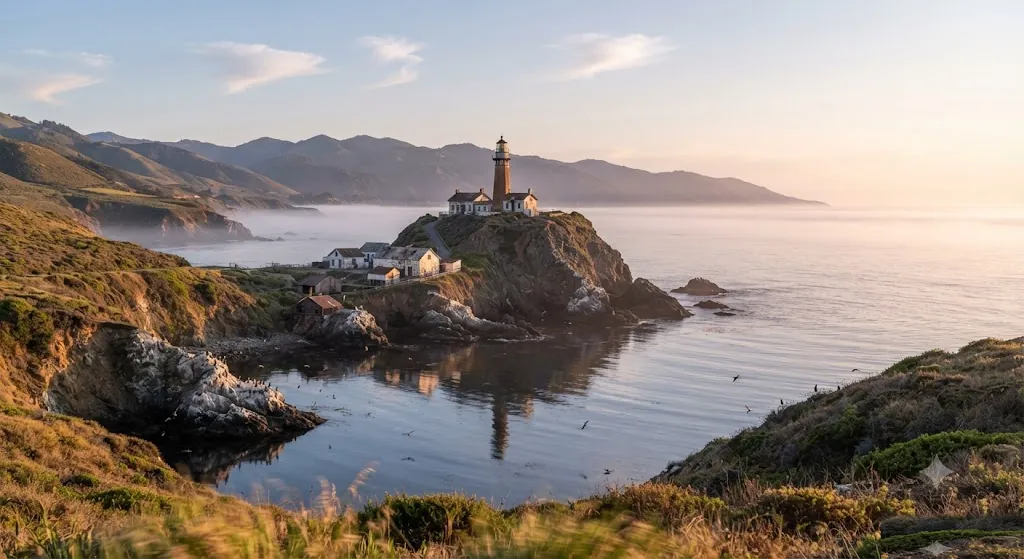
Our Point Sur State Historic Park guide covers practical planning for Point Sur State Historic Park California — best time to visit, getting there, and what to do on the ground.
Perched dramatically on a volcanic rock along the rugged Big Sur coastline, Point Sur State Historic Park California offers a unique blend of natural beauty and rich maritime history. Our team at Roam States has compiled this comprehensive guide to help you plan an unforgettable visit to this iconic California landmark. From navigating its historic lighthouse tours to exploring its breathtaking coastal vistas, we'll provide all the essential details for your trip.
Why Visit Point Sur State Historic Park
Point Sur State Historic Park stands as a testament to California's maritime past and the raw, untamed beauty of the Big Sur coast. The centerpiece, the Point Sur Lighthouse, has guided ships through treacherous waters since its first illumination on August 1, 1889. It's the only complete, turn-of-the-century light station in California that is open to the public, offering a rare glimpse into the lives of lighthouse keepers and their families who once inhabited this remote outpost.
Beyond its historical significance, the park provides dramatic coastal views that are quintessential Big Sur. The volcanic rock formation on which the lighthouse sits juts prominently into the Monterey Bay National Marine Sanctuary, offering panoramic vistas of the Pacific Ocean and the rugged shoreline. Visitors can also explore the former Point Sur Naval Facility (NAVFAC), a Cold War-era listening outpost that tracked Soviet submarines, adding another layer of intriguing history to the experience.
For those seeking a blend of history, stunning scenery, and a sense of remote adventure, Point Sur State Historic Park is an unparalleled destination. It’s a place where the stories of the past echo in the ocean breeze, and the natural grandeur of California's central coast is on full display. We recommend setting aside ample time to truly soak in the atmosphere and appreciate the dedication of the volunteers who preserve this remarkable site.
Who It's Best For
Point Sur State Historic Park is ideal for history enthusiasts, nature lovers, and anyone seeking a unique and immersive experience along the California coast. The guided tours, which are the only way to access the lighthouse and historic buildings, are particularly engaging for those interested in maritime history and the stories of the people who lived and worked in this isolated location.
Families with older children (typically fourth grade and up) will find the historical narratives and the scenic walk to the lighthouse both educational and exciting. The park is also a photographer's dream, with its dramatic landscapes, iconic lighthouse, and abundant opportunities for wildlife viewing. Birdwatchers and marine life enthusiasts will appreciate its location within the Monterey Bay National Marine Sanctuary.
However, visitors should be prepared for a moderately strenuous walking tour that includes steep sections and stairs. Those with significant mobility issues may find the full lighthouse tour challenging, though arrangements can sometimes be made for visitors with disabilities to access a drop-off point for viewing some restored buildings. Pets are generally not allowed on the trails or tours, so this destination is best suited for visitors without animal companions.
Getting There & Parking
Reaching Point Sur State Historic Park California is an adventure in itself, as it's nestled along the iconic Highway 1 in Big Sur. The park is located approximately 19 miles south of Carmel and about 24 miles south of Monterey. If you're driving from Carmel, simply head south on Highway 1 for about 19 miles. Look for the Point Sur State Historic Park entrance on the west side of the highway, or the wooden sign marked "Point Sur Naval Facility" a quarter-mile south of the light station gate.
Parking for the tours is available at the base of the point, near the entrance gate. It's important to arrive early, especially during peak seasons or holidays, as parking can be limited and tours operate on a first-come, first-served basis. Visitors are generally not permitted to remain in their vehicles once the tour begins.
When planning how to get to Point Sur State Historic Park, we strongly advise checking current road conditions for Highway 1. This scenic highway is renowned for its beauty but can occasionally experience closures due to landslides, particularly during winter months. CalTrans provides up-to-date road information. Be prepared for potential delays and allow ample travel time to ensure you arrive at the park before your desired tour slot. The remote nature of this park means that reservations are not accepted for tours, so showing up early is key to securing your spot.
Top Things to Do
The primary attraction and one of the most enriching things to do at Point Sur State Historic Park is the guided walking tour of the Point Sur Lightstation. These docent-led tours offer an in-depth exploration of the historic lighthouse, the keeper's quarters, and other support buildings, providing fascinating insights into the lives of the light keepers and the operational history of this vital aid to navigation.
The standard lighthouse tour is a three-hour experience that involves a moderately strenuous walk with a 360-foot elevation gain and two stairways, one of which has 61 steps. During the tour, you'll learn about the massive Fresnel lens that once cast its light 23 miles out to sea, and you'll have the opportunity to climb the lighthouse tower for breathtaking views of the Pacific Ocean and the rugged Big Sur coastline. Beyond the lighthouse itself, the dramatic coastal views from the volcanic rock are a major highlight, perfect for photography and soaking in the natural grandeur.
In addition to the main lighthouse tour, Point Sur State Historic Park also offers tours of the historic Point Sur Naval Facility (NAVFAC). This former Cold War listening outpost provides a different historical perspective, focusing on its role in tracking Soviet submarines. NAVFAC tours are typically shorter, around two hours, and are conducted on more level ground, making them a good option for those seeking a less strenuous experience. When considering things to do at Point Sur State Historic Park, we highly recommend experiencing both facets of its history if your schedule allows.
Point Sur State Historic Park Hiking Trails
While the primary activity at Point Sur State Historic Park involves the guided walking tours to the lighthouse and Naval Facility, the park and its immediate surroundings offer distinct walking experiences. The guided tour itself is a significant walk, covering approximately 1.5 miles round trip with some steep sections and a 360-foot elevation gain to the light station. This guided hike is the main way to experience the unique terrain and historical sites of Point Sur State Historic Park.
Beyond the guided tour, the park's natural setting provides opportunities for appreciating coastal bluffs and ocean vistas. While formal, unguided hiking trails within the immediate historic park boundaries are not a primary feature, the guided tour itself acts as an interpretive hike. For more extensive hiking, visitors often look to nearby state parks in the Big Sur area. For instance, Andrew Molera State Park, located just 7 miles away, offers various trails like the Creamery Meadow to Molera Beach trail (easy, 2 miles roundtrip) or the Molera 8-mile loop (moderate to strenuous) with great coastal views. Pfeiffer Big Sur State Park also boasts trails such as the Valley View Trail, which offers views of Point Sur and the Big Sur Valley.
It's important to remember that pets are not allowed on the trails or tours within Point Sur State Historic Park itself. When planning to explore Point Sur State Historic Park hiking trails, be sure to wear sturdy walking shoes and dress in layers, as coastal weather can change rapidly.
Best Time to Visit
The best time to visit Point Sur State Historic Park California largely depends on your preference for weather and crowd levels. The Big Sur coast is known for its changeable climate, with fog being a common occurrence, even in summer. However, the milder temperatures and typically clearer skies of late spring (April-May) and early fall (September-October) often provide the most pleasant conditions for the walking tours.
Summer (June-August) is popular, but it also brings the highest chance of coastal fog, which can obscure some of the panoramic views. While a foggy day can lend a mysterious and atmospheric quality to the lighthouse, clear days offer breathtaking vistas. Summer also sees the largest crowds, meaning tours can fill up quickly.
Winter (November-March) can offer dramatic storm watching and fewer crowds, but tours are more susceptible to cancellation due to inclement weather or road closures on Highway 1. Regardless of the season, we always recommend dressing in layers, wearing comfortable walking shoes, and bringing water and snacks, as the tours are three hours long and involve a significant amount of walking.
To ensure you have the best experience, always check the official Point Sur State Historic Park website or call ahead for the most current tour schedule and any potential closures before your visit. Tours are offered on Wednesdays, Saturdays, and Sundays, with specific times for the Lightstation and Naval Facility tours.
Point Sur State Historic Park Lodging: Where to Stay Nearby
While there is no camping or lodging directly within Point Sur State Historic Park itself, the surrounding Big Sur and Carmel areas offer a wide range of accommodations to suit various preferences and budgets. For those seeking a luxurious escape, iconic resorts like Post Ranch Inn and Alila Ventana Big Sur are located within a short drive, offering upscale amenities, stunning ocean views, and a tranquil atmosphere. These are often adult-only properties, perfect for a romantic getaway.
Mid-range options for Point Sur State Historic Park lodging can be found in Carmel and Monterey, which are about 19-24 miles north of the park. Hotels such as Hyatt Carmel Highlands or Carmel Mission Inn provide comfortable stays with good access to both the park and other Monterey County attractions. Many of these offer a blend of convenience and scenic beauty, often with views of the coastline or nestled in charming settings.
For a more rustic or budget-friendly experience, camping is available at nearby state parks like Andrew Molera State Park or Pfeiffer Big Sur State Park. Pfeiffer Big Sur State Park, known as "Mini Yosemite," is particularly popular and offers campsites nestled under towering redwoods, with reservations often filling up six months in advance. You can also find various private campgrounds and glamping options in Monterey County. When planning your visit, we advise booking your Point Sur State Historic Park lodging well in advance, especially during peak travel seasons, as accommodations in this popular region can fill up quickly. For additional options, consider exploring the diverse offerings across /states/california, including other stunning coastal destinations like /destinations/big-sur-pch-california.
Sample 2-Day Itinerary
To fully immerse yourselves in the beauty and history of the region surrounding Point Sur State Historic Park California, we recommend a two-day itinerary, allowing for both the park's unique offerings and the broader Big Sur experience.
Day 1: Lighthouse & Naval History
- Morning (9:00 AM - 1:00 PM): Start your day early and head to Point Sur State Historic Park. Arrive at least 30 minutes before the 10:00 AM Lightstation tour to secure your spot, as tours are first-come, first-served. Embark on the 3-hour guided walking tour of the Point Sur Lightstation, exploring the historic lighthouse, keeper's quarters, and enjoying the dramatic coastal views. This is one of the essential things to do at Point Sur State Historic Park.
- Lunch (1:00 PM - 2:00 PM): Pack a picnic to enjoy at a designated picnic area outside the park, or head south towards Big Sur Village for a meal at a local eatery. Remember, no picnics or snacks are allowed on the tour itself.
- Afternoon (2:00 PM - 4:00 PM): If time and interest allow, consider the 10:30 AM Saturday tour of the Point Sur Naval Facility (NAVFAC), a two-hour experience on more level ground, delving into its Cold War history. Alternatively, drive a short distance south on Highway 1 to marvel at the iconic Bixby Creek Bridge, a quintessential Big Sur photo opportunity.
- Evening: Check into your chosen accommodation in Big Sur or Carmel. Enjoy dinner with ocean views if staying in Big Sur, or explore the dining scene in Carmel-by-the-Sea.
Day 2: Big Sur Coastal Exploration & Nature
- Morning (9:00 AM - 12:00 PM): Dedicate your morning to exploring other natural wonders of the Big Sur coast. We recommend a visit to Julia Pfeiffer Burns State Park to see the famous McWay Falls, an 80-foot waterfall that cascades directly onto the beach. For a more active start, explore some of the Point Sur State Historic Park hiking trails in nearby Andrew Molera State Park, such as the Creamery Meadow to Molera Beach trail.
- Lunch (12:00 PM - 1:00 PM): Enjoy lunch at a cafe or restaurant in Big Sur Village, or find a scenic spot for a packed lunch amidst the redwoods.
- Afternoon (1:00 PM - 5:00 PM): Head north towards Point Lobos State Natural Reserve, often called the "crown jewel" of California's state parks. Here, you can hike scenic trails like the Cypress Grove Trail, observe abundant marine wildlife, and visit the small whaling museum. This provides a different perspective on California's rich coastal ecosystems.
- Evening: Enjoy a final dinner in Monterey or Carmel, perhaps visiting the Monterey Bay Aquarium if time permits, or simply relaxing after two days of coastal exploration. This itinerary offers a comprehensive experience of the beauty and history that define this stretch of California's central coast. For more planning resources, visit our /plan-your-trip page.
Is It Worth Visiting?
From our perspective as independent travel authorities, the question of "is Point Sur State Historic Park worth visiting?" can be answered with a resounding yes, especially for those who appreciate a blend of history, dramatic scenery, and a unique coastal experience. This park offers something truly distinct from other California attractions.
The opportunity to take a guided tour of a fully intact, turn-of-the-century lighthouse is a rare privilege. The stories shared by the knowledgeable docents bring the maritime history to life, offering a tangible connection to the past. The sheer beauty of the location, perched on a volcanic rock jutting into the Pacific, provides unparalleled views of the Big Sur coastline, making it a photographer's paradise and a memorable stop on any California road trip.
While the tours require a moderate level of physical fitness due to the walking and stairs, the reward is an immersive experience that transports you to another era. The former naval listening outpost adds another layer of intrigue, appealing to those interested in Cold War history. For travelers seeking an authentic, uncrowded, and educational encounter with California's heritage and natural splendor, Point Sur State Historic Park is worth visiting. It's a destination that leaves a lasting impression, far removed from generic tourist traps.
How to Get There
Reaching Point Sur State Historic Park is straightforward, as it's located directly off California's iconic Highway 1. The park is situated approximately 19 miles south of Carmel and about 24 miles south of Monterey. To get to Point Sur State Historic Park, you'll primarily be driving along this scenic coastal route.
If you're coming from the north (e.g., Monterey or Carmel), simply drive south on Highway 1. You'll need to keep an eye out for the park entrance, which is marked by a farm gate on the west side of the highway, about a quarter-mile north of the historic Point Sur Naval Facility. There's also a wooden sign that reads "Point Sur Naval Facility." For those traveling from the south, you'll drive north on Highway 1 past Big Sur Village until you reach the park entrance.
It's crucial to note that Highway 1 can be subject to closures due to landslides, especially during the rainy season. We strongly advise checking current CalTrans road conditions before you depart to ensure a smooth journey. Parking is available at the base of the point where tours begin, but it can be limited, so arriving early is recommended. Understanding how to get to Point Sur State Historic Park and checking road conditions are vital steps for a successful visit.
Last updated: 2026-07-13 by the Roam States team.