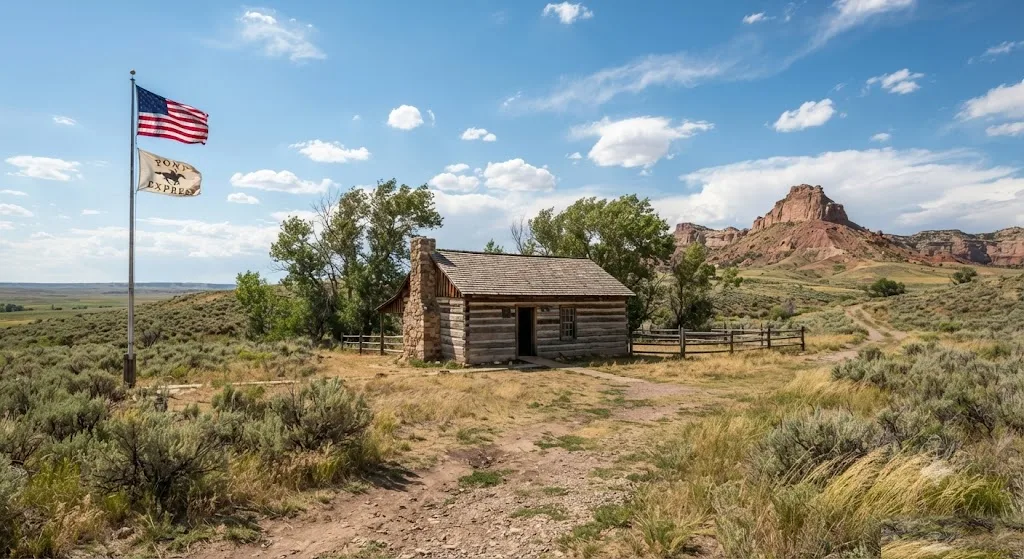
Our The National Pony Express Historic Trail guide covers practical planning for The National Pony Express Historic Trail Wyoming — best time to visit, getting there, and what to do on the ground.
The National Pony Express Historic Trail Wyoming offers a unique journey into a pivotal, albeit brief, chapter of American history. Our team at Roam States has extensively explored this legendary route, bringing you an independent and confident guide to experiencing the spirit of the Pony Express in the Cowboy State. This isn't just a road trip; it's an immersive dive into the daring feats of young riders who carried mail across the vast plains and rugged mountains, connecting a nation on the brink of civil war. We've compiled the essential information you need, from verified 2026 facts on hours and fees to the best places to stay and things to do, ensuring your adventure is as smooth as the mail delivery once aimed to be.
Why Visit The National Pony Express Historic Trail
Visiting The National Pony Express Historic Trail is more than just a historical excursion; it's an opportunity to connect with the raw, untamed spirit of the American West. We believe it offers a tangible link to a time when communication was a matter of grit, speed, and courage. Imagine the thundering hooves, the dust clouds, and the sheer determination of those young riders, often teenagers, who braved harsh weather, unforgiving terrain, and constant danger to deliver vital messages. The trail in Wyoming, in particular, showcases some of the most challenging and historically significant sections of the original route. Here, you can walk in their footsteps, see the remnants of the very stations where they rested and swapped horses, and read the interpretive signs that bring their stories to life. It’s a journey that speaks volumes about American ingenuity and the relentless pursuit of progress, even in the face of immense obstacles. For history buffs, outdoor enthusiasts, and families alike, it’s an experience that transcends a simple visit, offering profound insights into the nation’s formative years. We find that the stark beauty of Wyoming's landscapes, largely unchanged since the Pony Express era, only amplifies the sense of stepping back in time.
Who It's Best For
The National Pony Express Historic Trail is truly for anyone with a curious spirit and a love for American history and the great outdoors. We find it particularly resonates with history enthusiasts eager to delve into the details of this iconic mail service, from the logistics of horse changes to the daily lives of station masters. Families with older children will discover an engaging, interactive history lesson, where stories of bravery and endurance can spark imaginations far more vividly than any textbook. The trail also appeals strongly to road trippers seeking a unique theme for their journey, offering a compelling narrative to follow across the state. Outdoor adventurers will appreciate the opportunities for hiking, horseback riding, and exploring remote landscapes, often with breathtaking views. We also recommend it for photographers looking to capture the vastness of the American West and the subtle remnants of its past. While some sections are easily accessible by car, others require a bit more effort, making it ideal for those who enjoy a mix of convenience and off-the-beaten-path exploration. If you appreciate self-guided discovery and the freedom to explore at your own pace, this trail is undoubtedly for you.
Getting There & Parking
Navigating The National Pony Express Historic Trail in Wyoming involves understanding its linear nature and the various access points. Since it's a historic trail rather than a single destination, how to get to The National Pony Express Historic Trail depends on which segment or site you wish to visit. The trail stretches across the entire state, generally following Interstate 80 in the southern part of Wyoming, with key sites often accessible via well-maintained state highways and county roads. For many, Casper serves as an excellent central hub for exploring the trail, particularly due to the presence of the National Historic Trails Interpretive Center. This center is located at 1501 N Poplar St, Casper, WY, and offers ample free parking. From Casper, you can easily access various segments of the trail heading east or west.
Another significant access point is near Fort Laramie National Historic Site, which is a crucial Pony Express stop. The site is located at 965 Gray Rocks Rd, Fort Laramie, WY, and provides extensive parking facilities for visitors. Most interpretive sites along the trail, especially those managed by the Bureau of Land Management (BLM) or Wyoming State Parks, offer dedicated parking areas, often unpaved but suitable for standard vehicles. We always recommend checking specific site information before heading out, especially for more remote locations, as road conditions can vary with weather. When considering how to get to The National Pony Express Historic Trail, remember that many sections are best explored with a good map and a full tank of gas, as services can be sparse between towns. We found that most major interpretive sites along the route, such as the South Pass City State Historic Site, also have designated parking lots, typically free of charge. Always look for official signage to guide you to parking areas, which are usually well-marked at historical sites.
Top Things to Do
There are countless things to do at The National Pony Express Historic Trail, offering a blend of historical immersion and outdoor adventure. Our team has identified key experiences that truly capture the essence of this legendary route. First and foremost, we highly recommend visiting the National Historic Trails Interpretive Center in Casper. This state-of-the-art facility provides an excellent overview of the Pony Express, alongside other historic trails like the Oregon and Mormon Trails, through engaging exhibits, films, and interactive displays. It's an essential starting point to understand the broader context of your journey. The center is open daily from 8:00 AM to 5:00 PM in the summer (May 1-September 30) and Monday-Saturday from 9:00 AM to 4:30 PM in the winter (October 1-April 30), with free admission.
Another must-do is exploring the Fort Laramie National Historic Site. This former military post served as a vital Pony Express station and offers a remarkably preserved glimpse into 19th-century frontier life. You can wander through historic buildings, watch living history demonstrations, and imagine the riders arriving with their precious cargo. The site is open year-round, with visitor center hours typically 8:00 AM to 4:30 PM daily, and an entrance fee of $20 per vehicle or $15 per person for walk-ins, valid for seven days.
For a more rugged experience, seek out the actual trail segments. Many sections are marked with interpretive signs, allowing you to walk or even horseback ride along the original path. The Bureau of Land Management (BLM) manages numerous accessible segments, often with pull-offs and information kiosks. For instance, west of Casper, you can find well-preserved wagon ruts and Pony Express markers. We also suggest visiting South Pass City State Historic Site, a remarkably preserved gold mining town that was also a Pony Express station. The site is open from 9:00 AM to 5:00 PM daily from mid-May to October 31, with a $4 per person entrance fee for adults. These are just a few of the things to do at The National Pony Express Historic Trail that will bring history to life.
Beyond specific sites, simply driving the scenic byways that parallel the trail offers incredible photographic opportunities and a sense of the vast distances the riders covered. Keep an eye out for the distinct Pony Express Trail markers, often square brown posts with a rider silhouette. We also encourage you to visit local museums in towns like Rock Springs or Green River, as many have small exhibits dedicated to their local connection to the trail. Remember to carry plenty of water and snacks, especially when venturing into more remote areas.
Best Time to Visit
The best time to visit The National Pony Express Historic Trail in Wyoming is generally during the late spring, summer, and early fall months, from May through October. During this period, the weather is most favorable for exploration, with warmer temperatures and less chance of snow, making all trail segments and historic sites accessible. We find that June, July, and August offer the longest daylight hours and the most consistent warm weather, ideal for extensive driving, hiking, and outdoor activities. However, these are also the busiest months, particularly at popular sites like Fort Laramie and the National Historic Trails Interpretive Center.
For those seeking to avoid crowds while still enjoying pleasant weather, late May and September are excellent choices. In May, the landscapes are often lush and green, and wildflowers begin to bloom. September brings cooler temperatures, crisp air, and often stunning fall foliage, especially in areas with more trees, though much of the trail traverses high desert. We generally advise against visiting during the winter months (November through April) due to harsh weather conditions, including heavy snow, icy roads, and extreme cold, which can lead to road closures and make many trail segments impassible. Some visitor centers and historic sites may also have reduced hours or be closed during the off-season. Always check current weather forecasts and road conditions before embarking on your trip, especially if traveling during the shoulder seasons.
Where to Stay Nearby
Finding suitable lodging along The National Pony Express Historic Trail in Wyoming is crucial for a comfortable journey. While the trail itself is remote in many sections, several towns along or near the route offer a good range of accommodations. We recommend focusing your search on key cities that serve as excellent bases for exploration. Casper, being centrally located and home to the National Historic Trails Interpretive Center, is an ideal hub. Here, you'll find a variety of hotels, from budget-friendly options to more upscale choices, ensuring that The National Pony Express Historic Trail lodging needs are met for all travelers. Some popular options include the Ramkota Hotel and Conference Center and the Hilton Garden Inn Casper.
Further east, near Fort Laramie National Historic Site, lodging options become more limited, with smaller towns like Torrington offering motels and guesthouses. For a more robust selection, you might consider staying in Cheyenne, Wyoming's capital, which is about an hour's drive south of Fort Laramie. Cheyenne boasts numerous hotels, dining, and other amenities. As you head west along the trail, Rawlins and Rock Springs are significant towns providing a good selection of hotels and services. Rawlins offers a convenient stop between Casper and the western stretches of the trail, while Rock Springs is a larger city with more choices for The National Pony Express Historic Trail lodging, including major chain hotels.
For those exploring the South Pass City area, Lander and Riverton are the closest towns with substantial lodging. Lander, in particular, offers a charming small-town atmosphere with unique local inns and motels. We always advise booking accommodations in advance, especially during the peak summer season, as popular hotels can fill up quickly. While dispersed camping is possible on some BLM lands along the trail, traditional lodging offers comfort and convenience after a day of historical exploration.
Sample 2-Day Itinerary
To truly immerse ourselves in The National Pony Express Historic Trail in Wyoming, we've crafted a sample 2-day itinerary that balances historical exploration with scenic drives and local charm.
Day 1: Casper & Eastward Expansion
- **Morning (9:00 AM - 1:00 PM):** Begin your journey at the National Historic Trails Interpretive Center in Casper. Dedicate several hours to exploring its comprehensive exhibits on the Pony Express and other historic trails. This will provide essential context for your entire trip. Remember, admission is free.
- **Lunch (1:00 PM - 2:00 PM):** Enjoy lunch at one of Casper's local eateries.
- **Afternoon (2:00 PM - 5:30 PM):** Drive east from Casper along Highway 20/26, following the general route of the Pony Express. Look for interpretive signs and pull-offs marking historic trail segments. Your destination is Fort Laramie National Historic Site (approximately a 2-hour drive).
- **Late Afternoon (5:30 PM - 7:00 PM):** Explore the Fort Laramie National Historic Site, walking through the historic buildings and imagining its role as a key Pony Express station. The site is open until 4:30 PM, but you can still explore the grounds after the visitor center closes.
- **Evening:** Check into your accommodation in nearby Torrington or drive further to Cheyenne for more options. Enjoy dinner and reflect on the day's historical journey.
Day 2: South Pass & Western Frontiers
- **Morning (8:00 AM - 12:00 PM):** After breakfast, begin your drive west towards South Pass City State Historic Site (approximately a 3-hour drive from Casper, or longer if coming from Torrington/Cheyenne, so adjust start time accordingly). This route will take you through vast landscapes that truly evoke the Pony Express era.
- **Late Morning/Lunch (12:00 PM - 2:00 PM):** Arrive at South Pass City State Historic Site. Explore this remarkably preserved gold mining town, which also served as a Pony Express station. Allow ample time to wander the streets, visit the historic buildings, and learn about the intersection of gold rush and mail delivery. There's a $4 per person entrance fee. Pack a picnic or grab a snack at the site if available.
- **Afternoon (2:00 PM - 5:00 PM):** Continue west from South Pass City, exploring nearby segments of the Pony Express Trail. You can find marked segments and remnants of the trail in the vast open spaces managed by the BLM. Consider a short hike on one of The National Pony Express Historic Trail hiking trails in this area to truly experience the terrain.
- **Late Afternoon/Evening:** Depending on your onward travel plans, you can head north to Lander or Riverton for lodging and dinner, or continue west towards Rock Springs if your journey takes you further along I-80.
This itinerary offers a robust experience of The National Pony Express Historic Trail Wyoming, hitting key interpretive sites and allowing for appreciation of the historic landscapes.
Is It Worth Visiting?
From our perspective, the question of "is The National Pony Express Historic Trail worth visiting?" can be answered with an emphatic yes. This isn't a theme park or a single, grand monument; it's a sprawling, immersive historical experience that unfolds across the vast and beautiful landscapes of Wyoming. We believe its value lies in its authenticity and the profound sense of connection it offers to a pivotal moment in American history. The opportunity to stand on the same ground where young riders once galloped, delivering critical mail, is truly powerful. The interpretive signs, preserved station remnants, and well-maintained visitor centers like the National Historic Trails Interpretive Center in Casper make the history accessible and engaging for all ages.
For those who appreciate self-guided exploration and the freedom of the open road, the trail offers an unparalleled adventure. It encourages you to slow down, imagine, and reflect on the challenges faced by those who built this nation. The sheer scale of the landscape and the isolation of many segments also provide a unique opportunity for solitude and contemplation, a stark contrast to many of today's crowded attractions. While it requires a bit of planning and an adventurous spirit, the rewards are immense. So, if you're seeking a journey that combines stunning natural beauty with a deep dive into American heritage, then yes, The National Pony Express Historic Trail is worth visiting. It's a journey we highly recommend for its educational value, scenic beauty, and the enduring inspiration of its story.
The National Pony Express Historic Trail Hiking Trails
While much of The National Pony Express Historic Trail in Wyoming is experienced by car, there are numerous opportunities for those who wish to lace up their boots and explore The National Pony Express Historic Trail hiking trails. These trails often follow the original alignment of the historic route, allowing for a truly immersive experience. One of the best places to find accessible hiking segments is within the Bureau of Land Management (BLM) administered lands that crisscross the state. The BLM often designates short interpretive trails at key historical markers, providing a chance to walk alongside wagon ruts and past remnants of old stations. These are typically easy to moderate in difficulty and range from a few hundred yards to a couple of miles.
For a more extended trek, we recommend exploring the areas around South Pass City State Historic Site. While the primary focus is the historic town, the surrounding landscape offers informal opportunities to hike along the general path of the Pony Express. Similarly, near Fort Laramie National Historic Site, beyond the main fort grounds, there are trails that extend into the surrounding prairie, allowing you to imagine the riders approaching the fort. Always be prepared for open, exposed terrain with little shade when venturing onto The National Pony Express Historic Trail hiking trails. Carry plenty of water, wear appropriate sun protection, and be aware of wildlife. We find that even short walks along these historic paths provide a profound connection to the past, allowing you to truly feel the vastness and challenges the Pony Express riders faced.
The National Pony Express Historic Trail camping
Camping along The National Pony Express Historic Trail in Wyoming is definitely an option for those seeking a more rugged experience. While there are no dedicated "Pony Express Trail campgrounds," you'll find numerous opportunities for dispersed camping on Bureau of Land Management (BLM) lands, which are abundant along much of the trail's route. This allows for a truly authentic, self-sufficient experience under the vast Wyoming sky. Always follow Leave No Trace principles, pack out everything you pack in, and check for fire restrictions. Additionally, some Wyoming State Parks or National Forests near the trail may offer developed campgrounds with amenities, such as Glendo State Park or Guernsey State Park, though these require a slight detour from the immediate trail route. We recommend checking the BLM's website for specific regulations and maps of public lands suitable for dispersed camping.
things to do in Casper
Casper serves as an excellent base for exploring the Pony Express Trail and offers a variety of things to do. Beyond the essential National Historic Trails Interpretive Center, you can visit the Fort Caspar Museum and Historic Site, which reconstructs a 19th-century military post and trading center. The Werner Wildlife Museum offers a glimpse into local fauna, while the Nicolaysen Art Museum & Discovery Center provides cultural enrichment. For outdoor recreation, Casper Mountain offers hiking, mountain biking, and scenic drives. The North Platte River, which runs through the city, is popular for fishing and kayaking. We also recommend exploring Casper's revitalized downtown area with its unique shops and restaurants.
The National Pony Express Historic Trail with kids
Exploring The National Pony Express Historic Trail with kids can be a fantastic educational adventure. We've found that the key is to make history interactive and tangible. Start at the National Historic Trails Interpretive Center in Casper, which has excellent hands-on exhibits that engage children. At sites like Fort Laramie National Historic Site and South Pass City State Historic Site, encourage them to imagine what life was like for the riders and settlers. Look for junior ranger programs or activity booklets often available at NPS sites. Short hikes on marked trail segments are great for burning energy and connecting with the landscape. Emphasize the bravery of the young riders, many of whom were teenagers, to inspire and captivate their imaginations. Pack plenty of snacks, water, and allow for frequent stops to keep them engaged.
best hotels near The National Pony Express Historic Trail
The best hotels near The National Pony Express Historic Trail will depend on which section of the trail you're focusing on. For the central and eastern portions, Casper offers a wide range of options, including the Ramkota Hotel and Conference Center, Hilton Garden Inn Casper, and various budget-friendly motels. Near Fort Laramie, smaller towns like Torrington provide local motels such as the Cobblestone Inn & Suites. If you're exploring the western segments around South Pass City, Lander and Riverton are your best bets, with options like the Shoshone Rose Casino & Hotel in Lander or the Hampton Inn & Suites Riverton. We always suggest checking recent reviews and booking in advance, especially during peak season, as options can be limited in smaller towns.
The National Pony Express Historic Trail tips
Our top tips for visiting The National Pony Express Historic Trail include planning your route in advance, as it's a linear trail spanning hundreds of miles. Carry detailed maps, as cell service can be spotty in remote areas. Always pack plenty of water, snacks, sunscreen, and layers of clothing, as Wyoming weather can change rapidly. A full tank of gas is essential, as services are sparse between towns. We recommend starting your journey at the National Historic Trails Interpretive Center in Casper for an excellent overview. Respect private property and stay on marked trails or public lands. Finally, take your time to read the interpretive signs; they are invaluable for bringing the history to life and understanding the significance of each stop.
The National Pony Express Historic Trail in Wyoming offers an unparalleled journey into the heart of America's frontier history. Our team at Roam States hopes this guide empowers you to embark on an adventure that connects you with the daring spirit of the Pony Express riders. From the interpretive centers to the windswept plains, every mile tells a story of courage, determination, and the relentless pursuit of progress. We encourage you to explore not just the trail itself, but also the broader wonders of Wyoming, from the majestic peaks of Grand Teton National Park to the geothermal marvels of Yellowstone National Park, and other best places in Wyoming. Happy trails!
Last updated: 2026-07-08 by the Roam States team.
Our The National Pony Express Historic Trail guide covers practical planning for The National Pony Express Historic Trail Wyoming — best time to visit, getting there, and what to do on the ground.
The National Pony Express Historic Trail Wyoming offers a unique journey into a pivotal, albeit brief, chapter of American history. Our team at Roam States has extensively explored this legendary route, bringing you an independent and confident guide to experiencing the spirit of the Pony Express in the Cowboy State. This isn't just a road trip; it's an immersive dive into the daring feats of young riders who carried mail across the vast plains and rugged mountains, connecting a nation on the brink of civil war. We've compiled the essential information you need, from verified 2026 facts on hours and fees to the best places to stay and things to do, ensuring your adventure is as smooth as the mail delivery once aimed to be.
Why Visit The National Pony Express Historic Trail
Visiting The National Pony Express Historic Trail is more than just a historical excursion; it's an opportunity to connect with the raw, untamed spirit of the American West. We believe it offers a tangible link to a time when communication was a matter of grit, speed, and courage. Imagine the thundering hooves, the dust clouds, and the sheer determination of those young riders, often teenagers, who braved harsh weather, unforgiving terrain, and constant danger to deliver vital messages. The trail in Wyoming, in particular, showcases some of the most challenging and historically significant sections of the original route. Here, you can walk in their footsteps, see the remnants of the very stations where they rested and swapped horses, and read the interpretive signs that bring their stories to life. It’s a journey that speaks volumes about American ingenuity and the relentless pursuit of progress, even in the face of immense obstacles. For history buffs, outdoor enthusiasts, and families alike, it’s an experience that transcends a simple visit, offering profound insights into the nation’s formative years. We find that the stark beauty of Wyoming's landscapes, largely unchanged since the Pony Express era, only amplifies the sense of stepping back in time.
Who It's Best For
The National Pony Express Historic Trail is truly for anyone with a curious spirit and a love for American history and the great outdoors. We find it particularly resonates with history enthusiasts eager to delve into the details of this iconic mail service, from the logistics of horse changes to the daily lives of station masters. Families with older children will discover an engaging, interactive history lesson, where stories of bravery and endurance can spark imaginations far more vividly than any textbook. The trail also appeals strongly to road trippers seeking a unique theme for their journey, offering a compelling narrative to follow across the state. Outdoor adventurers will appreciate the opportunities for hiking, horseback riding, and exploring remote landscapes, often with breathtaking views. We also recommend it for photographers looking to capture the vastness of the American West and the subtle remnants of its past. While some sections are easily accessible by car, others require a bit more effort, making it ideal for those who enjoy a mix of convenience and off-the-beaten-path exploration. If you appreciate self-guided discovery and the freedom to explore at your own pace, this trail is undoubtedly for you.
Getting There & Parking
Navigating The National Pony Express Historic Trail in Wyoming involves understanding its linear nature and the various access points. Since it's a historic trail rather than a single destination, how to get to The National Pony Express Historic Trail depends on which segment or site you wish to visit. The trail stretches across the entire state, generally following Interstate 80 in the southern part of Wyoming, with key sites often accessible via well-maintained state highways and county roads. For many, Casper serves as an excellent central hub for exploring the trail, particularly due to the presence of the National Historic Trails Interpretive Center. This center is located at 1501 N Poplar St, Casper, WY, and offers ample free parking. From Casper, you can easily access various segments of the trail heading east or west.
Another significant access point is near Fort Laramie National Historic Site, which is a crucial Pony Express stop. The site is located at 965 Gray Rocks Rd, Fort Laramie, WY, and provides extensive parking facilities for visitors. Most interpretive sites along the trail, especially those managed by the Bureau of Land Management (BLM) or Wyoming State Parks, offer dedicated parking areas, often unpaved but suitable for standard vehicles. We always recommend checking specific site information before heading out, especially for more remote locations, as road conditions can vary with weather. When considering how to get to The National Pony Express Historic Trail, remember that many sections are best explored with a good map and a full tank of gas, as services can be sparse between towns. We found that most major interpretive sites along the route, such as the South Pass City State Historic Site, also have designated parking lots, typically free of charge. Always look for official signage to guide you to parking areas, which are usually well-marked at historical sites.
Top Things to Do
There are countless things to do at The National Pony Express Historic Trail, offering a blend of historical immersion and outdoor adventure. Our team has identified key experiences that truly capture the essence of this legendary route. First and foremost, we highly recommend visiting the National Historic Trails Interpretive Center in Casper. This state-of-the-art facility provides an excellent overview of the Pony Express, alongside other historic trails like the Oregon and Mormon Trails, through engaging exhibits, films, and interactive displays. It's an essential starting point to understand the broader context of your journey. The center is open Tuesday through Saturday from 9:30 AM to 5:00 PM and is closed on Sundays, Mondays, and federal holidays, with free admission.
Another must-do is exploring the Fort Laramie National Historic Site. This former military post served as a vital Pony Express station and offers a remarkably preserved glimpse into 19th-century frontier life. You can wander through historic buildings, watch living history demonstrations, and imagine the riders arriving with their precious cargo. The park grounds are open from sunrise until sunset every day of the year. The Fort Museum and Visitor Center is open daily from 8:00 AM to 6:00 PM between Memorial Day weekend and Labor Day, and from 8:00 AM to 5:00 PM from May 1 to Memorial Day weekend and Labor Day to September 30. From October 1 to April 30, it is open daily from 8:00 AM to 4:00 PM, with free admission.
For a more rugged experience, seek out the actual trail segments. Many sections are marked with interpretive signs, allowing you to walk or even horseback ride along the original path. The Bureau of Land Management (BLM) manages numerous accessible segments, often with pull-offs and information kiosks. For instance, west of Casper, you can find well-preserved wagon ruts and Pony Express markers. We also suggest visiting South Pass City State Historic Site, a remarkably preserved gold mining town that was also a Pony Express station. The historic buildings and exhibits are open daily from 10:00 AM to 5:00 PM, closing for the season on October 10, 2026. The grounds and trails are open sunrise to sunset, year-round, weather permitting. Admission fees apply.
Beyond specific sites, simply driving the scenic byways that parallel the trail offers incredible photographic opportunities and a sense of the vast distances the riders covered. Keep an eye out for the distinct Pony Express Trail markers, often square brown posts with a rider silhouette. We also encourage you to visit local museums in towns like Rock Springs or Green River, as many have small exhibits dedicated to their local connection to the trail. These are just a few of the things to do at The National Pony Express Historic Trail that will bring history to life. Remember to carry plenty of water and snacks, especially when venturing into more remote areas.
Best Time to Visit
The best time to visit The National Pony Express Historic Trail in Wyoming is generally during the late spring, summer, and early fall months, from May through October. During this period, the weather is most favorable for exploration, with warmer temperatures and less chance of snow, making all trail segments and historic sites accessible. We find that June, July, and August offer the longest daylight hours and the most consistent warm weather, ideal for extensive driving, hiking, and outdoor activities. However, these are also the busiest months, particularly at popular sites like Fort Laramie and the National Historic Trails Interpretive Center.
For those seeking to avoid crowds while still enjoying pleasant weather, late May and September are excellent choices. In May, the landscapes are often lush and green, and wildflowers begin to bloom. September brings cooler temperatures, crisp air, and often stunning fall foliage, especially in areas with more trees, though much of the trail traverses high desert. We generally advise against visiting during the winter months (November through April) due to harsh weather conditions, including heavy snow, icy roads, and extreme cold, which can lead to road closures and make many trail segments impassible. Some visitor centers and historic sites may also have reduced hours or be closed during the off-season. Always check current weather forecasts and road conditions before embarking on your trip, especially if traveling during the shoulder seasons.
Where to Stay Nearby
Finding suitable lodging along The National Pony Express Historic Trail in Wyoming is crucial for a comfortable journey. While the trail itself is remote in many sections, several towns along or near the route offer a good range of accommodations. We recommend focusing your search on key cities that serve as excellent bases for exploration. Casper, being centrally located and home to the National Historic Trails Interpretive Center, is an ideal hub. Here, you'll find a variety of hotels, from budget-friendly options to more upscale choices, ensuring that The National Pony Express Historic Trail lodging needs are met for all travelers. Some popular options include the Ramkota Hotel and Conference Center, the Hilton Garden Inn Casper, the Hampton Inn & Suites Casper, and the Best Western Plus Casper Inn & Suites.
Further east, near Fort Laramie National Historic Site, lodging options become more limited, with smaller towns like Torrington offering motels and guesthouses. For a more robust selection, you might consider staying in Cheyenne, Wyoming's capital, which is about an hour's drive south of Fort Laramie. Cheyenne boasts numerous hotels, dining, and other amenities. As you head west along the trail, Rawlins and Rock Springs are significant towns providing a good selection of hotels and services. Rawlins offers a convenient stop between Casper and the western stretches of the trail, while Rock Springs is a larger city with more choices for The National Pony Express Historic Trail lodging, including major chain hotels. For those exploring the South Pass City area, Lander and Riverton are the closest towns with substantial lodging. Lander, in particular, offers a charming small-town atmosphere with unique local inns and motels. We always advise booking accommodations in advance, especially during the peak summer season, as popular hotels can fill up quickly. While dispersed camping is possible on some BLM lands along the trail, traditional lodging offers comfort and convenience after a day of historical exploration.
Sample 2-Day Itinerary
To truly immerse ourselves in The National Pony Express Historic Trail in Wyoming, we've crafted a sample 2-day itinerary that balances historical exploration with scenic drives and local charm.
Day 1: Casper & Eastward Expansion
- **Morning (9:00 AM - 1:00 PM):** Begin your journey at the National Historic Trails Interpretive Center in Casper. Dedicate several hours to exploring its comprehensive exhibits on the Pony Express and other historic trails. This will provide essential context for your entire trip. Remember, admission is free.
- **Lunch (1:00 PM - 2:00 PM):** Enjoy lunch at one of Casper's local eateries.
- **Afternoon (2:00 PM - 5:30 PM):** Drive east from Casper along Highway 20/26, following the general route of the Pony Express. Look for interpretive signs and pull-offs marking historic trail segments. Your destination is Fort Laramie National Historic Site (approximately a 2-hour drive).
- **Late Afternoon (5:30 PM - 7:00 PM):** Explore the Fort Laramie National Historic Site, walking through the historic buildings and imagining its role as a key Pony Express station. The site grounds are open until sunset, and the visitor center is open until 6:00 PM during summer.
- **Evening:** Check into your accommodation in nearby Torrington or drive further to Cheyenne for more options. Enjoy dinner and reflect on the day's historical journey.
Day 2: South Pass & Western Frontiers
- **Morning (8:00 AM - 12:00 PM):** After breakfast, begin your drive west towards South Pass City State Historic Site (approximately a 3-hour drive from Casper, or longer if coming from Torrington/Cheyenne, so adjust start time accordingly). This route will take you through vast landscapes that truly evoke the Pony Express era.
- **Late Morning/Lunch (12:00 PM - 2:00 PM):** Arrive at South Pass City State Historic Site. Explore this remarkably preserved gold mining town, which also served as a Pony Express station. Allow ample time to wander the streets, visit the historic buildings, and learn about the intersection of gold rush and mail delivery. The historic buildings and exhibits are open from 10:00 AM to 5:00 PM, and admission fees apply. Pack a picnic or grab a snack at the site if available.
- **Afternoon (2:00 PM - 5:00 PM):** Continue west from South Pass City, exploring nearby segments of the Pony Express Trail. You can find marked segments and remnants of the trail in the vast open spaces managed by the BLM. Consider a short hike on one of The National Pony Express Historic Trail hiking trails in this area to truly experience the terrain.
- **Late Afternoon/Evening:** Depending on your onward travel plans, you can head north to Lander or Riverton for lodging and dinner, or continue west towards Rock Springs if your journey takes you further along I-80.
This itinerary offers a robust experience of The National Pony Express Historic Trail Wyoming, hitting key interpretive sites and allowing for appreciation of the historic landscapes.
Is It Worth Visiting?
From our perspective, the question of "is The National Pony Express Historic Trail worth visiting?" can be answered with an emphatic yes. This isn't a theme park or a single, grand monument; it's a sprawling, immersive historical experience that unfolds across the vast and beautiful landscapes of Wyoming. We believe its value lies in its authenticity and the profound sense of connection it offers to a pivotal moment in American history. The opportunity to stand on the same ground where young riders once galloped, delivering critical mail, is truly powerful. The interpretive signs, preserved station remnants, and well-maintained visitor centers like the National Historic Trails Interpretive Center in Casper make the history accessible and engaging for all ages.
For those who appreciate self-guided exploration and the freedom of the open road, the trail offers an unparalleled adventure. It encourages you to slow down, imagine, and reflect on the challenges faced by those who built this nation. The sheer scale of the landscape and the isolation of many segments also provide a unique opportunity for solitude and contemplation, a stark contrast to many of today's crowded attractions. While it requires a bit of planning and an adventurous spirit, the rewards are immense. So, if you're seeking a journey that combines stunning natural beauty with a deep dive into American heritage, then yes, The National Pony Express Historic Trail is worth visiting. It's a journey we highly recommend for its educational value, scenic beauty, and the enduring inspiration of its story.
The National Pony Express Historic Trail Hiking Trails
While much of The National Pony Express Historic Trail in Wyoming is experienced by car, there are numerous opportunities for those who wish to lace up their boots and explore The National Pony Express Historic Trail hiking trails. These trails often follow the original alignment of the historic route, allowing for a truly immersive experience. One of the best places to find accessible hiking segments is within the Bureau of Land Management (BLM) administered lands that crisscross the state. The BLM often designates short interpretive trails at key historical markers, providing a chance to walk alongside wagon ruts and past remnants of old stations. These are typically easy to moderate in difficulty and range from a few hundred yards to a couple of miles.
For a more extended trek, we recommend exploring the areas around South Pass City State Historic Site. While the primary focus is the historic town, the surrounding landscape offers informal opportunities to hike along the general path of the Pony Express. Similarly, near Fort Laramie National Historic Site, beyond the main fort grounds, there are trails that extend into the surrounding prairie, allowing you to imagine the riders approaching the fort. Always be prepared for open, exposed terrain with little shade when venturing onto The National Pony Express Historic Trail hiking trails. Carry plenty of water, wear appropriate sun protection, and be aware of wildlife. We find that even short walks along these historic paths provide a profound connection to the past, allowing you to truly feel the vastness and challenges the Pony Express riders faced.
The National Pony Express Historic Trail camping
Camping along The National Pony Express Historic Trail in Wyoming is definitely an option for those seeking a more rugged experience. While there are no dedicated "Pony Express Trail campgrounds," you'll find numerous opportunities for dispersed camping on Bureau of Land Management (BLM) lands, which are abundant along much of the trail's route. This allows for a truly authentic, self-sufficient experience under the vast Wyoming sky. Always follow Leave No Trace principles, pack out everything you pack in, and check for fire restrictions. Additionally, some Wyoming State Parks or National Forests near the trail may offer developed campgrounds with amenities, such as Glendo State Park or Guernsey State Park, though these require a slight detour from the immediate trail route. We recommend checking the BLM's website for specific regulations and maps of public lands suitable for dispersed camping.
things to do in Casper
Casper serves as an excellent base for exploring the Pony Express Trail and offers a variety of things to do. Beyond the essential National Historic Trails Interpretive Center, you can visit the Fort Caspar Museum and Historic Site, which reconstructs a 19th-century military post and trading center. The Werner Wildlife Museum offers a glimpse into local fauna, while the Nicolaysen Art Museum & Discovery Center provides cultural enrichment. For outdoor recreation, Casper Mountain offers hiking, mountain biking, and scenic drives. The North Platte River, which runs through the city, is popular for fishing and kayaking. We also recommend exploring Casper's revitalized downtown area with its unique shops and restaurants.
The National Pony Express Historic Trail with kids
Exploring The National Pony Express Historic Trail with kids can be a fantastic educational adventure. We've found that the key is to make history interactive and tangible. Start at the National Historic Trails Interpretive Center in Casper, which has excellent hands-on exhibits that engage children. At sites like Fort Laramie National Historic Site and South Pass City State Historic Site, encourage them to imagine what life was like for the riders and settlers. Look for junior ranger programs or activity booklets often available at NPS sites. Short hikes on marked trail segments are great for burning energy and connecting with the landscape. Emphasize the bravery of the young riders, many of whom were teenagers, to inspire and captivate their imaginations. Pack plenty of snacks, water, and allow for frequent stops to keep them engaged.
best hotels near The National Pony Express Historic Trail
The best hotels near The National Pony Express Historic Trail will depend on which section of the trail you're focusing on. For the central and eastern portions, Casper offers a wide range of options, including the Ramkota Hotel and Conference Center, Hilton Garden Inn Casper, Hampton Inn & Suites Casper, and various budget-friendly motels like the Best Western Plus Casper Inn & Suites. Near Fort Laramie, smaller towns like Torrington provide local motels such as the Cobblestone Inn & Suites. If you're exploring the western segments around South Pass City, Lander and Riverton are your best bets, with options like the Shoshone Rose Casino & Hotel in Lander or the Hampton Inn & Suites Riverton. We always suggest checking recent reviews and booking in advance, especially during peak season, as options can be limited in smaller towns.
The National Pony Express Historic Trail tips
Our top tips for visiting The National Pony Express Historic Trail include planning your route in advance, as it's a linear trail spanning hundreds of miles. Carry detailed maps, as cell service can be spotty in remote areas. Always pack plenty of water, snacks, sunscreen, and layers of clothing, as Wyoming weather can change rapidly. A full tank of gas is essential, as services are sparse between towns. We recommend starting your journey at the National Historic Trails Interpretive Center in Casper for an excellent overview. Respect private property and stay on marked trails or public lands. Finally, take your time to read the interpretive signs; they are invaluable for bringing the history to life and understanding the significance of each stop.
The National Pony Express Historic Trail in Wyoming offers an unparalleled journey into the heart of America's frontier history. Our team at Roam States hopes this guide empowers you to embark on an adventure that connects you with the daring spirit of the Pony Express riders. From the interpretive centers to the windswept plains, every mile tells a story of courage, determination, and the relentless pursuit of progress. We encourage you to explore not just the trail itself, but also the broader wonders of Wyoming, from the majestic peaks of Grand Teton National Park to the geothermal marvels of Yellowstone National Park, and other best places in Wyoming. Happy trails!
Last updated: 2026-07-08 by the Roam States team.