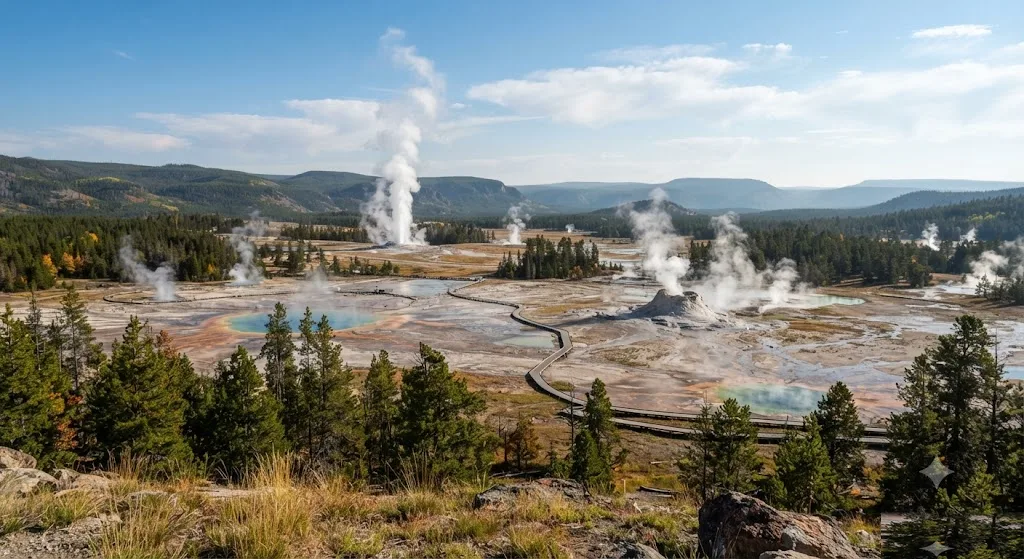
Our Upper Geyser Basin guide covers practical planning for Upper Geyser Basin Wyoming — best time to visit, getting there, and what to do on the ground.
Welcome to the ultimate guide for exploring the Upper Geyser Basin Wyoming, a place where the Earth truly shows its vibrant, steaming heart. As the Roam States editorial team, we’ve sifted through the generic travel fluff to bring you confident, specific advice for navigating this otherworldly landscape. Home to the world's largest concentration of geysers, including the iconic Old Faithful, this basin offers an unparalleled opportunity to witness geothermal wonders up close. Visitors can walk extensive boardwalks to observe numerous geysers, colorful hot springs, and bubbling mudpots, making it a truly unforgettable destination. We’re here to ensure your trip is as seamless and spectacular as the geysers themselves.
Why Visit Upper Geyser Basin
The Upper Geyser Basin is not merely a collection of hot springs; it's a dynamic, living landscape that showcases the raw power of our planet. This area boasts nearly a quarter of all the geysers on Earth within a few square miles, making it an unparalleled destination for geothermal enthusiasts and casual visitors alike. While Old Faithful rightfully claims its fame, the basin is a treasure trove of other magnificent features, each with its own unique charm and eruption pattern. From the vibrant hues of Morning Glory Pool to the powerful bursts of Grand Geyser, the visual spectacle here is constant and captivating. We recommend a visit to truly grasp the scale and beauty of these natural phenomena.
Beyond the sheer number of geysers, the Upper Geyser Basin offers a profound connection to the geological forces that shaped our world. The boardwalks and trails provide safe and intimate access to these delicate features, allowing you to feel the warmth, hear the hissing steam, and marvel at the intricate mineral formations. It's an educational experience woven into an awe-inspiring adventure, perfect for those seeking both wonder and understanding. This is a place that challenges your perceptions and leaves an indelible mark on your memory.
Who It's Best For
The Upper Geyser Basin caters to a wide array of travelers, making it a universally appealing destination within Yellowstone National Park. It's particularly ideal for:
- First-time Yellowstone Visitors: If you're new to Yellowstone, the Old Faithful area and Upper Geyser Basin are essential starting points. The concentration of iconic features provides an excellent introduction to the park's geothermal wonders.
- Families with Children: The mostly flat, well-maintained boardwalks and paved paths make the Upper Geyser Basin accessible for all ages, including those with strollers or wheelchairs. The predictable eruptions of Old Faithful and the vibrant colors of the pools are sure to captivate young minds. The Old Faithful Visitor Education Center also features a hands-on children's gallery.
- Accessibility-Focused Travelers: Old Faithful Geyser is accessible from the visitor center, Old Faithful Inn, and Old Faithful Lodge, with an accessible path extending 1.5 miles to Morning Glory Pool.
- Photography Enthusiasts: The ever-changing light, steam, and vibrant colors offer endless photographic opportunities, from wide landscape shots to intricate close-ups of mineral deposits.
- Nature Lovers and Geothermal Aficionados: For those fascinated by geology and natural processes, the sheer diversity and activity of the geysers and hot springs here are unparalleled.
- Those Seeking Convenience: The Old Faithful area is one of the most developed spots in the park, offering visitor centers, lodging, dining, and restrooms all within easy reach.
Getting There & Parking
Understanding how to get to Upper Geyser Basin and navigating the parking situation is crucial for a smooth visit. The Upper Geyser Basin is centrally located within Yellowstone National Park, making it accessible from several park entrances, though access varies by season.
How to Get There
Yellowstone National Park operates 24 hours a day, 365 days a year, but most interior roads are closed to wheeled vehicles from early November to late April due to snow.
- West Entrance (West Yellowstone, Montana): This is often the most direct and popular route for accessing the Old Faithful area and Upper Geyser Basin, especially for early-season trips. The road from the West Entrance to Madison and then to Old Faithful is scheduled to open on the third Friday in April, which is April 17, 2026.
- South Entrance (Jackson, Wyoming): Connecting from Grand Teton National Park, the South Entrance typically opens in mid-May, specifically May 8, 2026.
- East Entrance (Cody, Wyoming): The East Entrance is scheduled to open on May 1, 2026, providing access to Yellowstone Lake before connecting to the Old Faithful area.
- North Entrance (Gardiner, Montana) and Northeast Entrance (Cooke City, Montana): The road between the North Entrance (Gardiner) and the Northeast Entrance (Cooke City) remains open year-round to wheeled vehicles. However, reaching the Upper Geyser Basin from these entrances involves a longer drive through the park's interior roads, which open later in spring.
We strongly advise checking the National Park Service website for current road statuses before your trip, as opening dates can shift due to weather conditions.
Parking
Parking in the Old Faithful area, which serves as the primary access point for the Upper Geyser Basin, can be challenging, especially during peak season (July and August). Large parking lots are available. Our team recommends arriving before 9:00 AM or after 6:00 PM to avoid the heaviest summer congestion and secure a parking spot. Midday parking can be brutal.
For visitors with mobility needs, accessible parking is available, and arriving early is recommended to secure a convenient spot along the boardwalk.
Entrance Fees
As of 2026, the entrance fees for Yellowstone National Park are as follows:
- 7-day Yellowstone vehicle pass: $35 (covers one non-commercial vehicle and all passengers).
- 7-day motorcycle pass: $30.
- 7-day individual pass (on foot/bike/horse): $20 per person.
- Yellowstone Annual Pass: $70 (valid for one year from purchase, Yellowstone only).
- America the Beautiful Annual Pass: $80 (valid for all U.S. national parks and federal recreation sites for one year).
Important Note for Non-U.S. Residents: Beginning January 1, 2026, non-U.S. residents aged 16 and older will face an additional $100 surcharge per person on top of the standard entrance fee, unless admitted with an Annual or America the Beautiful Pass. This also applies to non-residents entering as part of commercial tour groups.
Top Things to Do
The Upper Geyser Basin offers an incredible array of activities centered around its unparalleled geothermal features. When considering things to do at Upper Geyser Basin, remember that the key is to immerse yourself in the unique landscape and respect its delicate nature.
- Witness Old Faithful Erupt: This is, without a doubt, the quintessential experience. Old Faithful erupts approximately every 90 minutes, and predictions are posted at the Old Faithful Visitor Education Center and on the free NPS Yellowstone app. We recommend checking the schedule and planning your visit around it, allowing you to explore other features while you wait. The Old Faithful Visitor Education Center, open generally from 8:00 AM to 8:00 PM during summer and winter, offers a front-row seat to eruptions from its massive windows.
- Walk the Boardwalks: The extensive network of boardwalks and paved paths throughout the Upper Geyser Basin allows for safe and close-up viewing of numerous geysers, hot springs, and colorful pools. These accessible trails are perfect for exploring the area.
- Explore Geyser Hill: Just a short walk from Old Faithful, Geyser Hill is a dense concentration of smaller but equally fascinating thermal features. Here you'll find colorful pools like the Blue Star Spring and various active geysers such as Beehive Geyser, which is unpredictable but stunning when it erupts.
- Visit Morning Glory Pool: This iconic hot spring is famous for its vibrant blue, green, and yellow colors, though its hues have been affected by visitors throwing trash into it over the years. It's a beautiful destination at the end of a 1.5-mile accessible path from the visitor center.
- Seek Out Other Predictable Geysers: While Old Faithful is the most famous, several other geysers in the Upper Geyser Basin are also predicted, including Castle, Grand, Daisy, and Riverside. Check the Old Faithful Visitor Education Center for their predicted eruption times. Grand Geyser, one of the tallest predictable geysers globally, can erupt up to 200 feet.
- Discover Biscuit Basin and Black Sand Basin: These smaller, but equally stunning, basins are located just a short drive or hike from the main Old Faithful area. They feature unique thermal features like Sapphire Pool and Emerald Pool, offering a different perspective on Yellowstone's geothermal activity. The boardwalks in Biscuit Basin have no steps.
- Visit the Old Faithful Visitor Education Center: This state-of-the-art facility provides interactive exhibits on hydrothermal features, volcanic geology, and scientific investigations, making it an excellent resource for understanding the park's unique environment. It's also where you can get the latest geyser predictions.
- Photography: Capture the stunning landscapes, the powerful eruptions, and the intricate details of the thermal features. Early mornings and late evenings offer the best light and fewer crowds for photography.
These things to do at Upper Geyser Basin will fill your days with wonder and provide a deep appreciation for this extraordinary corner of Wyoming.
Best Time to Visit
Choosing the best time to visit the Upper Geyser Basin can significantly impact your experience, as Yellowstone's seasons bring distinct advantages and challenges.
- Summer (June-August): This is peak season, offering full road access and warm weather, with daytime temperatures typically ranging from 70-80°F. All facilities are open, and wildlife is abundant. However, expect very high crowds, with over 30,000 daily visitors in July. We recommend early starts (before 9 AM) or late evenings (after 6 PM) to avoid congestion at popular thermal areas and for better wildlife viewing.
- Spring (May-early June): Spring offers a sweet spot with fewer crowds and active wildlife, including bears and wolves with cubs. Roads open in phases between mid-April and late May, with the West Entrance to Old Faithful typically opening by April 17, 2026. Daytime temperatures range from 50-65°F, with nights still chilly (25-40°F). Be prepared for unpredictable weather, including cold temperatures, high winds, and snow.
- Fall (September-October): Our team considers September to offer the clearest advantage, combining active wildlife (like the elk rut) with lighter crowds. Daytime temperatures are pleasant (55-70°F), and empty boardwalks are a real possibility. Lodges begin closing progressively in October and November.
- Winter (November-April): While most roads are closed to wheeled vehicles from early November to late April, the Upper Geyser Basin is accessible via guided snowmobile or snowcoach tours. This season offers a truly unique and serene experience, with snow-covered landscapes and steaming thermal features creating dramatic contrasts. Temperatures are cold, ranging from 10-30°F during the day and often below 0°F at night.
For optimal access and a balance of good weather and manageable crowds, we often recommend late spring (late May/early June) or early fall (September).
Where to Stay Nearby
Finding suitable Upper Geyser Basin lodging is a critical part of planning your Yellowstone adventure. Given the park's immense size, your choice of accommodation can significantly impact your travel time and overall experience. We generally recommend a split-stay strategy if you plan to explore different areas of the park extensively, but for focused exploration of the Upper Geyser Basin, staying within or very close to the Old Faithful area is ideal.
Inside Yellowstone National Park
Staying inside the park offers unparalleled access to the thermal features, especially during early mornings and late evenings when crowds are thinner. However, these options book up very quickly—sometimes a year in advance—so plan to reserve on the 5th of the month, 13 months prior to your desired stay.
- Old Faithful Inn: This historic national landmark, built in 1903-1904, is arguably the most iconic lodging in the park and is located just 0.2 miles (a 6-minute walk) from Old Faithful Geyser. It operates seasonally, from May 1, 2026, to October 12, 2026. While it offers historic charm, be aware that there is no internet service, air conditioning, TV, or radio in the rooms. Parking is not provided directly by the Inn.
- Old Faithful Snow Lodge & Cabins: Located just 0.3 miles (a 4-minute walk) from Old Faithful, this lodge offers a blend of rustic charm and comfort. It typically opens around the same time as the Inn.
- Old Faithful Lodge Cabins: These cabins provide a more rustic and often more affordable option near Old Faithful, operating from May 8, 2026, to October 4, 2026.
- Grant Village: Situated 14 miles from Old Faithful on the southwest shore of Yellowstone Lake, Grant Village offers a budget-friendly option with dining and recreational activities. It is scheduled to open on May 29, 2026, and close on October 11, 2026.
For those unable to secure Upper Geyser Basin lodging directly in the Old Faithful area, consider other in-park options like Canyon Lodge & Cabins (most central) or Lake Yellowstone Hotel & Cabins (on Yellowstone Lake) and plan for longer drives.
Outside Yellowstone National Park (Gateway Towns)
Staying in a gateway town offers more hotel options, better dining, and often lower prices, but it will add significant driving time to your daily itinerary.
- West Yellowstone, Montana: Located at the West Entrance, this town is the closest and most convenient gateway for accessing the Upper Geyser Basin. It offers numerous hotels like Kelly Inn West Yellowstone and The Hibernation Station.
- Cody, Wyoming: Situated near the East Entrance, Cody is about 52 miles from the East Gate. It's a good option if you plan to explore the eastern side of the park and the Buffalo Bill Center of the West. Old Faithful RV Park, located 32 miles from the East Entrance, offers RV sites and rustic cabins for the 2026 season.
We recommend booking all Yellowstone lodging and campground reservations as far in advance as possible. Reservations for lodging and campgrounds can be made up to 13 months in advance.
Sample 2-Day Itinerary
Our team has crafted this sample 2-day itinerary to maximize your experience in the Upper Geyser Basin, focusing on its unique geothermal features and surrounding natural beauty.
Day 1: Geysers Galore & Old Faithful
- Morning (Early Start is Key!): Arrive at the Old Faithful area early, ideally before 9:00 AM, to secure parking and beat the initial crowds. Head straight to the Old Faithful Visitor Education Center. Check the predicted eruption times for Old Faithful, Castle, Grand, Daisy, and Riverside Geysers.
- Late Morning: Begin your exploration of the Upper Geyser Basin Wyoming by walking the boardwalks around Old Faithful. Witness its iconic eruption from one of the viewing areas. Afterward, explore Geyser Hill, observing features like Beehive Geyser, Lion Geyser, and the colorful pools.
- Lunch: Grab a quick bite at one of the dining options near Old Faithful, such as the Old Faithful Inn Dining Room or Geyser Grill. Alternatively, pack a picnic to enjoy at a designated area.
- Afternoon: Continue your walk along the accessible path to Morning Glory Pool, admiring the vibrant colors and other thermal features along the way, such as Castle Geyser. Take your time to appreciate the intricate details of the hot springs and smaller geysers.
- Late Afternoon/Evening: If time and energy permit, hike to Observation Point (1.5 miles round trip, 250 ft elevation gain) for a panoramic view of the Old Faithful area and the Upper Geyser Basin. This offers a fantastic aerial perspective. Alternatively, relax and enjoy another Old Faithful eruption, perhaps from a different vantage point.
- Dinner: Enjoy dinner at your chosen lodging or a nearby restaurant.
Day 2: Beyond the Main Basin & Scenic Drives
- Morning: Head north from Old Faithful to explore nearby geyser basins. Start with Biscuit Basin, home to Sapphire Pool and Mustard Spring. Then, continue to Midway Geyser Basin to marvel at the Grand Prismatic Spring (the largest hot spring in the US) and Excelsior Geyser Crater. For the best view of Grand Prismatic, take the Grand Prismatic Overlook Trail (1.5 miles round trip).
- Late Morning/Lunch: Drive south towards the West Thumb Geyser Basin, located on the shore of Yellowstone Lake. Explore the accessible boardwalks here, which offer unique thermal features right alongside the lake. Enjoy lunch at Grant Village or a picnic by the lake.
- Afternoon: Depending on your interests, you have a few options:
- Wildlife Viewing: Drive along the Firehole Lake Drive (if open), a one-way scenic loop that often offers opportunities to spot bison and other wildlife.
- Hiking: Consider one of the Upper Geyser Basin hiking trails further afield, such as the Fairy Falls Trail (access from Midway Geyser Basin parking) which leads to a beautiful waterfall and offers a different perspective of Grand Prismatic Spring.
- Relaxation: Enjoy some downtime at your lodge or revisit a favorite geyser for a final eruption.
- Evening: Enjoy a final dinner in the park or a gateway town, reflecting on the incredible geothermal wonders you've witnessed.
Is It Worth Visiting?
The question "is Upper Geyser Basin worth visiting?" is one we can confidently answer with a resounding yes. Our team believes that the Upper Geyser Basin is not just a highlight of Yellowstone National Park, but one of the most remarkable natural attractions in the entire United States. The sheer concentration and diversity of geothermal features here are unparalleled, offering a truly unique and unforgettable experience.
The iconic Old Faithful Geyser, with its remarkably predictable eruptions, is a spectacle that lives up to its reputation. However, to truly appreciate the basin, one must delve deeper than just Old Faithful. The network of accessible boardwalks leads you past countless other geysers, vibrant hot springs like Morning Glory Pool, and bubbling mudpots, each a testament to the Earth's raw power. The constant activity and ever-changing landscape provide endless opportunities for wonder and photography.
For families, the accessibility of the trails and the interactive exhibits at the Old Faithful Visitor Education Center make it an engaging destination for all ages. For nature enthusiasts and photographers, the dramatic interplay of steam, water, and colorful mineral deposits creates a dynamic and beautiful environment. Even with the crowds during peak season, the experience of witnessing these natural wonders firsthand is profoundly impactful. The answer to "is Upper Geyser Basin worth visiting?" is a definitive yes – it's an essential journey that will leave you with a deep appreciation for our planet's incredible geological forces.
Upper Geyser Basin Hiking Trails
Exploring the Upper Geyser Basin on foot is the best way to truly appreciate its diverse geothermal features. The Upper Geyser Basin hiking trails are primarily composed of a network of well-maintained boardwalks and paved paths, making them accessible to a wide range of visitors. We recommend staying on designated paths to protect the fragile thermal features and ensure your safety, as scalding water and thin ground are real risks.
- Upper Geyser Basin Loop: This easy 3.2-mile (5.2 km) loop takes about 1 hour and 20 minutes and guides you through Yellowstone's most concentrated geothermal area, showcasing Old Faithful, Castle Geyser, Grand Geyser, and Morning Glory Pool. The main loops feature well-maintained boardwalks and paved paths with minimal elevation gain, making it accessible for most visitors.
- Observation Point Trail: For a fantastic aerial perspective of the Old Faithful area and the Upper Geyser Basin, hike to Observation Point. This trail is about 1.5 miles round trip from the Visitor Center with an elevation gain of approximately 250 feet. It's considered an easy to moderate hike and offers a great platform to watch Old Faithful erupt from above.
- Old Faithful to Biscuit Basin: This longer option extends the Upper Geyser Basin hiking trails, connecting the Old Faithful area to Biscuit Basin. It's about a 5-mile round trip with minimal elevation change. This route allows you to see additional features like Sapphire Pool and the unique formations in Biscuit Basin.
- Riverside Geyser Trail: A popular feature along the main Upper Geyser Basin loop, Riverside Geyser sits right on the Firehole River. There's a vault toilet and picnic table available near Riverside Geyser, not far from Morning Glory Pool.
Before embarking on any of the Upper Geyser Basin hiking trails, always check the eruption schedules at the Old Faithful Visitor Education Center to time your walks with the park's famous geysers. Trail guides are also available at the Visitor Center.
FAQ
Upper Geyser Basin camping
While there are no campgrounds directly within the Upper Geyser Basin itself, several excellent campgrounds are located within Yellowstone National Park and relatively close to the Old Faithful area. Reservations are highly recommended, especially during peak season, and can be made up to 13 months in advance.
- Grant Village Campground: Located on the southwest shore of Yellowstone Lake, approximately 14 miles from Old Faithful, this campground offers sites surrounded by lodgepole pines with easy access to the West Thumb Geyser Basin and Old Faithful Village. It is scheduled to operate from June 26, 2026, onwards.
- Madison Campground: Situated near the scenic Madison River, this campground offers sites for tents, RVs, and groups, with easy access to geyser basins and fishing rivers. It's a great base for exploring the central and western parts of the park.
- Bridge Bay Campground: Located near Bridge Bay Marina on Yellowstone Lake, this campground offers a mix of sites in grassy meadows and wooded areas. It is scheduled to be open from May 15 to September 13, 2026.
- Fishing Bridge RV Park: This RV park is specifically for hard-sided RV travelers and can accommodate large RVs. It's located on the east side of the park, where Yellowstone Lake exits into the Yellowstone River.
Reservations for campgrounds managed by Yellowstone National Park Lodges can be made through their website, while those managed by the National Park Service can be booked via Recreation.gov. We advise making your Yellowstone camping reservations early, as campgrounds can fill by early morning during peak season.
things to do in Yellowstone National Park
Yellowstone National Park offers a vast array of activities beyond the Upper Geyser Basin. Our team recommends exploring the Yellowstone National Park for a comprehensive list, but here are some highlights:
- Wildlife Viewing: Drive through Lamar Valley and Hayden Valley for exceptional opportunities to spot bison, elk, bears, wolves, and other wildlife. Remember to keep a safe distance from all animals.
- Grand Canyon of the Yellowstone: Witness the breathtaking Upper and Lower Falls, and explore viewpoints like Artist Point and Inspiration Point.
- Mammoth Hot Springs: Discover the unique travertine terraces formed by hot, mineral-rich water. The Mammoth Hot Springs Hotel & Cabins is open year-round and close to the North Entrance.
- Boating and Fishing: Enjoy activities on Yellowstone Lake, with permits required for fishing and boating.
- Hiking: Beyond the Upper Geyser Basin, Yellowstone offers hundreds of miles of trails, from easy strolls to challenging backcountry treks. Mount Washburn is a popular day hike accessible after Dunraven Pass opens (May 22, 2026).
- Visit Other Geyser Basins: Explore Norris Geyser Basin (the hottest and most dynamic), Midway Geyser Basin (Grand Prismatic Spring), and Fountain Paint Pot.
Upper Geyser Basin with kids
The Upper Geyser Basin is an excellent destination for families visiting Yellowstone National Park. The primarily flat, well-maintained boardwalks and paved paths are suitable for strollers and young children, making it easy to navigate. Kids will be captivated by the predictable eruptions of Old Faithful and the vibrant colors of hot springs like Morning Glory Pool. The Old Faithful Visitor Education Center is particularly kid-friendly, featuring interactive exhibits and a hands-on children's gallery where young scientists can learn about Yellowstone's geothermal systems. We recommend picking up a Junior Ranger booklet at any visitor center for an engaging educational activity. Remember to always stay on the boardwalks and keep a safe distance from thermal features and wildlife.
best hotels near upper geyser basin
For the best access to the geothermal wonders, our team recommends staying within the Old Faithful area. The best hotels near Upper Geyser Basin include:
- Old Faithful Inn: A historic landmark just a short walk from Old Faithful Geyser, offering a unique experience. It operates from May 1, 2026, to October 12, 2026.
- Old Faithful Snow Lodge & Cabins: Also within walking distance of Old Faithful, providing comfortable lodging.
- Old Faithful Lodge Cabins: A more rustic and often more affordable option near the geyser.
These in-park options book up extremely fast (up to 13 months in advance), so early reservations are essential. If in-park lodging is unavailable, consider staying in West Yellowstone, Montana, at hotels like Kelly Inn West Yellowstone or The Hibernation Station, which offer more amenities and are still a convenient drive to the West Entrance.
Upper Geyser Basin tips
To make the most of your visit to the Upper Geyser Basin, our team offers these essential tips:
- Arrive Early or Late: To avoid peak crowds and find parking, aim to arrive before 9:00 AM or after 6:00 PM. This also offers better lighting for photography.
- Check Geyser Predictions: Visit the Old Faithful Visitor Education Center or use the NPS Yellowstone app for predicted eruption times of Old Faithful and other major geysers.
- Stay on Boardwalks: For your safety and the preservation of delicate thermal features, always remain on designated boardwalks and trails. Scalding water and unstable ground are serious hazards.
- Dress in Layers: Weather in Yellowstone can change rapidly. Layers allow you to adapt to varying temperatures throughout the day.
- Bring Water and Snacks: While dining options are available, having your own provisions is convenient, especially on longer walks.
- Practice Wildlife Safety: Maintain a safe distance from all wildlife, especially bison and elk, which are frequently seen in the area.
- Consider a Split Stay: If exploring other parts of Yellowstone, consider booking lodging in two different areas of the park to minimize driving time.
- Book in Advance: Lodging and popular activities, especially inside the park, book up months, sometimes over a year, in advance.
where to stay near upper geyser basin
For optimal convenience when visiting the Upper Geyser Basin, we highly recommend staying in the Old Faithful area itself. Options include the historic Old Faithful Inn, Old Faithful Snow Lodge & Cabins, and Old Faithful Lodge Cabins. These are the closest accommodations, allowing you to walk to Old Faithful and other geothermal features. Reservations for these in-park lodges are highly competitive and should be made up to 13 months in advance.
If in-park options are fully booked, the gateway town of West Yellowstone, Montana, is your best alternative. It's located at the West Entrance and offers a wider range of hotels, restaurants, and services, though you'll have a 30-45 minute drive to Old Faithful once inside the park.
The Upper Geyser Basin in Wyoming is an absolute must-see for any traveler to Yellowstone National Park. Its unparalleled concentration of geysers, vibrant hot springs, and accessible boardwalks offer a truly immersive experience into the Earth's raw geothermal power. From the iconic eruptions of Old Faithful to the colorful beauty of Morning Glory Pool, this area promises wonder and education for visitors of all ages. Plan your visit strategically, book accommodations well in advance, and prepare to be amazed by this extraordinary natural spectacle. It's a journey that will stay with you long after the steam has cleared.
Last updated: 2026-07-12 by the Roam States team.