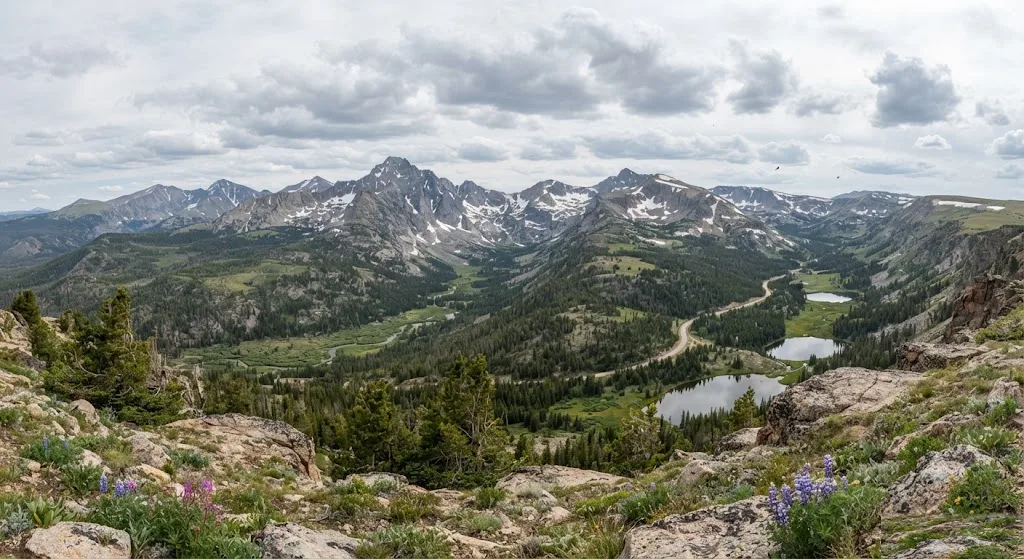
Our Big Horn Mountains guide covers practical planning for Big Horn Mountains Wyoming — best time to visit, getting there, and what to do on the ground. We’ve compiled essential information on everything from scenic drives to the best hiking trails, ensuring your trip to this stunning Wyoming range is unforgettable. The Big Horn Mountains Wyoming offer diverse landscapes from alpine forests to high mountain lakes, providing extensive opportunities for hiking, fishing, and scenic drives. The Cloud Peak Wilderness Area is a highlight within this range, drawing adventurers seeking solitude and spectacular views.
We are the Roam States editorial team, and we’re here to help you navigate the vast and beautiful expanse of the Big Horn Mountains. Our goal is to provide you with confident, specific, and actionable advice, free from generic travel fluff. We believe in empowering you with the knowledge to craft your own extraordinary American adventure.
Why Visit Big Horn Mountains
The Big Horn Mountains stand as a testament to Wyoming's rugged beauty, offering a dramatic escape into nature that few other destinations can match. Our team consistently recommends this region for its unparalleled scenic grandeur and the sheer variety of outdoor activities available. From the moment you begin your ascent into the mountains, you'll be treated to panoramic vistas of rolling hills giving way to towering peaks, dense pine forests, and crystal-clear lakes. It's a place where the air is crisp, the wildlife is abundant, and the sense of scale is truly humbling.
One of the primary draws of the Big Horn Mountains is the Cloud Peak Wilderness Area, a pristine expanse covering over 189,000 acres. This designated wilderness offers an unparalleled opportunity for solitude and true backcountry exploration, with over 400 miles of trails, 130 named lakes, and Cloud Peak itself, soaring to 13,167 feet. For those seeking a less strenuous experience, the scenic byways, like the Cloud Peak Skyway (US-16) and the Big Horn Scenic Byway (US-14 and US-14A), offer breathtaking views from the comfort of your vehicle. We find that the dramatic elevation changes and diverse ecosystems make every turn a new discovery, from arid sagebrush flats to lush alpine meadows.
Beyond the scenery, the Big Horn Mountains provide a rich tapestry of recreational opportunities. Anglers will find abundant trout in the mountain streams and lakes, while hikers can choose from easy strolls to challenging multi-day treks. Wildlife enthusiasts will appreciate the chance to spot moose, elk, deer, and even black bears in their natural habitat. The region also holds significant historical and cultural value, with evidence of ancient Native American presence and remnants of early pioneer life. It’s an ideal destination for those who appreciate both natural splendor and a touch of frontier history.
Who It's Best For
The Big Horn Mountains cater to a wide array of travelers, but we've identified a few key groups who will find this destination particularly rewarding. First and foremost, it's an absolute paradise for outdoor enthusiasts. Hikers, backpackers, anglers, and wildlife photographers will revel in the extensive trail systems, pristine waters, and abundant fauna. The Cloud Peak Wilderness, in particular, calls to those seeking a true wilderness experience, where self-reliance and a love for untouched nature are paramount.
Families looking for an active vacation will also find the Big Horn Mountains to be an excellent choice. Many campgrounds offer amenities, and numerous shorter, less strenuous trails are perfect for children. The opportunity to spot wildlife, learn about geology, and simply enjoy the fresh mountain air makes for a memorable family adventure. We recommend this region for families who enjoy activities like fishing, picnicking, and scenic drives, rather than those seeking amusement park thrills.
Road trippers and scenic drivers will be captivated by the Big Horn Mountains. The aforementioned Cloud Peak Skyway and Big Horn Scenic Byway are consistently ranked among the most beautiful drives in the country. These routes offer easy access to stunning viewpoints, picnic areas, and trailheads, making them perfect for those who prefer to experience the mountains from their vehicle with frequent stops for exploration. If you're planning a larger USA road trip planner, the Big Horns make an excellent stop between Yellowstone and destinations further east.
Finally, those seeking peace and solitude will discover it in abundance here. While popular areas can see visitors, it's remarkably easy to find quiet corners, especially if you venture even a short distance onto a trail. The vastness of the landscape and the relative remoteness of many areas provide a profound sense of escape from the hustle and bustle of daily life. It's a destination for introspection and reconnection with the natural world.
Getting There & Parking
Understanding how to get to Big Horn Mountains is crucial for planning your trip. The Big Horn Mountains are located in north-central Wyoming, making them accessible from several directions. The primary gateways to the range are the towns of Sheridan to the east, Buffalo to the southeast, and Lovell or Greybull to the west. We find that most visitors approach the mountains via major U.S. highways that traverse the range.
For those flying in, the nearest major airport is Sheridan County Airport (SHR). This airport offers regional flights and is a convenient starting point for exploring the eastern side of the Big Horns. Another option is Billings Logan International Airport (BIL) in Montana, which is larger and offers more flight options, though it's about a two-hour drive north of the range. Rental cars are available at both airports, and we highly recommend securing one as public transportation within the mountains is non-existent. This is the best way for how to get to Big Horn Mountains and explore at your own pace.
Once you're driving, the main arteries through the Big Horn Mountains are U.S. Highway 16 (the Cloud Peak Skyway) and U.S. Highway 14/14A (the Big Horn Scenic Byway). These highways are generally open from late May or early June through October, depending on snowfall. Always check road conditions before heading out, especially in the shoulder seasons. For 2026, we anticipate these opening and closing dates to remain consistent with historical patterns, but early or late snow can alter schedules. You can find current conditions on the Wyoming Department of Transportation (WYDOT) website.
Parking throughout the Big Horn National Forest is generally available at trailheads, scenic overlooks, and campgrounds. Most parking areas do not require a specific fee for day use, but some developed recreation sites or campgrounds within the Big Horn National Forest might require a fee, typically around $5-$10 per day for day-use areas or a valid recreation pass. For 2026, we advise checking the specific recreation site's information on the U.S. Forest Service website for the most up-to-date fee schedules and any reservation requirements. We recommend arriving early at popular trailheads, especially on weekends during peak season, as parking can fill up quickly.
Top Things to Do
When considering things to do at Big Horn Mountains, the options are as vast and varied as the landscape itself. Our team has curated a list of essential experiences that showcase the best of what this incredible region has to offer. Whether you're an avid adventurer or prefer a more leisurely pace, there's something here for everyone.
Big Horn Mountains Hiking Trails
Hiking is undoubtedly one of the premier things to do at Big Horn Mountains. The range boasts an extensive network of trails, from easy interpretive loops to challenging multi-day treks into the Cloud Peak Wilderness. For those seeking a moderate challenge, we highly recommend the **Tongue River Canyon Trail** near Dayton, which offers stunning canyon views and opportunities for wildlife spotting. Another excellent option is the **Bucking Mule Falls Trail**, leading to a spectacular waterfall.
For a true wilderness experience, the **Cloud Peak Wilderness** offers countless routes. Access points like the West Tensleep Trailhead provide entry to trails leading to high alpine lakes such as Lake Helen or Florence Lake. Permits are generally not required for day hiking in the Cloud Peak Wilderness, but self-registration is often requested at trailheads for safety and data collection. For overnight backpacking, a free self-issued permit is required and can typically be obtained at the trailhead or a Forest Service office. We recommend checking the Bighorn National Forest website for the most current information regarding specific Big Horn Mountains hiking trails and any updated regulations for 2026.
When planning your Big Horn Mountains hiking trails adventure, always carry plenty of water, layers of clothing, and bear spray, as you are in active bear country. Inform someone of your itinerary, especially for longer hikes. We also suggest consulting detailed maps, such as those from the Forest Service or USGS, as cell service is unreliable in much of the wilderness.
Scenic Drives
The Big Horn Mountains are home to two of Wyoming's most breathtaking scenic byways. The **Cloud Peak Skyway (US-16)** stretches 64 miles between Buffalo and Ten Sleep, climbing to nearly 9,700 feet. It offers continuous panoramic views, access to numerous trailheads, and picturesque picnic spots. The **Big Horn Scenic Byway (US-14 and US-14A)**, connecting Dayton and Shell, showcases a dramatic change in scenery from lush forests to the deep canyons of the Shell Creek area. US-14A, in particular, features steep grades and switchbacks, offering thrilling views into the Bighorn Canyon. These drives are typically open from late spring to late fall, weather permitting. We advise checking road conditions before embarking, especially in early summer or late autumn.
Fishing and Boating
The Big Horn Mountains are a renowned destination for fishing, with numerous streams and high mountain lakes teeming with trout. Species include rainbow, brook, cutthroat, and brown trout. Popular fishing spots include the Tongue River, Shell Creek, and the many alpine lakes accessible via hiking trails. A valid Wyoming fishing license is required for anyone 14 years or older. For 2026, licenses can be purchased online through the Wyoming Game and Fish Department website or from authorized vendors in nearby towns. Small, non-motorized boats and kayaks are popular on some of the larger lakes, offering a different perspective of the mountainous landscape.
Wildlife Viewing
The diverse ecosystems of the Big Horn Mountains support a rich variety of wildlife. Keep an eye out for moose in marshy areas, elk and deer grazing in meadows, and bighorn sheep on rocky slopes. Black bears are also present, so practice bear-safe food storage and carry bear spray. Birdwatchers will enjoy spotting various raptors and songbirds. Early morning and late evening are generally the best times for wildlife viewing.
Camping
Camping is an immersive way to experience the Big Horn Mountains. The Bighorn National Forest offers numerous developed campgrounds with amenities like picnic tables, fire rings, and vault toilets. Popular campgrounds include Tie Hack Campground and Leigh Creek Campground. Many operate on a first-come, first-served basis, while others accept reservations through Recreation.gov, especially for 2026 during peak season. Dispersed camping (boondocking) is also permitted in many areas of the national forest, provided you follow Leave No Trace principles and adhere to local regulations regarding fire restrictions and site selection. We recommend checking the Bighorn National Forest website for specific campground details, fees, and reservation windows for your planned 2026 visit.
Best Time to Visit
Determining the best time to visit the Big Horn Mountains largely depends on your desired activities. Our team generally recommends the summer months, from late June through early September, for the most accessible and enjoyable experience. During this period, the high mountain passes are typically clear of snow, allowing full access to the scenic byways and most hiking trails. Wildflowers are often in bloom in July, painting the meadows with vibrant colors, and the weather is generally warm and pleasant, though afternoon thunderstorms are common.
For those interested in hiking and backpacking, July and August offer the most reliable conditions for exploring the higher elevations and the Cloud Peak Wilderness. Fishing is also excellent during these months as the waters warm. However, this is also peak season, so expect more visitors at popular trailheads and campgrounds. We advise making reservations for lodging and popular campgrounds well in advance if you plan to visit during this time in 2026.
The shoulder seasons of late May to early June and late September to early October can also be rewarding, particularly for those seeking fewer crowds. In late spring, you'll witness the landscape coming alive, with snowmelt feeding roaring streams and early wildflowers emerging. However, some higher elevation roads and trails may still be closed due to snow. In early autumn, the aspens turn brilliant shades of gold, creating stunning photographic opportunities. The weather can be more unpredictable during these times, with possibilities of early snowstorms, especially at higher elevations. Always check road and weather conditions before heading out during the shoulder seasons.
Winter in the Big Horn Mountains transforms the landscape into a snowy wonderland, attracting cross-country skiers, snowmobilers, and ice climbers. However, many roads are closed, and access is significantly limited. Unless you are specifically planning a winter sports trip, we generally recommend avoiding the deep winter months for a comprehensive Big Horn Mountains experience.
Where to Stay Nearby
Finding the right Big Horn Mountains lodging can significantly enhance your trip, providing a comfortable base for your daily adventures. While the mountains themselves offer numerous camping options, the surrounding towns provide a range of accommodations from charming bed and breakfasts to modern hotels. Our team has identified key towns that serve as excellent gateways to the Big Horns.
**Sheridan, Wyoming**, located on the eastern flank of the mountains, is often considered the primary hub for visitors. It's a vibrant town with a rich Western history, offering a wide selection of Big Horn Mountains lodging options, including hotels, motels, and vacation rentals. Sheridan boasts a lively downtown area with excellent restaurants, shops, and attractions like the Buffalo Bill Center of the West (though this link is for Cody, Sheridan has its own historical attractions like the Brinton Museum) and historic sites. It's an ideal base for exploring the eastern Big Horns and accessing the scenic byways. You can find everything from budget-friendly motels to upscale boutique hotels here.
**Buffalo, Wyoming**, situated south of Sheridan at the base of the Cloud Peak Skyway, is another excellent choice. This historic town retains much of its Old West charm and offers a more laid-back atmosphere than Sheridan. Buffalo provides a good range of Big Horn Mountains lodging, including historic hotels like the Occidental Hotel, which dates back to 1893. It's a convenient starting point for trips into the southern Big Horns and the Cloud Peak Wilderness. The town also has several dining options and a few local shops.
On the western side of the Big Horn Mountains, towns like **Ten Sleep, Lovell, and Greybull** offer more rustic and remote lodging experiences. **Ten Sleep** is a small, charming community known for its rock climbing and access to the Ten Sleep Canyon. Lodging here is typically limited to small motels, cabins, and campgrounds, providing a true small-town Western feel. **Lovell** and **Greybull** are larger than Ten Sleep and offer more basic hotel and motel options, serving as good bases for exploring the western slopes and nearby attractions like Bighorn Canyon National Recreation Area. While these towns have fewer amenities than Sheridan or Buffalo, they offer a quieter, more authentic experience closer to the western side of the range.
Regardless of where you choose for your Big Horn Mountains lodging, we strongly advise booking your accommodations in advance, especially for summer 2026 travel, as popular options can fill up quickly. Consider the type of experience you're seeking – whether it's the amenities of a larger town or the quiet solitude of a smaller community – when making your selection.
Sample 2-Day Itinerary
To help you make the most of your visit, our team has crafted a sample 2-day itinerary for the Big Horn Mountains. This itinerary focuses on experiencing the diverse landscapes and key attractions, assuming you're based in either Sheridan or Buffalo.
Day 1: Scenic Byways and Eastern Peaks
- **Morning:** Start your day early by heading west from Sheridan or north from Buffalo onto the **Cloud Peak Skyway (US-16)**. Take your time driving this stunning route, stopping at designated overlooks for photos.
- **Late Morning:** Stop at the **Powder River Pass** (9,666 feet) for panoramic views and a short interpretive walk. Continue to the **Tie Hack Campground area**, where you can take a short, easy hike around **Sibley Lake** or enjoy a picnic lunch amidst the pines.
- **Afternoon:** Continue west on US-16 towards Ten Sleep. Consider a stop at the **Ten Sleep Canyon** overlook to admire the dramatic rock formations.
- **Late Afternoon:** Turn around and head back east on US-16, perhaps taking a different route or exploring a side road you missed. Alternatively, if time permits, take a detour north on a forest road (check conditions) to explore some of the more remote forest areas.
- **Evening:** Return to your lodging in Sheridan or Buffalo. Enjoy dinner at a local restaurant, perhaps trying some authentic Western cuisine.
Day 2: Northern Byways and Wilderness Gateway
- **Morning:** From Sheridan, head west on **US-14 (Big Horn Scenic Byway)** towards Dayton. This route will take you through the Tongue River Canyon.
- **Late Morning:** Drive the breathtaking **US-14A (Medicine Wheel Passage)**, which branches off US-14. This incredibly scenic and steep road offers dramatic views into the Shell Canyon and leads to the **Medicine Wheel National Historic Landmark**. Allow ample time to visit this ancient and sacred site, which requires a moderate walk from the parking area. Check ahead for any access restrictions or interpretive programs for 2026.
- **Afternoon:** Continue on US-14A towards Lovell or turn back towards US-14. If you have time and are interested in more hiking, consider a trail near the **Shell Falls Interpretive Site** (on US-14), which offers an accessible waterfall view and information about the area's geology.
- **Late Afternoon:** Begin your return journey, perhaps taking US-14 all the way back to Sheridan, enjoying different perspectives of the landscape.
- **Evening:** Enjoy a final dinner in your chosen town, reflecting on the stunning vistas and experiences of the Big Horn Mountains.
This itinerary is a suggestion; feel free to adjust it based on your interests and pace. Remember to factor in driving times, which can be longer than anticipated due to winding mountain roads and frequent scenic stops.
Is It Worth Visiting?
Without a doubt, our team confidently states that the question "is Big Horn Mountains worth visiting?" can be answered with a resounding yes. For travelers seeking authentic natural beauty, diverse outdoor recreation, and a genuine taste of the American West, the Big Horn Mountains deliver an experience that is both memorable and deeply rewarding. It’s a destination that consistently exceeds expectations, offering something for every type of adventurer.
What makes the Big Horn Mountains particularly worth visiting is their unique combination of accessibility and wildness. Unlike some more heavily trafficked national parks, the Big Horns allow for a sense of discovery and solitude, especially once you venture onto the trails or into the Cloud Peak Wilderness. The scenic byways provide incredible views without requiring strenuous effort, making the grandeur of the mountains accessible to everyone. We believe this balance of ease and adventure is a significant draw.
Furthermore, the cost of visiting the Big Horn Mountains is generally lower than some other major Western destinations. While there are fees for some campgrounds and specific recreation sites, access to the vast majority of the national forest and its scenic drives is free. This makes the Big Horn Mountains an excellent value for travelers looking to experience world-class natural beauty without breaking the bank. So, if you're deliberating whether is Big Horn Mountains worth visiting, we wholeheartedly recommend adding it to your Wyoming itinerary, perhaps even combining it with a visit to Bighorn Canyon National Recreation Area or even Grand Teton National Park if you're extending your trip across Wyoming.
Last updated: 2026-07-12 by the Roam States team.