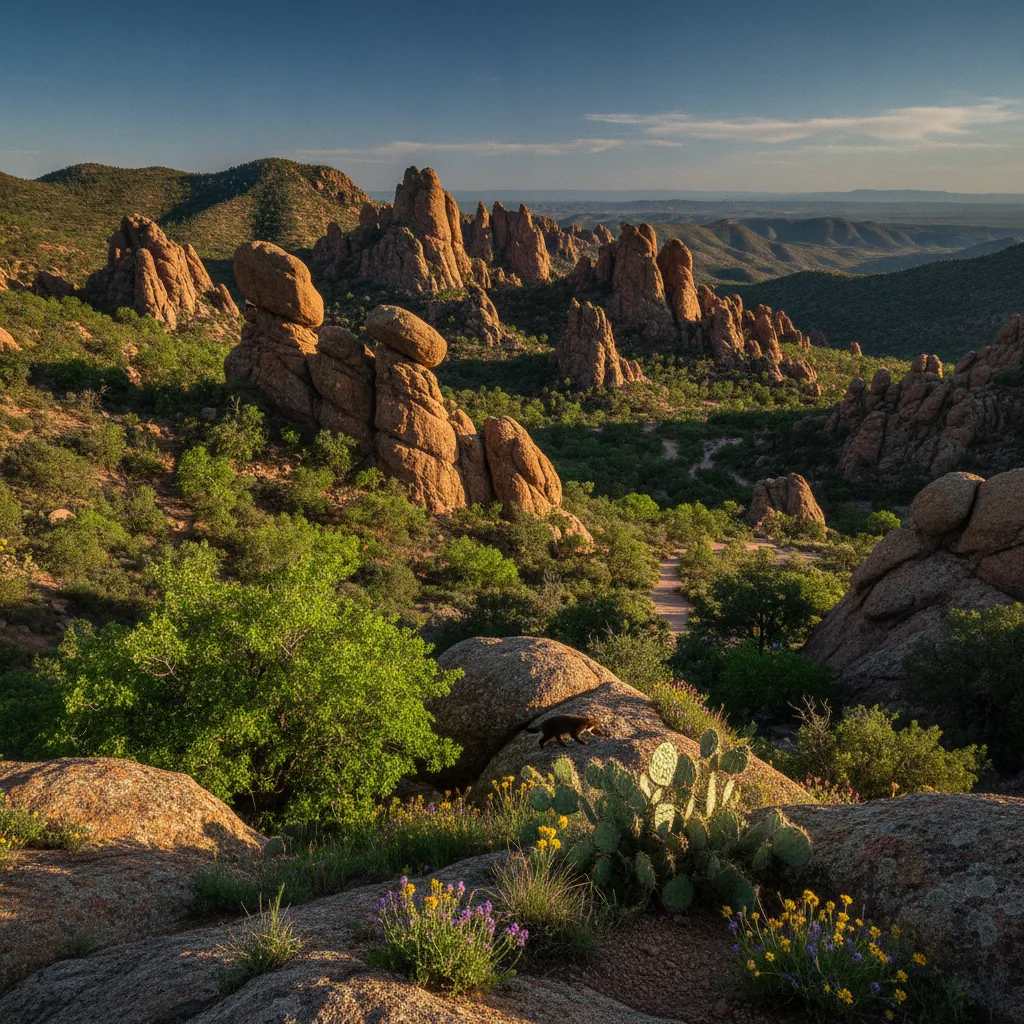
Welcome to our definitive guide for Chiricahua National Monument Arizona, your essential resource for exploring the "Wonderland of Rocks" in southeastern Arizona. Our team at Roam States has meticulously compiled this information to ensure you have a confident, specific, and unforgettable trip, far removed from generic travel advice. We'll cover everything from navigating the monument's unique landscape to finding the perfect place to stay, ensuring your visit to Chiricahua National Monument Arizona is truly exceptional.
Why Visit Chiricahua National Monument
Chiricahua National Monument offers a truly unique geological spectacle, a landscape unlike any other in the American Southwest. Formed by a massive volcanic eruption approximately 27 million years ago, the area is characterized by towering rhyolite rock formations, pinnacles, and balancing rocks, often referred to as the "Wonderland of Rocks." This dramatic scenery is a paradise for photographers, hikers, and anyone seeking to immerse themselves in nature's artistry. Beyond its striking geology, the monument is a "sky island," a high-elevation ecosystem that boasts incredible biodiversity, supporting over 1,200 plant species and a rich array of wildlife, including numerous bird species, bobcats, and even black bears. The blend of stunning natural beauty and ecological richness makes Chiricahua National Monument Arizona a compelling destination for any traveler.
Adding to its allure, there's a significant push to reclassify Chiricahua National Monument as a national park. Legislation has passed the House and is currently moving through the Senate, with supporters arguing that national park status would elevate its national profile, attract more visitors, and provide increased funding and protection for this fragile landscape. While its status may evolve, the monument's inherent value as a natural and historical treasure remains undeniable, offering a profound sense of peace and wonder to all who visit.
Who It's Best For
Chiricahua National Monument is ideally suited for outdoor enthusiasts, nature photographers, birdwatchers, and history buffs. Hikers will find a network of trails ranging from easy strolls to challenging backcountry adventures, all offering breathtaking views of the unique rock formations. The monument's "sky island" ecosystem makes it a prime location for birding, with nearly 400 species calling the mountains home. Photographers will revel in the dramatic landscapes, especially during sunrise and sunset when the rhyolite formations glow with warm hues. For those interested in history, the Faraway Ranch Historic District provides a glimpse into the lives of early pioneers and the area's ranching heritage. Families with older children who enjoy hiking and exploring will also find plenty to engage with, though some trails may be too strenuous for very young children.
It's also a fantastic destination for those seeking solitude and a break from crowded national parks. While popular, Chiricahua National Monument receives fewer visitors than some of Arizona's more famous sites like Grand Canyon National Park or Saguaro National Park, offering a more tranquil experience. We recommend it for anyone looking for a deep connection with nature and a chance to explore a truly distinctive corner of Arizona.
Getting There & Parking
When planning how to get to Chiricahua National Monument, it's important to remember its remote location in southeastern Arizona. The most practical and often only way to reach the monument is by private car. Rideshare apps and taxi services are generally not available in the park or its nearby communities. We advise travelers to ensure their vehicle is fueled up before heading out, as gas, groceries, and other supplies are 30-40 miles from the monument in towns like Willcox and Sunizona.
For those driving from the north, west, or east, Interstate 10 connects to Highway 186 in Willcox. Take Exit 336, 340, or 344 and follow the brown signs to Highway 186 South. Continue on Highway 186 for approximately 32 miles, then turn left onto Highway 181. The park entrance will be straight ahead in about 4 miles. If you're coming from the south or southwest, Highway 191 meets Highway 181 in Sunizona (Pearce, AZ). Follow Highway 181 for about 26 miles, staying on the pavement through several sharp turns.
Regarding parking, Chiricahua National Monument offers several free parking areas. The main parking lots are located at the Visitor Center, Echo Canyon Trailhead, and Massai Point (at the end of Bonita Canyon Drive). There's also a smaller lot for the Sugarloaf Mountain Trailhead. While parking is generally sufficient, Massai Point can become busy on weekends. No reservations are required for parking as of 2026. However, be aware that most parking areas cannot accommodate oversized vehicles or trailers. Vehicles over 24 feet are not allowed past the campground, and those over 29 feet should park at Faraway Ranch Parking. Overnight parking is strictly prohibited outside of the Bonita Canyon Campground.
Top Things to Do
There are numerous things to do at Chiricahua National Monument, catering to various interests and activity levels. Our team recommends focusing on the monument's core attractions: its unique rock formations, extensive hiking trails, and rich history.
- Drive the Bonita Canyon Scenic Drive: This 8-mile paved road winds through the heart of the "Wonderland of Rocks," offering stunning views and access to various trailheads and viewpoints. It culminates at Massai Point, providing panoramic vistas of the surrounding landscape. The scenic road is open from 6:00 AM to 8:00 PM daily.
- Explore Massai Point: Located at the end of Bonita Canyon Drive, Massai Point is a must-see. It offers expansive 360-degree views of Rhyolite Canyon and the "Wonderland of Rocks," serving as an excellent starting point for several hikes.
- Visit the Visitor Center: Stop here for maps, trail information, and exhibits on the monument's geology, biodiversity, and human history. As of 2026, the visitor center is open daily from 8:30 AM to 4:30 PM, closing on Thanksgiving Day and Christmas Day. It's also cashless, so bring a card or mobile pay.
- Tour Faraway Ranch Historic District: Take an easy walk along Bonita Creek to this well-preserved 19th-century homestead. Learn about the Erickson family, Swedish immigrants who settled here and eventually turned it into one of Arizona's first guest ranches.
- Birdwatching: With nearly 400 species of birds, Chiricahua is a prime destination for birders. The diverse habitats, from desert scrub to pine-oak forests, attract a wide variety of avian life.
- Stargazing: Chiricahua National Monument was designated an International Dark Sky Park in 2021, making it an exceptional place for stargazing, especially during new moon phases.
These things to do at Chiricahua National Monument provide a comprehensive experience of its natural beauty and cultural heritage. Don't forget to check for ranger programs or guided walks at the visitor center, which can enhance your understanding of the area.
Chiricahua National Monument Hiking Trails
The network of Chiricahua National Monument hiking trails is undoubtedly one of its biggest draws, offering over 17 miles of paths that wind through the dramatic rock formations. We strongly recommend dedicating ample time to explore these trails, as they provide the most immersive experience of the "Wonderland of Rocks." Always carry at least one quart of water per anticipated hour of hiking, especially during warmer months.
Some of the most popular Chiricahua National Monument hiking trails include:
- Echo Canyon Loop: This 3.3-mile loop is often cited as a must-do. It takes you through some of the most spectacular formations, including the "Grottoes" and the narrow "Wall Street" slot canyon.
- Heart of Rocks Loop: A longer and more strenuous option, this 7.3-mile loop (often accessed via other trails) delves deep into the monument's core, showcasing its most iconic and intricate rock formations. It's a truly rewarding hike for experienced trekkers.
- Massai Point Nature Trail: For a shorter, more accessible option, this 0.5-mile loop at Massai Point offers incredible views and an introduction to the monument's geology and ecology.
- Big Balanced Rock Trail: A half-mile hike leads to the impressive Big Balanced Rock, a testament to the forces of erosion.
- Sugarloaf Mountain Trail: This trail leads to the summit of Sugarloaf Mountain, offering panoramic views of the entire monument and beyond. There's a dedicated parking lot for this trailhead.
A free hiker shuttle is typically available from the visitor center, taking hikers to the Echo Canyon or Massai Point trailheads. However, as of Fall 2025, the hiker's shuttle was not running, so it's advisable to check current conditions at the visitor center upon arrival. Dogs are permitted in the campground and picnic areas but are not allowed on the wilderness trails. Pick up a hiking brochure at the visitor center for detailed maps and guidelines.
Best Time to Visit
When considering the best time to visit Chiricahua National Monument, we consistently recommend the spring and fall seasons. These months offer the most pleasant weather for hiking and exploring the monument's extensive trail system.
- Spring (March to May): Temperatures are mild, wildflowers are often in bloom, and the air is generally clear, making for excellent visibility and comfortable hiking conditions. Spring is considered a peak season for visitation.
- Fall (September to November): Similar to spring, fall brings comfortable temperatures and beautiful clear skies. The changing foliage in the higher elevations adds another layer of beauty to the landscape.
Summers (June to August) can be hot, though the monument's higher elevation makes it notably cooler than nearby desert cities like Tucson and Phoenix. However, monsoon rains and thunderstorms are common during July, August, and September, which can occasionally lead to road and campsite closures due to flash flooding. Winters (December to February) are generally cool and pleasant, with daytime temperatures often reaching 50° to 60°F. While snow can occur, it usually melts quickly, and the monument remains accessible year-round.
To avoid larger crowds, consider visiting on weekdays, especially during the peak seasons. Also, be mindful of federal holidays, as these often see increased visitation. The visitor center parking lot can fill up during holidays, mid-October, and from February to April.
Where to Stay Nearby
While Chiricahua National Monument offers an excellent camping experience within its boundaries (more on that below), many visitors prefer the comfort of a hotel or other lodging options in nearby towns. The closest town with amenities is Willcox, located about 35-45 minutes north of the monument.
In Willcox, you'll find a range of accommodations, from familiar chain hotels to local motels. Options include the Holiday Inn Express & Suites Willcox, Days Inn by Wyndham Willcox, and Super 8 by Wyndham Willcox. These provide a convenient base with access to restaurants, gas stations, and basic supplies that are not available within the monument itself.
Other nearby communities like Sunizona (Pearce, AZ) also offer some lodging options and services. For a wider selection of hotels and dining, Tucson is about a two-hour drive away, making it a feasible option for those who don't mind a longer commute to the monument each day.
For a unique experience, consider exploring some of the independent or Hipcamp options in the broader Willcox Wine Country area. Many offer RV sites or tent camping with mountain views and proximity to local wineries. This allows you to combine your visit to the monument with exploring the burgeoning Arizona wine scene. We also recommend checking out charming historic towns like Bisbee Historic District, about 80 miles southwest, for a different overnight experience if you're extending your trip in Southern Arizona.
Sample 2-Day Itinerary
To truly appreciate the "Wonderland of Rocks" and its surrounding area, we recommend at least a two-day visit to Chiricahua National Monument Arizona. This allows for ample hiking, exploration, and a chance to soak in the unique atmosphere.
Day 1: Immersion in the Wonderland of Rocks
- Morning (8:00 AM - 12:00 PM): Scenic Drive & Massai Point
- Arrive at Chiricahua National Monument early to beat any potential crowds.
- Head straight to the Visitor Center (open 8:30 AM - 4:30 PM) to pick up maps, check for current conditions, and learn about the monument's geology. Remember, it's cashless.
- Drive the entire 8-mile Bonita Canyon Scenic Drive, making stops at various pullouts for photos.
- Spend time at Massai Point, enjoying the panoramic views and taking a leisurely stroll on the 0.5-mile Massai Point Nature Trail.
- Lunch (12:00 PM - 1:00 PM): Picnic with a View
- Enjoy a packed lunch at one of the picnic areas near Massai Point or the Visitor Center. There are no food services within the monument.
- Afternoon (1:00 PM - 5:00 PM): Iconic Hiking
- Embark on the Echo Canyon Loop (3.3 miles) to experience the Grottoes and Wall Street. If the hiker shuttle is running (check at the Visitor Center), consider taking it to a trailhead and hiking back.
- Alternatively, for a shorter hike, explore the Big Balanced Rock Trail (0.5 miles).
- Evening (5:00 PM onwards): Sunset & Stargazing
- Find a scenic spot along Bonita Canyon Drive or return to Massai Point for sunset views over the rock formations.
- If camping, set up at Bonita Canyon Campground. If staying in Willcox, head back for dinner.
- As an International Dark Sky Park, Chiricahua offers incredible stargazing opportunities. Stay out after dark to witness the Milky Way.
Day 2: History, Longer Trails & Local Flavors
- Morning (8:00 AM - 12:00 PM): Faraway Ranch & Deeper Hiking
- Start your day with a visit to the Faraway Ranch Historic District, an easy walk from the Visitor Center area. Explore the preserved homestead and learn about its history.
- For experienced hikers, tackle a portion of the Heart of Rocks Loop (longer options available by connecting trails). This is a more strenuous but highly rewarding hike.
- Lunch (12:00 PM - 1:00 PM): Willcox Delights
- Head into Willcox for lunch. Explore local eateries and recharge.
- Afternoon (1:00 PM - 5:00 PM): Willcox Wine Country or Local History
- Spend the afternoon exploring Willcox, known as Arizona's Wine Country. Visit one of the many tasting rooms, such as Keeling Schaefer Vineyards, for a tour and tasting.
- Alternatively, delve into local history at the Rex Allen Arizona Cowboy Museum, celebrating the life of the famous cowboy singer and actor.
- Evening: Departure or Extended Stay
- Depending on your travel plans, you can depart from Willcox or extend your stay to explore more of Southern Arizona. Consider a visit to Canyon de Chelly or Antelope Canyon if heading further north in Arizona, or explore more best places in Arizona.
Is It Worth Visiting?
Our team unequivocally believes the answer to "is Chiricahua National Monument worth visiting?" is a resounding yes. This "Wonderland of Rocks" offers a truly distinctive experience that stands apart from Arizona's more widely known natural attractions. Its unique geological formations, sculpted by ancient volcanic activity and millennia of erosion, create a landscape that feels both otherworldly and deeply serene.
For those who appreciate stunning natural beauty, extensive hiking opportunities, and a chance to connect with a rich biological and historical tapestry, Chiricahua National Monument delivers. It's a haven for hikers, photographers, and birdwatchers, providing a quieter, more intimate encounter with nature compared to some of the state's more crowded destinations. The ongoing efforts to potentially redesignate it as a national park further underscore its significant value and the desire to provide it with enhanced protection and recognition. Considering there is no entrance fee to Chiricahua National Monument, the value it offers is exceptional. So, if you're asking "is Chiricahua National Monument worth visiting?", we confidently say it is a must-add to your Arizona travel itinerary.
Chiricahua National Monument Camping
For those who wish to fully immerse themselves in the monument's natural beauty, Chiricahua National Monument camping at Bonita Canyon Campground is the only option within the park boundaries. We highly recommend securing reservations, especially during peak seasons, as there are only 26 campsites available.
Here's what you need to know about Chiricahua National Monument camping:
- Reservations: Reservations for Bonita Canyon Campground are essential and can be made up to six months in advance through Recreation.gov. Sites often book months ahead, so plan accordingly.
- Fees: As of 2026, the camping fee is $20 per night. This fee is separate from the monument entrance fee, as there is no entrance fee for Chiricahua National Monument.
- Facilities: Bonita Canyon Campground is nestled in a shaded pine and oak grove. Each campsite includes a picnic table, a raised grill, a food storage box, and a tent pad. Restrooms with flush toilets and sinks are available, as are drinking water faucets throughout the campground. However, there are no showers or hookups (electric, water, sewer) at individual campsites, making it a dry camping experience for RVs.
- RV and Trailer Information: The campground can accommodate tents, small RVs, and trailers. However, vehicle length is limited to 29 feet (including racks). The scenic drive itself is restricted to vehicles under 24 feet. Be sure to check driveway lengths and notes on Recreation.gov when booking, as some sites may be difficult to back into or may not be level.
- Rules: Quiet hours are from 8 PM to 8 AM. Generators are allowed only from 8-10 AM and 4-6 PM. Each site allows a maximum of 8 people, 2 vehicles (a trailer counts as a vehicle), and 2 tents. Overnight parking is not permitted elsewhere in the park.
Outside the monument, dispersed camping is available in the surrounding Coronado National Forest, particularly along Pinery Canyon Road, which offers free and legal options for those who can't secure a spot in Bonita Canyon.
Frequently Asked Questions
What are some things to do in Willcox?
Willcox, Arizona, is a charming town known for its burgeoning wine industry and rich Western heritage. Our team recommends exploring the Willcox Wine Country, where you can visit numerous tasting rooms and vineyards like Keeling Schaefer Vineyards. History enthusiasts will enjoy the Rex Allen Arizona Cowboy Museum, dedicated to the famous singing cowboy. The town also hosts various festivals throughout the year, including spring and fall wine festivals and Rex Allen Days.
Is Chiricahua National Monument suitable for visiting with kids?
Yes, Chiricahua National Monument can be a great destination for families with children, especially those who enjoy the outdoors. The Massai Point Nature Trail is a short, accessible loop perfect for younger children. The Visitor Center offers educational exhibits and Junior Ranger programs. However, many of the longer hiking trails can be strenuous, so we recommend assessing your children's hiking abilities before embarking on longer routes. Dogs are permitted in the campground and picnic areas, but not on wilderness trails.
What are some essential Chiricahua National Monument tips for visitors?
Our key Chiricahua National Monument tips include: always carry plenty of water (at least one quart per hour of hiking) as there are no services within the monument beyond the Visitor Center. Fuel up your vehicle in Willcox or Sunizona before arriving. Wear sturdy hiking shoes, and bring sun protection, including hats and sunscreen. Download maps offline, as cell reception is limited or nonexistent within the park. Make camping reservations well in advance if you plan to stay overnight. Finally, be prepared for diverse wildlife, including birds, deer, and even larger mammals.
What are the parking options at Chiricahua National Monument?
Chiricahua National Monument offers several free parking areas, including at the Visitor Center, Echo Canyon Trailhead, Massai Point, and Sugarloaf Mountain Trailhead. No reservations are required for parking. However, be aware of vehicle length restrictions: most parking areas cannot support oversized vehicles or trailers, and vehicles over 24 feet are not allowed past the campground. Trailers and vehicles over 29 feet should park at Faraway Ranch Parking. Overnight parking is only permitted within the Bonita Canyon Campground.
What is the best time to visit Chiricahua National Monument?
The best time to visit Chiricahua National Monument is during the spring (March to May) and fall (September to November) seasons. These months offer mild temperatures, ideal for hiking and outdoor activities. Summers can be hot with monsoon rains, while winters are generally cool and pleasant. Visiting on weekdays during these seasons can help avoid larger crowds.
What are the Chiricahua National Monument hours and fees?
As of 2026, Chiricahua National Monument is open 24 hours a day, year-round. There is no entrance fee to Chiricahua National Monument. The Visitor Center is open daily from 8:30 AM to 4:30 PM, but closes on Thanksgiving Day and Christmas Day. The scenic Bonita Canyon Drive is open from 6:00 AM to 8:00 PM daily. Camping at Bonita Canyon Campground costs $20 per night and requires reservations made through Recreation.gov.
Our team at Roam States firmly believes that Chiricahua National Monument Arizona is a hidden gem that deserves a prominent spot on your travel itinerary. Its unparalleled geological formations, diverse ecosystems, and rich history offer a profound and memorable experience. Whether you're an avid hiker, a nature photographer, or simply seeking a tranquil escape into the heart of Arizona's unique landscapes, this monument delivers. We encourage you to plan your visit, embrace the "Wonderland of Rocks," and discover the magic that awaits in this extraordinary corner of the American Southwest. For further exploration of the region, consider integrating your trip with visits to other Arizona highlights like Monument Valley Navajo Park or even planning a broader USA road trip that includes this remarkable destination.
Last updated: 2026-07-12 by the Roam States team.