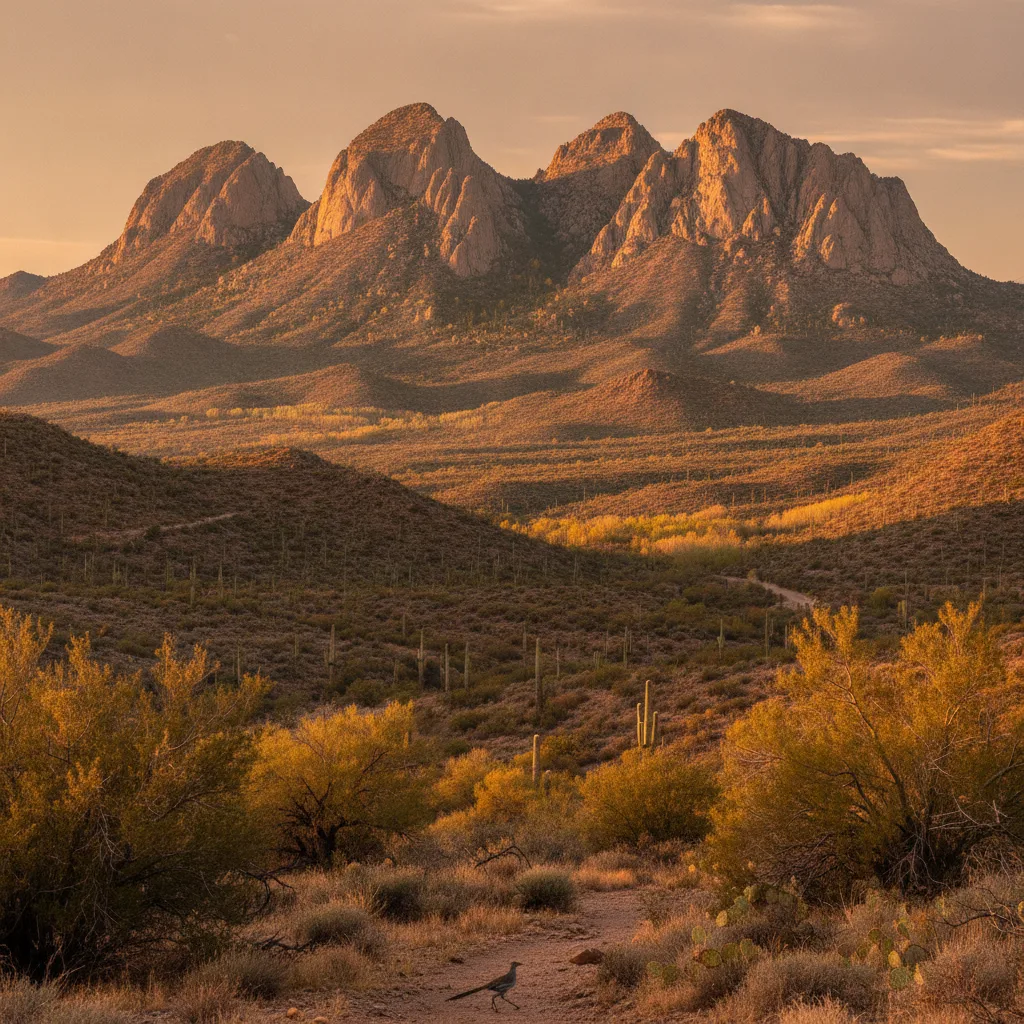
For those seeking a quintessential Arizona adventure that combines rugged mountain landscapes with accessible outdoor recreation, look no further than Four Peaks Arizona. This prominent mountain range, part of the larger Mazatzal Mountains, stands as a majestic sentinel, its distinctive four summits visible from across the Phoenix metropolitan area. Our team at Visit America has thoroughly explored this unique destination, and we're ready to share our expert insights to help you plan an unforgettable trip. From scenic drives and challenging hikes to off-road escapades and dispersed camping, Four Peaks offers a diverse array of experiences for every type of traveler.
Why Visit Four Peaks
If you're wondering, "is Four Peaks worth visiting?", our answer is an unequivocal yes. The Four Peaks Wilderness Area provides a dramatic escape from the desert floor, offering cooler temperatures and breathtaking panoramic views that stretch across the Tonto National Forest, Roosevelt Lake, and even the distant Superstition Wilderness. It's a place where the Sonoran Desert's iconic saguaros gradually give way to higher elevation forests of manzanita, oak, and Ponderosa pine, creating a unique ecological transition zone. This diverse landscape ensures that every visit reveals something new, whether it's vibrant wildflowers in spring or the golden hues of scrub oaks in autumn.
Beyond the stunning scenery, the area offers a sense of remote wilderness surprisingly close to a major metropolitan area. It’s a chance to disconnect, breathe fresh air, and immerse yourself in Arizona's natural beauty. For those who appreciate geological wonders, the Four Peaks are also home to the only commercial amethyst mine in the United States, offering a unique opportunity to tour an active mine and even search for your own crystals. The contrast of the desert lowlands with the alpine feel of the peaks themselves is truly remarkable, making us confident that Four Peaks is worth visiting for its sheer natural grandeur and diverse offerings.
Who It's Best For
Four Peaks caters to a wide range of outdoor enthusiasts, though some activities require a certain level of preparation. It's ideal for:
- Off-Road Adventurers: The unpaved Forest Road 143 (Four Peaks Road) is a classic Arizona off-road route, rated around 2/10 difficulty, making it suitable for most stock SUVs in dry conditions. However, a high-clearance vehicle is recommended, and 4x4 may be needed after rain. It's a popular choice for those with trucks, SUVs, side-by-sides, or dirt bikes looking for scenic drives and dispersed camping options.
- Hikers: From challenging summit ascents to more moderate wilderness trails, the Four Peaks Wilderness offers diverse hiking opportunities. Experienced hikers will find routes like Browns Peak via Browns Trail particularly rewarding.
- Nature Photographers: The dramatic elevation changes, diverse flora and fauna, and expansive vistas provide endless photographic opportunities, especially during sunrise and sunset.
- Campers: Dispersed camping is widely available throughout the Tonto National Forest areas surrounding Four Peaks, offering a chance for solitude under the stars.
- Families with a Sense of Adventure: While some trails are difficult, the scenic drive and accessible staging areas make it possible for families with appropriate vehicles to enjoy the views and shorter walks.
Those seeking paved roads and luxury amenities might find the immediate Four Peaks area too rugged. However, its proximity to Phoenix and surrounding towns means comfortable lodging and dining are just a drive away.
Getting There & Parking
Understanding how to get to Four Peaks is crucial for a smooth trip, as access primarily involves unpaved forest roads. The area is located within the Tonto National Forest and is roughly 40 miles from Phoenix.
Road Conditions and Vehicle Requirements
The main access route is Forest Road 143, also known as Four Peaks Road. This 28-mile unpaved road connects State Route 87 (Beeline Highway) to State Route 188 near Theodore Roosevelt Lake. While rated as an "easy" off-road route (around 2/10 difficulty), sections can be rocky and washboarded.
- High-Clearance Vehicle: A high-clearance vehicle is required, and a 4x4 is recommended, especially after rain or if rain is in the forecast, as conditions can become challenging. Sedans are generally not recommended.
- East vs. West Entrance:
- West Entrance (from SR 87): This is the most common route from Phoenix. From SR 87, you'll turn onto FR 143 (Four Peaks Road). The road starts as gravel and can be washboarded immediately.
- East Entrance (from SR 188): This route involves turning onto El Oso Road from SR 188. This road is generally smoother gravel with fewer bumps but can be narrow with drop-offs, offering great views of Roosevelt Lake.
- Check Conditions: Always check current road conditions before heading out, especially during winter (when snow and ice can make higher elevations treacherous) and during monsoon season (July and August) when lightning storms and flash floods are common, and roads can become impassable. The Arizona Department of Transportation (ADOT) provides current road restrictions and conditions via their AZ511 system.
Parking and Fees
For those wondering about Four Peaks Arizona parking, several options exist:
- Four Peaks OHV Staging Area: This is the first parking lot on Forest Road 143 and a common staging area for off-highway vehicles. No fees are required to park here. Portable restrooms are available, but potable water and picnic tables are not. This staging area is day-use only, with no overnight camping or campfires allowed within the staging area itself.
- Trailhead Parking: Parking areas are available at various trailheads, such as Pigeon Spring Road and Lone Pine Saddle, which provide access to hiking trails within the Four Peaks Wilderness.
- Tonto Pass: While parking at the Four Peaks OHV Staging Area does not require a fee, a Tonto Pass ($8/day or $80/year for a Discovery Pass) or an America the Beautiful Pass ($80/year) is required at most developed recreation sites within the Tonto National Forest, including many day-use areas, picnic areas, and trailheads. It's always best to have one if you plan to stop at other designated recreation sites in the broader Tonto National Forest. These passes can be purchased from Tonto National Forest offices or authorized retail vendors.
- OHV Permits: If you plan to use motorized vehicles south of the Four Peaks OHV Staging Area into The Rolls OHV Permit Zone, a Tonto National Forest OHV Permit is required. These permits cost $10 for 3 days, $60 for 6 months, or $80 for an annual pass and can be purchased from Recreation.gov. Traveling on Four Peaks Road itself does not require an OHV permit.
For those planning how to get to Four Peaks, we recommend downloading offline maps (like OnX Off-Road) as cell service can be limited.
Top Things to Do
When considering things to do at Four Peaks, the opportunities are as varied as the landscape itself. Our team has curated a list of must-do activities that showcase the best of this Arizona gem.
Four Peaks Hiking Trails
The Four Peaks Wilderness offers a network of trails ranging from moderate to strenuous, providing stunning views and a true wilderness experience. For those interested in Four Peaks hiking trails, here are some highlights:
- Browns Peak via Browns Trail: This is the most popular and challenging route, a 4.9-mile (7.9 km) hike that takes about 3 hours and 15 minutes to complete. It involves a challenging ascent to Browns Peak (7,657 feet), the highest point in Maricopa County, often requiring a Class 4 scramble near the summit. The views from the top are unparalleled.
- Browns Peak via Four Peaks Trail Loop: Another difficult option, this 5.0-mile (8.0 km) path offers an alternative approach to the summit with substantial elevation gain.
- Arizona Trail: North Four Peaks Wilderness (Passage 20): This 10.1-mile (16.2 km) section of the Arizona Trail leads through the northern part of the wilderness, offering panoramic views of the Mazatzal Mountains and the iconic Four Peaks. It's often completed in about 5 hours and is rated as moderate to difficult, with some sections containing over 30% grades. The trail ascends from Theodore Roosevelt Lake, traversing high ridges with significant elevation gains.
- Four Peaks Trail #130: This trail is well-marked and offers scenic views of Tonto National Forest, Roosevelt Lake, and the Four Peaks. It's a longer route, with some sections being very difficult.
When embarking on Four Peaks hiking trails, remember that springs and streams are seasonal, so water can be scarce. Always pack ample water, especially during warmer months, and be prepared for significant elevation changes and rugged terrain. Cell service is limited, so bring a map and compass or a GPS device. Group size is limited to 15 people.
Off-Roading and Scenic Drives
Driving Forest Road 143 (Four Peaks Road) is an adventure in itself. This 28-mile route offers incredible scenery, transitioning from classic Sonoran Desert terrain to higher elevations with sweeping ridgeline views. It's a popular route for off-road vehicles, providing access to deeper parts of the Tonto National Forest and numerous dispersed camping spots. Remember to adhere to OHV permit requirements if venturing into designated OHV Permit Zones. The road can be bumpy and challenging in parts, but the views are well worth the effort.
Four Peaks Amethyst Mine Tour
For a truly unique experience among the things to do at Four Peaks, consider a tour of the Four Peaks Amethyst Mine. This is Arizona's premier amethyst mine, and tours are offered seasonally. In 2026, fall tour dates are scheduled for September 19th, October 17th, and November 14th. Reservations are required and can be made by contacting Four Peaks Mining Co.. The adventure includes a helicopter ride up to the mine at 6,200 feet elevation, a short hike to the mine entrance, and an opportunity to see if you can find your own amethyst crystals. Public tours cost $600 per person, with private tours also available. Participants must be at least 12 years old.
Wildlife Viewing and Photography
The diverse ecosystems of Four Peaks support a variety of wildlife. Keep an eye out for black bears (one of Arizona's densest populations), ring-tailed cats, skunks, coyotes, deer, javelinas, and mountain lions. In the lower elevations, you'll find an abundance of desert flora, including magnificent saguaros. Birdwatchers will also appreciate the numerous species that inhabit the area. Remember to maintain a safe distance and never feed wildlife.
Best Time to Visit
Choosing the best time to visit Four Peaks greatly impacts your experience due to Arizona's varied climate. Our team recommends aiming for the cooler months to fully enjoy all the things to do at Four Peaks.
- Fall (October-November): This is often cited as the optimal time to visit Arizona, with comfortable temperatures (70-90°F in the desert, cooler at elevation), clear skies, and moderate crowds. The cooler temperatures are ideal for hiking and off-roading, and the desert scrub oaks turn golden.
- Spring (March-April): Another excellent window, spring offers pleasant warming weather (60-85°F), the possibility of wildflowers, and ideal hiking conditions. March is often considered peak "perfect weather".
- Winter (December-February): While lower elevations are mild and sunny, expect cooler temperatures, and potentially snow and ice at higher elevations around Four Peaks. This can make some roads and trails treacherous. However, it also means fewer crowds and unique snowy vistas.
- Summer (June-September): We generally advise caution when visiting during the summer due to extreme heat in the lower desert areas (often exceeding 100°F). While Four Peaks offers cooler mountain air, the monsoon season (July and August) brings lightning storms and a risk of flash floods, which can make roads impassable and hiking dangerous. If you do visit in summer, plan outdoor activities for early mornings and carry plenty of water.
Always check the weather forecast and road conditions (via ADOT's AZ511 system) before your trip, especially if planning to drive Four Peaks Road or hike at higher elevations. Fire restrictions are also common during dry periods, particularly in summer, which can impact camping and campfire allowances.
Where to Stay Nearby
While Four Peaks itself is primarily a wilderness area offering dispersed camping, you won't find traditional hotels or resorts directly on the mountain. For those seeking more conventional Four Peaks lodging, several towns within a reasonable driving distance offer a range of accommodations, from budget-friendly options to upscale resorts. The best choice for Four Peaks lodging depends on your preference for proximity to amenities versus a more remote experience.
Dispersed Camping
For the full wilderness experience, dispersed camping is a popular option within the Tonto National Forest surrounding Four Peaks. This means camping outside of developed campgrounds, typically without amenities like water, restrooms, or picnic tables.
- Regulations: Dispersed camping is generally free and does not require reservations. However, a 14-day stay limit applies in most forest areas. Always practice Leave No Trace principles, packing out all trash. Campfires may be restricted, especially during dry seasons (check for Stage 1 or Stage 2 Fire Restrictions). No overnight camping or campfires are allowed in the Four Peaks OHV Staging Area itself.
- Locations: Many spots are available along Forest Road 143 (Four Peaks Road) and its side roads. A high-clearance vehicle is often necessary to access these areas.
- Amenities: Be prepared to be self-sufficient. Potable water is not available, and portable restrooms are only found at designated staging areas.
Hotels and Resorts (Phoenix/Mesa/Tempe Area)
The closest major metropolitan area offering a wide array of Four Peaks lodging options is Phoenix and its eastern suburbs like Mesa and Tempe. These areas are typically about an hour to an hour and a half drive from the western entrance of Four Peaks Road.
- Phoenix: Offers numerous resorts, including the Hilton Phoenix Resort at the Peak, known for its water park and family-friendly amenities. Many hotels are located near the Phoenix Mountains Preserve.
- Mesa: A convenient base for accessing the Tonto National Forest. You'll find a variety of chain hotels here.
- Tempe: Home to Arizona State University, Tempe offers a lively atmosphere with many hotels, including those near Four Peaks Brewing Co. (note: this is a brewery, not the mountain itself, but indicates a general area for lodging).
These areas provide easy access to restaurants, shopping, and other attractions, allowing you to enjoy the wilderness by day and comfortable amenities by night. When searching for Four Peaks lodging, consider booking in advance, especially during peak seasons (fall and spring).
Sample 2-Day Itinerary
To help you make the most of your visit to Four Peaks Arizona, our team has crafted a sample 2-day itinerary. This plan balances scenic drives, hiking, and relaxation, ensuring you experience the best this unique destination has to offer.
Day 1: Scenic Drive & Lower Elevation Exploration
- Morning (8:00 AM - 12:00 PM): Drive Four Peaks Road (FR 143)
Start your adventure early from the Phoenix/Mesa area. Head north on SR 87 (Beeline Highway) and turn east onto Forest Road 143 (Four Peaks Road). Ensure your vehicle is high-clearance, and ideally 4x4, especially if there has been recent rain. Take your time driving this scenic 28-mile unpaved road, stopping at various pull-offs for panoramic views of the Sonoran Desert, Roosevelt Lake, and the distinct four summits.
Utilize the Four Peaks OHV Staging Area for a quick stretch and to check informational signboards. No fees are required to park here.
- Lunch (12:00 PM - 1:00 PM): Picnic with a View
Pack a picnic lunch to enjoy at one of the many scenic overlooks along FR 143. Remember to practice Leave No Trace principles and pack out all your trash.
- Afternoon (1:00 PM - 5:00 PM): Easy Hike or Amethyst Mine Tour
- Option A (Hiking): For a more moderate experience, explore a section of the Arizona Trail Passage 20, accessible from trailheads like Pigeon Spring or Lone Pine Saddle. These trails offer stunning views without the extreme difficulty of summiting Browns Peak.
- Option B (Amethyst Mine Tour): If your visit aligns with a tour date (e.g., Fall 2026 dates: September 19th, October 17th, November 14th), embark on the unique Four Peaks Amethyst Mine tour. This requires advance reservations and typically involves a helicopter ride to the mine.
- Evening (5:00 PM onwards): Dispersed Camping or Return to Hotel
- Option A (Camping): Find a dispersed camping spot along FR 143. Remember the 14-day stay limit and check for any fire restrictions. Enjoy stargazing away from city lights.
- Option B (Hotel): Drive back to your chosen Four Peaks lodging in Phoenix, Mesa, or Tempe for a comfortable night's rest.
Day 2: Summit Challenge & Wilderness Immersion
- Morning (7:00 AM - 2:00 PM): Browns Peak Summit Hike
For experienced and well-prepared hikers, dedicate your morning to conquering Browns Peak, the highest of the Four Peaks. The Browns Peak via Browns Trail is a difficult 4.9-mile (7.9 km) route with significant elevation gain and a Class 4 scramble near the top. Start early to avoid midday heat and allow ample time for the ascent and descent (approx. 3 hours 15 minutes hiking time, plus breaks). Carry plenty of water (at least 3-4 liters per person), snacks, and sun protection. Inform someone of your hiking plans, as cell service can be unreliable.
- Lunch (2:00 PM - 3:00 PM): Post-Hike Refreshment
Enjoy a well-deserved packed lunch at the trailhead or head back towards SR 87 for a casual meal in Fountain Hills or Mesa.
- Afternoon (3:00 PM - 5:00 PM): Relax & Reflect
After a challenging hike, take some time to relax. If staying at a hotel, enjoy the amenities. If camping, simply unwind at your campsite, soaking in the quiet wilderness ambiance.
- Evening: Departure or Extended Stay
Head home, or if you've fallen in love with the Four Peaks area, consider extending your stay to explore other parts of the Tonto National Forest, such as nearby Roosevelt Lake or the Tonto National Monument.
Frequently Asked Questions (FAQ)
Four Peaks camping
Dispersed camping is widely available throughout the Tonto National Forest surrounding Four Peaks, offering a free and primitive experience. You can find spots along Forest Road 143 (Four Peaks Road) and its side roads. No reservations or fees are typically required for dispersed camping, but a 14-day stay limit applies. Remember to pack out all trash and check for fire restrictions, as campfires are often prohibited during dry seasons, and never allowed in the Four Peaks OHV Staging Area. Developed campgrounds are available elsewhere in the Tonto National Forest, which often require fees and reservations through Recreation.gov.
things to do in Tonto National Forest
The Tonto National Forest, encompassing 2.9 million acres, offers a vast array of recreational opportunities beyond just Four Peaks. Visitors can enjoy auto touring, biking, developed and dispersed camping, climbing, horseback riding, recreational vehicles, swimming, and wildlife viewing. Popular areas include numerous lakes (Saguaro, Canyon, Apache, Bartlett, Roosevelt) for water sports, the Salt River and Verde River for river activities, and extensive trail systems like those in the Superstition Wilderness and near Payson. The Tonto National Monument, with its ancient cliff dwellings, is also a significant cultural site within the forest. Note that some developed sites and OHV zones require a Tonto Pass or OHV Permit.
Four Peaks with kids
Visiting Four Peaks with kids is definitely possible, especially for families with a sense of adventure and the right vehicle. The scenic drive along Four Peaks Road (FR 143) offers spectacular views that can be enjoyed by all ages. For younger children, stick to shorter, easier walks from designated parking areas rather than challenging hikes like Browns Peak. The Four Peaks OHV Staging Area provides a safe place to park and view the landscape. Pack plenty of snacks, water, and sun protection, and be aware that amenities like restrooms and potable water are limited. The remote nature means unreliable cell service, so bring physical maps and ensure everyone knows the plan.
best hotels near Four Peaks
Since there are no hotels directly on Four Peaks, the best hotels near Four Peaks are found in the surrounding towns. Phoenix, Mesa, and Tempe offer the widest selection of accommodations. In Phoenix, options like the Hilton Phoenix Resort at the Peak provide resort amenities, including a water park. Tempe has hotels near Arizona State University, such as the MOXY Phoenix Tempe or La Quinta Inn & Suites Tempe University. For a balance of convenience and access to the forest, look for hotels in the eastern parts of Mesa or Fountain Hills. When searching for the best hotels near Four Peaks, consider your budget and desired amenities, keeping in mind that you'll have a drive to reach the mountain itself.
Four Peaks tips
Our top Four Peaks tips for a successful trip include: 1) **Vehicle Preparation:** A high-clearance vehicle is essential, and 4x4 is recommended for Four Peaks Road (FR 143), especially after rain. 2) **Timing:** Visit in fall (Oct-Nov) or spring (Mar-Apr) for the most pleasant weather. Avoid summer midday heat and monsoon storms. 3) **Hydration & Supplies:** Carry ample water, food, and a first-aid kit, as services are limited. 4) **Navigation:** Download offline maps (e.g., OnX Off-Road) as cell service is unreliable. 5) **Permits & Fees:** While parking at the OHV Staging Area is free, consider a Tonto Pass for other developed sites and an OHV Permit for designated motorized zones. 6) **Leave No Trace:** Pack out everything you pack in. 7) **Fire Restrictions:** Always check for current fire restrictions before planning any campfires.
where to stay near Four Peaks
For those wondering where to stay near Four Peaks, your primary options are dispersed camping directly within the Tonto National Forest or conventional lodging in nearby cities. Dispersed camping offers a rugged, free experience with a 14-day stay limit, but lacks amenities. For hotels, the cities of Phoenix, Mesa, and Tempe provide the closest and most diverse selections. These cities are about an hour to an hour and a half drive from the western entrance to Four Peaks Road. You can find everything from budget-friendly motels to luxury resorts, offering a comfortable base after a day of exploring the wilderness.
The Four Peaks region of Arizona offers a truly unparalleled blend of accessible wilderness and dramatic scenery. As the Visit America editorial team, we are confident that a trip here will leave you with lasting memories of Arizona's diverse landscapes. Whether you're a seasoned hiker tackling Browns Peak, an off-road enthusiast navigating FR 143, or simply seeking a scenic escape, Four Peaks delivers. Remember to plan carefully, respect the wilderness, and prepare for an adventure that showcases the wild heart of the Grand Canyon State. For more Arizona exploration, consider extending your trip to Grand Canyon National Park, Monument Valley Navajo Park, or other best places in Arizona.
Last updated: 2026-07-05 by the Visit America team.