Sunset Crater Volcano National Monument Travel Guide — Arizona
For travelers seeking a truly unique geological experience in the American Southwest, our team highly recommends a visit to Sunset Crater Volcano National Monument Arizona. This dramatic landscape, shaped by a volcanic eruption over 1,000 years ago, offers an unparalleled opportunity to explore a well-preserved cinder cone and vast lava flows. We've compiled this comprehensive guide to help you discover the scenic drives and trails that showcase the area's distinctive geological features.
Why Visit Sunset Crater Volcano National Monument
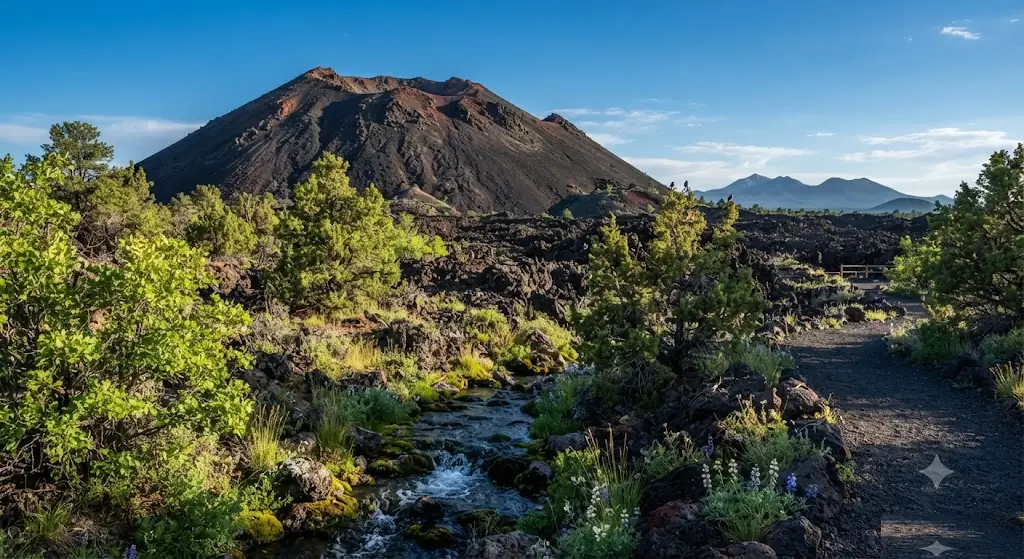
Sunset Crater Volcano National Monument stands as a testament to the raw power of nature, offering a glimpse into Arizona's fiery past. Here, you'll encounter the youngest volcano on the Colorado Plateau, formed by an eruption that occurred between A.D. 1040 and 1100. The monument's namesake, Sunset Crater, is a striking cinder cone rising approximately 1,000 feet above the surrounding terrain, its rim glowing with rusty red cinders that inspired its name.
Beyond the main cinder cone, the landscape is a fascinating tapestry of jagged lava flows, known as the Bonito Lava Flow, and smaller volcanic features like squeeze-ups and hornitos. The area is part of the larger San Francisco Volcanic Field, a region dotted with over 600 volcanoes. Visiting Sunset Crater Volcano National Monument provides an educational journey through volcanic geology, allowing you to witness firsthand how such powerful events reshaped the earth and influenced the lives of the Ancestral Puebloan people who once inhabited this area. The monument's proximity to other national monuments like Wupatki and Walnut Canyon makes it an ideal stop for those exploring the rich natural and cultural history of Northern Arizona.
Who It's Best For
Sunset Crater Volcano National Monument caters to a diverse range of visitors. It's an excellent destination for geology enthusiasts eager to witness volcanic formations up close and learn about the processes that shaped the land. Hikers, from casual strollers to those seeking more strenuous climbs, will find a variety of trails to explore the unique terrain. Families with children will appreciate the accessible trails and the Junior Ranger program, which offers engaging activities for young explorers.
Photographers will be captivated by the stark contrasts of black lava, red cinders, and verdant ponderosa pines, especially during sunrise or sunset when the light enhances the landscape's dramatic colors. Road trippers will find it a convenient and rewarding stop along U.S. 89, particularly when combined with a visit to nearby Wupatki National Monument via the scenic loop road. While pets are not allowed on the trails or in buildings, they are permitted in the parking lot and on the paved portion of the Lava Flow Trail.
Getting There & Parking
Reaching Sunset Crater Volcano National Monument is straightforward, typically involving a drive from Flagstaff, Arizona. From Flagstaff, travel north on U.S. Highway 89 for approximately 12 miles. You'll then turn right onto the Sunset Crater-Wupatki Loop Road (Forest Road 545) between mile markers 430 and 431. The visitor center is located about two miles down this road on your right. For those coming from Page or the east entrance of the Grand Canyon, you would travel south on Highway 89.
The monument is part of a 35-mile (or 34-mile, depending on the source) scenic loop road that connects Sunset Crater Volcano and Wupatki National Monuments. This loop road is paved and generally accessible, though winter weather or fire season may occasionally lead to closures. There is ample free parking available at the visitor center and at various trailheads throughout the monument. Our team recommends checking current road conditions before your visit, especially during winter months, by consulting the National Park Service website or Arizona's 511 system for road closures.
For those wondering how to get to Sunset Crater Volcano National Monument, a private vehicle is highly recommended as there is no public transportation serving the area. GPS units may not always accurately pinpoint the volcano's location, so it's advisable to carry a map.
Top Things to Do
There are numerous things to do at Sunset Crater Volcano National Monument, offering a blend of scenic beauty, geological exploration, and historical insight. Our team suggests starting your visit at the Sunset Crater Volcano Visitor Center. Here, you can gather information about the trails, learn about the monument's geology through exhibits and a short film, and even observe a working seismograph. Junior Ranger booklets are also available for younger visitors.
The primary activity and one of the most rewarding things to do at Sunset Crater Volcano National Monument is to explore its unique trails and scenic loop. The 35-mile Loop Road (FR-545) provides a panoramic drive through diverse landscapes, connecting Sunset Crater with Wupatki National Monument. Along the way, you'll encounter various pull-offs and trailheads. Picnic areas are available, such as one near Bonito Campground across from the visitor center, perfect for a packed lunch. Ranger-led hikes and interpretive programs are often offered, especially during the summer months, providing deeper insights into the monument's natural and cultural history.
While you cannot hike to the summit of Sunset Crater itself due to erosion concerns (the trail was closed in 1973), several other trails allow close-up exploration of the volcanic features. We recommend taking advantage of the various viewpoints along the scenic drive, such as the Cinder Hills Overlook, for excellent photo opportunities.
Best Time to Visit
Sunset Crater Volcano National Monument is open year-round, offering distinct experiences throughout the seasons. The scenic drive and all trails are accessible day and night unless extreme snowfall or other weather events make them impassable. The visitor center, however, operates daily from 9:00 AM to 4:30 PM, with closures on Thanksgiving, Christmas, and New Year's Day.
Spring and fall generally offer the most pleasant weather for hiking, with cooler temperatures and fewer crowds than the peak summer months. Summer brings warmer days, often in the 80s, but also the possibility of afternoon thunderstorms from July through September. This is also when ranger-led hikes and interpretive programs are most frequently available. Winter can bring snow and cold temperatures, transforming the volcanic landscape into a serene, starkly beautiful environment, though some roads or trails may temporarily close due to heavy snowfall.
Arizona observes Mountain Standard Time year-round, so Daylight Savings Time is not a factor when planning your visit. Our team advises checking the weather forecast for Flagstaff before your trip and dressing in layers, as conditions at the monument's 7,000+ feet elevation can be unpredictable.
Where to Stay Nearby
While there is no lodging directly within Sunset Crater Volcano National Monument, visitors have several excellent options for accommodations in the surrounding area. The closest and most convenient choice for Sunset Crater Volcano National Monument lodging is Bonito Campground, operated by the U.S. Forest Service. Located directly across from the monument's visitor center, Bonito Campground is typically open from late May through mid-October. It offers 43 sites on a first-come, first-served basis, with running water and restrooms, but no hookups or showers. The maximum vehicle size allowed is 35 feet. For current information and availability, you can contact the Coconino National Forest at 928-526-0866.
For those preferring more amenities, the city of Flagstaff, approximately 30 minutes south, offers a wide range of Sunset Crater Volcano National Monument lodging options to suit all budgets, from hotels and motels to vacation rentals and cabins. Flagstaff serves as a fantastic base for exploring not only Sunset Crater and Wupatki but also other Northern Arizona attractions like the Grand Canyon National Park, Sedona, and Antelope Canyon. Many hotels in Flagstaff cater to outdoor enthusiasts, offering comfortable stays after a day of exploration. Dispersed camping is also available in the nearby Cinder Hills OHV Area, offering a free and convenient option for a two-day adventure.
Sample 2-Day Itinerary
Our team has crafted a sample 2-day itinerary to help you make the most of your visit to Sunset Crater Volcano National Monument and its remarkable surroundings.
Day 1: Volcanic Wonders and Ancient Ruins
- **Morning (9:00 AM - 12:00 PM): Sunset Crater Exploration.** Begin your day at the Sunset Crater Volcano Visitor Center. Pick up a park map and any available brochures. Watch the park film to gain an understanding of the volcano's history and geological significance. Then, head out to the Lava Flow Trail. This 1-mile (1.6 km) loop trail is the most popular and allows you to walk across ancient lava flows and get close to the base of Sunset Crater. The first 0.25-mile section is paved and accessible. Consider also the Bonito Vista Trail (0.3 miles round-trip), which is wheelchair accessible and offers sweeping views of the lava flow and surrounding volcanoes.
- **Lunch (12:00 PM - 1:00 PM): Picnic Amidst Cinders.** Enjoy a packed lunch at the picnic area near Bonito Campground, directly across from the visitor center, taking in the unique volcanic scenery.
- **Afternoon (1:00 PM - 4:00 PM): Wupatki National Monument.** Continue your drive north on the 35-mile Loop Road (FR-545) to Wupatki National Monument. This area features well-preserved ancient Native American pueblos and offers a stark contrast to the volcanic landscape. Explore the Wupatki Pueblo, Lomaki Pueblo, and Wukoki Pueblo, imagining the lives of the Sinagua people who lived here.
- **Late Afternoon (4:00 PM - 6:00 PM): Scenic Drive and Return.** Complete the scenic loop back to U.S. 89. Take your time to stop at various overlooks for photos. Head back to Flagstaff for dinner and check into your chosen accommodation.
Day 2: Crater Views and Flagstaff Charm
- **Morning (9:00 AM - 12:00 PM): Lenox Crater Hike.** Return to Sunset Crater Volcano National Monument. Today, tackle the Lenox Crater Trail. This moderately strenuous 1.6-mile (2.6 km) round-trip hike takes about 1.5 hours and leads you up a cinder cone, offering excellent panoramic views of Sunset Crater, O'Leary Peak, and the San Francisco Peaks. The loose cinders make for a unique climbing experience.
- **Lunch (12:00 PM - 1:00 PM): Flagstaff Dining.** Drive back to Flagstaff and enjoy lunch at one of its many local restaurants.
- **Afternoon (1:00 PM - 5:00 PM): Explore Flagstaff.** Spend your afternoon exploring the charming city of Flagstaff. Visit the historic downtown area, browse local shops, or explore the Lowell Observatory. For those interested in more natural beauty, consider a visit to nearby Walnut Canyon National Monument or the Grand Canyon National Park South Rim, both easily accessible from Flagstaff.
Sunset Crater Volcano National Monument Hiking Trails
The Sunset Crater Volcano National Monument hiking trails offer diverse experiences, from easy, accessible strolls to more challenging climbs up cinder cones. While hiking to the top of Sunset Crater itself is prohibited to prevent erosion, visitors can still immerse themselves in the volcanic landscape through several well-maintained paths.
The most popular of the Sunset Crater Volcano National Monument hiking trails is the **Lava Flow Trail**. This 1-mile (1.6 km) loop is considered easy and takes about an hour to complete. The initial 0.25-mile section is paved and fully accessible for wheelchairs, walkers, and strollers, providing a close-up view of the lava. An unpaved spur section allows you to get even closer to the jagged lava, though it has uneven surfaces and steps, making it less accessible. Pets are allowed only on the paved portion of this trail. Interpretive signs along the Lava Flow Trail provide insights into the geology of the area.
For those seeking a bit more elevation, the **Lenox Crater Trail** is a moderately strenuous 1.6-mile (2.6 km) round-trip hike that takes approximately 1.5 hours. This trail climbs a cinder cone, offering rewarding views of Sunset Crater, O'Leary Peak, and the distant San Francisco Peaks. The path consists of loose cinders, making the ascent a unique challenge but the descent easier on the knees. Another accessible option is the **Bonito Vista Trail**, a short 0.3-mile (0.5 km) round-trip paved path that leads to a sweeping overlook of the lava flow and surrounding volcanoes. The **A'a Trail** is a quick 0.25-mile (0.4 km) unpaved loop, offering an easy walk to examine the jagged basaltic a'a lava up close. For a longer, more strenuous adventure, the **Lava's Edge Trail** is a 3.4-mile (5.5 km) round-trip hike that follows the edge of the Bonito Lava Flow under ponderosa pines. Pets are allowed on the U.S. Forest Service section of this trail.
Beyond the monument, the **O'Leary Peak Trail** offers a challenging 10-mile round-trip hike (or 7.7 miles one way) through the Coconino National Forest, leading to a fire lookout with panoramic views of Sunset Crater, the San Francisco Peaks, and even the Painted Desert. This trail is primarily an old jeep road and is considered strenuous.
Is It Worth Visiting?
Our team unequivocally believes that visiting Sunset Crater Volcano National Monument is absolutely worth it for any traveler exploring Northern Arizona. This destination offers a rare and accessible opportunity to witness a relatively young volcanic landscape, providing a fascinating counterpoint to Arizona's more commonly known desert and canyon scenery. The dramatic contrasts of black lava, red cinders, and green pines create a visually stunning environment that is unlike anything else in the region.
For those questioning "is Sunset Crater Volcano National Monument worth visiting," we point to the unique educational experience it provides. The monument's well-preserved features, coupled with the informative visitor center and interpretive trails, make learning about geology both engaging and memorable. The ability to walk on lava flows and hike up a cinder cone like Lenox Crater offers a tangible connection to the powerful forces that shaped our planet. Furthermore, its inclusion on the scenic loop with Wupatki National Monument means you can combine an exploration of volcanic geology with ancient human history in a single, rewarding day trip. Whether you're a casual sightseer, an avid hiker, or a family seeking an educational adventure, the unique beauty and geological significance of Sunset Crater Volcano National Monument make it a truly worthwhile stop on your Arizona itinerary.
Last updated: 2026-07-13 by the Roam States team.