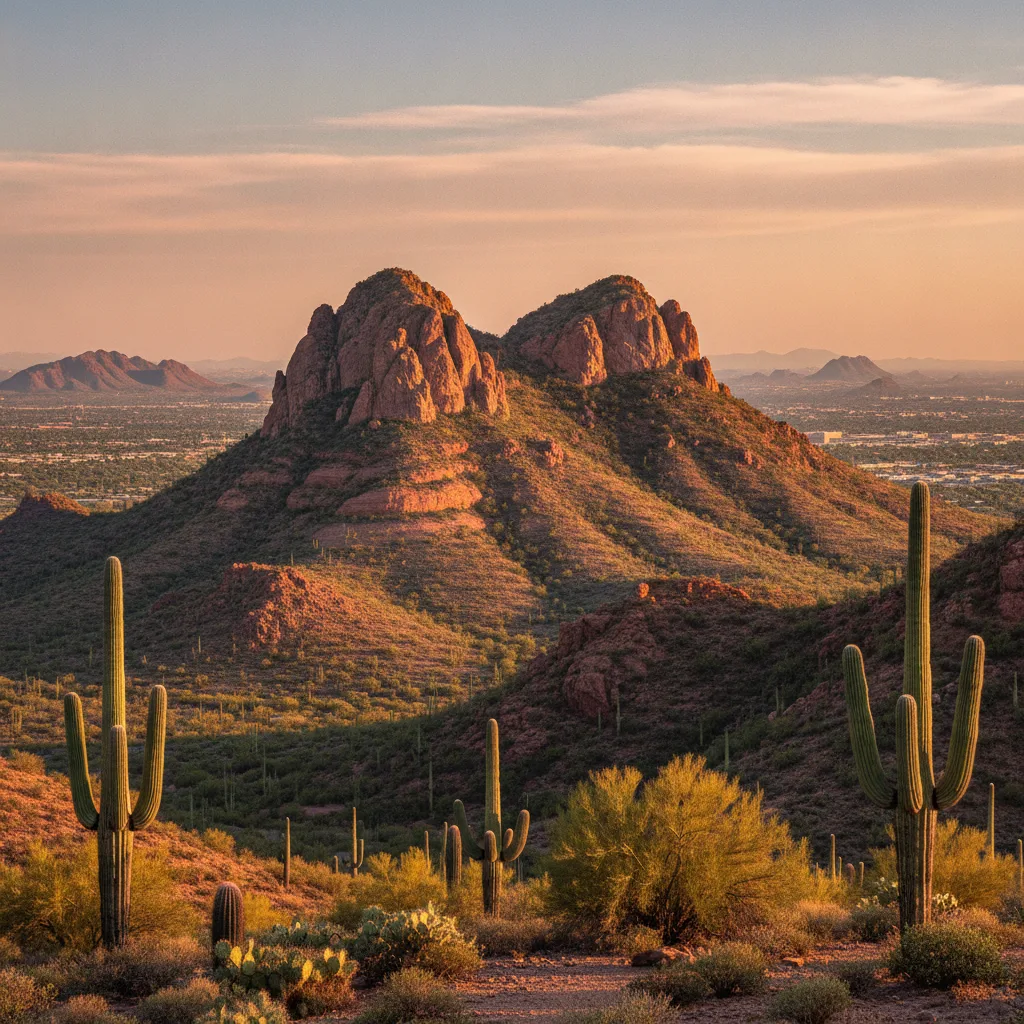
We, the Visit America editorial team, consider Camelback Mountain Arizona to be an essential experience for any adventurous traveler exploring the Grand Canyon State. Rising prominently from the Sonoran Desert floor, this iconic landmark offers some of the most challenging yet rewarding hiking in the Phoenix metropolitan area, culminating in panoramic views that stretch for miles.
Why Visit Camelback Mountain
Camelback Mountain stands as a testament to the rugged beauty of Arizona's desert landscape, beckoning hikers and nature enthusiasts alike. Its distinctive silhouette, resembling a kneeling camel, is instantly recognizable and has become a symbol of Phoenix and Scottsdale. Beyond its striking appearance, the mountain offers an unparalleled opportunity to immerse oneself in the unique Sonoran Desert ecosystem. The climb, though strenuous, rewards visitors with breathtaking 360-degree views of the sprawling Valley of the Sun, including the urban landscape of Phoenix and Scottsdale, and the distant mountain ranges. It's a chance to challenge your physical limits and connect with nature, all within minutes of a major metropolitan area. For us, it represents the perfect blend of accessibility and adventure, making it a must-do for those seeking an active escape.
Who It's Best For
Camelback Mountain is unequivocally best suited for fit and experienced hikers. Both of its primary trails, Echo Canyon and Cholla, are rated "Extremely Difficult" by the City of Phoenix, featuring steep elevation gains, rocky terrain, and sections requiring hand-over-hand climbing or scrambling. This is not a casual stroll; it's a demanding workout that requires proper preparation, sturdy footwear, and a good level of physical fitness.
While the panoramic views from the summit are tempting for everyone, we strongly advise against attempting these trails if you are a beginner hiker, have a fear of heights, or are not acclimated to intense desert heat. Families with young children (especially those under 8) should also consider alternative, less strenuous options within the Phoenix Mountains Preserve. However, for those who embrace the challenge, Camelback Mountain offers an incredibly rewarding experience, providing a sense of accomplishment along with spectacular vistas.
Getting There & Parking
Navigating to Camelback Mountain and securing parking requires a bit of planning, especially during peak hiking season. The mountain has two main trailheads: Echo Canyon and Cholla. Understanding "how to get to Camelback Mountain" and its parking nuances is crucial for a smooth visit.
Echo Canyon Trailhead
Located at 4925 E McDonald Dr, Phoenix, the Echo Canyon Trailhead offers a dedicated parking lot. However, this lot is notoriously busy and fills up quickly, particularly from late morning through early afternoon on weekdays, and often remains full all day on weekends. When the lot reaches capacity, the entry gate will be closed, and vehicles are not permitted to idle on nearby McDonald Drive or Tatum Boulevard while waiting for a spot; illegally parked vehicles will be ticketed and towed.
Cholla Trailhead
The Cholla Trailhead is accessed off Invergordon Road. There is no designated parking lot directly at the trailhead. Instead, hikers must rely on limited parallel street parking along the east and west sides of Invergordon Road. Be extremely mindful of "NO PARKING" signs, as violations are strictly enforced and result in tickets.
Our Parking Recommendations
Given the parking challenges at both locations, our team highly recommends utilizing ride-sharing services like Uber or Lyft. This eliminates the stress of finding a spot and allows you to be dropped off closer to the trailheads. If taking a ride-share to Cholla, note that passengers cannot be dropped off directly on Cholla Lane; you will need to be dropped on North 64th Street and walk a short distance to the trailhead. Another excellent option, if feasible, is to bike to the trailhead, as bike racks are available. Arriving as early as possible, especially on weekends and during cooler months, is always your best bet to secure parking or avoid long waits for ride-shares. There are no fees for parking at either trailhead, but the inconvenience of finding a spot can be significant.
Top Things to Do
While the primary draw of Camelback Mountain Arizona is undoubtedly its challenging ascent, there are several "things to do at Camelback Mountain" that cater to various interests, all centered around its natural grandeur.
- Summit Hiking: The quintessential experience is to conquer one of the two main trails to the summit. The Echo Canyon Trail, a 2.5-mile round trip, is known for its extreme steepness and use of handrails in sections, offering a direct and intense climb. The Cholla Trail, slightly longer at 3.2 miles round trip, traverses the mountain's eastern slope and involves significant rock scrambling, particularly in its upper third. Both trails lead to the same breathtaking 2,704-foot summit, providing 360-degree views of the Valley of the Sun.
- Photography: The panoramic views from the summit are a photographer's dream, capturing the vast desert landscape, the city sprawl, and the distant mountains. Early morning or late afternoon hikes offer the best light for stunning sunrise or sunset shots. Even from the base, the unique camel-like profile of the mountain provides excellent photo opportunities.
- Wildlife Spotting: Keep an eye out for desert wildlife. While large animals are rare due to urban encroachment, you might spot cottontail rabbits, Harris antelope squirrels, various bird species, and even snakes, including venomous rattlesnakes, so always stay on marked trails.
- Guided Hikes: For those who prefer expert guidance or want to learn more about the local flora, fauna, and geology, guided hiking adventures are available. These tours often provide valuable safety tips, historical context, and ensure you stay on the correct path.
- Enjoy the Challenge: Simply embracing the physical and mental challenge of ascending Camelback Mountain is a significant "thing to do at Camelback Mountain." It's a rigorous workout that leaves you with a profound sense of accomplishment.
Best Time to Visit
The timing of your visit to Camelback Mountain Arizona is paramount for a safe and enjoyable experience, given the extreme desert climate. Our team strongly advises planning your trip during the cooler months.
The best time to hike Camelback Mountain is typically from **October to April**. During these months, temperatures are much more moderate, making the strenuous climb more manageable. Even within this period, we recommend starting your hike early in the morning, ideally at sunrise, to take advantage of the coolest temperatures and avoid the midday sun. Early starts also help in avoiding crowds, which can be significant, especially on weekends and holidays.
Conversely, hiking in the summer months (May through September) is highly discouraged due to dangerously high temperatures, which can exceed 100°F (38°C) and even reach 119°F (48.3°C). The trails offer very little shade and are often closed by the City of Phoenix from 8 a.m. to 5 p.m. when extreme heat warnings are issued by the National Weather Service. These closures are implemented to prevent heat-related illnesses and dangerous trail rescues, which unfortunately occur annually. If you must hike during warmer periods, always check for closures, start at dawn, carry significantly more water than you think you'll need (2-3 liters per person is recommended), and know your limits.
Where to Stay Nearby
For those planning to conquer Camelback Mountain, finding convenient and comfortable "Camelback Mountain lodging" is key. The mountain's prime location between Phoenix and Scottsdale means there's a wide array of options, from luxurious resorts to more budget-friendly hotels.
Luxury Resorts
The immediate vicinity of Camelback Mountain is home to some of Arizona's most prestigious resorts, offering unparalleled amenities and often stunning views of the mountain itself. Our top recommendations for a lavish stay include:
- The Phoenician, a Luxury Collection Resort, Scottsdale: A sprawling resort with multiple pools, golf courses, and fine dining, located very close to the mountain.
- Sanctuary Camelback Mountain, A Gurney's Resort & Spa: Known for its exceptional spa and breathtaking views, offering a serene escape.
- Royal Palms Resort and Spa, part of Hyatt: An elegant, historic property with a Mediterranean feel, just a short drive from the trailheads.
- Omni Scottsdale Resort & Spa at Montelucia: Offers a luxurious Spanish-inspired experience with beautiful architecture and amenities.
- Mountain Shadows Resort Scottsdale: A modern, stylish option with a golf course and excellent dining, located in Paradise Valley.
Mid-Range & Boutique Hotels
For those seeking a balance of comfort and value, several excellent hotels are located within a short driving distance, particularly in Scottsdale and the Biltmore area of Phoenix.
- Hotel Valley Ho: A retro-chic hotel in Old Town Scottsdale, known for its vibrant atmosphere and proximity to dining and shopping.
- The Scott Resort & Spa: Another stylish Scottsdale option with a relaxed, resort-like feel.
- Sonesta ES Suites Scottsdale Paradise Valley: Offers suite-style accommodations, ideal for longer stays or families.
- AC Hotel Phoenix Biltmore: A contemporary hotel in the upscale Biltmore area, providing easy access to both the mountain and other Phoenix attractions.
Budget-Friendly Options
While direct "Camelback Mountain lodging" at a low price point is rare, more economical options can be found slightly further afield, particularly near Phoenix Sky Harbor International Airport or in parts of Tempe and Mesa, which are still within a reasonable driving distance.
- SureStay By Best Western Phoenix Airport: Offers good value and is convenient for airport access.
- Hampton Inn Phoenix-Airport North: Another reliable choice near the airport with complimentary breakfast.
When selecting your Camelback Mountain lodging, consider proximity to your preferred trailhead, the amenities you desire, and your budget. Many hotels offer pools, which are a welcome amenity after a challenging hike in the desert heat.
Sample 2-Day Itinerary
Our team has crafted a sample 2-day itinerary to help you make the most of your visit to Camelback Mountain Arizona and the surrounding Phoenix/Scottsdale area.
Day 1: Conquering Camelback & Scottsdale Exploration
- Morning (Sunrise - 10:00 AM): Begin your day early with an ascent of Camelback Mountain. Choose either the Echo Canyon or Cholla Trail based on your preference for terrain. Remember to start at sunrise to beat the heat and crowds. Allow 2-3 hours for the round trip.
- Late Morning (10:00 AM - 1:00 PM): After your hike, return to your lodging for a refreshing shower and some well-deserved rest.
- Lunch (1:00 PM - 2:00 PM): Head to Old Town Scottsdale for lunch. Enjoy one of the many local eateries, from casual cafes to upscale restaurants.
- Afternoon (2:00 PM - 5:00 PM): Explore Old Town Scottsdale. Wander through its charming streets, browse art galleries, boutiques, and perhaps visit the Scottsdale Museum of Contemporary Art (SMoCA).
- Evening (5:00 PM onwards): Enjoy dinner in Old Town Scottsdale, followed by a leisurely evening. Consider a sunset hot air balloon ride for a different perspective of the desert landscape.
Day 2: Desert Gardens, Cultural Immersion & Grand Vistas
- Morning (9:00 AM - 12:00 PM): Immerse yourself in the beauty of the desert at the Desert Botanical Garden, located near Papago Park. This stunning garden showcases the diverse flora of the Sonoran Desert.
- Lunch (12:00 PM - 1:00 PM): Grab a casual lunch near Papago Park or head towards downtown Phoenix.
- Afternoon (1:00 PM - 5:00 PM): Dive into Phoenix's cultural scene. Visit the Heard Museum for Native American art and culture, or the Phoenix Art Museum. Alternatively, for music lovers, the Musical Instrument Museum is a world-class experience.
- Late Afternoon/Evening: Consider a day trip to one of Arizona's other magnificent natural wonders. While a full Grand Canyon trip requires more time, you could explore closer options. For those with more time in Arizona, we highly recommend extending your trip to visit Grand Canyon National Park, or the unique landscapes of Monument Valley Navajo Park. Closer options for a shorter excursion include Sedona & Oak Creek Canyon, Antelope Canyon, Horseshoe Bend, or Saguaro National Park.
- Dinner: Enjoy a final dinner in Phoenix, perhaps trying a restaurant in the Biltmore area or downtown.
Is It Worth Visiting?
So, "is Camelback Mountain worth visiting"? Our unequivocal answer is yes, for the right traveler. For those seeking an exhilarating physical challenge coupled with some of the most spectacular urban desert views in the United States, Camelback Mountain Arizona is an absolute must-do. The sense of accomplishment upon reaching the 2,704-foot summit, with its 360-degree panoramas of Phoenix, Scottsdale, and the vast Sonoran Desert, is truly unforgettable.
However, we emphasize that this is not a casual hike. Both the Echo Canyon and Cholla trails are rated "Extremely Difficult" and require a good level of fitness, proper hydration, and an awareness of the extreme desert climate. If you are prepared for a strenuous climb and respect the inherent risks of desert hiking, then Camelback Mountain offers a uniquely rewarding experience that perfectly encapsulates the adventurous spirit of Arizona. If you're looking for something less strenuous, there are many other excellent hiking opportunities in the Phoenix Mountains Preserve or nearby Papago Park that might be a better fit.
Camelback Mountain camping
Direct camping on Camelback Mountain itself is not permitted. As a protected urban preserve, the focus is on day-use hiking. However, there are numerous campgrounds and RV parks in the greater Phoenix area and surrounding regional parks that offer camping experiences. Options include Lake Pleasant Regional Park Campground, Cave Creek Regional Park, and McDowell Mountain Regional Park, which provide a range of facilities for RVs, tents, and even glamping. Some unique glamping experiences, like the Phoenix Citi StarGazer A-Frame, are also available within a short drive, offering amenities like pools and stargazing opportunities.
things to do in Phoenix
Beyond Camelback Mountain, Phoenix offers a diverse array of attractions and activities. You can explore the vibrant flora of the Sonoran Desert at the Desert Botanical Garden, visit the Phoenix Zoo, or delve into art and culture at the Phoenix Art Museum or Heard Museum. Old Town Scottsdale provides a charming area for shopping and dining, while outdoor enthusiasts can enjoy other hikes in South Mountain Park and Preserve or Papago Park. For unique experiences, consider a hot air balloon ride over the desert or a self-drive ATV/UTV rental in the Sonoran Desert.
Camelback Mountain with kids
Hiking Camelback Mountain with kids, especially young ones, is generally not recommended due to the "Extremely Difficult" rating of both main trails. The steep, rocky terrain and sections requiring scrambling can be dangerous for children. Dogs are also prohibited on all Camelback Mountain trails year-round. For families with children, we suggest exploring more family-friendly trails in nearby Papago Park, South Mountain Park, or the Phoenix Mountains Preserve, which offer easier paths and less strenuous conditions.
best hotels near Camelback Mountain
The "best hotels near Camelback Mountain" cater to various preferences and budgets, primarily located in the upscale areas of Scottsdale and Paradise Valley. Top luxury options include The Phoenician, a Luxury Collection Resort, Scottsdale; Sanctuary Camelback Mountain, A Gurney's Resort & Spa; Royal Palms Resort and Spa, part of Hyatt; and Omni Scottsdale Resort & Spa at Montelucia. For a blend of style and comfort, Hotel Valley Ho and The Scott Resort & Spa in Old Town Scottsdale are excellent choices. More budget-conscious travelers might look slightly further afield towards the airport area for brands like Hampton Inn or SureStay by Best Western.
Camelback Mountain tips
Our top Camelback Mountain tips for a safe and enjoyable hike include: **Start Early:** Begin your hike at sunrise to avoid the intense midday heat and crowds. **Hydrate Extensively:** Carry 2-3 liters of water per person, and begin hydrating days in advance. **Wear Proper Gear:** Sturdy hiking shoes or boots with good ankle support, a hat, sunscreen (SPF30+), and lightweight, moisture-wicking clothing are essential. **Know Your Limits:** Both trails are extremely difficult; turn back if you feel dizzy, overheated, or tired. **Stay on Trail:** The paths can be narrow and rocky, and going off-trail is dangerous and harmful to the environment. **Check Closures:** During summer, trails are often closed from 8 a.m. to 5 p.m. due to extreme heat warnings. Consider a guided hike for added safety and insight.
where to stay near Camelback Mountain
When considering "where to stay near Camelback Mountain," you have excellent options primarily in Scottsdale and Paradise Valley, both offering quick access to the trailheads. Scottsdale provides a vibrant atmosphere with a wide range of hotels, resorts, dining, and entertainment, including Old Town Scottsdale and Fashion Square. Paradise Valley is known for its luxurious resorts and more secluded, high-end accommodations. The Biltmore area of Phoenix also offers upscale hotels and is conveniently located. These areas ensure you're close to the mountain for early morning hikes while also having access to amenities and other attractions.
In conclusion, Camelback Mountain Arizona is more than just a hike; it's an iconic desert adventure that offers profound rewards for those willing to meet its challenge. From the strenuous climbs to the unparalleled vistas, it embodies the rugged beauty and vibrant spirit of the Grand Canyon State. Plan wisely, prepare thoroughly, and you'll find an experience that stays with you long after you've descended its slopes.
Last updated: 2026-07-05 by the Visit America team.