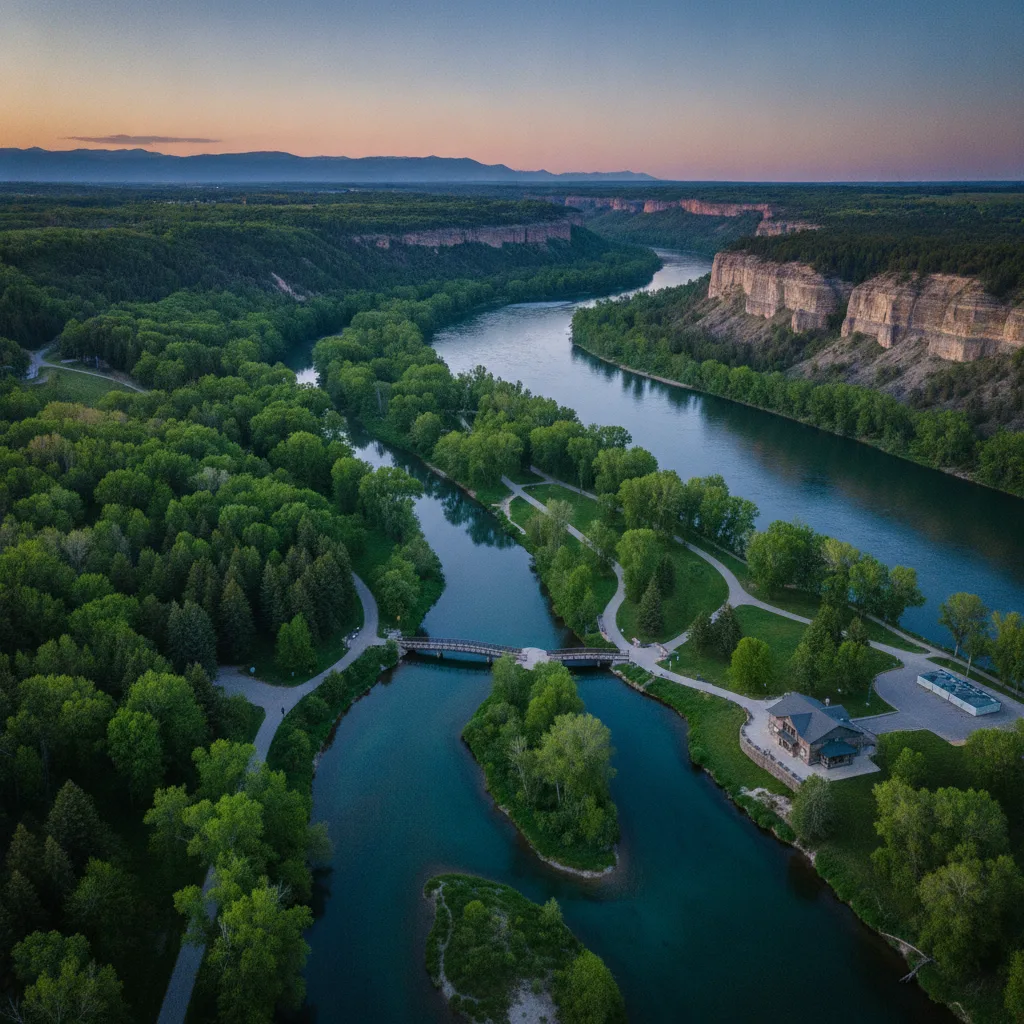
Giant Springs State Park Travel Guide — Montana
For those seeking an authentic immersion into Montana's natural wonders and rich history, our team confidently recommends Giant Springs State Park Montana. This isn't just another stop on the map; it's a geological marvel protecting one of the largest freshwater springs in the entire country, discharging an astounding 156 million gallons of water daily. Discovered by the Lewis and Clark Expedition in 1805, this day-use park offers a unique blend of historical significance, diverse recreational opportunities, and stunning landscapes along the Missouri River.
Why Visit Giant Springs State Park
Giant Springs State Park stands out as a premier destination for its sheer natural spectacle and the wealth of activities it offers. We find its constant flow of 156 million gallons of crystal-clear, 54-degree Fahrenheit water daily to be a truly captivating sight, a testament to the power of the Madison aquifer that feeds it from the distant Little Belt Mountains. This impressive spring is not only a natural wonder but also the source of the Roe River, once recognized by the Guinness Book of World Records as the world's shortest river before it empties into the mighty Missouri.
Beyond the springs themselves, the park serves as a hub for outdoor enthusiasts. Visitors can enjoy over 30 miles of paved and dirt trails, perfect for hiking, biking, and wildlife viewing. The park also boasts exceptional birding opportunities, with diverse ecosystems attracting a variety of species throughout the year. For families, the Giant Springs Fish Hatchery offers an engaging experience, where you can learn about hatchery-raised fish and even feed the "monster trout" in the show pond.
The historical significance of Giant Springs State Park is another compelling reason to visit. It was first recorded by the Lewis and Clark Expedition in 1805, and interpretive displays throughout the park delve into this pivotal moment in American exploration, as well as the area's indigenous heritage. The park's proximity to the Lewis and Clark Interpretive Center further enhances its educational value, offering deeper insights into their journey.
Who It's Best For
Giant Springs State Park is a versatile destination that caters to a wide range of visitors, making it a fantastic choice for nearly anyone traveling through central Montana. We confidently recommend it for:
- Families with Children: The park offers numerous kid-friendly activities, including feeding fish at the Giant Springs Fish Hatchery, exploring easy walking trails, and enjoying picnic areas. The natural beauty and historical exhibits provide educational entertainment for all ages.
- Outdoor Enthusiasts: With over 30 miles of trails for hiking and biking, fishing opportunities in the Missouri River and a dedicated fishing pond, and excellent bird watching, active travelers will find plenty to keep them engaged.
- History Buffs: Those interested in the Lewis and Clark Expedition and the region's past will appreciate the interpretive displays and the nearby Lewis and Clark Interpretive Center.
- Nature Lovers and Photographers: The stunning clear waters of the springs, the Roe River, the Missouri River, and the diverse wildlife make for incredible photographic opportunities and a peaceful natural escape. Winter visitors, in particular, will find unique visuals with the steaming springs against a cold, snowy backdrop.
- Anyone Seeking Relaxation: The park's numerous picnic areas, tranquil river views, and accessible paved trails provide a perfect setting for a relaxing day outdoors.
Because it is a day-use park with no camping available on-site, it's ideal for those looking for day trips, picnics, and group gatherings rather than overnight stays within the park itself.
Getting There & Parking
Knowing how to get to Giant Springs State Park is straightforward, as it's conveniently located just outside of Great Falls, Montana. The park's address is 4803 Giant Springs Rd, Great Falls, MT 59405. We find that its proximity to the city makes it easily accessible for both local residents and visitors staying in Great Falls.
For those arriving by vehicle, parking is readily available within the park. While facilities are generally well-maintained, our team notes that parking lots can fill up, especially on weekends and during peak summer months. This is particularly true for larger vehicles, such as RVs, where designated spots might be occupied by cars. We recommend arriving earlier in the day to secure a spot, particularly if you plan to visit during a busy period. There are multiple trailheads throughout Great Falls that offer easy parking for accessing the River's Edge Trail, which connects to the park.
As a day-use park, reservations for entry are not required. Non-resident visitors will incur a day-use entrance fee. As of our latest verification for 2026, the daily vehicle entrance fee for non-residents is $10. For individuals entering as a walk-in, cyclist, or bus passenger, the fee is $5. Montana residents who have paid the annual state parks fee with their vehicle registration enjoy free daily entrance. Those residents who haven't paid the annual fee will be subject to the non-resident day-use fees. A 7-day non-resident entrance pass is available for $50, and an annual non-resident vehicle pass costs $70, offering savings for those planning multiple visits or extended stays in Montana State Parks. These passes can be purchased online or at FWP offices. When staff are not available, visitors should use a self-pay envelope and include the transaction number from their electronic pass.
Top Things to Do
When planning your visit, you'll discover a wealth of things to do at Giant Springs State Park that cater to every interest. Our team has identified the following as the absolute must-dos:
- Marvel at Giant Springs: The star attraction, of course, is the spring itself. Witness the astonishing volume of crystal-clear water gushing forth at a constant 54 degrees Fahrenheit. It's a truly mesmerizing natural phenomenon.
- Explore the Roe River: Take a short walk to see the Roe River, which flows a mere 201 feet from the springs before joining the Missouri River. It's a unique geographical feature that was once recognized as the world's shortest river.
- Visit the Giant Springs Fish Hatchery: This on-site facility is both educational and fun, especially for families. Learn about the trout raised here and enjoy feeding the large fish in the show pond.
- Hike or Bike the River's Edge Trail: The park is an integral part of the extensive River's Edge Trail system, offering over 30 miles of paved and dirt single-track trails. These trails provide scenic views of the Missouri River and are suitable for all skill levels, from leisurely strolls to challenging mountain biking.
- Picnic with a View: Numerous picnic areas are scattered throughout the park, many offering shaded spots under towering silver poplars and blue spruce, or on manicured lawns by the river. It's an ideal setting for a relaxing meal outdoors.
- Bird Watching and Wildlife Viewing: Bring your binoculars! The diverse ecosystems along the Missouri River make Giant Springs State Park an excellent spot for bird watching, especially during migratory seasons. Keep an eye out for other native fauna as well.
- Discover Local History: Interpretive displays throughout the park provide insights into the Lewis and Clark Expedition's discovery of the springs and the area's rich history. The nearby Lewis and Clark Interpretive Center is also a highly recommended stop.
- Fishing: Giant Springs State Park offers excellent fishing opportunities. Anglers can cast a line in the Missouri River or try their luck at the separate family fishing pond, which features five docks for easy access.
- View the Missouri River Waterfalls: The park encompasses four of the five Missouri River waterfalls (with one now buried) that are accessible by walk or drive. These offer spectacular scenic overlooks.
These things to do at Giant Springs State Park ensure a memorable and engaging experience for every visitor.
Best Time to Visit
Choosing the best time to visit Giant Springs State Park depends largely on your preferred activities and tolerance for crowds. Our team has evaluated the seasonal experiences to help you plan your ideal trip:
- Fall (September-November): We consider fall to offer the best combination of comfortable weather and lighter crowds. Daytime temperatures typically range from 45–70°F, and the cottonwood trees along the Missouri River turn a stunning gold. This season is excellent for hiking, photography, and enjoying the serene beauty of the park without the summer rush.
- Spring (March-May): Early spring brings migratory birds and increased water flows from snowmelt, creating very scenic views. While the weather can be variable and unpredictable, it's a beautiful time to witness nature reawakening. May is particularly noted for peak bird migrations.
- Winter (December-February): Giant Springs State Park is open year-round, and winter offers a unique visual experience. The constant 54-degree water of the springs creates a foggy mist that rises into the cold air, a dramatic contrast against the snow-covered landscape. The water never freezes due to its consistent temperature. While cold, it's a peaceful time to visit and enjoy the steaming springs.
- Summer (June-August): Summer is the most popular time to visit, offering warm temperatures for outdoor activities. However, it can also be hot and crowded, with parking becoming more challenging to find, especially on weekends. If you visit in summer, we recommend arriving early in the day to beat the heat and the crowds. The park also hosts family-friendly trivia nights every Tuesday from July through August 25th, starting at 7 p.m.
Ultimately, the park is described as beautiful and worth visiting year-round, with each season offering a distinct experience. For optimal comfort and fewer people, fall is our top recommendation.
Where to Stay Nearby
While Giant Springs State Park is a day-use facility and does not offer camping, the nearby city of Great Falls provides a wide array of accommodation options to suit every budget and preference. Our team recommends staying in Great Falls for convenient access to the park and other local attractions.
You'll find a variety of hotels, from well-known chains to independent establishments. Options like the Days Inn by Wyndham Great Falls and the Best Western Plus Riverfront Hotel and Suites are located conveniently off I-15 and Route 87, placing you close to the park and downtown. Many hotels, such as the Best Western Plus Riverfront, offer amenities like free breakfast, free parking, and easy access to the River's Edge Trail. Other highly-rated options in Great Falls include the Heritage Inn, Holiday Inn Express Hotel & Suites Great Falls, Staybridge Suites Great Falls, and Hotel Arvon.
For those interested in camping, while there's no Giant Springs State Park camping available directly within the park, the surrounding area offers several campgrounds and RV parks. These include Prewett Creek RV Park and Cabins, Benton RV Park and Campground, and Great Falls RV Park. Many private campgrounds in the region often require advance reservations, especially during the busy summer months when visitation to Montana's national parks like Glacier National Park and Yellowstone National Park (North) peaks. Public access and camping are also available along the Missouri River, particularly towards Cascade and Craig, with some first-come, first-served sites.
Staying in Great Falls allows you to easily combine your visit to Giant Springs State Park with exploration of the city's other attractions, such as the Lewis and Clark Interpretive Center, the C.M. Russell Museum, and various dining and shopping options.
Sample 2-Day Itinerary
To help you make the most of your visit, our team has crafted a sample 2-day itinerary focusing on Giant Springs State Park and the surrounding Great Falls area. This plan balances natural exploration with historical and cultural immersion.
Day 1: Giant Springs Immersion & River Exploration
- Morning (9:00 AM - 1:00 PM): Giant Springs State Park Deep Dive
- Begin your day by heading directly to Giant Springs State Park. Arrive early to ensure good parking and enjoy the tranquility before larger crowds gather.
- Start at the main spring, marveling at the incredible volume of water and its constant temperature.
- Walk to the Roe River, observing its remarkably short journey to the Missouri.
- Visit the Giant Springs Fish Hatchery. Spend time learning about the fish and feeding the trout in the show pond – a highlight for all ages.
- Explore the interpretive displays to understand the park's geological and historical significance, including its connection to the Lewis and Clark Expedition.
- Lunch (1:00 PM - 2:00 PM): Picnic by the Missouri
- Pack a picnic lunch and enjoy it at one of the scenic picnic areas within the park, offering beautiful views of the Missouri River.
- Afternoon (2:00 PM - 5:00 PM): River's Edge Trail & Waterfalls
- After lunch, rent bikes or continue on foot along a section of the River's Edge Trail that runs through Giant Springs State Park. This extensive trail system offers paved and dirt options, providing stunning views of the Missouri River and its waterfalls.
- Drive or walk to the overlooks for Rainbow Falls and other Missouri River waterfalls located within or near the park.
- Evening (6:00 PM onwards): Dinner in Great Falls
- Head back to Great Falls for dinner at one of the local restaurants. Consider options with river views if available.
Day 2: Lewis & Clark History & City Exploration
- Morning (9:00 AM - 12:00 PM): Lewis and Clark Interpretive Center
- Dedicate your morning to the National Park Service's Lewis and Clark National Historic Trail Interpretive Center. This world-class facility offers immersive exhibits detailing the expedition's journey through the region, including their portage around the Great Falls of the Missouri.
- Lunch (12:00 PM - 1:00 PM): Downtown Great Falls
- Enjoy lunch at a cafe or eatery in downtown Great Falls.
- Afternoon (1:00 PM - 5:00 PM): Great Falls Culture & Art
- Explore other cultural highlights in Great Falls. We recommend the C.M. Russell Museum, dedicated to the famous cowboy artist Charles M. Russell, offering a deep dive into Western art and history.
- Stroll through Gibson Park, a beautiful urban park perfect for a leisurely walk.
- Consider a visit to the Montana ExpoPark if there are any events scheduled during your visit, such as the Montana State Fair in late summer.
- Evening (6:00 PM onwards): Leisure & Local Flavor
- Enjoy a relaxed evening. Depending on your interests, you might catch a show at The Newberry, explore local shops, or try another Great Falls restaurant.
This itinerary provides a comprehensive experience of Giant Springs State Park and the vibrant city of Great Falls. For those planning a longer USA Road Trip Planner, Great Falls serves as an excellent base for exploring more of Montana, including destinations like Bighorn Canyon or even the scenic Beartooth Highway.
Giant Springs State Park Hiking Trails
The Giant Springs State Park hiking trails are a major draw for visitors looking to explore the natural beauty of the area on foot or by bike. Our team finds the park to be an exceptional starting point for accessing a vast network of trails that cater to various skill levels.
The park is an integral part of the larger River's Edge Trail System, which boasts nearly 60 miles of trails around the Great Falls area. Within Giant Springs State Park itself, you'll find over 30 miles of paved and dirt single-track trails. These trails range in difficulty from beginner-friendly, flat, and paved paths to more intermediate and even expert-level dirt trails with uneven terrain and small hills.
Some popular Giant Springs State Park hiking trails include sections of the River's Edge Trail that hug the Missouri River, offering continuous scenic views. The trails provide excellent opportunities for wildlife watching and photography, especially along the river corridor where bird migrations peak in May. The accessibility of many sections, particularly the paved paths, makes them perfect for families, casual walks, or those with mobility considerations. Multiple trailheads throughout Great Falls offer easy parking for accessing this extensive system.
For a specific example, the Giant Springs State Park - Rivers Edge Trail is a 7.4 km (approximately 4.6 miles) looped trail graded as easy, which can typically be completed in about 1 hour and 38 minutes. Another easy option is the Lewis and Clark Interpretive Center Loop via Rivers Edge Trail, with variations around 1.7 to 1.9 miles. For more challenging terrain, some dirt single-track trails offer a more rugged experience. We recommend checking the park map or online resources like the Montana FWP website for the most current trail conditions and detailed maps before heading out.
Giant Springs State Park Camping
For those planning an overnight stay, it's crucial to understand the Giant Springs State Park camping situation. Our team confirms that Giant Springs State Park is strictly a day-use park, and therefore, no overnight camping is available directly within its boundaries.
However, this doesn't mean you can't find excellent camping opportunities in the surrounding Great Falls area. Many private campgrounds and RV parks are located within a reasonable driving distance, offering a range of amenities. Some top-rated options near Giant Springs State Park include Prewett Creek RV Park and Cabins, Benton RV Park and Campground, and Great Falls RV Park. These facilities often provide full hookups, restrooms, showers, and other conveniences for RVs and tents.
If you prefer a more rustic experience, public access and camping are available along the Missouri River, particularly as you head towards Cascade and Craig. These areas often feature first-come, first-served campsites. For those interested in a unique glamping experience, some private landowners in the region offer sites, such as "Untouchable" or "Pull In Near the Mighty Mo," which allow for trailer or tent setups along the Missouri River.
It's important to note that during peak seasons, especially summer (July and August), campgrounds in Montana, particularly those near popular attractions like Glacier National Park and Yellowstone National Park, can fill up quickly. We strongly advise making reservations well in advance if you plan to camp during these busy months. While Giant Springs State Park itself doesn't require reservations, nearby campgrounds often do.
For those who enjoy amenities, some nearby campgrounds, like Benton RV Park and Campground, offer reservations by phone. You can also look into services like Campnab, which notifies you when sold-out campsites become available due to cancellations at various campgrounds, including those near Giant Springs State Park. Keep in mind that while the park provides BBQ pits and grills in its day-use areas, these are not for overnight use.
Is It Worth Visiting?
After thoroughly reviewing its offerings, our team unequivocally affirms that Giant Springs State Park is worth visiting. It consistently ranks as Montana's most visited state park, a testament to its widespread appeal and unique features.
The primary draw, of course, is the Giant Springs itself—a remarkable natural wonder that discharges 156 million gallons of freshwater daily at a constant 54 degrees Fahrenheit. This geological marvel, coupled with the world's shortest river, the Roe River, provides a truly unique and memorable experience that you won't find just anywhere.
Beyond the springs, the park offers an impressive array of activities and amenities that enhance its value. With over 30 miles of diverse hiking and biking trails, a fascinating fish hatchery where you can feed massive trout, abundant picnicking spots, and excellent opportunities for bird watching and fishing, there's something to engage every member of the family. The park's rich historical ties to the Lewis and Clark Expedition further add to its appeal, offering educational insights alongside natural beauty.
Visitors consistently praise the park for its scenic beauty, well-maintained environment, and the variety of trails and wildlife. Many describe it as a "must-see attraction" in Great Falls, highlighting the clear natural spring, the family-friendly pond, and the overall peaceful atmosphere. Whether you come to admire the springs, hike the trails, fish the Missouri, or simply enjoy a relaxing picnic, Giant Springs State Park offers exciting opportunities for the whole family.
While it is a day-use park without overnight camping, its proximity to Great Falls means convenient access to accommodations and other city attractions, making it an ideal destination for a day trip or as part of a longer Montana adventure. In our expert verdict, Giant Springs State Park is absolutely worth visiting for its unparalleled natural beauty, historical significance, and diverse recreational offerings.
Things to do in Great Falls
Great Falls, Montana, serves as an excellent base for exploring Giant Springs State Park and offers a variety of attractions itself. Beyond the park, we recommend visiting the Lewis and Clark National Historic Trail Interpretive Center for an immersive look into the famous expedition. Art enthusiasts will appreciate the C.M. Russell Museum, dedicated to the renowned Western artist. For family fun, the Children's Museum of Montana features interactive exhibits. Outdoors, you can explore Gibson Park, a beautiful urban green space, or catch an event at the Montana ExpoPark, home to the Montana State Fair. The city also boasts the Electric City Water Park for cooling off on hot days and various dining and shopping opportunities.
Giant Springs State Park with Kids
Giant Springs State Park is an excellent destination for families with children. Our team highlights several kid-friendly activities. A visit to the Giant Springs Fish Hatchery is a must, where children can learn about fish and even feed the large trout in the show pond. The park's paved sections of the River's Edge Trail are perfect for easy walks or bike rides with little ones, and multiple access points make it convenient. There are also playgrounds, picnic areas for family meals, and plenty of space for children to explore and enjoy nature. The interpretive displays offer engaging ways for kids to learn about history and geology.
Giant Springs State Park Tips
To enhance your visit to Giant Springs State Park, our team offers these practical tips: Arrive early, especially on weekends or during summer, to secure parking and experience the park with fewer crowds. Bring water, snacks, and a picnic lunch to take advantage of the scenic picnic areas. Don't forget your camera for stunning photos and binoculars for bird watching. Wear comfortable shoes suitable for walking or hiking on paved and dirt trails. Check the Montana FWP website for any current restrictions, closures, or special events, such as the summer trivia nights. If you plan to fish, ensure you have a valid Montana fishing license.
Giant Springs State Park Parking
Parking at Giant Springs State Park is available within the park, but it can become crowded, particularly on weekends and during peak season. We advise arriving early to find a convenient spot. While facilities are generally well-maintained, some visitors, especially those with RVs, have noted difficulties finding suitable parking when the park is busy. The park is part of the larger River's Edge Trail system, and multiple trailheads throughout Great Falls also offer easy parking access to sections of the trail that connect to Giant Springs.
Best time to visit Giant Springs State Park
The best time to visit Giant Springs State Park for comfortable weather and fewer crowds is during the fall months (September-November). Temperatures are pleasant, ranging from 45–70°F, and the autumn foliage along the Missouri River is spectacular. Spring (March-May) is also a beautiful time, with migratory birds and snowmelt-fed flows, though the weather can be unpredictable. Summer (June-August) is popular but can be hot and crowded. Winter offers a unique experience with the steaming springs against a snowy backdrop. The park is open year-round from sunrise to sunset.
Giant Springs State Park hours and fees
Giant Springs State Park is a day-use park, open year-round from sunrise to sunset. For Montana residents who pay the $9 state parks fee with their annual vehicle registration, daily entrance is free. For non-residents, the daily vehicle entrance fee for 2026 is $10. Individuals entering on foot, by bicycle, or as a bus passenger will pay $5. A 7-day non-resident entrance pass is available for $50, and an annual non-resident vehicle pass costs $70. These fees are subject to change, and we always recommend checking the official Montana Fish, Wildlife & Parks website for the most current information.
Our team at Roam States remains confident that Giant Springs State Park offers an exceptional travel experience for anyone exploring Montana. Its unique geological features, rich historical context, and abundance of recreational opportunities make it a standout destination. We encourage you to plan your visit and discover why this remarkable park is one of Montana's true gems. Whether you're drawn by the tranquility of the springs, the adventure of the trails, or the educational insights into the Lewis and Clark Expedition, Giant Springs State Park delivers a memorable and enriching journey into the heart of Big Sky Country. We are committed to providing you with the most accurate and up-to-date information to ensure your travels are seamless and unforgettable.
Last updated: 2026-07-12 by the Roam States team.