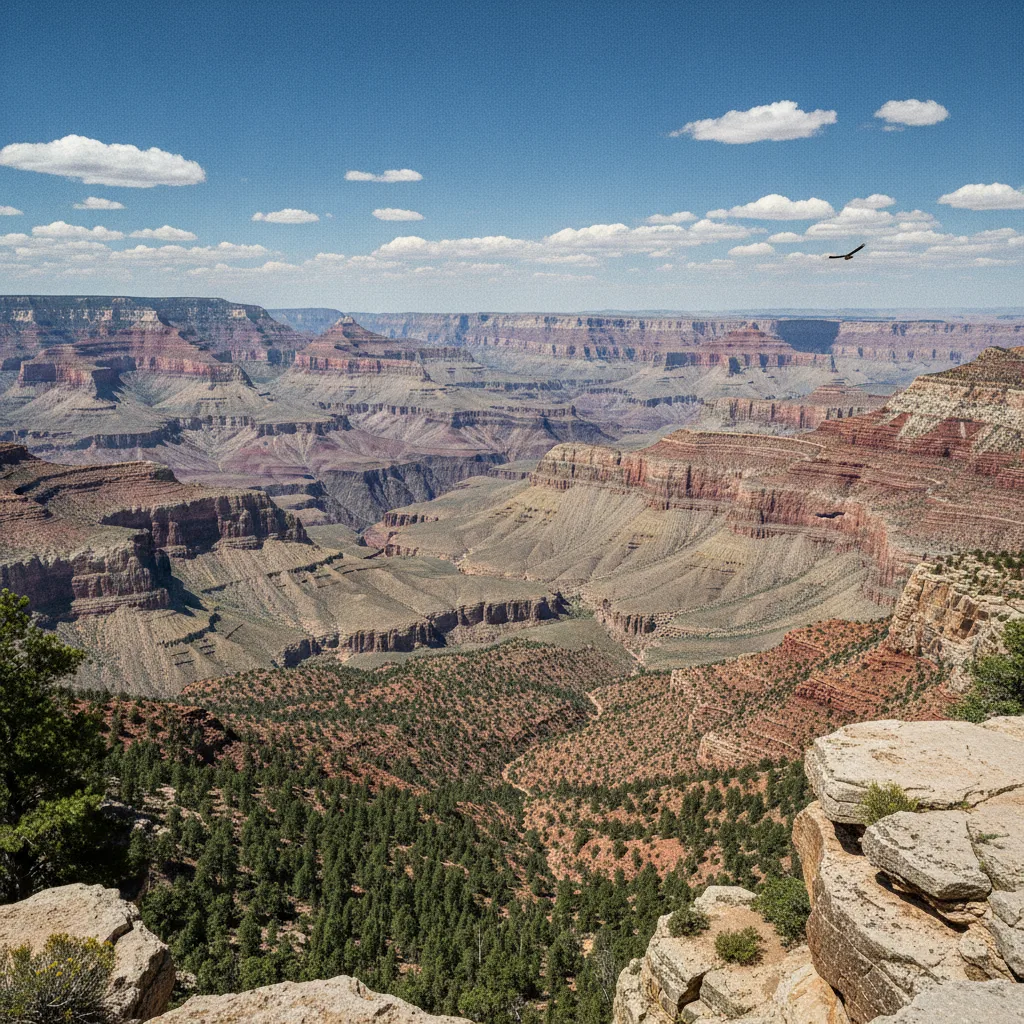
Arizona" — We've meticulously compiled insights to ensure your visit is nothing short of extraordinary, offering a confident and specific look at this vital Arizona destination.
Kaibab National Forest Travel Guide — Arizona
As the independent US travel authority, our team believes the Kaibab National Forest offers an unparalleled Arizona experience. It’s a crucial ecological buffer to the Grand Canyon, providing a cooler, forested escape from the desert heat with diverse ecosystems, abundant wildlife, and endless opportunities for outdoor recreation. Don't just see the Grand Canyon; experience its majestic surroundings with us.
Why Visit Kaibab National Forest
The Kaibab National Forest, Arizona, is far more than just the backdrop to the Grand Canyon; it's a destination in its own right, offering a refreshing contrast to the arid landscapes typically associated with Arizona. Spanning over 1.6 million acres, this vast forest is divided into three distinct ranger districts: the North Kaibab, Tusayan, and Williams districts, each presenting unique terrain and recreational opportunities. From towering ponderosa pine forests and alpine meadows to high plateaus and dramatic canyon views, the Kaibab provides a diverse natural tapestry.
Our team consistently recommends the Kaibab National Forest for its ability to offer peace, solitude, and discovery away from the more crowded national park viewpoints. It serves as a critical habitat for a variety of wildlife, including the unique Kaibab squirrel, mule deer, and elk, making it a prime spot for wildlife viewing. The higher elevations mean cooler temperatures, providing a welcome respite during Arizona's hot summer months. Whether you're seeking challenging hikes, serene scenic drives, or a quiet place to camp under the stars, the Kaibab National Forest delivers.
Who It's Best For
The Kaibab National Forest caters to a wide array of visitors, making it an ideal destination for various travel styles. It's perfect for:
- Outdoor Enthusiasts: With extensive hiking, biking, and horse riding trails, plus opportunities for fishing, hunting, and winter sports, those who thrive in nature will find endless activities.
- Families: Many campgrounds offer amenities suitable for families, and the diverse landscape provides educational opportunities for children to learn about different ecosystems and wildlife. The cooler temperatures are also a plus for families traveling with younger children.
- Grand Canyon Visitors: For those planning a trip to Grand Canyon National Park, the Kaibab National Forest offers excellent complementary experiences, including camping and lodging options just outside the park, and scenic drives that lead directly to the North and South Rims.
- Nature Photographers: The dramatic landscapes, varied flora and fauna, and stunning light conditions, especially during sunrise and sunset, provide ample opportunities for breathtaking photography.
- Those Seeking Solitude: While parts of the forest are popular, its vastness allows for quiet, secluded experiences, particularly on less-trafficked trails or in dispersed camping areas.
- Budget Travelers: Unlike Grand Canyon National Park, there is no entrance fee to explore the Kaibab National Forest, making it an accessible option for outdoor recreation.
Getting There & Parking
Accessing the Kaibab National Forest is relatively straightforward, as it strategically surrounds the Grand Canyon. The forest is divided into three districts, each with its primary access points:
- North Kaibab Ranger District: This district is north of the Grand Canyon and is accessed via Highway 67, which connects to Highway 89A at Jacob Lake. Highway 67 is also the scenic route that leads directly to the Grand Canyon North Rim. The Kaibab Plateau Visitor Center in Jacob Lake is a key information hub.
- Tusayan Ranger District: Located just south of Grand Canyon National Park, this district is easily reached via Highway 64, which runs north from Williams and through Tusayan to the Grand Canyon South Rim.
- Williams Ranger District: This district is closest to the town of Williams, Arizona, and is accessible directly from I-40 and historic Route 66. The Williams Visitor Center is a good starting point for information.
For navigation within the Kaibab National Forest, we highly recommend downloading Motor Vehicle Use Maps (MVUMs) or Travel Aid Maps from the official Forest Service website. These maps display legal designations for motorized vehicle travel and are available as hard copies at ranger offices or digitally through apps like Avenza Maps. Parking is generally available at trailheads, campgrounds, and designated recreation sites throughout the forest. While some developed day-use areas may charge a fee, the forest itself does not have a general entrance fee.
Be aware that some forest roads may require high-clearance vehicles, and conditions can vary, especially after inclement weather. Always check current road conditions before heading out. For those visiting the North Rim, Highway 67 typically operates seasonally, from mid-May through mid-October.
Top Things to Do
The Kaibab National Forest offers a wealth of activities, ensuring there's something for every visitor. Our team's top recommendations for things to do at Kaibab National Forest include:
- Hiking and Backpacking: Explore a diverse network of Kaibab National Forest hiking trails, from easy strolls to challenging backcountry excursions. Popular options include the Bill Williams Mountain Trail, offering beautiful views near the town of Williams, and sections of the Arizona Trail. For a unique perspective, the Triple Alcoves Trail on the North Kaibab Ranger District provides breathtaking views of Marble Canyon and the Colorado River.
- Scenic Drives: The Kaibab Plateau–North Rim Parkway (Highway 67) is a designated National Forest Scenic Byway, offering stunning views through dense ponderosa pine and mixed conifer forests, with abundant wildlife sightings, including deer and buffalo. Other forest roads lead to picturesque overlooks and secluded spots.
- Camping: Choose from numerous developed campgrounds like Dogtown Lake, Kaibab Lake, White Horse Lake, and Tusayan-Montane (formerly Ten-X) campgrounds, which offer various amenities. Reservations for many sites are available on Recreation.gov. Dispersed camping is also permitted in many areas, offering a more primitive experience.
- Wildlife Viewing: The forest is home to a rich array of wildlife. Keep an eye out for mule deer, elk, and the unique Kaibab squirrel, identifiable by its white tail and tufted ears. Birdwatching is also excellent, with species like the Northern Goshawk present.
- Fishing and Boating: Lakes such as Kaibab Lake, Dogtown Lake, Cataract Lake, and White Horse Lake offer opportunities for fishing. Day-use fees of $8 per vehicle per day apply at these concession-operated sites, or an annual pass can be purchased.
- Stargazing: Far from city lights, the Kaibab National Forest provides exceptional dark skies, perfect for admiring constellations and the Milky Way.
- Winter Sports: When snow blankets the higher elevations, the forest transforms into a winter wonderland, ideal for cross-country skiing, snowshoeing, and peaceful escapes.
Remember to check for current conditions and any fire restrictions before your visit. As of June 11, 2026, Stage 1 fire restrictions are in effect for the entire Kaibab National Forest, prohibiting campfires except in Forest Service-provided structures in developed recreation sites. The North Kaibab Ranger District has even stricter Stage 2 restrictions as of June 18, 2026, prohibiting all campfires, charcoal, and briquettes, and restricting smoking to enclosed vehicles or developed recreation sites.
Best Time to Visit
Choosing the best time to visit the Kaibab National Forest largely depends on your desired activities and tolerance for crowds and weather. Our team has identified the following optimal periods:
- Spring (April – June): This is an excellent time for pleasant weather, wildflowers, and active wildlife. Temperatures are comfortable for hiking and scenic drives before the intense summer heat arrives. The North Rim typically reopens around May 15th.
- Summer (July – August): While hotter, the higher elevations of the Kaibab National Forest offer a cooler escape compared to the surrounding desert. Afternoon thunderstorms are common, which can bring dramatic skies and lush greenery. This is a popular time for camping and enjoying the forest's lakes. However, be mindful of potential fire restrictions, which are often in place during these dry months.
- Fall (September – October): Often considered the "sweet spot" for visiting, fall brings brilliant foliage, especially on the North Kaibab, and fewer visitors after Labor Day. Temperatures are ideal for hiking, and wildlife activity peaks as animals prepare for winter. The North Rim usually closes around October 15th.
- Winter (November – March): For those seeking solitude and a unique experience, winter offers snow-covered landscapes, perfect for snowshoeing and cross-country skiing. Many roads and facilities, particularly on the North Kaibab, close for the season, so planning is essential.
Regardless of the season, we advise checking the official Kaibab National Forest website for current conditions, weather forecasts, and any alerts or closures, especially regarding fire restrictions.
Where to Stay Nearby
When planning your trip to the Kaibab National Forest, you have several excellent options for lodging, ranging from cozy cabins within the forest to hotels in nearby towns. Our team recommends considering these options for Kaibab National Forest lodging:
-
Within Kaibab National Forest (Camping & Cabins):
- Developed Campgrounds: The forest offers numerous developed campgrounds, including Kaibab Lake, Dogtown Lake, White Horse Lake (near Williams), and Tusayan-Montane Campground (near Grand Canyon South Rim), and Jacob Lake and DeMotte campgrounds (North Kaibab Ranger District). These sites often require reservations, especially during peak season, which can be made via Recreation.gov. Fees for single sites typically start around $20-$30 per night, with day-use fees for certain lake areas at $8 per vehicle per day.
- Cabin Rentals: For a more comfortable stay within the forest, consider renting a historic cabin like Big Springs Cabins or Hull Cabin, available through Arizona's Rooms with a View program.
- Dispersed Camping: Permitted in many areas, dispersed camping offers a free, primitive experience, but requires self-sufficiency and adherence to Leave No Trace principles.
-
Near the Grand Canyon South Rim (Tusayan):
- The town of Tusayan, located just outside the South Entrance of Grand Canyon National Park, offers a range of hotels, including the Grand Canyon Hotel and Suites, The Grand Hotel at the Grand Canyon, and Red Feather Lodge. These provide convenient access to both the Grand Canyon and the southern portions of the Kaibab National Forest.
-
Near the Grand Canyon North Rim (Jacob Lake/Fredonia):
- For North Rim visitors, the historic Kaibab Lodge is the nearest lodging outside the park entrance, located just five miles from the boundary and 18 miles from the North Rim itself. It offers a combination of cabins and units. The Jacob Lake Inn, adjacent to the Kaibab Plateau Visitor Center, also provides lodging. In the nearby town of Fredonia, you might find options like the Grand Canyon Cabin.
-
Williams, Arizona:
- Located on historic Route 66, Williams is a vibrant town offering numerous hotels, including the Days Inn by Wyndham Williams, Comfort Inn Near Grand Canyon, and Hampton Inn Williams. It's a great base for exploring the southern part of the Kaibab National Forest and is the departure point for the Grand Canyon Railway.
When considering Kaibab National Forest lodging, remember that reservations, especially for popular campgrounds and lodges, should be made well in advance, particularly for peak seasons.
Sample 2-Day Itinerary
Our team has crafted a sample 2-day itinerary to help you make the most of your visit to the Kaibab National Forest, offering a mix of adventure and relaxation.
Day 1: Southern Kaibab Exploration & Grand Canyon Gateway
- Morning (Williams Ranger District): Arrive in Williams, Arizona, the "Gateway to the Grand Canyon." Grab breakfast in town, then head into the Williams Ranger District of the Kaibab National Forest. Start with a hike on a portion of the Bill Williams Mountain Trail, enjoying the cooler pine forests.
- Late Morning/Lunch: Drive to Kaibab Lake Campground for a scenic picnic lunch by the water. If interested, enjoy some fishing or simply relax by the lake. Note that a day-use fee of $8 per vehicle applies here.
- Afternoon (Tusayan Ranger District): Head north towards the Grand Canyon South Rim, passing through the Tusayan Ranger District. Stop at the Tusayan-Montane Campground (formerly Ten-X) to set up your camp for the night if you have reservations.
- Evening: Venture into Grand Canyon National Park (South Rim) for breathtaking sunset views from Mather Point or Yavapai Point. Return to your Kaibab National Forest campsite for a campfire (if fire restrictions allow) and stargazing. Remember, Stage 1 fire restrictions are in effect for the entire Kaibab National Forest as of June 11, 2026, limiting fires to developed recreation sites.
Day 2: North Kaibab Scenic Beauty & Grand Canyon North Rim
- Morning: Rise early and drive north towards the North Kaibab Ranger District. This involves a significant drive around the Grand Canyon (approximately 4-5 hours from the South Rim). Alternatively, if you're staying near the North Rim, start your day directly.
- Late Morning: Stop at the Kaibab Plateau Visitor Center in Jacob Lake for maps and current information. Then, embark on a scenic drive along the Kaibab Plateau–North Rim Parkway (Highway 67) towards the Grand Canyon North Rim. Keep an eye out for wildlife, including deer and buffalo.
- Lunch: Enjoy a picnic lunch amidst the high-elevation forests or grab a meal at the historic Jacob Lake Inn.
- Afternoon: Explore the Grand Canyon North Rim. Hike a portion of the Bright Angel Point Trail for stunning views, or simply take in the vista from the Lodge. Note that the North Kaibab Trail, while iconic, is a challenging inner-canyon trail and requires significant planning and time.
- Late Afternoon: Begin your journey out, reflecting on the diverse beauty of the Kaibab National Forest Arizona, and its majestic neighbor.
Last updated: 2026-07-05 by the Visit America team.