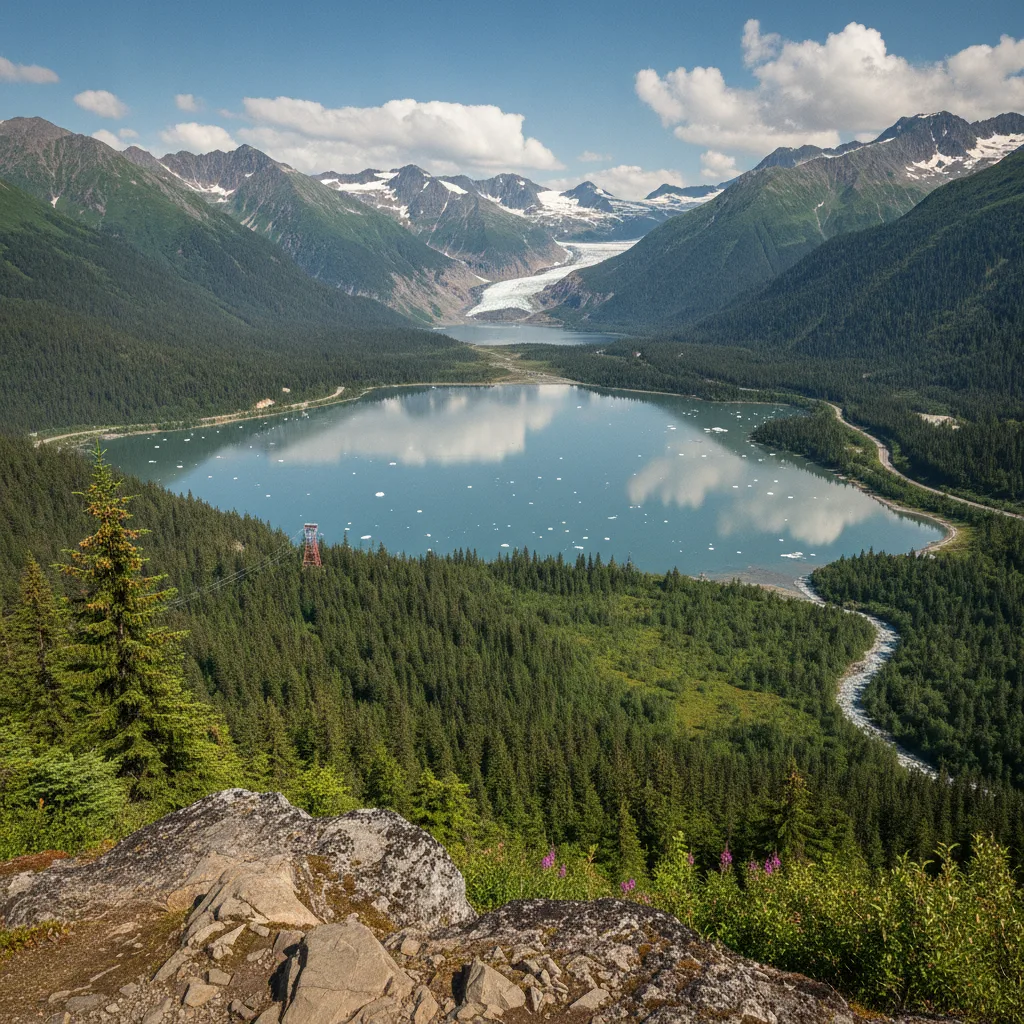
Our Portage Valley guide covers practical planning for Portage Valley Alaska — best time to visit, getting there, and what to do on the ground.
Portage Valley Travel Guide — Alaska
Portage Valley Alaska is a glacial valley offering access to multiple glaciers, hiking trails, and the Begich Boggs Visitor Center, making it a popular destination for outdoor enthusiasts. As independent US travel authorities, our team at Roam States has explored this stunning corner of Southcentral Alaska, and we're here to provide you with a confident, specific guide to planning your adventure. Forget generic fluff; we deliver the actionable insights you need to make the most of your trip to this incredible landscape.
Why Visit Portage Valley
Portage Valley is a testament to Alaska's raw, glacial power, a place where ice has carved dramatic landscapes and continues to shape the environment. We consider it a must-visit for anyone seeking accessible glacier viewing, diverse hiking opportunities, and abundant wildlife within a relatively short drive of Anchorage. The valley is home to several "hanging" glaciers, including Byron Glacier, Explorer Glacier, and Middle Glacier, which cling to the surrounding mountainsides, offering breathtaking vistas at every turn.
The sheer accessibility of Portage Valley is a primary draw. Unlike many remote Alaskan wilderness areas, this region is easily reached via the scenic Seward Highway, making it perfect for day trips or multi-day excursions from Anchorage. Here, you can witness the ongoing retreat of Portage Glacier, explore a temperate rainforest, and immerse yourself in the natural history of the Chugach National Forest, America's second-largest national forest. The valley's unique ecosystem, with plant life ranging from lichens on bare rock to groves of Sitka spruce, showcases a living laboratory of post-glacial succession.
Who It's Best For
Portage Valley caters to a wide array of travelers, from families with young children to seasoned hikers and wildlife photographers. We find it particularly ideal for:
- **Families:** With easy, flat trails like the Byron Glacier Trail and the Trail of Blue Ice, and interactive exhibits at the Begich Boggs Visitor Center, it’s an excellent place to introduce kids to Alaska's natural wonders. The Alaska Wildlife Conservation Center, located just before the Portage Glacier Road turnoff, provides guaranteed wildlife sightings that captivate all ages.
- **Outdoor Enthusiasts:** Whether you're interested in leisurely strolls, moderate hikes, or more challenging treks, the valley offers a variety of terrain. Kayaking on Portage Lake, fishing in its streams, and biking the Trail of Blue Ice are popular activities.
- **Nature Photographers:** The dramatic glacial landscapes, floating icebergs, diverse wildlife (including moose, bears, and mountain goats), and vibrant fall colors provide endless photographic opportunities.
- **First-Time Alaska Visitors:** For those new to the Last Frontier, Portage Valley offers a concentrated taste of Alaska's beauty and wilderness without requiring extensive backcountry experience or specialized gear. It's a fantastic complement to visits to other iconic Alaskan destinations like Denali National Park & Preserve or Kenai Fjords National Park.
Our team believes Portage Valley strikes a perfect balance between accessibility and immersion in the Alaskan wilderness, making it an excellent choice for nearly any traveler.
Getting There & Parking
Accessing Portage Valley is straightforward, primarily via the Seward Highway (AK-1), one of Alaska's most scenic drives. From Anchorage, the drive is approximately 50 miles south to the junction with Portage Glacier Road. The journey itself is part of the experience, offering stunning views of Turnagain Arm, with opportunities to spot beluga whales, Dall sheep, and bald eagles.
To get to Portage Valley from Anchorage, you'll drive south on the Seward Highway. After about 47-50 miles, you'll see the turnoff for Portage Glacier Road (at milepost 78.9) on your left. Follow Portage Glacier Road for about 5.5 miles into the valley.
For parking, there are various options depending on your activity:
- **Begich Boggs Visitor Center:** Ample parking is available here, serving as a hub for many activities and trailheads.
- **Trailheads:** Parking areas are designated at popular trailheads like Byron Glacier Trail and the Trail of Blue Ice. These can fill up quickly during peak summer months, so arriving early, especially on sunny weekends, is advisable.
- **Campgrounds:** Williwaw Campground and Black Bear Campground offer parking for registered campers.
While there are no direct public buses to Portage Valley, several tour operators offer day trips from Anchorage, often including stops at the Alaska Wildlife Conservation Center and a Portage Glacier cruise. If you're driving, ensure your vehicle is fueled up in Anchorage or Girdwood, as there are no gas stations within Portage Valley itself. Rental cars typically range from $80 to $150 daily, depending on demand.
Top Things to Do
When considering things to do at Portage Valley, the options are as varied as the landscape itself. Our team always recommends starting at the Begich Boggs Visitor Center to get your bearings and gather current information.
Explore the Begich Boggs Visitor Center
The Begich Boggs Visitor Center is an essential first stop, operated by the National Forest Service. It offers award-winning exhibits, educational presentations, and a film titled "Retreat and Renewal: Stories from Alaska's Chugach National Forest". While entrance to the visitor center itself is free, there is a $5.00 fee for adults to access the museum exhibits and film, with children 15 and younger admitted free. National Park Passes or other interagency passes are honored and can waive this fee. The center is open seasonally, typically from Memorial Day through Labor Day, Thursday through Sunday, from 9 AM to 5 PM, though it's crucial to check current operating dates and hours, especially in mid-September when it can close for the season.
Take a Portage Glacier Cruise
One of the most iconic things to do at Portage Valley is to take an hour-long narrated sightseeing boat tour on Portage Lake aboard the M/V Ptarmigan. This cruise brings you within 300 feet of the towering Portage Glacier, allowing for incredible close-up views of its blue ice face and the chance to witness calving events. The M/V Ptarmigan operates daily with five departure times from mid-May through mid-September 2026: 10:30 AM, 12:00 PM, 1:30 PM, 3:00 PM, and 4:30 PM. Tickets can be booked online in advance or purchased on-site at the Portage Glacier Cafe. Onboard, Forest Service rangers or naturalists provide fascinating insights into the valley's geology, wildlife, and history.
Visit the Alaska Wildlife Conservation Center
Just before the turn-off to Portage Valley from the Seward Highway, the Alaska Wildlife Conservation Center (AWCC) is a non-profit sanctuary dedicated to preserving Alaska's wildlife. Here, you can see orphaned and injured Alaskan animals, including bears, moose, musk oxen, and wolves, in spacious enclosures along a 1.5-mile loop accessible by foot, bike, or car. The AWCC is open year-round, with varying hours by season. For example, from May to September 15, 2026, it's open daily from 8:30 AM to 7 PM, with the last entry at 6 PM. Note that it will be closed on Saturday, October 3, 2026, for a fundraiser.
Hike the Portage Valley Hiking Trails
The Portage Valley hiking trails offer something for every skill level, from easy, paved paths to more moderate ascents. Our team highly recommends exploring these trails to truly appreciate the glacial landscape.
- **Byron Glacier Trail:** This is one of the most accessible glaciers in Alaska for families. The trail is a 1.6-mile round trip on a mostly flat gravel path, leading to the glacier's lower terminus. It's fully maintained and snow-free from June through August, requiring only standard hiking boots, a rain shell, and bear spray. In the evening, after the sun retreats, ice worms can sometimes be seen surfacing at the end of the trail.
- **Trail of Blue Ice:** Departing from near the Begich Boggs Visitor Center, this 5-mile paved trail parallels Portage Glacier Road along the valley floor. It's fully accessible and popular with both hikers and bikers, connecting many of the valley's developed sites and campgrounds. It's also an excellent spot for salmon viewing during the spawning season.
- **Portage Pass Trail:** For those seeking a more challenging hike with unparalleled views of Portage Glacier, the Portage Pass Trail is a 4-mile roundtrip, family-friendly trail starting on the Whittier side of the Anton Anderson Memorial Tunnel. After cresting Portage Pass, which is about 800 feet in elevation, the trail offers direct views of Portage Glacier from the shores of Portage Lake. The trailhead is at the end of a dirt road, and while passenger vehicles can usually manage, careful driving is advised.
- **Williwaw Nature Trail:** This 1.25-mile nature trail leads along spawning streams and offers opportunities to see moose, Dall sheep, and bears on the mountainsides. It connects with the Trail of Blue Ice for a longer loop.
Wildlife Viewing
Portage Valley is a haven for wildlife. Moose are a common sight, especially cows and calves browsing along ponds in May and June. Both black and brown bears roam the valley, with black bears being more visible, often seen eating greens on the steep northern slopes. Mountain goats forage on the valley walls, particularly in spring. During spring and fall migrations, flocks of geese, ducks, swans, and cranes pass through Portage Pass. From mid-July through August, you can witness four species of salmon (sockeye, chum, coho, and pink) spawning in streams and ponds, with excellent viewing platforms at Williwaw Creek.
Best Time to Visit
The best time to visit Portage Valley Alaska largely depends on what you want to experience, as the region undergoes dramatic seasonal shifts. Our team generally recommends the summer months for the widest array of activities and most favorable weather.
- **Summer (June – August):** This is peak season, and for good reason. Days are long (up to 19 hours of daylight around the summer solstice), temperatures are mild (50s-60s°F), and all attractions and trails are fully accessible. Wildlife viewing, including salmon runs, is at its peak, and wildflowers are in bloom. However, this also means larger crowds and higher prices for lodging and tours.
- **Shoulder Seasons (May and September):** These months offer a balance of pleasant weather, fewer crowds, and lower prices.
- **May:** Alaska is waking up, with snow melting at lower elevations. Many services begin to open in late May or early June, and you'll experience long days (17-18 hours of daylight).
- **September:** Early September is a "hidden gem" with spectacular fall colors, minimal crowds, and dropping prices. The northern lights also become visible on clear nights. Weather can be wet, but the autumnal beauty is undeniable.
- **Winter (October – April):** Portage Valley transforms into a winter wonderland, ideal for backcountry skiing, snowshoeing, and aurora viewing (especially February and March). However, many trails will be covered in deep snow, and some services may be closed. Avalanche hazards are also a significant concern in certain areas.
For most visitors, especially those primarily interested in hiking, glacier cruises, and wildlife viewing, late June through early September is the optimal window to experience Portage Valley Alaska.
Where to Stay Nearby
While there are no extensive hotels directly within Portage Valley, several excellent options for Portage Valley lodging are available in nearby communities, offering convenient access to the valley's attractions. Our team suggests considering Girdwood or Whittier for your base.
- **Girdwood:** Located just 20 minutes north of the Portage Glacier Road turnoff, Girdwood is a popular resort town known for Alyeska Resort. It offers a range of accommodations, from luxury hotels to cozy lodges and vacation rentals.
- **Alyeska Resort:** A 4-star ski-in/ski-out hotel with stunning alpine views, an indoor pool, spa, and multiple dining options. It's ideal for those seeking comfort and amenities.
- **Carriage House Accommodations:** A cozy lodge in Girdwood offering free parking and a convenient location for hiking, biking, and skiing.
- **Whittier:** This unique town is accessible via the Anton Anderson Memorial Tunnel, located just beyond Portage Valley. Whittier offers a different experience, with hotels like the Inn at Whittier providing waterfront views and easy access to Prince William Sound cruises.
- **Moose Pass:** Further south on the Kenai Peninsula, Moose Pass offers a charming, small-town atmosphere and lodging like Trail Lake Lodge.
- **Campgrounds:** For those seeking a more immersive outdoor experience, Portage Valley camping is available at two federal campgrounds:
- **Williwaw Campground:** The largest campground in Portage Valley, with 60 sites suitable for RVs. Half of the sites can be reserved in advance through Recreation.gov, while the other half are first-come, first-served. It offers amenities like drinking water (from hand pumps), vault toilets, and picnic tables. Sites range from $18 for a single to $28 for a double per night.
- **Black Bear Campground:** A quieter, more intimate option with 12 graveled, wooded sites, also offering outhouses, picnic tables, and fire rings.
- **Portage Valley RV Park:** A privately run campground located off Portage Valley Road, offering another option for RV travelers.
When planning your Portage Valley lodging, especially during peak summer months, we strongly advise making reservations well in advance to secure your preferred spot.
Sample 2-Day Itinerary
To help you maximize your visit, our team has crafted a sample 2-day itinerary for Portage Valley Alaska, blending popular attractions with opportunities for exploration.
Day 1: Glaciers, Wildlife & Scenic Drives
- **Morning (9:00 AM - 12:00 PM): Scenic Drive & Wildlife Encounter**
- Depart Anchorage and enjoy the breathtaking drive along the Seward Highway, keeping an eye out for beluga whales in Turnagain Arm and Dall sheep on the cliffs. This drive is considered one of the world's most scenic.
- Stop at the Alaska Wildlife Conservation Center (AWCC) near the entrance to Portage Valley. Spend 1.5-2 hours exploring the 1.5-mile loop, observing rescued Alaskan wildlife up close. Check AWCC's 2026 hours, as they vary seasonally.
- **Lunch (12:00 PM - 1:00 PM): Picnic with a View**
- Pack a picnic lunch to enjoy at one of the scenic pullouts along Portage Glacier Road or at a picnic area near the Begich Boggs Visitor Center.
- **Afternoon (1:00 PM - 5:00 PM): Glacier Cruise & Visitor Center**
- Head to the Begich Boggs Visitor Center. Arrive in time for the 1:30 PM or 3:00 PM Portage Glacier Cruise aboard the M/V Ptarmigan. This one-hour tour will take you across Portage Lake for close-up views of Portage Glacier.
- After your cruise, explore the exhibits at the Begich Boggs Visitor Center. Learn about the geology, wildlife, and history of the Chugach National Forest. Remember the $5.00 adult fee for exhibits and film.
- **Evening: Dinner & Campground Stay**
- Enjoy dinner in Girdwood, where options range from casual eateries to fine dining.
- Check into your reserved campsite at Williwaw Campground or Black Bear Campground, or your chosen lodging in Girdwood.
Day 2: Hiking & Hidden Gems
- **Morning (9:00 AM - 12:00 PM): Byron Glacier Hike**
- Begin your day with a hike on the family-friendly Byron Glacier Trail. This 1.6-mile round trip offers easy access to stunning views of Byron Glacier. Allow ample time for photos and enjoying the glacial landscape.
- **Lunch (12:00 PM - 1:00 PM): Local Fare or Packed Lunch**
- Grab a quick bite at the Portage Glacier Cafe (if open) or bring another packed lunch for trailside enjoyment.
- **Afternoon (1:00 PM - 4:00 PM): Trail of Blue Ice & Salmon Viewing**
- Walk or bike a section of the Trail of Blue Ice, a 5-mile paved multi-use trail that connects various points of interest in the valley.
- Visit the Williwaw Fish Viewing Platform (mid-July to August) to observe salmon spawning in Williwaw Creek.
- **Late Afternoon (4:00 PM onwards): Whittier Excursion (Optional) or Return to Anchorage**
- **Option A (Whittier):** For an additional adventure, drive through the Anton Anderson Memorial Tunnel to the unique town of Whittier. Be aware of the tunnel's one-way schedule and $13 vehicle toll (paid going into Whittier). From Whittier, you could hike a portion of the Portage Pass Trail for another view of Portage Glacier.
- **Option B (Return):** Head back to Anchorage, perhaps stopping at Beluga Point for one last scenic overlook or at the Bird Creek Motel for a budget-friendly stay.
This itinerary provides a solid framework, but feel free to adjust it based on your interests and energy levels. Remember to check current conditions, especially trail closures or weather alerts, before heading out. For more ideas on exploring the state, check out our guide to the Best places in Alaska.
Last updated: 2026-07-05 by the Roam States team.